7 Best Heavy Duty Sewing Machines in 2026: Tested Workhorse Picks
I’ve owned a real, genuine sewing-room graveyard of underpowered machines that quit the moment fabric got past two layers of denim, so I know exactly what “heavy duty” needs to actually mean before I’ll put that label on a review. The best heavy duty sewing machine is not simply the model with the fastest motor or the word “heavy duty” printed on the front.
For denim, canvas, bags, layered quilts and repeated home-sewing workloads, I look at stitch quality under load, feeding consistency, presser-foot clearance, foot pressure, speed control, workspace, needle and thread compatibility, and how stable the machine feels when seams become bulky.
This roundup covers seven very different workhorses, from affordable mechanical machines to 1,500-1,600 SPM straight-stitch specialists and a feature-rich computerized SINGER. I also separate domestic heavy-duty sewing machines from true industrial machines, because a strong home model can handle demanding projects without being designed for continuous factory production or very thick multi-layer leather.
Best Heavy-Duty & Quilting Machines, Compared
Seven workhorses we rate for thick fabric, denim, and quilting — from budget mechanical to high-speed straight stitch.
| Machine | Type | Stitches | Speed | Standout Control | Work Space | Best For | Buy |
|---|---|---|---|---|---|---|---|
| Janome HD3000 ★ MariaSew 9.0/10 |
Mechanical | 18 | Up to 860 SPM | 5-piece feed dog, adjustable foot pressure | 6.5 in | Best overall mechanical | Buy Now |
| SINGER 4452 ★ MariaSew 8.6/10 |
Mechanical | 32 / 110 apps | 1,100 SPM | Walking + non-stick feet, adjustable pressure | 6.25 in | Best value for denim & canvas | Buy Now |
| Brother ST371HD ★ MariaSew 8.4/10 |
Mechanical | 37 | 800 SPM | 6-point feed dog, metal needle plate | Compact | Best beginner heavy-duty | Buy Now |
| JUKI TL-2010Q ★ MariaSew 9.2/10 |
Straight stitch | 1 | 1,500 SPM | Speed control, even-feed foot, drop feed | 23 × 13 in table | Best for quilting | Buy Now |
| Brother PQ1500SL ★ MariaSew 8.8/10 |
Straight stitch | 1 | 1,500 SPM | Pin feed, 4 feed-dog settings | 5.7 × 8.6 in | Best legacy value for quilting | Buy Now |
| Janome HD9 Pro ★ MariaSew 9.1/10 |
Straight stitch | 1 | 1,600 SPM | Up to 11 lb foot pressure, HWTG | 8 × 5.5 in | Best premium workhorse | Buy Now |
| SINGER 6800C ★ MariaSew 8.5/10 |
Computerized | 586 apps | 1,100 SPM | Speed control, needle down, auto cutter | 6.4 in | Best computerized heavy-duty | Buy Now |
“HWTG” = high-lift presser foot with thread guide. Straight-stitch machines sew one stitch only, but at high speed with superior fabric feed for quilting and heavy fabric. Specs from manufacturer listings; verify current details before buying. As an Amazon Associate, MariaSew earns from qualifying purchases, at no extra cost to you.
Key Takeaways
- Heavy duty does not mean every machine handles every material or project equally well.
- The right choice depends on fabric thickness, sewing frequency, stitch needs, and workspace.
- A practical comparison should separate everyday versatility from specialized construction.
- Maintenance, correct needles, thread, and patient setup matter as much as machine type.
- The best heavy duty sewing machines are the ones that suit the work you actually do.
What Makes a Sewing Machine Heavy Duty?
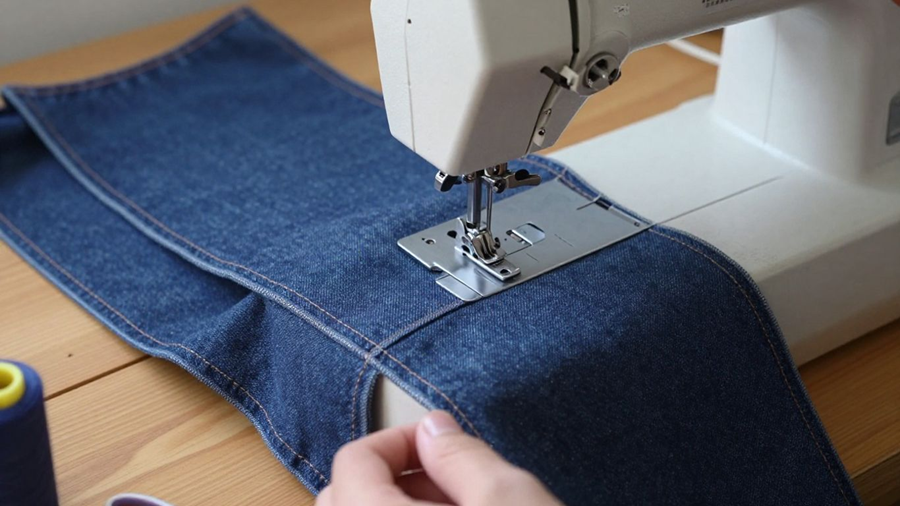
I use ‘heavy duty’ to describe a machine that remains controlled and stable when normal home sewing becomes more demanding. That can mean heavier woven fabrics, multiple seam layers, long straight seams, dense home-decor materials, bag construction or frequent daily use.
The label alone proves very little. I look for a rigid frame, predictable feeding, adequate presser-foot lift, compatible heavy needles and thread, sensible motor performance, a stable bed and controls that let me slow down before a bulky seam crossing.
A high-speed straight-stitch machine can also qualify as a workhorse even when it has only one stitch. For many quilters, bag makers and garment sewists, one excellent straight stitch at 1,500 SPM is more useful than hundreds of decorative patterns.
Heavy Duty vs. Industrial Sewing Machine
A domestic heavy-duty machine is designed for home or studio power, household needles and a relatively portable body. An industrial sewing machine is normally built around one production task, mounted in a dedicated table and paired with an industrial motor and feed system.
This distinction matters most with leather and upholstery. A SINGER 4452, Janome HD3000, TL-2010Q or HD9 can handle appropriate leathercraft, denim, canvas and layered projects when correctly set up, but none should be treated as a universal replacement for a walking-foot or compound-feed industrial machine on dense multi-layer leather.
If you are still deciding between machine formats, my mechanical vs. computerized sewing machine guide explains how the control systems change day-to-day sewing.
Who Actually Needs a Heavy Duty Sewing Machine?
I recommend stepping up to a workhorse machine when an ordinary home machine repeatedly becomes the limiting part of the project. One thick hem every six months is not enough reason to buy a specialist machine.
- You sew denim, canvas or bags regularly. Repeated bulky seams make feeding, presser-foot clearance and stability much more important.
- You quilt or piece for long sessions. High-speed straight-stitch machines reduce time on long seams and usually feel more planted under large projects.
- You sew home decor or costumes. Curtains, cushion covers, layered interfacing and structured fabrics benefit from a stronger feed and stable bed.
- You repair workwear frequently. A durable mechanical machine can be more practical than a decorative computerized model when repairs dominate your workload.
- You are building a small sewing business. A specialist straight-stitch machine can improve repeatability and workflow if most of your production is straight seams.
If most of your sewing is lightweight clothing, crafts or occasional repairs, a conventional all-purpose machine may be cheaper, lighter and more versatile.
How I Test Heavy Duty Sewing Machines at MariaSew
I personally use the sewing machines I recommend on MariaSew.com before I publish a verdict. I have more than 12 years of hands-on sewing experience, and I do not call a machine heavy duty because it survives one staged stack of fabric. I want to know how it behaves after repeated seam crossings, speed changes, needle changes and longer sewing sessions.
- Straight-stitch consistency. I inspect both sides of the seam for skipped stitches, looping, uneven length and tension changes when fabric thickness increases.
- Bulky seam crossings. I test folded denim and layered canvas transitions and watch whether the foot tips, the stitch shortens or the machine begins to hammer instead of feed.
- Feed and foot pressure. I look for layer creep, shifting, fabric drag and whether adjustable pressure or a walking/even-feed foot actually improves control.
- Low-speed control. A heavy-duty machine that is only comfortable at full speed is less useful around corners, topstitching, bag hardware and precision garment work.
- Long-session stability. I pay attention to vibration, noise, heat, bobbin changes, thread cutting and how the controls feel after the novelty wears off.
- Realistic material limits. I do not use one leather sample to claim industrial capability. I follow the machine manual, needle system, thread guidance and actual feed design.
For this category, I sew quilting cotton, garment denim, canvas, layered seams, interfaced bag panels, lighter woven fabric and suitable leathercraft samples when the manufacturer supports them. I test straight-stitch consistency at slow and high speed, reverse, presser-foot clearance, feed control, tension recovery, vibration, noise, bobbin access and how quickly I can recover from a difficult seam without forcing the machine.
MariaSew’s editorial standard is that recommended sewing machines are personally used and tested before publication.
Key Features to Look for in a Heavy Duty Sewing Machine
I compare the same core features across every workhorse machine, even when the designs are very different. These are the features that tell me more than a marketing label.
Frame Construction and Table Stability
A rigid internal frame helps keep the needle, hook and feed system aligned when the machine is working through denser seams. Extra weight can also reduce vibration, although a heavy machine is not automatically a stronger one.
Motor Performance and Maximum Sewing Speed
High speed matters for long construction seams and quilting, but piercing power and control matter just as much. I would rather have a machine that crosses a bulky seam cleanly at moderate speed than one that races until the fabric gets difficult.
Feed System and Presser-Foot Pressure
Thick or layered fabrics need to move evenly under the foot. Adjustable presser-foot pressure, pin feed, even-feed feet or a well-designed feed dog can prevent layer creep and short, compressed stitches.
Extra-High Presser-Foot Lift
Extra clearance helps position bulky seams and layered projects under the foot before sewing begins. It does not mean the machine can safely penetrate anything that physically fits underneath.
Needle and Heavy-Thread Support
Heavy denim, canvas and visible topstitching require the right needle system and thread range. Specialist machines such as the Janome HD9 go further with a dedicated heavy-weight thread guide.
Stitch Length and Straight-Stitch Quality
Longer stitch settings are useful for topstitching, basting and thicker materials. On a straight-stitch specialist, consistent formation and feed matter more than decorative stitch count.
Stitch Variety and Buttonholes
If the machine will be your only sewing machine, zigzag, stretch stitches and buttonholes may matter as much as heavy-duty strength. A straight-stitch-only machine is a poor one-machine solution for many garment sewists.
Speed Control, Needle Up/Down and Thread Cutting
Electronic controls can make a workhorse easier to manage. Speed limiting is especially useful on a 1,100-1,600 SPM machine, while needle up/down and automatic cutting improve quilting and repetitive construction workflow.
Workspace and Extension Table
Quilters, bag makers and home-decor sewists need room to support fabric before it reaches the needle. A wide auxiliary table can matter more than the machine’s built-in throat measurement.
Bobbin Capacity and Winding Workflow
High-volume straight stitching uses a lot of bobbin thread. Jumbo bobbins and independent bobbin winders reduce interruptions during quilting, topstitching and small-batch production.
Maintenance and Service Requirements
All workhorse machines collect lint and experience higher mechanical loads during frequent use. I check whether the user manual calls for cleaning, oiling or dealer service and whether parts and technicians are readily available.
7 Best Heavy Duty Sewing Machines: Quick Comparison
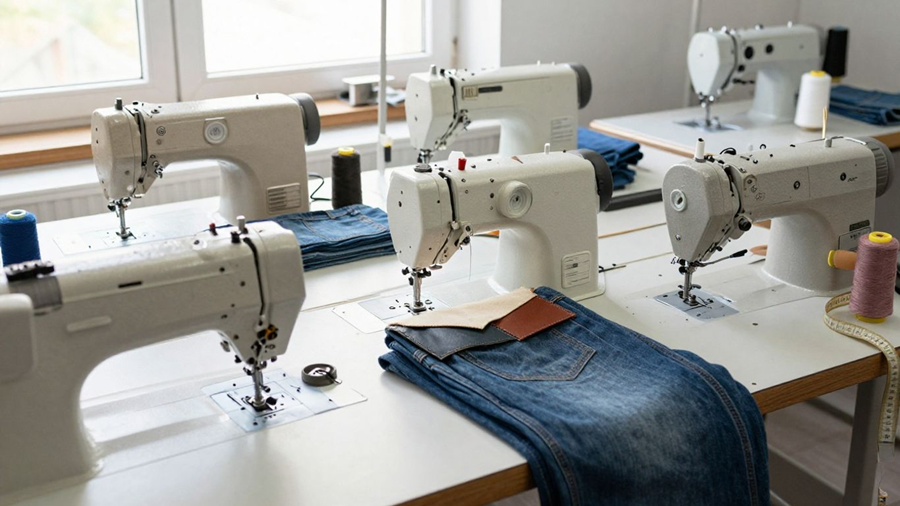
The seven machines below are not direct substitutes. Three are high-speed straight-stitch specialists, three are mechanical or home-oriented heavy-duty machines, and one is a computerized heavy-duty model. I use the comparison to identify the right format before comparing smaller features.
Speed alone should not decide the purchase. The 1,600 SPM Janome HD9 is outstanding for straight seams but cannot sew a zigzag or buttonhole, while the slower Brother ST371HD gives a beginner 37 stitches, a free arm and a one-step buttonhole in one portable machine.
- Need one versatile home machine? Start with the Janome HD3000, SINGER 4452, Brother ST371HD or SINGER 6800C.
- Need high-speed quilting or straight seams? Compare the JUKI TL-2010Q, Brother PQ1500SL and Janome HD9 Professional.
- Need a current new purchase? Remember that Brother now lists the PQ1500SL as discontinued, so compare its successor if you cannot find reputable stock.
The table is a quick reference after those distinctions, not a replacement for the full model reviews that follow.
| Model | Type | Stitches | Speed | Standout Control | Space | Best For |
|---|---|---|---|---|---|---|
| Janome HD3000 | Mechanical | 18 | Up to 860 SPM | 5-piece feed, adjustable foot pressure | 6.5 in | Best overall mechanical |
| SINGER 4452 | Mechanical | 32 / 110 applications | 1,100 SPM | Walking + non-stick feet, adjustable pressure | 6.25 in | Best value for denim/canvas |
| Brother ST371HD | Mechanical | 37 | 800 SPM | 6-point feed, metal needle plate | Compact | Best beginner heavy duty |
| JUKI TL-2010Q | Straight stitch | 1 | 1,500 SPM | Speed control, even-feed foot, drop feed | 23 x 13 in table | Best quilting straight stitch |
| Brother PQ1500SL | Straight stitch | 1 | 1,500 SPM | Pin feed, 4 feed-dog settings | 5.7 x 8.6 in | Best legacy value / quilting |
| Janome HD9 Pro | Straight stitch | 1 | 1,600 SPM | Up to 11 lb foot pressure, HWTG | 8 x 5.5 in | Best premium workhorse |
| SINGER 6800C | Computerized | 586 applications | 1,100 SPM | Speed control, needle down, cutter | 6.4 in | Best computerized heavy duty |
Janome’s current HD3000 product page does not prominently list maximum speed, so the 860 SPM figure above follows Janome’s published HD-series documentation. The PQ1500SL is included as a legacy model because it remains widely used, but Brother’s current catalog marks it discontinued.
1. Janome HD3000 – Best Overall Mechanical Heavy Duty Sewing Machine
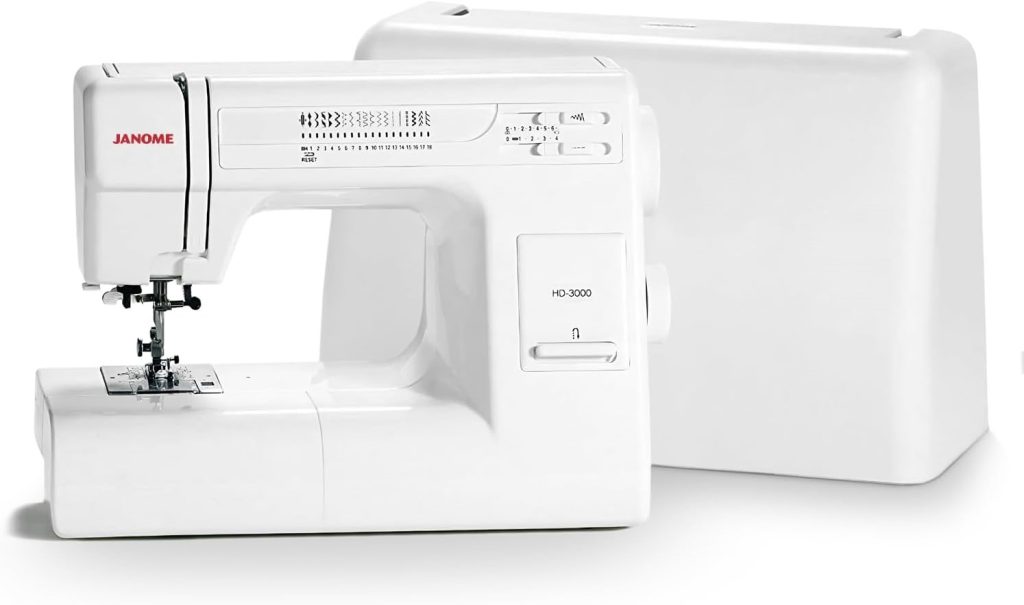
The Janome HD3000 is the machine I would choose for most home sewists who want a stronger mechanical platform without giving up everyday versatility. Its aluminum construction, 18 stitches, 5-piece feed dog, adjustable presser-foot pressure, 15 needle positions, free arm and extra-high presser-foot lift make it useful for garments, repairs, denim, canvas, bags and home decor.
For a deeper hands-on breakdown, read my Janome HD3000 review.
What I like most is the balance. It is more controlled and substantial than a lightweight beginner machine, but it is still a normal domestic sewing machine with zigzag, stretch stitches and a buttonhole rather than a one-purpose straight-stitch specialist. One factual detail worth correcting from older summaries: Janome’s current information sheet and instruction book specify a four-step buttonhole on the HD3000.
Janome HD3000 Key Features
- Heavy-duty aluminum construction. The rigid body gives the machine a planted feel and supports consistent alignment during thicker seams.
- 18 built-in stitches. The focused stitch set covers everyday construction, stretch, decorative work and a four-step buttonhole.
- Adjustable presser-foot pressure. This is one of the features I value most when moving between heavier denim and lighter garment fabrics.
- 5-piece feed dog and 15 needle positions. The feed supports ordinary fabric control while needle positioning helps with topstitching, zippers and edge work.
- Extra-high foot lift, free arm and drop feed. These features add clearance for thicker seams plus practical garment and quilting flexibility.
Janome HD3000 Pros
- Stable mechanical platform. It feels controlled on denim, canvas and long construction seams.
- Versatile enough to be your only machine. Unlike a straight-stitch specialist, it still handles zigzag, stretch work and buttonholes.
- Useful pressure adjustment. Fine-tuning presser-foot pressure improves handling across different fabric weights.
- Simple controls. Dials and a mechanical layout make settings easy to understand and repeat.
- Good long-term home-sewing fit. It has enough capability for beginners to grow into without overwhelming them.
Janome HD3000 Cons
- No needle up/down or speed slider. Precision speed is controlled through the foot pedal rather than electronic limits.
- Four-step buttonhole is less convenient. Computerized and some modern mechanical machines make repeated buttonholes faster.
- Workspace is still domestic-size. Large quilts are more comfortable on the dedicated straight-stitch machines in this guide.
Final Verdict
Buy the Janome HD3000 if you want one durable mechanical machine for garments, repairs, denim, canvas and everyday thick-fabric work. Skip it if your main priority is 1,500+ SPM quilting speed, automatic thread cutting or a large flatbed.
2. SINGER Heavy Duty 4452 – Best Value for Denim, Canvas and Thick Seams
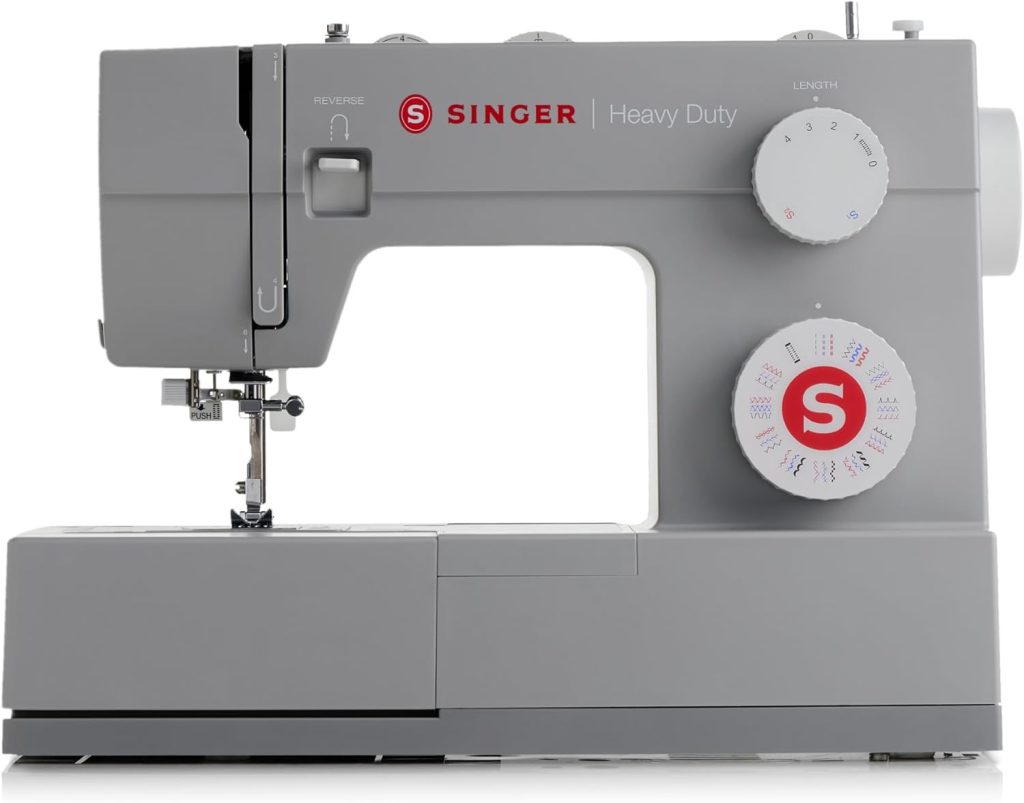
The SINGER Heavy Duty 4452 is the value pick for a sewist who wants more outright speed and a thick-fabric accessory package without moving into a specialist straight-stitch machine. It reaches up to 1,100 stitches per minute, has 32 built-in stitches, a one-step buttonhole, a metal frame, stainless-steel bed plate, adjustable presser-foot pressure and a top drop-in bobbin.
My full SINGER 4452 Heavy Duty review covers its real-world strengths and limitations.
The included accessories make the 4452 more useful than the basic specification suggests. SINGER supplies an even-feed walking foot for multiple layers, a non-stick foot for materials such as vinyl or suitable leathercraft, heavy-duty needles and a clearance plate for bulky seam transitions. I still slow down and level the foot over thick denim hems instead of treating the motor rating as permission to force the machine.
SINGER 4452 Key Features
- Up to 1,100 stitches per minute. The high maximum speed is useful for long seams once the fabric is feeding cleanly.
- 32 built-in stitches and one-step buttonhole. You get basic, stretch and decorative options without moving to a computerized interface.
- Adjustable presser-foot pressure. This helps the same machine handle both thicker and lighter fabrics more predictably.
- Walking foot, non-stick foot and clearance plate included. The accessory package directly supports layered and difficult-to-feed materials.
- Metal frame and stainless-steel bed plate. The frame adds rigidity while the bed plate gives fabric a smooth surface to slide across.
SINGER 4452 Pros
- Excellent performance per dollar. It delivers 1,100 SPM and useful heavy-duty accessories at a lower price class than specialist workhorses.
- Better accessory package than many rivals. Walking and non-stick feet are especially relevant to thick and tricky materials.
- One-step buttonhole. Garment makers get a quicker buttonhole workflow than on the HD3000.
- Portable for a heavy-duty machine. At roughly 14.6 lb, it is easier to move than the 24-32 lb straight-stitch specialists.
- Useful for both heavy and light fabrics. Adjustable presser-foot pressure gives it more range than a one-purpose thick-fabric setup.
SINGER 4452 Cons
- High speed requires pedal discipline. There is no electronic speed slider to cap the machine for detail work.
- Domestic throat space is modest. The 6.25-inch needle-to-tower space is limiting for large quilts.
- Not an industrial leather machine. The non-stick foot helps appropriate leather and vinyl, but dense multi-layer leather needs the correct industrial feed system.
Final Verdict
The SINGER 4452 is my favorite value pick for denim hems, canvas, costumes, repairs and home-decor sewing. Choose it for speed and accessories, but do not confuse its heavy-duty domestic design with an industrial leather machine.
3. Brother ST371HD – Best Heavy Duty Sewing Machine for Beginners
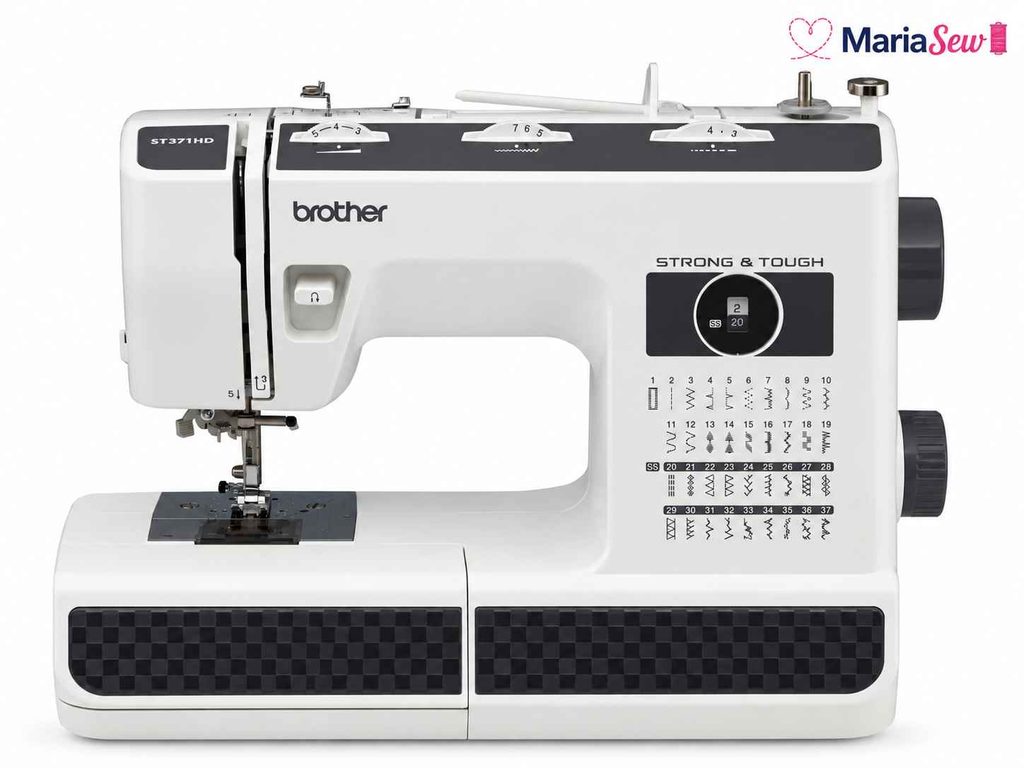
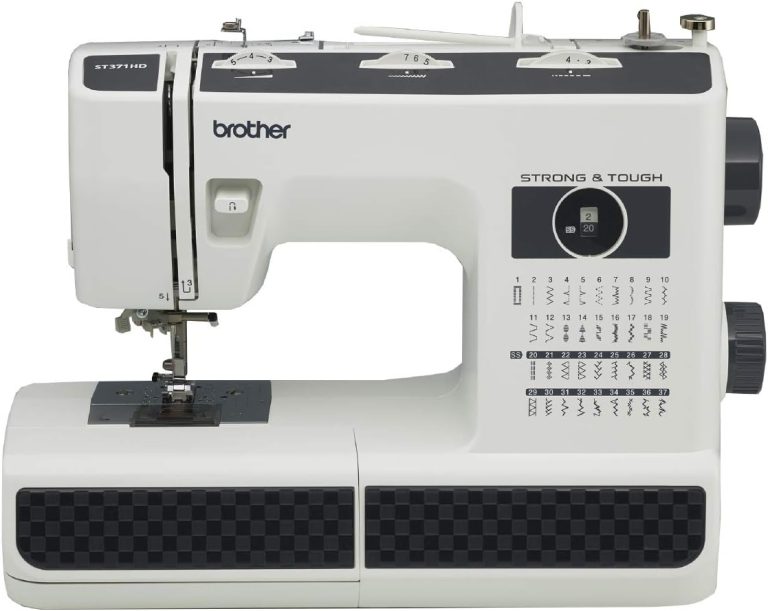
The Brother ST371HD is the easiest model here to recommend to a beginner who wants a stronger all-purpose machine without buying a high-speed specialist. Brother gives it 37 built-in stitches, one one-step buttonhole, an automatic needle threader, a Quick-Set top bobbin, free arm, drop feed and six included feet.
If you are comparing Brother options, my best Brother sewing machines guide explains where the ST371HD fits.
Its metal needle plate and 6-point feed system are designed to improve fabric movement, and Brother includes heavyweight needles plus a non-stick foot for demanding materials. The trade-off is that presser-foot pressure is not adjustable, so it gives you less manual tuning than the Janome HD3000 or SINGER 4452 when moving between very different fabric weights.
Brother ST371HD Key Features
- 37 built-in stitches. The stitch selection covers practical construction, stretch, decorative work and a one-step auto-size buttonhole.
- 800 SPM maximum speed. It is slower than the SINGER heavy-duty models but easy to manage for learners and everyday repairs.
- Metal needle plate and 6-point feed. These components help fabric move consistently through normal and heavier home-sewing tasks.
- Automatic needle threader and Quick-Set bobbin. Setup is beginner-friendly and less fussy than traditional front-loading systems.
- Six included feet plus drop feed. The package supports buttonholes, zippers, non-stick sewing and free-motion techniques.
Brother ST371HD Pros
- Beginner-friendly setup. Threading, bobbin loading and stitch selection are straightforward.
- More stitch variety than most mechanical heavy-duty rivals. Thirty-seven stitches give new sewists room to explore garments and crafts.
- Light enough to store or move. At about 14.3 lb, it is much easier to handle than semi-professional straight-stitch machines.
- Good accessory variety. Six feet and heavyweight needles make the package useful out of the box.
- Free arm and drop feed add versatility. It can move from cuffs and hems to basic free-motion sewing.
Brother ST371HD Cons
- No adjustable presser-foot pressure. You have less control over how firmly the foot holds very light or thick fabric.
- 800 SPM is modest. High-volume quilting and long production seams are faster on the JUKI, Brother PQ or Janome HD9.
- Less planted than heavier workhorses. Its portability is useful, but the machine does not have the same mass as premium straight-stitch models.
Final Verdict
Choose the Brother ST371HD if you are a beginner or casual sewist who wants a tougher all-purpose machine with lots of practical stitches. It is a better learning machine than a straight-stitch specialist, but not the strongest choice for high-volume production.
4. JUKI TL-2010Q – Best Heavy Duty Sewing Machine for Quilting and Precision Straight Stitching
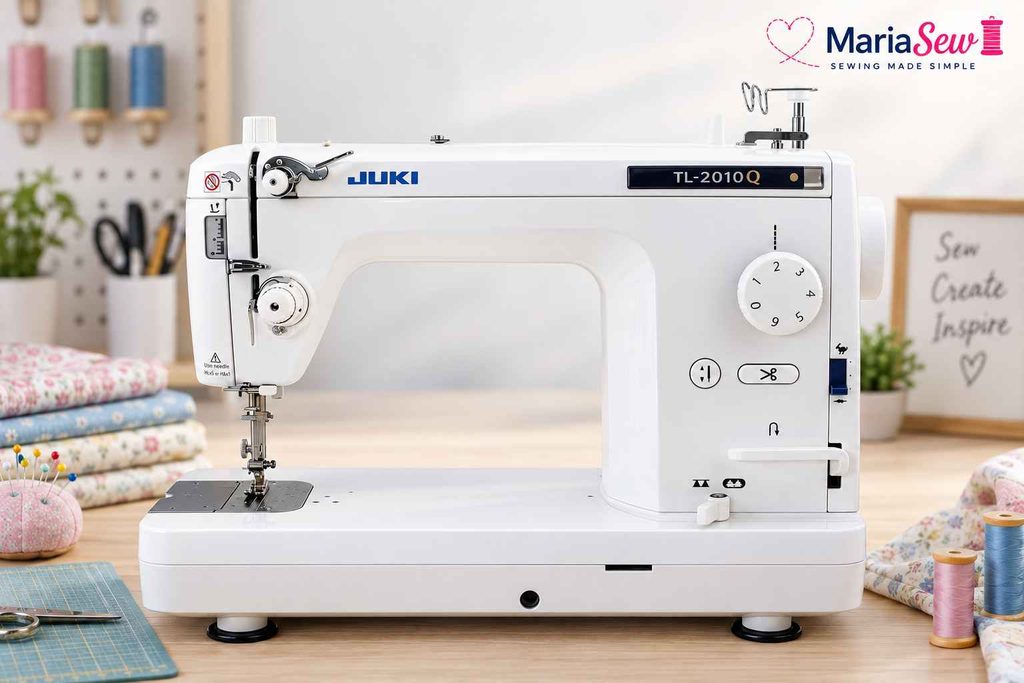
The JUKI TL-2010Q is where this roundup moves from versatile domestic machines to specialist straight-stitch performance. It sews up to 1,500 stitches per minute, has a 6 mm maximum stitch length, adjustable foot pressure, a speed-control lever, automatic thread trimming, drop feed, a knee lifter and a large 23 x 13-inch auxiliary table.
For quilting-focused alternatives, see my best quilting sewing machines guide.
I like the TL-2010Q for quilt piecing, free-motion quilting, bags, topstitching and garment construction where a clean straight seam is the priority. JUKI also includes an even-feed foot for difficult layers. The limitation is fundamental: it is straight stitch only, so stretch seams, zigzag finishing and buttonholes need another machine or serger.
JUKI TL-2010Q Key Features
- 1,500 SPM straight-stitch performance. Long seams and piecing move quickly without turning the machine into a difficult-to-control racer.
- Maximum speed control. The lever lets me cap top speed for curves, corners, free motion and detailed topstitching.
- Automatic thread trimmer. Both the button and foot control can activate JUKI’s industrial-style trimming mechanism.
- Adjustable foot pressure and even-feed foot. These controls improve handling on quilts, difficult layers and heavier materials.
- 23 x 13-inch auxiliary table and knee lift. The large support area and hands-free foot lift are excellent for quilting and larger projects.
JUKI TL-2010Q Pros
- Excellent straight-stitch quality. This is the reason to buy the TL-2010Q rather than a feature-heavy domestic machine.
- Fast but controllable. The speed lever makes 1,500 SPM useful rather than intimidating.
- Strong quilting workflow. Drop feed, extension table, quilting feet and knee lift all support long quilting sessions.
- Good fabric-control options. Foot-pressure adjustment and the even-feed foot help on shifting or layered materials.
- Proven specialist format. It gives serious sewists semi-professional straight-stitch workflow without a full industrial table setup.
JUKI TL-2010Q Cons
- Straight stitch only. You still need another machine for zigzag, stretch stitches and buttonholes.
- Large and heavy for casual storage. At about 25.4 lb plus the table, it prefers a dedicated sewing area.
- Not a compound-feed industrial. Appropriate leather can be sewn with the right setup, but very dense leather assemblies are outside its ideal role.
Final Verdict
The JUKI TL-2010Q is one of my strongest picks for quilters, bag makers and garment sewists whose workload is dominated by straight stitching. Buy it for precision, speed and fabric control, not as your only machine if you still need zigzag or buttonholes.
5. Brother PQ1500SL – Best Legacy High-Speed Straight-Stitch Value
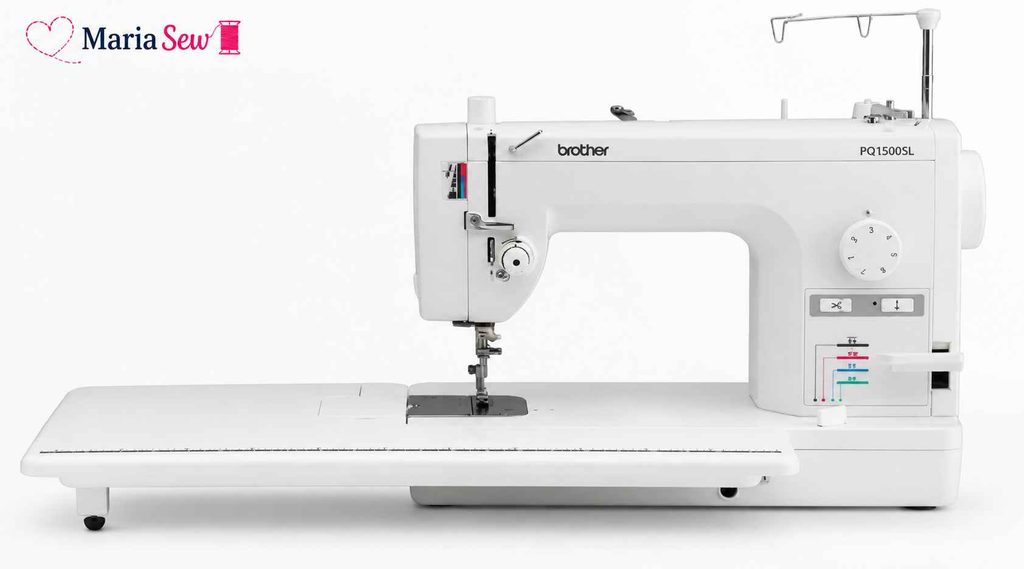
The Brother PQ1500SL remains a capable 1,500 SPM straight-stitch quilting machine with an adjustable pin-feed mechanism, four feed-dog settings, full-range presser-foot pressure adjustment, knee lifter, automatic thread cutter, automatic needle threading and an independent bobbin-winding motor.
The PQ1500SL also appears in my quilting machine roundup.
The important 2026 update is availability: Brother’s current catalog marks the PQ1500SL as discontinued. I keep it in this roundup because many sewists already own one and new-old-stock or used machines still appear, but I would not pay a premium as if it were a current model. If you are shopping new through Brother, compare the current PQ1600S before buying old inventory.
Brother PQ1500SL Key Features
- 1,500 SPM maximum speed. It is built for fast straight-stitch piecing, garments and long construction seams.
- Adjustable pin-feed mechanism. The pin feed can improve control on difficult layers and precise fabric movement.
- Four feed-dog settings. The machine gives more feed tuning than a typical domestic straight-stitch model.
- Automatic thread cutter and needle threader. These features reduce repetitive hand work during long sewing sessions.
- Knee lifter and extension table. Hands-free foot control and extra support make it practical for quilting and larger projects.
Brother PQ1500SL Pros
- Fast straight-stitch performance. It matches the JUKI TL-2010Q’s 1,500 SPM ceiling.
- Excellent feed customization. Pin feed plus four feed-dog settings give the user unusually detailed fabric control.
- Useful automation. Thread cutting and automatic threading save time during repetitive work.
- Independent bobbin winder. You can prepare bobbins without interrupting the same workflow as a basic domestic machine.
- Strong used-market value when priced correctly. A clean machine can still be an excellent quilting and garment workhorse.
Brother PQ1500SL Cons
- Discontinued. Parts and service may remain available, but I would confirm support and price before buying.
- Straight stitch only. It cannot replace an all-purpose garment machine for zigzag and buttonholes.
- Used condition matters more than original reputation. High-speed machines can have substantial prior use, so service history is important.
Final Verdict
The PQ1500SL is still an excellent machine if you already own one or find a well-maintained example at the right price. For a brand-new 2026 purchase, compare Brother’s current straight-stitch successor instead of overpaying for discontinued stock.
6. Janome HD9 Professional – Best Premium High-Speed Heavy Duty Workhorse
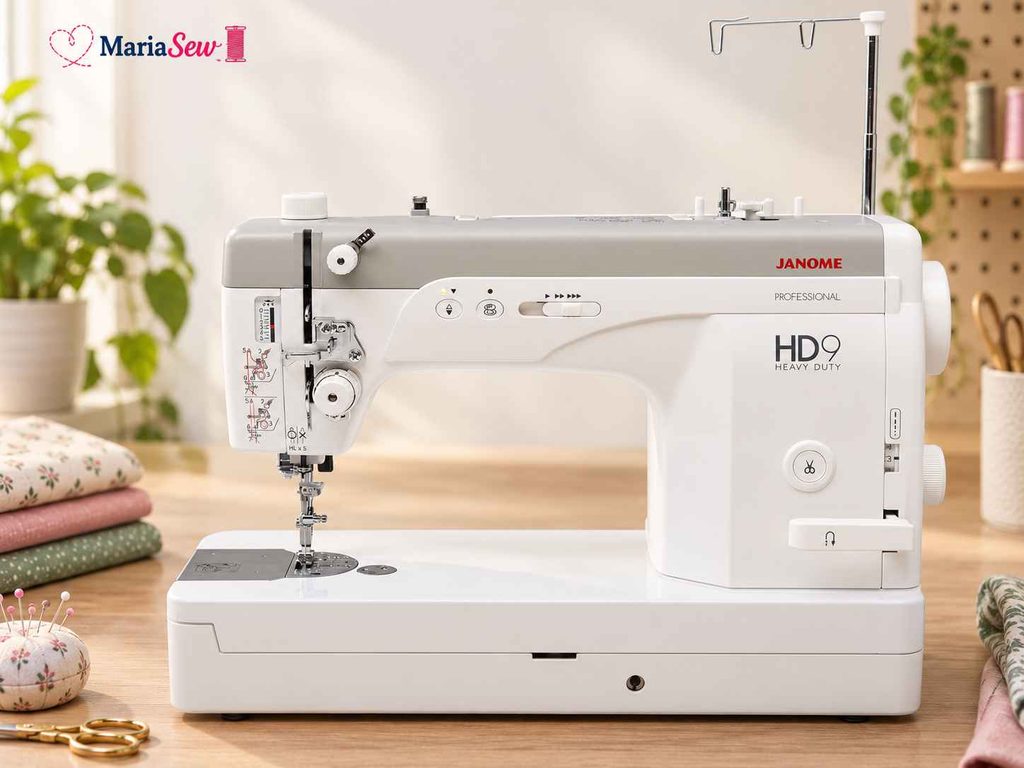
The Janome HD9 Professional is the most specialized and most powerful-feeling machine in this list for home and studio straight stitching. It reaches 1,600 SPM, provides up to 11 pounds of presser-foot pressure, uses a jumbo side-loading bobbin that holds about 40 percent more thread, and includes a heavy-weight thread guide for visible topstitching on materials such as denim, canvas and suitable leathercraft.
I tested this machine in depth in my Janome HD9 Professional review.
The HD9 also adds a speed slider, memorized needle up/down, automatic thread cutter, knee lift, independent bobbin-winding motor, extra-high presser-foot lift and 6 mm maximum stitch length. Janome markets it for sewing and quilting, but its own manual treats it as a household machine. That is exactly how I judge it: an exceptionally fast specialist home/studio workhorse, not a substitute for every industrial leather or upholstery machine.
Janome HD9 Professional Key Features
- 1,600 SPM top speed. It is the fastest machine in this roundup and excels at long straight seams.
- Up to 11 lb of presser-foot pressure. The pressure range supports demanding straight-stitch setup on heavier materials.
- Heavy-weight thread guide. Janome specifically designed the guide to improve control with heavier topstitching thread.
- Jumbo bobbin and independent winder. The larger bobbin and separate winding motor reduce interruptions during production-style sewing.
- Speed slider, needle up/down, cutter and knee lift. These workflow controls make the machine far easier to manage than speed alone would suggest.
Janome HD9 Professional Pros
- Fastest pick in the guide. 1,600 SPM makes long seams and repetitive construction extremely efficient.
- Excellent heavy-thread workflow. The dedicated guide and long stitch length suit visible topstitching.
- Strong pressure control. Up to 11 lb of presser-foot pressure gives it more authority than ordinary domestic machines.
- Large bobbin capacity. Fewer bobbin changes are genuinely valuable on long projects.
- Excellent ergonomic controls. Needle memory, speed control, knee lift and thread cutting all support serious daily use.
Janome HD9 Professional Cons
- Straight stitch only. It is a second-machine specialist for most sewists, not a complete all-purpose replacement.
- Premium price and 32 lb weight. It makes most sense in a dedicated sewing room or small studio.
- Automatic cutter has heavy-thread limits. Janome advises checking the manual because very heavy thread should not always go through the automatic cutter.
Final Verdict
Buy the Janome HD9 Professional if fast, clean straight stitching and heavier topstitching are central to your sewing workflow. It is my premium workhorse pick for serious sewists, but its specialist design means most owners will still keep another machine for zigzag and buttonholes.
7. SINGER Heavy Duty 6800C – Best Computerized Heavy Duty Sewing Machine
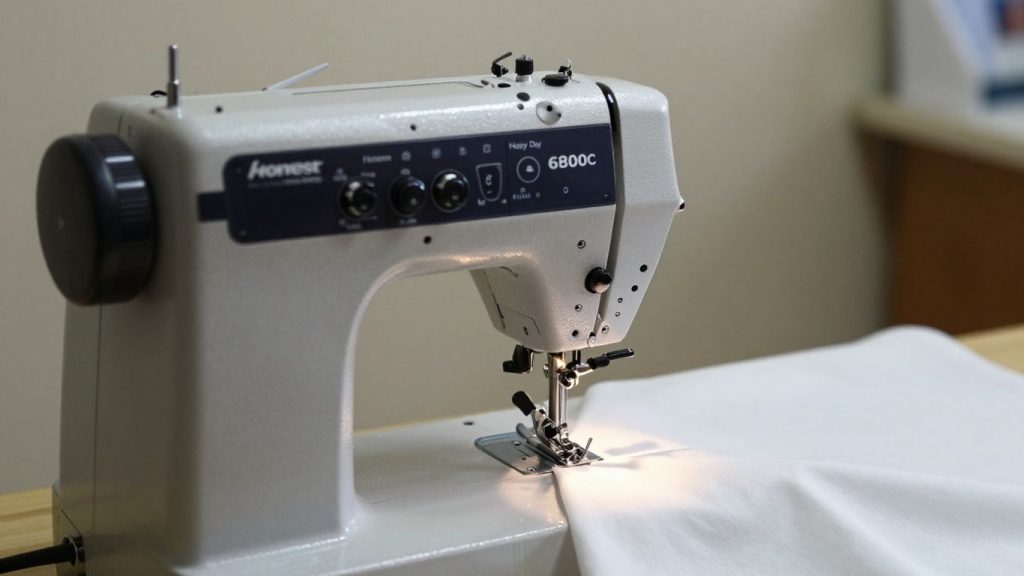
The SINGER Heavy Duty 6800C is the outlier in this roundup because it combines the brand’s 1,100 SPM heavy-duty platform with computerized controls. It has a large 586-application stitch library, two lettering fonts, nine one-step buttonhole styles, an LCD screen, speed control, needle up/down, automatic thread cutting, adjustable presser-foot pressure, drop feed and a metal frame.
For my full hands-on experience, read the SINGER Heavy Duty 6800C review.
I recommend it to sewists who want one machine for denim, canvas, garments, quilting and decorative work without giving up modern convenience. Its 6.4-inch needle-to-tower space is still domestic-sized, so it is not a substitute for the wide flatbeds of the JUKI or Brother straight-stitch machines. The feature depth also means a bigger learning curve than the HD3000 or 4452.
SINGER 6800C Key Features
- Up to 1,100 stitches per minute. It maintains the high-speed character of SINGER’s heavy-duty line while adding electronic control.
- Computerized stitch library and LCD screen. The machine gives you far more garment, decorative and personalization options than the mechanical models.
- Speed control and needle up/down. These features are especially useful for quilting, corners, detail work and beginners controlling a fast machine.
- Automatic thread cutter. One-button trimming saves time during piecing, garment construction and repeated seams.
- Adjustable presser-foot pressure and drop feed. The machine can adapt to lightweight fabric and free-motion work instead of being focused only on thick material.
SINGER 6800C Pros
- Best blend of power and automation. None of the mechanical all-purpose picks combines 1,100 SPM with this level of electronic convenience.
- Huge creative range. The stitch applications, lettering, buttonholes and mirror functions support far more than repairs.
- Speed slider makes heavy-duty speed safer. I can slow the machine for precision instead of managing everything through pedal pressure.
- Automatic cutter and needle position improve workflow. These are meaningful time-savers for frequent sewing.
- Suitable as a single versatile machine. Unlike the straight-stitch specialists, it can handle garment construction, stretch stitches and decorative work.
SINGER 6800C Cons
- More complicated than a mechanical workhorse. The screen and feature library require more learning and menu awareness.
- Domestic workspace remains limited. The 6.4-inch throat is not ideal for very large quilts.
- Electronic repairs can be more specialized. The added convenience also introduces boards, buttons and sensors that a basic mechanical machine does not have.
Final Verdict
The SINGER 6800C is my best computerized heavy-duty choice for sewists who want one fast machine for thick fabrics, garments, quilting and creative stitches. Choose it when automation matters; choose the 4452 or HD3000 if you would rather keep the controls mechanical and simpler.
Best Heavy Duty Sewing Machine by Project
A single ranking becomes less useful once the project is specific. These are the machines I would move to the top of the shortlist for the most common heavy-duty use cases.
Best for Denim and Workwear Repairs
I would start with the SINGER 4452 for value and speed, or the Janome HD3000 if I want a more controlled mechanical feel and adjustable foot pressure. For long straight topstitching and repeated workwear construction, the Janome HD9 is the premium step up.
Best for Canvas, Bags and Home Decor
The JUKI TL-2010Q and Janome HD9 are excellent when the projects are dominated by straight seams, topstitching and long runs. If I still need zigzag, buttonholes and general garment stitches, I would choose the 4452 or 6800C instead.
Best for Quilting
The JUKI TL-2010Q is my strongest current straight-stitch quilting pick because of its 1,500 SPM speed, speed limiter, drop feed, knee lift and large auxiliary table. The PQ1500SL remains very capable for owners and used buyers, but its discontinued status matters.
Best for Beginners
The Brother ST371HD is the easiest entry point because it combines a manageable 800 SPM speed with 37 stitches, one-step buttonhole, free arm, drop feed and simple setup. The HD3000 is the stronger long-term mechanical upgrade if the budget allows.
Best for Leathercraft
For appropriate light-to-medium leathercraft and visible topstitching, the Janome HD9 has the most purpose-built thread and pressure features here. For truly thick leather stacks, upholstery production or bags built from dense leather, I would use a proper industrial walking-foot or compound-feed machine instead.
If you plan to work with leather regularly, my how to sew leather guide covers the basic machine and material considerations.
Best for One-Machine Versatility
The SINGER 6800C wins when I need thick-fabric capability plus stretch stitches, buttonholes, quilting functions and computerized convenience. The Janome HD3000 is the simpler mechanical answer for a sewist who does not need electronic automation.
Mechanical vs. Computerized Heavy Duty Sewing Machines
Mechanical machines such as the Janome HD3000 and SINGER 4452 give me direct dials, fewer electronic components and a very visible relationship between the setting and the stitch. I like that simplicity for repairs, denim, garments and home sewing.
For the full category comparison, see Mechanical vs. Computerized Sewing Machines.
A computerized model such as the SINGER 6800C adds speed limiting, needle up/down, automatic thread cutting, more buttonholes and a much larger stitch library. Those features do not make the needle stronger, but they can make a fast machine easier to control and more useful as an all-purpose sewing machine.
How to Choose the Right Heavy Duty Sewing Machine
I choose by starting with the work, not the brand. A clear project list quickly eliminates machines that are too specialized, too small or more complicated than necessary.
- Write down your five most common projects. Separate denim hems and repairs from quilts, bags, upholstery and leather because they demand different feed and stitch systems.
- Decide whether you need zigzag and buttonholes. If yes, remove the TL-2010Q, PQ1500SL and HD9 from consideration as a one-machine purchase.
- Choose the speed you can control. 1,500-1,600 SPM is valuable only if the machine also gives you the precision you need.
- Check presser-foot pressure and feed options. Layer creep and bulky seams are often feed problems rather than motor problems.
- Measure your largest project. Large quilts need table support and throat space; a small domestic bed becomes tiring quickly.
- Match needles and thread before buying. Make sure the machine supports the thread weights and needle system your projects actually use.
- Check service and parts availability. This is especially important for discontinued machines and high-speed specialists.
- Budget for the right presser feet. Walking, non-stick, zipper, quilting and compensating feet can change how useful the machine is.
If two machines still look close, I would test both on the same fabric stack and compare the seam, the sound, the pedal response and how much effort it takes to keep the layers aligned.
Common Heavy Duty Sewing Machine Mistakes to Avoid
Most mistakes happen when buyers treat ‘heavy duty’ as permission to ignore setup or as a guarantee that the machine can sew industrial materials. The machine still has limits, and thick projects punish poor setup faster than lightweight cotton does.
- Forcing a bulky seam at full speed. Slow down, level the foot and let the needle penetrate instead of pushing the fabric through.
- Using the wrong needle. A dull universal needle can bend, skip stitches or damage fabric on heavy denim, canvas or leathercraft.
- Using heavy thread the machine cannot tension correctly. Check the manual and test tension before committing to the final seam.
- Assuming anything under the foot can be sewn safely. Presser-foot clearance and piercing capability are different limits.
- Calling a domestic workhorse industrial. High speed and metal construction do not create compound feed, an industrial motor or factory duty cycle.
- Buying a straight-stitch specialist as your only machine. Garment sewists often still need zigzag, stretch stitches and buttonholes.
- Ignoring discontinued status. A low used price can be excellent, but confirm service history, parts and dealer support.
- Neglecting lint and maintenance. Heavy fabric, batting and canvas can create more lint and mechanical load than light sewing.
- Pulling fabric from behind the presser foot. Let the feed system move the project or you can bend the needle and distort stitch length.
- Buying for maximum speed instead of actual workflow. The best workhorse is the one you can control cleanly on your real projects.
A well-matched machine should make heavy sewing calmer, not turn every thick seam into a test of strength. If you have to force the fabric repeatedly, the setup or the machine format is wrong for the job.
Heavy Duty Sewing Machine Maintenance Tips
Workhorse machines still need routine care. Heavy fabrics, batting, canvas and long sessions create lint and mechanical load, so I follow the exact manual rather than using one universal oiling schedule.
- Clean lint around the bobbin and feed area. Do this more frequently after batting, denim, flannel and other lint-heavy projects.
- Replace damaged needles early. Bent and dull needles are a common cause of skipped stitches and poor penetration.
- Use manufacturer-specified oiling guidance. Some machines require user oiling and others direct the owner to service points only.
- Check high-speed machines more often. Frequent 1,500-1,600 SPM use justifies closer cleaning and service attention.
- Keep the bed and feed path clear. Pins, clips, heavy seams and fabric drag can affect stitch quality even when the machine itself is fine.
Rethread before changing several settings. Incorrect threading can look like a tension or power problem. If threading is causing problems, my how to thread a sewing machine guide provides a useful refresher.
Use manufacturer-specified oiling guidance. Some machines require user oiling and others direct the owner to service points only. For machines that do require routine lubrication, see how to oil a sewing machine.
If stitch quality suddenly changes after the machine was sewing well, I check the needle, threading, bobbin, lint and presser-foot setup before assuming the motor or timing has failed. Understanding sewing machine tension can also help separate setup problems from mechanical faults.
How to Thread a SINGER Heavy Duty Sewing Machine
SINGER Heavy Duty machines like the 4411, 4423, 4432, and 4452 all thread the same way, and once you have done it twice it takes about thirty seconds. The whole path is printed right on the machine with little numbered arrows, so you are really just following the map. Here is exactly how I do it.
Step 1: Raise the needle and presser foot
Turn the handwheel on the right toward you until the needle is at its highest point, then lift the presser foot lever. Raising the foot is the step most people skip, and it matters, because it opens the tension discs so the thread can seat properly. Skip it and your stitches will look loose no matter what you do.
Step 2: Set the thread on the spool pin
Place your thread on the horizontal spool pin and slide the spool cap on after it so the spool cannot bounce around. Pull the thread across to the first thread guide on the top of the machine and hook it in.
Step 3: Follow the numbered path down and up
Lead the thread down the right hand channel, around the bottom, and back up the left channel. This U shaped trip is what wraps the thread around the tension discs hidden inside. At the top of that left channel you will reach the take up lever. Pass the thread through the eye of that lever from right to left. If the lever is not showing, turn the handwheel toward you until it rises into view.
Step 4: Come down to the needle
Bring the thread back down and slip it through the lower thread guides just above the needle, then through the small wire guide on the needle clamp. Thread the needle from front to back. Every SINGER Heavy Duty has a built in needle threader, so lower it, hook the thread on the tiny hook, and let it pull the thread through the eye for you.
Step 5: Drop in the bobbin and bring the thread up
SINGER Heavy Duty machines use a clear top drop in bobbin. Open the cover, drop the wound bobbin in so the thread unwinds counterclockwise, and pull it through the slot the way the arrows show. Then hold the top thread and turn the handwheel toward you one full turn. The needle dips and lifts the bobbin thread up as a loop. Pull that loop out, lay both threads toward the back under the foot, and you are ready to sew.
How to Thread a Brother Heavy Duty Sewing Machine
Brother Heavy Duty machines such as the ST371HD and the Strong and Tough series are famously beginner friendly to thread, because the numbered guides are printed clearly and the bobbin system is a quick set drop in. Here is the full path from spool to needle.
Step 1: Raise the needle and foot, then follow the numbers
Turn the handwheel toward you to lift the needle to its highest position and raise the presser foot lever. Brother prints the threading path as numbered steps right on the machine, so from here you are simply following 1, 2, 3 in order.
Step 2: Set the spool and reach the take up lever
Put the thread on the spool pin and add the spool cap. Guide the thread through the top thread guide, then down into the right hand channel, around the bottom, and up the left channel to the take up lever. Pass it through the take up lever from right to left. This is the same U shaped route as any modern machine, and the printed arrows keep you on track.
Step 3: Thread the needle with the built in threader
Bring the thread down through the thread guide just above the needle. Then use the automatic needle threader: lower the lever on the left, which swings a tiny hook through the needle eye, catch the thread on that hook, and gently release the lever so it pulls the thread through for you. Pull a few inches of thread through toward the back.
Step 4: Drop in the quick set bobbin
This is where Brother makes life easy. Open the clear cover and drop the wound bobbin in so the thread unwinds counterclockwise, usually shown by a little arrow diagram. Guide the thread through the slot following the numbered notches. With Brother’s quick set system you do not need to fish the bobbin thread up by hand. Once it is threaded through the slots, you can close the cover and start sewing.
Step 5: Test on a scrap
Hold both thread tails loosely, sew a few stitches on a scrap of fabric, and check that the top and bottom look even. If the top thread loops on the underside, rethread the top with the presser foot raised. A threading slip is almost always the cause, not the machine.
Final Verdict: Which Heavy Duty Sewing Machine Should You Buy?
For one durable home machine, the Janome HD3000 is my best overall mechanical pick and the SINGER 6800C is my best computerized choice. The SINGER 4452 is the value option when denim, canvas and speed matter more than electronic controls, while the Brother ST371HD is the most beginner-friendly entry point.
For serious straight-stitch work, I would move to the JUKI TL-2010Q for quilting and precision or the Janome HD9 Professional for maximum speed, pressure and heavy-thread workflow. The discontinued Brother PQ1500SL remains a very good legacy workhorse, but in 2026 I would only buy it at a price that reflects its status.
Frequently Asked Questions
What is the best heavy duty sewing machine in 2026?
For most home sewists, I would start with the Janome HD3000 for a durable mechanical all-rounder. Choose the SINGER 4452 for more speed and value, or the SINGER 6800C if you want computerized heavy-duty features.
What is the best heavy duty sewing machine for denim?
The SINGER 4452 and Janome HD3000 are strong domestic choices for denim and workwear repairs. For repeated straight topstitching, the Janome HD9 Professional is the premium specialist option.
Can a heavy duty sewing machine sew leather?
Some models can sew appropriate leathercraft with the correct needle, thread and presser foot, but a domestic heavy-duty machine is not a universal substitute for an industrial compound-feed leather machine.
Is a heavy duty sewing machine the same as an industrial machine?
No. Domestic heavy-duty machines use home-style power, bodies and feed systems. Industrial machines are normally dedicated to a production task and use a table-mounted motor and specialized feed.
Which heavy duty sewing machine is best for beginners?
The Brother ST371HD is my easiest beginner pick because it combines 37 stitches, one-step buttonhole, automatic threading, free arm and manageable 800 SPM speed.
Which heavy duty machine is best for quilting?
The JUKI TL-2010Q is my strongest current straight-stitch quilting pick thanks to 1,500 SPM, speed control, drop feed, knee lift and the large auxiliary table.
Is the Brother PQ1500SL still available?
Brother currently lists the PQ1500SL as discontinued. It remains a good legacy machine if you already own one or find reputable used or new-old-stock inventory, but compare the current successor before paying a premium.
Is the Janome HD9 an industrial sewing machine?
No. The HD9 uses industrial-inspired features and reaches 1,600 SPM, but Janome’s manual identifies it as a household-use machine. I treat it as a premium specialist home/studio workhorse.
Do I need 1,500 SPM for heavy fabrics?
No. Maximum speed mainly improves productivity on long seams. Thick seam crossings often sew better at a slower controlled pace.
What needle should I use for denim or canvas?
Use the needle type and size recommended for the fabric, thread and machine. Denim/jeans needles are common for denim, but the exact size should follow the project and manufacturer guidance.
Should I buy a mechanical or computerized heavy duty machine?
Choose mechanical if you prefer direct controls and simpler operation. Choose computerized if speed control, needle up/down, thread cutting, more buttonholes and a larger stitch library are valuable to your workflow.
How long should a heavy duty sewing machine last?
There is no reliable universal lifespan. Build quality, workload, cleaning, lubrication requirements, service, storage and whether the machine is used within its material limits all matter.
Tested by Maria — 12 Years of Sewing Experience
Maria has been sewing for 12 years and personally tests every heavy-duty sewing machine featured on MariaSew.com. From beginner mechanical models to premium straight-stitch specialists, she puts each machine through hands-on testing before recommending it to readers.

One Comment