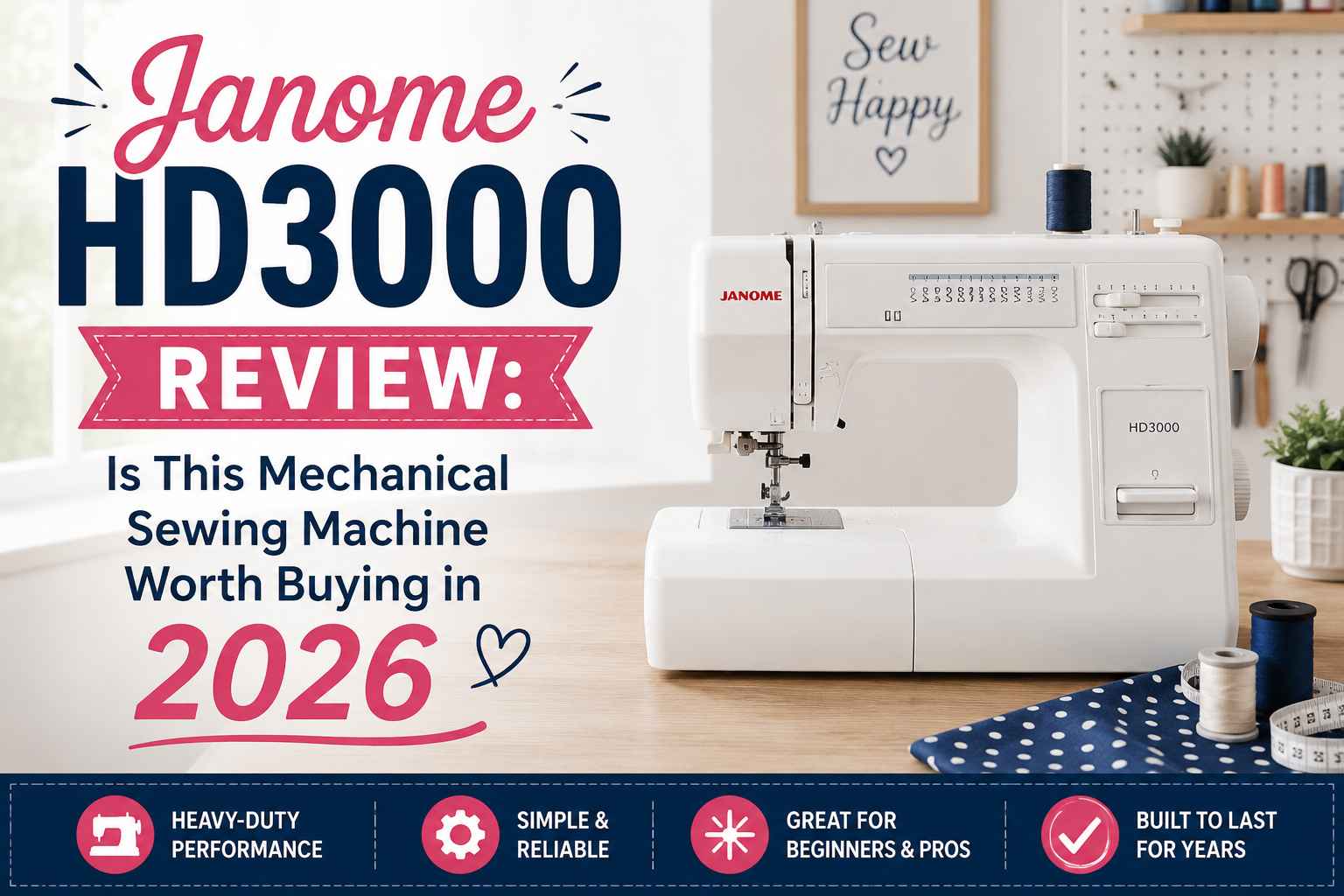
Janome HD3000 Tested Review: Is This Mechanical Sewing Machine Worth Buying in 2026
The Janome HD3000 is a durable mechanical sewing machine built for sewists who want power, simplicity, and long-term reliability without dealing with complicated computerized controls. With 18 built-in stitches, a heavy-duty aluminum frame, adjustable presser foot pressure, and an automatic needle threader.
It is designed for everyday sewing, garment repairs, home decor, and thicker fabrics like denim and canvas. In this Janome HD3000 review, we’ll look at its key features, real performance, pros and cons, and whether it is still worth buying in 2026.
Key Takeaways
- The Janome HD3000 is a very tough and reliable mechanical sewing machine that can handle thick materials like leather and denim without problems.
- It’s surprisingly easy to use, making it great for beginners, but it also has enough features to keep more experienced sewers happy.
- With 18 built-in stitches, you get all the common ones you’ll actually need for most projects, without being overwhelmed by too many options.
- Maintenance is simple because it’s not computerized, meaning you can do basic cleaning and oiling yourself, saving on professional servicing costs.
- It’s a great long-term investment because of its durable build quality and the fact that it doesn’t become outdated quickly, making it suitable for many years of sewing.
Introduction to the Janome HD3000
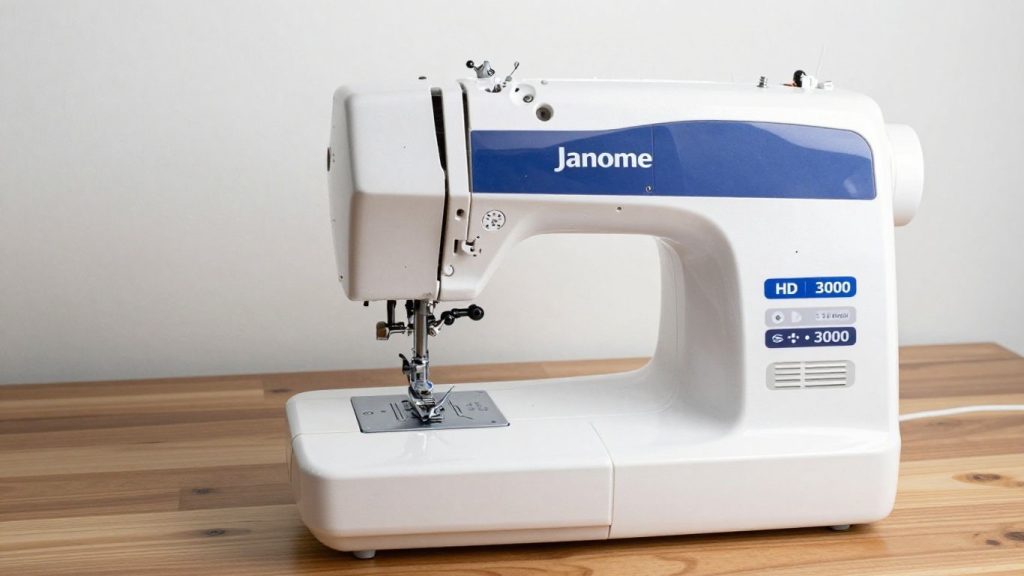
The Janome HD3000 was all the rage as I began my search for a sewing machine that would do more than make basic repairs. It’s frequently touted as a great option, particularly for novices seeking something dependable but not excessively complicated. It’s a basic sewing machine for those who are new to sewing, but it’s not to be overlooked by more advanced sewers, either.
I’ve had some time with the HD3000, and I can understand the interest it has garnered. It’s sturdy – that’s different for me. I do not want something that appears to be thin and will not last for a few projects. It may have a solid aluminum frame, but it’s not so cumbersome to carry if you have to.
The things that really impressed me are that it is very simple. It’s not a techno-savant to install and use it. It’s a relief that the manual is quite clear! The automatic needle threader is a small but powerful feature, especially for people who struggle with threading, a topic also covered in best automatic needle threaders.
It comes with a decent number of stitches – 18, to be exact. That might sound like a lot, but it’s not so many that it becomes overwhelming. You’ll have everything you need to get started – and more – to avoid getting bored when you start mastering new techniques. Plus, it also makes changing stitches a breeze with its simple dial. It also has other great features, such as an automatic needle threader, which has saved my eyes, and a free arm for sewing sleeves and pant legs!
So far, I think my first impression of the Janome HD3000 is that it’s a workhorse. Its purpose is to be reliable and work with different types of fabrics, from light cottons to heavier fabrics such as denim or canvas. It feels like it grows with me, that’s what I want.
It is not overly complicated to set up, which is something I appreciate compared to more advanced machines like the Janome MC6650.
Key Features and Specifications
| Feature | Janome HD3000 Details | Why It Matters |
|---|---|---|
| Machine Type | Mechanical sewing machine | Simple to use, easier to understand, and less complicated than computerized models. |
| Price | $529 | Places it in the mid-range category for serious beginners and regular home sewists. |
| Built-in Stitches | 18 built-in stitches | Covers seams, hems, repairs, stretch stitches, utility sewing, and basic decorative work. |
| Buttonhole | One-step buttonhole | Makes buttonholes easier and more consistent than older multi-step systems. |
| Needle Threader | Automatic needle threader | Reduces eye strain and makes setup faster for frequent sewing. |
| Frame / Build | Heavy-duty aluminium frame | Adds stability and durability for regular use and thicker fabric projects. |
| Presser Foot | Adjustable pressure | Helpful when switching between cotton, denim, canvas, and layered fabrics. |
| Free Arm | Included | Useful for sleeves, cuffs, pant legs, and smaller round sewing areas. |
| Hard Cover | Included | Protects the machine during storage and keeps dust away when not in use. |
| Best Use | Everyday Heavy-Duty Sewing | Best for repairs, garments, crafts, home décor, tote bags, denim, and medium-heavy projects. |
Build Quality and Durability
The Janome HD3000 was the first sewing machine that I touched when I first got my hands on one, and I was impressed with the feel. It’s made of aluminum, so it’ll last a long, long time, but won’t be too heavy for me to carry around my sewing area. This is a significant thing for me – I have to change my configuration in some situations. It simply feels like a machine that’s not giving up on me after a couple of years.
Stitch Options and Performance
The HD3000 has a total of 18 built-in stitches. Compared to some of the computerized machines that have hundreds of stitches, that may not sound like a lot, but for most of my projects, it’s plenty. I am familiar with the basic stitches: straight stitch, zigzag stitch, and a pretty good 4-step buttonhole. Oh, and a few pretty stitches are included if I want a little fancy.
Unlike advanced quilting setups found in best quilting sewing machine discussions, this machine stays focused on practical use.
They have a dial to pick the stitch, and it’s very easy. I haven’t had any stitch quality problems. It works fairly well with all types of fabric, but sometimes needs a bit of a tap on the back with the handwheel for the initial couple of stitches on really thick layers, such as multiple layers of canvas for a bag. It also features an adjustable presser foot pressure that works well with both thin and thick fabrics, such as leather.
Here’s a quick look at some of the included stitches:
- Straight Stitch
- Zigzag Stitch
- Blind Hem Stitch
- Overcasting Stitch
- Four-Step Buttonhole
- Decorative Stitches (5 options)
For heavy projects, it performs well but is not meant to replace specialized systems like a serger, which is better explained in serger vs sewing machine.
Ease of Use for Beginners and Experts
Of course, the real strength of the HD3000 is in this area, at least in my opinion. It’s not as complicated as it seems, which is excellent for newbies. The threading is simple, and there’s a needle threader, too, which is a blessing for my eyes! Its manual is not just a bunch of confusing diagrams, but helpful and easy to follow.
It provides enough control and ability for more advanced sewers like me, without overloading with features that I wouldn’t use. The free arm is a nice feature, so you can easily seam on the cuffs, pant legs, or other hard-to-sew spots. It also vibrates very little when in use, a feature that comes as a welcome surprise when trying to sew at night.
I love the hard case that is included. It secures the machine when not in use and makes the machine easier to transport or store. The model seems to be an attempt to consider some of the realities of having and using a sewing machine.
Beginners who usually struggle with setup, like those using full sewing kits from sewing kits for beginners you can buy online, will find this machine very approachable.
It also gives enough control for experienced users without unnecessary complications.
What Sets the HD3000 Apart?
As I began my quest to learn more about the Janome HD3000, I started to ask myself how it was different from the rest. It’s not a fancy computerised machine, and in all honesty, that’s part of its charm. The most important thing for me is that it’s very reliable. It’s like a workhorse and can do just about anything I ask of it.
Its versatility with various fabrics stands out as a key asset. I have tried it on every type of cotton, denim, and even faux leather, and it slides through. The adjustable presser foot pressure really helps here; I can tweak the machine’s interaction with the material, which comes in very handy when I’m dealing with tricky materials.
Here’s a quick rundown of what I found particularly special:
- Robust Build: It has a sturdy aluminum frame. This means it’s built to last but doesn’t weigh a ton, making it manageable to move around my sewing space.
- User-Friendly Stitch Selection: With 18 built-in stitches, it offers enough variety for most projects without being overwhelming. The dial for selecting stitches is simple and intuitive.
- Quiet Operation: I was pleasantly surprised by how quietly it runs. This is a huge plus if I’m sewing late at night or early in the morning and don’t want to disturb anyone.
- Helpful Accessories: It comes with a hard case, which is great for keeping it protected, plus various needles and presser feet that add to its versatility.
One of the most convenient features is the automatic needle threader, which can save a lot of time and headaches. One of those small things that makes the whole sewing process easier.
Whereas some machines may get a bit flaky and limited when one becomes a little more experienced, the HD3000 grows with the user. I like that it can be learned fairly easily by a novice, but it isn’t too simple that I will likely outgrow it in the foreseeable future. It’s simply a very functional, no frills machine.
Pros and Cons of the Janome HD3000
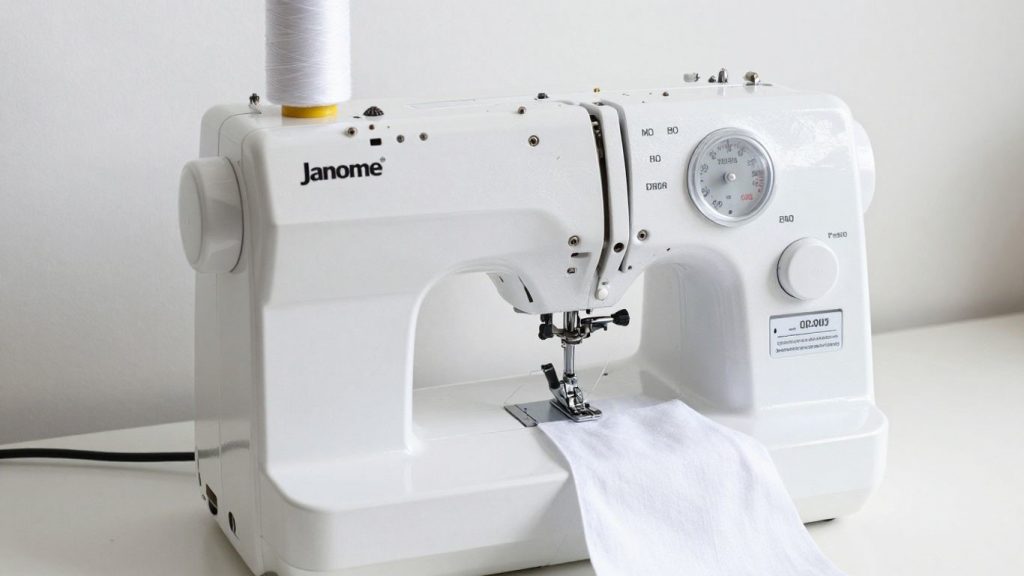
After spending some time with the Janome HD3000, I’ve put together a list of what I think are its biggest strengths and weaknesses. It’s a solid machine, no doubt, but like anything, it’s not perfect for everyone.
- Strong mechanical build feels stable and dependable for regular sewing.
- 18 built-in stitches cover the most useful everyday sewing needs.
- Simple stitch dial makes it easy for beginners to choose settings.
- Automatic needle threader saves time and reduces frustration.
- Adjustable presser foot pressure helps with thin and thicker fabrics.
- Good option for denim, canvas, home décor, crafts, repairs, and basic garment sewing.
- Quiet operation makes it more comfortable for home sewing sessions.
- Hard cover helps protect the machine when stored or moved.
- Not computerized — no touchscreen or digital stitch menu.
- Limited decorative stitch variety compared with computerized machines.
- Not the best option for advanced quilting or very large quilt projects.
- Heavier than many lightweight beginner sewing machines.
- May need the correct needle, thread, and slower speed for very thick fabric layers.
- Users who want hundreds of stitches may feel limited.
- Not a replacement for an industrial sewing machine.
Overall, the Janome HD3000 strikes a great balance between being a robust, reliable machine and being user-friendly. Its strengths lie in its durability, quiet operation, and the practical features that make sewing easier without being overly complicated.
The few drawbacks are mostly minor and don’t significantly detract from its overall performance as a solid, dependable sewing machine.
This level of practicality is often missing in heavily digital machines and is why many users prefer mechanical options over complex systems seen in mending machine vs sewing machine comparisons.
Who is the Janome HD3000 Best Suited For?
Well, who is the Janome HD3000 for? After spending some considerable time with this machine, I have a rather good idea of what goes on here.
This machine is a great option for anyone who is looking for a machine that can get the job done without any frills. With its ability to handle thicker fabrics, the HD3000 is definitely a good consideration to either get rid of the flimsy machines that can’t conquer thicker fabrics, or if you are just starting and would like something that isn’t overwhelming.
Here’s a breakdown of who I think will get the most out of it:
| User Type | Why It Fits | Best Projects |
|---|---|---|
| Beginners | Simple controls, practical stitch selection, and no confusing digital features to navigate. | Basic sewing, repairs, hems, beginner garments, and learning projects. |
| Intermediate Sewists | Better strength and durability than many starter machines while staying easy to control. | Garments, denim repairs, tote bags, home décor, and regular sewing projects. |
| Home Décor Sewists | Sturdy build and adjustable presser foot pressure handle thicker fabrics and layered materials well. | Curtains, pillow covers, cushion covers, canvas, and light upholstery projects. |
| Craft and Bag Makers | Handles medium-heavy fabrics better than many basic machines when paired with the right needle and thread. | Tote bags, fabric organizers, denim crafts, canvas projects, and layered seams. |
| Mechanical Machine Users | A good fit for sewists who prefer dials, simple controls, and fewer electronic parts. | Everyday sewing, long-term home use, and practical utility stitching. |
| Backup Machine Buyers | Works well as a dependable second machine for users who already own a computerized model. | Quick repairs, heavy fabric backup work, and simple daily sewing tasks. |
When it comes to handling a little bit of everything, from light cottons to harder fabrics such as leather, and love a machine that feels like it will last a long time, I believe you will be very satisfied with the Janome HD3000. It feels comfortable and strong, and that’s a wonderful thing to have when you are working on something.
Who is the Janome HD3000 Not Suited For?
While I think the Janome HD3000 is a fantastic machine for many people, it’s not the perfect fit for everyone. This probably isn’t for you if you’re interested in a sewing machine that is capable of all the digital wows and wow-wows. It’s a mechanical machine and not a computer screen. If you want hundreds of built-in decorative stitches and you want to control them from a touchscreen, then you’ll want to look elsewhere.
Also, I do not think this is for a quilting enthusiast. It can do some quilting, but it is not quite up to it. It’s not a big deal for some quilting methods, which require that exact needle position, but the needle won’t move to the left. More of a general-purpose machine for sewing, making clothes, and even thicker fabrics.
Here are a few other scenarios where I’d suggest considering other options:
| User Type | Why It May Not Fit | Better Alternative |
|---|---|---|
| Advanced Quilters | Does not offer the large throat space, quilting controls, or advanced features found on dedicated quilting machines. | A quilting-focused computerized machine with wide table support. |
| Decorative Stitch Lovers | 18 built-in stitches — practical but limited if you want hundreds of decorative options. | A computerized machine with a larger stitch library. |
| Digital Feature Users | No touchscreen, start/stop button, speed slider, or digital stitch programming. | A computerized sewing machine such as Brother CS7000X-style models. |
| Industrial-Level Sewists | Strong for home sewing, but not designed for professional industrial sewing all day. | An industrial or semi-industrial straight-stitch machine. |
| Ultra-Light Buyers | The sturdy build makes it less portable than very lightweight beginner machines. | A compact lightweight machine for travel or occasional repairs. |
| Embroidery Users | Does not include embroidery functions or built-in embroidery designs. | A sewing and embroidery combo machine. |
It’s important to remember that ‘not suited for’ doesn’t mean ‘bad’. It just means the machine’s strengths lie in different areas than what these specific users might need.
Comparison of Janome HD3000 with Other Sewing Machines
I always like to see how a new sewing machine compares to others when I’m viewing a mechanical machine, like the Janome HD3000. It can give me an idea of whether I am getting the best deal or if there is something else in the market that will cater to my needs.
When I heard about heavy-duty sewing machine reviews, I knew I had to compare the HD3000 with other popular sewing machines. And when I heard it was the best mechanical sewing machine for beginners, it was definitely the one I wanted to compare with. When comparing machines, it helps to also understand how different brands perform, especially in Brother vs Singer sewing machines discussions.
Janome HD3000 vs Brother ST371HD
The Janome HD3000 sewing machine caught my eye as I was searching for a reliable machine. It’s a real workhorse, and I’m grateful that it is mechanical, so I can do some basic maintenance on my own. I then ran into the Brother ST371HD and began to contemplate the comparison of the two.
Both machines are sold as “heavy-duty” and claim to be able to work on tougher fabrics. I have found, from my experience, the Janome HD3000 to be truly exceptional, thanks to its simplicity of use and the 18 stitches it provides. For most projects I do – be it a repair or a project in which I design and make clothes – that is enough. Also comes with this amazing automatic needle threader, which is a lifesaver for my eyes.
The Brother ST371HD, on the other hand, boasts 37 built-in stitches. That’s quite a jump from the Janome. It also includes a couple of extra feet, such as a walking foot and a free-motion/darning foot; these are a great addition for quilting or freehand embroidery. If you have a particular interest in those crafts, perhaps the ST371HD will be your choice.
The HD3000 seems a little tougher to build, and in my hands, it never lacks for a bit of juice, not even when wearing denim or canvas. The ST371HD is also a very good machine, but I do have the feeling that the plastic parts are not as sturdy as Janome’s. It is a small difference, but one that is certainly discernible when operating the machine at full effort.
I’ve learned that more stitches are better, but you rarely use all those that are available, and you are left with a collection of your favorites. Janome HD3000 hits the sweet-sweet spot for me; it’s not too much, it’s not too little.
Finally, if I’m doing many thick seams and don’t need anything too fussy, I tend to go with the Janome HD3000. If I had more interest in quilting and more decorative stitches right away, I might have to take a look at the Brother ST371HD. Well, for most of my heavy-duty sewing, I would have to go with the Janome.
Janome HD3000 vs Brother CS7000X
I was researching machines, and I kept finding Brother’s CS7000X, and I wanted to see how it compares to the Janome HD3000 machine. They are in the same price bracket, but they are certainly different.
The CS7000X is a computerized machine that can’t compare to the multitude of preprogrammed stitches and features the HD3000 lacks, since it is mechanical. For instance, the Brother has a start/stop button and an automatic needle threader so that you can sew without the foot pedal. That is neat if you have problems with foot control. It has an even larger number of stitches – more than 60, actually. That is a lot to say, but I wondered myself how many of those I would ever use. The HD3000 offers a bit more limited selection, just about 18 stitches, and they’re all pretty decent and useful for the majority of projects.
I really didn’t like the build of the CS7000X. Inside is a cool metal frame, but the plastic shell was a bit of a dud. I’ve heard of some accessory compartments breaking, which is not ideal. The HD3000, however, is more akin to a tank. Yes, it’s heavier, but it feels more substantial and durable. I have been using it for years, and it has never caused me any problems.
The other is the buttonholes. The CS7000X is a one-step, auto buttonhole, which is awesome. But a few said that they could get a bit messy if they left the settings as they are. The buttonhole on the HD3000 is handmade, but simple and tidy. It’s a bit more work, but I like the control.
The Brother CS7000X has several digital bells and whistles, which may be a plus for a user who desires a great deal of stitch choice and convenience features, such as a start/stop button. But, to be honest, I discovered the Janome HD3000 was much more powerful and reliable for normal sewing and heavier material. For me, the simplicity of the HD3000 is a good thing – there’s not so much to mess up, and it’s like it’s built for a lifetime.
So the CS7000X was a more stitch-heavy machine with some modern amenities, but for durability and all-around sewing, I felt that the HD3000 was the better option, particularly for heavier fabrics.
Janome HD3000 vs Singer HD500
The Janome HD3000 vs Singer HD500 comparison mainly comes down to build quality and stitching consistency. Janome HD3000 is known for its smoother, more precise stitching and slightly quieter operation, making it a strong choice for users who want long-term reliability. It also handles multiple fabric layers with better control, which is useful for quilting and medium-heavy projects.
On the other hand, the Singer HD500 focuses more on speed and power at a lower price point. It performs well for basic heavy fabrics like denim and canvas, but it may not feel as refined during detailed stitching compared to Janome. For beginners or budget-focused users, Singer HD500 is a practical option, while Janome HD3000 is better suited for those who prioritize durability and professional-level stitch quality.
Conclusion: Is the Janome HD3000 Worth Buying in 2026?
I’ve been working for years with the Janome HD3000, and I can tell you that I will continue to use it through 2026 and beyond, and will highly recommend it! A rugged machine that will cut through numerous fabrics with ease and without fuss. If you’re seeking a solid, dependable, low-maintenance, and budget-conscious option, you can’t beat the HD3000.
It may not have the same computer-enhanced options as the newer models, but it is durable, easy to use, and performs very well, and is a good value for the beginner and expert sewer alike. It is the type of machine that you can rely on for years and, possibly, pass on. If you’re looking for a reliable sewing machine that simply does its job, then the Janome HD3000 still has its spot.
It remains a solid alternative to both beginner machines and more complex systems, especially when compared with machines in best sewing machines for beginners guides.
Frequently Asked Questions
Is the Janome HD3000 good for thick fabrics like denim or leather?
Yes, absolutely. I’ve used it on thick materials, and it goes through them pretty well. It has a strong motor and a sturdy build that helps it handle tougher fabrics without much fuss. Just make sure you’re using the right needle for the job.
Can a beginner use the Janome HD3000?
Definitely! It’s one of the best machines for beginners because it’s not overly complicated. The manual is easy to follow, and the basic functions are straightforward. You won’t outgrow it too quickly, either.
How many stitches does the Janome HD3000 have?
It comes with 18 built-in stitches. This includes all the basic stitches you’ll need for most sewing, like straight stitch, zig-zag, and buttonholes. It’s a good number without being too many to confuse you.
Does the Janome HD3000 have an automatic needle threader?
Yes, it does! This is a really handy feature that makes threading the needle much easier, especially if you have trouble with your eyesight. It saves a lot of frustration.
Is it hard to maintain the Janome HD3000?
Not at all. Since it’s a mechanical machine without a computer inside, basic maintenance like cleaning and oiling is pretty simple. I’ve been able to do it myself for years without needing to take it for professional service.
What’s the difference between the white and black editions of the HD3000?
From what I’ve seen, there isn’t a big functional difference. The main thing is the color. Some people find the black machine a bit harder to see on, especially in lower light, but others prefer the look. Functionally, they’re pretty much the same.

4 Comments