Brother ST371HD Review 2026: Features, Heavy-Fabric Performance, Pros, Cons & Alternatives
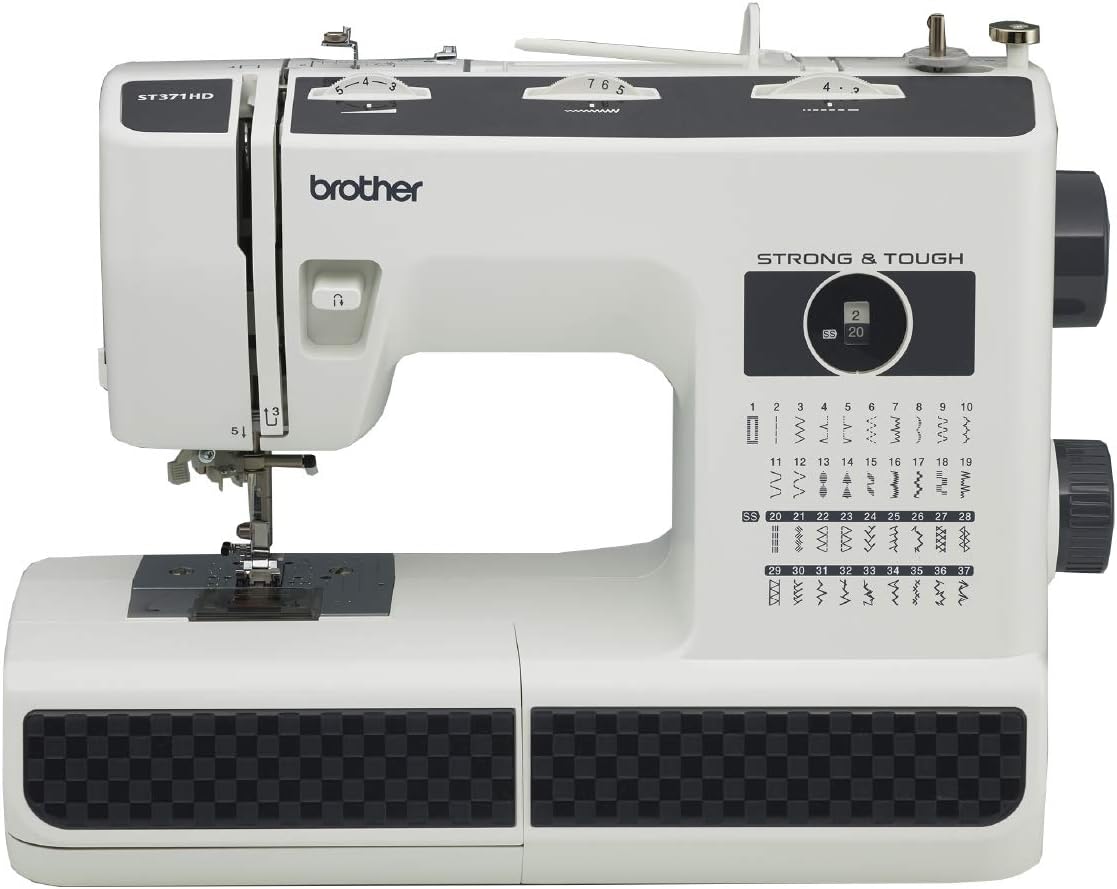
The Brother ST371HD is a mechanical heavy-duty home sewing machine designed for everyday repairs, garment sewing, denim hems, canvas, outdoor fabrics, and lighter materials without the complexity of a computerized interface. Its core strengths are 37 built-in stitches, a one-step auto-size buttonhole, 800 stitches per minute maximum speed, a metal needle plate, six included presser feet, manual tension control, a Quick-Set top-loading bobbin, free-arm sewing, and drop feed for free-motion work.
At about 14.3 pounds, it is portable enough to store between projects while still feeling more substantial than many entry-level machines. In this review, I focus on stitch quality, fabric feeding, setup, heavy-fabric limits, beginner usability, long-term value, and how the ST371HD compares with stronger or more feature-rich alternatives in 2026.
Brother ST371HD Sewing Machine
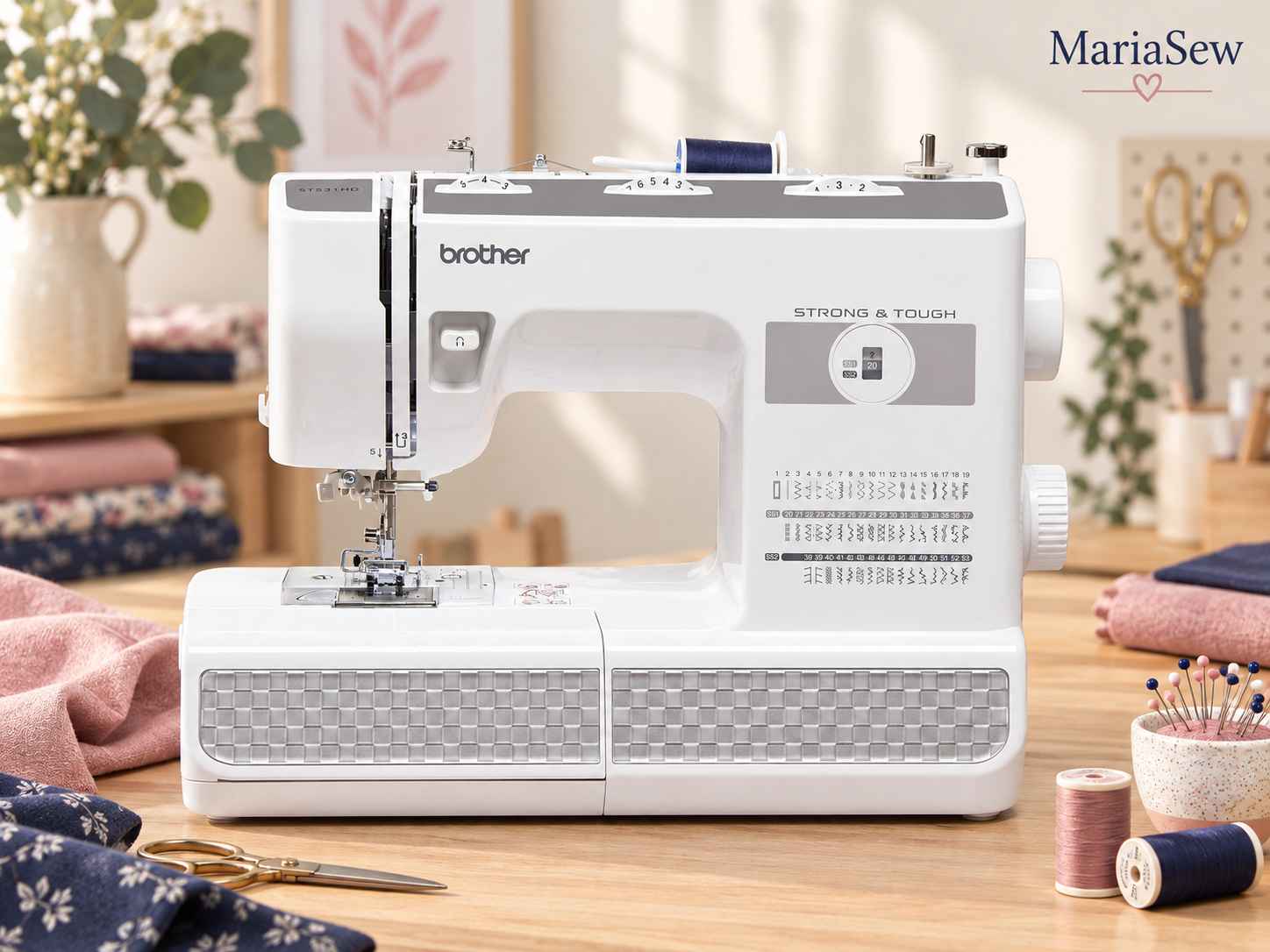
The Brother ST371HD hits a lovely balance of mechanical simplicity and real range. With 37 built-in stitches, a one-step buttonhole, six included feet, and a metal needle plate, it sews cleanly through everything from lightweight silk to denim and canvas, then packs away by its carry handle at just 14.3 pounds. It tops out at 800 stitches per minute and skips electronic extras, but as one versatile home machine for mixed-fabric sewing, it is an easy recommendation.
What We Loved
- 37 genuinely useful built-in stitches
- One-step auto-size buttonhole
- Six practical feet included
- Metal needle plate and automatic needle threader
- Portable at 14.3 lb with a built-in carry handle
- Strong from lightweight silk to denim and canvas
Keep In Mind
- 800 SPM, slower than the SINGER 4423 and 4432
- No electronic speed control or needle up and down
- Not made for true industrial heavy-duty work
Verdict based on hands-on testing and verified owner reviews. Prices change often. As an Amazon Associate, MariaSew earns from qualifying purchases, at no extra cost to you.
Key Takeaways
- The machine offers 37 built-in stitches for utility, stretch, blind hem, decorative sewing, zipper work, and buttonholes.
- It reaches 800 stitches per minute, providing controlled sewing speed for everyday home projects.
- You can adjust the stitch width up to 7 mm and length up to 5 mm for different sewing techniques.
- Brother includes six sewing feet for zigzag, nonstick, blind stitch, zipper, buttonhole, and button sewing.
- The metal needle plate and heavyweight needles help with smooth feeding and thicker fabrics.
- The machine has no speed slider or programmable needle up/down, so speed control mainly comes through the foot pedal.
- The free arm and drop-feed feature help with cuffs, sleeves, narrow hems, darning, and free-motion sewing.
- At roughly 14.3 pounds, the ST371HD is portable enough to move or store without feeling too lightweight.
For me, the strongest reason to buy it is the balance of mechanical simplicity and useful range. The strongest reason to skip it is that several competitors provide either more speed, stronger build feel, or more electronic control for a modest step up in price.
What Is the Brother ST371HD?
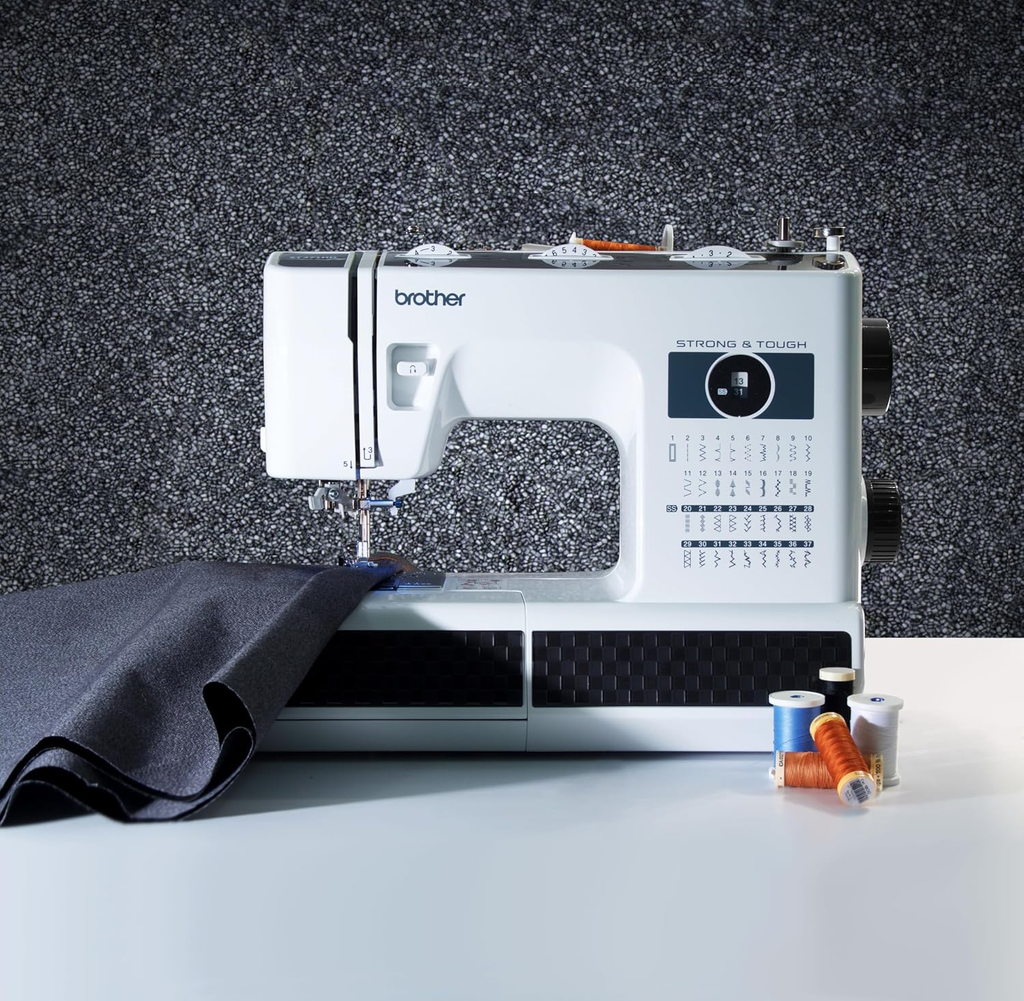
The Brother ST371HD belongs to Brother’s Strong & Tough line and is built as a full-size mechanical domestic sewing machine. It uses direct stitch selection and manual thread tension rather than an LCD menu, automatic tension, or programmable sewing controls.
Brother currently markets it for everyday sewing and mending across fabric weights ranging from lightweight silks to heavier outdoor materials. The metal needle plate, included heavyweight needles, nonstick foot, and spring-action zigzag foot are the clearest signs that Brother expects users to move beyond lightweight cotton.
That said, ‘heavy duty’ should not be read as ‘industrial.’ I would use the ST371HD for denim hems, canvas bags, garments, household repairs, vinyl with the nonstick foot, and layered home projects. I would not use it as a production machine for thick leather, dense webbing, or continuous upholstery work.
For readers still deciding between traditional and computerized controls, my guide to mechanical vs. computerized sewing machines explains the practical differences.
Brother ST371HD Features: What Each One Does in Real Sewing
The ST371HD is not packed with electronics, so each feature needs to earn its place through practical sewing. I focus on the functions that change fabric control, project range, setup time, or everyday convenience.
37 Built-In Utility and Decorative Stitches
The machine includes 37 built-in stitches covering basic construction, stretch sewing, blind hems, decorative work, and specialty tasks. I rarely need every decorative pattern, but the wider selection gives the ST371HD more flexibility than many heavy-duty mechanical machines with 14 to 23 stitches.
One-Step Auto-Size Buttonhole
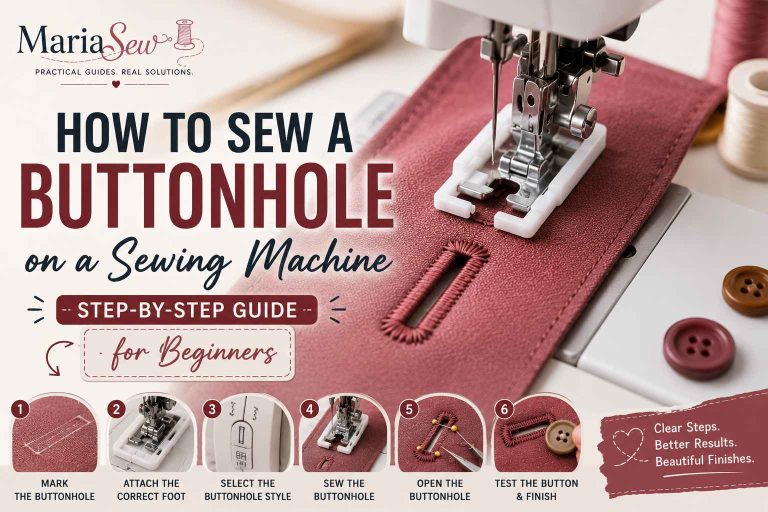
The one-step buttonhole is a meaningful garment feature because it removes the repeated manual repositioning of a four-step system. I still test buttonholes on a stabilized scrap first, especially on denim or bulky plackets where feeding can change.
800 Stitches per Minute
It has a maximum sewing speed of 800 SPM. That is fast enough for ordinary home sewing, but slower than the 1,100-SPM SINGER 4423 and 4432, so the ST371HD feels more controlled than production-oriented.
7 mm Maximum Stitch Width
A 7 mm maximum stitch width gives zigzag and decorative stitches enough presence for appliqué, edge finishes, stretch sewing, and creative work. It also gives more side-to-side range than many older 5 mm mechanical machines.
5 mm Maximum Stitch Length
The 5 mm maximum stitch length is useful for long basting stitches, topstitching, and heavier fabrics where a longer stitch often looks cleaner. Normal garment seams will use shorter settings, so the value is having room to adjust rather than using 5 mm all the time.
Manual Thread Tension
The ST371HD uses manual upper-thread tension, which means I adjust it when fabric, thread, needle, or stitch type changes enough to affect balance. I like that direct control on a mechanical machine, but beginners should test on scraps instead of changing the dial randomly.
If tension problems appear, our guide on how to adjust sewing machine tension covers the troubleshooting process in more detail.
Metal Needle Plate
Brother uses a metal needle plate with engraved seam guides to support smooth feeding and more accurate seam placement. It helps with durability around the needle area, but it should not be confused with proof that the entire machine is an all-metal industrial design.
Heavyweight Needles Included
Brother includes #11, #14, and #16 needles, which makes it easier to match the needle to lightweight, medium, and heavier home-sewing fabrics. The included needles do not make every thick material safe to sew, so I still match needle type to the fabric and project.
Six Included Presser Feet
The box includes spring-action zigzag, nonstick, blind stitch, zipper, buttonhole, and button-sewing feet. That is a practical mix for garments, repairs, vinyl or sticky surfaces, buttons, and decorative work without immediately buying extra feet.
Quick-Set Drop-In Top Bobbin
The top-loading bobbin is easier for me to monitor and access than a front-loading system. Correct bobbin direction still matters, but the clear cover and Quick-Set path make routine setup and troubleshooting straightforward.
Easy Needle Threader
The built-in needle threading system reduces eye strain and speeds up thread changes. I treat it as a convenience feature, not something to force if the needle is bent, too small, or not in the correct position.
Free Arm
Removing the accessory area exposes the free arm for cuffs, sleeves, trouser hems, children’s clothing, and other tubular projects. That makes the ST371HD more useful for garment alterations than a fixed flatbed machine.
Drop Feed
The feed dogs can be lowered for free-motion sewing, darning, and button sewing. This expands the machine beyond ordinary feed-driven seams, although free-motion quality still depends heavily on hand speed, presser foot choice, and practice.
LED Work Light
The built-in LED illuminates the needle area for threading and seam placement. It is useful for normal sewing, though detailed dark-fabric work may still benefit from an additional task light.
Variable Needle Position
The machine supports needle-position adjustment for tasks such as zipper insertion, topstitching, and edge stitching. It is less granular than electronic multi-position systems on higher-end machines, but it is enough for common garment work.
Reverse Stitching and Built-In Thread Cutter
A reverse control secures ordinary seams at the beginning and end, while the built-in manual thread cutter trims thread without reaching for scissors. These are simple features, but they keep the mechanical workflow efficient.
Built-In Carry Handle and Accessory Storage
The integrated handle makes the ST371HD realistic to move from a shelf to a sewing table, and onboard accessory storage keeps basic feet and tools together. At 14.3 pounds it is portable, but still large enough to behave like a full-size home machine.
Brother ST371HD Full Specifications
The feature explanations above show how the machine behaves. The table below collects the current manufacturer specifications in one place so you can compare the ST371HD with other heavy-duty home machines.
| Feature / Specification | Current Detail | What It Means in Practice |
|---|---|---|
| Machine type | Mechanical domestic heavy-duty sewing machine | Direct physical controls; no computerized stitch menu |
| Built-in stitches | 37 | Utility, stretch, blind hem, decorative and specialty sewing |
| Buttonholes | 1 one-step auto-size style | Simpler repeatable garment buttonholes |
| Maximum sewing speed | 800 SPM | Controlled home-sewing speed |
| Maximum stitch width | 7 mm | Useful zigzag and decorative range |
| Maximum stitch length | 5 mm | Longer basting/topstitching options |
| Thread tension | Manual | Direct user adjustment |
| Needle threading | Built-in automatic/easy threader | Faster setup and less eye strain |
| Bobbin | Quick-Set top drop-in | Easy access and thread monitoring |
| Feed dogs | 6 feed-dog points | Standard fabric feeding |
| Drop feed | Yes | Darning, button sewing and free-motion work |
| Free arm | Yes | Cuffs, sleeves and trouser hems |
| Included feet | 6 | Zigzag, nonstick, blind stitch, zipper, buttonhole, button sewing |
| Needle up/down key | No | No programmable needle-stop position |
| Speed slider | No | Speed controlled primarily through foot pedal |
| Automatic thread cutter | No | Threads trimmed manually |
| Lighting | LED | Needle-area illumination |
| Weight | 14.3 lb | Portable full-size machine |
| Dimensions | 12.21 x 16.10 x 7.87 in | Compact full-size footprint |
| Current official U.S. listing | $239.99 on Brother USA, checked Sep. 2026 | Price can change by retailer and bundle |
I would pay the most attention to sewing speed, stitch range, included feet, manual tension, weight, free-arm access, and the lack of electronic speed control. Those details affect the daily experience more than the total number of decorative stitches.
How I Test Sewing Machines at MariaSew
I personally use the sewing machines I recommend before I publish a verdict. I have more than 12 years of hands-on sewing experience, and I do not score a machine from the box, stitch chart, or manufacturer claims alone. I thread it from scratch, wind and load the bobbin, change feet, adjust settings, sew real projects, and pay attention to the problems that appear after the first few seams.
For a mechanical heavy-duty machine like the Brother ST371HD, I test straight stitching on quilting cotton, garment seams, denim hems, canvas layers, lightweight fabric, stretch fabric, buttonholes, zipper insertion, blind hems, free-arm work, and free-motion stitching. I also test low-speed pedal control, full-speed stability, bulky seam crossings, needle threading, bobbin access, tension adjustment, reverse stitching, noise, vibration, portability, cleaning, and how easy it is to recover from a jam or setup mistake.
- Stitch quality. I inspect both sides of the seam for balanced locking, skipped stitches, puckering, loose loops, inconsistent stitch length, and changes at higher speed.
- Heavy-fabric handling. I test ordinary denim and canvas layers, then bulky seam transitions, while using the correct needle and slowing down instead of forcing the machine.
- Lightweight-fabric control. I switch to fine needles and lighter fabric to see whether feeding and tension remain predictable rather than judging the machine only on thick material.
- Garment functions. I test buttonholes, zippers, blind hems, cuffs, sleeves, stretch stitches, and topstitching because those are the jobs that reveal whether the included feet are genuinely useful.
- Free-motion and feed control. I lower the feed dogs for darning or free-motion practice and check how smoothly the machine responds at controlled pedal speed.
- Ownership experience. I consider threading, bobbin loading, cleaning, accessory storage, weight, portability, manual clarity, service access, and whether the machine feels easy to live with after repeated use.
That testing approach follows MariaSew’s published standard: every recommended sewing machine is personally used before publication.
Brother ST371HD Real-World Sewing Performance
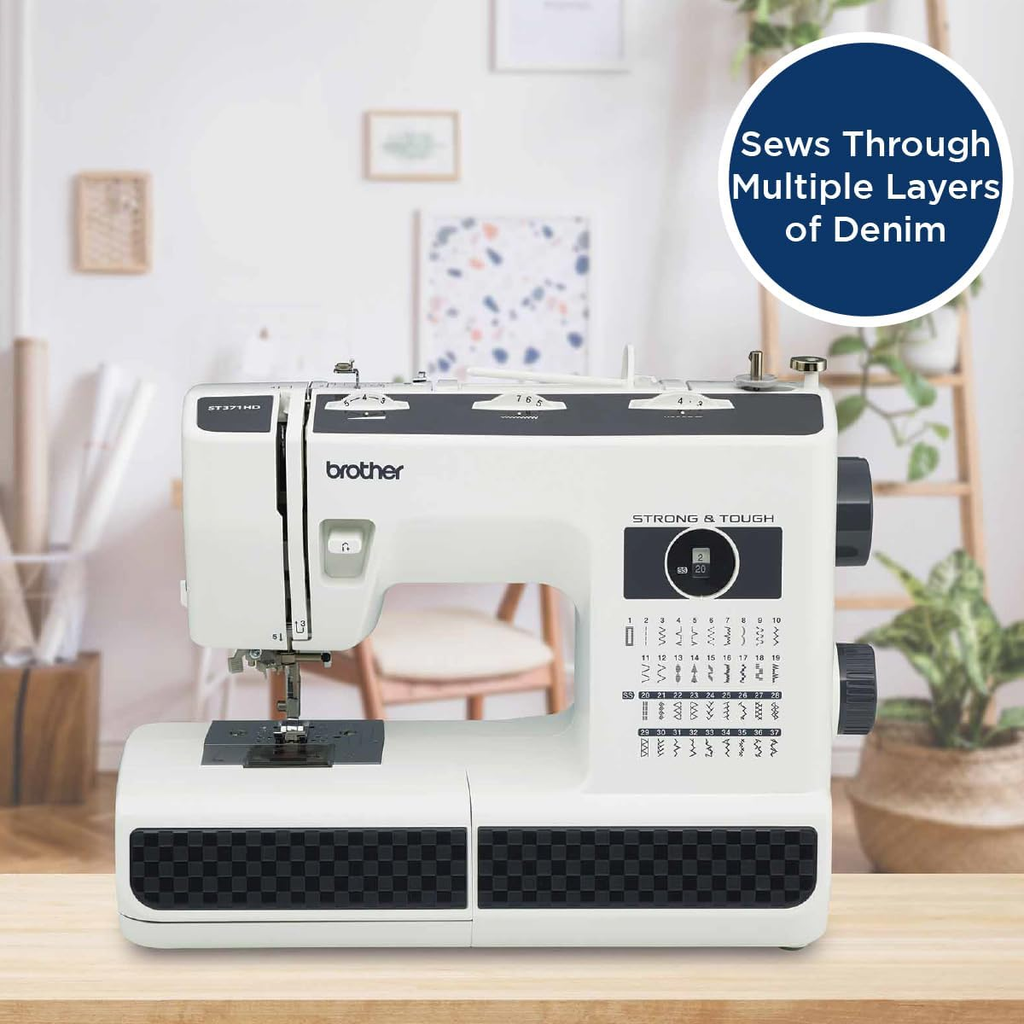
The heavy-duty label matters only if the machine behaves predictably across the fabrics people actually sew at home. I judge the ST371HD by how it transitions between ordinary cotton, lighter garments, stretch fabric, and heavier seam stacks.
Understanding the machine’s components also helps when diagnosing feeding or stitching problems, so our guide to sewing machine parts is useful for beginners learning what each component does.
Straight Stitch on Cotton and Everyday Wovens
On quilting cotton and ordinary woven fabric, the ST371HD is at its easiest. Straight seams feed predictably, the manual tension is simple to tune, and the 800-SPM ceiling feels fast enough without making the pedal overly sensitive.
For garment construction and repairs, this is the kind of work the machine can do all day at home. The main setup variables are still needle condition, correct threading, seam allowance, and consistent fabric guidance.
Denim Hems and Layered Seams
Denim is where I slow down and separate marketing from reality. The ST371HD handles ordinary jeans hems and layered garment denim well with a sharp jeans needle, longer stitch length, and a level presser foot at bulky transitions.
I do not force multiple dense seam allowances under the foot at full speed. If the foot is climbing a thick hump, I hand-wheel the first stitch when needed and let the machine feed rather than pulling the fabric from behind.
For anyone specifically learning this technique, our guide on how to hem jeans with a sewing machine covers the process in greater detail.
Canvas, Outdoor Fabric, and Vinyl
Canvas and common outdoor fabrics are realistic ST371HD projects when the layers remain within domestic-machine limits. The metal needle plate supports smooth feeding, and the included nonstick foot is useful on vinyl or coated surfaces that can drag under a standard foot.
I would not treat heavy upholstery vinyl, dense leather, thick webbing, or repeated bag seams as guaranteed work. The machine is versatile for home projects, but not a substitute for an industrial walking-foot machine.
If leather is part of your sewing plans, see our guide on how to sew leather before deciding whether this machine fits your projects.
Lightweight Fabrics
Brother specifically positions the machine for fabrics down to lightweight silks, which is useful because a true all-round home machine should not only be good at denim. With a fine needle, stable seam start, and lighter tension when necessary, the ST371HD can sew delicate wovens without needing a second machine.
The most common mistake is leaving a heavy needle installed after denim and then blaming the machine for pulls or puckering on fine fabric. Needle choice matters as much as the stitch setting.
Stretch Fabrics and Knits
The built-in stretch stitches give the ST371HD a useful garment range beyond woven fabric. I switch to a ballpoint or stretch needle when appropriate, test seam stretch on a scrap, and avoid pulling the knit through the machine.
A mechanical machine can sew knits very well, but it does not automatically correct technique. Wavy seams usually point me toward presser-foot pressure, feeding, needle choice, stitch selection, or fabric handling before I blame the motor.
For more demanding knit projects, understanding the difference between a regular sewing machine and an overlocker is useful, which is why our guide to serger vs. sewing machine is worth reading.
Buttonholes, Zippers, and Blind Hems
The included buttonhole, zipper, and blind-stitch feet make the ST371HD much more useful for garments than a bare-bones repair machine. The one-step buttonhole is especially convenient when making several matching openings on a shirt, skirt, bag, or home project.
I stabilize buttonhole areas and test the first one on a matching fabric stack. For zippers and blind hems, the variable needle position and dedicated feet give enough control for normal home garment work.
Free-Motion Sewing and Darning
Lowering the feed dogs opens the machine to darning, button sewing, and free-motion practice. At that point the sewist controls fabric movement, so smooth results depend on hand speed and pedal rhythm rather than the feed dogs.
The ST371HD can do this work, but it is not a dedicated quilting platform with a large throat space, speed slider, needle-down button, or automatic thread cutter. Those missing conveniences matter more as quilting projects become larger.
Sewists focused primarily on quilting may want to compare it with our recommendations for the best quilting sewing machines.
Is the Brother ST371HD Good for Beginners?
Yes, especially for a beginner who prefers physical controls and wants a machine that can grow into garments, repairs, and heavier household projects. The stitch selection is broad without becoming a 100-plus-stitch menu, and the top-loading bobbin, needle threader, free arm, and one-step buttonhole reduce several common frustrations.
The learning curve is mostly mechanical: threading, bobbin placement, tension, stitch length and width, presser-foot choice, and pedal control. The machine does not have a speed limiter, so a nervous beginner should practice slow pedal control before sewing curves or small details.
If you are still choosing your first machine, our guide to the best sewing machines for beginners can help compare the ST371HD with other beginner-friendly options.
Who Should Buy the Brother ST371HD?
The ST371HD is best for a home sewist who wants one mechanical machine for regular practical sewing instead of a specialized quilting or embroidery platform.
- Beginners who want a machine to grow into. The controls are direct, but the stitch range and included feet go well beyond emergency mending.
- Garment makers and alteration sewists. One-step buttonholes, zipper and blind-hem feet, free arm, stretch stitches, and variable needle positioning cover everyday clothing work.
- Home sewists working with mixed fabric weights. The same machine can move from lightweight wovens to denim, canvas, and outdoor fabrics with the correct setup.
- Sewists who prefer mechanical controls. There is no need to navigate an LCD menu, memory system, or computerized settings.
- People who store the machine between projects. The 14.3-pound weight and built-in handle make it practical to move without buying a mini machine.
If those priorities sound familiar, the ST371HD is a coherent package. Its value comes from versatility and simplicity rather than being the fastest or heaviest machine in the category.
Beginners who are still learning the fundamentals can also benefit from our guide on how to learn sewing before moving into more advanced projects.
Who Should Not Buy the Brother ST371HD?
I would skip the ST371HD if the features you care about are specifically electronic, production-oriented, or industrial. The machine is intentionally traditional.
- Sewists who want a speed slider. The ST371HD relies on foot-pedal control rather than an electronic maximum-speed setting.
- Quilters who want needle down and automatic thread cutting. Those workflow features are more common on computerized quilting machines.
- High-volume heavy-fabric sewists. SINGER’s 1,100-SPM heavy-duty models or a more robust mechanical machine may feel better for repeated thick work.
- Embroidery users. The ST371HD does decorative stitches, not hoop embroidery or imported designs.
- Industrial leather or upholstery users. This remains a domestic sewing machine and should not be bought as a substitute for industrial equipment.
A good purchase is not the machine with the longest feature list. It is the machine whose limitations do not conflict with the projects you make most often.
Brother ST371HD Pros and Cons
The ST371HD’s strengths are practical and easy to use. Its weaknesses are mostly what Brother leaves out to keep the machine mechanical and affordable.
Pros of Brother ST371HD
- 37 useful built-in stitches. More creative and garment flexibility than many mechanical heavy-duty competitors.
- One-step buttonhole. Much easier for repeated garment openings than a four-step system.
- Strong accessory package. Six included feet cover zippers, hems, buttons, sticky surfaces, buttonholes, and general sewing.
- Good mixed-fabric versatility. Brother specifically supports use from lightweight silks through heavier home fabrics.
- Portable full-size design. The built-in handle and 14.3-pound weight make storage and transport realistic.
I especially like that none of these advantages depends on a screen or complicated setup. They are useful the moment the machine is threaded correctly.
Cons of Brother ST371HD
- Only 800 SPM. It is slower than SINGER 4423 and 4432, which reach up to 1,100 SPM.
- No electronic speed control or needle up/down. Precision work depends more heavily on foot-pedal control and handwheel use.
- Not an industrial heavy-duty machine. Dense leather, repeated upholstery stacks, and production work remain outside its intended domestic role.
For occasional denim and mixed home sewing, those compromises are reasonable. For frequent heavy work or advanced quilting workflow, I would compare alternatives before buying.
Brother ST371HD vs. Competitors: Which One Should You Buy?
The five alternatives above are not interchangeable. The quickest way to narrow the list is to decide whether your priority is speed, mechanical build, computerized precision, or stitch variety.
I would choose the ST371HD as the balanced value pick, ST531HD as the mechanical Brother upgrade, ST150HDH for computerized control, SINGER 4423 for simple speed, SINGER 4432 for speed plus more stitches, and Janome HD3000 for a heavier premium mechanical platform.
- Best balanced value: Brother ST371HD.
- Best Brother mechanical upgrade: Brother ST531HD.
- Best computerized alternative: Brother ST150HDH.
- Best for maximum mechanical speed: SINGER Heavy Duty 4423.
- Best SINGER balance of speed and stitch variety: SINGER Heavy Duty 4432.
- Best premium mechanical build: Janome HD3000.
The table below is a final reference after the detailed model sections above. Prices can change, so I compare the stable specifications and workflow differences rather than ranking by a temporary sale.
How the Brother ST371HD Compares
The ST371HD next to five popular heavy-duty rivals, so you can see exactly where it wins and where another machine fits better.
| Machine | Type | Stitches | Max Speed | Feet | Weight | Best For |
|---|---|---|---|---|---|---|
| Brother ST371HDReviewed here ★ MariaSew 8.5/10 |
Mechanical | 37 | 800 SPM | 6 | 14.3 lb | Value + stitch variety |
| Brother ST531HD ★ MariaSew 8.6/10 |
Mechanical | 53 | 800 SPM | 6 | 14.3 lb | Step up for more stitches |
| Brother ST150HDH ★ MariaSew 8.8/10 |
Computerized | 50 | 850 SPM | 9 | 10.1 lb | Speed control + quilting |
| SINGER Heavy Duty 4423 ★ MariaSew 8.7/10 |
Mechanical | 23 | 1,100 SPM | 4 core feet | 14.6 lb | Faster on thick fabric |
| SINGER Heavy Duty 4432 ★ MariaSew 8.8/10 |
Mechanical | 32 | 1,100 SPM | 4 core feet | 14.6 lb | Speed + more stitches |
| Janome HD3000 ★ MariaSew 9.0/10 |
Mechanical | 18 | Up to 860 SPM | Multiple feet | 18.7 lb | Premium mechanical feel |
“SPM” = stitches per minute. The Brother ST371HD (reviewed here) leads on stitch variety and value; step up to the SINGER 4423/4432 for faster sewing on thick fabric, or the Janome HD3000 for a heavier, premium build. Specs from manufacturer listings; verify current details before buying.
For most home sewists, I would not pay for an upgrade unless the alternative solves a specific ST371HD limitation. More speed, speed control, stronger construction, or presser-foot-pressure adjustment are real reasons. A different brand name by itself is not.
If you are comparing brands rather than individual models, our Janome vs. Brother sewing machines guide provides another useful point of comparison.
Brother ST531HD vs. Brother ST371HD
The Brother ST531HD is a strong alternative to the Brother ST371HD if you want more stitch options while keeping a similar mechanical sewing experience. With 53 built-in stitches compared with the ST371HD’s 37, it offers greater flexibility for garment sewing, decorative projects, quilting, and everyday repairs.
Both models are designed for home sewists who need dependable performance on thicker fabrics. However, the ST531HD makes more sense if stitch variety is a priority, while the ST371HD remains the simpler value-focused choice for basic and heavy-duty sewing.
You can also read our detailed Brother ST531HD review for its individual performance and features.
Final Verdict: Choose the ST531HD for more stitch versatility. Choose the ST371HD if you want better value without needing 53 stitches.
Brother ST150HDH vs. Brother ST371HD
The Brother ST150HDH takes a different approach from the mechanical ST371HD by offering computerized controls, 50 built-in stitches, and adjustable sewing speed. This makes it appealing for sewists who want more control over stitch selection, quilting, and precision sewing without relying entirely on mechanical controls.
Our Brother ST150HDH review goes deeper into the model’s computerized features and performance.
The ST371HD is easier to operate for users who prefer traditional dials and straightforward controls. The ST150HDH is lighter and adds computerized convenience, while the ST371HD offers a more familiar mechanical sewing experience for everyday projects and thicker fabrics.
Final Verdict: Choose the ST150HDH for computerized control and speed adjustment. Choose the ST371HD for simple, traditional mechanical operation.
SINGER Heavy Duty 4423 vs. Brother ST371HD
The SINGER Heavy Duty 4423 is one of the strongest competitors to the Brother ST371HD for sewists who prioritize sewing speed and straightforward mechanical performance. Its 1,100 stitches-per-minute maximum speed is substantially higher than the ST371HD’s 800 SPM, making it attractive for users who frequently sew long seams and larger projects.
The Brother ST371HD counters with 37 built-in stitches, giving it more stitch variety than the 4423’s 23-stitch setup. For beginners and everyday home sewing, the Brother offers greater flexibility, while the SINGER is better suited to users who value faster mechanical sewing.
See our SINGER Heavy Duty 4423 review for a closer look at its heavy-fabric performance.
Final Verdict: If speed on long seams matters most to you, the 4423 wins. If you’d rather have more stitches and a broader accessory set to grow into, stick with the ST371HD.
SINGER Heavy Duty 4432 vs. Brother ST371HD
The SINGER Heavy Duty 4432 combines a 1,100 SPM maximum speed with 32 built-in stitches, making it a practical alternative to the Brother ST371HD. It is particularly appealing for sewists who work on frequent sewing projects and want a fast mechanical machine with more stitch options than the SINGER 4423.
The ST371HD still offers more built-in stitches at 37 and provides a strong balance between everyday sewing, garment projects, repairs, and thicker fabrics. The choice largely comes down to whether you value SINGER’s higher sewing speed or Brother’s additional stitch variety.
Our SINGER 4432 review covers its features and performance in more detail.
Final Verdict: Choose the SINGER 4432 for faster sewing and solid stitch variety. Choose the ST371HD for a more balanced combination of versatility and value.
Janome HD3000 vs. Brother ST371HD
The Janome HD3000 is a heavier premium mechanical sewing machine that appeals to sewists who prioritize a substantial machine platform and controlled mechanical operation. At around 18.7 pounds, it is considerably heavier than the 14.3-pound Brother ST371HD and is designed for users who want a more solid-feeling machine for regular home sewing.
See our Janome HD3000 review for a deeper comparison of its build and sewing performance.
The Brother ST371HD offers considerably more built-in stitches, with 37 compared with the Janome’s 18, while remaining lighter and easier to move around. Janome is the better choice for buyers who value a heavier mechanical build, whereas Brother provides more stitch versatility for the money.
Final Verdict: The HD3000 is the right call if a heavier, more planted mechanical feel matters more to you than stitch count. For most home sewists, though, the ST371HD’s lighter build and broader stitch range make it the easier machine to live with day to day.
5 Best Alternatives to the Brother ST371HD in 2026
The original ST371HD is not the only machine in this price-and-purpose range. I would compare it with these five models because each solves a different limitation: more stitches, more speed, a stronger mechanical feel, or computerized control.
I have personally tested the models below through MariaSew’s normal review process, and I also checked the current manufacturer specifications before writing this comparison. The point is not to create five winners; it is to show which model fits which kind of sewist.
1. Brother ST531HD – Best Brother Mechanical Upgrade
The Brother ST531HD is the most natural step up if you like the ST371HD’s mechanical layout but want more stitch variety and a more reinforced heavy-duty package. It has 53 built-in stitches, one one-step buttonhole, six included feet, an automatic needle threader, a metal frame, a metal needle plate, a finger guard, and an 800-SPM maximum speed.
MariaSew hands-on review: Brother ST531HD Review
Brother ST531HD can sew through up to six layers of denim, which gives it a clearer manufacturer-backed heavy-fabric claim than the ST371HD. I would choose it for a sewist who wants to stay mechanical and within Brother’s Strong & Tough family, but wants the more robust construction and broader stitch menu.
Pros
- 53 built-in stitches. More utility and decorative options than the ST371HD.
- Metal frame and metal needle plate. A stronger construction story for frequent heavy home sewing.
- Up to six layers of denim claim. Brother directly documents this capability on the current product page.
- Six practical feet. The included set covers the same broad garment and utility tasks.
- Finger guard included. Useful for beginners, teaching settings, or sewists who value added needle-area protection.
Cons
- Still limited to 800 SPM. The upgrade does not add more top speed.
- Still no speed slider or programmable needle down. It remains a traditional mechanical workflow.
- More stitches than some sewists need. If you mostly straight stitch and hem, the ST371HD may already be enough.
Final Verdict
Choose the ST531HD if you want the ST371HD idea with a sturdier frame and more stitch variety. It is the cleanest Brother mechanical upgrade without moving to a computerized machine.
2. Brother ST150HDH – Best Computerized Brother Alternative
The Brother ST150HDH changes the workflow completely because it is computerized. It has 50 built-in stitches, five auto-size buttonhole styles, a backlit LCD, 850-SPM maximum speed, needle up/down, start/stop sewing, speed control, a seven-point box-feed design, and nine included feet including a walking foot and quarter-inch piecing foot.
MariaSew hands-on review: Brother ST150HDH Review
I would choose it over the ST371HD for quilting, precision garment work, or a beginner who wants to cap the maximum sewing speed. It is lighter at about 10.1 pounds and has a 6.4 x 4.1-inch needle-to-arm workspace, so it also works well for someone who wants a portable heavy-duty-style computerized machine.
Pros
- Computerized speed control. A speed slider makes slow, precise sewing easier than pedal-only control.
- Needle up/down and start/stop. Useful for quilting, pivoting, and detailed work.
- 50 stitches and five buttonholes. More programmed options than the ST371HD.
- Nine included feet. Walking and quarter-inch feet make the package more quilting-friendly.
- Seven-point box feed. Designed for smoother feeding across fabric weights.
Cons
- More complex than a mechanical machine. The LCD and electronic controls add a learning layer some sewists do not want.
- Electronics can require specialized repair. Board or sensor faults are more complex than purely mechanical control issues.
- Higher price than the ST371HD. The added convenience only pays off if you use the computerized features.
Final Verdict
Choose the ST150HDH if speed control, needle up/down, quilting feet, and an LCD matter more than mechanical simplicity. It is the best Brother alternative for a sewist who wants modern control without leaving the heavy-duty category.
3. SINGER Heavy Duty 4423 – Best for Speed and Simple Heavy-Fabric Work
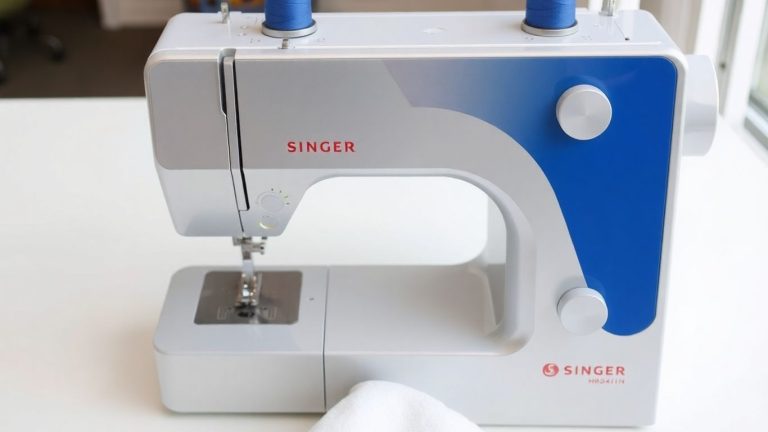
The SINGER Heavy Duty 4423 is the alternative I would choose when top speed and straightforward heavy-fabric sewing matter more than stitch count. It has 23 built-in stitches, a one-step buttonhole, a metal frame, stainless-steel bedplate, adjustable presser-foot pressure, built-in needle threader, top drop-in bobbin, free arm, and speeds up to 1,100 stitches per minute.
MariaSew hands-on review: SINGER Heavy Duty 4423 Review
Compared with the ST371HD, the 4423 gives up 14 stitches but gains 300 SPM and adjustable presser-foot pressure, which can help when moving between sheers and heavier fabrics. I prefer the Brother if I want more stitch variety and included specialty feet; I prefer the SINGER if I want a faster mechanical workhorse.
Pros
- Up to 1,100 SPM. Much faster than the ST371HD for long seams and repetitive work.
- Heavy-duty metal frame. Provides stable internal support at higher speeds.
- Adjustable presser-foot pressure. Useful when switching between very light and heavier fabrics.
- One-step buttonhole and needle threader. Keeps garment setup straightforward.
- Stainless-steel bedplate. Provides a smooth fabric path across the machine bed.
Cons
- Only 23 built-in stitches. Less creative variety than the Brother ST371HD.
- Fast pedal response can feel aggressive. Some beginners prefer the calmer 800-SPM ceiling of the Brother.
- No electronic speed limiter. The 1,100-SPM capacity still depends on foot-pedal control.
Final Verdict
Choose the 4423 when fast mechanical sewing, denim, canvas, and everyday heavy-fabric work are the priority. Choose the ST371HD when you would trade some speed for more stitches and a broader included-foot package.
4. SINGER Heavy Duty 4432 – Best SINGER Alternative for More Stitch Variety
The SINGER Heavy Duty 4432 keeps the same fast 1,100-SPM heavy-duty concept but adds 32 built-in stitches and 110 stitch applications. It has a one-step buttonhole, built-in needle threader, top drop-in bobbin, drop feed, adjustable presser-foot pressure, metal frame, stainless-steel bedplate, extra-high presser-foot lift, three needle positions, and a 6.25-inch sewing space.
MariaSew hands-on review: SINGER Heavy Duty 4432 Review
This is the model I would compare most closely with the ST371HD if I wanted both mechanical simplicity and reasonable stitch variety. Brother still offers five more built-in stitches and a particularly useful nonstick foot in the box, while the SINGER counters with 300 more stitches per minute and adjustable presser-foot pressure.
Pros
- 32 built-in stitches. More creative flexibility than the 4423 while staying mechanical.
- 1,100-SPM maximum speed. Fast completion of long seams and repeated construction work.
- Adjustable presser-foot pressure. Helpful for fabric-weight changes.
- Drop feed. Supports free-motion work and button sewing.
- Extra-high presser-foot lift. More room when positioning bulky home-sewing layers.
Cons
- Still fewer stitches than the ST371HD. Brother remains slightly broader on stitch count.
- No computerized speed control. High speed still depends on pedal discipline.
- More speed can amplify setup mistakes. Wrong needle, thread, or feeding technique becomes obvious quickly at 1,100 SPM.
Final Verdict
Choose the 4432 if you want the strongest balance of SINGER speed and mechanical stitch variety. It is a compelling alternative when the ST371HD feels a little slow but the 4423 feels too limited.
5. Janome HD3000 – Best Premium Mechanical Alternative
The Janome HD3000 is the premium mechanical alternative I would choose for sewists who care more about build feel, fabric control, and long-term simplicity than a large stitch count. It has an aluminum-frame construction, 18 stitches, top-loading full-rotary bobbin, built-in needle threader, 15 needle positions, adjustable presser-foot pressure, free arm, drop feed, extra-high presser-foot lift, 6.5 mm stitch width, and an 18.7-pound machine weight.
MariaSew hands-on review: Janome HD3000 Review
It has fewer stitches than the ST371HD and costs considerably more, but it feels like a different ownership proposition. I prefer it for frequent garment sewing, denim, canvas, and sewists who want a heavier mechanical platform with finer needle-position control and adjustable foot pressure.
Pros
- Heavy-duty aluminum frame. Provides a planted, traditional mechanical feel.
- Adjustable presser-foot pressure. Useful for controlling light and heavy fabric feeding.
- 15 needle positions. Better fine placement for zippers, topstitching, and edge work.
- Top-loading full-rotary bobbin. Smooth, convenient bobbin access.
- Extra-high presser-foot lift. Helpful when positioning thick home-sewing layers.
Cons
- Only 18 stitches. Much less decorative variety than the ST371HD.
- Heavier at 18.7 pounds. Less convenient for frequent transport or shelf storage.
- Higher purchase price. You are paying for build, control, and Janome’s mechanical platform rather than stitch quantity.
Final Verdict: Choose the HD3000 if you want the most substantial traditional mechanical feel in this group and do not care about having dozens of decorative stitches. The ST371HD remains the better value when portability and stitch variety matter more.
Maintenance and Ownership Tips for the Brother ST371HD
Routine maintenance matters more than dramatic repair. Mechanical machines still depend on clean thread paths, a healthy needle, a correctly seated bobbin, and lint-free moving areas.
- Unplug before cleaning. Remove the power source before opening the bobbin area or cleaning around the needle plate.
- Remove lint regularly. Denim, cotton, fleece, batting, and canvas can leave significant debris around the bobbin and feed dogs.
- Replace dull or bent needles. Skipped stitches and thread damage often begin with the needle rather than the machine.
- Rethread before changing several settings. Incorrect upper threading or bobbin placement can look like a tension problem.
- Use the right needle and foot. A nonstick foot, zipper foot, blind-hem foot, or heavier needle solves specific feeding and stitch problems.
- Do not force bulky seams. Slow down, level the foot, and let the feed system move the fabric.
- Follow Brother’s manual for lubrication and service. Do not add oil or open internal assemblies unless the manufacturer specifically instructs you to.
A good maintenance routine is simple: clean after lint-heavy projects, change needles before they become a problem, and troubleshoot one variable at a time.
Common Brother ST371HD Mistakes to Avoid
Most ST371HD problems start with setup rather than a defective machine. I check the simple causes first because changing several dials at once makes the real issue harder to identify.
- Using the same needle for every fabric. A denim needle, stretch needle, fine universal needle, and specialty needle solve different problems.
- Forcing the fabric from behind. Pulling can bend the needle, distort stitch length, and fight the feed dogs.
- Running full speed over thick seam humps. Slow down and level the foot at bulky transitions.
- Changing tension before rethreading. Thread-path errors can mimic bad tension.
- Installing the bobbin in the wrong direction. Follow the Quick-Set path exactly before blaming the hook or tension system.
- Skipping a scrap test. Buttonholes, decorative stitches, vinyl, knits, and heavy layers should be tested on a matching fabric stack.
- Treating ‘heavy duty’ as industrial. The ST371HD is a strong domestic machine, not a production leather or upholstery machine.
- Expecting electronic speed control. There is no speed slider, so practice slow foot-pedal control before precision work.
- Using the wrong presser foot. The included nonstick, zipper, blind-stitch, buttonhole, and button-sewing feet exist because general-purpose feet are not ideal for every task.
- Neglecting cleaning after denim or canvas. Lint and thread debris can accumulate quickly around the bobbin and feed system.
Our guide on sewing machine tension explains how to troubleshoot these issues systematically.
When the machine jams, I stop sewing, unplug it, remove tangled thread carefully, inspect the needle and bobbin area, rethread, and test on scrap fabric before returning to the project.
Is the Brother ST371HD Worth It in 2026?
Yes, if you want a mechanical home sewing machine with more stitch variety than the typical heavy-duty model and enough accessories to handle garments, repairs, free-motion work, denim, canvas, and lighter fabrics. The current Brother U.S. listing of $239.99 places it in a competitive middle ground between budget mechanical machines and heavier premium models.
I would not buy it because of the word ‘heavy duty’ alone. I would buy it because 37 stitches, a one-step buttonhole, six useful feet, a top-loading bobbin, a needle threader, free arm, drop feed, 7 mm width, and 800-SPM control fit the way I sew. If maximum speed or computerized control is more important, one of the alternatives above is the better purchase.
Final Verdict: Should You Buy the Brother ST371HD?
I recommend the Brother ST371HD to home sewists who want mechanical simplicity without being limited to a tiny stitch menu. It gives me enough variety for garments, repairs, decorative work, free-motion sewing, denim hems, canvas, and lighter fabrics while keeping setup familiar and direct.
I would choose something else for industrial work, maximum 1,100 SPM speed, or advanced computerized control. But for a beginner-to-intermediate sewist who wants one portable full-size mechanical machine with 37 stitches, six useful feet, a one-step buttonhole, free arm, drop feed, and sensible heavy-fabric capability, the ST371HD remains a strong 2026 value.
If you’re comparing it with other Brother models, our guide to the best Brother sewing machines can help put the ST371HD into the wider Brother lineup.
Frequently Asked Questions
Is the Brother ST371HD a mechanical sewing machine?
Yes. The ST371HD uses mechanical stitch selection and manual thread tension. It does not have a computerized stitch-selection LCD, speed slider, or programmable needle up/down.
How many stitches does the Brother ST371HD have?
It has 37 built-in stitches, including utility and decorative options, plus one one-step auto-size buttonhole.
Can the Brother ST371HD sew denim?
Yes, it is designed for heavier home-sewing fabrics and includes heavyweight needles. Use the correct jeans needle, suitable thread, longer stitch length when appropriate, and slower handling at thick seam crossings.
Can the Brother ST371HD sew canvas?
Yes, ordinary canvas and outdoor fabrics are realistic home-sewing projects when the layer stack is appropriate. Very dense upholstery or industrial work may require a stronger machine.
Can the Brother ST371HD sew lightweight fabric?
Yes. Brother markets it for fabrics ranging down to lightweight silks. Use a fine needle, correct tension, and careful seam-start technique for delicate material.
Does the Brother ST371HD have a one-step buttonhole?
Yes. It includes one one-step auto-size buttonhole and a dedicated buttonhole foot.
Does the Brother ST371HD have a free arm?
Yes. The free arm is useful for cuffs, sleeves, trouser hems, and other tubular sewing.
Does the Brother ST371HD have drop feed?
Yes. The feed dogs can be lowered for free-motion work, darning, and button sewing.
Does the Brother ST371HD have speed control?
It does not have an electronic speed slider. Sewing speed is controlled primarily through the foot controller.
Is the Brother ST371HD better than the SINGER 4423?
The Brother gives you more stitches and a broader included-foot package, while the SINGER 4423 reaches 1,100 SPM and adds adjustable presser-foot pressure. Choose based on stitch variety versus speed and heavy-fabric workflow.

One Comment