
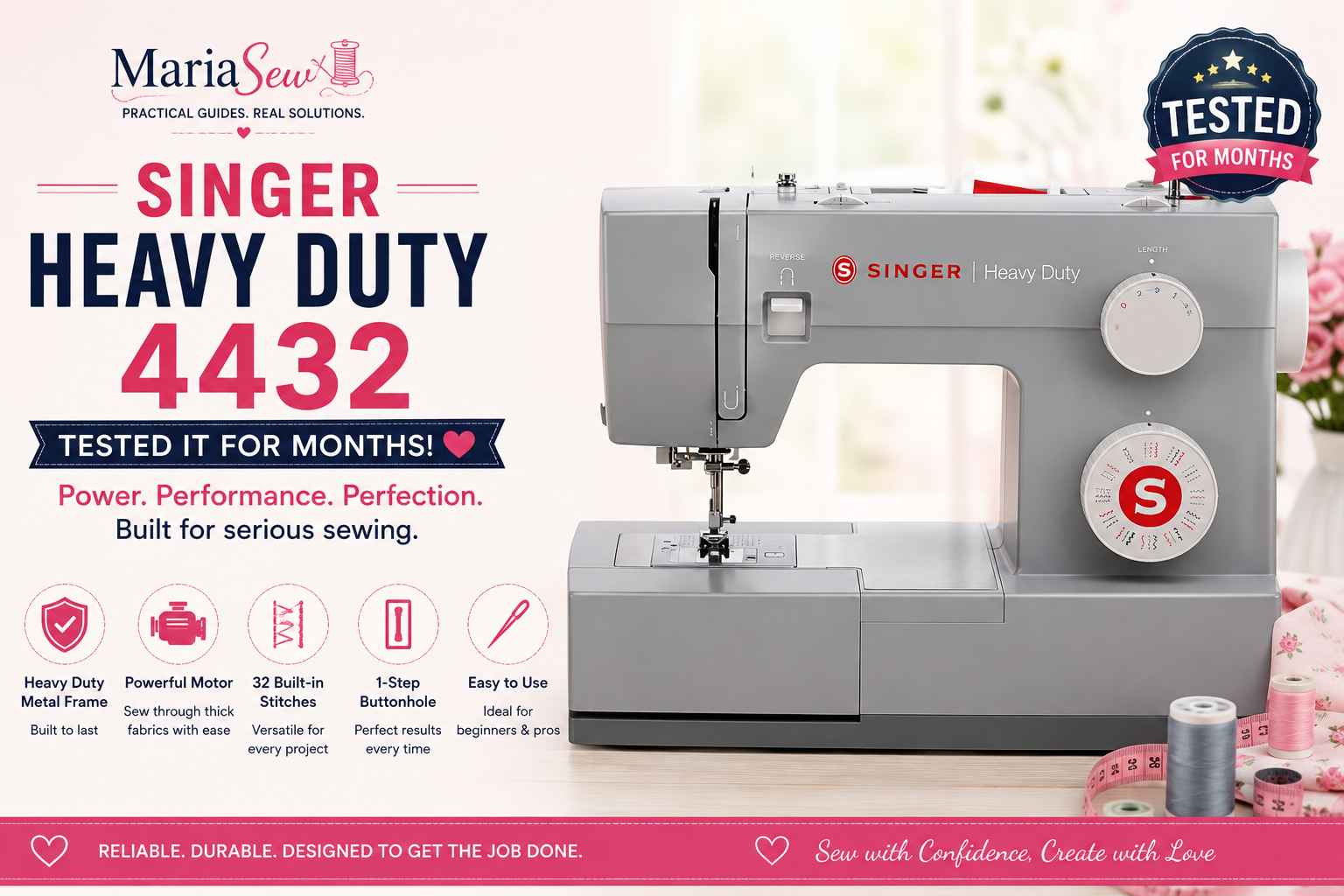
Singer Heavy Duty 4432 Review: I tested it for Months
Singer has been making machines since 1851, and after 12 years of testing sewing machines across every brand, I’ve used more Singer models than I can count. The Heavy Duty 4432 has been in my sewing room for a few months now, run through denim hems, canvas bags, and everyday cotton projects to see where it actually holds up.
This review covers the motor, stitches, and real fabric performance, plus honest comparisons against the Singer 4452,Singer 4423, Brother CS7000X, Brother ST371HD, and Janome HD1000.
Key Takeaways
- I’ve been sewing for months and this is not a fancy computerised machine, but a simple mechanical machine that’s designed for work that is practical and fabric based.
- There are 32 stitches and 1-step buttonhole in the machine.
- It’s made of metal, has a stainless steel bedplate, and has a strong motor for tough projects.
- Everyday sewing is made easier with the automatic needle threader and free arm.
- It’s ideal for sewists who appreciate speed, direct controls, and sturdy build.
What Is the Singer Heavy Duty 4432
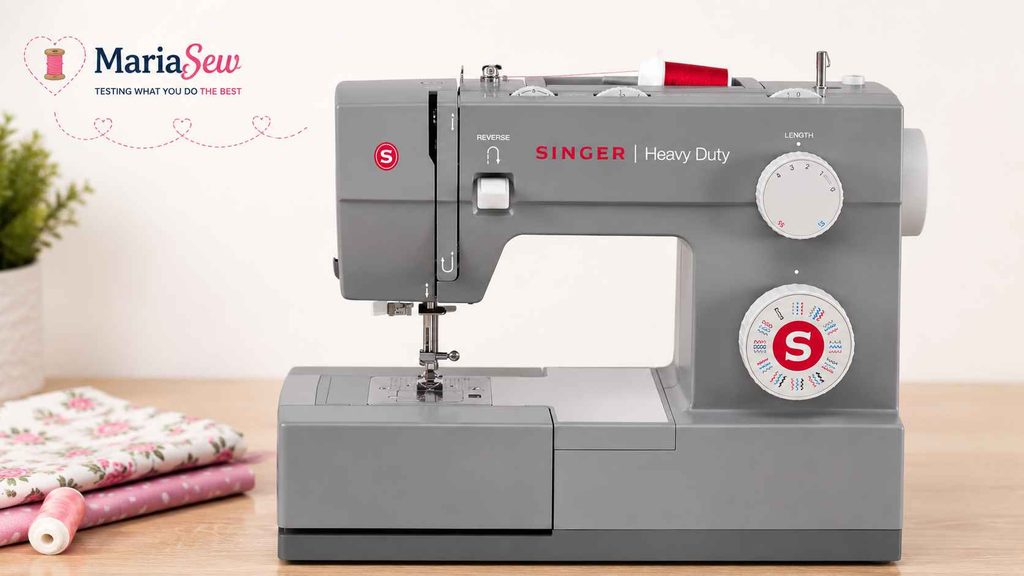
Singer Heavy Duty 4432 sewing machine is a mechanical sewing machine with a metal frame, a strong motor, and direct dial controls. I had been using it for regular repairs, sewing garments and heavier fabrics for months and its character became apparent pretty early on: it works best when it’s doing something simple and quick. This is a review of the singer 4432, not so much about the bells and whistles, but rather how the machine performs over time.
The machine comes with 32 preprogrammed stitches, a drop-in top bobbin, an automatic needle threader and a one-step buttonhole. It’s set up with dials instead of a screen, so once I got used to the controls, it was quick. The Singer Heavy Duty 4432 is an easy-to-understand machine, but it still demands careful threading and careful needle selection.
The limits of a mechanical machine was also demonstrated in my Singer 4432 sewing machine performance testing. It adapts easily and is fairly predictable, but doesn’t offer computer-aided guidance or a comprehensive library of automated functions. If you’re looking for the best sewing machine for heavy fabrics, the main issue is that you want something that’s made well and has good control over the machine rather than convenience features.
Heavy Duty 4432 Singer Specifications
The main specifications indicate that it is a machine for utility sewing. It has a maximum stitch speed of 1,100 stitches per minute, 32 stitches built-in, adjustable stitch length and width, and a maximum stitch width of 6mm. The stainless steel bedplate provides a smooth surface for fabric to run on and the top drop-in bobbin maintains the visibility of the bobbin during set up.
| Feature | Detail |
|---|---|
| Machine type | Mechanical |
| Built-in stitches | 32 |
| Buttonhole | One-step |
| Motor | Heavy-duty, high-speed |
| Sewing speed | Up to 1,100 stitches per minute |
| Frame | Metal internal frame |
| Bedplate | Stainless steel |
| Needle threader | Automatic |
| Presser foot pressure | Adjustable |
| Free arm | Yes |
| Reverse lever | Yes |
| Weight | Moderately heavy for a mechanical machine |
It was useful to consider the specifications as a whole, not as individual numbers. Although speed is important for sewing long seams, control is equally important when changing direction or sewing through multiple layers. The 4432 review also mentions the automatic needle threader and adjustable stitch controls, plus the model’s inclusion in the list of heavy-duty machines.
The 4432 comes with a genuinely useful accessory set for the price point. It’s enough to get started on most projects without an immediate trip to buy extra feet.
That’s a key reason for the Singer 4432 user experience. The machine is not complicated to use, but the outcome is still dependent on the threading, tension, fabric preparation, and appropriate needle. In my Singer sewing machine durability test, the physical construction seemed to be more important than any one of the specifications.
Singer Heavy Duty 4432 Features:
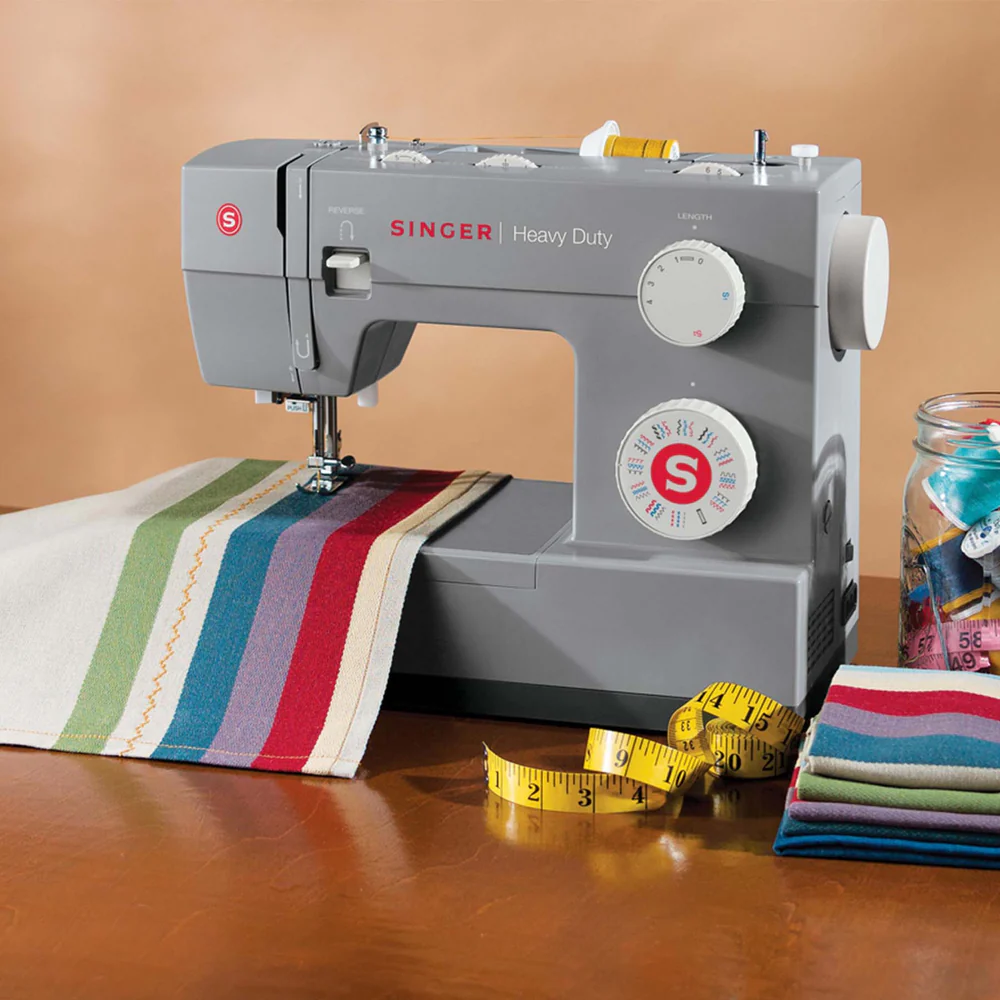
The feature list is not too long. The majority of the controls are provided to speed up common sewing operations, and the frame and bedplate help to make the machine heavy-duty. I used these features together more than I used them individually, since that’s where I could better evaluate the Singer Heavy Duty sewing machine durability.
Heavy-duty motor
This machine is recommended for thick materials due to the strong motor. It was a very purposeful machine movement when working through heavier fabrics, but not quite as good as not forcing the feed and keeping the layers in line, as I did in my testing. The 4432 Black Special Edition is described for projects that include materials like denim and canvas, which align with the machine’s overall function.
High sewing speed
The machine can stitch up to 1,100 stitches per minute. I liked that fast speed on long seams, but I used the foot pedal lightly on corners, narrow areas and topstitching. If I can keep the seam line under control, fast sewing is helpful only if I can.
32 built-in stitches
Thirty-two built-in stitches cover utility and decorative sewing, without making stitch selection complex. I could switch between straight stitch, zigzag style work, stretch oriented and decorative patterns by turning the selector dial. It has a wide range for repair work, sewing and craft projects, but it is not a replacement for a computerized embroidery machine.
One-step buttonhole
The one-step buttonhole makes it easier to perform a task that might otherwise need to be repeated manually. I still made test buttonholes on scraps before working on a finished garment because the type of fabric and stabilizing can affect the outcome. After proper set up, the feature made repeat buttonholes more repeatable.
Automatic needle threader
The automatic needle threader is a minor convenience that was a big deal when used. It saved me a lot of time in getting a seam started, particularly when I was switching threads frequently. It doesn’t make the rest of the machine easier to thread, but it makes the last step at the needle less frustrating.
Stainless steel bedplate
The fabric rests on a smooth working surface of stainless steel bedplate. This made it easy to move material when sewing normally and provided the machine with a solid, easy-to-wipe surface. The heavy-fabric sewing overview also links this bedplate to sewing denim, canvas, and upholstery.
Metal frame
The metal frame provides a good table weight. It doesn’t make the machine weightless or particularly portable, but it did help keep it on the ground while stitching faster. The frame for me was more of an experience in the long run than cosmetic.
Adjustable presser foot pressure
I am able to adjust the presser foot pressure when working with different types of fabric or different handling, because of the adjustable presser foot pressure. This was helpful when transitioning from lighter fabric to multiple layer projects, but I didn’t jump around and change my style. The setting should be used as a control for fabric feeding, rather than as a replacement for good preparation.
Reverse lever
The reverse lever allows easy locking of the starting and finishing points of a seam. I found the manual action more direct than going through a menu, and I used it for short backstitches. It’s a simple feature but it’s in the direct, mechanical style of the machine.
Free arm
The free arm is useful for sewing around narrower tubular areas like cuffs or sleeves. Not always but when the majority of the garment was going to fill the bed, it was useful. It is easy to use with the Singer sewing machine, has a storage space, and has simple controls.
Design and Build Quality of Singer 4432 Heavy Duty
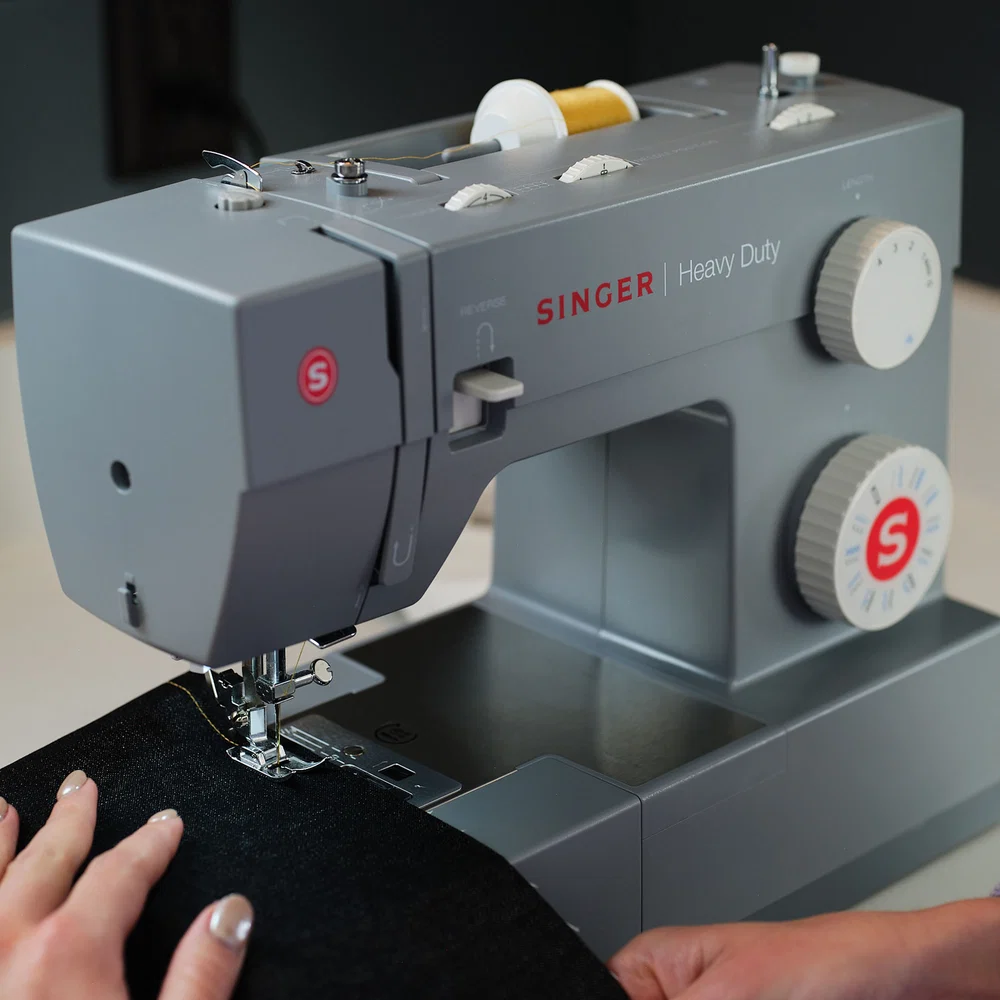
The 4432 feels substantially more solid in hand than typical beginner machines in the same price bracket. Between the metal frame and stainless steel bedplate, there’s a noticeable difference in stability once you’re sewing through anything beyond single-layer cotton, less vibration, less “walking” across the table during faster stitching.
If you’re still deciding between Singer models, you can also check out our Best Singer Sewing Machines guide to see how the 4432 stacks up against the rest of the range.
It’s not a lightweight machine, and that’s largely the point, the weight comes from the internal frame that gives it the stability to handle heavier fabric without the housing flexing or the machine shifting mid-seam. After months of regular use, I haven’t noticed any looseness developing in the casing or controls, which speaks well to the build quality holding up over time rather than just feeling solid out of the box.
Singer Heavy Duty 4432 Performance Review
Cotton Fabrics
Cotton is where any machine should perform well, and the 4432 does, clean, even stitches with no adjustment needed beyond standard tension settings. This isn’t where the machine’s heavy-duty branding matters, but it’s worth confirming it handles the basics competently, and it does.
Denim
This is genuinely where the 4432 shines. Across multiple denim hemming projects, including the bulky, multi-layer seam intersections that give lighter machines trouble, it pushed through consistently with the recommended denim needle. I did slow down and use the handwheel manually at the thickest crossing points, standard practice regardless of machine, but the motor never stalled or strained audibly.
Canvas
Similar story to denim, canvas is a fabric this machine is clearly built to handle. Tote bag construction with multiple canvas layers and interfacing sewed cleanly, with consistent stitch length maintained even through thicker sections.
Upholstery Fabric
This is where results became more mixed. Lighter to medium-weight upholstery fabric sewed fine, but genuinely heavy, tightly woven upholstery textiles pushed the machine closer to its limits, still workable, but requiring more patience, slower speeds, and occasional manual assistance through thick sections rather than the confident performance seen on denim and canvas.
Quilting
For piecing and general quilting cotton work, the 4432 performed reliably. It’s not purpose-built for quilting the way a dedicated quilting machine is, no extended throat space, no specialized quilting feet included by default, but for straightforward piecing and straight-line quilting on smaller projects, it handled the work without complaint.
Leather
This is the clearest limitation I found in months of testing. Thin, soft leather in single or double layers was manageable with the correct leather needle and a slower approach. But anything approaching multi-layer or firmer leather pushed well past what this machine is designed for, the motor and standard feed system aren’t built for genuine leatherwork, and forcing it risked needle deflection. If leather is a regular part of your projects, this isn’t the machine for that specific work, even though it handles nearly everything else confidently.
Pros and Cons Heavy Duty 4432
| Pros | Cons |
|---|---|
|
|
The Singer 4432 earns its strong 4.4/5 rating from thousands of reviewers who praise its sturdy metal frame, wide fabric range, and beginner-friendly features like the automatic threader and one-step buttonhole. For everyday sewing, garment construction, and even moderately heavy fabrics, most owners find it reliable and good value.
The honest caveat is quality consistency: a real minority of buyers received units with serious factory defects (misaligned needles, loose parts, erratic pedal control), and “Heavy Duty” shouldn’t be read as truly industrial — thick vinyl, multiple canvas layers, or leather can push past what this machine is built for. Test your machine thoroughly as soon as it arrives, keep spare needles on hand, and download the PDF manual since a printed one isn’t included.
Singer 4432 vs Singer 4423
The 4432 is effectively the direct successor to the Singer Heavy Duty 4423, and the two are close enough that the comparison is really about deciding whether the differences matter for your specific projects. The most obvious upgrade is stitch count: 32 built-in stitches on the 4432 versus 23 on the Singer 4423, with the 4432 adding more decorative options.
The other meaningful difference is the buttonhole. In my experience, this is actually the bigger practical upgrade of the two, a one-step buttonhole is simply faster and more consistent to use than a four-step process, especially across a full garment with multiple buttonholes.
| Singer 4432 | Singer 4423 | |
|---|---|---|
| Pros |
|
|
| Cons |
|
|
Motor power, frame construction, and core heavy-fabric performance are comparable between the two, so you’re not sacrificing durability by choosing the cheaper option. Choose the 4432 if the wider stitch selection and one-step buttonhole genuinely matter to your work. Choose the 4423 if you want the same reliable heavy-duty foundation at a lower price and don’t mind the extra steps on buttonholes.
Singer 4432 vs Singer 4452
The Singer Heavy Duty 4452 sits directly above the 4432 in Singer’s Heavy Duty lineup, and on paper the two look nearly identical: same 1,100 stitches per minute motor, same metal frame construction, same stainless steel bedplate. The real difference comes down to stitch count and a few refinements rather than a fundamental performance gap.
The 4452 offers a slightly larger stitch library and is generally positioned as the step-up model for sewists who want a bit more variety without moving to a computerized machine. In my hands, the practical difference on actual projects, denim, canvas, everyday garment work, was smaller than the spec sheet suggests. Both machines pushed through the same heavy fabrics with comparable ease, and neither felt meaningfully more capable on leather or upholstery, where both share the same core limitations.
| Singer 4432 | Singer 4452 | |
|---|---|---|
| Pros |
|
|
| Cons |
|
|
Choose the 4452 if the extra stitches specifically matter to your projects, or if you simply want to buy at the top of Singer’s Heavy Duty range for peace of mind. Choose the 4432 if you want the same reliable motor and frame at a lower price point, since the core heavy-fabric performance doesn’t meaningfully change between the two.
Singer 4432 vs Brother CS7000X
This comparison is primarily a matter of machine type. The 4432 features mechanical controls and a dial display, whereas those who are interested in the Brother CS7000X might prefer a different type of operation. I would not say one is better than the other, but rather, is it something I want to make direct adjustments or is it something I want to be more guided by a computer?
The mechanical method seemed to have an instant effect on me as I began using it for a few months. I could dial up a scrap and go, without having to go through menus. This simplicity worked well for my Singer 4432 sewing machine performance testing but it may be a different sewist’s preference to have a machine that is organized around digital selection and convenience features.
| Singer 4432 | Brother CS7000X | |
|---|---|---|
| Pros |
|
|
| Cons |
|
|
The costume making sewing guide is a helpful tip for readers who are working on their own custom costume projects and craft projects. I would think of fabric handling, stitch control, workspace and learning curve when it comes to that type of sewing. The best sewing machine for thick fabrics is not necessarily the best for every sewer, especially if most of the work involves lighter fabrics.
Singer 4432 vs Brother ST371HD
The ST371HD comparison is not a matter of simply choosing between the two, but rather about priorities. I would consider the level of control I would want over the stitch settings, how frequently I would sew thick layers, and if physical feel is important to me, I would consider that as well. On paper, a machine may be just right and at the worktable it can be very wrong.
I enjoyed the hands-on and clear path from threading to stitching. The controls didn’t require me to memorize a complex sequence and the free arm was there when I needed it when working around a smaller opening. It made the machine accessible for repairs and simple clothing and allowed for expansion in more complex projects.
| Singer 4432 | Brother ST371HD | |
|---|---|---|
| Pros |
|
|
| Cons |
|
|
I suggest that you compare the specific accessories that are included and the type of support offered at the store you are purchasing from. If durability is a key consideration for the buyer, it is not just about being able to sew a thick sample once. It’s if the setup, feeding and controls are comfortable during repeated sessions.
Singer 4432 vs Janome HD1000
The Janome HD1000 comparison is another example where the user’s priorities should take precedence. I would listen to the controls, the variety of stitch options, workspace, and the changes made that are most applicable to my work. Those details make you more satisfied than a short list of headline features.
The machine’s simplicity of rhythm was the best part of my own long-term testing with a 4432 Singer. Carefully thread it, select a stitch, determine the width and length and start with a piece of the same material. It’s not a glamorous process, but it did give me a repeatable routine and made troubleshooting less mysterious when a seam did not look right.
| Singer 4432 | Janome HD1000 | |
|---|---|---|
| Pros |
|
|
| Cons |
|
|
Noise, storage, portability, and service access are also considerations for those who are considering heavy-duty. Comfort over many hours is as important as durability for thick-fabric work, which can be challenging for the operator and the machine. A stable work area and good lighting can make it as good as another stitch option.
Who Should Buy the Singer Heavy Duty 4432
I believe this machine is ideal for the novice who prefers to sew with a machine that has physical controls, and for the advanced sewer who requires a second machine for use. This is especially appropriate for repairs, clothes, crafts, and projects that could require heavier materials. The best argument for its use is not that it can do it all, but that the basic sewing operation is clear and has a purpose.
I would not be as inclined to recommend it to a person who desires a lot of computer automation, a large decorative library or a very light machine for frequent transport. The machine has a more grounded, workshop feel to it thanks to its heft, but it’s also helpful at a sewing table. This was a compromise I made in my Singer 4432 user experience, from the first week to the later months.
Best For
- Sewists who regularly work with denim, canvas, or medium-weight home décor fabric
- Beginners who’ve outgrown a basic starter machine and want genuine heavy-fabric capability
- Anyone who wants a reliable one-step buttonhole without paying for a computerized machine
- Sewists who prefer mechanical, dial-based controls over digital menus
Not the Right Fit If…
- You regularly work with thick or multi-layer leather, this machine isn’t built for that
- You need a large decorative stitch library or embroidery capability
- Heavy upholstery work is a frequent part of your projects
- You want the lightest possible machine for portability
Prior to purchasing, I might make a brief checklist: what kinds of fabrics do I sew most, what stitches do I really need, and allow for some money to be allocated for the right needles and thread. I would also experiment with the threading path and the presser foot adjustments, rather than by speed alone. That practical test is more revealing than a feature count for a sewist looking for the best sewing machine for heavy fabrics.
Final Verdict
After several months of regular use across denim, canvas, cotton, and quilting projects, the Singer Heavy Duty 4432 has earned its place as a dependable, no-nonsense workhorse. It genuinely delivers on the “heavy-duty” branding for the fabrics most home sewists actually work with, and the one-step buttonhole and metal frame construction stand out at this price point.
Where it falls short is exactly where you’d expect a mechanical, motor-focused machine to fall short, genuine leatherwork and the heaviest upholstery fabrics. If your projects live outside that narrow range, this is one of the more reliable machines available in its category, and one I’d comfortably recommend to anyone stepping up from a basic beginner model.
Frequently Asked Questions
Is a mechanical sewing machine good for beginners?
Yes. Mechanical machines are accessible, as they are controlled by physical means and selection and adjustments of the stitches are done so, while still requiring the beginner to learn about how to thread, control the tension, select the needle and fabric.
What fabrics are heavy?
Heavy sewing materials are typically denim, canvas, upholstery fabric, multiple layers or some dense utility fabrics. The level of difficulty will vary depending on thickness, stiffness, seams and the number of layers.
Is there a special needle for thick fabric?
Typically, the needle should be the same color as the fabric and thread. Using the right heavy-fabric needle will help minimize skipped stitches and breakage, but it is important to have the needle threaded properly and to sew at a steady rate.
Do you need to sew faster than you sew different stitches?
Both are not necessarily more important. For long seams, speed is important; for garments, finishing, repairs, and decorative work, stitch variety may be of importance. The better option is based on the projects that you create most frequently.
How to avoid bunching under the threads?
Use the upper path again with presser foot up, make sure the bobbin is in place, use a new needle and test the tension on some scrap material. Cleaning the bobbin area might also be helpful.
What should I do before I start sewing an already finished garment?
Try the stitch, tension, seam allowance, presser-foot pressure, and needle on a scrap of fabric similar to the project fabric. This is a minor adjustment that can show feeding or adjustment problems before the final product is created.
What are some long-term maintenance tips for sewing machines?
Clean and oil according to the manual, remove lint frequently, replace dull or bent needles and keep the machine dust-free. It’s generally more helpful to provide consistent care rather than waiting for a performance issue to emerge.

4 Comments