Why Is My Sewing Machine Skipping Stitches? 10 Causes & Fixes
If your sewing machine is skipping stitches, the problem is usually somewhere in the needle, thread path, bobbin area, fabric setup, or the timing between the needle and hook. The fastest fix is to start with a fresh correctly installed needle, rethread the upper thread with the presser foot raised, confirm the bobbin is seated correctly, and test again on a scrap of the same fabric.
Stretch fabrics, denim, thick seam crossings, incorrect presser-foot pressure, excessive tension, lint, or a poor needle-and-thread match can make an otherwise healthy machine miss stitches. In this guide, I work from the easiest home fixes to the mechanical problems that should be left to a qualified technician.
In this guide, based on 12 years of sewing and troubleshooting my own machines, I work from the easiest home fixes to the mechanical problems that should be left to a qualified technician.
Key Takeaways
Skipped stitches are easier to fix when I change one variable at a time. I do not start by turning every tension dial or opening the machine.
- Replace the needle first if it is bent, dull, damaged, incorrectly installed, or unsuitable.
- Match the needle type and size to the fabric and thread you are using.
- Rethread the machine correctly before adjusting thread tension.
- Use the exact bobbin type and insertion method specified for your machine.
- Avoid pulling or pushing fabric, as this can deflect the needle and cause skipped stitches.
- Remove accessible lint and thread buildup around the bobbin case, hook, feed dogs, and needle plate.
- Check tension only after ruling out needle, threading, and bobbin issues.
- Seek professional service if skipping continues after basic checks or the machine shows timing issues, needle strikes, or unusual noises.
The order matters. A fresh needle and clean rethread take minutes and solve far more everyday problems than random internal adjustments.
What Is a Skipped Stitch on a Sewing Machine?
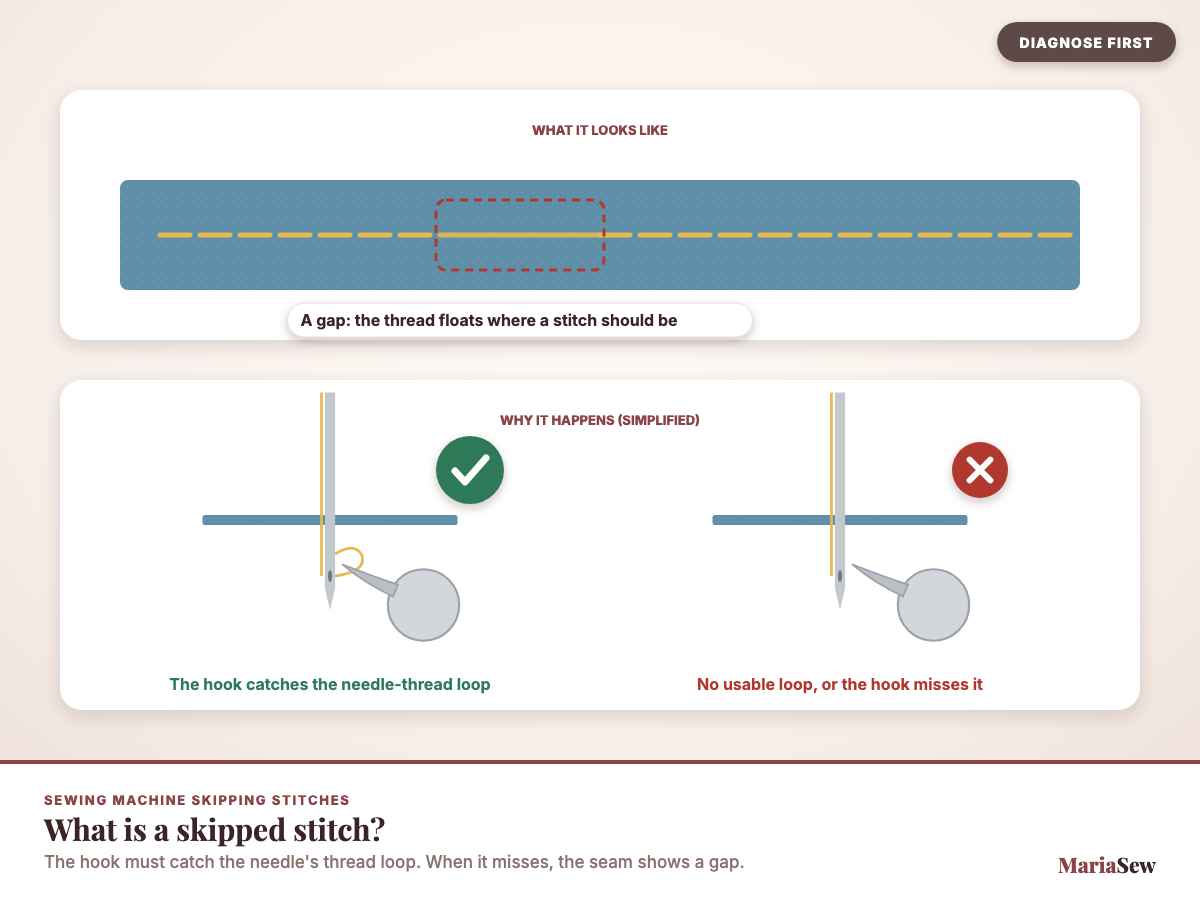
A skipped stitch is a stitch that never fully formed. The needle carries the upper thread through the fabric, then begins to rise and creates a small thread loop near the needle. The hook must pass close enough to catch that loop and carry it around the bobbin so the upper and lower threads can lock together.
If the needle is bent, the wrong type for the fabric, threaded incorrectly, pulled off line, or out of synchronization with the hook, that loop may be too small, in the wrong place, or missed completely. The fabric still moves forward, so the seam shows a gap instead of a completed lockstitch.
If you want to understand the needle, hook, feed dogs, bobbin case, and take-up lever before troubleshooting, read my sewing machine parts guide.
Skipped Stitches vs. Other Stitch Problems
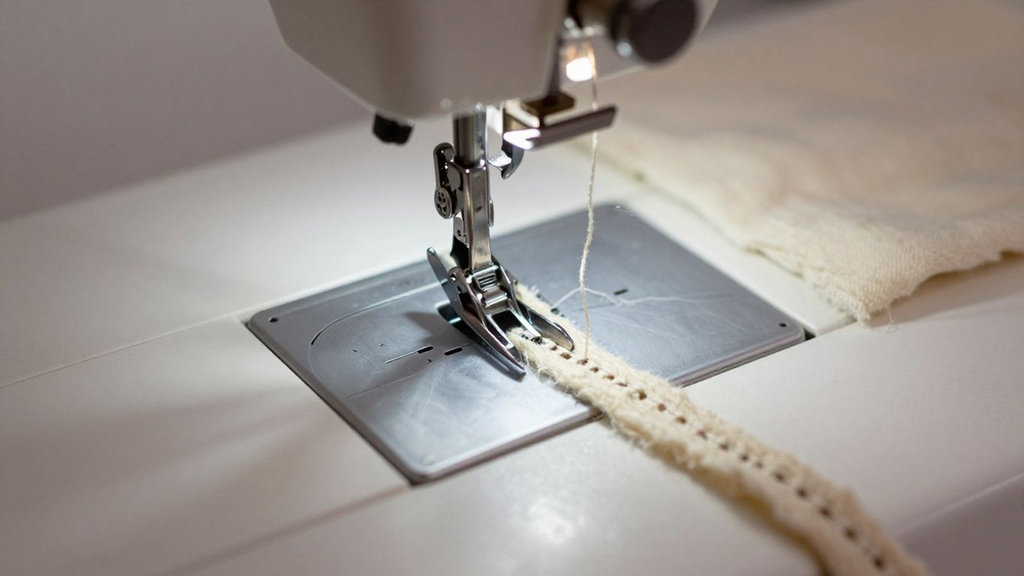
Not every ugly seam is a skipped-stitch problem. If the thread forms large loops underneath the fabric, the upper thread may not be seated in the tension system. If the bobbin thread is being pulled to the top, the issue may be tension, bobbin seating, or threading rather than a stitch that failed to form.
Broken upper thread, thread nests, seam puckering, and skipped stitches can overlap, but they are not the same diagnosis. I identify the visible symptom first so I do not try to solve a threading problem by changing timing.
For related symptoms, see my sewing machine tension guide and bobbin thread showing on top guide.
How I Test Sewing Machine Skipping-Stitch Problems
I test skipped stitches by recreating the problem under controlled conditions instead of changing several settings at once. I begin with a fresh needle, correct threading, the specified bobbin, normal starting tension, and a stable woven cotton so I have a clean baseline. Then I move to the fabric that caused the problem and change only one variable at a time.
I test straight seams at slow and normal speed, bulky seam crossings, stretch fabric, curves, multiple layers, and the same thread and needle combination used in the real project. I inspect both sides of the seam and note whether the skip happens randomly, at a repeated interval, only at speed, only on stretch fabric, or only where the seam becomes thick.
If a new needle, correct fabric-and-needle match, complete rethread, correct bobbin, clean hook area, and gentle fabric handling do not improve the result across more than one fabric, I stop treating it as a basic setup problem. At that point, timing, hook clearance, needle-bar height, burrs, damage, or another internal issue deserves professional inspection.
MariaSew’s editorial standard is based on hands-on testing and real-world technique checks, so I use the same one-change-at-a-time approach throughout this guide.
The 5-Minute Fix: What to Check First
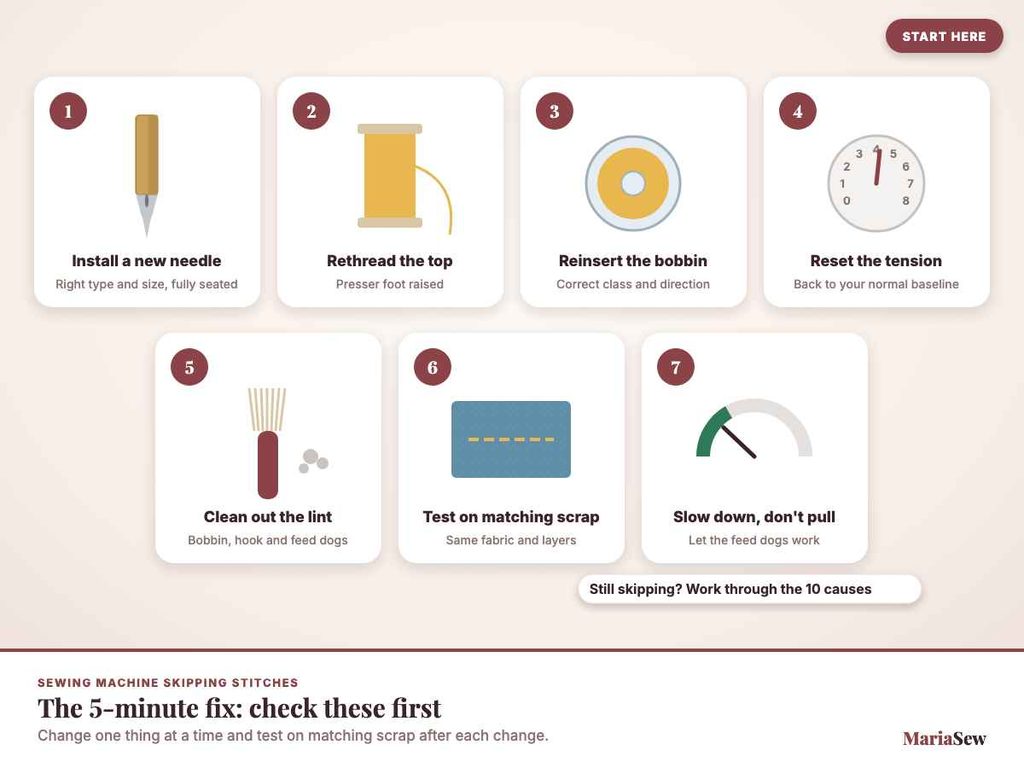
Before I work through all ten causes, I run this short reset. It solves many skipped-stitch problems without touching an internal screw or changing a dozen settings.
- 1. Install a new needle. Use the correct type and size for the fabric, orient it as the manual shows, and push it fully into the clamp.
- 2. Rethread the upper thread. Raise the presser foot first so the thread can seat correctly in the tension system, and make sure the take-up lever is threaded.
- 3. Remove and reinsert the bobbin. Use the correct bobbin class, correct winding direction, and the threading path shown for your machine.
- 4. Return tension to the normal starting range. If you changed tension while troubleshooting, return to a known baseline before making another diagnosis.
- 5. Clean accessible lint. Brush the bobbin area, hook area, and feed dogs only as the manual permits.
- 6. Test on matching scrap fabric. Use the same number of layers, thread, needle, and stitch that you plan to use on the project.
- 7. Slow down and stop pulling the fabric. Let the feed dogs move the fabric and support heavy or long pieces on the table.
If the machine now forms a consistent seam, keep the successful setup and continue sewing. If it still skips, the pattern of the skips can point to the next check.
Skipped Stitch Troubleshooting Table
The table below is a quick diagnostic map, not a substitute for the machine manual. Several problems can produce the same symptom, so I always confirm the first fix with a short test seam before moving deeper.
I also avoid treating one clue as proof. Skips on stretch fabric often point to the needle, but incorrect threading or excessive tension can still be involved. Skips at a bulky denim seam may look like a power problem when the actual issue is needle deflection or pulling the project.
- Start with the least invasive fix. Needle, threading, bobbin, and cleaning come before timing.
- Change one thing at a time. Otherwise you will not know which correction solved the problem.
- Test on the same fabric and layers. A fix that works on cotton may fail again on jersey or a thick seam crossing.
| What I Notice | Likely Area to Check | Best First Fix |
|---|---|---|
| Random gaps on normal woven fabric | Old, bent, dull, or incorrectly installed needle | Install a fresh correct needle |
| Skips only on jersey, Lycra, or stretch fabric | Wrong needle point/type for the material | Try a fresh ballpoint, jersey, or stretch needle as appropriate |
| Skips started after rethreading | Thread missed a guide, take-up lever, or tension path | Rethread from the spool with presser foot raised |
| Skips started after bobbin change | Wrong bobbin, incorrect insertion, or uneven winding | Reinsert or rewind the correct bobbin |
| Skips at thick seam crossings | Needle deflection, wrong size, or fabric being pushed/pulled | Use appropriate needle, slow down, and level/support the seam |
| Skips plus tight or distorted stitches | Upper tension too high or thread/needle mismatch | Return to baseline tension and recheck thread/needle match |
| Skips on light, thick, or slippery fabric only | Feed or presser-foot pressure mismatch | Check pressure if adjustable and guide fabric gently |
| Skips after lint-heavy projects | Lint or thread debris around hook, bobbin, or feed area | Clean accessible areas per the manual |
| Skips after a hard needle strike | Bent needle, burr, hook/plate damage, or timing shift | Replace needle; inspect visible damage; service if persistent |
| Skips on several fabrics after all basic checks | Hook timing, clearance, needle-bar height, or internal adjustment | Stop DIY adjustments and book service |
Once I know which pattern matches the seam, I work through the relevant cause below instead of repeating every adjustment on the machine.
10 Common Causes of Skipped Stitches and How to Fix Them
I order these causes from the most common and least invasive checks to the problems that may need a technician. That sequence prevents a simple needle or threading error from turning into unnecessary machine disassembly.
1. The Needle Is Bent, Dull, Damaged, or Installed Incorrectly
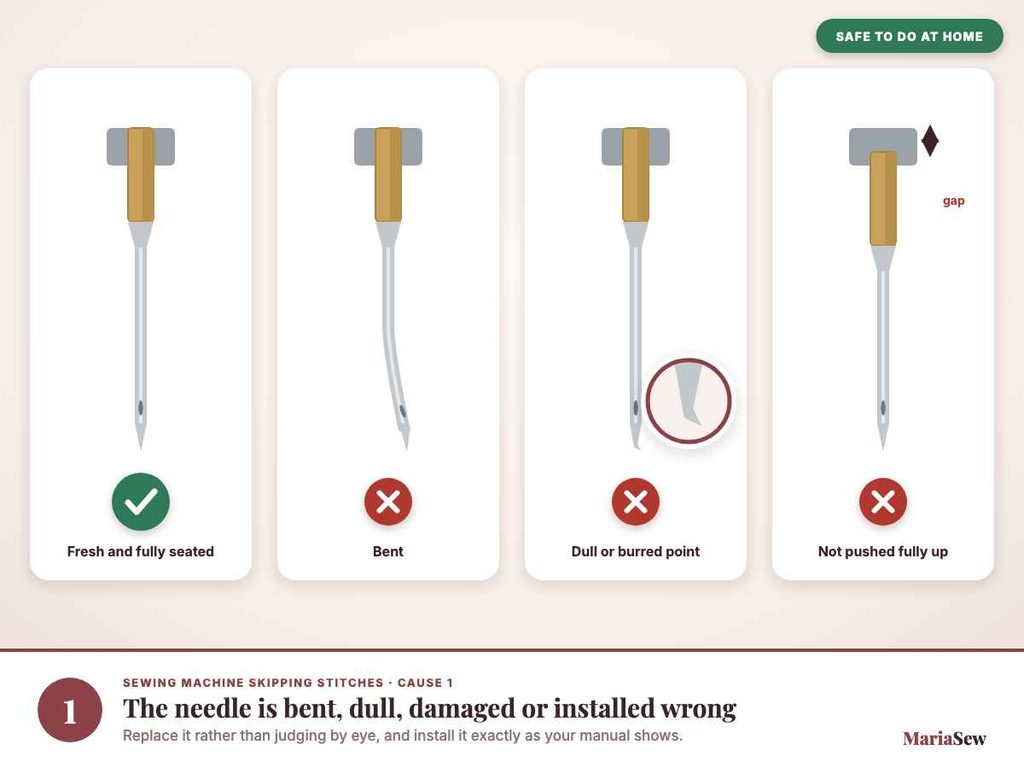
The needle is my first suspect because even a small bend or damaged point can change where the thread loop forms. A needle that is not pushed fully into the clamp, is facing the wrong direction for that machine, or has been damaged by a pin or thick seam can miss the hook even when the rest of the machine is set correctly.
I replace the needle rather than trying to judge it by eye, then install the new one exactly as the model manual shows. Needle orientation is not universal across every machine, so the manual beats a generic flat-side rule.
2. The Needle Type or Size Does Not Match the Fabric and Thread
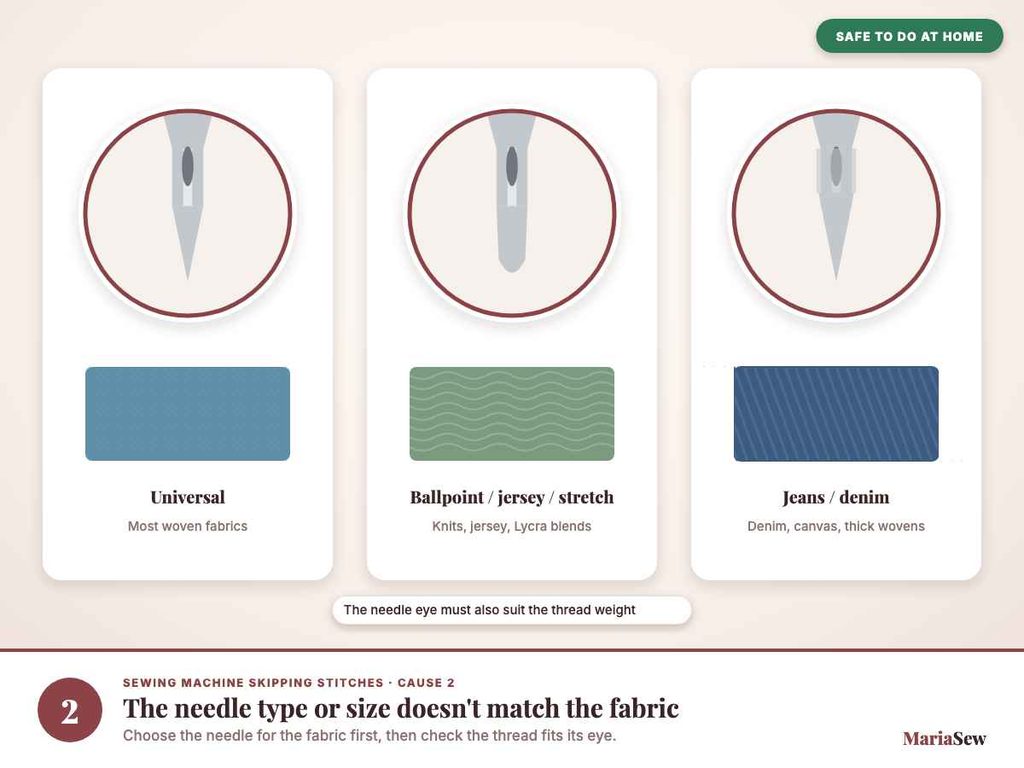
A universal needle can sew many woven fabrics, but it is not the best choice for every material. Stretch and knit fabrics often sew more reliably with a ballpoint, jersey, or stretch needle, while denim and canvas can need a reinforced jeans or denim needle that resists deflection through thick woven layers.
The needle eye also has to suit the thread. A needle that is too small for a heavy thread can create friction and prevent a clean loop from forming. I choose the needle for the fabric first, make sure the thread weight is compatible, and test on scraps before touching tension.
If the skipping appears only on jersey, spandex blends, or other knits, use my guide to sewing stretch fabric to match the needle, stitch, and handling method.
3. The Upper Thread Is Not Threaded Correctly
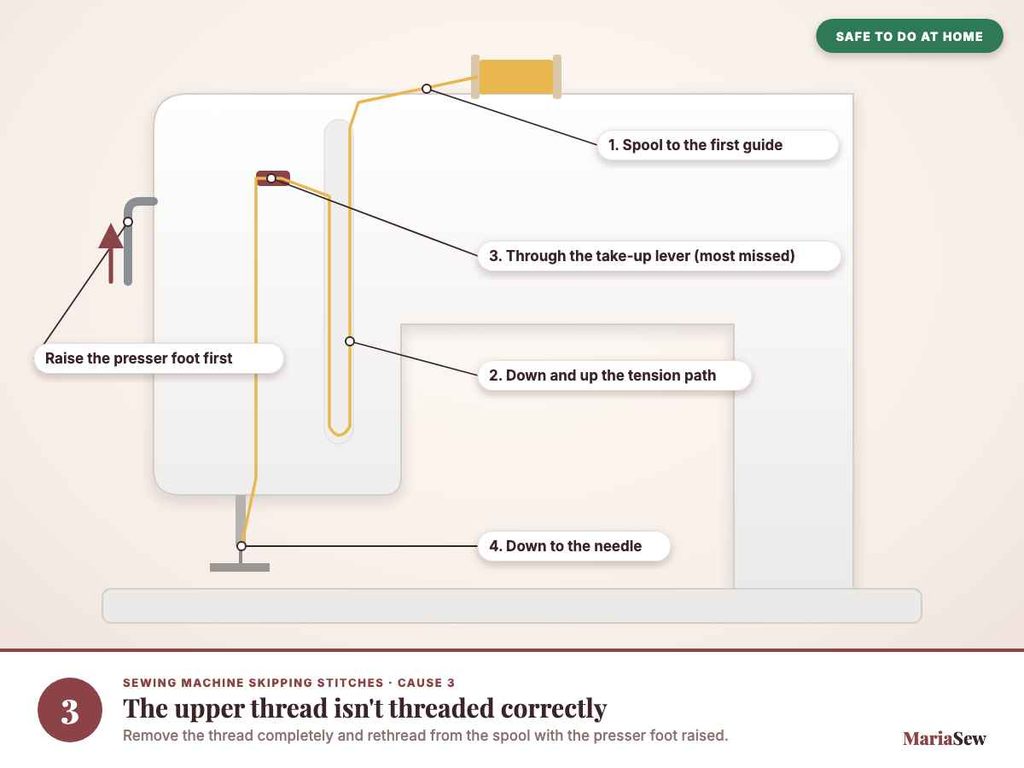
A missed guide or take-up lever can keep the upper thread from forming the right loop at the needle. Threading with the presser foot raised is important on many domestic machines because it allows the thread to enter the tension-disc path correctly.
I remove the thread completely and rethread from the spool instead of trying to patch one section of the path. I raise the needle and take-up lever, lift the presser foot, follow every guide, and only then thread the needle.
For a complete setup walkthrough, see How to Thread a Sewing Machine.
4. The Thread Is Damaged, Uneven, or Feeding Poorly From the Spool
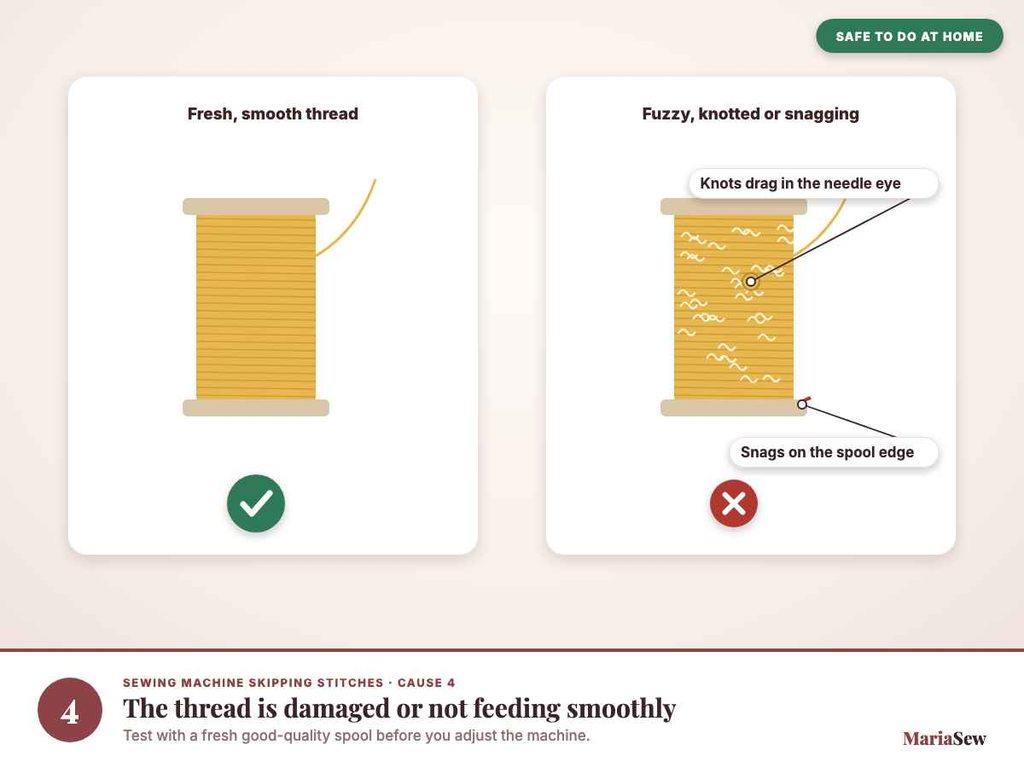
Old, fuzzy, knotted, or damaged thread can drag through guides and the needle eye instead of feeding smoothly. A spool can also catch behind a cap, snag on a rough edge, or unwind badly enough to create changing tension.
I inspect the thread for fraying and knots, check that the spool can unwind correctly, and test with a fresh good-quality thread when I am uncertain. If the new thread fixes the seam, I do not keep adjusting the machine to compensate for the old spool.
5. The Bobbin Is Wrong, Wound Poorly, or Inserted Incorrectly
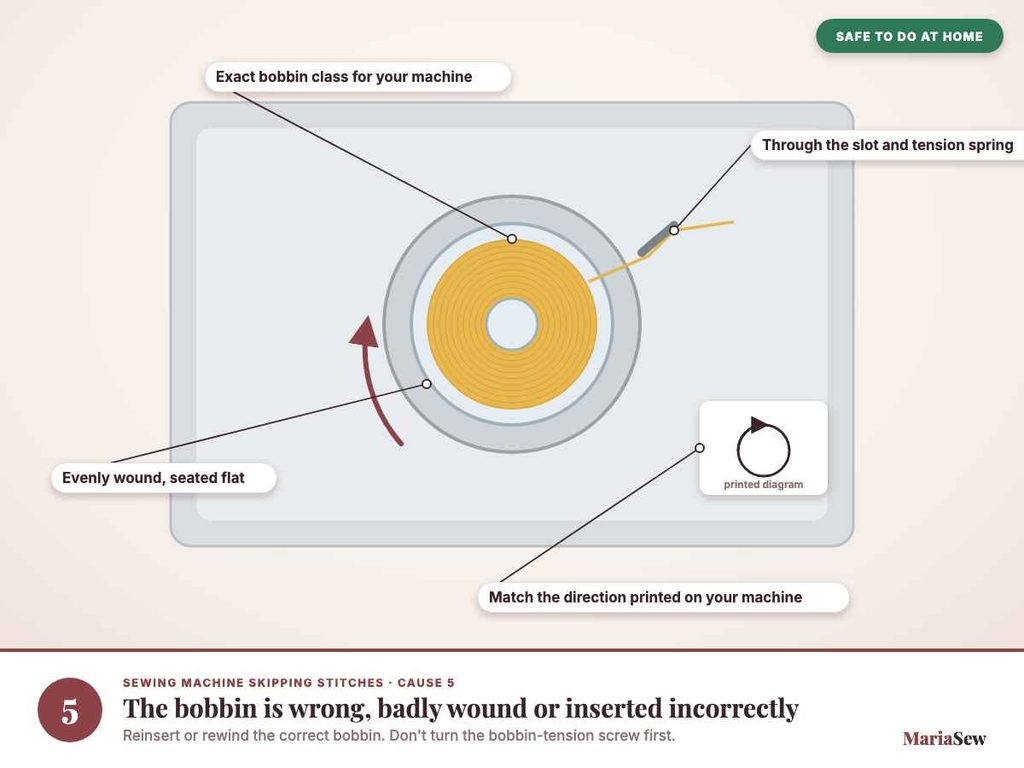
Bobbin problems do not always create skipped stitches by themselves, but they can disrupt lower-thread delivery enough to make the seam irregular. I check that the bobbin is the exact class specified for the model, is wound evenly, sits in the correct direction, and follows the bobbin-case threading path.
I avoid turning the bobbin-tension screw as a first fix. If the symptom is actually bobbin thread being pulled to the top surface, I diagnose that separately before changing lower tension.
Use my bobbin thread showing on top troubleshooting guide when that is the visible symptom.
6. Upper Thread Tension Is Too Tight or the Thread Path Is Binding
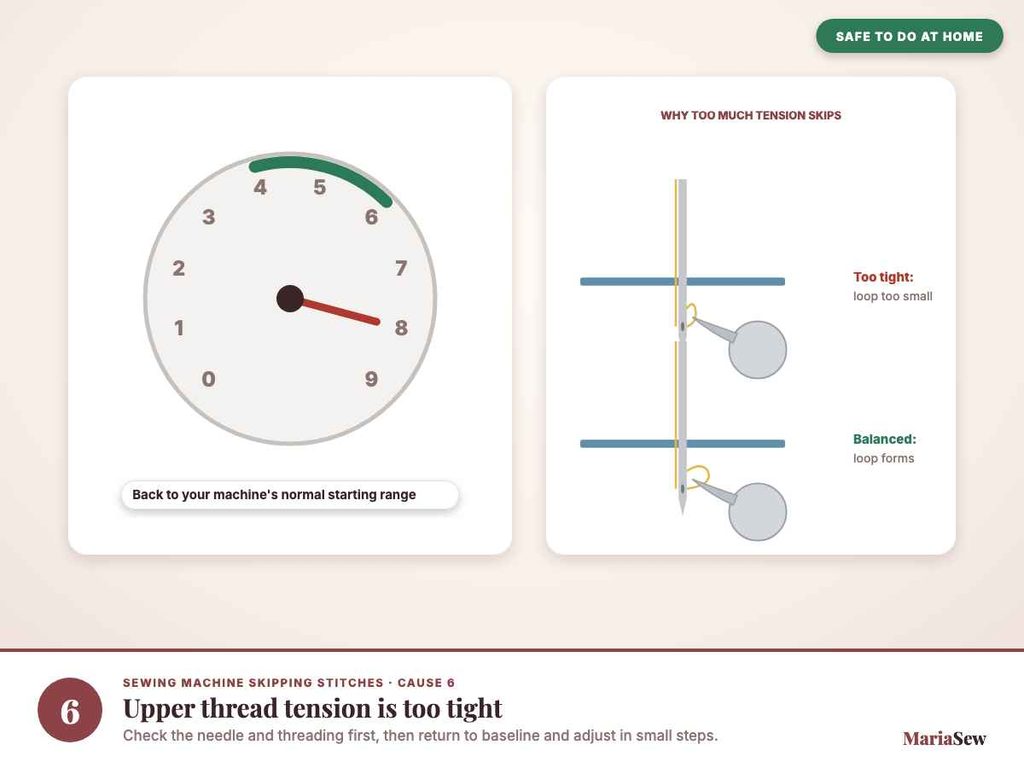
Excessive tension can prevent the thread from forming the loop the hook needs to catch, but I still treat tension as a later check because incorrect threading often looks like a tension problem. I return to the machine’s normal starting tension, test the seam, and make only small changes.
If the stitches are missing rather than simply loose, loopy, or puckered, I recheck the needle and thread path before increasing or decreasing tension further. Random large tension changes can create a second problem on top of the first.
For a controlled adjustment process, follow my sewing machine tension guide.
7. The Fabric Is Being Pulled, Pushed, or Fed With the Wrong Pressure
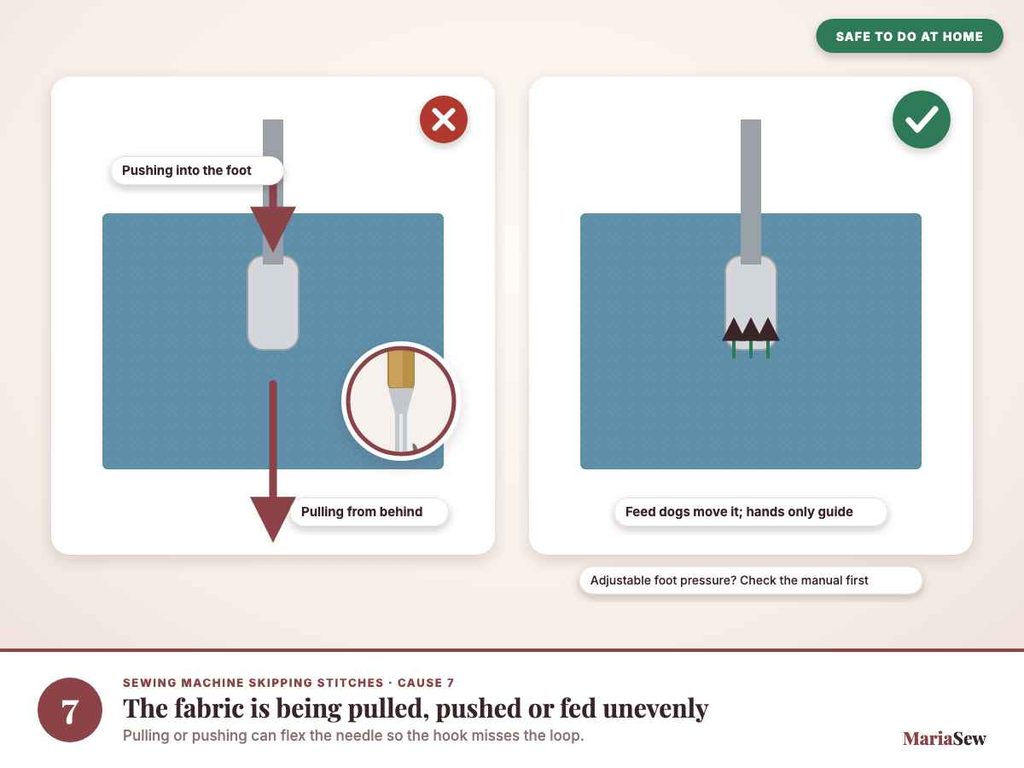
The feed dogs and presser foot should move the fabric while my hands guide direction and support weight. Pulling from behind or pushing into the foot can bend the needle slightly during the stitch cycle, which can make the hook miss the upper-thread loop.
If the machine has adjustable presser-foot pressure, a setting that is too light or too heavy for the fabric can also affect feeding. I check the manual before changing it, then test one small adjustment on scrap fabric.
8. Lint or Thread Debris Is Affecting the Bobbin, Hook, or Feed Area
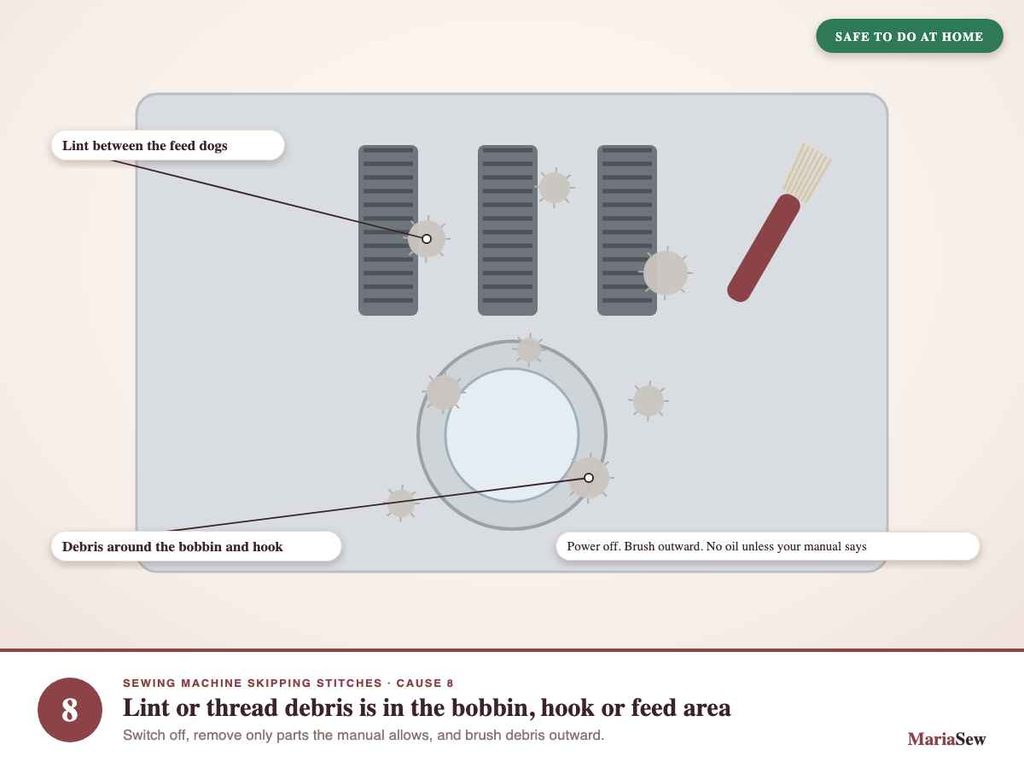
Lint from fleece, batting, flannel, cotton, and other fabrics can build up around the hook, bobbin holder, needle plate, and feed dogs. That buildup can interfere with smooth thread movement and fabric feeding, especially if a thread fragment is trapped in the hook area.
I switch the machine off, remove only the parts the manual allows, and brush debris outward with a suitable soft brush. I do not add oil just because the machine is skipping, and I do not assume every modern machine has user-accessible lubrication points.
For safe maintenance, use my sewing machine cleaning and oiling guide. If the problem includes a thread nest or seized hook, also see Why Does My Sewing Machine Keep Jamming?.
9. A Needle Strike Has Left a Burr or Damaged the Needle Area
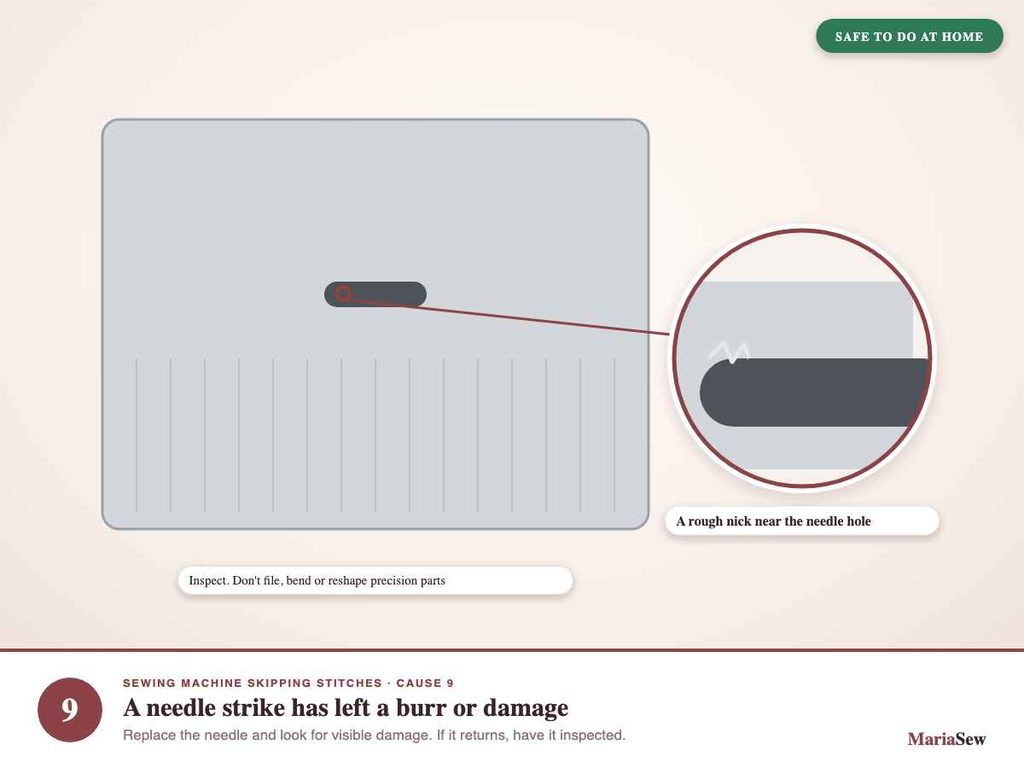
After a hard needle strike, I inspect the needle first and look for obvious damage around the presser foot, needle plate, and accessible bobbin area. A rough burr or damaged part can interfere with thread movement, shred thread, or indicate that the needle was deflected far enough to affect alignment.
I do not file, bend, or reshape precision parts while guessing at the cause. If the needle repeatedly hits metal or the same problem returns after a new needle, I stop and arrange proper inspection.
10. The Hook Timing, Hook Clearance, or Needle-Bar Height Is Out of Adjustment
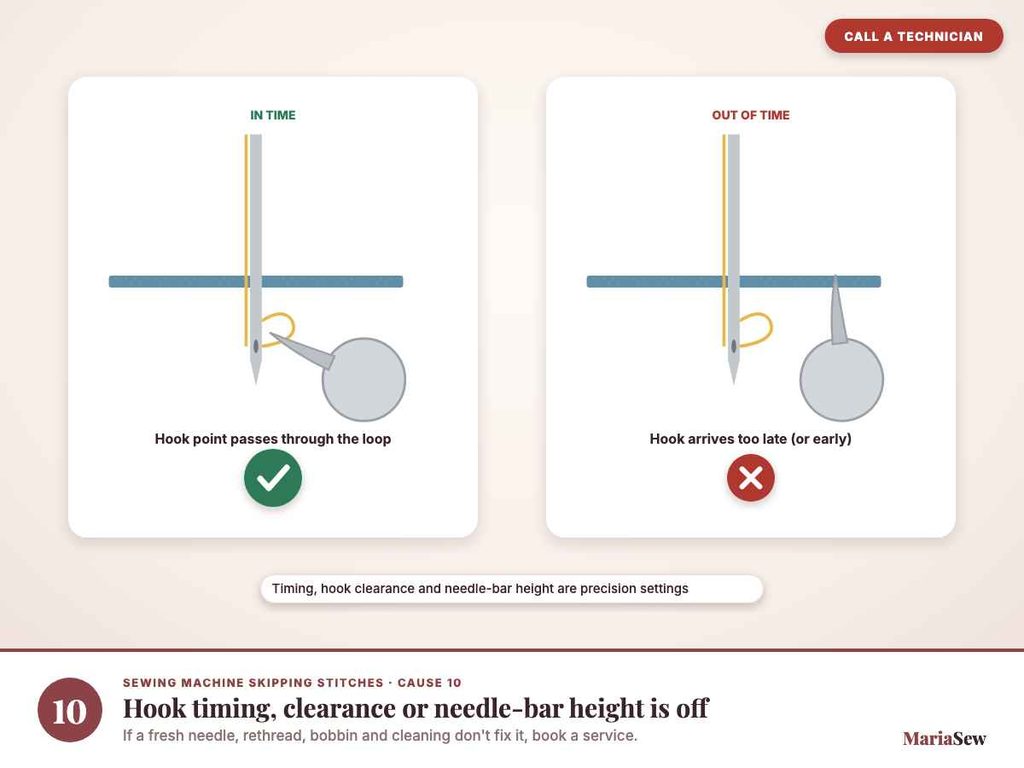
Timing becomes a serious suspect when a fresh correct needle, complete rethread, correct bobbin, normal tension, clean accessible areas, and multiple test fabrics still produce skipped stitches. The hook has to arrive beside the needle at the right moment and at the correct clearance to catch the upper-thread loop.
This is not a setting I recommend adjusting by trial and error. Timing, hook-to-needle clearance, and needle-bar height are precision mechanical relationships, and an incorrect adjustment can cause needle strikes or further damage.
Why Does My Sewing Machine Skip Stitches on Stretch Fabric?
Stretch fabric is one of the most common places I see skipped stitches because the fabric moves around the needle and a standard sharp or universal needle may not form a reliable loop on highly elastic material. A fresh jersey, ballpoint, or stretch needle is usually the first fabric-specific change I test.
I also stop pulling the knit, support the fabric on the table, and use a stitch that can move with the material. If the seam waves, I consider lower presser-foot pressure or a walking foot before blaming tension.
For knit-specific setup, see How to Sew Stretch Fabric.
Why Does My Sewing Machine Skip Stitches on Denim or Thick Fabric?
Thick layers can flex a needle away from the hook, especially at a bulky hem crossing. I use a fresh jeans or denim needle of an appropriate size, slow the machine down, support the weight of the project, and keep the presser foot level as it climbs the seam.
I do not force the fabric through or assume more motor speed will solve the problem. If the machine repeatedly stalls or skips at a thickness beyond its domestic rating, the project may need a different construction method or a more suitable machine.
Why Does My Machine Skip Stitches After a Needle Change?
If the skipping started immediately after replacing the needle, I check installation before anything else. The needle may not be seated fully, may be facing the wrong direction for the model, may be the wrong system or type, or may simply be defective.
I remove it, compare it with the correct needle specified for the machine, reinstall it carefully, tighten the clamp, and test on scrap. That is faster and more reliable than changing tension to compensate for an installation problem.
When to Stop Troubleshooting and Call a Sewing Machine Technician
A skipped-stitch problem becomes a service problem when the safe external checks are exhausted or the machine shows signs of mechanical damage. I stop before turning timing screws, bending metal parts, or opening internal areas that the owner manual does not identify as user-serviceable.
- The machine skips on several fabrics with a fresh correct needle. Persistent skipping across cotton, stretch fabric, and other test materials points away from a single fabric mismatch.
- The needle repeatedly strikes the plate, hook, or bobbin case. Repeated metal contact can damage the needle and internal parts.
- You hear new knocking, scraping, or grinding. Unusual resistance or noise deserves inspection before more sewing.
- The handwheel feels abnormally tight. Do not force a mechanism that has suddenly become difficult to turn.
- A hard needle strike happened immediately before the problem. Timing, hook clearance, burrs, or alignment may need professional evaluation.
- The machine is under warranty. Check warranty terms before attempting any internal adjustment that could affect coverage.
When I book service, I tell the technician exactly when the skips occur, what fabrics trigger them, which needle and thread I used, and which basic checks I already completed. That makes the fault easier to reproduce.
How to Prevent Skipped Stitches
Preventing skipped stitches is mostly about keeping the needle, thread path, bobbin system, fabric handling, and accessible machine areas predictable. I would rather spend two minutes on setup than stop halfway through a finished seam.
- Start important projects with a good needle. Replace a needle that is bent, dull, damaged, or questionable after a hard strike.
- Match needle, thread, and fabric. Do not use one universal needle setup for every knit, denim, canvas, fine woven, or specialty material.
- Thread with the machine in the correct position. Follow the manual, raise the presser foot when required, and make sure the take-up lever is included.
- Use the specified bobbin. Correct size, winding, direction, and seating matter.
- Clean after lint-heavy sewing. Batting, fleece, flannel, and frequent cotton sewing can leave more lint than a short lightweight project.
- Support the fabric. Keep large quilts, heavy denim, and long garments from pulling behind the needle.
- Test before the final seam. A scrap made from the same fabric and layers can expose a problem before it reaches the project.
- Oil only when the manual tells you to. Some machines allow user lubrication; others should be serviced internally by a technician.
A machine that suddenly starts skipping after sewing normally is telling me something changed. I look for the most recent change first: needle, thread, fabric, bobbin, cleaning, a needle strike, or a new setup.
Common Skipped-Stitch Troubleshooting Mistakes to Avoid
The fastest way to make troubleshooting harder is to change several unrelated settings at once. That can hide the original cause and create a new problem.
- Turning tension first. Needle and threading errors are easier to rule out and commonly mimic tension problems.
- Reusing a questionable needle. A needle can be bent or damaged without looking dramatically different.
- Assuming all needles install the same way. Needle orientation and needle systems vary; follow the exact machine manual.
- Using a universal needle for every fabric. Stretch fabrics and heavy woven materials often benefit from purpose-designed needle points and reinforced blades.
- Pulling fabric through a thick seam. This can deflect or bend the needle and make the skipping worse.
- Touching the bobbin-tension screw too early. Many visible stitch problems are caused by upper threading, needle choice, or bobbin seating instead.
- Blowing lint deeper into the machine. Use the cleaning method specified in the manual rather than forcing debris into inaccessible areas.
- Oiling because the machine is skipping. Lubrication is model-specific and is not a universal skipped-stitch fix.
- Attempting timing adjustments without the service procedure. Hook timing and needle-bar height are precision settings, not trial-and-error controls.
- Testing on a different fabric than the project. A fix on quilting cotton does not prove the same setup will work on Lycra, denim, or a bulky seam.
When I cannot explain why a change should help the specific symptom, I do not make that change. That keeps the troubleshooting process safe and repeatable.
Final Answer: Why Is My Sewing Machine Skipping Stitches?
Most skipped stitches come from a needle or setup problem, so I start with the simplest reset: install a fresh correct needle, rethread the upper path with the presser foot raised, confirm the bobbin, return tension to a normal baseline, clean accessible lint, and test on matching scrap fabric.
If the skipping happens only on stretch fabric or thick seams, match the needle and handling method to that material. If the machine continues to skip across multiple fabrics after the external checks are correct, stop adjusting at home and have the hook timing, clearance, needle bar, and related internal parts inspected professionally.
Frequently Asked Questions
Why is my sewing machine suddenly skipping stitches?
Start with what changed most recently. A worn or bent needle, a new fabric, incorrect rethreading, a bobbin change, a hard needle strike, or lint buildup can make a machine that was sewing normally begin skipping.
Can a dull needle cause skipped stitches?
Yes. A dull, bent, burred, or damaged needle can interfere with loop formation and hook pickup. Replacing the needle is one of the best first troubleshooting steps.
Why does my sewing machine skip stitches on stretch fabric?
Stretch and knit fabrics often need a fresh ballpoint, jersey, or stretch needle. Support the fabric, avoid pulling, and test a flexible stitch on a scrap before adjusting tension.
Why does my machine skip stitches on thick fabric or denim?
Thick seam crossings can deflect a needle. Use an appropriate jeans or denim needle and size, slow down, level the presser foot, support the project, and do not force the fabric.
Can incorrect threading cause skipped stitches?
Yes. If the upper thread misses the take-up lever or does not seat correctly in the tension path, the loop needed for hook pickup can be disrupted. Rethread from the beginning.
Should I adjust tension when stitches are skipped?
Not first. Replace the needle, verify the needle-and-fabric match, rethread the upper path, check the bobbin, and clean accessible lint. If those are correct, then evaluate tension in small steps.
Can the wrong bobbin cause skipped stitches?
It can contribute to irregular stitching and lower-thread problems. Use the exact bobbin type specified for the machine and insert it in the direction shown in the manual.
Can lint cause skipped stitches?
Lint and thread debris around the hook, bobbin holder, needle plate, and feed system can contribute to irregular feeding and stitch formation. Clean only the accessible areas described in the manual.
Why does my machine skip stitches at high speed?
A weak or bent needle, needle deflection, unstable fabric handling, or a marginal hook-to-needle relationship may become more obvious at higher speed. Slow down and repeat the test with a fresh correct needle.
Why does my sewing machine skip stitches after I changed the needle?
The replacement needle may be installed incompletely, facing the wrong direction for the model, the wrong type or size, or defective. Remove and reinstall the correct needle before changing other settings.
Can bad timing cause skipped stitches?
Yes. If the hook reaches the needle at the wrong point in the stitch cycle, it may miss the upper-thread loop. Persistent skipping after all basic setup checks should be inspected by a qualified technician.
When should I take my sewing machine in for repair?
Book service when skipping persists across multiple fabrics after a fresh correct needle and full rethread, when the needle strikes metal, when the handwheel becomes unusually tight, or when the machine makes new mechanical noises.