6 Best Industrial Sewing Machines in 2026: Heavy-Duty & High-Speed Picks Compared
Written by Maria
The best industrial sewing machine isn’t the fastest one, and it isn’t the one marketed for the thickest stack of fabric. After 12 years of sewing, I’ve learned that the feed system and stitch type matter more than the headline speed, because a machine built for garment seams will struggle on leather, and a leather machine is slow on light cotton.
This guide compares seven machines for garment production, denim, canvas, leather, upholstery, quilting, and zigzag work. It also draws a line most listings skip: the Brother PQ1600S and Janome HD9 are excellent professional-style straight-stitch machines, but they are not factory industrial machines. I’ve matched each pick to the job it’s built for, so you can match stitch type, feed system, speed, and daily workload to your own sewing.
Key Takeaways
- JUKI DDL-8700 is a medium-weight industrial lockstitch specialist with speeds up to 5,500 SPM.
- Consew 206RB-5 is a heavy-material specialist with compound feed for leather, upholstery, vinyl, canvas, and layered fabrics.
- Standard JACK F4 is a light-to-medium industrial lockstitch machine, while the F4-H is the separate heavy-duty version.
- VEVOR JK-9803 is an industrial lockstitch machine with a 550W servo motor, up to 5,000 SPM, and a 5 mm maximum stitch length.
- Brother PQ1600S is a professional-style straight-stitch machine, not a factory industrial machine.
- Janome HD9 is a professional home/studio straight-stitch machine with speeds up to 1,600 SPM and useful convenience features.
- The feed system matters as much as speed, because straight-stitch and walking-foot machines are designed for different sewing applications.
Quick Verdict: 6 Best Industrial Sewing Machines
| Machine | Our rating | Type | Best for | Price | Buy |
|---|---|---|---|---|---|
| JUKI DDL-8700 Best Overall | 9.4/10 | Single-needle lockstitch | Garments, light-medium fabric | $1,120 | Buy Now |
| JUKI TL-2010Q Best Semi-Industrial for Home | 9.2/10 | Semi-industrial straight stitch | Quilting, home sewing | $1,239* | Buy Now |
| Consew 206RB-5 Best for Upholstery & Leather | 9.1/10 | Walking foot (compound feed) | Upholstery, leather, canvas | $2,512 | Buy Now |
| JUKI DNU-1541S Best for Very Heavy Material | 9.0/10 | Walking foot (needle feed) + safety clutch | Heavy multi-layer work | Check price | Buy Now |
| JUKI DU-1181N Best for Canvas & Vinyl | 8.8/10 | Walking foot (top & bottom feed) | Canvas, vinyl, piping | Check price | Buy Now |
| JUKI DDL-8100e Best Budget JUKI | 8.6/10 | Single-needle lockstitch | Light-medium fabric on a budget | $900* | Buy Now |
*Dealer price (Quality Sewing for the TL-2010Q, Sewing Machine Outlet package for the DDL-8100e), October 2026. Industrial machines are often sold as head only or as a complete set with table and motor, so compare like with like. Ratings are MariaSew’s editorial scores.
What Makes a Sewing Machine Truly Industrial?
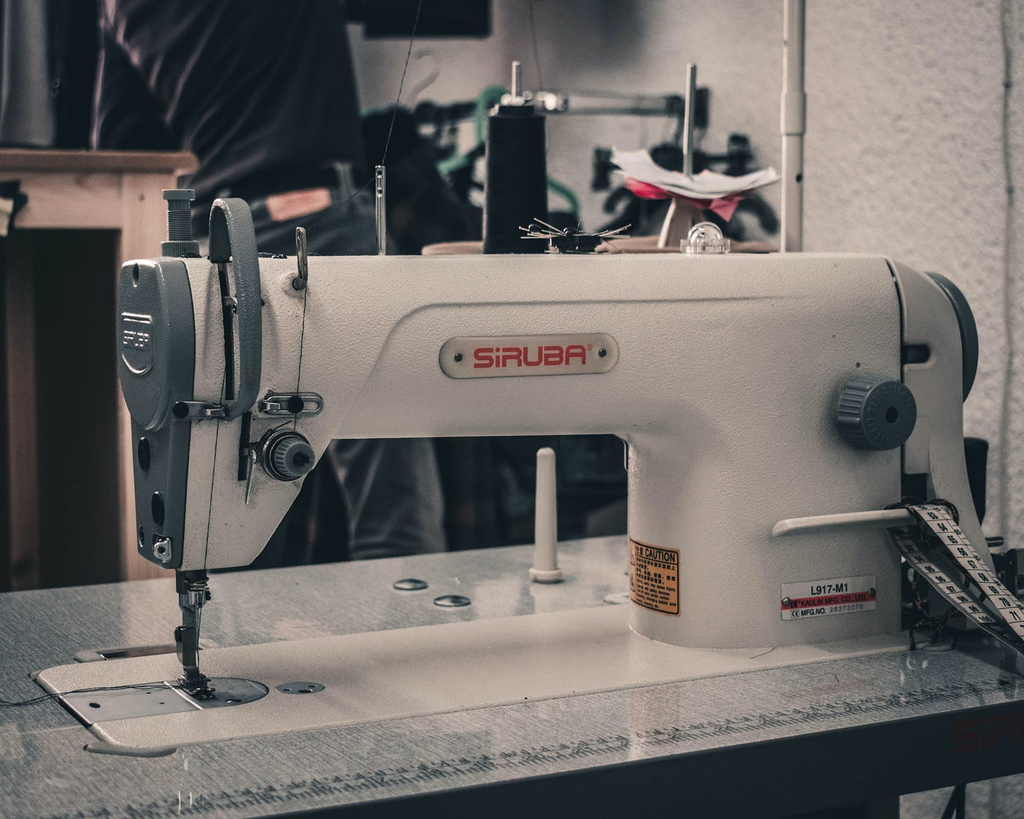
A true industrial sewing machine is designed around repeated production work and a narrow job description. Many are sold as a machine head that mounts into a dedicated table with a servo or clutch motor, knee lifter, thread stand, oil system, and industrial controls.
Industrial does not automatically mean ‘sews anything thick.’ A high-speed garment lockstitch machine can be genuinely industrial while still being intended mainly for light or medium materials. Heavy upholstery work usually needs a different feed mechanism, needle system, presser-foot lift, thread capacity, and stitch length.
Professional-style domestic machines sit between household and factory equipment. They can provide industrial-like straight-stitch speed and stability in a self-contained body, but they are still designed for a different duty cycle, workspace, and service environment.
Industrial vs. Heavy-Duty vs. Professional-Style Sewing Machines
These labels overlap in marketing, so I separate them by construction and intended workflow rather than by appearance. A heavy metal machine with one straight stitch is not automatically industrial, and a true industrial garment machine is not automatically suitable for leather upholstery.
- True industrial. Usually table-mounted, task-specific, motor-driven, serviceable for sustained production, and designed around one operation or material class.
- Heavy-duty domestic. A stronger household machine built to handle thicker everyday fabrics or more frequent use while retaining normal home-machine versatility.
- Professional-style straight stitch. A fast, self-contained home or studio machine focused on straight stitching, quilting, garments, or home décor without being a factory production head.
- Walking-foot industrial. A specialist machine designed to control multiple layers and difficult materials through coordinated feed movement.
- Industrial zigzag. A production machine built around straight and zigzag or related stitch motion rather than straight lockstitch only.
For this roundup, I keep all seven original machines because each is relevant to buyers searching for industrial-style performance, but I label the Brother PQ1600S and Janome HD9 correctly as professional alternatives rather than true factory industrial machines.
How I Test Industrial Sewing Machines at MariaSew
I personally use the sewing machines I recommend on MariaSew.com before I publish a verdict. I have more than 12 years of hands-on sewing experience, and with industrial or professional machines I focus less on decorative features and more on whether the machine can repeat the same seam cleanly, predictably, and comfortably over a longer working session.
I test straight-stitch consistency, pedal response, slow-speed control, full-speed stability, reverse, seam starts, long seams, bulky intersections, bobbin changes, presser-foot lift, thread handling, and the way the feed system controls real materials. For walking-foot machines I add leather, vinyl, canvas, webbing, batting, and layered assemblies. For zigzag machines I test stitch width, dense satin-style sewing, directional control, and straight-to-zigzag changes.
- Stitch consistency. I inspect the top and underside for balanced tension, skipped stitches, inconsistent stitch length, thread damage, and changes as speed rises.
- Feed behavior. I watch whether layers creep, whether the machine climbs seam transitions, and whether I have to pull or steer the project excessively.
- Speed and control. An industrial machine must be productive without becoming difficult to control at seam starts, corners, or short runs.
- Material range. I test the fabrics the machine is actually designed for rather than forcing a garment lockstitch machine to prove itself on upholstery leather.
- Workflow. I evaluate knee lift, reverse, bobbin access, thread trimming, needle positioning, table space, lighting, and how quickly I can repeat the same setup.
- Maintenance and ownership. I consider lubrication, cleaning, needle systems, service access, replacement parts, motor setup, noise, and the amount of dedicated space the machine needs.
MariaSew’s published editorial policy states that every sewing machine recommendation is based on personal hands-on use rather than manufacturer specifications alone.
How Industrial Sewing Machines Work
The stitch formation is familiar: the needle carries the upper thread through the material, the hook catches the loop, and the bobbin thread locks with it to form a lockstitch. What changes in an industrial setup is how the machine is optimized for speed, feed control, lubrication, thread size, material class, and repeatability.
A garment lockstitch machine usually relies on bottom feed and high speed. A compound-feed walking-foot machine coordinates the feed dog, needle movement, and alternating feet so stacked material advances more evenly. An industrial zigzag machine moves the needle laterally as well as vertically, creating a different stitch structure and set of applications.
Key Features to Consider Before Buying an Industrial Sewing Machine
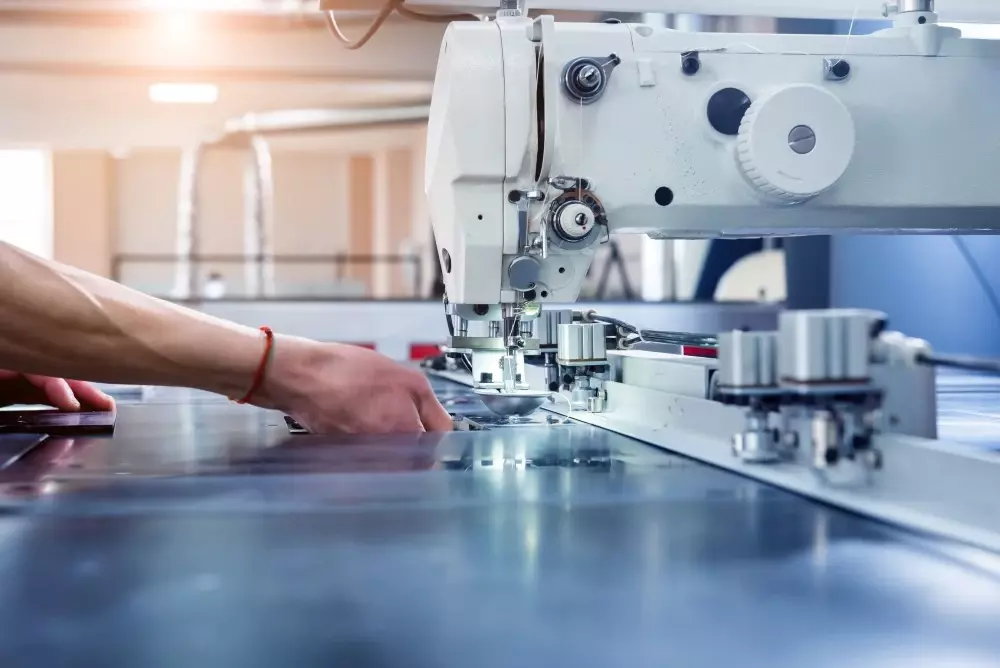
The safest way to compare industrial machines is to start with the operation, then move to the feed system and materials, and only then compare speed or price. These features have the biggest effect on real production.
Stitch Type and Intended Operation
Lockstitch, straight stitch, zigzag, and compound-feed machines are not interchangeable. I write down the seams I produce most often before comparing models because the wrong stitch category can make an otherwise excellent machine useless for the workflow.
Feed System
Bottom feed is excellent for conventional garment and general straight stitching, while compound feed and walking feet are better when layers must move together. Pin feed, needle feed, and specialty feed systems solve different fabric-control problems.
Motor Type and Drive System
Modern servo and direct-drive systems improve low-speed control, noise, energy use, and response compared with older clutch-motor setups. A direct-drive motor can also reduce belts and external components, but the exact control system matters more than the label.
Maximum Speed and Slow-Speed Control
Industrial speeds from roughly 2,500 to 5,500 SPM can dramatically increase output, but top speed is only useful if the operator can control starts, corners, short seams, and thick transitions. I prefer predictable pedal response to a headline number I cannot use comfortably.
Stitch Length and Zigzag Width
Longer stitches are useful for topstitching, upholstery, canvas, leather, and visible construction seams. Zigzag width matters only on machines designed for zigzag work, where the application may include tailoring, appliqué, elastic, decorative work, or specialty production.
Presser-Foot Lift and Material Clearance
A higher lift provides room to position thicker assemblies under the foot, but clearance alone does not prove the machine can feed or penetrate that material. Feed mechanism, needle system, thread, motor torque, and machine subclass still matter.
Needle and Thread System
Industrial machines use specific needle systems and can be optimized around different thread weights. Before buying, I confirm the exact needle range and whether the hook, tension system, and feed setup match the thread used in my products.
Bobbin and Hook Capacity
Large hooks and bobbins reduce interruptions during long seams and heavy-thread work. Standard garment lockstitch machines may prioritize speed instead, while upholstery machines often benefit from larger bobbin capacity.
Lubrication and Maintenance
Many true industrial machines use automatic or centralized lubrication and require the correct oil level and service routine. A professional-style domestic machine may need less oil handling but should not be assumed to tolerate the same production duty cycle.
For broader maintenance guidance, see How to Oil a Sewing Machine.
Table, Workspace, and Ergonomics
A dedicated table supports the material and keeps the machine stable at high speed. I also check knee-lifter position, reverse access, bobbin access, lighting, chair height, and whether large projects can move without fighting the table edge.
For buyers setting up a dedicated sewing workspace, i also covered the Best Sewing Machine Tables and Best Sewing Chair.
Best Industrial Sewing Machines at a Glance
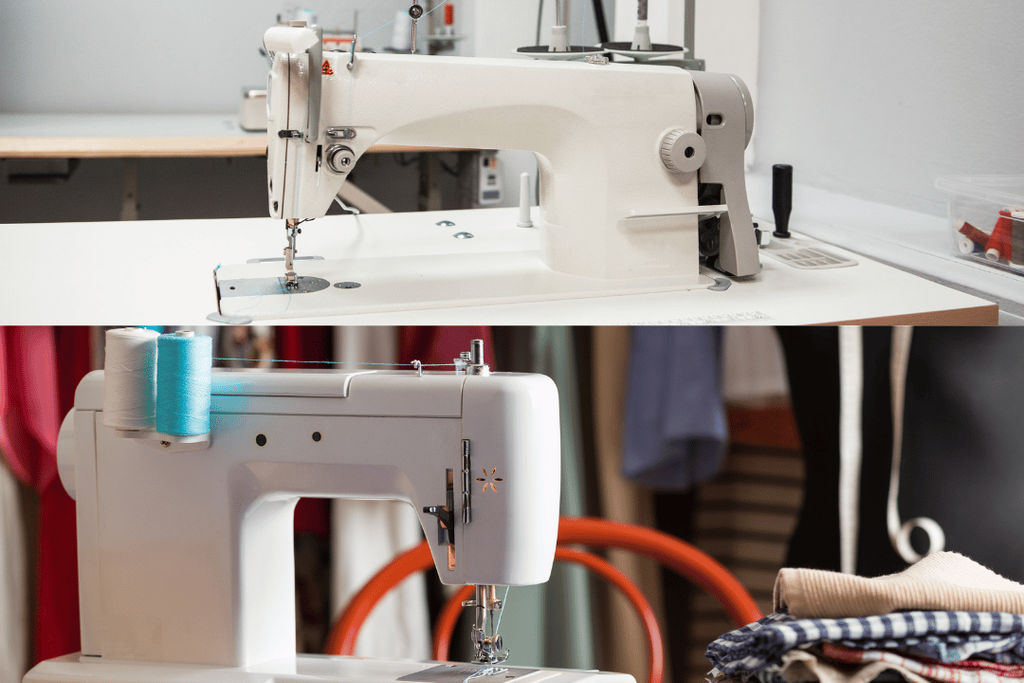
The seven picks below cover several different sewing jobs, so the comparison table should be used as a final orientation tool rather than a winner-takes-all scorecard. A 5,500 SPM garment lockstitch machine is not ‘better’ than a 3,300 SPM compound-feed machine if your real work is leather upholstery.
I narrow the choices by stitch type first, then material handling, then speed and automation. This avoids the common mistake of choosing a machine because one specification looks impressive in isolation.
- Choose JUKI DDL-8700 for very fast straight lockstitch production on the material class matched to the specific DDL-8700 subclass.
- Choose JACK F4 for a direct-drive industrial lockstitch with strong speed control and a simpler integrated setup for light-to-medium production.
- Choose VEVOR JK-9803 for a budget-oriented complete servo lockstitch package with digital controls.
- Choose Consew 206RB-5 for leather, upholstery, vinyl, canvas, coated fabrics, bags, covers, and layered assemblies that need compound feed.
- Choose Brother PQ1600S for fast professional-style quilting and straight-stitch home/studio work with pin feed and a large included table.
- Choose Janome HD9 for premium professional straight stitching with 1,600 SPM speed, heavy presser-foot pressure, jumbo bobbin, and automatic conveniences.
| Model | Category | Max Speed | Stitch | Feed | Material Focus | Best For |
|---|---|---|---|---|---|---|
| JUKI DDL-8700 | True industrial lockstitch | 5,500 SPM | 5 mm | Bottom feed | Medium-weight standard model | Garment / general production |
| JACK F4 | True industrial direct-drive lockstitch | 5,000 SPM | 5 mm | Bottom feed | Light-to-medium standard model | Direct-drive production value |
| VEVOR JK-9803 | True industrial servo lockstitch | 5,000 SPM | 5 mm | Bottom feed | Medium-thick per current listing | Budget complete setup |
| Consew 206RB-5 | True industrial compound-feed lockstitch | 3,300 SPM | 10 mm | Drop + needle + walking foot | Light to heavy | Upholstery / leather / canvas |
| Brother PQ1600S | Professional-style straight stitch | 1,500 SPM | Straight stitch | Feed dogs + pin feed | Home/studio fabrics & quilting | Quilting / precision |
| Janome HD9 | Professional-style straight stitch | 1,600 SPM | 6 mm | 3-piece feed dog | Heavy home/studio work | Fast straight stitching |
The table also shows why I do not call the Brother PQ1600S or Janome HD9 true industrial machines. They are extremely capable professional straight-stitch machines, but their self-contained home/studio design and intended workflow differ from table-mounted production heads.
1. JUKI DDL-8700 – Best Overall High-Speed Industrial Lockstitch Machine
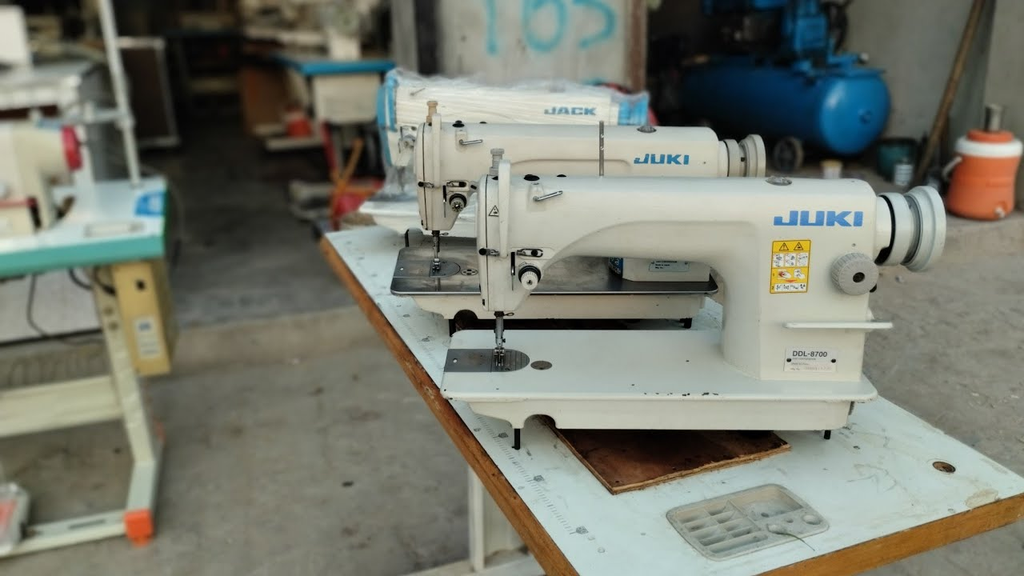
The JUKI DDL-8700 is the machine I would start with for high-speed straight lockstitch production when the work is dominated by garment seams, general fabrication, or repeated medium-weight sewing. JUKI rates the standard DDL-8700 at up to 5,500 stitches per minute with a 5 mm maximum stitch length and up to 13 mm of presser-foot lift by knee.
The important correction is material class. The standard DDL-8700 is listed for medium-weight materials, while JUKI also sells DDL-8700A and DDL-8700H subclasses for lighter and heavier work. I would not buy the standard model for upholstery leather simply because it is industrial; I would match the exact subclass to the fabric and thread system.
Features
- 5,500 SPM Industrial Speed
- 5 mm Maximum Stitch Length
- 13 mm Knee-Lifter Presser-Foot Lift
- Automatic Lubrication
- Low-Tension Sewing Mechanism
- Industrial DBx1 Needle System
Pros
These are the advantages I would actually notice in a working sewing room, rather than benefits that only look good on a specification sheet.
- Extremely fast production speed. Up to 5,500 SPM is excellent for long straight-seam workflows.
- Purpose-built industrial stability. The head, table and motor format is designed around repetitive lockstitch production.
- Good operator ergonomics. Knee lift, stitch dial and wide front-area handling support efficient work.
- Automatic lubrication. Useful for sustained industrial operation when maintained correctly.
- Strong parts and service ecosystem. JUKI industrial lockstitch machines are widely supported in professional sewing environments.
The strongest pros only matter when they match the machine’s intended stitch and material class. I would not trade the correct feed system for a higher headline speed.
Cons
Every specialist machine gives something up. These limitations are the points I would check before committing table space, budget, and maintenance time.
- Straight stitch only. It cannot replace zigzag, overlock, coverstitch or walking-foot equipment.
- Standard model is not an upholstery machine. Heavy material buyers need the correct DDL-8700H or another machine category.
- Requires dedicated industrial setup. Table, motor, oiling, tuning and permanent floor space are part of ownership.
None of these cons automatically disqualifies the machine. They simply define the buyer and workflow it suits best.
Final Verdict
The JUKI DDL-8700 is my best overall true industrial pick for fast, repeatable straight-stitch production on the correct material class. Buy it for garment and general lockstitch productivity, not as a universal heavy-leather machine.
2. JUKI DDL-8100e – Best Entry-Level JUKI Industrial Lockstitch
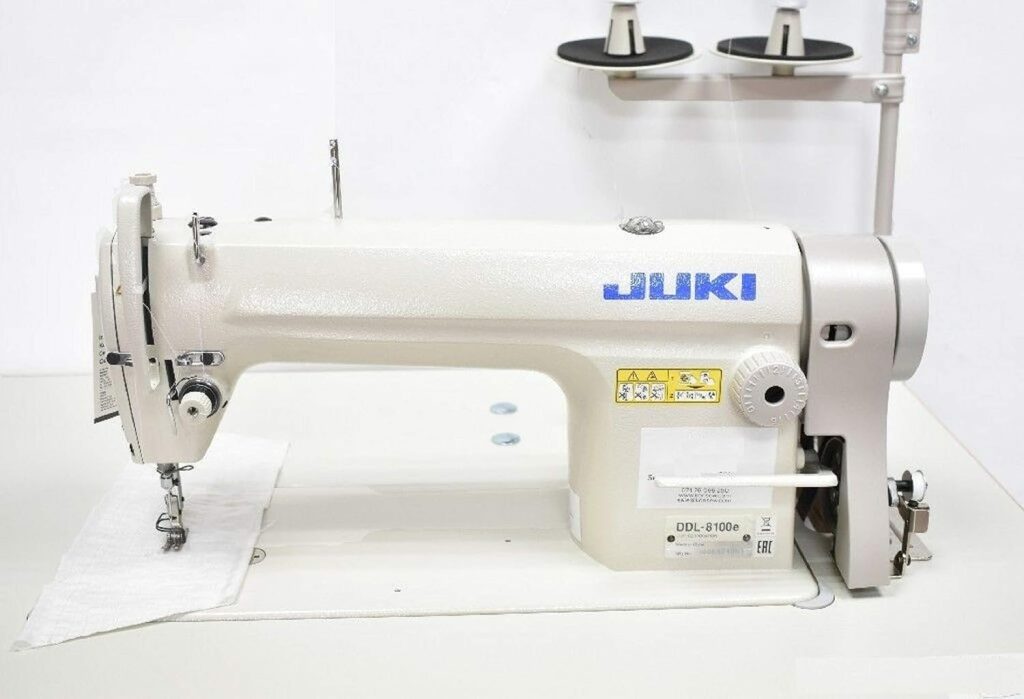
The JUKI DDL-8100e is JUKI’s economy single-needle straight lockstitch machine, built for light-to-medium-weight materials. The published specs are a maximum 4,500 stitches per minute, a 5 mm maximum stitch length, 13 mm of presser-foot lift by knee, DB×1 needles (sizes 9 to 18, with #14 as the starting size), a 3-row feed dog, and an automatic-lubricating full-rotary hook.
It sits close to the DDL-8700 but costs less and runs slower, with 4,500 SPM against the 8700’s 5,500. For tailoring, alterations, curtains, shirts and small garment runs, top speed is rarely what limits output. Steady feeding and comfortable control matter more, and that is where I would buy this machine. JUKI also sells a heavier DDL-8100eH (4,000 SPM, longer needle-bar stroke), so match the exact version to your material. The standard 8100e is a bottom-feed machine and not an upholstery or leather-stack machine.
Features
- Up to 4,500 SPM
- 5 mm maximum stitch length
- 13 mm knee-lift presser-foot clearance
- Automatic lubrication
- DB×1 needle system, sizes 9 to 18
- Servo motor, table and stand in most US complete sets
Pros
- Lower entry cost than the DDL-8700 within JUKI’s lockstitch line.
- Fast enough for alterations, garment and general production work.
- Automatic lubrication reduces daily oiling.
- Servo-driven complete sets are easier to control at low speed than older clutch motors.
- Common needle system, so replacement needles are easy to find.
Cons
- Straight stitch only. No zigzag, overlock or coverstitch.
- Not for heavy materials. The standard model is light to medium weight, and thick leather or upholstery needs a compound-feed machine such as the Consew 206RB-5.
- Dedicated setup required. Table, motor, oil and floor space are part of ownership.
Final Verdict: The DDL-8100e is the JUKI to choose for light-to-medium straight-stitch work when budget matters more than the top speed of the DDL-8700. Buy it for garments, alterations and home décor, not for thick leather.
3. VEVOR JK-9803 – Best Budget Complete Industrial Lockstitch Setup
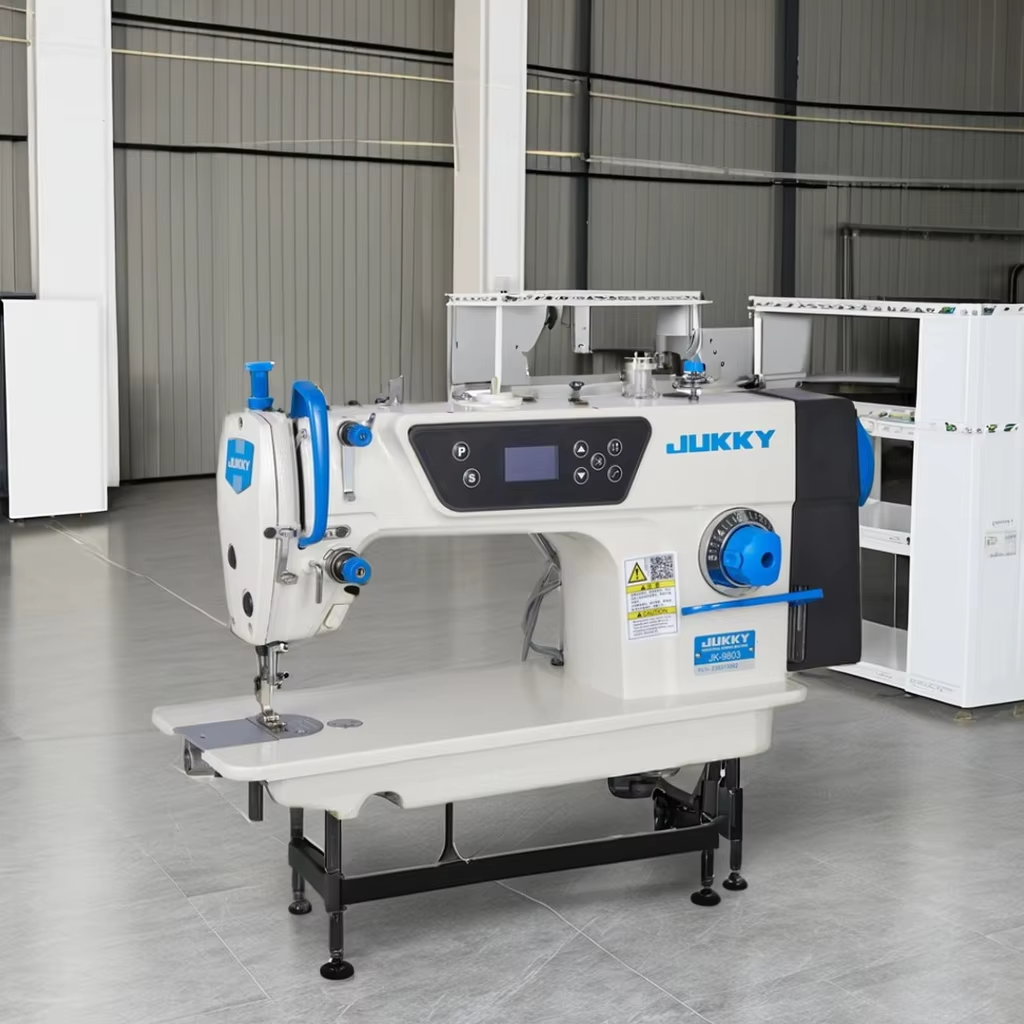
VEVOR sells several closely related industrial lockstitch packages, so I use the current JK-9803 550W version as the reference point for this guide. Its listed specifications include a 550W servo motor, 0 to 5,000 stitches per minute, 0 to 5 mm stitch length, 10 mm standard and 13 mm maximum knee lift, a table and stand, digital controls, needle positioning, and intelligent start/stop functions.
The attraction is price-to-package value rather than a long-established industrial service ecosystem. VEVOR markets the machine for medium-thick materials and makes aggressive thickness claims, but I would still judge it as a bottom-feed lockstitch machine, not as a substitute for a compound-feed Consew when leather, vinyl, foam and upholstery layers need synchronized feeding.
Features
- 550W Servo Motor
- Up to 5,000 SPM
- 0 to 5 mm Stitch Length
- Digital Control Panel
- Needle Stop and Smart Start/Stop
- Complete Table-and-Stand Package
Pros
These are the advantages I would actually notice in a working sewing room, rather than benefits that only look good on a specification sheet.
- Strong value for a full setup. Motor, table and controls are bundled together.
- Fast 5,000 SPM specification. Suitable for productive straight-seam work once the operator is comfortable.
- Servo control is beginner-friendlier. Slower starts are easier than with many traditional clutch motors.
- Digital needle-position functions. Useful for controlled stops and corners.
- Low entry cost relative to established industrial brands. Attractive for a small shop testing an industrial workflow.
The strongest pros only matter when they match the machine’s intended stitch and material class. I would not trade the correct feed system for a higher headline speed.
Cons
Every specialist machine gives something up. These limitations are the points I would check before committing table space, budget, and maintenance time.
- Brand service network is less established in industrial sewing. Local parts and technician support may not match JUKI or Consew availability.
- Assembly and setup can require more work. A complete package still needs correct table assembly, alignment and tuning.
- Bottom feed limits upholstery control. Do not confuse thickness claims with compound-feed capability.
None of these cons automatically disqualifies the machine. They simply define the buyer and workflow it suits best.
Final Verdict
The VEVOR JK-9803 is the budget-oriented pick for buyers who want a complete servo lockstitch package without premium industrial pricing. I would use it for general straight-seam production, not as my first choice for demanding upholstery assemblies.
4. Consew 206RB-5 – Best Industrial Sewing Machine for Upholstery, Leather & Canvas
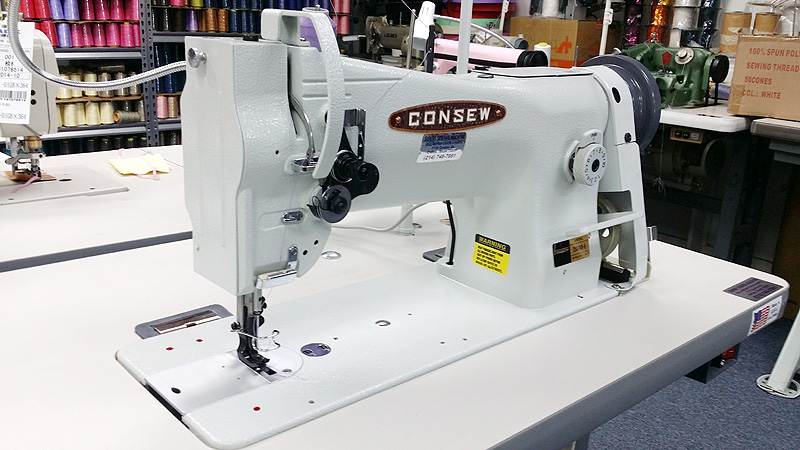
The Consew 206RB-5 is the machine in this list that most clearly earns the heavy-material label. Consew describes it as a triple-feed, single-needle lockstitch machine using drop feed, needle feed, compound feed, and alternating walking presser feet. It is designed for materials including leather, vinyl, upholstery, synthetics, canvas, laminated goods, sails, tents, covers, bags, luggage, outdoor gear, and related products.
Its specifications also match that job: up to 3,300 stitches per minute, an extra-long 10 mm stitch, 14 mm presser-foot clearance, a large horizontal-axis hook and bobbin, adjustable reverse, a safety clutch, and about 258 mm of work space. It is slower than garment lockstitch machines because material control, stitch length, and heavy-thread capability matter more here than raw speed.
Features
- Compound Triple-Feed System
- 10 mm Maximum Stitch Length
- 14 mm Presser-Foot Clearance
- Large Horizontal-Axis Hook and Bobbin
- Adjustable Forward and Reverse Stitching
- Safety Clutch and Centralized Lubrication
Pros
These are the advantages I would actually notice in a working sewing room, rather than benefits that only look good on a specification sheet.
- Excellent layered-material control. Compound feed is the right tool for upholstery-style assemblies.
- Very long 10 mm stitch. Ideal for visible heavy-duty construction and topstitching.
- Large bobbin and hook. Reduces interruptions on long heavy-thread seams.
- High 14 mm foot clearance. Provides useful room for bulky work.
- Strong industrial feature set. Reverse matching, safety clutch and lubrication are built around real production use.
The strongest pros only matter when they match the machine’s intended stitch and material class. I would not trade the correct feed system for a higher headline speed.
Cons
Every specialist machine gives something up. These limitations are the points I would check before committing table space, budget, and maintenance time.
- Slower than garment lockstitch machines. 3,300 SPM is appropriate for the job but not the fastest straight-seam production speed.
- Large and heavy dedicated setup. Consew is substantial machine and table weight, so this is not a portable option.
- Overkill for lightweight garment-only sewing. A high-speed bottom-feed lockstitch machine is more efficient for simple light fabrics.
None of these cons automatically disqualifies the machine. They simply define the buyer and workflow it suits best.
Final Verdict
The Consew 206RB-5 is my clear winner for upholstery, leather, canvas, vinyl, bags, covers and layered material control. If your projects actually need walking-foot compound feed, I would choose it over every faster bottom-feed machine in this roundup.
5. Brother PQ1600S – Best Professional-Style Straight-Stitch Machine for Quilters
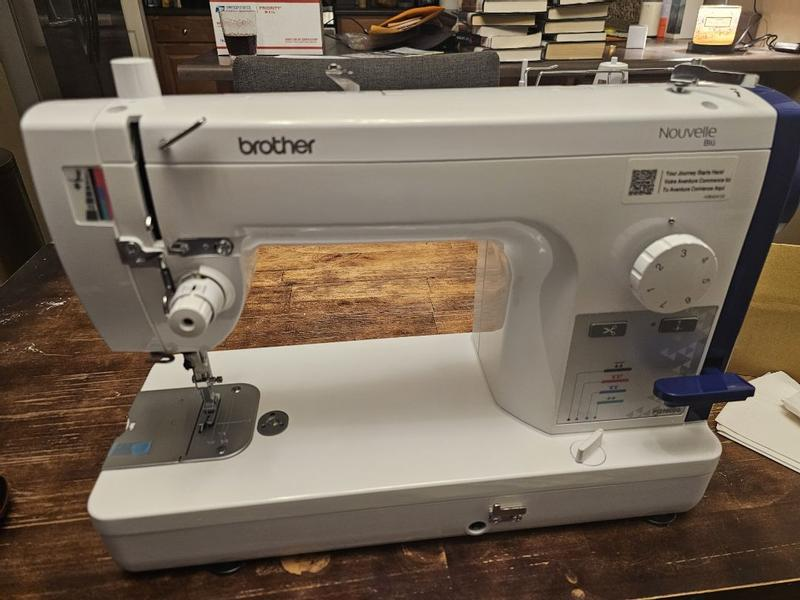
The Brother PQ1600S is not a factory industrial machine, and I would not market it as one. It is a high-speed straight-stitch sewing and quilting machine built for serious home and studio users, with up to 1,500 stitches per minute, a push-button thread cutter, programmable needle stop, adjustable feed dogs and presser-foot pressure, and a Pin Feed Mechanism for difficult fabrics.
Its biggest advantage over a table-mounted industrial lockstitch machine is the self-contained quilting workflow. Brother includes an 11.1 x 23.3-inch extension table and provides about 5.7 x 8.7 inches of needle-to-arm space. That gives large fabric support while keeping the machine easy to place in a home studio. I would choose it for quilts, garments, precision seams and layered home projects, not continuous factory production.
Features
- 1,500 SPM Straight-Stitch Speed
- Pin Feed Mechanism
- Push-Button Thread Cutter
- Programmable Needle Stop
- Large Included Extension Table
- Adjustable Feed Dog and Presser-Foot Pressure
Pros
These are the advantages I would actually notice in a working sewing room, rather than benefits that only look good on a specification sheet.
- Fast 1,500 SPM home/studio performance. Excellent for quilting and repeated straight seams.
- Unique pin-feed control. Useful for velvet, quilts and difficult layered fabrics.
- Excellent quilting workspace. The included extension table is large and practical.
- Automatic thread cutting and needle stop. Strong workflow features for frequent sewists.
- No industrial table installation required. The self-contained body is easier to place and move than a factory head.
The strongest pros only matter when they match the machine’s intended stitch and material class. I would not trade the correct feed system for a higher headline speed.
Cons
Every specialist machine gives something up. These limitations are the points I would check before committing table space, budget, and maintenance time.
- Not a true industrial production machine. Duty cycle and service environment differ from table-mounted industrial equipment.
- Straight stitch only. No zigzag, buttonholes or decorative stitch library.
- Not a compound-feed upholstery machine. Pin feed does not replace a Consew-style walking-foot system for leather upholstery.
None of these cons automatically disqualifies the machine. They simply define the buyer and workflow it suits best.
Final Verdict
The Brother PQ1600S is the best professional-style option here for quilters and serious home sewists who want industrial-like straight-stitch speed without an industrial table. It is powerful and precise, but it should not be confused with a factory walking-foot machine.
6. Janome HD9 Professional – Best Premium Professional Straight-Stitch Machine
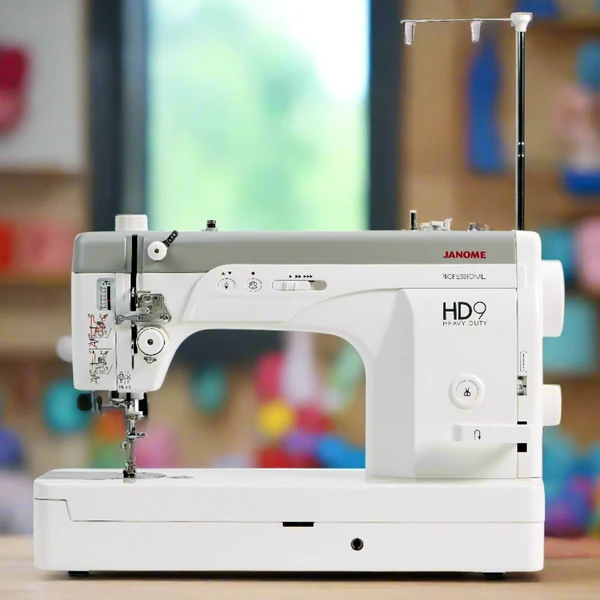
The Janome HD9 Professional is another machine that looks industrial because it is fast, heavy, straight-stitch only, and highly focused, but Janome positions it as a professional home-use sewing and quilting machine. It reaches up to 1,600 stitches per minute and combines a 6 mm maximum stitch length with automatic thread cutting, memorized needle up/down, a speed-control slider, an industrial-style pretension thread path, and an extra-large side-loading bobbin.
I would choose the HD9 when straight-stitch quality, heavy thread, strong presser-foot pressure and studio productivity matter more than stitch variety. Janome has up to 11 pounds of presser-foot pressure and a jumbo bobbin that holds about 40% more thread than a normal bobbin. It is excellent for quilts, bags, denim, canvas, leather crafts and home décor, but still belongs in the professional domestic category rather than a factory industrial duty cycle.
Features
- 1,600 SPM Maximum Speed
- Up to 11 Pounds of Presser-Foot Pressure
- 6 mm Maximum Stitch Length
- Jumbo Side-Loading Bobbin
- Automatic Thread Cutter and Needle Up/Down
- Heavy-Weight Thread Guide
Pros
These are the advantages I would actually notice in a working sewing room, rather than benefits that only look good on a specification sheet.
- Very fast 1,600 SPM straight stitching. Excellent for serious studio productivity.
- Strong presser-foot pressure. Helps control demanding home/studio fabrics.
- Large-capacity bobbin. Reduces interruptions during long projects.
- Excellent electronic conveniences. Thread cutter, needle memory and speed slider improve workflow.
- Self-contained professional format. No industrial table or external servo installation is required.
The strongest pros only matter when they match the machine’s intended stitch and material class. I would not trade the correct feed system for a higher headline speed.
Cons
Every specialist machine gives something up. These limitations are the points I would check before committing table space, budget, and maintenance time.
- Premium price for straight stitch only. You pay for speed and workflow rather than versatility.
- Not a true walking-foot industrial. Heavy home fabrics are different from commercial upholstery assemblies.
- Large and heavy for a domestic machine. At about 32 pounds, it is movable but not a casual travel machine.
None of these cons automatically disqualifies the machine. They simply define the buyer and workflow it suits best.
Final Verdict
The Janome HD9 is my premium professional straight-stitch pick for serious home and studio sewists who want speed, heavy-thread capability and excellent automation. It is a superb specialist, but not a replacement for a compound-feed industrial upholstery machine.
Which Industrial Sewing Machine Is Best for Your Material?
Material choice should narrow the list faster than brand preference. The wrong feed system is often the reason a powerful machine feels frustrating on a real project.
- Garment cottons, woven apparel and general production. Start with JUKI DDL-8700 or JACK F4 in the correct material subclass.
- Medium-thick general straight-seam work on a budget. VEVOR JK-9803 is the lower-cost servo package, provided local setup and support are acceptable.
- Leather, upholstery vinyl, canvas, foam-backed fabric and bags. Consew 206RB-5 is the most appropriate feed system in this roundup.
- Quilting, garments and fast straight stitching in a home studio. Brother PQ1600S offers pin feed, a large table and 1,500 SPM speed.
- Premium studio straight stitching, heavy thread and automated convenience. Janome HD9 combines 1,600 SPM speed, large bobbin capacity and electronic workflow features.
If your work changes from garments one day to leather upholstery the next, one specialist industrial machine may not be enough. Many professional shops use separate machines because each operation is faster and more reliable on equipment designed for that exact job.
Do You Need a True Industrial Machine?
A true industrial machine makes sense when sewing volume, material control, or repeated stitch quality has outgrown normal household equipment. It does not automatically make sense just because you occasionally hem jeans or sew one canvas bag.
- Choose true industrial if you sew for hours, repeat the same operation, need a dedicated feed system, use industrial thread and needles, or are building a small production workflow.
- Choose professional-style if you want fast straight stitching, quilting space and better control but still need a self-contained machine that lives in a home sewing room.
- Choose heavy-duty domestic if your work still needs zigzag, buttonholes and normal household versatility with occasional thicker fabrics.
- Choose multiple specialists if your business requires straight lockstitch, overlock, coverstitch, walking-foot and zigzag operations on a regular basis.
If you are not sure you need a factory machine yet, compare this guide with MariaSew’s best heavy-duty sewing machines before committing to an industrial table setup.
Industrial Sewing Machine Maintenance and Safety
Industrial machines are designed to work hard, but they are not maintenance-free. High speed makes small setup errors more consequential, so I treat cleaning, lubrication, needle condition, and electrical safety as part of the sewing workflow.
- Use the correct oil. Follow the exact manual for automatic, centralized, wick, or manual lubrication. Do not substitute random household oil.
- Check the needle system before every new material class. Industrial machines use specific needle systems, and the wrong needle can damage the hook, break thread, or create skipped stitches.
- Clean lint and thread debris regularly. High-speed production can build lint quickly around the feed dog, hook and oil areas.
- Inspect thread path and tension discs. Heavy or abrasive thread can expose wear and setup problems faster.
- Keep guards and belt covers installed. Do not operate exposed moving belts or electrical components.
- Turn power off before adjustments. Needle changes, hook work, table work and internal adjustments should never be done with the machine energized.
- Use a trained technician for timing and electrical work. Industrial hook timing, motor programming and internal electronic repairs are not casual trial-and-error jobs.
For a step-by-step maintenance reference, see How to Oil a Sewing Machine.
If tension problems appear during testing, MariaSew’s guide to Sewing Machine Tension can help distinguish tension-related issues from feed or needle problems.
A maintained machine is easier to diagnose because changes in sound, stitch quality, tension, vibration or feeding become obvious sooner. That consistency protects both the machine and the work.
Common Industrial Sewing Machine Buying Mistakes to Avoid
Most expensive buying mistakes happen before the machine is switched on. The buyer sees the word industrial, a high stitch-per-minute number, or a video of thick fabric and assumes the machine fits every demanding project.
- Assuming every industrial machine is heavy-duty upholstery equipment. The JUKI DDL-8700 and JACK F4 are industrial lockstitch machines, but the standard subclasses are not the same as a compound-feed Consew.
- Buying by maximum speed alone. A slower walking-foot machine can be far more productive on leather and vinyl because it feeds the material correctly.
- Ignoring the exact subclass. JUKI and JACK both sell variants for different fabric weights, stitch lengths, and needle systems.
- Confusing professional-style with true industrial. Brother PQ1600S and Janome HD9 are excellent specialists but use a home/studio format.
- Believing thickness marketing without checking feed design. Piercing a thick stack once is not the same as feeding real upholstery layers evenly for a long seam.
- Forgetting table and motor requirements. A machine head, servo motor, table cutout, stand, knee lift and electrical setup all affect total cost and space.
- Ignoring parts and technician access. A cheap machine can become expensive if hooks, feet, bobbins, boards, needles or trained service are difficult to source.
- Using the wrong needle or thread system. Industrial machines are less forgiving of casual substitutions at high speed.
- Buying a straight-stitch specialist when you need zigzag. No amount of speed will replace a stitch the machine cannot physically form.
- Expecting one industrial machine to replace an entire production line. Professional shops often use separate lockstitch, walking-foot, overlock, coverstitch and zigzag machines because specialization is the advantage.
For a dedicated sewing setup, Best Sewing Machine Tables can also help when comparing the workspace requirements of industrial and professional machines.
Ignoring parts and technician access. A cheap machine can become expensive if hooks, feet, bobbins, boards, needles or trained service are difficult to source.
For general machine-component terminology and maintenance, see Sewing Machine Parts.
My rule is to take your real material, thread, seam construction and finished product to the dealer or test machine whenever possible. A five-minute sample on the correct material can reveal more than an hour of comparing marketing claims.
Final Verdict: Which Industrial Sewing Machine Should You Buy?
For high-speed industrial straight stitching, the JUKI DDL-8700 remains my strongest all-around production pick when the exact subclass matches the material. For real upholstery, leather, canvas and layered work, I would choose the Consew 206RB-5 because compound feed matters more than a faster needle.
The JACK F4 is the direct-drive value choice, while the VEVOR JK-9803 is the budget complete-package option. Brother PQ1600S and Janome HD9 are excellent professional straight-stitch alternatives for serious home and studio users who do not need a factory table-mounted head. Singer 20U109 earns its place only when industrial zigzag is a genuine requirement.
The best industrial sewing machine is the one built for the seam you repeat, the material you actually use, and the hours you expect it to work. Match the operation first, then compare speed, features, price, and brand.
Frequently Asked Questions
What is the best industrial sewing machine for beginners?
For a first true industrial lockstitch setup, a servo-controlled model such as the JACK F4 can be easier to manage than an older clutch-motor machine because the speed can be limited. Beginners sewing upholstery should still learn on the correct walking-foot machine rather than a garment lockstitch.
What is the best industrial sewing machine for leather?
Among these seven picks, the Consew 206RB-5 is the strongest match for leather and upholstery because its compound feed combines drop feed, needle feed, and alternating walking feet. Material thickness, leather type, needle and thread still need to match the machine.
Is the JUKI DDL-8700 good for heavy leather?
The standard DDL-8700 is a high-speed industrial lockstitch machine for medium-weight material, not a compound-feed upholstery machine. JUKI offers heavier DDL-8700 subclasses, but thick leather goods often call for a different feed system entirely.
Is the JACK F4 a heavy-duty industrial sewing machine?
The standard JACK F4 is primarily specified for light-to-medium materials. JACK sells F4-H heavy-duty variants, so confirm the exact subclass instead of treating every F4 as the same machine.
Is the Brother PQ1600S an industrial sewing machine?
No. It is a professional-style high-speed straight-stitch sewing and quilting machine. It offers 1,500 SPM speed, pin feed, thread cutting and a large table, but it is not a factory industrial table-mounted production head.
Is the Janome HD9 an industrial sewing machine?
No. Janome positions the HD9 as a professional home-use straight-stitch sewing and quilting machine. It has industrial-inspired threading and high speed, but its intended workflow differs from a factory industrial machine.
What is the difference between a walking-foot and lockstitch machine?
Lockstitch describes the stitch formation, while walking foot describes a feeding mechanism. The Consew 206RB-5 is both a lockstitch machine and a compound-feed walking-foot machine. JUKI DDL-8700 is a lockstitch machine with conventional bottom feed.
How fast should an industrial sewing machine be?
Speed should match the operation. Garment lockstitch machines may exceed 5,000 SPM, upholstery walking-foot machines are slower, and industrial zigzag machines are slower again because feed control and stitch motion are different.
Can one industrial machine sew garments and upholstery?
It may sew some of both, but one machine is rarely ideal for both. Garment lockstitch machines prioritize speed and smooth feeding on lighter materials, while upholstery machines prioritize compound feed, heavier thread, longer stitches, and thicker assemblies.
Do industrial sewing machines need oil?
Many do. Some use automatic lubrication, centralized oiling, reservoirs or wick systems. Follow the exact model manual because over-oiling, under-oiling or using the wrong oil can damage the machine or fabric.
Are industrial sewing machines good for home use?
They can be if you have dedicated space, the right electrical setup, noise tolerance, maintenance knowledge, and enough sewing volume to justify a specialist machine. A professional-style self-contained machine may be a better fit for many home studios.
What should I test before buying an industrial machine?
Bring your real fabric, thread, needle size, number of layers and seam design. Test slow starts, full-speed stitching, reverse, corners, bulky transitions, bobbin changes, presser-foot lift, long seams, and the feed behavior you will repeat most often.