Upright vs Stick Vacuum: Which One Should You Buy in 2026
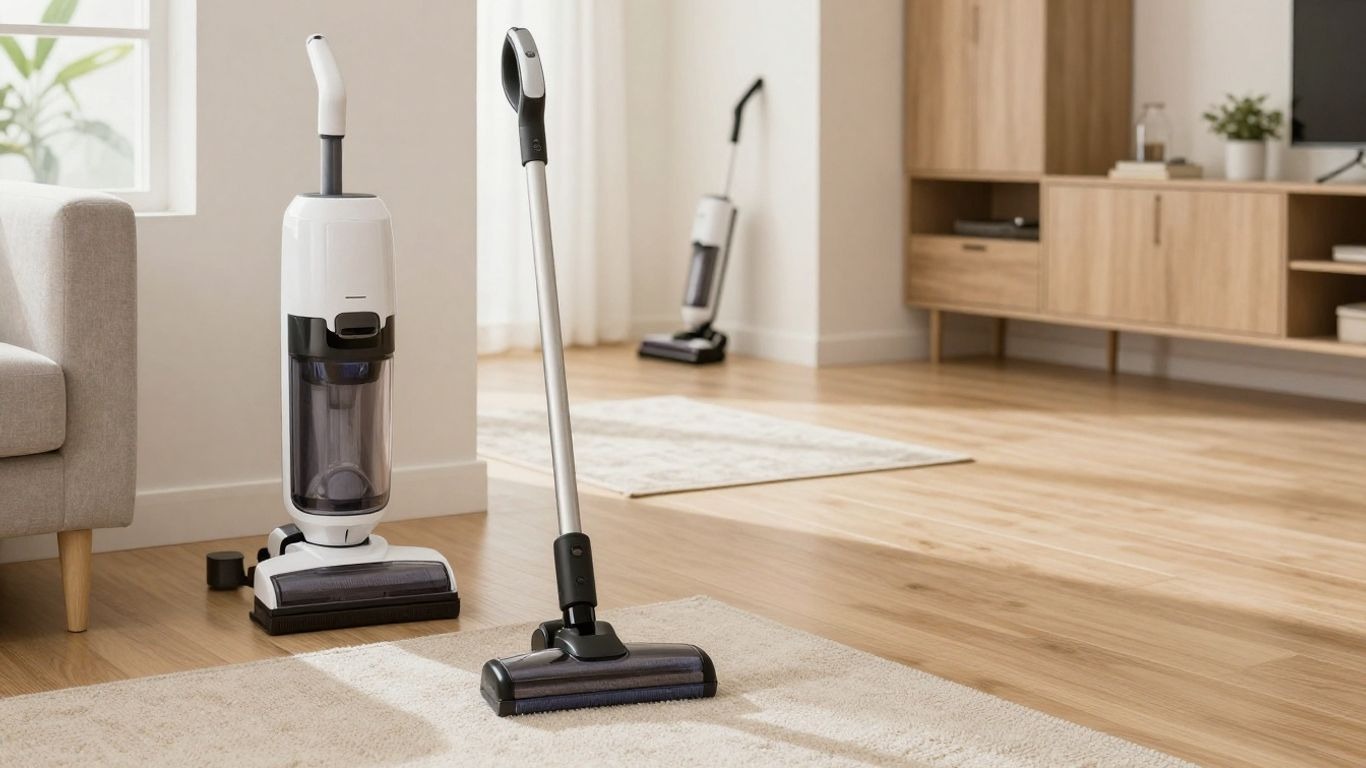
Choosing between an upright and a stick vacuum is less about finding one universal winner and more about matching the cleaner to your floors, home size, pet-hair level, storage space, and cleaning routine. Upright vacuums generally offer larger dust capacity and uninterrupted corded cleaning, while stick vacuums prioritize portability, quick access, and compact storage.
Modern premium stick vacuums can clean far better than older lightweight models, but battery runtime and small bins still matter during whole-home sessions. This guide compares upright vs. stick vacuums across carpet performance, hard-floor cleaning, pet hair, filtration, maintenance, cost, and everyday convenience so you can choose with confidence.
Quick Verdict: Upright or Stick Vacuum?
Choose an upright vacuum if you have a larger home, substantial wall-to-wall carpet, heavy pet shedding, or long cleaning sessions where a bigger bin and continuous power matter most. Choose a stick vacuum if you have mostly hard floors or low-pile rugs, stairs, limited storage, mobility concerns, or a preference for quick daily cleaning. A high-quality stick can serve as a primary vacuum in many apartments and small- to medium-sized homes, but an upright remains the safer default for deep carpet cleaning and high-volume debris.
If you’re specifically shopping for cordless models, you may also want to compare the best cordless vacuum cleaners before making your decision.
Key Takeaways
- Upright vacuums are generally better suited to large carpeted areas, longer cleaning sessions, and households that need a larger dust container.
- Stick vacuums are easier to carry, store, and use for stairs, hard floors, quick spills, and frequent light cleaning.
- Cordless runtime claims are usually best-case figures; high-power modes, carpet settings, and motorized heads can reduce actual runtime significantly.
- A HEPA filter is most useful when the entire airflow path is well sealed, because unsealed gaps can allow fine particles to escape around the filter.
- Pet owners should prioritize brush-roll design, anti-tangle features, upholstery tools, bin capacity, and easy hair removal rather than suction claims alone.
- The right choice depends on floor type, home size, storage, physical comfort, maintenance tolerance, and whether you prefer daily touch-ups or weekly deep cleans.
What Is an Upright Vacuum?
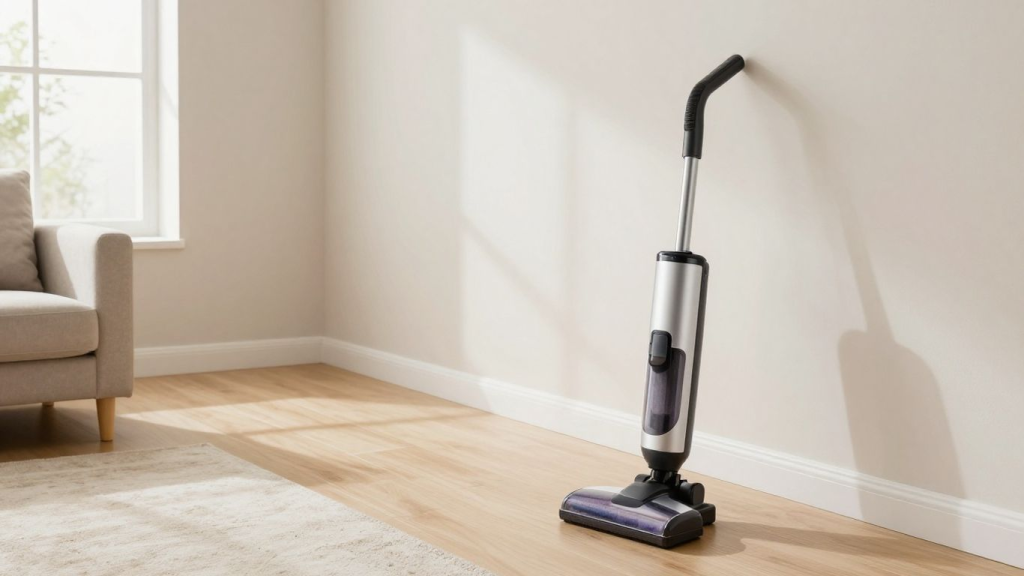
An upright vacuum is a single-stand vacuum that includes the motor, dust container or bag, floor head, and handle. Most uprights are full-size corded, but there are cordless uprights as well. The design typically includes a generous cleaning width, greater debris holding capacity, and a stable body for multiple passes over carpeted areas.
Uprights are frequently selected for deep cleaning because many models have powerful motorized brush rolls that lift embedded dirt from carpet fibers. But an upright is not necessarily more powerful just because it is bigger. The actual performance remains dependent on the airflow, floor-head seal, brush design, height adjustment, filtration, and the ability to keep the machine suctioned as the bin or bag fills.
What Is a Stick Vacuum?
A stick vacuum is a vacuum cleaner with a thin wand-like body, and the motor and dust bin are near the handle or floor head. Some stick vacuums can transform into handheld cleaners for stairs, furniture, vehicles, and hard-to-reach areas. Most of these are cordless, but corded sticks are also available for those who prefer to avoid the limitations of battery power.
Stick vacuum cleaners can be effective primary cleaners, particularly on hard floors and low-pile carpet. They offer the greatest benefits in terms of accessibility, maneuverability, and storage. They have a tendency to offer reduced capacity bins, more frequent filter maintenance, in-hand weight at the expense of the suction, battery aging, and reduced run time with maximum suction or carpet mode.
Upright vs. Stick Vacuum: Key Differences
A good comparison should not only consider size and appearance. The key differences are related to agitation of carpet, hard floor control, cleaning capacity, portability, runtime, filtration, maintenance, and total ownership cost. These are the things that will make or break the convenience of the vacuum after the first couple of weeks.
| Feature | Upright Vacuum | Stick Vacuum |
|---|---|---|
| Suction Power | Excellent | Good to Excellent (varies by model) |
| Weight | Heavier | Lightweight |
| Portability | Moderate | Excellent |
| Battery Life | Plug-in (typically) | Cordless or corded |
| Dust Bin Capacity | Large | Smaller |
| Best For | Carpets, large homes | Hard floors, apartments |
| Storage | Requires more space | Compact |
| Price Range | Budget to Premium | Budget to Premium |
No single specification is sufficient to tell the whole story. Motor wattage, air watts, and maximum suction numbers can be taken in different conditions and are not necessarily directly comparable from brand to brand. Independent floor pickup, pet-hair, filtration and runtime testing is more valuable than a single headline.
Carpet Cleaning Performance
Full-size uprights typically perform better on wall-to-wall carpet than do narrow uprights, as the wider motorized heads can agitate a larger area and the corded models can run for longer periods at high power. Adjustable-height or suction models are particularly useful when vacuuming medium- and high-pile carpet, because they can be tightened if it is too loose.
Even carpet can be effectively cleaned with stick vacuums, especially for low-pile carpet and area rugs. High-performance models can offer impressive acceleration, but can have short running times when in boost mode. If your primary surface is carpet, check the carpet performance and ensure that the head does not stall, grab the edges of the carpet, or become difficult to move.
Hard-Floor Cleaning
Stick vacuums are generally great on hardwood, laminate, tile, and vinyl, as they are easy to move around and may have soft rollers or multi-surface heads. These designs can trap small dust and larger crumbs without having to move the debris in front of the nozzle repeatedly.
An upright that provides brush-roll shutoff, hard floor mode, or a floor head that prevents scattering can also work on hard floors. Don’t assume that all spinning brushes are suitable for all floor finishes. Look at the manufacturer’s maintenance instructions for the flooring and select a head that won’t scratch, drag, or beat fragile surfaces.
If your home includes multiple floor types and you want a broader comparison of recommended models, browse our roundup of the best vacuum cleaners for home.
Weight and Maneuverability
Typically, stick vacuums are simpler to move from floor to floor, maneuver around furniture, and utilize stairs. They are also much easier to store for those who have limited space or don’t like to clean because of the weight of the machine.
The total weight isn’t the only indicator. Many cordless sticks have the motor, battery, and bin close to the user’s hand, and this can cause fatigue in the wrist or forearm even if the machine itself is lightweight. Uprights tend to be heavier on the floor and may feel heavier to carry but less challenging in straight floor passes.
For people who also need a lightweight cleaner for vehicles, our guide to the best car vacuum cleaners may be helpful.
Dust Capacity and Emptying
Uprights usually have bigger bins or bags and are suitable for larger homes, heavy shedding, and longer sessions with fewer interruptions. Bagged uprights may also be easier to dispose of as the debris is contained within the bag instead of being shaken out of an open container.
Stick vacuums typically need to be emptied more often. This is fine for day-to-day cleanings, but can be cumbersome for whole-house cleaning. Dust release during emptying should also be taken into account by allergy-sensitive buyers, as well as the filter rating during use.
Filtration and Allergy Considerations
Very small particles can be captured by HEPA filtration, but the filter is just one component of the system. A vacuum that has a closed airflow path is more likely to prevent small dust from escaping through body seams before it reaches the filter. Self-sealing bags can further minimize exposure during disposal for bagged models.
If your home has allergy issues, be sure to find a clear term like “sealed system,” “whole-machine filtration,” or a term that has been tested and proven for particle containment. Replace or clean filters as per the manufacturer’s recommendations, as clogged filters can decrease airflow and affect performance.
Corded Power vs. Cordless Freedom
Corded uprights are great for deep-cleaning and for larger homes, as they can be used continuously without having to worry about the power running out. The downside is cord management, outlet changes, and increased effort when moving from level to level or around the crowded furniture.
Cordless sticks eliminate the need for a cable and increase the likelihood of quick cleaning. Published maximum runtimes, however, tend to be for low-power operation. Motorized carpet heads, automatic power adjustment, and boost modes can shorten the available run time, and buyers should check the run time in the mode they intend to use, not the highest number listed on the box.
Maintenance and Long-Term Ownership
In both cases, brush-rolls need to be cleaned regularly, filters need to be maintained, blocks need to be checked for blockage, and seals need to be inspected. Stick vacuums typically have smaller air paths and bins, which can cause clogs or dirty filters to impact them rapidly. In some instances, uprights may be easier to service, but larger brush rolls and belt changes may also require maintenance.
Check filter, bag, battery, brush roll, belt, and replacement head availability and prices before purchase. The ability to replace a battery can increase the lifespan of a cordless vacuum; a non-replaceable battery can make a vacuum that is otherwise repairable into a costly replacement.
If you regularly vacuum upholstered furniture, curtains, and fabric items, learning how to get mold out of clothes and how to wash a wool blanket can also help maintain a cleaner home environment.
Upright vs. Stick Vacuum Comparison Table
The points above explain the practical trade-offs in detail. For a faster decision, start by identifying the surfaces and cleaning pattern that dominate your home. A carpet-heavy family home and a compact apartment with mostly hard floors should not use the same buying priorities.
- Prioritize an upright when carpet depth, debris volume, and uninterrupted runtime are your biggest concerns.
- Prioritize a stick when stairs, compact storage, daily access, and easy maneuvering matter most.
- Compare model-specific filtration, floor-head control, and maintenance instead of assuming every vacuum within one category performs the same.
| Category | Upright Vacuum | Stick Vacuum | Typical Best Fit |
|---|---|---|---|
| Carpet cleaning | Usually stronger for extended deep cleaning and embedded debris | Ranges from basic to excellent; boost mode may reduce runtime | Upright for large carpeted homes |
| Hard floors | Good when brush roll can stop or a proper hard-floor mode is included | Often very maneuverable with soft or multi-surface rollers | Stick for mostly hard-floor homes |
| Weight | Heavier to carry but much of the weight rests on the floor | Lighter overall, though motor and battery may feel heavy in hand | Stick for stairs and portability |
| Dust capacity | Usually larger bin or bag | Usually smaller bin requiring frequent emptying | Upright for pets and large spaces |
| Power source | Often corded with unlimited session time | Often cordless with mode-dependent runtime | Depends on cleaning duration |
| Storage | Requires more closet or floor space | Fits narrow closets and wall docks | Stick for apartments |
| Filtration | Many sealed or bagged options available | Varies widely; whole-machine sealing matters | Choose by model, not format |
| Above-floor use | Uses hose and tools; may be bulky on stairs | Often converts to handheld mode | Stick for furniture and vehicles |
| Maintenance | Larger parts, possible belts, bags, and brush-roll care | Frequent bin/filter care and eventual battery replacement | Depends on maintenance preference |
| Typical cleaning style | Longer scheduled deep cleans | Frequent quick cleanups and spot cleaning | Match your actual routine |
For many households, the most practical setup is not necessarily one machine replacing the other. A corded upright can handle weekly carpet cleaning while a lightweight stick manages crumbs, pet hair, stairs, and daily touch-ups. However, buying two vacuums only makes sense when both solve distinct problems and fit the budget and storage available.
Pros and Cons of Upright Vacuums
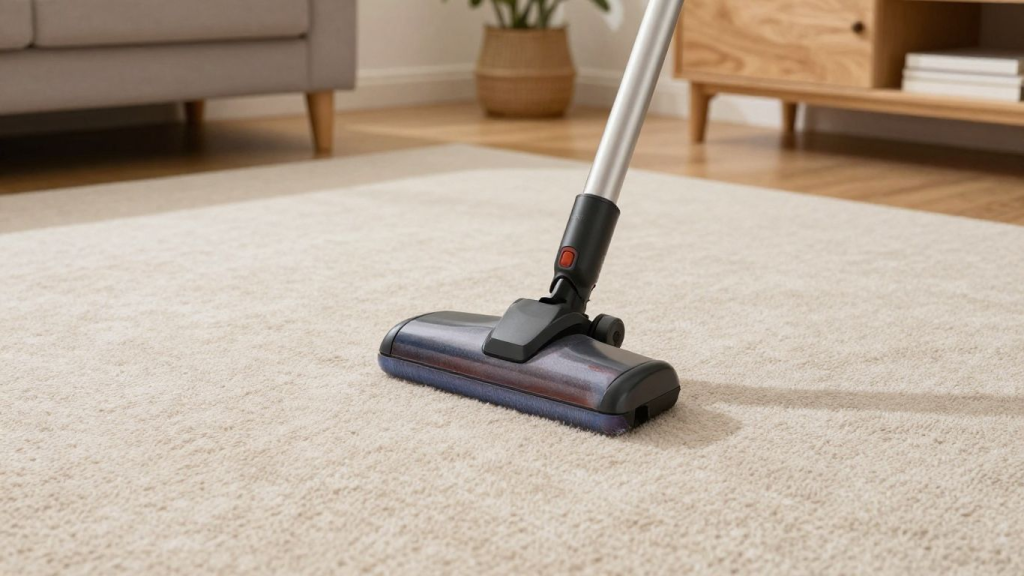
Upright vacuums are the best option for homes that need regular floor cleaning instead of occasional spot cleaning. They can be beneficial in size due to the ability to fit more dust, wide cleaning heads, and fewer interruptions. However, the same design may not be practical for multi-level homes or small areas.
The following pros and cons are trends. Don’t assume these features because you compare the weight, steering, brush-roll controls, hose reach, filtration, and repair support of the same model.
If your home has extensive carpeting and high foot traffic, comparing today’s best vacuum cleaners for home can help identify models with stronger carpet performance.
Advantages of an Upright Vacuum
- Better suited to long, uninterrupted cleaning sessions, especially when corded.
- Typically offers a larger bin or bag for high-debris and pet-hair households.
- Often provides aggressive carpet agitation and a wide cleaning path.
- Many models offer sealed filtration, bagged disposal, and full-size accessory storage.
- The floor-supported body can feel stable during repeated passes across large rooms.
These advantages are most noticeable in larger homes with significant carpet coverage. They matter less in a small apartment where carrying, storage, and quick access are more important than capacity.
Disadvantages of an Upright Vacuum
- Heavier and more awkward to carry upstairs or lift into storage.
- Requires more closet or floor space than a slim stick vacuum.
- Can be difficult to maneuver under low furniture or through crowded rooms.
- Corded models require outlet changes and cable management.
- Some carpet-focused heads can scatter debris or scratch floors if brush control is poor.
An upright is therefore not automatically the best “main vacuum” for every household. It is strongest when its capacity and carpet performance solve a real need rather than simply adding bulk.
Pros and Cons of Stick Vacuums
Stick vacuums work because they minimize the resistance to cleaning. They are often the most commonly used appliance in the house due to their slim storage, ease in steering, and being easily converted into a handheld appliance. While this convenience is important, the purchaser should not ignore the battery, bin, filtration, and replacement expenses over the life of the product.
High-end stick vacuums are now sufficiently powerful to be used as main cleaners in numerous households. It is a very wide category, though, so a low-cost model for crumbs shouldn’t be judged as a high-performance carpet cleaner.
Many cordless stick vacuums are also suitable for quick vehicle cleaning, making them a practical companion to the recommendations in our best car vacuum cleaners guide.
Advantages of a Stick Vacuum
- Easy to carry between floors and use on stairs, furniture, and vehicles.
- Compact storage makes it practical for apartments and small closets.
- Cordless operation supports fast daily cleaning without outlet changes.
- Many models convert to handheld use and include specialized mini tools.
- Soft rollers and slim heads can perform very well on hard floors and under furniture.
A stick vacuum is especially valuable when ease of access leads to more frequent cleaning. A machine that is used daily can keep debris under control even if its bin is smaller than a full-size upright.
Disadvantages of a Stick Vacuum
- Smaller bins fill quickly in pet-heavy or large homes.
- Maximum-power modes can shorten cordless runtime substantially.
- Battery capacity declines over time and replacement batteries may be expensive.
- The motor-and-battery placement can cause hand or wrist fatigue.
- Some lightweight models struggle with deep carpet, large debris, or sealed filtration.
These limitations do not make stick vacuums poor cleaners. They simply mean the buyer should judge whether portability is worth the trade-offs for the size and flooring of the home.
Best Upright Vacuums
Once you’ve decided an upright fits your home, the next question is which model actually delivers on carpet depth, filtration, and everyday handling. These three represent a clear spread across the category, from a versatile mid-range all-rounder to a premium pet-focused pick to a reliable budget option, so there’s a starting point whatever your priority and price range happen to be.
Shark Navigator Lift-Away
The Lift-Away design is what sets this model apart from a standard upright, the canister detaches from the base, turning the machine into a portable pod for stairs, furniture, and car interiors without switching to a separate handheld. It pairs well with strong carpet agitation and a sealed filtration system, making it a practical all-rounder for homes with mixed carpet and hard-floor coverage. The narrower head also helps it fit into tighter spaces than many full-size uprights.
Pros:
- Lift-Away canister converts to portable use without a separate handheld
- Strong carpet agitation on wall-to-wall and medium-pile flooring
- Sealed filtration system helps with allergen control
- Narrower head fits tighter spaces than most full-size uprights
Cons:
- Heavier overall than dedicated stick vacuums when used in full upright mode
- Corded design means outlet changes for larger homes
- Hose and wand needed for true above-floor cleaning beyond the Lift-Away pod
Dyson Ball Animal 3
Built specifically with pet hair in mind, the Ball Animal 3 uses a self-adjusting cleaner head that automatically seals against both carpet and hard floors, and its ball-based steering makes it noticeably easier to maneuver around furniture than a traditional fixed-wheel upright. The de-tangling comb on the brush bar is designed to actively remove wrapped hair during use rather than requiring manual clearing afterward, a genuine advantage for households with long-haired pets. It sits at the premium end of the upright category.
Pros:
- Self-adjusting head seals automatically across carpet and hard floors
- Ball steering makes tight turns and furniture navigation easier
- De-tangling comb actively clears hair during use, reducing manual maintenance
- Strong overall suction suited to heavy pet hair and debris
Cons:
- Premium price point compared to standard uprights
- Heavier than many competing models, which can affect stairs and lifting
- Replacement parts and filters tend to cost more than budget alternatives
Hoover WindTunnel
The WindTunnel line has long been positioned as a budget-friendly, no-frills corded upright, providing reliable everyday suction without premium pricing. Generally, it’s a reasonable entry point for buyers who want dependable carpet and hard-floor performance without paying for smart features they won’t use.
Pros:
- Budget-friendly price point relative to premium uprights
- Straightforward, no-frills operation without unnecessary smart features
- Widely available replacement parts and accessories
Cons:
- Fewer advanced features (filtration, anti-tangle tech) compared to premium models
- Bulkier and heavier than most stick vacuum alternatives
- Specific specs for current models should be verified directly before purchase
Best Stick Vacuums
If portability and daily convenience matter more than raw carpet-deep-cleaning power, these three cordless sticks represent the strongest options at different price points.
Each takes a slightly different approach: laser-guided precision, clog detection with odor control, and automatic suction adjustment, but all three handle the format’s core promise: quick, lightweight cleaning without sacrificing real performance.
Dyson V15 Detect
The defining feature here is the laser dust detection built into the hard-floor head, which illuminates fine dust that’s otherwise invisible under normal lighting, genuinely useful for confirming a floor is actually clean rather than just guessing. It pairs this with an LCD screen showing particle count and real-time suction data, along with strong overall suction across both carpet and hard floors. It’s a premium pick, and like most high-suction cordless sticks, its most powerful mode meaningfully shortens runtime versus the advertised maximum.
Pros:
- Laser dust detection reveals fine debris invisible to the eye
- LCD screen provides real-time particle count and suction data
- Strong suction performance across both carpet and hard floors
- Converts easily to handheld mode for furniture and stairs
Cons:
- Highest price point among stick vacuums on this list
- Maximum suction mode significantly reduces runtime versus advertised figures
- Heavier in hand than some competing stick vacuums due to added technology
Shark Stratos Cordless
The Stratos line builds in odor-neutralizing technology and a clog-detection system that alerts you when airflow is blocked, a practical fix for one of the most common frustrations with stick vacuums over time. Its DuoClean-style head is designed to handle both carpet and hard floors without swapping attachments, and it includes anti-hair-wrap technology on the brush roll, which matters most for pet owners tired of cutting hair out by hand.
Pros:
- Clog-detection system flags blocked airflow before performance drops
- Odor-neutralizing technology is a distinctive extra for pet households
- Dual-surface head handles carpet and hard floors without attachment swaps
- Anti-hair-wrap brush roll reduces manual maintenance
Cons:
- Runtime in max mode is shorter than the advertised maximum, as with most cordless sticks
- Mid-to-premium pricing puts it above basic stick vacuum options
- Bin capacity is smaller than a full-size upright, requiring more frequent emptying
Tineco Pure One S15
Positioned as a smart cordless vacuum, the Pure One S15 uses onboard sensors to automatically adjust suction based on the debris and floor type it detects, aiming to balance cleaning power with battery efficiency rather than relying on a single fixed high-power mode.
It typically includes a self-cleaning or self-emptying base depending on the specific model variant, and an LED display for real-time feedback. It sits in the mid-to-premium range, competing directly with Dyson and Shark’s smart cordless offerings.
Pros:
- Automatic suction adjustment balances power with battery efficiency
- Self-cleaning or self-emptying base reduces manual maintenance (model dependent)
- LED display gives real-time feedback during cleaning
- Competitive mid-tier pricing against premium Dyson and Shark models
Cons:
- Self-emptying base availability varies by specific model variant, easy to be confused by
- Smart sensor technology can add cost versus simpler, manual-mode stick vacuums
- Battery and parts availability may be less widespread than Dyson or Shark
Which Vacuum Is Better for Different Homes?
The easiest way to choose is to match the vacuum to the home rather than to a generic ranking. Consider the worst or most repetitive cleaning task in your routine, because that is where an unsuitable vacuum becomes frustrating.
Best for Apartments and Small Homes
A stick vacuum is typically the best option for an apartment or small home that does not have a lot of space. Can run rapidly over hard floors, low-pile rugs, furniture, and small stairs, and does not need to be plugged in every time or stored in a large closet.
Select a model that will run for the entire space, has a wall dock or a stable storage location, and empties the bin without creating a dust cloud. If battery replacement is a worry, a corded stick may be a good option.
If compact storage and portability are your priorities, you may also like our roundup of the best handheld vacuums.
Best for Large Carpeted Homes
An upright corded is usually the more reliable choice for a large house with a large carpet area. No interruptions during long sessions with continuous power, wider cleaning paths, and larger debris capacity. Use height adjustment or suction control to make it easier to use with various carpet piles.
Even a stick cordless can be used as a secondary cleaner for stairs, kitchens, and fast pet hair removal. Using it as the sole vacuum requires attention to real-time performance, spare-battery availability, and high-pile carpet performance.
Best for Pet Hair
Pet-hair performance depends more on brush-roll design, airflow, anti-tangle features, upholstery tools, and maintenance access than on vacuum format. Uprights usually offer larger capacity and longer cleaning sessions, while sticks make daily shedding easier to manage before hair becomes embedded.
For long-haired pets, check whether the brush roll can be removed or cleaned without disassembling the entire head. Also confirm that the upholstery tool has its own agitation and that the bin can hold a meaningful amount of fur without blocking the cyclone or filter.
For specific product recommendations, check our guide to the best vacuum cleaners for pet hair.
Best for Allergies and Fine Dust
A well-sealed vacuum with genuine HEPA-level filtration is the priority for allergy-sensitive households. Bagged uprights often provide the cleanest disposal because the bag can seal before removal. Some premium stick vacuums also offer strong whole-machine filtration, but open-bin emptying can expose the user to dust.
Look for independent filtration testing, clear replacement-filter guidance, and a body design that does not leak at joints. A HEPA label on one component is not enough if the machine allows air to bypass the filter.
Improving indoor air quality often involves more than vacuuming, so you may also find our guide to the best air purifiers for bedroom useful.
Best for Seniors, Stairs, or Limited Mobility
A lightweight stick vacuum is often easier to retrieve, carry, and steer, especially in a multi-level home. However, check in-hand balance and trigger design, because a top-heavy motor can still cause fatigue. A model that stands independently or uses a secure dock may be easier to manage than one that must be leaned against a wall.
Some lightweight uprights and lift-away designs are also worth considering. The best choice is the machine that can be moved safely and comfortably without forcing awkward lifting or repeated bending.
Top Features to Look for in 2026
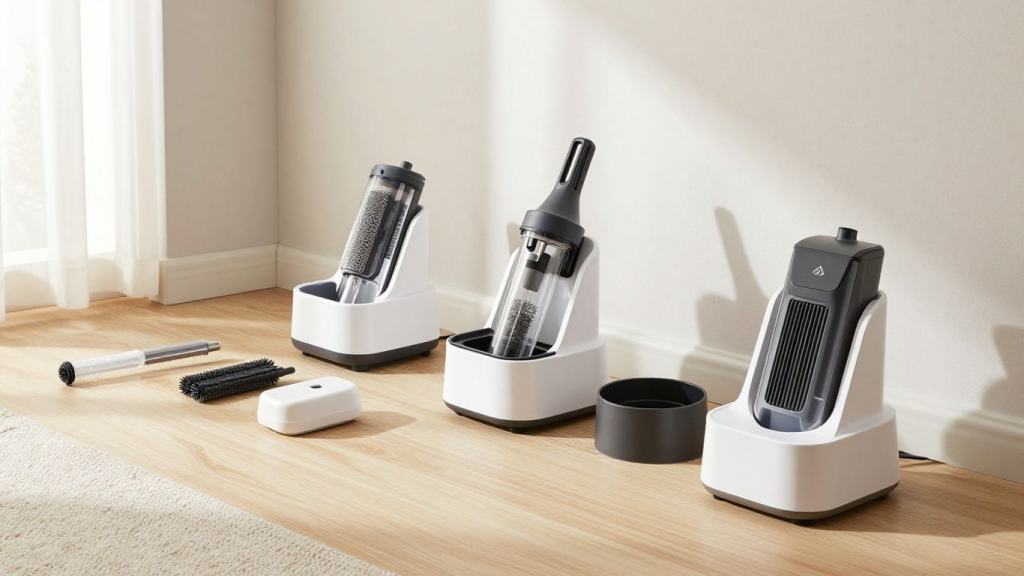
The most useful vacuum features are the ones that solve real cleaning problems and remain easy to maintain. Smart sensors, screens, and automatic modes can be helpful, but they should not replace strong floor pickup, good filtration, accessible parts, and reliable controls.
- Brush-roll shutoff, soft roller, or clearly labeled hard-floor mode for delicate surfaces.
- Height or suction adjustment for medium- and high-pile carpet.
- Sealed filtration with a genuine HEPA filter when fine-particle containment matters.
- Anti-tangle brush design and easy brush-roll access for pet hair.
- A dust bin or bag capacity appropriate for the size of the home.
- Removable, replaceable battery and transparent runtime information for cordless models.
- Comfortable handle, balanced weight, useful steering, and enough reach under furniture.
- Accessible filters, belts, bags, batteries, and replacement heads from reliable sellers.
- A warranty that clearly covers the motor, battery, and major components.
Avoid paying extra for features that do not improve your routine. A floor sensor is useful only when it adjusts effectively, and a display is valuable only when it provides meaningful maintenance or runtime information.
If you’re narrowing your options, comparing the best cordless vacuum cleaners alongside the best handheld vacuums can help you choose the right format.
Common Mistakes to Avoid When Choosing a Vacuum
Most disappointing vacuum purchases happen because the buyer focuses on one attractive specification and ignores the home as a complete cleaning environment. The mistakes below can make a capable vacuum feel unsuitable even when the machine itself is not defective.
- Assuming every upright is more powerful than every stick vacuum.
- Choosing a cordless model based only on its maximum advertised runtime.
- Ignoring brush-roll control when the home includes delicate hard floors or lightweight rugs.
- Treating a HEPA filter as proof that the whole vacuum is sealed.
- Underestimating how often a small stick-vacuum bin must be emptied.
- Buying a heavy upright without testing stairs, storage, and turning effort.
- Overlooking replacement battery, bag, filter, belt, and brush-roll costs.
- Choosing a model for one floor type when the home has mixed surfaces.
- Relying on wattage or air-watt claims without checking independent pickup tests.
A better process is to rank the home’s top three needs, such as carpet depth, pet hair, and stairs, then eliminate any model that fails one of those essentials. This prevents optional features from distracting from the actual job.
Reading comprehensive reviews of the best vacuum cleaners for home before purchasing can help you avoid many of these mistakes.
Vacuum Buying Checklist
Use this checklist before ordering or visiting a store. It turns a broad upright vs. stick vacuum debate into a practical evaluation of your floors, cleaning habits, and ownership expectations.
- List the percentage of carpet, hard flooring, stairs, and rugs in the home.
- Estimate how long a normal whole-home cleaning session takes.
- Measure storage space and confirm whether a charging dock can be installed.
- Decide whether pet hair, allergies, large debris, or quick spills are the biggest problem.
- Check actual weight, in-hand balance, steering, and ease of carrying.
- Confirm dust capacity, emptying method, and filter-cleaning frequency.
- Review runtime by power mode and whether the battery is replaceable.
- Check brush-roll shutoff, height adjustment, and hard-floor compatibility.
- Compare warranty coverage and the availability of filters, bags, belts, and batteries.
- Read model-specific performance tests instead of relying only on star ratings.
Once these questions are answered, the correct format usually becomes obvious. The final model choice should then be based on verified performance and support within that format.
Final Verdict: Upright vs. Stick Vacuum
If you have a large home or a carpeted home, the corded upright is the most reliable all-purpose option as it offers long-lasting cleaning, capacity, and effective carpet agitation. A stick vacuum is generally more convenient and will be used more often in apartments (mostly hard floors), on stairs, and for quick cleanups.
Not every vacuum is the best in 2026, and the newest cordless vacuum or the tallest upright vacuum is not necessarily the best. It is the machine that cleans your dominant floor type well, fits your storage, is comfortable to use, contains dust well, and can be maintained with available parts. If those requirements match up properly, either can be a great buy.
Before making your final purchase, compare our expert recommendations for the best vacuum cleaners for home, best cordless vacuum cleaners, best handheld vacuums, and vacuum cleaners for pet hair to find the model that best fits your home and cleaning habits.
Frequently Asked Questions
Is an upright vacuum better than a stick vacuum?
An upright is usually better for large carpeted areas, heavy debris, and long cleaning sessions. A stick vacuum is usually better for portability, stairs, hard floors, quick cleanups, and limited storage. Model-specific performance can outweigh the general category differences.
Can a stick vacuum replace an upright vacuum?
Yes, a high-quality stick vacuum can replace an upright in many apartments and small-to-medium homes, especially when the floors are mostly hard surfaces or low-pile carpet. Large carpeted homes may still benefit from an upright or a second full-size cleaner.
Which type is better for carpet?
Uprights generally have the advantage on extensive wall-to-wall carpet because they provide sustained power, wider heads, and stronger agitation. Premium sticks can perform well, but confirm tested carpet pickup and runtime in the relevant power mode.
Which type is better for hardwood floors?
Stick vacuums often excel on hard floors because of their maneuverability and soft rollers. Uprights can also be safe and effective when they include brush-roll shutoff, a hard-floor setting, or a properly designed multi-surface head.
Are cordless vacuum runtime claims accurate?
They may be accurate under the manufacturer’s test conditions, but the maximum figure commonly reflects low-power operation. Carpet modes, motorized heads, automatic suction, and boost mode can shorten actual runtime.
Is a HEPA filter enough for allergies?
Not by itself. The vacuum should also have a well-sealed airflow path so fine particles cannot bypass the filter. Bagged disposal or a clean bin-emptying design can further reduce dust exposure.
Are stick vacuums easier for seniors?
Often yes, because they are easier to carry and store. However, top-heavy motor placement can strain the hand or wrist, so test balance, trigger design, and self-standing or docking features before buying.
Which vacuum is better for pet hair?
Either can work well. Prioritize anti-tangle brush rolls, strong floor and upholstery pickup, a useful pet tool, adequate bin capacity, and easy access for removing wrapped hair.
Do upright vacuums last longer than stick vacuums?
There is no universal rule, but corded uprights avoid battery aging and may be easier to repair. A stick vacuum with a replaceable battery and available parts can also provide good long-term value.
Should I buy both an upright and a stick vacuum?
A two-vacuum setup can make sense in a large home where an upright handles weekly deep cleaning and a stick manages daily messes, stairs, and furniture. It is unnecessary when one well-matched vacuum can cover the entire home.
Are bagged vacuums better than bagless vacuums?
Bagged vacuums can contain dust more cleanly during disposal and often maintain a tidy airflow path. Bagless models avoid replacement bags and make debris visible, but they require careful bin emptying and regular filter maintenance.
How often should filters and brush rolls be cleaned?
Follow the manufacturer’s schedule and inspect them more often in pet-heavy homes. Clean the brush roll when hair accumulates, empty the bin before the maximum line, and allow washable filters to dry completely before reinstalling them.