Best Cheap Sewing Machine in 2026: 6 Affordable Picks Worth Buying
A cheap sewing machine can be a smart first purchase when it is easy to thread, stable enough to learn on, and capable of the projects you actually want to make. The best budget models in 2026 are not all the same: some use direct mechanical dials, while others add computerized stitch selection, speed control, wider accessory packages, or more automatic buttonhole options.
I tested these six machines across everyday cotton, basic garment seams, lightweight fabrics, simple quilting tasks, buttonholes, hems, and common beginner setup steps so the rankings are based on practical use rather than price alone. This guide explains which model is best for beginners, portability, mechanical simplicity, computerized convenience, quilting value, and everyday home sewing, plus the trade-offs to expect before you buy.
Quick Verdict: What Is the Best Cheap Sewing Machine?
The Brother CS7000X is my best overall cheap sewing machine because it combines 70 stitches, seven one-step buttonholes, a speed-control system, quilting accessories, a wide table, and a lightweight 10.5-pound body.
If you prefer mechanical controls, the Brother XM2701 is the easiest all-around starter, while the Janome 2212 is the pick I prefer for simple, sturdy, no-screen sewing.
The SINGER M1500 is the most stripped-back portable choice, the Brother GX37 gives mechanical users more stitch variety, and the Brother CS5055 is the simpler computerized alternative when you do not need the CS7000X quilting package.
Key Takeaways
I compared six approachable machines for different beginner priorities, from simple mechanical controls to computerized convenience.
- Mechanical models can keep the learning curve straightforward.
- Computerized machines may offer more stitch choices and guided selection.
- Weight, controls, included accessories, and workspace all matter.
- A short feature list is not automatically a drawback.
- The best cheap sewing machine is the one that suits the projects I will actually make.
Why Choose a Cheap Sewing Machine in 2026?
A budget sewing machine makes sense when you are learning, returning to sewing after a long break, or need a second machine for occasional repairs and small projects. The global sewing and quilting market is projected to grow from roughly $6.6 billion to nearly $12 billion by 2035, according to industry research, much of that growth coming from exactly this kind of first-time, budget-conscious buyer rather than professional or industrial demand.
It lets you develop threading, seam control, tension, fabric handling, and buttonhole skills before paying for automation you may not need.
I also prefer leaving part of a beginner budget for the items that actually make sewing easier: quality thread, the correct needles, spare bobbins, fabric scissors, clips or pins, interfacing, and practice fabric. A better setup around a modest machine often produces better results than spending the entire budget on the machine body.
The trade-off is that inexpensive machines usually have smaller workspaces, lighter frames, fewer automation features, and less tolerance for repeated heavy-duty sewing. That is acceptable when the machine is being used for the kind of work it was designed to handle.
What Counts as a “Cheap” Sewing Machine?
I use “cheap” to mean budget-oriented, full-size home sewing machines that sit below the mid-range and premium categories, not machines that are disposable or toy-like. Prices change too quickly to make one permanent dollar limit useful, especially when dealer promotions and retailer bundles vary.
The better question is whether the model gives you enough useful stitches, a workable buttonhole system, stable feeding, clear controls, and the accessories needed for your first projects. If it does, a short feature list can actually be an advantage because there is less to learn before you start sewing.
How I Test Sewing Machines at MariaSew
I personally use the sewing machines I recommend before I publish a verdict. I have more than 12 years of hands-on sewing experience, and I do not judge a budget machine by its price tag or stitch chart alone. I set each machine up the way a new owner would, thread it from scratch, wind and load the bobbin, change presser feet, sew real fabric, and repeat the same core tasks so I can compare what feels genuinely easy versus what only looks simple on the box.
- Stitch quality. I inspect both sides of the seam for balanced tension, skipped stitches, loose loops, puckering, and changes when I increase speed.
- Beginner setup. I time how quickly I can thread, wind the bobbin, select a stitch, reverse a seam, and sew a usable test line without unnecessary troubleshooting.
- Fabric range. I move from ordinary cotton to lightweight fabric, knits or stretch stitches, and light denim instead of judging the machine on one easy material.
- Buttonholes and garment basics. I test the included buttonhole system, zipper-foot access, free arm, hems, and seam control because those are common first-year projects.
- Portability and stability. I check whether the machine is easy to move and store without becoming unstable or excessively vibratory at normal sewing speed.
- Accessories and ownership. I compare the included feet, table or cover where provided, manual clarity, cleaning access, warranty support, and whether the package saves money after purchase.
For this six-model budget guide, I test straight-stitch consistency on quilting cotton, basic zigzag and stretch stitches, hems, seams, light denim layers, lightweight woven fabric, buttonholes, free-arm sewing, and simple quilt piecing. I also compare low-speed control, pedal response, stitch selection, needle threading, bobbin access, noise, vibration, portability, accessory usefulness, and how quickly I can recover from a threading or feeding mistake.
This follows MariaSew’s published standard that recommended sewing machines are personally used and tested before publication.
How I Chose These 6 Affordable Sewing Machines
I kept the original six-model shortlist because it covers the most useful budget categories instead of repeating six machines with nearly identical controls. The group includes mechanical Brother models, two entry-level computerized Brother machines, a simple Janome mechanical model, and a lightweight SINGER option.
- Beginner usability. Threading, bobbin access, stitch selection, reverse, and buttonholes need to be learnable without constant troubleshooting.
- Useful stitch range. I value straight, zigzag, stretch, blind hem, buttonhole, and a few practical decorative options more than inflated stitch counts.
- Real portability. Weight and footprint matter when the machine shares a dining table, bedroom desk, closet, or class bag.
- Accessory value. Included feet, quilting accessories, a wide table, hard cover, or useful bobbin tools can change the true cost of ownership.
- Room to grow. A good budget machine should still handle more than the first practice seam, even if it is not intended for professional production or heavy upholstery.
My Top 6 Cheap Sewing Machine Picks for 2026
If you want the shortest route to a decision, match the machine to the job below. The detailed reviews that follow explain exactly why each one earned that position.
- Brother CS7000X – Best Overall. Best mix of computerized control, quilting extras, stitch variety, portability, and beginner growth potential.
- Brother XM2701 – Best Mechanical for Beginners. Easy mechanical layout with automatic threading, a one-step buttonhole, and enough stitches for most first projects.
- Brother GX37 – Best Mechanical for More Stitches. A faster 37-stitch mechanical option with adjustable stitch settings and six included feet.
- Brother CS5055 – Best Simple Computerized Alternative. A 60-stitch LCD machine for sewists who want computerized selection without the larger CS7000X quilting bundle.
- Janome 2212 – Best for Mechanical Simplicity. A focused 12-stitch machine with drop feed, free arm, and a sturdy, traditional control layout.
- SINGER M1500 – Best Lightweight Basic Machine. A 10-pound, six-stitch model with preset stitch dimensions for simple mending, classes, and small-space sewing.
Now I will break down each machine by real strengths, limitations, key features, and the kind of beginner I would match it with.
1. Brother CS7000X – Best Overall Cheap Sewing Machine
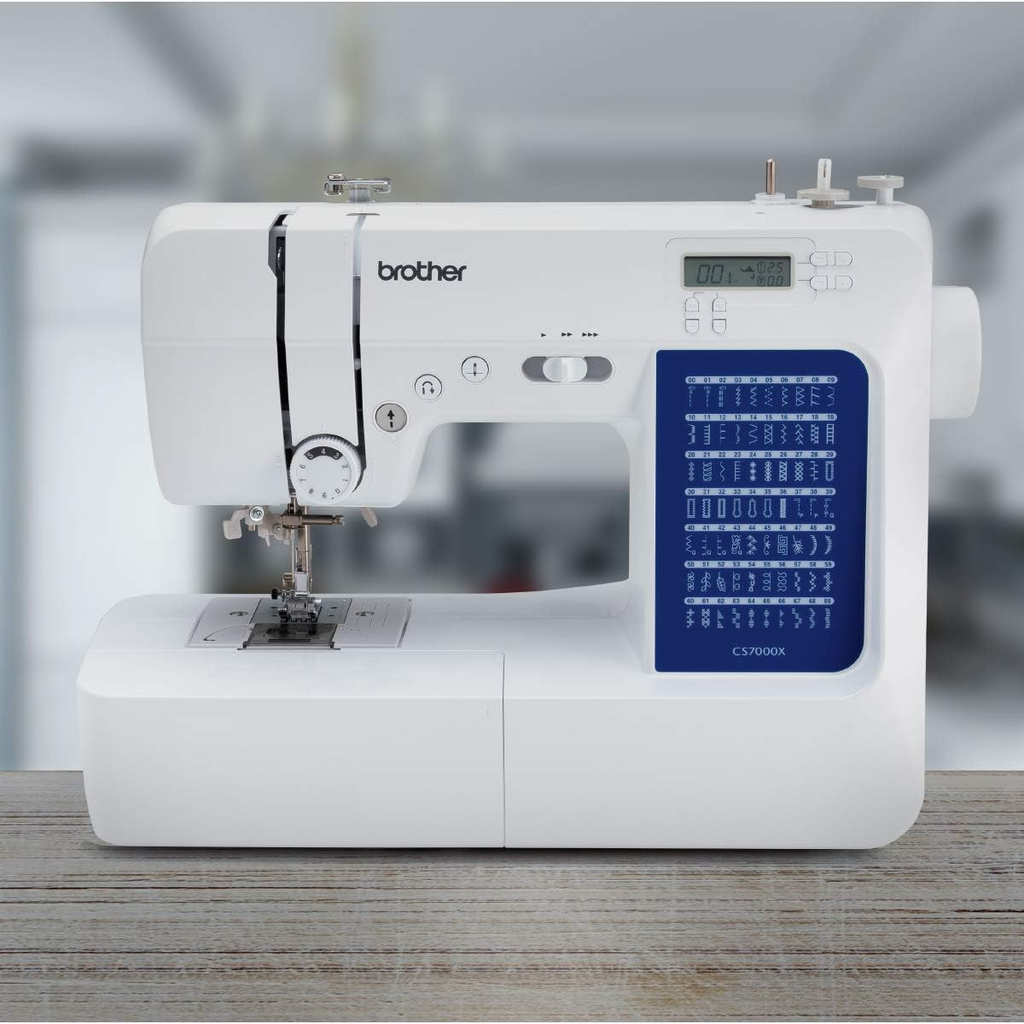
The Brother CS7000X is the machine I would choose first for a beginner who wants a budget price without buying a machine they will outgrow after a few simple projects. It combines 70 built-in stitches, seven one-step auto-size buttonholes, an LCD interface, automatic needle threading, a Quick-Set bobbin, and a lightweight 10.5-pound body.
What makes it stand out is the quilting package. Brother includes a wide table, walking foot, quilting foot, 1/4-inch foot, quilt guide, hard cover, and 10 sewing feet total. The 750 SPM maximum is not especially fast, but the controlled pace, adjustable maximum speed, and configurable needle stop position make it friendly for learning curves, corners, piecing, and garment details.
Features
- 70 Built-In Stitches and 7 One-Step Buttonholes
- Adjustable Maximum Speed
- Automatic Needle Threader and Quick-Set Bobbin
- Wide Table and Quilting Feet
- Lightweight 10.5-Pound Body with Free Arm
Pros
These are the strengths that stood out most during normal beginner and home-sewing use.
- Excellent beginner-to-intermediate value. It gives you room to grow without starting with an advanced interface.
- Best accessory package in this roundup. The wide table and quilting feet add real use rather than filler.
- Computerized stitch selection is easy to repeat. Settings are faster to change when moving between garments, quilting, and decorative work.
- Speed control improves confidence. Limiting maximum speed makes detailed work easier for new sewists.
- Very portable for its feature set. The 10.5-pound body is practical for small spaces and classes.
The biggest value comes from how these strengths work together rather than from any one specification.
Cons
Every budget machine makes trade-offs. These are the limitations I would factor into the buying decision.
- 750 SPM is slower than several mechanical picks. It favors control over maximum throughput.
- No automatic thread cutter. You still trim threads manually at the end of seams.
- The lightweight body is not designed for repeated heavy-duty production. Use appropriate needles and reasonable layer counts on denim and canvas.
None of these drawbacks is unusual for the price class, but each one matters more for some projects than others.
Best For: Beginners Who Want Room to Grow
Choose the Brother CS7000X if you want one affordable machine for learning, garments, basic quilting, crafts, and everyday home sewing. It is the strongest all-around value here because the controls and accessory package remain useful well beyond the first month.
For a deeper hands-on breakdown, read my Brother CS7000X review.
2. Brother XM2701 – Best Cheap Mechanical Sewing Machine for Beginners
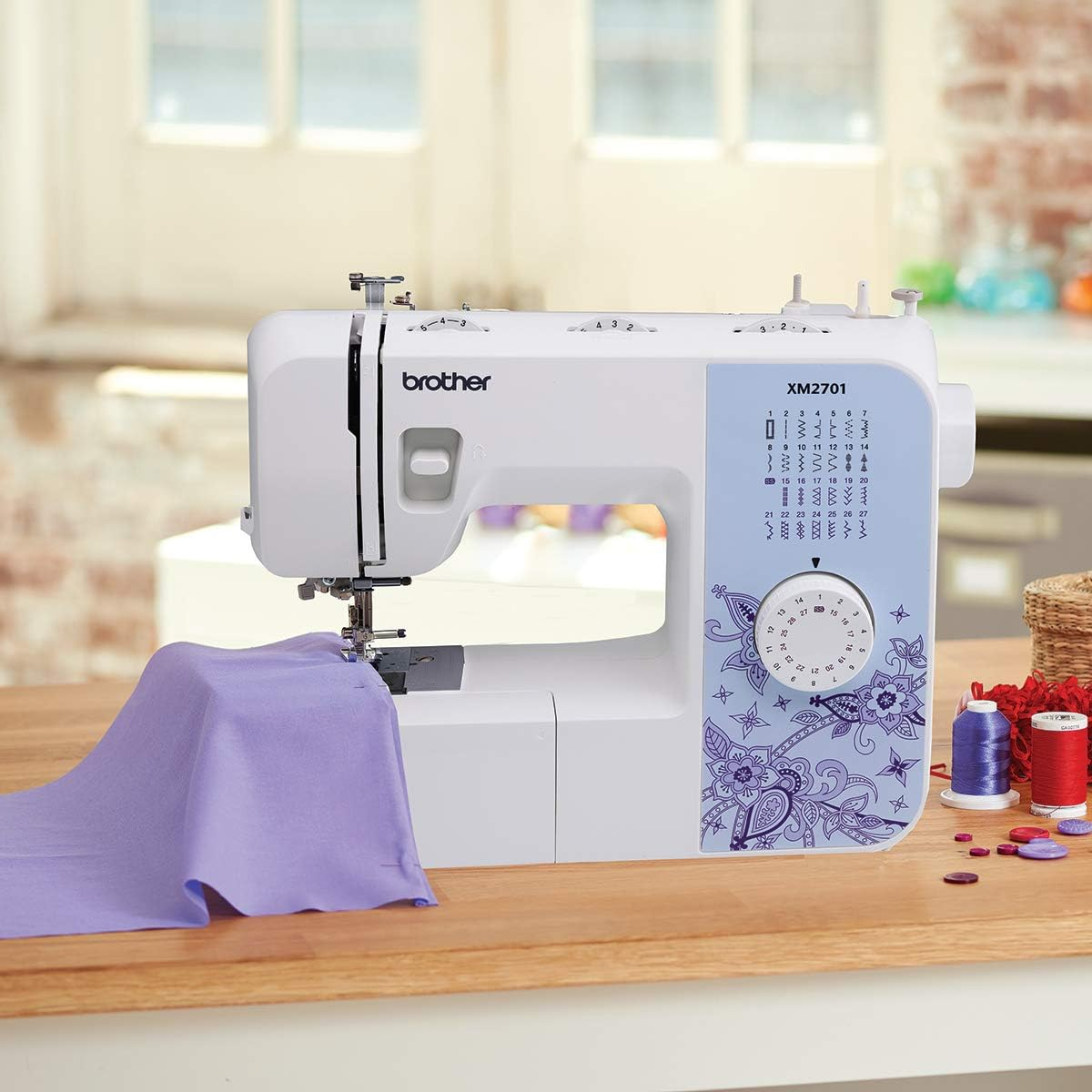
The Brother XM2701 is my favorite mechanical starting point in this group because it keeps the controls direct without stripping away the convenience features that make first projects easier. Brother lists 27 built-in stitches, 63 stitch functions, a one-step auto-size buttonhole, an automatic needle threader, a Quick-Set top drop-in bobbin, six included feet, and an 800 SPM maximum speed.
During beginner sewing, that combination feels well balanced. I can use physical stitch selection and manual tension while still avoiding the frustration of a front-loading bobbin or fully manual needle threading. It works well for cotton, simple garments, hems, repairs, crafts, and light quilting, but I would not treat it as a heavy-duty denim or upholstery machine.
Features
- 27 Built-In Stitches and 63 Stitch Functions
- One-Step Auto-Size Buttonhole
- Automatic Needle Threading
- Quick-Set Top Drop-In Bobbin
- 800 SPM Speed and Six Included Feet
Pros
These are the strengths that stood out most during normal beginner and home-sewing use.
- Simple mechanical controls. You can learn how stitch selection and manual tension affect the seam without navigating a screen.
- Automatic needle threading saves setup time. This is uncommon on the most stripped-back budget machines.
- One-step buttonhole is beginner-friendly. It is easier to repeat than a four-step system.
- Top drop-in bobbin is easy to monitor. The Quick-Set system is practical for new sewists.
- Good stitch variety for the price class. Twenty-seven stitches cover far more than basic mending.
The biggest value comes from how these strengths work together rather than from any one specification.
Cons
Every budget machine makes trade-offs. These are the limitations I would factor into the buying decision.
- No speed slider or programmable needle stop. Fine low-speed control depends mostly on the foot pedal.
- No automatic thread cutter. Thread trimming remains manual.
- Not intended for frequent thick multilayer sewing. Use light-to-moderate denim and correct needles rather than forcing bulky stacks.
None of these drawbacks is unusual for the price class, but each one matters more for some projects than others.
Best For: First-Time Sewists Who Prefer Dials
Choose the Brother XM2701 if you want a mechanical machine that still includes the conveniences beginners notice every session. It is easier to learn than a feature-heavy computerized model but more versatile than the most basic six- or 12-stitch machines. See how it compares against Singer’s mechanical lineup in our Brother vs. Singer comparison.
For a deeper hands-on breakdown, read my Brother XM2701 review.
3. Brother GX37 – Best Mechanical Machine for More Stitch Variety
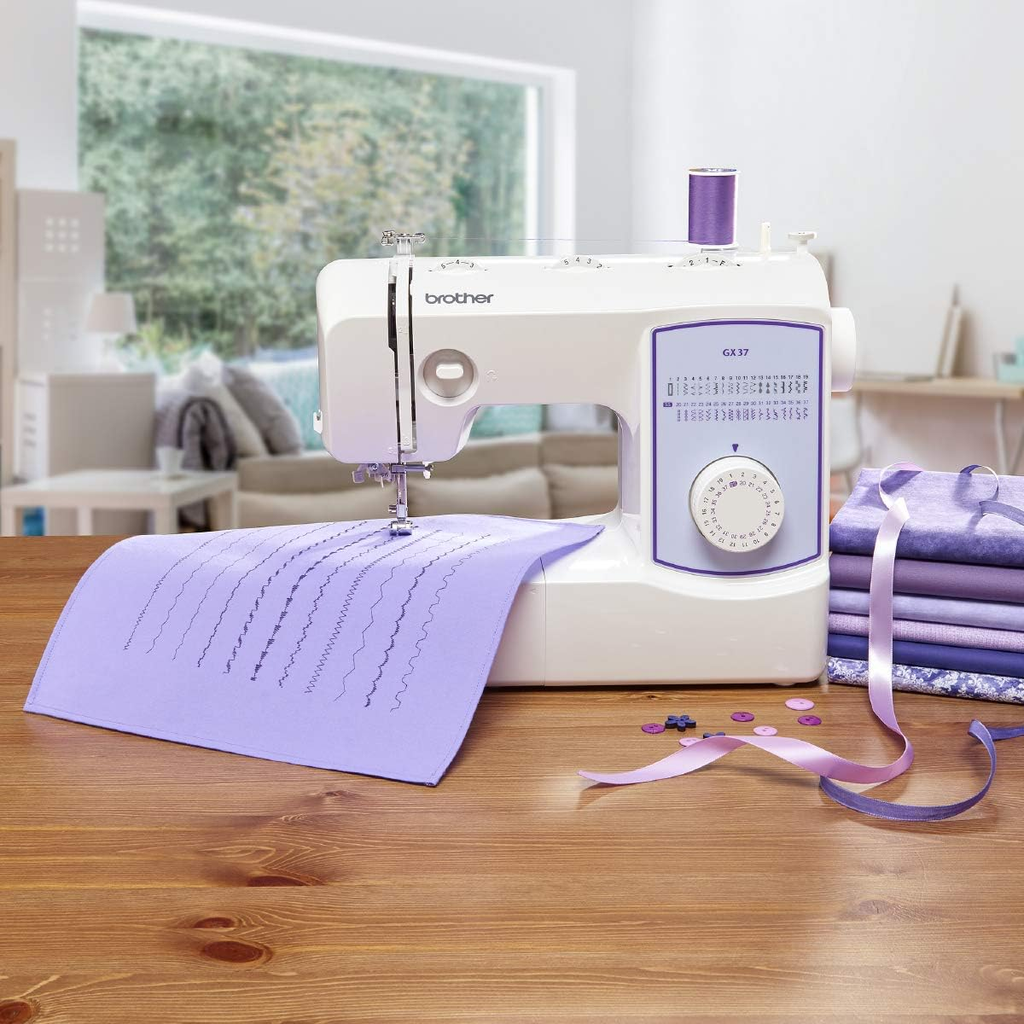
The Brother GX37 is the mechanical pick I prefer when 27 stitches feel limiting but you still do not want an LCD screen. Brother lists 37 built-in stitches, a one-step auto-size buttonhole, automatic needle threading, a Quick-Set bobbin, adjustable stitch width and length, six included feet, and a maximum speed of 850 stitches per minute.
It is also light at about 10.14 pounds, so it makes sense for a shared workspace or a machine that needs to be stored after each session. Compared with the XM2701, I would choose the GX37 when stitch variety and a slightly faster top speed matter more than the XM2701’s particular stitch mix or familiar popularity among beginners.
Features
- 37 Built-In Stitches
- Adjustable Stitch Width and Length
- 850 Stitches per Minute
- Automatic Needle Threader and Quick-Set Bobbin
- Six Included Sewing Feet and Free Arm
Pros
These are the strengths that stood out most during normal beginner and home-sewing use.
- More stitch choices than most budget mechanical models. Thirty-seven options give you room for garments and decorative work.
- Adjustable stitch length and width. You can fine-tune seams instead of relying only on preset dimensions.
- Fast 850 SPM maximum. Long straight runs move efficiently once you are comfortable with the pedal.
- Automatic threading and top bobbin. Setup remains beginner-friendly despite the larger stitch set.
- Very light for storage and classes. The 10.14-pound body is easy to move.
The biggest value comes from how these strengths work together rather than from any one specification.
Cons
Every budget machine makes trade-offs. These are the limitations I would factor into the buying decision.
- No electronic speed limiter. The pedal controls the pace, which can take practice for very slow detail work.
- Lightweight construction can feel less planted on bulky projects. Use a stable table and avoid forcing thick seam stacks.
- No automatic thread cutter or needle up/down button. Those conveniences require stepping up to a more advanced computerized model.
None of these drawbacks is unusual for the price class, but each one matters more for some projects than others.
Best For: Beginners Who Want Mechanical Control Plus More Stitches
Choose the Brother GX37 if you want a traditional dial-driven machine but do not want to outgrow a tiny stitch menu quickly. It is particularly good for garments, home décor, repairs, and craft sewing where adjustable stitch dimensions are useful.
4. Brother CS5055 – Best Budget Computerized Alternative
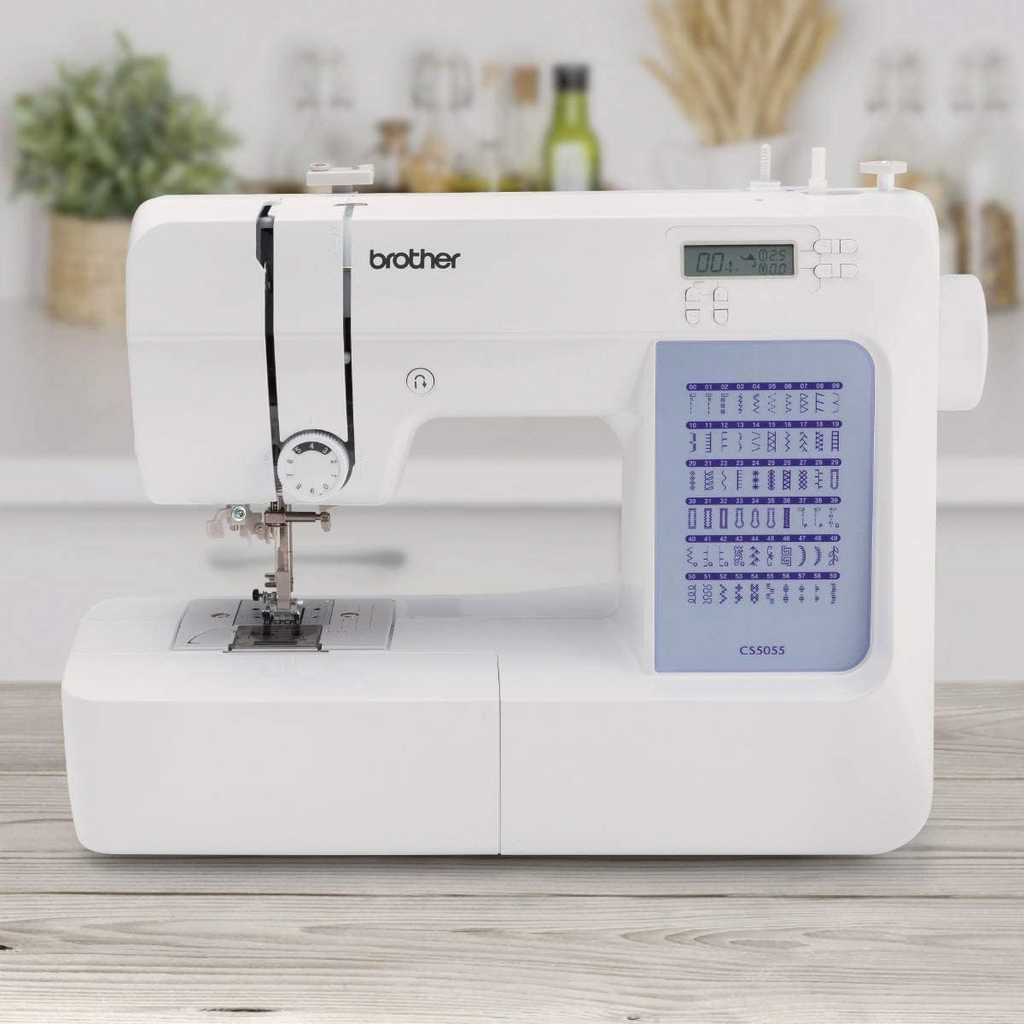
The Brother CS5055 is the computerized machine I would choose when you want electronic stitch selection but do not need the wider quilting bundle included with the CS7000X. Brother lists 60 built-in stitches, seven one-step auto-size buttonholes, an LCD screen, automatic needle threading, seven included feet, a free arm, LED lighting, and a 750 SPM maximum speed.
The machine is also light at about 10.5 pounds. I found its biggest advantage to be straightforward computerized selection rather than advanced automation: it does not include a start/stop button, automatic thread cutter, or dedicated needle-position key. That keeps it simple, but it also means the CS7000X is the better choice when quilting controls and accessories matter.
Features
- 60 Built-In Stitches and 7 One-Step Buttonholes
- LCD Computerized Stitch Selection
- Automatic Needle Threading
- 750 SPM Sewing Speed
- Seven Feet, Free Arm, and LED Work Area
Pros
These are the strengths that stood out most during normal beginner and home-sewing use.
- Easy computerized stitch selection. The LCD makes a 60-stitch library much less intimidating.
- Seven one-step buttonholes. Garment makers get more automatic buttonhole variety than on budget mechanical models.
- Good feed system for everyday fabrics. Brother specifically positions the model for normal fabric variety, including some thicker materials.
- Lightweight 10.5-pound body. Storage and class transport are easy.
- Seven useful included feet. The accessory package covers common garment and decorative tasks.
The biggest value comes from how these strengths work together rather than from any one specification.
Cons
Every budget machine makes trade-offs. These are the limitations I would factor into the buying decision.
- No start/stop button or dedicated speed slider. You still manage sewing speed through the foot controller.
- No automatic thread cutter. Thread trimming remains manual.
- Less quilting value than the CS7000X. It lacks the CS7000X wide table, walking foot, quilting foot, and broader 10-foot package.
None of these drawbacks is unusual for the price class, but each one matters more for some projects than others.
Best For: Beginners Who Want a Simple Computerized Interface
Choose the Brother CS5055 if you want more stitch and buttonhole variety than a mechanical machine but do not need a dedicated quilting package. It is a clean middle ground between basic dials and a more fully equipped computerized machine.
For a deeper hands-on breakdown, read my Brother CS5055 review.
5. Janome 2212 – Best for Simple Mechanical Reliability
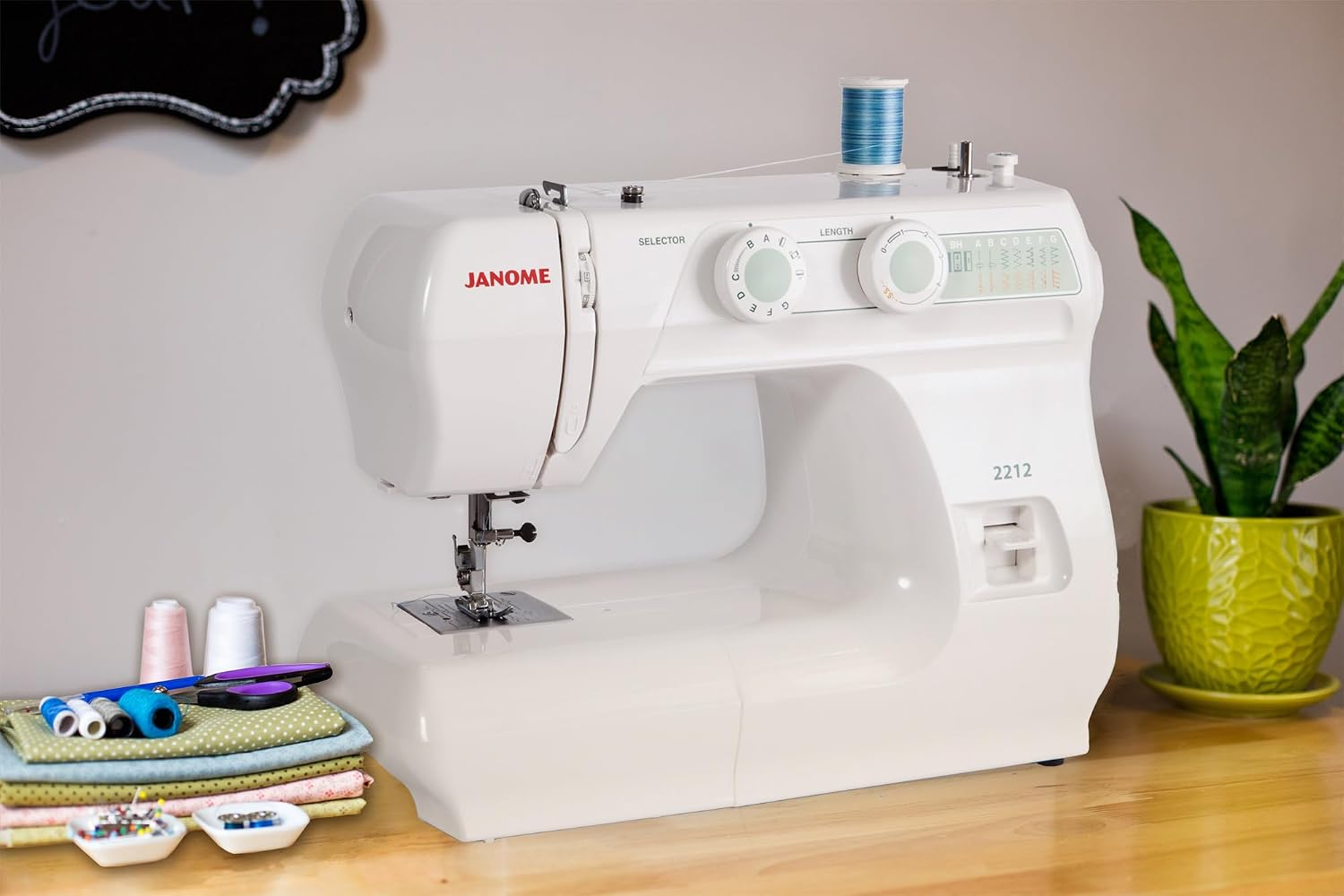
The Janome 2212 is the most traditional-feeling machine in this roundup. Janome lists 12 stitches, one four-step buttonhole, manual thread tension, a front-loading vertical oscillating-hook bobbin, a five-piece feed dog, free arm, drop feed, extra-high presser-foot lift, and maximum stitch dimensions of 5 mm wide by 4 mm long.
I like it for a beginner who actively wants fewer features and a more substantial mechanical feel. It is not the machine I would buy for decorative sewing or fast automatic buttonholes, but the limited interface can be reassuring when your real goal is learning straight seams, zigzags, hems, repairs, garment basics, and simple quilting techniques.
Features
- 12 Built-In Stitches
- Four-Step Buttonhole
- Five-Piece Feed Dog
- Drop Feed and Free Arm
- Extra-High Presser-Foot Lift and Manual Tension
Pros
These are the strengths that stood out most during normal beginner and home-sewing use.
- Very straightforward control layout. The machine is easy to understand if you prefer physical dials and visible settings.
- Strong core feature set despite only 12 stitches. Free arm, drop feed, and extra-high lift add practical range.
- Good machine for learning sewing fundamentals. Manual tension and a four-step buttonhole make the mechanics visible.
- Stable choice for ordinary home sewing. It is well suited to cotton, repairs, garments, and basic quilting tasks.
- Long-running model with current Janome documentation. Manuals and the official feature sheet remain available.
The biggest value comes from how these strengths work together rather than from any one specification.
Cons
Every budget machine makes trade-offs. These are the limitations I would factor into the buying decision.
- Only 12 stitches. Creative sewists can outgrow the stitch library quickly.
- Four-step buttonhole is slower than one-step systems. Repeated garment buttonholes require more hands-on control.
- No automatic needle threader. Threading the needle remains fully manual.
None of these drawbacks is unusual for the price class, but each one matters more for some projects than others.
Best For: Sewists Who Want Fewer Features and More Direct Control
Choose the Janome 2212 if your priority is a focused mechanical machine that teaches sewing fundamentals without a screen. It is a better fit for basic garments, repairs, and simple quilting than for decorative stitching or automation-heavy work.
For a deeper hands-on breakdown, read my Janome 2212 review.
6. SINGER M1500 – Best Lightweight Machine for Basic Sewing and Mending
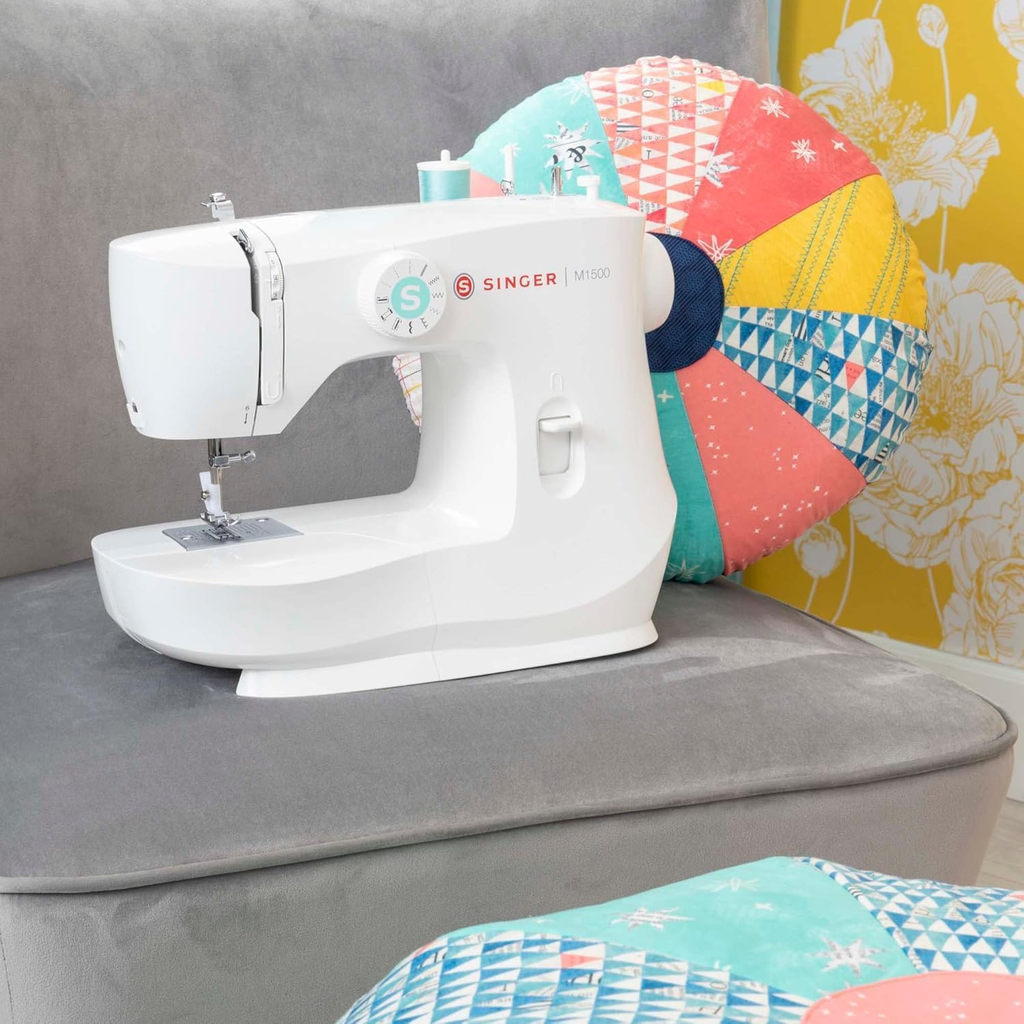
The SINGER M1500 is the most stripped-back machine in this group, and that is exactly why some beginners will prefer it. SINGER lists six built-in stitches, 57 stitch applications, a four-step buttonhole, front-loading Class 15 bobbin, preset stitch length and width, LED lighting, free arm, extra-high presser-foot lift, and a 10-pound machine weight.
The important correction is that 57 stitch applications does not mean 57 different built-in stitches. SINGER uses “stitch applications” to describe techniques that can be completed with the six actual stitches. I would buy the M1500 for mending, simple seams, classes, small-space sewing, and portability, not for someone who wants to experiment with lots of adjustable stitch settings.
Features
- 6 Built-In Stitches and 57 Stitch Applications
- Preset Stitch Length and Width
- Four-Step Buttonhole
- 10-Pound Body with Metal Interior Frame
- 5.6-Inch Sewing Space, Free Arm, and Extra-High Lift
Pros
These are the strengths that stood out most during normal beginner and home-sewing use.
- Very simple for absolute beginners. Preset stitch dimensions reduce the number of adjustments needed to start.
- Lightweight and easy to store. At about 10 pounds, it works well in small or shared spaces.
- Metal interior frame. The internal structure adds useful stability for a portable budget machine.
- Free arm and extra-high presser-foot lift. Basic garment repairs and tubular pieces remain practical.
- Good for mending and classes. The machine is easy to carry and does not require learning a digital interface.
The biggest value comes from how these strengths work together rather than from any one specification.
Cons
Every budget machine makes trade-offs. These are the limitations I would factor into the buying decision.
- Only six built-in stitches. The creative ceiling is lower than every Brother model in this roundup.
- Preset stitch length and width reduce flexibility. You cannot fine-tune many stitch dimensions the way you can on the GX37 or computerized models.
- Four-step buttonhole and front-loading bobbin are more traditional. Both take more manual handling than the easiest one-step and top-drop-in systems.
None of these drawbacks is unusual for the price class, but each one matters more for some projects than others.
Best For: Simple Mending, Small Spaces, and Sewing Classes
Choose the SINGER M1500 when portability and straightforward basic sewing matter more than stitch variety. It is the easiest machine here to justify as an occasional-use or class machine, but it is also the model you are most likely to outgrow if your projects become more creative.
Best Cheap Sewing Machines 2026: Features & Specifications Comparison
The individual reviews above explain how each machine feels in use. The comparison below is only a final reference for the specifications that most directly affect a beginner: control type, stitch and buttonhole range, standout convenience features, and the use case I would match to each model.
| Model | Type | Core Specs | Key Convenience | Best For |
|---|---|---|---|---|
| Brother CS7000X | Computerized | 70 stitches · 7 one-step buttonholes | LCD · adjustable max speed · auto threader · wide table · 10 feet · 10.5 lb | Best overall; beginners + basic quilting |
| Brother XM2701 | Mechanical | 27 stitches · 1 one-step buttonhole · 800 SPM | Auto threader · Quick-Set bobbin · 6 feet · LED · 12.6 lb | Best mechanical beginner pick |
| Brother GX37 | Mechanical | 37 stitches · 1 one-step buttonhole · 850 SPM | Adjustable width/length · auto threader · Quick-Set bobbin · 6 feet · 10.14 lb | Best mechanical stitch variety |
| Brother CS5055 | Computerized | 60 stitches · 7 one-step buttonholes · 750 SPM | LCD · auto threader · 7 feet · free arm · 10.5 lb | Best simple computerized alternative |
| Janome 2212 | Mechanical | 12 stitches · 1 four-step buttonhole | 5-piece feed · drop feed · free arm · extra-high lift · manual tension | Best simple mechanical reliability |
| SINGER M1500 | Mechanical | 6 stitches · 57 applications · 1 four-step buttonhole | Preset length/width · metal frame · free arm · 5.6-in space · 10 lb | Best basic portable/mending machine |
The table shows the core split clearly: CS7000X gives the most complete package, XM2701 and GX37 are the best dial-driven Brother options, CS5055 is a simpler computerized choice, Janome 2212 prioritizes traditional mechanical control, and M1500 prioritizes minimum complexity and portability.
What to Look for in a Cheap Sewing Machine
I start with the first six months of projects, not the feature list. A machine for hems, pillowcases, tote bags, simple garments, and repairs needs a different level of control from a machine that will be used for quilting, decorative stitching, or regular stretch-fabric sewing.
Useful Built-In Stitches
Straight stitch, zigzag, stretch options, blind hem, and a buttonhole are more important than a huge decorative library for most beginners. I would rather have 12 useful stitches that feed well than 100 patterns on a machine that is frustrating to control.
Buttonhole System
One-step buttonholes are easier to repeat because the machine completes the sequence automatically. Four-step systems can still work well, but they require the sewist to change stages manually and pay closer attention to length and direction.
Needle Threading and Bobbin Access
Automatic needle threading and a top drop-in bobbin make setup easier, but they are conveniences rather than requirements. A front-loading bobbin is perfectly usable if the path is clear and the machine feeds consistently. Our how-to thread a sewing machine guide walks through both systems step by step.
Speed Control
A computerized speed limiter is one of my favorite beginner features because it prevents the machine from running faster than you are ready to guide. On mechanical models, a responsive foot pedal becomes more important because your foot controls the entire speed range.
Stitch Length and Width Adjustment
Adjustability matters when you want more control over basting, zigzags, appliqué, edge finishing, or decorative work. Machines with preset stitch dimensions are simpler, but you give up some flexibility as your skills grow.
Free Arm and Workspace
A free arm helps with sleeves, cuffs, and trouser hems, while needle-to-tower space matters more for quilts, bags, and larger projects. Budget machines are usually compact, so check the real project size rather than assuming every full-size machine has equal room.
Included Presser Feet
A good accessory package can save real money. Zipper, buttonhole, blind hem, overcasting, walking, quilting, and 1/4-inch feet are valuable only if they match the projects you plan to make.
Weight and Stability
A light machine is easier to store and carry but can feel less planted on a weak table or bulky project. I look for the balance between portability and enough stability that the machine does not feel like it is walking across the surface.
Warranty, Manuals, and Support
Budget machines are easier to own when manuals, support, replacement bobbins, and common presser feet are easy to find. I would choose a well-supported simple model over an obscure machine with a longer feature list.
Choose Your Budget Sewing Machine in 60 Seconds
- If you want the absolute cheapest machine that still sews reliably → buy the SINGER M1500
- If you want the best features for the money and room to grow → buy the Brother CS7000X
- If you’re a total beginner who wants dials, not a screen → buy the Brother XM2701
- If you want more stitches on a budget, still fully mechanical → buy the Brother GX37
- If you want a computerized machine at the lowest possible price → buy the Brother CS5055
- If you want a simple, durable machine that teaches real fundamentals → buy the Janome 2212
- If you’re unsure which one fits you best → see our full guide to the best sewing machines for beginners
Mechanical vs. Computerized Cheap Sewing Machines
Mechanical machines such as the XM2701, GX37, Janome 2212, and SINGER M1500 use dials and direct physical controls. They make it easy to see the connection between stitch selection, tension, and the seam, which is why many new sewists like them.
If you are still deciding which control style suits you, read my mechanical vs. computerized sewing machine guide.
Computerized machines such as the CS7000X and CS5055 use an LCD and electronic selection. They are not automatically harder for beginners. In fact, the CS7000X can be easier for detailed learning because its speed control, stitch guidance, and automatic buttonholes reduce repetitive setup.
Can a Cheap Sewing Machine Handle Denim?
Yes, several of these machines can handle light or moderate denim when I use the correct jeans needle, appropriate thread, sensible stitch length, and slow down at thick seam crossings. That does not make them industrial or heavy-duty machines.
The important limit is repeated bulky layering. A normal jeans hem may be reasonable; thick bag seams, upholstery, leather, or continuous production work can overload a budget home machine. I level the presser foot at bulky transitions and never force the handwheel or pedal when the needle is struggling to penetrate.
Can a Cheap Sewing Machine Be Used for Quilting?
Yes, especially for piecing, small quilts, table runners, and beginner free-motion practice. The CS7000X is the strongest quilting value here because it includes a wide table, walking foot, quilting foot, 1/4-inch foot, quilt guide, and free-motion capability.
If quilting becomes a bigger part of your sewing, our best quilting sewing machines guide covers models built specifically for larger, more frequent projects.
The Janome 2212 and other mechanical models can also piece and do basic quilting when the feed is consistent and the correct foot is used. The biggest limitation is workspace: large quilts become physically harder to manage on compact budget machines.
What You Give Up With a Budget Sewing Machine
A cheap sewing machine can be excellent for home use, but the lower price usually comes from simplifying the build or feature set. Knowing what is missing helps you decide whether the savings are worth it.
- Smaller workspace. Most budget machines leave less room to the right of the needle than larger quilting-focused models.
- Fewer automation features. Automatic thread cutters, automatic tension, electronic presser-foot lift, and large color screens are uncommon.
- Lighter construction. Portable bodies are convenient but can feel less planted with bulky fabric.
- Simpler lighting and controls. Budget displays and LED systems are functional rather than premium.
- Lower tolerance for heavy production. These are home machines for normal project cycles, not industrial equipment for hours of thick-material sewing.
For a beginner, many of those compromises are completely reasonable. I would only pay more when the missing feature solves a problem you already expect to have.
Common Cheap Sewing Machine Mistakes to Avoid
The easiest way to waste money on a budget machine is to buy the lowest price first and figure out the projects later. Most disappointment comes from a mismatch between the machine and the work, not from the word “cheap” itself.
- Buying by stitch count alone. A 70-stitch machine is not automatically better than a 27-stitch machine if you only sew hems, repairs, and simple garments.
- Confusing stitch applications with built-in stitches. The SINGER M1500 has six built-in stitches and 57 stitch applications, not 57 separate stitch patterns.
- Expecting a budget machine to be industrial. Home denim repairs are different from repeated leather, upholstery, or bag-production work.
- Ignoring the buttonhole system. One-step and four-step buttonholes feel very different when you sew multiple garments.
- Forgetting accessory cost. A walking foot, wide table, quilting foot, zipper foot, and extra bobbins can change the real value of the package.
- Choosing portability without checking stability. A light machine is useful only if it remains controlled on the table during normal sewing.
- Skipping the manual. Threading, bobbin installation, needle choice, and stitch setup differ enough between models to cause avoidable jams.
- Using the wrong needle for the fabric. Many “machine problems” are really dull, bent, or inappropriate needles.
- Starting on a finished project without a scrap test. A small test reveals tension, stitch length, needle, and thread issues before they damage the real fabric.
- Buying without checking service and replacement parts. A cheap machine is not a bargain if basic bobbins, feet, or support are difficult to find.
My rule is to test the exact setup you plan to use: thread, needle, fabric, foot, and stitch. If your test seam still looks uneven after that, our sewing machine tension guide walks through the most common causes before you assume the machine itself is at fault. A budget machine becomes much easier to judge when the test reflects a real project instead of an empty presser foot.
Final Verdict: Which Cheap Sewing Machine Should You Buy?
For the best overall balance, I would buy the Brother CS7000X. It gives a new sewist the most useful room to grow through garments, home projects, basic quilting, buttonholes, and decorative sewing without becoming a heavy or complicated machine.
If you want mechanical controls, choose the Brother XM2701 for the easiest all-around start, the GX37 for more stitch flexibility, or the Janome 2212 for a focused traditional machine. Choose the CS5055 if you want a simpler computerized interface, and choose the SINGER M1500 if portability and basic mending matter more than long-term feature depth.
The best cheap sewing machine is not the one with the longest feature list. It is the one you can thread confidently, control comfortably, and use often enough to finish real projects.
Need to Compare More Models? Use the MariaSew Sewing Machine Comparison Tool to compare specs across hundreds of machines before you buy.
Frequently Asked Questions
What is the best cheap sewing machine in 2026?
The Brother CS7000X is my best overall pick because it combines beginner-friendly computerized controls, 70 stitches, seven one-step buttonholes, speed control, a wide table, quilting feet, and a lightweight body.
What is the best cheap sewing machine for a complete beginner?
Choose the Brother XM2701 if you prefer mechanical dials, or the Brother CS7000X if a screen and speed control make you more comfortable. Both are easier to grow with than the most stripped-back machines.
What is the best cheap mechanical sewing machine?
The Brother XM2701 is my best overall mechanical beginner pick. The GX37 is better if you want more stitch variety, while the Janome 2212 is better if you want fewer features and a more traditional setup.
What is the best cheap computerized sewing machine?
The Brother CS7000X offers the best value in this six-model group. The Brother CS5055 is a good alternative if you want computerized stitch selection but do not need the CS7000X quilting package.
Is the SINGER M1500 a 57-stitch sewing machine?
No. SINGER lists six built-in stitches and 57 stitch applications. A stitch application is a sewing technique that can be completed with the available stitches, not a separate built-in stitch pattern.
Can a cheap sewing machine sew denim?
Yes, for light or moderate denim and normal home repairs when you use the correct needle and slow down at thick seam crossings. Budget home machines are not substitutes for industrial or dedicated heavy-duty equipment.
Can a cheap sewing machine quilt?
Yes. All six can handle basic piecing or small quilting tasks to different degrees, but the Brother CS7000X is the best quilting value because it includes a wide table, walking foot, quilting foot, and 1/4-inch foot.
Are computerized sewing machines better for beginners?
Not automatically. Computerized speed control and one-step buttonholes can make learning easier, while mechanical dials can make the relationship between settings and stitches clearer. Choose the control style that feels natural to you.
How many stitches does a beginner really need?
A beginner can do a large amount of sewing with a small set of utility stitches: straight, zigzag, stretch options, blind hem, and a buttonhole. Extra decorative stitches are useful only when your projects call for them.
Should I buy the cheapest sewing machine I can find?
No. Buy the least expensive machine that still fits your fabric, projects, buttonhole needs, control preferences, and service requirements. An unsuitable cheap machine is more expensive if you replace it quickly.
What accessories should come with a beginner sewing machine?
At minimum, I want an all-purpose or zigzag foot, zipper foot, buttonhole foot, bobbins, needles, and basic tools. Quilters should value a walking foot, 1/4-inch foot, quilting foot, quilt guide, and extension table.
How can I make a cheap sewing machine last longer?
Use the correct needle and bobbin, clean lint as directed, avoid forcing thick seams, keep the machine covered, and follow the manufacturer’s manual for lubrication and service. Most beginner problems are easier to prevent than repair. Our full how to oil a sewing machine guide covers exactly which models allow user oiling and which are better left to a technician. Most beginner problems are easier to prevent than repair.

2 Comments