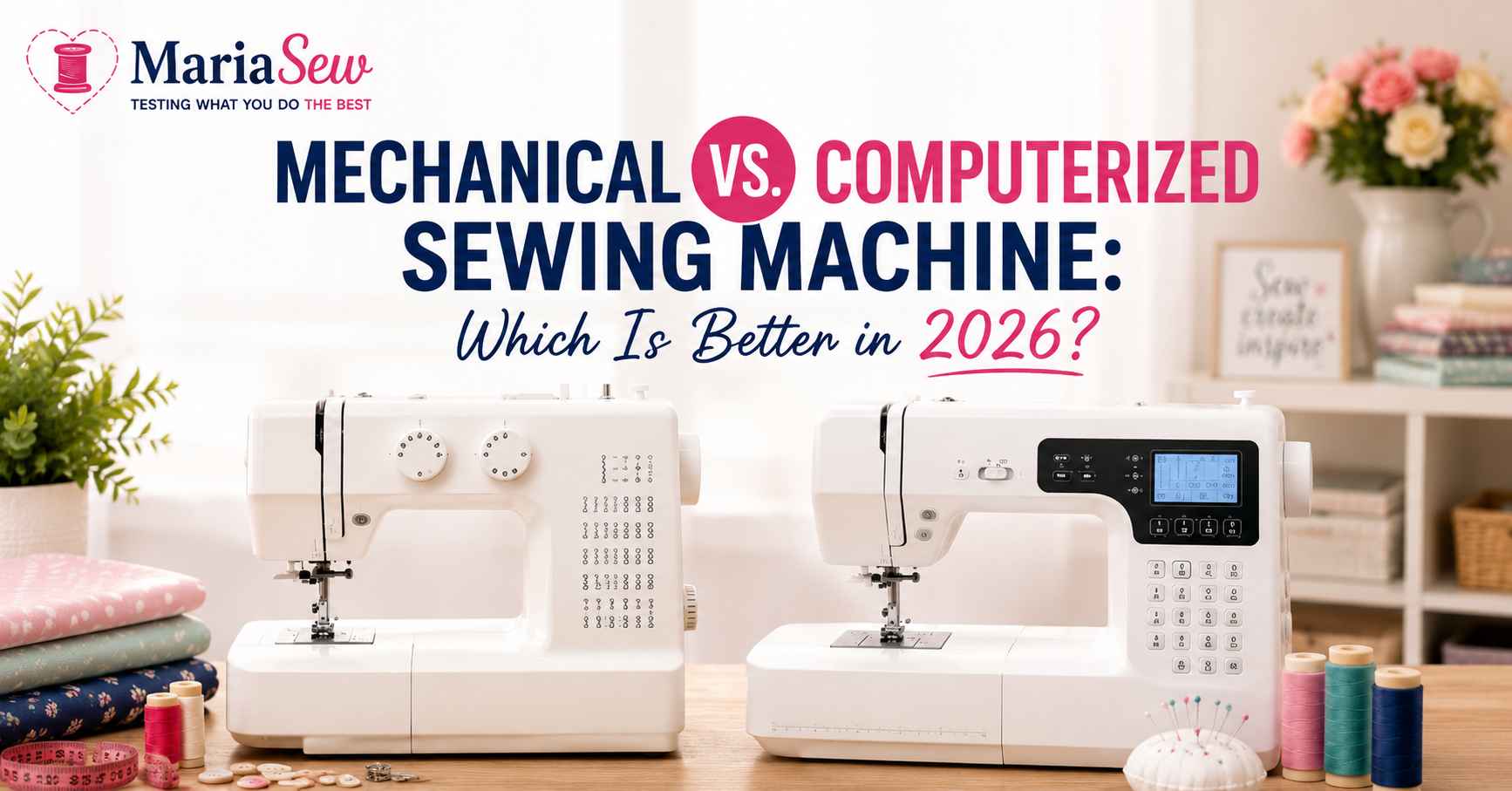
Mechanical vs. Computerized Sewing Machine: Which Is Better in 2026?
Twelve years ago, I learned to sew on a mechanical machine with three dials and one lever, no screen, no menus. These days, half the machines on my shelf are computerized, and the honest answer to “which is better” is: it depends on how you like to sew, not on the technology itself.
Mechanical machines use physical dials, knobs, and levers for direct control over stitch settings. Computerized machines add electronic stitch selection, a display, and model-dependent automation, speed control, needle up/down, automatic thread cutting, or one-step buttonholes. Both can produce excellent seams, garments, and quilts when matched to the right project and setup.
In this 2026 guide, I compare the real differences using machines I’ve personally tested, and recommend the models I’d genuinely stand behind for beginners, quilting, heavy fabrics, and everyday sewing.
Key Takeaways
- Mechanical means manual control, not low quality. Physical dials and levers directly change stitch length, width, tension, needle position, or stitch type depending on the model.
- Computerized means electronic control, not automatic sewing. You still choose the needle, thread, presser foot, fabric preparation, seam allowance, and technique.
- Computerized models usually offer more convenience. LCD screens, speed sliders, needle up/down, stitch memory, automatic thread cutters, and many buttonhole styles are more common in this category.
- Mechanical models often keep the learning path visible. Fewer menus and tactile adjustments can make it easier to understand how a setting changes the stitch.
- Beginners can succeed with either type. A simple computerized machine can be easier than a feature-heavy mechanical model if digital controls feel natural to you.
- Project type matters more than stitch count. A sewist making repairs and denim hems needs different strengths from someone doing quilting, decorative stitching, or frequent garment work.
What Is a Mechanical Sewing Machine?
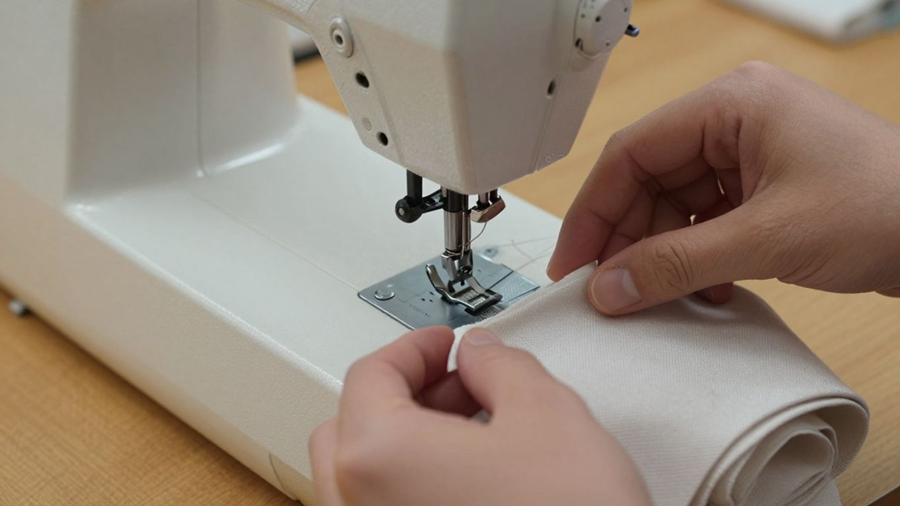
A mechanical sewing machine uses physical controls such as dials, knobs, sliders, and levers to select stitches and adjust settings. The motor still runs on electricity on most modern home machines, but the stitch-control system is primarily mechanical rather than menu-driven.
I like mechanical machines because I can usually see the major settings at a glance. If I want a longer stitch, a wider zigzag, a different tension setting, or another utility stitch, I turn the appropriate control and immediately see the result on fabric.
This direct relationship can be reassuring for beginners and practical sewists. It also makes mechanical models popular for repairs, garment construction, denim, home décor, and anyone who prefers a focused stitch selection over dozens or hundreds of decorative options.
How Mechanical Sewing Machines Work
When I press the foot controller, the motor drives the needle bar and hook system while the feed dogs move the fabric under the presser foot. Cams, gears, linkages, and the selected mechanical settings determine how far the needle moves, whether it swings side to side, and how long each stitch becomes.
The bobbin thread and upper thread lock together to form the stitch, while manual tension and presser-foot pressure settings influence thread balance and feeding on models that allow those adjustments. The process is still precise, but more of the setup remains visible and directly controlled by the sewist.
A mechanical machine can still include modern conveniences such as a built-in needle threader, one-step buttonhole, top-loading bobbin, drop feed, or extra-high presser-foot lift. The category does not mean ‘basic’ in every respect.
What Is a Computerized Sewing Machine?
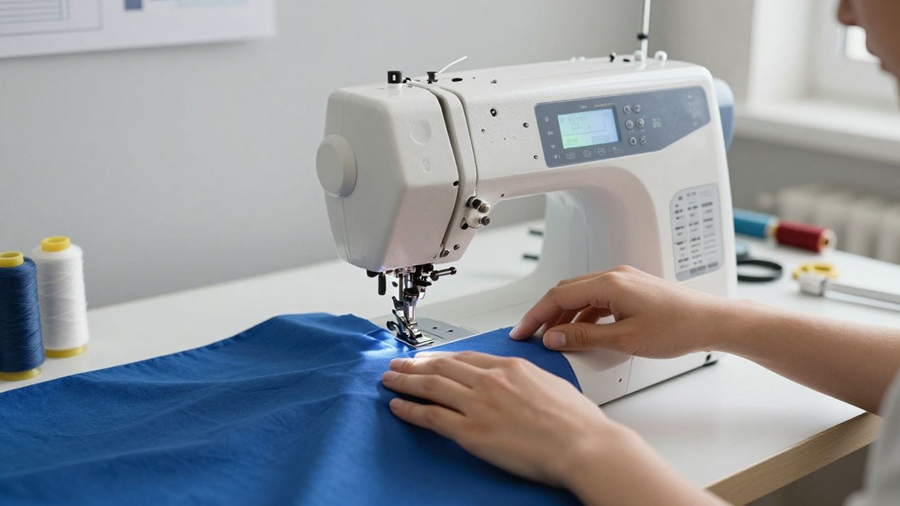
A computerized sewing machine uses electronic controls and an internal processor to manage stitch selection and model-specific settings. Instead of turning separate dials for every function, I may choose a stitch through buttons or an LCD screen and let the machine apply recommended length, width, or other parameters.
Computerized machines commonly offer a broader stitch library and more repeatable adjustments. Depending on the model, they may add speed control, needle up/down, start/stop sewing, stitch memory, automatic thread cutting, locking stitches, multiple one-step buttonholes, alphabets, or on-screen presser-foot recommendations.
Those features reduce repetitive setup, but they do not replace sewing technique. I still have to choose appropriate needles and thread, stabilize delicate or decorative work, guide the fabric correctly, and understand when the recommended setting needs to change.
How Computerized Sewing Machines Work
The basic stitch formation is still mechanical: the needle, hook, bobbin, feed dogs, and presser foot physically form and feed the seam. The difference is that electronic controls tell the machine how to position the needle, move the feed system, limit speed, and apply programmed stitch patterns.
When I select a stitch, the machine can recall stored values and reproduce them consistently. On more advanced models, sensors and electronic motors also manage functions such as thread cutting, locking stitches, presser-foot lift, or automatic tension.
This repeatability is useful when I switch between construction stitches, quilting, buttonholes, decorative borders, and garment details in the same session. It saves time because I spend less time recreating settings manually.
How I Test Sewing Machines at MariaSew
I personally use the sewing machines I recommend before I publish a verdict. I have more than 12 years of hands-on sewing experience, and I do not decide whether a machine is good from the stitch count or manufacturer description alone. I thread it, wind bobbins, change feet, sew real fabric, test the controls repeatedly, and look for the small frustrations that only appear after the first setup.
When I compare mechanical and computerized machines, I run both through the same core tasks: straight stitching on cotton, seam matching, lightweight fabric, stretch fabric, denim hems, buttonholes, zipper installation, free-arm sewing, and basic quilting. I also test low-speed control, full-speed stability, needle threading, bobbin loading, tension consistency, reverse or locking stitches, and how quickly I can recover from a threading or feeding mistake.
- Stitch quality. I inspect the top and underside for balanced tension, skipped stitches, inconsistent stitch length, puckering, and changes at higher speed.
- Fabric handling. I move from lightweight woven fabric to cotton, knits, denim, and layered seams instead of repeating one easy test fabric.
- Control usability. On mechanical machines I test dials, levers, tension, and pedal response; on computerized models I test menus, speed control, needle position, automation, and screen clarity.
- Buttonholes and garment tasks. I compare consistency, setup time, free-arm access, zipper work, hems, topstitching, and repeated seams.
- Quilting and larger projects. I check drop-feed capability, extension-table support, walking-foot compatibility, workspace, needle down, and how stable the machine feels with more fabric around the needle.
- Ownership experience. I consider cleaning, needle changes, accessory storage, portability, noise, service access, manuals, warranty, and whether the features actually save time.
For additional guidance on machine setup, see our guide on how to thread a sewing machine and our resource on sewing machine tension.
Mechanical vs. Computerized Sewing Machine: Key Features and Differences
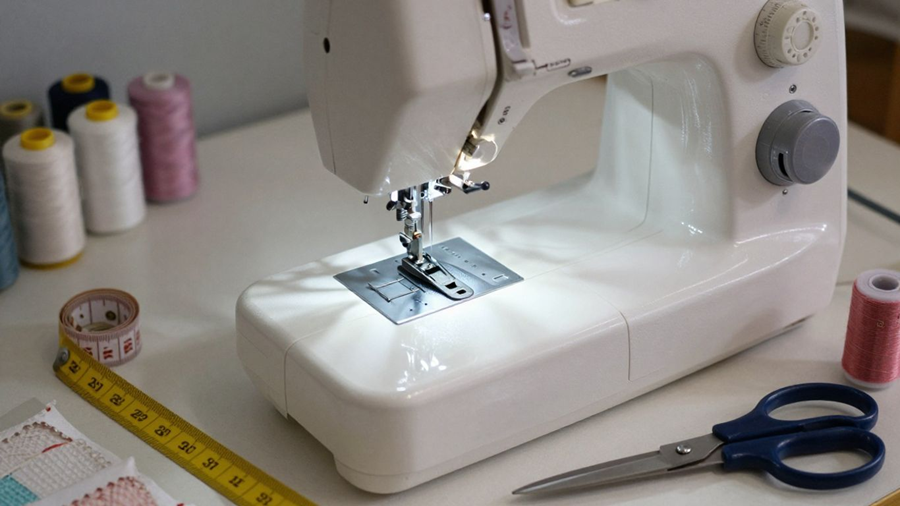
The most useful comparison is not ‘old technology versus new technology.’ It is how each control system changes a normal sewing session. The following feature areas are the ones I notice most during testing.
Controls and Stitch Selection
Stitch Variety
Stitch Length, Width, and Needle Position
Speed Control
Needle Up/Down and Pivoting
Thread Cutting and Locking Stitches
Buttonholes
Tension Control
Learning Curve
Beginners who want more guidance can also compare our recommendations for best sewing machines for beginners.
Maintenance and Repair
Weight and Portability
Price and Long-Term Value
Power and Heavy Fabrics
Mechanical vs. Computerized Sewing Machine Features & Specifications
The feature explanations above show why the categories feel different during real sewing. The table below summarizes the typical pattern, but it should not be treated as a promise that every machine includes or excludes a feature.
Always verify the exact model’s manual and specifications. Some premium mechanical machines have features that budget computerized machines lack, and some computerized machines intentionally keep the feature set simple.
| Feature / Specification | Mechanical Sewing Machine | Computerized Sewing Machine |
|---|---|---|
| Control system | Physical dials, knobs, sliders, levers | Buttons, LCD/display, electronic controls |
| Stitch selection | Direct manual selection | Electronic/programmed selection |
| Stitch library | Usually focused on essential and decorative stitches | Often broader; may include alphabets and specialty stitches |
| Length/width adjustment | Manual within model range | Electronic or button-based within model range |
| Speed control | Primarily foot controller | Foot controller; many models add speed slider |
| Needle up/down | Less common | Common on mid-range and premium models |
| Automatic thread cutter | Rare | Available on many mid-range/premium models |
| Buttonholes | 4-step or 1-step, model dependent | Often multiple 1-step styles |
| Tension | Often manual dial | Manual or automatic, model dependent |
| Stitch memory/sequencing | Usually no | Available on selected models |
| Free arm | Common | Common |
| Drop feed | Model dependent | Model dependent; common on quilting-oriented models |
| Heavy-fabric ability | Depends on model construction and feed | Depends on model construction and feed |
| Learning style | Tactile, direct adjustments | Guided, repeatable digital settings |
| Repair/service | Mechanical systems may be simpler to diagnose | Electronics can require specialized service |
| Best fit | Practical sewing, repairs, tactile control, focused features | Frequent sewing, quilting, decorative work, convenience and repeatability |
The biggest pattern is convenience versus direct control, not capability versus incapability. Both types can produce professional-looking home-sewn work when the machine is matched to the fabric and technique.
Pros and Cons of Mechanical Sewing Machine
Mechanical machines are strongest when simplicity is intentional. I like them most when I want to sit down, select a practical stitch, adjust it directly, and start sewing without a screen or long menu.
Pros of Mechanical Sewing Machines
- Direct tactile controls. Dials and levers make it easy to see which setting I changed and why the stitch changed.
- Focused feature set. Fewer built-in options can reduce decision fatigue for repairs, garments, hems, and basic home projects.
- Often strong value. I am not paying for screens, memory, or automation that I may never use.
- Good learning feedback. Manual adjustments help me understand tension, stitch length, width, pedal control, and fabric handling.
The strongest mechanical-machine advantage is not nostalgia. It is clarity: the machine asks me to make fewer decisions, but makes those decisions very visible. Many sturdy heavy-duty choices. Models such as the Janome HD3000, HD1000, and SINGER 4423 combine mechanical controls with strong frames and practical fabric handling.
Cons of Mechanical Sewing Machines
- Less automation. Thread cutting, programmable needle down, speed sliders, stitch memory, and automatic locking functions are uncommon.
- Smaller stitch libraries. Decorative sewists may outgrow a focused utility-stitch menu.
- More manual repetition. I may need to recreate stitch settings, trim threads, and manage speed entirely through the pedal.
- Advanced precision features are less common. Fine electronic needle positioning, multiple automatic buttonholes, and guided screen settings are usually found on computerized machines.
If I only need practical stitches, these limitations may not matter. If I sew frequently and repeat detailed operations, the missing automation can become noticeable.
Pros and Cons of Computerized Sewing Machine
Computerized machines make the biggest difference when I change stitches often or value repeatable settings. The good ones reduce setup time without making the sewing itself feel disconnected.
Pros of Computerized Sewing Machines
- Fast, repeatable stitch selection. Buttons or an LCD screen make it easy to switch between construction, quilting, decorative, and buttonhole settings.
- More convenience features. Speed control, needle up/down, automatic thread cutting, locking stitches, and start/stop are common as price rises.
- Broader creative range. Many models include more decorative stitches, quilting stitches, alphabets, and buttonhole styles.
- Helpful for precision work. Electronic needle positions and speed limiting can make curves, topstitching, appliqué, and quilting more controlled.
- Strong choices for frequent sewists. Automation saves more time when I sew every week rather than a few times per year.
For me, the best computerized machines use technology to shorten repetitive setup. They do not hide the basic sewing process or force me through menus for ordinary seams.
Cons of Computerized Sewing Machines
- More features can feel overwhelming. A large stitch library and menu system can distract a beginner who only needs a few core functions.
- Electronics can increase repair complexity. Boards, displays, sensors, or electronic motors may require specialized service if they fail.
- Higher price for features you may not use. A sewist who only straight stitches and hems can pay for automation that adds little value.
- Some lightweight models are not built for demanding thick-fabric work. Computerization does not guarantee frame strength, feed power, or high presser-foot clearance.
The right computerized machine should feel easier after the first few sessions, not more complicated forever. If the interface slows me down on basic tasks, I would choose a simpler model.
Which Type Is Better for Beginners?
Both can be beginner-friendly. A mechanical model is excellent for someone who learns by turning a dial, sewing a sample, and seeing exactly what changed. A simple computerized model is excellent for someone who prefers a screen, recommended settings, a speed slider, and fewer manual setup decisions.
- Choose mechanical as a beginner if you want the smallest learning surface, enjoy tactile controls, and plan to focus on repairs, garments, crafts, and everyday sewing.
- Choose computerized as a beginner if speed control, easy buttonholes, clear stitch selection, quilting accessories, and guided settings make you feel more confident.
- Avoid buying only by ‘beginner’ labels. A cheap machine that feeds poorly or lacks the functions your projects need can be harder to learn on than a slightly better model.
My beginner recommendation is to test the threading path, bobbin system, stitch selection, reverse, buttonhole process, and speed control before buying. Those everyday actions matter more than the number printed on the stitch chart.
Which Is Better for Quilting?
Computerized machines usually have the convenience advantage for quilting because needle down, speed control, automatic thread cutting, extension tables, walking feet, quilting stitches, and wider needle-position ranges are common.
Mechanical machines can still be excellent for piecing and straightforward quilting. I would prioritize feed quality, workspace, drop-feed capability, walking-foot compatibility, stitch consistency, and table stability before deciding that a digital screen is necessary.
Which Is Better for Garment Sewing?
For garments, both categories work very well. A mechanical machine is excellent for seams, zippers, hems, darts, sleeves, topstitching, and repairs when it has the right feet and adjustable settings.
A computerized machine becomes more useful when I sew garments frequently and want multiple buttonhole styles, needle up/down, adjustable speed, fine needle positioning, automatic locking, or decorative finishing. The project frequency matters more than whether clothing ‘requires’ a computerized machine. For projects involving different fabrics, our guide on how to sew stretch fabric is also useful.
Which Is Better for Denim, Canvas, and Heavy Fabrics?
Do not choose by category alone. A robust mechanical heavy-duty model can outperform a lightweight computerized machine, but a well-designed computerized heavy-duty model can also handle demanding home-sewing fabrics confidently.
I check motor performance, internal frame, presser-foot clearance, feed system, adjustable presser-foot pressure, needle system, stitch speed, and how the machine crosses a bulky seam. The correct denim or jeans needle, thread, seam leveling, and slower speed at thick intersections remain essential.
Which Type Is Easier to Maintain?
Routine maintenance is very similar: remove lint, use the correct bobbin, change damaged needles, rethread correctly, follow oiling instructions for the exact model, and keep the machine covered when stored.
Mechanical systems may be easier for a technician to diagnose without electronic boards, while computerized models can require electronic troubleshooting. That does not mean mechanical machines always last longer. Build quality, use, service support, parts availability, and maintenance matter more than a category stereotype. Knowing the main sewing machine parts can also make routine maintenance and troubleshooting easier.
How to Choose Between Mechanical and Computerized Sewing Machines
I make the decision by starting with real projects, then working backward to the controls and features needed to complete them. This prevents me from paying for technology simply because it looks more advanced.
- List your next five projects. If the list is repairs, hems, tote bags, simple clothes, and home décor, a mechanical machine may be enough. If it includes quilting, decorative stitching, repeated buttonholes, or frequent garment work, computerized convenience may add value.
- Decide how you want to control speed. If a foot pedal feels natural, either type works. If you want a maximum-speed limiter, prioritize computerized models with a speed slider.
- Count the features you will use weekly. Needle down, thread cutting, one-step buttonholes, extension tables, and stitch memory are valuable only when they solve real tasks.
- Check fabric range. Test the machine on the lightest and heaviest fabrics you realistically expect to sew.
- Measure the workspace. Quilters and bag makers should look at needle-to-tower space, table support, and overall stability.
- Check weight and storage. A class machine or apartment machine has different portability needs from a permanent sewing-room setup.
- Research service and warranty. A strong local dealer or service center can be more valuable than ten extra decorative stitches.
For simple sewing projects, resources such as how to make a simple tote bag at home can help you identify the type of machine your projects actually require.
If I am still undecided, I use the MariaSew comparison tool to compare specific machines rather than comparing categories in the abstract.
Best Computerized Sewing Machines Recommended
These are three computerized machines I would shortlist for different buyers. I selected them because each represents a clear reason to choose computerized controls rather than simply offering a long stitch menu.
Brother CS7000X – Best Computerized Sewing Machine for Beginners & Value
The Brother CS7000X is the computerized machine I would show a beginner who wants useful automation without jumping into a premium price tier. It has 70 built-in stitches, seven one-step buttonholes, an LCD display, adjustable speed control, automatic needle threading, free-arm sewing, drop feed, a wide table, and 10 included sewing feet.
I like it for everyday garments, beginner quilting, repairs, and learning because the speed slider reduces the pressure to control everything through the foot pedal. It is not my first choice for repeated heavy denim work, but it is one of the easiest ways to experience the practical advantages of a computerized machine. Read my full Brother CS7000X tested review.
Janome 3160QDC-G – Best Portable Computerized Machine for Quilting
The Janome 3160QDC-G is the pick I prefer for a sewist who wants stronger quilting controls without carrying a heavy studio machine. Janome lists 60 stitches, six one-step buttonholes, a speed-control slider, memorized needle up/down, automatic thread cutting, SFS+ feeding, drop feed, foot-pressure adjustment, an LCD screen, and an included extension table.
At about 12.6 pounds, it is unusually portable for a full-size computerized machine. I would choose it for quilting classes, garment sewing, piecing, and sewists who value thread cutting and needle control more than hundreds of decorative stitches. Read my hands-on Janome 3160QDC-G review.
SINGER Heavy Duty 6600C – Best Computerized Choice for Faster Heavy-Fabric Sewing
The SINGER Heavy Duty 6600C is the hybrid choice for someone who wants a computerized interface but still prioritizes speed and heavier home-sewing fabrics. SINGER lists 215 stitch applications, six one-step buttonhole styles, an LCD screen, needle up/down, adjustable presser-foot pressure, a metal frame, drop feed, and sewing speeds up to 1,100 stitches per minute.
I like the concept for denim, canvas, garments, and home décor because it offers more digital convenience than a traditional heavy-duty mechanical machine. It is not as quilting-focused as the Janome, but it makes a strong case for sewists who want speed plus electronic stitch selection. Read my SINGER Heavy Duty 6600C review.
Best Mechanical Sewing Machines Recommended
The best mechanical models are not simply the cheapest machines. I look for strong feeding, useful stitch selection, easy maintenance, a stable frame, good presser-foot clearance, and controls that remain comfortable after long sewing sessions.
These three machines cover different priorities: all-around durability, lower-cost heavy-duty simplicity, and maximum speed for home heavy-duty sewing.
Janome HD3000 – Best Overall Mechanical Sewing Machine
The Janome HD3000 is my favorite all-around mechanical choice because it combines sturdy aluminum-frame construction with controls that still feel approachable. Janome lists 18 stitches, a built-in needle threader, free arm, drop feed, 15 needle positions, adjustable presser-foot pressure, extra-high presser-foot lift, and a top-loading rotary-hook bobbin.
It handles everyday garments, repairs, denim, canvas, bags, crafts, and home décor without making the sewing session feel complicated. I would choose it over a cheaper beginner machine when long-term durability and fabric control matter more than digital features. Read my tested Janome HD3000 review.
Janome HD1000 – Best Mechanical Heavy-Duty Value
The Janome HD1000 is a simpler, lower-cost mechanical workhorse with an all-aluminum interior frame and body. Janome lists 14 stitches, a four-step buttonhole, built-in needle threader, 860-stitch-per-minute maximum speed, free arm, drop feed, extra-high presser-foot lift, and straightforward dial selection.
I like it for repairs, practical garment work, canvas, basic quilting, and buyers who want a durable machine without paying for a large stitch library. The front-loading bobbin and four-step buttonhole feel more traditional, but that simplicity is part of the appeal. Read my Janome HD1000 review.
SINGER Heavy Duty 4423 – Best Fast Mechanical Machine for Denim & Home Projects
The SINGER Heavy Duty 4423 is the mechanical option I would consider when speed is a priority. SINGER lists 23 built-in stitches, a one-step buttonhole, adjustable stitch length and width, adjustable presser-foot pressure, built-in needle threader, a metal frame, stainless-steel bedplate, extra-high presser-foot lift, and speeds up to 1,100 stitches per minute.
It is a strong home machine for denim hems, canvas, costumes, curtains, repairs, and general sewing. The trade-off is that the faster, more aggressive feel can be less forgiving than a slower Janome for very precise beginner work. Read my SINGER Heavy Duty 4423 review.
Common Mechanical vs. Computerized Sewing Machine Mistakes to Avoid
Most poor sewing-machine purchases happen because the buyer chooses a category first and the actual projects second. The machine type should be the result of your needs, not the starting assumption.
- Assuming mechanical is always better for beginners. Some beginners are more comfortable with a speed slider, screen, and one-step buttonholes than with several manual dials.
- Assuming computerized means fragile. Electronics add repair complexity, but many computerized machines are well-built and reliable when maintained and serviced correctly.
- Assuming mechanical means heavy-duty. A lightweight basic mechanical machine may have less piercing power and stability than a well-built computerized model.
- Buying by stitch count. Seventy useful stitches can be more valuable than two hundred you never select.
- Ignoring speed control. Beginners and detail sewists often benefit more from a good speed limiter than from extra decorative stitches.
- Ignoring presser feet and accessories. Walking feet, quilting feet, zipper feet, buttonhole feet, extension tables, and free-motion feet can change what the machine can realistically do.
- Confusing home heavy-duty with industrial. Machines such as the HD3000 or SINGER Heavy Duty line are strong domestic machines, not factory machines designed for continuous industrial production.
- Skipping a fabric test. A machine that feels smooth on cotton may behave differently on denim seam crossings, knits, chiffon, or layered quilting.
- Paying for automation you will not use. Thread cutters, alphabets, memory, and hundreds of stitches add value only when they fit your workflow.
- Ignoring service support. Parts, dealer help, warranty service, and technician access matter more over ten years than a small difference in stitch count.
The easiest way to avoid these mistakes is to test the exact model with your own fabric and ask whether each feature solves a problem you already have.
Final Verdict: Mechanical or Computerized Sewing Machine?
I would choose a mechanical sewing machine when I want direct controls, a focused stitch set, straightforward practical sewing, and fewer electronic features between me and the fabric. Models such as the Janome HD3000, HD1000, and SINGER 4423 show that mechanical does not have to mean weak or outdated.
I would choose a computerized sewing machine when I sew frequently enough to benefit from repeatable digital settings, speed control, needle up/down, automatic buttonholes, thread cutting, quilting tools, or a broader stitch library. The Brother CS7000X, Janome 3160QDC-G, and SINGER Heavy Duty 6600C each show a different reason to pay for computerization.
For most buyers, the answer is not ‘mechanical versus computerized.’ It is which exact machine makes your normal projects easier without forcing you to pay for features you will never use.
Frequently Asked Questions
Is a mechanical or computerized sewing machine better for beginners?
Either can be excellent. Mechanical machines suit beginners who prefer tactile dials and direct feedback, while simple computerized machines can be easier for beginners who value speed control, guided stitch selection, and automatic buttonholes.
What is the main difference between mechanical and computerized sewing machines?
The main difference is the control system. Mechanical machines use physical dials and levers, while computerized machines use electronic controls and programmed settings to manage stitch selection and model-dependent functions.
Do computerized sewing machines sew better stitches?
Not automatically. Stitch quality depends on the machine’s engineering, setup, needle, thread, tension, feed system, fabric, and technique. Computerization mainly changes control and convenience.
Do mechanical sewing machines last longer?
Not as a universal rule. Mechanical systems can be simpler to repair, but actual lifespan depends on build quality, use, maintenance, service, and parts availability.
Are computerized sewing machines expensive to repair?
Electronic components can make some repairs more specialized or costly, but repair cost varies widely by model and fault. Good dealer support and warranty coverage matter.
Which type is better for quilting?
Computerized machines often provide more quilting convenience through needle down, speed control, thread cutting, extension tables, and quilting stitches. A strong mechanical machine can still piece and quilt very well.
Which type is better for denim?
Choose the exact model rather than the category. A heavy-duty mechanical machine such as the Janome HD3000 or SINGER 4423 is a strong option, but computerized heavy-duty machines can also perform well.
Do computerized sewing machines work without a foot pedal?
Some do. Models with a start/stop button can sew without the foot controller, usually with a speed slider controlling maximum speed. This feature is model dependent.
Do computerized machines set thread tension automatically?
Only some models do. Many computerized machines still use manual tension, so verify the exact specification rather than assuming automatic tension is included.
Is a mechanical machine better for learning sewing fundamentals?
It can be because the controls make adjustments very visible, but a computerized machine does not prevent you from learning fabric handling, threading, tension, seam construction, and needle choice.
What should I check before buying either type?
Check the projects you plan to sew, fabric range, stitch selection, buttonhole system, speed control, needle positions, free arm, drop feed, included feet, workspace, weight, warranty, and local service support.

2 Comments