
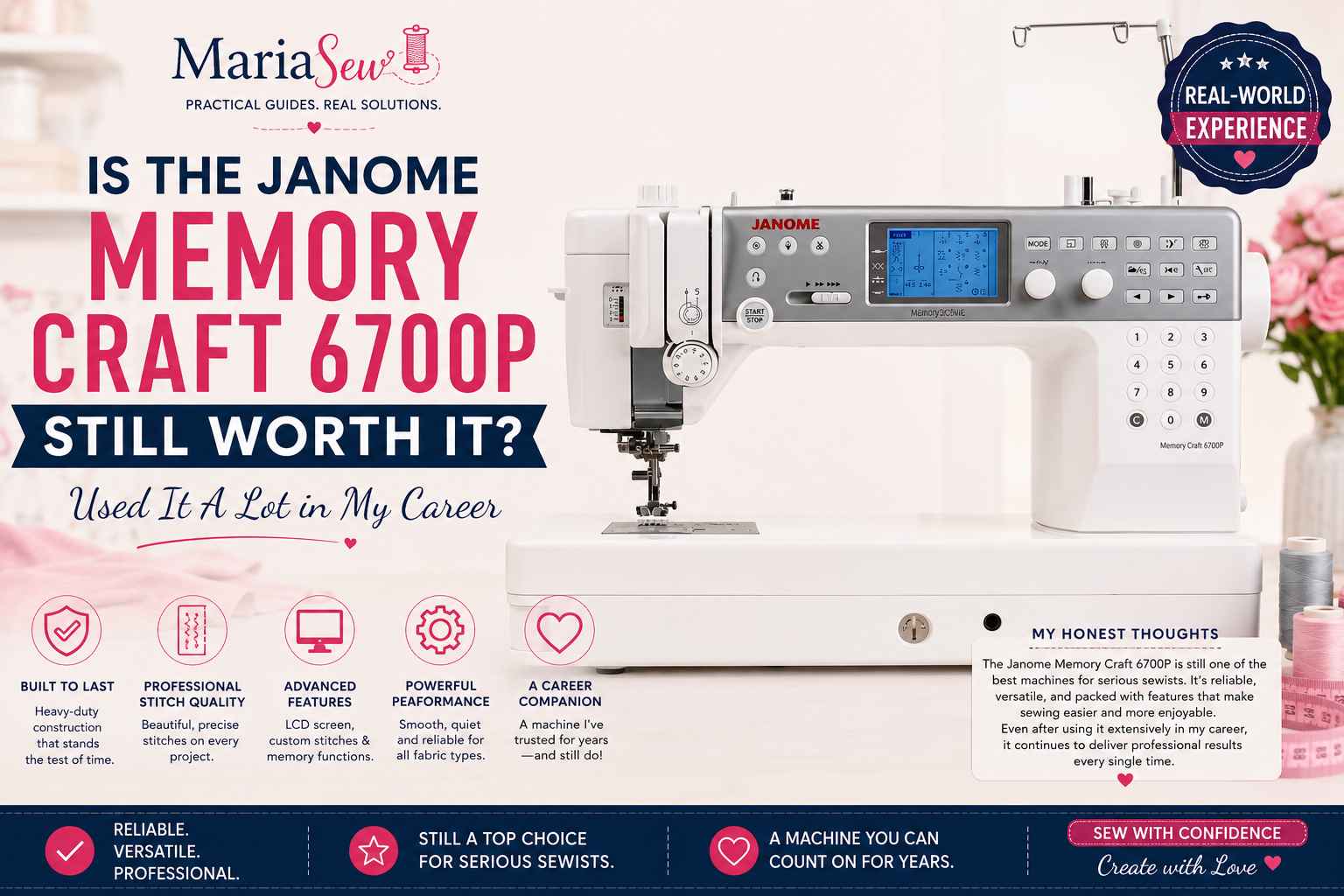
Is the Janome 6700P Still Worth It? I used it alot in My Career
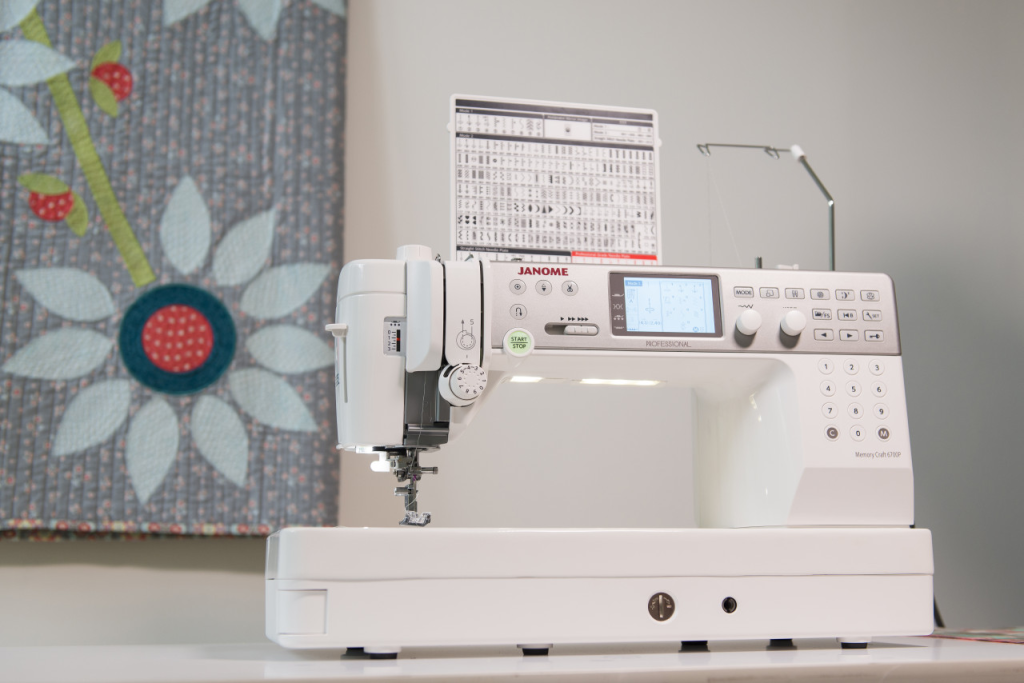
The Janome Memory Craft 6700P is a high-speed computerized sewing and quilting machine built for experienced home sewists who want more workspace, stronger fabric control, and professional-style features without moving to an industrial machine. It combines a 10-inch all-metal flatbed, 1,200-stitch-per-minute top speed, AcuFeed Flex dual feeding, 200 built-in stitches, five alphabets, and three interchangeable needle plates.
That specification list is impressive, but the real question is whether the machine improves the projects you sew often enough to justify its price, weight, and dedicated-table footprint. This review explains where the MC6700P performs best, what its limitations are, and who should choose a simpler or more portable alternative.
Key Takeaways
- Best for serious home sewing. Its size, speed, controls, and accessory package make the most sense for people who sew regularly rather than for occasional repairs.
- The 10-inch flatbed is the headline advantage. It supports quilts, coats, wide garment panels, and home décor more comfortably than a compact machine, especially with the included extension table.
- AcuFeed Flex improves layered feeding. The detachable system feeds from above and below, helping quilt sandwiches, slippery layers, plaids, and long seams stay aligned.
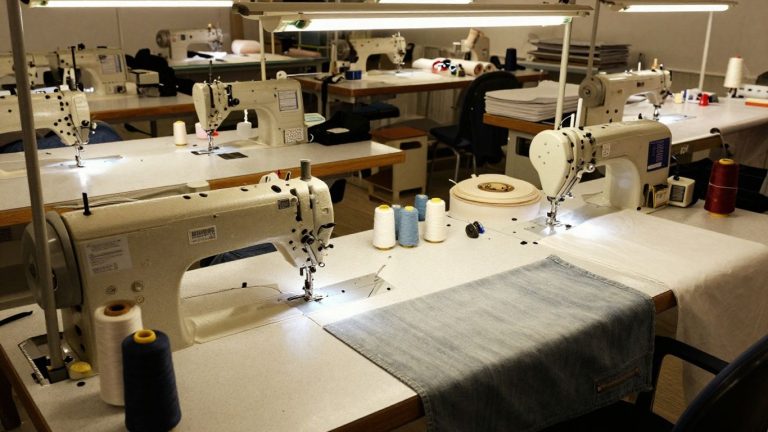
- It is not an industrial machine. The manual identifies the MC6700P as a household-use sewing machine, even though its speed, HP foot, metal flatbed, and controls feel more production-oriented than entry-level models.
- There is no free arm. The seamless flat-bed design is excellent for large flat work, but sleeves, trouser hems, cuffs, and small tubular pieces may be easier on a convertible free-arm machine.
Janome Memory Craft 6700P at a Glance
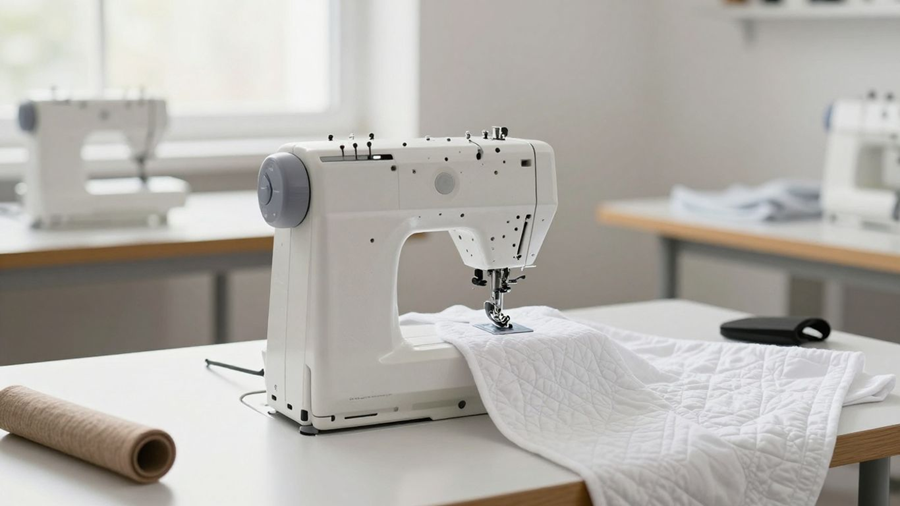
Janome positions the MC6700P as an advanced sewing machine for serious sewists. It sits above simpler computerized and mechanical models, but it remains a domestic sewing machine rather than an industrial straight-stitch unit or an embroidery machine.
Its strongest combination is the 10-inch all-metal flatbed, 1,200 SPM speed, AcuFeed Flex system, HP professional foot and plate, interchangeable needle plates, independent bobbin-winding motor, large extension table, knee lift, and direct-access controls. Those features are aimed at continuous, accurate work rather than portability.
- Best For: Quilting, garment construction, home décor, decorative sewing, long seams, layered projects
- Skill Level: Confident intermediate to advanced sewists; motivated beginners with dealer support can grow into it
- Machine Type: Computerized household flat-bed sewing and quilting machine
- Main Strength: Large workspace with precise feeding and high-speed control
- Main Limitation: Large footprint, no free arm, manual thread tension, and a premium purchase price
- Official MSRP: $3,999 on Janome’s U.S. product page; authorized-dealer pricing can vary
Because pricing and dealer bundles change, compare the full package rather than the machine alone. Included feet, the extension table, local lessons, warranty handling, and dealer servicing can materially affect the value.
If you’re still comparing models within the brand, our Best Janome Sewing Machines guide explains how the MC6700P compares with other popular Janome options for different sewing styles.
How I Test Sewing Machines at MariaSew
I have been sewing for over 12 years now and personally use the sewing machines that I recommend on MariaSew.com. I don’t make a judgment of a machine based on the stitches or product page. I installed it as a typical owner would, read the manual, and then tried the controls on actual sewing projects before determining who it’s for.
I test straight stitch consistency at low, medium, and high speeds, zigzag and decorative stitches, buttonholes, layered quilting cotton and batting, garment fabrics, knits, denim seams, edge transitions, and long topstitching runs for a machine like the Janome Memory Craft 6700P. I also perform threading, bobbin changes, needle-plate conversion, AcuFeed Flex alignment, presser-foot pressure, knee lift, lighting, thread cutter, speed slider, noise, vibration, and cleanup tests.
- Stitch consistency. I inspect both sides of the seam for balanced tension, straight tracking, skipped stitches, loose loops, puckering, and changes in quality when speed increases.
- Fabric feeding. I compare the standard feed, AcuFeed Flex, HP foot, and presser-foot pressure across single layers, bulky intersections, slippery fabrics, and quilt sandwiches.
- Control and ergonomics. I assess how quickly I can select stitches, change plates, position the needle, use the knee lift, trim threads, and repeat a sequence without unnecessary menu work.
- Real ownership demands. I consider the space required, machine weight, cleaning routine, accessory storage, dealer support, and whether the feature set saves enough time to justify the cost.
My verdict is based on repeatable sewing performance and day-to-day usability. A feature only counts as a strength when it improves control, consistency, comfort, or workflow on real projects. If you’re new to computerized machines, it’s also worth reviewing How to Thread a Sewing Machine to ensure proper setup before evaluating any machine’s performance.
Janome Memory Craft 6700P Features and Performance
The MC6700P has many features, but they are most useful when grouped by the sewing problem they solve. Each feature below is explained in practical terms rather than treated as a marketing claim.
1,200 Stitches per Minute with Adjustable Speed Control
One of Janome’s faster top-loading domestic sewing machines, the MC6700P can sew up to 1,200 stitches per minute. I don’t care so much about the max speed as the speed slider and responsive foot control, which allow me to slow down for curves, corners, buttonholes, and bulky seam crossings.
10-Inch All-Metal Seamless Flatbed
The 10-inch throat plate is perfect for larger quilt pieces, coats, bags, wide garment panels, and home décor projects. It has a smooth metal surface that allows fabric to glide through it, but no removable free arm because of its flat-bed design.
If quilting is your primary focus, you’ll also want to compare it with other top-rated models in our Best Quilting Sewing Machine guide.
Large Extension Table
Janome includes a wide extension table that expands support around the machine. It is especially useful for quilt piecing and broad fabric panels because it reduces the amount of material pulling downward from the needle area.
AcuFeed Flex Layered Fabric Feeding System
AcuFeed Flex is a dual feed system with the fabric being fed from above and the feed dogs being fed from below, but they are detachable. It can aid in keeping layers of quilt, slippery fabrics, plaids, and long seams in place, but it still needs the proper foot, pressure, needle, and test settings.
Professional HP Foot and HP Needle Plate
The narrow HP foot and dedicated plate provide better visibility and control for straight stitching, curves, piecing, and accurate topstitching. They provide the MC6700P with a more focused straight-stitch feel without making it an industrial machine.
One-Push Needle Plate Conversion
It has zigzag, straight-stitch, and HP needle plates, and the one-push release allows the plates to be changed faster than screw-mounted systems. The machine also recognizes the plate that is installed, which helps prevent the wrong wide stitch being selected.
200 Built-In Stitches and Five Alphabets
Janome officially lists 200 stitches plus five alphabets. The library covers utility, stretch, quilting, heirloom, decorative, and lettering functions, with pattern combinations of up to 50 stitches.
Nine One-Step Buttonholes
The automatic buttonhole system features nine one-step styles for garments, crafts, and decorative work. The stabilizer plate is helpful when the edges of fabric, heavy seams, or layers are not level and a standard buttonhole foot can’t keep up.
91 Needle Positions and 9 mm Maximum Stitch Width
The wide needle position range facilitates accurate edge stitching, top stitching, zippers, seam quilting and decorative placement. A maximum 9 mm width also provides a greater visual impact for decorative stitches than the 5 mm or 7 mm systems.
Manual Thread Tension Control
Thread tension is adjusted manually rather than fully automated. That gives experienced sewists direct control, but it also means the user must understand how thread, needle, fabric, stabilizer, and stitch choice affect balance.
If you’re unfamiliar with adjusting tension correctly, our Sewing Machine Tension guide walks through common problems and practical solutions.
Adjustable Presser-Foot Pressure
The pressure dial lets me change how firmly the foot holds fabric against the feed dogs. Lower pressure can help delicate, stretchy, or bulky layers feed more naturally, while firmer pressure can stabilize ordinary woven fabrics.
3.6-Inch LCD Screen and Direct Stitch Selection
The selected stitch and settings are displayed, and direct-selection buttons minimize the need to navigate the menus for frequently used functions. Patterns I use often can replace the seven direct-access stitches, which is convenient for repeat project workflows.
Six LEDs in Three Locations
The official specification is six LEDs positioned in three locations. The lighting covers the needle and work area more evenly than a single lamp, although very dark fabrics may still benefit from additional task lighting.
Automatic Thread Cutter and Memorized Needle Up/Down
The thread cutter eliminates a repetitive manual task in piecing and garment construction, and the need to remember where to position the needle for pivoting and accurate stops. These are little things that make a difference in extended periods.
Start/Stop, Locking Stitch, and Easy Reverse Controls
The front-panel controls allow me to sew without the foot controller when it’s needed, to secure seams, and to backstitch without moving my hands too far away from the fabric. The machine also has twin-needle protection to minimize incompatible stitch selections.
Independent Bobbin-Winding Motor
The separate motor allows bobbins to be wound without using the main sewing drive. This reduces interruptions during large projects and is more production-friendly than machines that must stop sewing to wind a bobbin.
Knee Lift and Extra-High Presser-Foot Lift
The knee lift lifts the presser foot and keeps both hands on a quilt or garment to get better control at corners and layered areas. The extra-high lift provides greater clearance for positioning thick assemblies, but not for all heavy materials.
Top-Loading Full Rotary Hook Bobbin
The drop-in bobbin is easy to see and access, and the full rotary hook supports smooth domestic sewing. Correct Janome bobbins, proper winding, and a clean hook area remain important for consistent tension and thread cutting.
Seventeen Included Accessory Feet
Janome offers 17 feet, including AcuFeed, buttonhole, quilting, HP, zipper, overcast, rolled-hem, satin-stitch, and free-motion. The package cuts down on the number of immediate add-ons, but it can still add to ownership expenses with specialized feet.
24.25-Pound Machine with a Large Footprint
The MC6700P is about 20.3 inches wide, 11.8 inches tall, and 8.6 inches deep, and has a weight of 24.25 pounds. This weight helps with stability, but is more appropriate to a dedicated table than for regular transport to classes or storage.
Full Janome Memory Craft 6700P Specifications
The feature explanations above show how the machine behaves in practice. The specification table below collects the official details in one place so buyers can compare the MC6700P with other computerized sewing and quilting machines.
| Feature / Specification | Official Detail |
|---|---|
| Machine type | Computerized household flat-bed sewing and quilting machine |
| Maximum sewing speed | 1,200 stitches per minute |
| Built-in stitches | 200 |
| Alphabets | 5 |
| Buttonholes | 9 one-step buttonholes |
| Maximum stitch width | 9 mm |
| Maximum stitch length | 5 mm |
| Needle positions | 91 |
| Workspace | 10 inches wide x 4.7 inches high |
| Flatbed | 10-inch all-metal seamless flatbed |
| Feed system | Detachable AcuFeed Flex layered fabric feeding system |
| Needle plates | 3 included: zigzag, straight stitch, and HP |
| Needle-plate change | One-push conversion |
| Thread tension | Manual |
| Presser-foot pressure | Adjustable |
| Bobbin | Top-loading full rotary hook |
| Bobbin winding | Independent motor |
| Display | 3.6-inch LCD |
| Lighting | 6 LEDs in 3 locations |
| Needle up/down | Memorized |
| Automatic thread cutter | Yes |
| Start/stop button | Yes |
| Speed-control slider | Yes |
| Locking stitch/reverse | Yes / Yes |
| Drop feed | Yes |
| Knee lift | Included |
| Extra-high presser-foot lift | Yes |
| Memory | 5 memory banks; combinations up to 50 stitches |
| Included feet | 17 accessory feet |
| Extension table | Included |
| Free arm | No; fixed flat-bed design |
| Machine dimensions | 20.3 in W x 11.8 in H x 8.6 in D |
| Machine weight | 24.25 lb |
| Voltage | Dual voltage, 80-240 V |
| Cover | Dust cover |
The table confirms why the MC6700P is best viewed as a specialized premium domestic machine. It offers unusually strong workspace, speed, control, and accessories, but it is not compact, fully automatic, portable, or designed to replace an industrial machine.
How the Janome MC6700P Performs on Real Projects
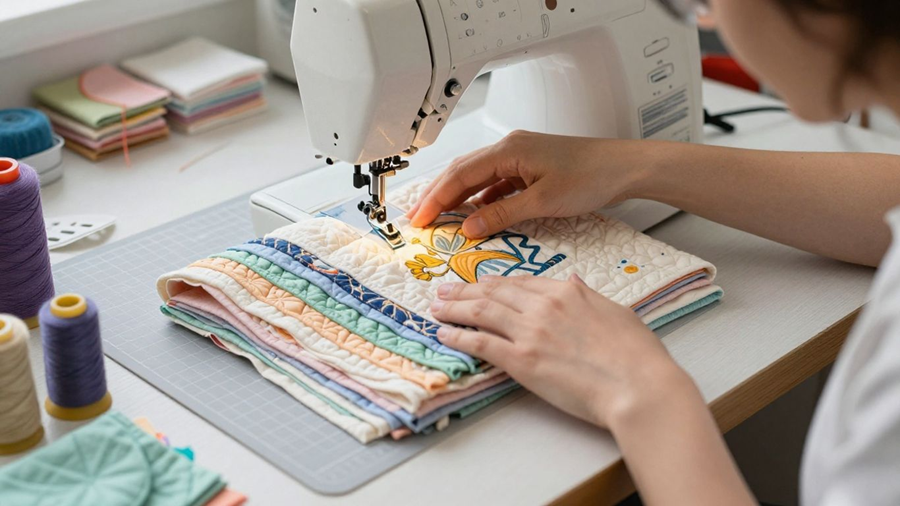
A high-end machine should produce consistent results across more than one ideal fabric sample. I look at how the controls and feeding systems respond when a project becomes wide, layered, slippery, bulky, or repetitive.
Quilting and Layered Fabric
The MC6700P really shines here. Piecing, walking-foot quilting, free-motion quilting, and large quilt sections are all possible with the 10-inch workspace, extension table, AcuFeed Flex, straight-stitch and HP plates, knee lift, drop feed, quilting feet, and fast top speed.
While AcuFeed Flex helps keep layers aligned, there are other factors that still matter, such as the thickness of the batting, the type of needle, the weight of the thread, the foot pressure, and basting. Ideally, I always test the exact quilt sandwich before attempting long rows or decorative quilting.
Garment Construction
The machine is suitable for garment construction where the allowances, topstitching, buttonholes, decorative finishes and feeding of the fabric are important. Useful flexibility is offered by the 91 needle positions, 9 mm width, HP foot, zipper feet, buttonhole system and manual pressure adjustment.
The primary garment restriction is that it has no free arm. Small tubes such as sleeves, cuffs, trouser hems, etc., can also be sewn by working in the tube, but a smaller free-arm machine may be more convenient and faster for such jobs.
Denim, Canvas, and Bulky Seams
With its stable flatbed, extra-high presser-foot lift, HP setup, adjustable pressure, and strong feeding, the MC6700P can handle a wide range of denim, canvas, bag, and home décor projects. Can confidently cross ordinary layered seams with the appropriate needle, thread, speed, and leveling technique.
I wouldn’t show it as an industrial leather or upholstery machine. A household machine may not be suitable for thick assemblies, dense webbing, very heavy thread, or hard leather. Test slowly and follow Janome’s needle and thread instructions.
Lightweight, Slippery, and Stretch Fabrics
The straight-stitch plate, narrow HP foot, adjustable pressure, fine needle positioning, and AcuFeed options assist with shifting, stretching, and pulling fabrics into a wide needle opening. Even lightweight fabric requires the right needle, stabilizer, seam start, and tension.
I use a needle appropriate for knits, the right size stretch stitch or twin needle setup, and moderate foot pressure. When it comes to sewing stretch fabric, How to Sew Stretch Fabric is a helpful companion for selecting the right techniques beyond the machine itself.
Buttonholes and Decorative Stitches
The machine has a wider range of creativity than a dedicated straight-stitch machine, with nine automatic buttonhole styles and a 200-stitch library. The stabilizer plate is especially useful for buttonholes that are close to an irregular edge or a large seam.
Stabilizer, thread, needle, tension, and fabric support are all important to decorative quality. I use a full repeat on scrap fabric before working the project because a 9 mm decorative stitch can magnify puckling or feeding errors.
Long Sewing Sessions
The knee lift, thread cutter, independent bobbin winder, needle up/down, direct stitch selection, large table, and bright work area minimize repetitive hand motions. The efficiencies are more useful when piecing quilts, when sewing in batches, and when making long garments.
It’s also stable at speed due to its weight and footprint, but a sturdy table and comfortable chair are still required. Working height and unsupported fabric are more important than a high-quality machine.
Ease of Use and Learning Curve
The MC6700P is logical rather than simple. Experienced computerized-machine users should adapt quickly, while someone moving from a basic mechanical model will need time to learn the display, plate detection, stitch editing, memory, AcuFeed setup, HP system, and presser-foot controls.
- Easy everyday functions. Threading guides, the superior needle threader, top-loading bobbin, start/stop button, speed slider, thread cutter, needle up/down, direct keys, and stitch chart make routine setup efficient.
- More advanced decisions. Manual tension, pressure adjustment, several plates, multiple feeding options, stitch combinations, and specialty feet reward users who understand why a fabric is behaving differently.
- Dealer support matters. An authorized Janome dealer can provide setup guidance, warranty service, lessons, and accessory advice, which adds real value for a machine at this price.
- The manual is important. The 112-page instruction book explains plate restrictions, dual-feed setup, stitch functions, maintenance, warning messages, and troubleshooting that cannot be learned from the control panel alone.
A motivated intermediate sewist can grow into the MC6700P, but a beginner who mainly wants straightforward garment repairs may learn faster on a less expensive machine with fewer systems to manage.
Pros and Cons of the Janome Memory Craft 6700P
The MC6700P’s strengths are connected: workspace, speed, feeding, precision, and convenience all support serious sewing. Its weaknesses are also connected because the same professional-style flat-bed format makes it expensive, large, heavy, and less flexible for small tubular projects.
Pros of the Janome Memory Craft 6700P
- Fast but controllable sewing. A 1,200 SPM ceiling speeds up long seams and piecing, while the speed slider gives enough restraint for corners, curves, and detailed work.
- Excellent large-project workspace. The 10-inch metal flatbed and extension table provide stable support for quilts, coats, bags, and wide home décor panels.
- Strong layered-fabric control. AcuFeed Flex, adjustable pressure, multiple plates, the HP foot, and the knee lift create several ways to improve alignment and handling.
- Useful premium workflow features. The thread cutter, independent bobbin winder, needle up/down, direct keys, memory banks, and included feet reduce interruptions.
- Broad sewing range. Two hundred stitches, five alphabets, nine buttonholes, 91 needle positions, 9 mm width, drop feed, and quilting accessories support both construction and decorative work.
These benefits are most persuasive for a sewist who regularly works on substantial projects. The machine saves time when its features are used repeatedly, not when they remain untouched in the accessory box.
Cons of the Janome Memory Craft 6700P
- No free arm. The fixed flatbed is excellent for broad work but less convenient for sleeves, narrow trouser legs, cuffs, and small circular openings.
- Premium price and large footprint. It requires a meaningful budget, a sturdy dedicated table, and more permanent sewing-room space than a compact domestic machine.
- Manual tension and a real learning curve. Experienced users may appreciate the control, but beginners expecting automatic decisions may find the machine demanding at first.
None of these drawbacks makes the MC6700P a poor machine. They simply narrow its audience. Buyers should choose it because they need its workspace and control, not because it has the longest specification list.
Who Should Buy the Janome Memory Craft 6700P?
The ideal buyer already understands the kind of sewing they do and can name the limitations of their current machine. The MC6700P is easiest to justify when its workspace, feeding, speed, or precision solves a recurring problem.
If you’re purchasing your very first machine, our Best Sewing Machines for Beginners guide offers several beginner-friendly alternatives.
- Serious quilters. The 10-inch throat, extension table, AcuFeed Flex, HP plate and foot, knee lift, drop feed, and quilting feet support piecing and quilt handling.
- Frequent garment makers. The stitch range, buttonholes, needle positions, pressure adjustment, speed control, and precise topstitching tools suit structured sewing workflows.
- Home-based makers and batch sewists. The independent bobbin winder, fast sewing speed, thread cutter, direct controls, and stable flatbed reduce repetitive setup time.
- Sewists upgrading from a basic machine. An intermediate user who has outgrown a small workspace or limited feeding control can gain meaningful capability without moving to industrial equipment.
- Users with a dedicated sewing area. The MC6700P works best when it can remain set up on a solid table with the extension table and accessories nearby.
If several of these descriptions match your actual weekly projects, the machine’s price and footprint become easier to defend. Anyone seeking embroidery.
The MC6700P creates sewing stitches and lettering, but it is not a hoop embroidery machine and does not import embroidery designs. If embroidery is your goal, consider the options featured in our Best Embroidery Sewing Machines guide.
For a simpler Janome alternative, compare our Janome MC6650 Review or Janome HD3000 Review before deciding that the MC6700P is necessary.
Who Should Not Buy It?
A premium machine can still be the wrong purchase. The MC6700P is less suitable when the buyer’s main priorities are portability, low cost, automatic simplicity, embroidery, or easy access to narrow tubular pieces.
- Absolute beginners on a tight budget. A less expensive computerized or mechanical machine can teach threading, seam control, needles, tension, and fabric handling without the same financial commitment.
- Occasional menders. If you mainly repair hems, sew a few straight seams, or use a machine a handful of times each year, much of the MC6700P will remain unused.
- People who need portability. At 24.25 pounds plus the extension table and accessories, it is not an ideal class, retreat, or shared-table machine.
- Sewists who rely on a free arm. A convertible machine is usually more convenient for sleeves, cuffs, children’s clothing, and narrow hems.
For a simpler Janome alternative, compare MariaSew’s Janome MC6650 review or Janome HD3000 review before deciding that the 6700P is necessary.
Janome Memory Craft 6700P vs Competitors
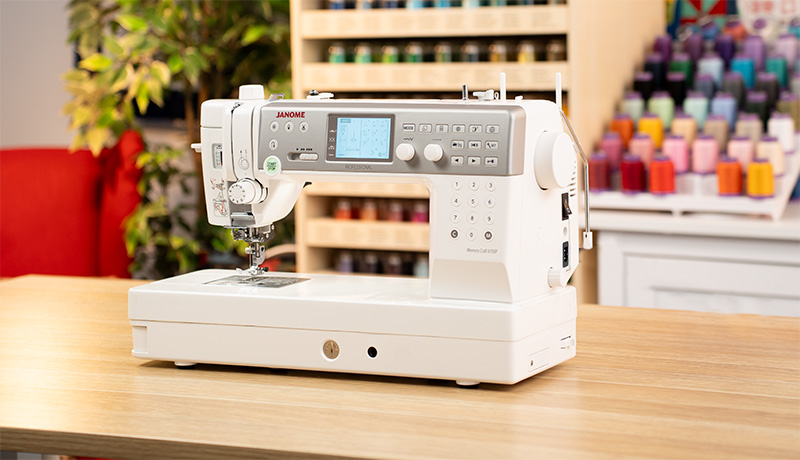
It’s not just about stitch count versus stitch count. The main differentiators of the MC6700P are its 10-inch seamless flatbed, 1,200 SPM speed, HP system, AcuFeed Flex, three plates, and included extension table, as well as stable flat-bed workflow.
Before selecting, determine if the maximum flat surface is important, free arm, larger touch screen, automatic tension, embroidery compatibility, portability, or a specific dealer network. It is the priorities that can change the winner even if all four machines are good.
Janome MC6700P vs Janome MC6650
The MC6650 is the best budget Janome option. The MC6700P is faster, has AcuFeed Flex, has the HP plate and foot, includes 3 needle plates, and has more stitches and more advanced workflow control, but both are designed for quilting and serious home sewing and use a 10-inch all-metal flatbed. For a deeper look at its features, read our Janome MC6650 Review.
If you’re looking for a reliable large-flatbed Janome that doesn’t cost as much and doesn’t need the 6700P’s dual feed or 1,200 SPM speed, the MC6650 is the choice for you. Use the MC6700P if you’re layering, topstitching for precision, quilting a lot, or working in a production style that calls for the extra speed.
Janome MC6700P vs Juki HZL-DX7
The Juki HZL-DX7 features 287 stitch patterns, four fonts, 16 buttonholes, automatic thread tension, Juki’s box-feed system, a free arm,m and a top speed of 1,050 SPM. Lighter and smaller than the Janome, it may be more convenient for garment sewing and smaller workspaces.
Select the Juki if automatic tension, free arm, box feeding, and a smaller body are more important. Use the Janome if the 10-inch metal flatbed, faster speed, HP system, AcuFeed Flex, 9 mm wide stitches, and large table included with purchase are more important.
Janome MC6700P vs Brother Innov-is BQ3100
The Brother BQ3100 is a more technologically advanced quilting machine featuring a 7-inch touchscreen, 11.25-inch workspace, hundreds of built-in stitches, an automatic presser-foot lift, pivot functions, and an improved dual-feed foot. It has an interface and creative library that are ideal for sewists who desire a lot of help and decoration on screen.
Opt for the Brother for a bigger touch panel, a broader creative community, and more powerful automation. Opt for the Janome for a more straightforward flat-bed control design, 1,200 SPM sewing speed, HP plate and foot, manual fine-tuning, and a more streamlined sewing-only workflow.
Janome MC6700P vs Bernina 570 QE
The Bernina 570 QE is a high-quality quilting and embroidery platform featuring an 8.5″ needle space to the right of the needle, a maximum of 1000 SPM, Bernina Dual Feed, adaptive thread tension, a large front-loading bobbin, and Bernina Stitch Regulator compatibility. It has an optional embroidery module which extends its use beyond sewing.
The Bernina is the best choice when adaptive tension, embroidery expansion, BSR support, the dealer ecosystem, and premium interface are most important. Opt for the Janome if you want a wider 10-inch flatbed, a faster sewing machine, a large bundle of accessories included, and a machine that is easier to sew with.
Quick Comparison Summary
The points above show that each competitor emphasizes a different working style. The summary below should be read after the detailed comparisons, not as a substitute for testing the controls and fabric handling in person.
- Choose the Janome MC6700P for the widest flat-bed workspace in this group, 1,200 SPM speed, HP precision system, AcuFeed Flex, and a production-oriented sewing workflow.
- Choose the Juki HZL-DX7 for automatic tension, box feed, a free arm, lighter weight, and strong garment-sewing ergonomics.
- Choose the Brother BQ3100 for a large touchscreen, the broadest creative stitch library, more automation, and an 11.25-inch quilting workspace.
- Choose the Bernina 570 QE for adaptive tension, BSR compatibility, embroidery expansion, and Bernina’s premium dealer ecosystem.
| Category | Janome MC6700P | Juki HZL-DX7 | Brother BQ3100 | Bernina 570 QE |
|---|---|---|---|---|
| Best fit | Fast, precise flat-bed sewing | Garments and versatile domestic sewing | Feature-rich quilting and creative sewing | Premium quilting plus embroidery option |
| Max speed | 1,200 SPM | 1,050 SPM | Dealer specification varies by region | 1,000 SPM |
| Workspace | 10 in right of needle | Approx. 8 in arm space | 11.25 in | 8.5 in |
| Feed highlight | AcuFeed Flex | Box feed | Compact MuVit dual feed | Bernina Dual Feed |
| Tension | Manual | Automatic | Automatic/electronic controls | Adaptive thread tension |
| Free arm | No | Yes | Yes | Yes |
| Embroidery | No | No | No | Optional module |
A dealer demonstration with your own fabric is more useful than choosing from this chart alone. Test the exact motions you repeat most: threading, seam starts, bulky crossings, curves, buttonholes, knee-lift use, plate changes, free-arm work, and moving a large project around the needle.
Maintenance and Ownership Tips
The MC6700P is not maintenance-free. Janome’s manual instructs owners to clean the hook area at least once a month, and linty fabrics or frequent quilting may justify more frequent cleaning. Always switch off and unplug the machine before cleaning.
- Clean the bobbin holder, hook race, feed dogs, and automatic cutter area. Use the supplied lint brush and a soft cloth according to the manual. Do not dismantle the machine beyond the user-maintenance instructions.
- Use the correct bobbins and needles. Poorly wound or incorrect bobbins, bent needles, and mismatched needle-thread combinations can cause tension problems, skipped stitches, or cutter issues.
- Rethread before changing tension. Many apparent tension problems begin with an incorrect upper thread path, bobbin placement, lint, or a damaged needle. MariaSew’s tension guide explains a controlled troubleshooting process.
- Protect the machine from heat, moisture, and direct sun. Store it in a cool, dry place and use the dust cover when it is not in use.
- Use authorized service for internal faults. Warning messages, electrical issues, timing problems, abnormal noise, or repeated thread-cutter failures should be handled by a qualified Janome technician.
A regular cleaning and testing routine protects stitch quality better than changing multiple settings at once. Keep a small project log with the best needle, thread, foot, pressure, and tension combinations for fabrics you sew repeatedly.
Our Sewing Machine Tension guide explains a step-by-step troubleshooting process, while Sewing Machine Parts can help you identify the components involved during maintenance.
Common Mistakes to Avoid with the MC6700P
Most frustration with an advanced sewing machine comes from using the right feature at the wrong time or changing too many variables together. A deliberate setup process makes the MC6700P far easier to understand.
- Buying for stitch count alone. Most sewists use a core set of utility stitches. The machine is worth the premium because of workspace, feeding, control, and workflow, not because 200 stitches sound impressive.
- Expecting AcuFeed Flex to solve every feeding problem. Dual feed helps alignment, but needle choice, pressure, stabilizer, fabric preparation, and foot selection still determine the result.
- Using the wrong needle plate. A straight-stitch or HP plate cannot accommodate wide zigzag movement. Use the machine’s plate detection and confirm the selected stitch before sewing.
- Running at full speed on every project. The 1,200 SPM top speed is useful for long controlled seams, not for corners, curves, buttonholes, bulky intersections, or unfamiliar fabric.
- Adjusting tension before rethreading. Raise the presser foot, rethread the upper path, check the bobbin, replace the needle, and clean the hook area before making major tension changes.
- Treating extra-high lift as unlimited thickness capacity. Lift clearance helps position layers, but needle penetration, feed, motor load, thread size, seam density, and material hardness still create limits.
- Ignoring the lack of a free arm. Test how you sew sleeves, cuffs, and trouser hems before buying. A flat-bed-only machine may require a different handling method or a second machine.
The fastest route to reliable results is to test one change at a time on the same fabric, thread, needle, foot, and number of layers you plan to use in the final project.
Is the Janome Memory Craft 6700P Worth It?
Yes, for the sewist it was designed for. The MC6700P is a stable domestic machine that features a large metal flatbed, high-speed operation, powerful layered feeding, accurate plate and foot options, wide stitch width, and thoughtful workflow controls.
Not necessarily the most suitable machine for the beginner or the best machine on the market for any price. The lack of free arm, manual tension, 24.25 lb weight, large footprint, and high dealer price are significant drawbacks. When sewing is less frequent, or space is limited, it may be better to buy a less expensive or smaller machine.
The Janome Memory Craft 6700P is an excellent long-term investment for an experienced quilter, garment maker, or serious home sewist who will keep the machine up and running and using its advanced controls on a regular basis.
Final Verdict
The Janome Memory Craft 6700P is not a stitch-counting machine; it’s a useful engineering one. With its 10″ metal flatbed, 1200 SPM speed, AcuFeed Flex, HP system, three plates, extension table, knee lift, independent bobbin winder, er and direct controls, it provides a fast and precise sewing environment for serious home projects.
Purchase it if you sew frequently, have a permanent space, and frequently work on quilts, clothes, layered fabrics, topstitching, or batch projects. If portability, free arm sewing, lower cost, embroidery, or occasional basic repairs are more important, skip it.
Frequently Asked Questions
Is the Janome Memory Craft 6700P an industrial sewing machine?
No. Janome’s manual states that it is designed and manufactured for household use. Its 1,200 SPM speed, HP foot and plate, metal flatbed, and large controls give it a professional feel, but it does not have the construction or single-purpose setup of an industrial machine.
How many stitches and alphabets does the MC6700P have?
Janome officially lists 200 built-in stitches plus five alphabets. It also includes nine one-step buttonholes and can combine up to 50 stitches in memory.
Does the Janome 6700P have a free arm?
No. It uses a fixed 10-inch all-metal seamless flatbed. This is excellent for broad projects but less convenient for sleeves, cuffs, trouser hems, and narrow tubular pieces.
Is the Janome MC6700P good for quilting?
Yes. Its 10-inch workspace, extension table, AcuFeed Flex, HP and straight-stitch plates, knee lift, drop feed, quilting feet, needle positioning, and fast speed make it well suited to piecing and many quilting workflows.
Can the MC6700P sew denim and canvas?
It can handle many denim, canvas, bag, and home décor projects when used with the correct needle, thread, foot, pressure, stitch length, and speed. It should not be treated as an unlimited industrial leather or upholstery machine.
Is the MC6700P good for beginners?
A committed beginner can learn it, especially with dealer lessons, but it is more machine than most first-time sewists need. Its price, manual tension, multiple plates, AcuFeed system, and broad controls create a steeper learning curve.
What is AcuFeed Flex?
AcuFeed Flex is Janome’s detachable layered-fabric feeding system. It works with the lower feed dogs to move layers more evenly from the top and bottom, helping with quilts, slippery fabrics, plaids, and long seams.
What is the difference between the HP foot and AcuFeed Flex?
The HP foot is a narrow professional-style foot used with the HP plate for precise straight sewing and visibility. AcuFeed Flex is a dual-feed system designed to keep multiple layers moving together.
Does the Janome 6700P have automatic tension?
No. Janome lists manual thread tension. This gives the user direct control but requires careful testing when changing fabric, thread, needle, stabilizer, and stitch type.
How often should the MC6700P be cleaned?
The Janome manual instructs users to clean the hook area at least once a month. Frequent sewing, quilting batting, flannel, fleece, and other lint-producing materials may require more frequent cleaning.
How heavy is the Janome MC6700P?
Janome lists a machine weight of 24.25 pounds. It is stable during sewing but is better suited to a dedicated table than frequent carrying.
What is the best alternative to the MC6700P?
The Janome MC6650 is a strong lower-cost large-flatbed alternative. The Juki HZL-DX7 suits buyers wanting automatic tension and a free arm, while the Brother BQ3100 and Bernina 570 QE offer more advanced interfaces or quilting ecosystems at premium prices.

One Comment