5 Best Embroidery Sewing Machines for Beginners and Pros – Tested Results
When I first started looking for the best embroidery sewing machines, I was overwhelmed by all the choices. Some machines seemed packed with features, while others looked easier for a beginner like me. I wanted something that wouldn’t frustrate me on day one but could also handle bigger projects as I got better.
After trying out a few and reading way too many reviews, I realized the right machine makes all the difference. Whether you’re just starting or you’ve been stitching for years, finding a machine that fits your needs is key. Here are my top picks and what I learned along the way.
Key Takeaways
- Choose a machine with an embroidery area that matches the size of your usual projects.
- Look for simple controls, clear screens, and automatic features to make learning easier.
- Speed is nice, but steady stitch quality is more important for beginners and pros.
- USB or Wi-Fi connectivity lets you add new designs and keeps things interesting.
- Think about your budget, but also what features you might want as your skills grow.
Best Embroidery Sewing Machines Compared
A compact comparison of top embroidery machine picks, including use case, machine type, embroidery area, price, and quick recommendation.
What to Look For in an Embroidery Sewing Machine
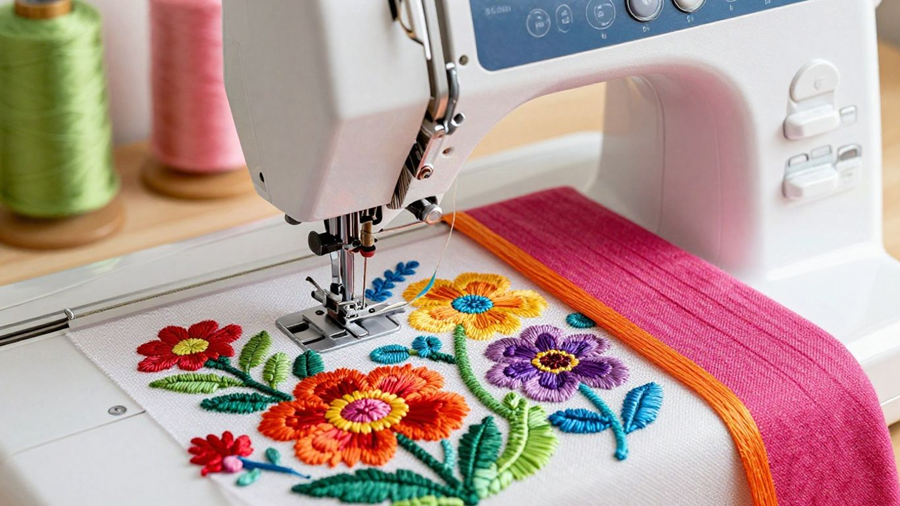
I was a little daunted when I first began to research embroidery machines. There are so many choices available, and it’s difficult to know where to start. I learned a few things when looking for an embroidery machine for home use or a sewing machine with embroidery capabilities. These points were very helpful to me in determining what I wanted to do and what was the best fit for my projects.
Embroidery Area Size
This is likely to be one of the first things that you notice. The embroidery area, also known as the hoop size, determines the size of the design you can embroider without re-hooping your fabric. If you are working on a smaller project, such as a monogram, patch, or baby clothes, a 4″x4″ or 5″x7″ may be just right.
But if you want to embroider larger designs, such as full jacket backs or elaborate home decor pieces, you’ll need to find machines with larger embroidery fields, such as 8″x8″ or larger. The bigger the hoop, the faster you can work on larger projects; you may be surprised.
Stitch Speed and Quality
Typically, stitch speed is measured in stitches per minute (SPM). A higher SPM is not always the most crucial, particularly for the first time, as it could mean faster project completion. Occasionally, a slightly reduced speed will produce more control and cleaner stitches. The quality of those stitches is more important.
Whether you’re sewing simple or embroidering intricate designs, you should search for machines that are known for even and consistent stitching. Even at moderate speed, a machine that makes nice, professional-looking seams is usually preferable to a super-fast machine that skips stitches or puckers.
Ease of Use and Features
This is where personal preference really comes into play. To me, usability was a major factor. I wanted something that I didn’t have to have a degree in engineering to use. Automatic needle threaders, thread cutters, and easy-to-use touch screen displays can make all the difference.
If you’re new to this, seek out embroidery machines that are easy to use and have clear instructions and guides on the screen. Some machines even include a library of pre-designed layouts and fonts, making it easy to get started right away. If you’re thinking of a sewing machine that has embroidery capabilities, look at the variety of sewing stitches it has as well.
Connectivity and Software
Many modern embroidery machines are now computer-controlled, or even wireless. This connectivity enables you to import designs from the web or from your own designs. Ensure that the machine can accept standard embroidery files (such as .PES, .DST, .EXP). Some machines have their own basic software, while others require third-party software to be used.
If you plan on creating a lot of custom designs, investigate the software compatibility and ease of transferring files. If you want the best computerized sewing machines that can also embroider, it is important for you to consider expanding your creativity.
When selecting an embroidery machine, you need to take into account the machine’s features, cost, and your own skill level. It’s not the most expensive or the cheapest; it’s the one that will help you realize your creative vision best.
As I was initially searching, I discovered that reading beginner embroidery machine reviews was super beneficial. It provided me with practical experience with the performance of various models. If you are searching for a dependable sewing machine that has embroidery capabilities, you can save a lot of guesswork by reading reviews.
Additionally, some machines are embroidery-only, and some are sewing and embroidery combo machines, so if you do lots of various kinds of crafting, you might want to consider a more versatile machine. If you’re just starting, a beginner embroidery machine that’s straightforward to use is a great place to begin your journey into the world of needlework machines for crafting. You may also want to compare different machine categories in our guide on serger vs sewing machine.
My Top 6 Picks for Embroidery Sewing Machines
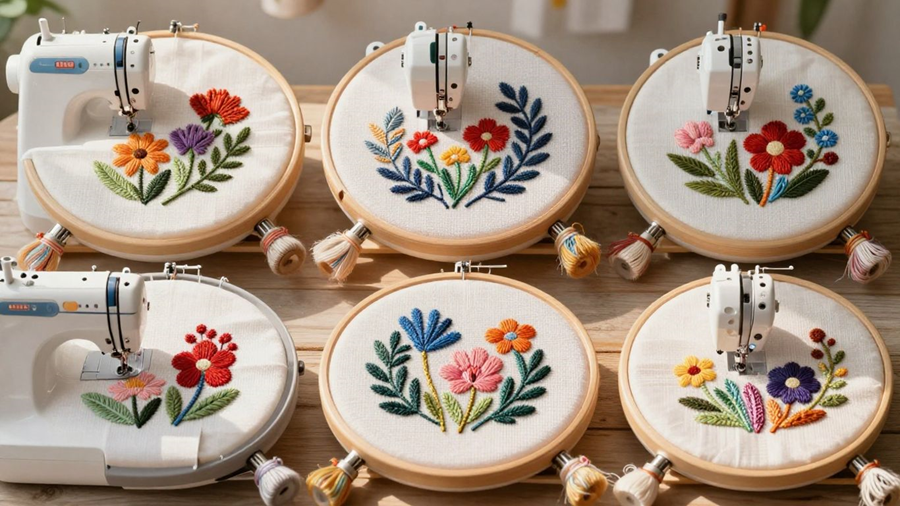
Let’s get down to the nitty-gritty. I’ve been using some of the best sewing and embroidery machines available and have narrowed it down to my absolute favorites. There’s something here for all of you, from novices to those who are looking for bigger projects.
1. Best Overall Embroidery Sewing Machine: Brother SE700
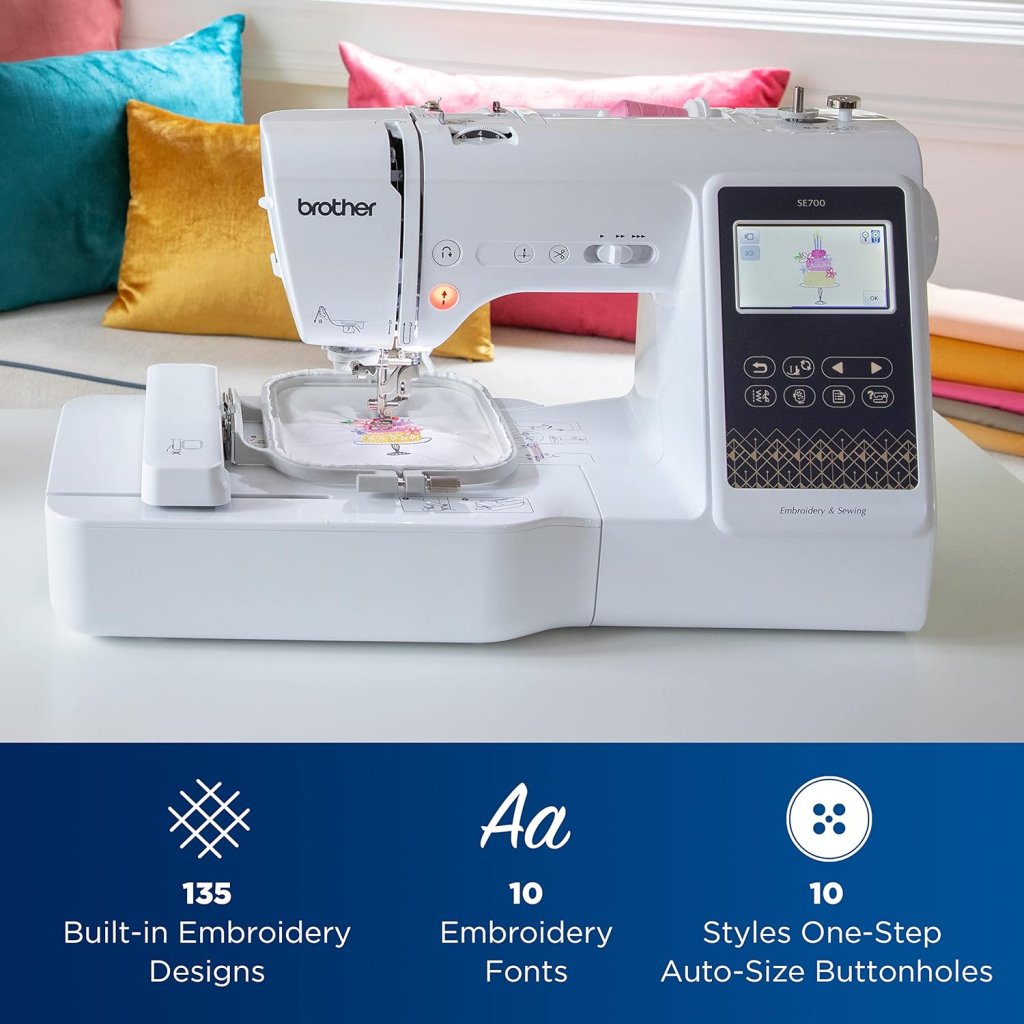
The Brother SE700 sewing and embroidery machine is one of the best overall options for those who want to have one machine for both sewing and embroidery, and are new to sewing or embroidery, or a hobby crafter. It contains 103 built-in sewing stitches, 135 built-in embroidery designs, and 10 embroidery fonts for monogramming, small clothing projects, home decor, and custom gifts. Its embroidery field is 4″ x 4″, which is not very big but sufficient for beginners who are learning embroidery at home.
The Brother SE700’s appeal lies in its combination of affordability, functionality, and user-friendliness. Easier to get started without feeling overwhelmed with the colour touch screen, wireless design transfer, automatic needle threading, and built-in design editing tools. It’s ideal for those who are looking for a simple embroidery sewing machine instead of a big commercial embroidery machine.
For a more detailed breakdown of its embroidery features, performance, and usability, read our full Brother SE700 Review.
| Pros of the Brother SE700 | Cons of the Brother SE700 |
|---|---|
|
|
Final Verdict
Choose the Brother SE700 if you want a beginner-friendly sewing and embroidery combo machine for small embroidery projects, monograms, basic sewing, and home crafting.
2. Best Embroidery Machine for Beginners: Brother PE900
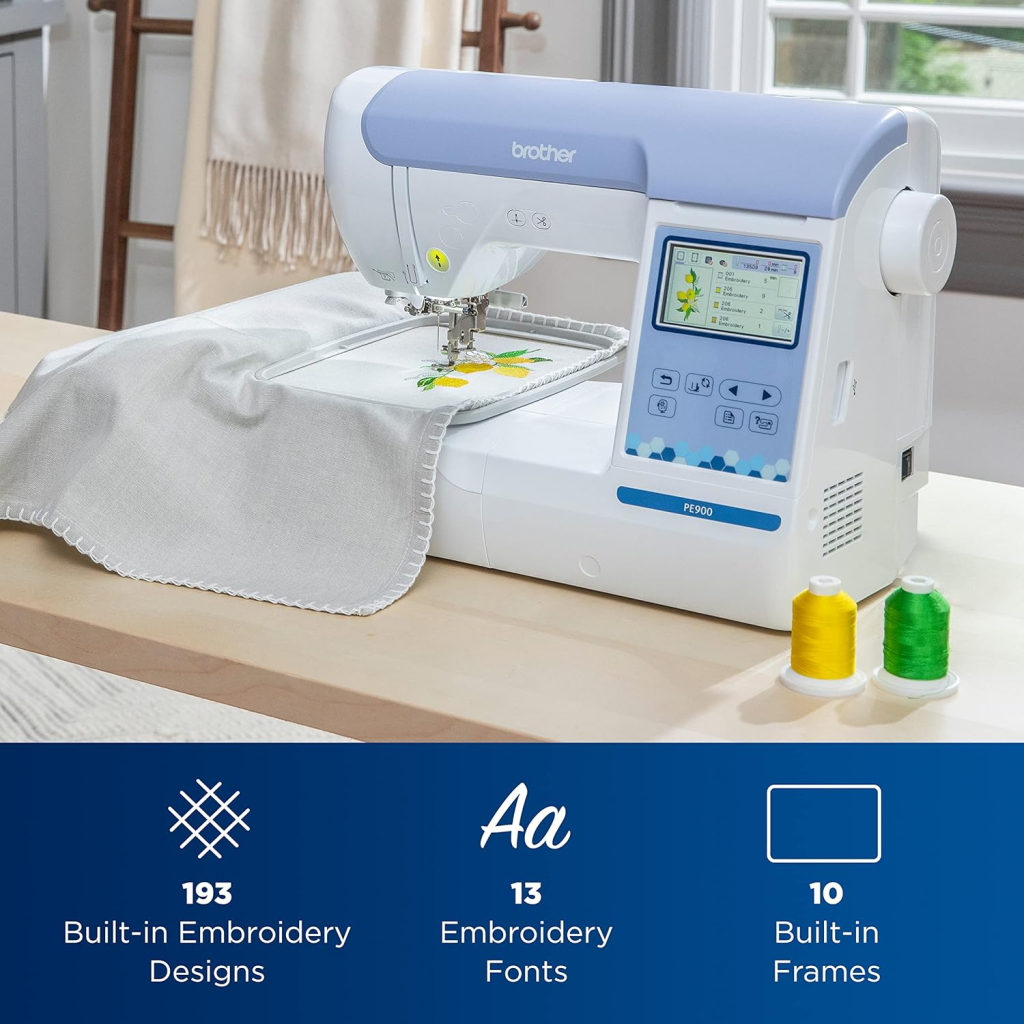
If you’re a user who only wants to embroider and not sew regularly, the Brother PE900 embroidery machine is a good beginner machine. It features a larger 5″ x 7″ embroidery field, providing you with more space than 4″ x 4″ machines for names, patches, baby products, towels, and medium-sized designs. It also has 193 pre-loaded embroidery designs and 13 pre-loaded embroidery fonts to get started with personalizing projects.
The PE900 is superior to the Brother SE700 for those primarily interested in embroidery who prefer a larger embroidery hoop. It’s not a sewing machine, so you’ll still need a sewing machine for hems, seams, and making garments. The PE900 is a good upgrade from the smaller 4″ x 4″ machines for those who are new to embroidery and wish to have more space to expand.
If you’re comparing beginner-friendly embroidery models, our in-depth Brother PE900 Review covers its embroidery area, built-in designs, and overall value in greater detail.
| Pros of the Brother PE900 | Cons of the Brother PE900 |
|---|---|
|
|
Final Verdict
Choose the Brother PE900 if you want a beginner-friendly embroidery machine with a larger hoop area for monograms, towels, patches, baby items, and medium-sized personalization projects.
3. Best Budget Embroidery Machine: Brother PE545
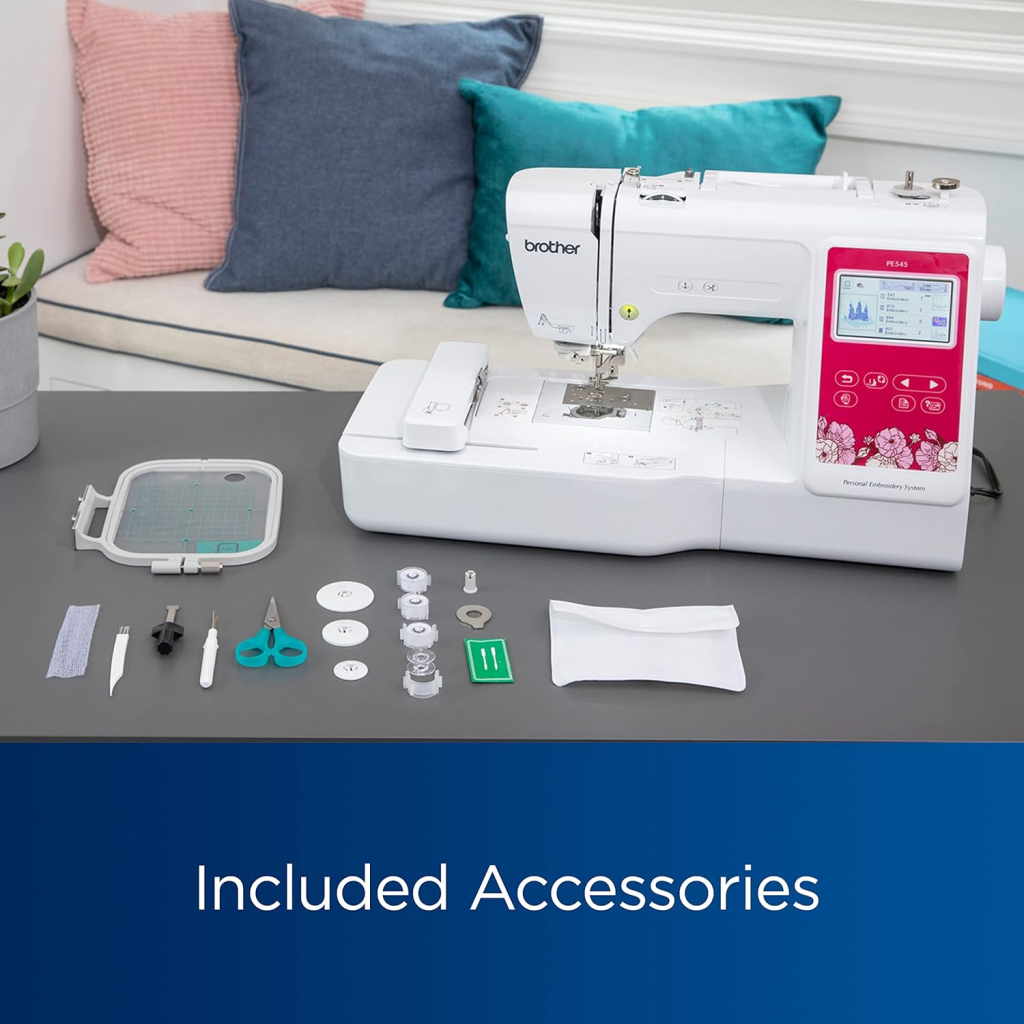
For beginners who would like to embroider without investing in a bigger 5″ x 7″ embroidery machine, the Brother PE545 embroidery machine would be a good budget option. It can be used for monograms, patches, baby clothes, napkins, and beginner embroidery projects, as it has a 4″ x 4″ embroidery area, 135 built-in designs, 10 frame patterns, and 10 font styles.
This is the best model for individuals who desire an inexpensive embroidery-only machine for small designs. It’s not meant for big embroidery projects, and the 4″ X 4″ hoop may seem restrictive after you begin working on larger projects. However, if you are a beginner looking to learn embroidery fundamentals and make some small personalized pieces, the Brother PE545 is a great beginner embroiderer.
Those shopping for their first machine may also find our roundup of the best sewing machines for beginners helpful when comparing embroidery and standard sewing models.
| Pros of the Brother PE545 | Cons of the Brother PE545 |
|---|---|
|
|
Final Verdict
Choose the Brother PE545 if you want an affordable embroidery-only machine for small designs, monograms, patches, and beginner personalization projects. It is best for testing embroidery before upgrading to a larger hoop machine.
4. Best Embroidery Machine for Large Projects: Janome Memory Craft 500E LE
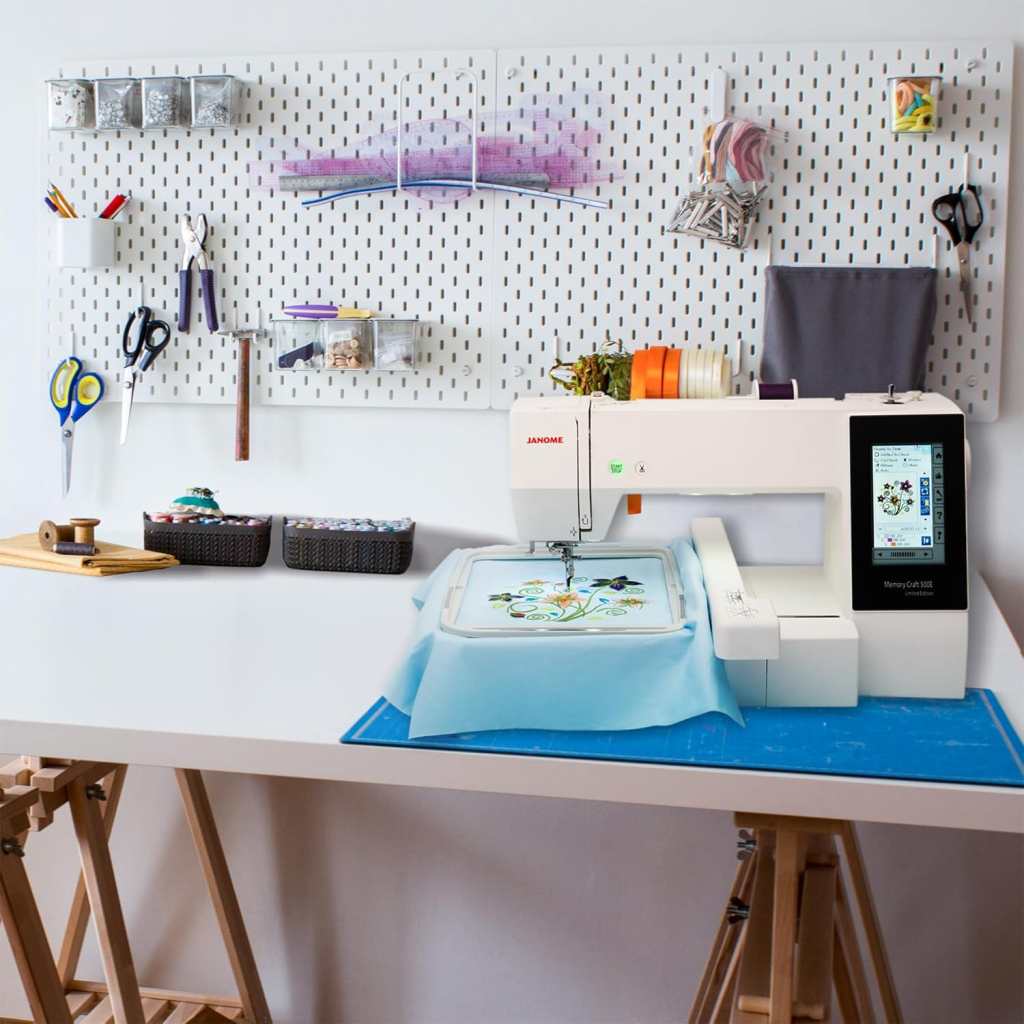
If you’re looking for more serious embroidery and a larger embroidery field, then the Janome Memory Craft 500E is a good option. It has a maximum embroidery size of 7.9″ x 11″, 160 built-in embroidery designs, 6 fonts, and several included hoops, so it is much better for large designs than beginner 4″ x 4″ machines.
This machine is for embroidery only; it is not a sewing machine. The biggest benefit is the increased working space, which is great for jacket backs, quilt blocks, home decor, large monograms, and more complex embroidery designs. It offers more space and flexibility for the serious embroidery user, but is more costly than Brother’s entry-level models.
Janome is well known for producing reliable machines across different skill levels. If you’re considering other models from the brand, check out our Janome MC6650 Review and Janome 2212 Review.
| Pros of the Janome Memory Craft 500E | Cons of the Janome Memory Craft 500E |
|---|---|
|
|
Final Verdict
Choose the Janome Memory Craft 500E if you want a larger embroidery-only machine for serious projects, jacket backs, quilt blocks, home decor, and detailed embroidery work. It is best for users who have outgrown smaller 4″ x 4″ or 5″ x 7″ machines.
5. Best Versatile Sewing and Embroidery Machine: Bernette B79
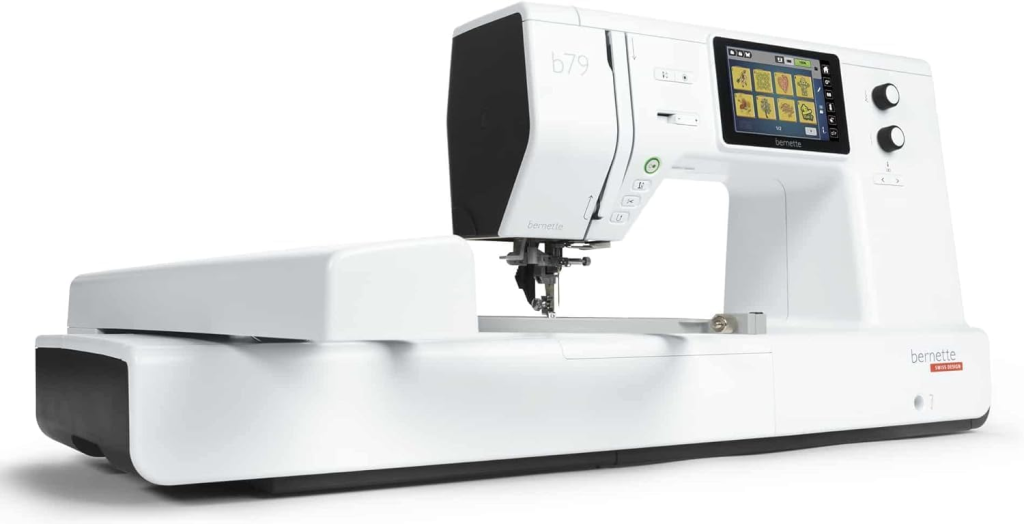
The Bernette B79 sewing and embroidery machine is one of the most versatile machines for users who desire advanced sewing capabilities and embroidery in a single machine. It comes with 500 stitch patterns, 208 embroidery designs, 17 one-step buttonholes, a 5-inch touchscreen, and an embroidery area of 10″ x 6″ (260 x 160 mm).
This machine is more suitable for sewers who desire more creative control than a basic beginner machine can provide. Great for sewing, decorative stitching, quilting, and embroidery. It’s a bigger learning curve for absolute beginners, though, due to its added features.
If you’re considering a combination machine, you may also want to compare popular embroidery-capable models such as the Brother SE2000 Review and Brother NQ1700E Review.
| Pros of the Bernette B79 | Cons of the Bernette B79 |
|---|---|
|
|
Final Verdict
Choose the Bernette B79 if you want a versatile sewing and embroidery combo machine with advanced features, a larger embroidery area, and more creative control. It is best for sewists who want one machine for regular sewing, decorative stitching, quilting-style projects, and embroidery.
My Testing and Research Process
When I’m reading and looking at embroidery sewing machines, I really try to see past the words and the product description. I test it for actual sewing and embroidery projects, such as setup, threading, hooping, stitch quality, transfer of designs, built-in features, ease of use, noise level, fabric handling, and the level of beginner-friendliness of the controls. When I test a machine, I look for the little day-to-day things that work well for me in real use, like how quickly I can change settings, how easily the fabric glides through the machine, whether the stitches are consistent, and if the machine feels like it’s useful for home projects.
I also compare my experience with actual customer feedback from reputable sites such as Amazon, manufacturer websites, sewing communities, and other large retail sites. I seek out recurring themes in user reviews, rather than individual ones. If a lot of users are commenting on easy setup, good stitch quality, small hoop limits, threading problems, or the value for money, I will cover those things in my review. This allows me to make a more well-rounded recommendation based on actual product use, official specs, and real buyer experiences—so readers can select the best embroidery sewing machine for their skill level, budget, and project needs.
Choosing the right machine often comes down to your specific needs and budget. Think about the types of projects you want to create and how much space you have for an embroidery area. Don’t be afraid to look at reviews and compare features before making your final decision.
— Maria Sew
Wrapping Things Up
So, there you have it. When you’re new to embroidery, finding the right embroidery machine can seem like a daunting task. I’ve seen some of these, and they range from the very basic to the machines that allow a little more room to expand.
I hope this guide helps you decide which machine is the right fit for you, whether you’re looking to personalize gifts or plan to work on larger projects. Remember to consider how you want to use it and how much it will cost you.
If you’re still comparing brands before making a decision, our guides on Brother vs Singer Sewing Machines, Best Brother Sewing Machines, and Best Singer Sewing Machines can help narrow down your options.
Frequently Asked Questions
What’s the difference between a sewing machine and an embroidery machine?
Think of it this way: a regular sewing machine is like a pencil, great for writing and drawing basic lines. An embroidery machine, on the other hand, is like a fancy pen with a whole set of colors and special tips. It can do all the regular sewing stuff, but its main job is to create cool designs and pictures using thread. Some machines can do both, which is super handy!
What does ’embroidery area size’ mean?
The embroidery area size is like the canvas for your embroidery designs. It’s the biggest space on your fabric that the machine can stitch a design in without you having to move the fabric around. Smaller areas, like 4×4 inches, are good for little things like monograms or patches. Bigger areas, like 5×7 inches or more, let you create larger, more detailed designs.
Is it hard to get my own designs onto the machine?
Not usually! Most modern embroidery machines let you add your own designs easily. You can often use a USB stick, kind of like a thumb drive, for your computer to transfer designs. Some even connect through Wi-Fi. You just need to make sure the design is in a format the machine understands, which is usually pretty standard.
What should I look for to make sure it’s easy for me to use?
For beginners, I’d say look for a machine with a clear screen, maybe a touchscreen, that’s easy to navigate. Features like an automatic needle threader (it pulls the thread through the needle for you!) and an automatic thread cutter save a lot of hassle. Simple instructions or built-in guides are also a big plus.
Do I need special software to use an embroidery machine?
Not always to get started. Many machines come with plenty of built-in designs and fonts, which is great for learning. If you want to create your own super unique designs or edit existing ones a lot, you might want to get separate embroidery software later on. But for your first machine, the built-in options are usually enough.
What’s the difference between an embroidery-only machine and a combination machine?
An embroidery-only machine is like a specialist – it’s designed just for creating embroidery designs. A combination machine is more of a jack-of-all-trades; it can do both regular sewing and embroidery. If you already have a sewing machine you love, an embroidery-only one might be perfect. But if you want one machine to do it all, a combination model is the way to go.

3 Comments