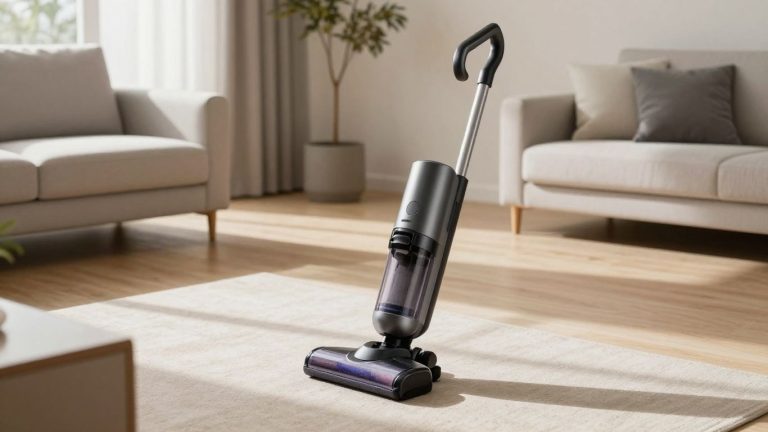
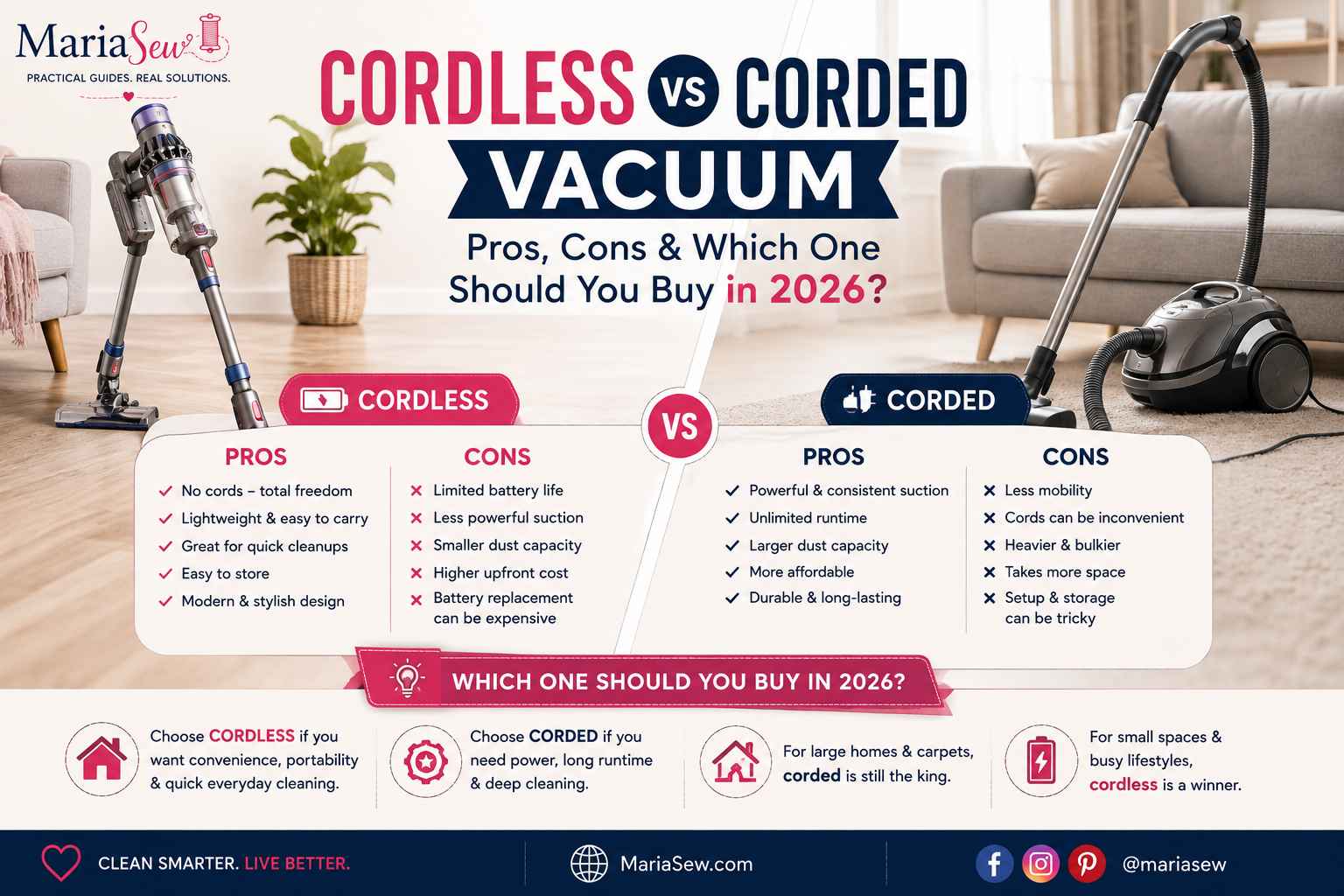
Cordless vs Corded Vacuum Pros, Cons & Which One Should You Buy in 2026?
I’ve owned both formats, a cordless stick for my small apartment, a corded upright for a bigger home with more carpet, and switched between them depending on the space. That’s a common shift, Fortune Business Insights projects cordless models will hold roughly 61% of the vacuum market in 2026, driven by portability and ease of use.
Neither format is the universal winner. The real differences come down to battery runtime, dust capacity, carpet performance, and maintenance, and this guide breaks those down so you can choose what actually fits how you clean.
This guide compares cordless vs. corded vacuums in practical terms so you can choose the format that fits the way you actually clean in 2026.
Key Takeaways
- Cordless vacuums provide excellent mobility, but their runtime changes with power mode, floorhead, surface, battery condition, and tool selection.
- Corded vacuums offer continuous electrical power, but they can still lose cleaning performance when filters, bags, bins, or air paths are clogged.
- A corded vacuum is not automatically more powerful than every cordless model; cleaning results are model-specific and depend heavily on floorhead design and airflow.
- Cordless machines usually have smaller bins and require charging, while full-size corded models often provide larger capacity and fewer interruptions.
- HEPA filtration is most useful when the complete vacuum has a well-sealed airflow path, and the filters are maintained correctly.
- The right choice depends on floors, square footage, stairs, storage, pets, allergies, maintenance tolerance, and budget.
| Bissell Featherweight | Shark Detect Pro | Dyson V8 | Shark Navigator Lift-Away | Kenmore Elite | Miele Complete C3 | |
|---|---|---|---|---|---|---|
| Type | Cordless | Cordless | Cordless | Corded | Corded | Corded |
| Tier | Budget | Mid | Premium | Mid | Mid-Premium | Premium |
| Weight | ~4 lbs | 6 lbs | 5.6 lbs | ~12.5 lbs | ~17 lbs | ~20 lbs |
| Runtime | 15-20 min | 40 min | Up to 40 min | Unlimited | Unlimited | Unlimited |
| Bin/Bag | 0.5L | 0.4L | 0.2L | Detachable canister | 2L+ | 4.7L |
| Filtration | Standard | Standard | Standard | Standard | Standard | Sealed HEPA |
| Best For | Quick surface pickups | Everyday mixed floors | Lightweight carry | Stairs & above-floor versatility | Heavy pet hair | Allergy control |
Cordless vs. Corded Vacuum: What Is the Main Difference?
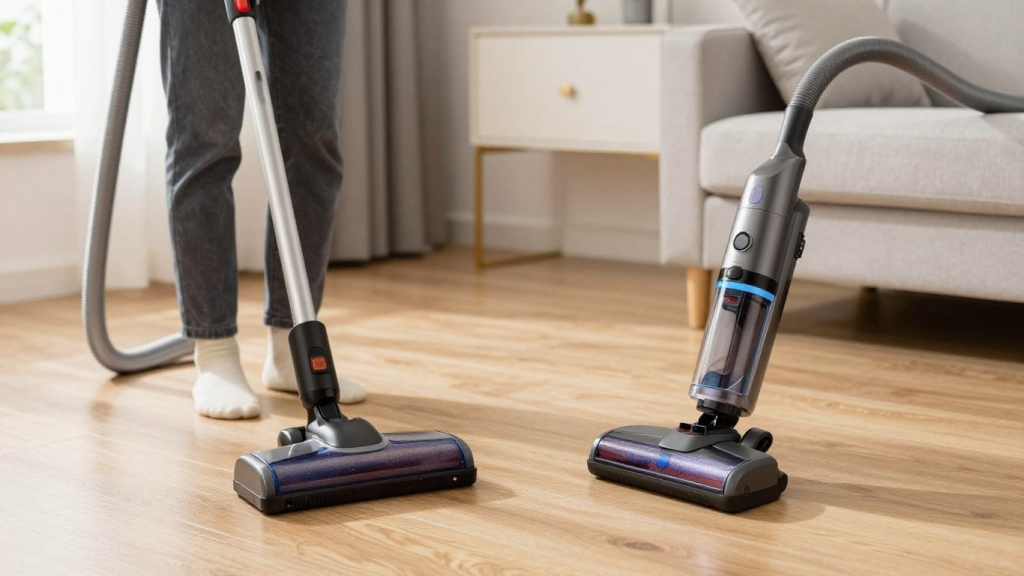
The major difference between the two is the source of power. A cordless vacuum collects energy in a rechargeable battery, and a corded vacuum uses electricity directly from an outlet. That one difference impacts the way to move, runs, distributes weight, stores, capacity, maintenance, and planning a cleaning session.
Neither format individually dictates performance. The cleaning head, brush-roll design, airflow path, seals, filters, floor settings, and maintenance condition are as important as the power source. That is the reason why a modern cordless vacuum cleaner can be a great choice for hard floors or low-pile carpet, and a poorly maintained corded vacuum cleaner with access to unlimited electricity can be a bad choice.
If you’re considering a battery-powered model, our guide to the best cordless vacuum cleaners can help you compare the top options.
How a Cordless Vacuum Works
A cordless vacuum is a vacuum that has a rechargeable battery to drive the motor and any motorized cleaning head. Some models have several power settings, and the best advertised run time is likely to be at a lower power setting or with a non-powered tool. Runtime may be reduced on carpet, with a motorized floorhead or with maximum suction.
Stick-type models tend to have the motor, battery, dustbin and controls grouped around the handle. This arrangement enhances accessibility and storage, but could make the machine feel top-heavy during extended sessions. Not all cordless vacuums have a removable battery, but if they do, it can help to prolong the lifespan of the vacuum or enable the user to have a second battery.
How a Corded Vacuum Works
A corded vacuum is plugged in and is always on. There is no battery countdown, so it’s easier to clean multiple rooms or repeat passes over carpet without stopping to recharge. There are also corded designs, such as uprights, canisters, sticks, and commercial machines, and there is still a wide variety of sizes and handling.
Continuous power should not be confused with guaranteed constant suction. A full bag, packed bin, dirty filter, clogged hose, worn belt, or a tangled brush roll can cause a decrease in pickup. Corded ownership takes the place of battery management and, depending on the model, bag, belt, hose, and brush-roll maintenance.
Pros and Cons of Cordless Vacuum
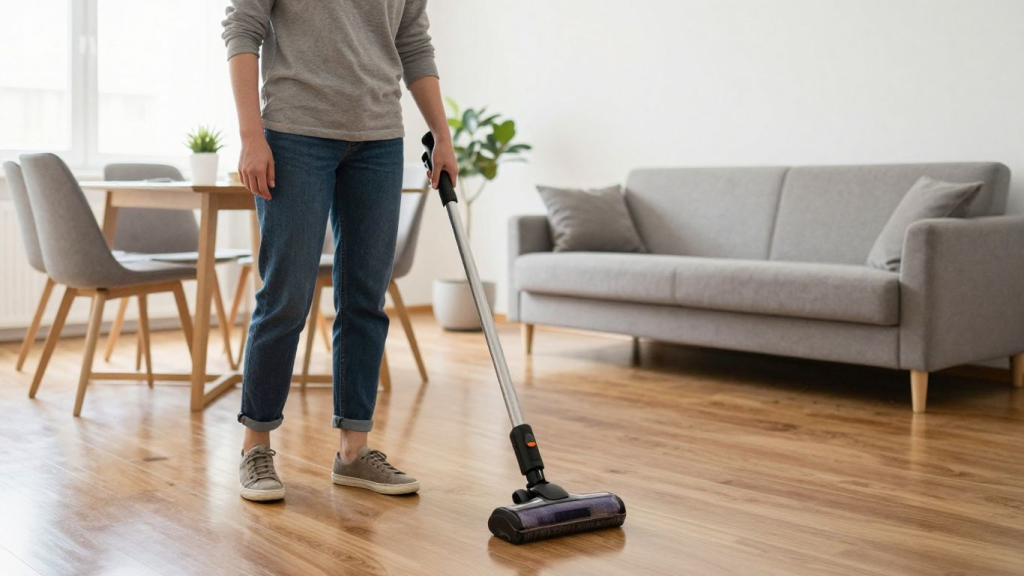
Cordless vacuums are designed around convenience. Their strongest advantage is that they reduce setup friction, making it easier to clean crumbs, pet hair, stairs, furniture, and car interiors before a small mess becomes a larger job. They are especially appealing in apartments and homes where storage is limited.
Pros of Cordless Vacuums
The following benefits matter most when you clean frequently in short sessions. They do not guarantee that every cordless vacuum will suit every surface, but they explain why the format has become a practical primary cleaner for many households.
- No cable to unwind, move between outlets, or manage around furniture.
- Usually lighter and easier to carry on stairs or between floors.
- Compact storage in closets, utility rooms, or wall-mounted charging areas.
- Fast conversion to handheld use on many models for upholstery, stairs, and cars.
- Easy access encourages frequent touch-ups in kitchens, entrances, and pet areas.
Convenience has real cleaning value because the vacuum that is easiest to reach often gets used most consistently. A cordless model can therefore keep hard floors and high-traffic areas cleaner even when it is not the strongest option for prolonged deep-carpet work.
Cons of Cordless Vacuums
The main compromises involve battery limits, capacity, and long-term parts support. These drawbacks become more noticeable in large homes, during heavy shedding seasons, or when a cordless machine is expected to perform every deep-cleaning task without a backup.
- Runtime falls in higher suction modes and with motorized tools.
- Smaller dustbins can require frequent emptying during pet-hair or whole-home cleaning.
- Battery capacity declines over time, and replacement cost or availability varies by model.
- Top-heavy designs may cause wrist or forearm fatigue despite a low total weight.
- Some models cannot stand upright independently and require a dock, wall mount, or careful storage.
A cordless vacuum is most successful when its realistic runtime covers your normal session and its bin is large enough for the debris you collect. Check replacement battery availability, charging time, storage needs, and the runtime conditions behind any advertised claim before buying.
Pros and Cons of Corded Vacuum
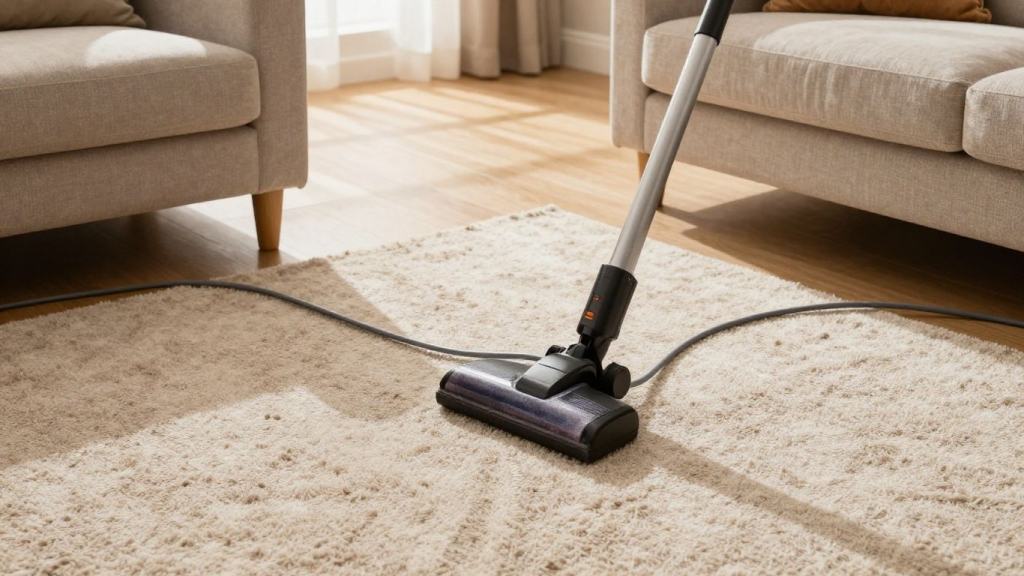
Corded vacuums prioritize endurance and predictable availability. They remain a sensible choice for large homes, extensive carpet, workshops, high debris loads, and households that prefer one longer cleaning session instead of several short passes throughout the week.
Pros of Corded Vacuums
The biggest advantage is not that every corded vacuum has stronger suction. It is that the machine can continue operating without battery planning, making repeated passes and whole-home cleaning easier to schedule.
- Continuous operation while connected to an outlet.
- Often larger dust bags or bins, reducing interruptions on big jobs.
- Many full-size models provide broad cleaning heads for carpeted rooms.
- No battery replacement cost or charging routine.
- A wide range of bagged, bagless, upright, canister, and commercial formats.
These strengths make corded machines dependable for demanding sessions, but the individual model still needs the correct floorhead, filtration, height adjustment, and tools. Continuous electricity supports endurance, not automatic superiority on every surface.
Cons of Corded Vacuums
The disadvantages become obvious in rooms with stairs, dense furniture, few outlets, or limited storage. A capable vacuum can still be frustrating if the cable, body, or hose makes the cleaning route unnecessarily awkward.
- The cord can catch on furniture, cross walkways, and require outlet changes.
- Full-size machines can be heavy to carry between floors.
- Large bodies need more closet or utility-room space.
- Stairs and car interiors may require a hose, detachable pod, or separate handheld tool.
- Bagged models add consumable costs, while some uprights require belt maintenance.
A corded vacuum is a poor fit when setup effort prevents regular use. Measure the storage area, check cable and hose reach, and consider the most difficult room before assuming that uninterrupted power will solve every cleaning problem.
Key Buying Factors to Compare
Power source is just one of the considerations. After a few weeks of ownership, the following factors determine if the vacuum feels efficient, comfortable, and affordable. Features should be matched to a specific cleaning task and not considered individually.
Cleaning Performance and Suction
Never judge a vacuum by watts, motor size, or by one suction claim. Pickup is affected by airflow, floorhead seal, brush agitation, debris path, and ability to maintain performance as the bin or bag fills. The performance of cordless power may also vary depending on the mode, and the performance of corded power may also drop due to lack of maintenance.
Battery Runtime and Charging
If the model is cordless, check the duration of the run at the setting and with the tool you will be using. Longer runtimes are usually associated with lower power usage, and powered floorheads or carpet may reduce the runtime. Charging time, removable battery, and replacement options are also crucial for long-term use.
Cord Length and Cleaning Reach
Total reach is the distance from the power cable to the hose, wand, and attachments for corded models. The longer the cord, the fewer the number of outlets that will need to be changed, but it will also need to be stored and handled safely. See if the vacuum can reach stairs, edges of the ceiling and furniture without shifting the body into an unstable position.
Carpet and Hard-Floor Compatibility
Good brush agitation, height control and multiple passes may be needed to ensure good coverage on thick carpet, while controlled airflow and a floorhead that does not scatter or scratch delicate surfaces are important on hard floors. The cordless or corded label may not be as useful as the brush-roll shutoff or a dedicated soft roller.
Dustbin or Bag Capacity
The larger the capacity, the fewer interruptions in use, particularly when using carpet or pets. Fluffy debris can fill a small cordless bin quickly, and bagged corded vacuums can provide cleaner disposal, but can result in a recurring bag expense. Test the ease of opening and whether hair is able to get inside.
Weight, Balance, and Maneuverability
Weight is not the only indicator. Light overall but heavy in the hand, cordless sticks are made with the battery and motor close to the hand. Corded uprights may be heavier, but they will weigh down the floor. Use test steering, handle comfort, stairs, and carrying balance where possible.
Filtration and Allergy Considerations
The complete vacuum design is important, but a true HEPA filter will capture 99.97% of the particles at 0.3 microns in the filtered airflow. A sealed path prevents air from bypassing the filter, and proper disposal of bags or bins will minimize exposure to collected dust. Filters should be cleaned or replaced according to the instructions.
Noise and Household Comfort
The noise is more model-dependent than power source. A small cordless machine isn’t necessarily quiet, and a large corded machine isn’t necessarily loud. Think about pets, children, shared walls, and the time of day you normally clean, and seek out measured sound information if available.
Storage and Daily Accessibility
Cordless vacuums tend to take up a lot of space in tight areas but might require a charger or wall mount close to an outlet. Corded machines can be freestanding, but take up more space. The ideal storage area is one that will allow easy access to the vacuum without creating a tripping hazard or forcing attachments to be brought into another room.
Maintenance and Replacement Parts
Both formats demand filter maintenance, brush-roll maintenance, blockage maintenance, and bin/bag maintenance. Cordless ownership may involve battery and charger considerations, and corded ownership may involve cables, belts, bags, or hoses. Review the warranty and whether batteries, filters, bags, brush rolls, and tools are sold separately.
Cordless vs. Corded Vacuum Comparison
The best time to use a comparison table is after knowing the details of the trade-offs. Cordless machines tend to be more mobile and more easily accessible; corded machines tend to be more powerful and more uninterrupted. These are trends, not guarantees for each model.
- Choose based on realistic cleaning time rather than maximum advertised runtime.
- Match the floorhead and controls to your carpet and hard-floor mix.
- Include consumables, replacement batteries, and storage in the ownership cost.
- Consider a two-vacuum setup when quick daily care and deep cleaning are equally important.
Prior to reading the table, determine the two factors that you think would be the most frustrating in your home. If the jobs are cable management and stairs, then cordless might be the right choice. If they are battery anxiety and repeated bin emptying, then corded may be more viable.
| Buying Factor | Cordless Vacuum | Corded Vacuum |
|---|---|---|
| Power source | Rechargeable battery | Household electrical outlet |
| Runtime | Limited by battery, mode, tool, floor type, and battery condition | Continuous while connected, although filters and blockages still affect pickup |
| Mobility | Excellent for stairs, cars, quick jobs, and moving between rooms | Restricted by cord length, outlet placement, and machine size |
| Typical capacity | Usually smaller, with more frequent emptying | Often larger, especially among full-size upright and canister models |
| Weight and storage | Usually lighter and easier to store | Often heavier and needs more floor or closet space |
| Deep-cleaning sessions | Capable when the battery and floorhead suit the job, but high-power modes shorten runtime | Well suited to long sessions and repeated carpet passes |
| Maintenance focus | Battery care, charging, filters, bin, brush roll, and clogs | Cord care, bags or bin, filters, belt or brush roll, and clogs |
| Long-term costs | Possible battery replacement plus filters and accessories | Possible bags, belts, filters, and higher storage requirement |
| Best fit | Quick cleanups, stairs, apartments, cars, and frequent light maintenance | Large homes, extensive carpet, high debris loads, and uninterrupted whole-home cleaning |
Which Vacuum Is Better for Different Homes?
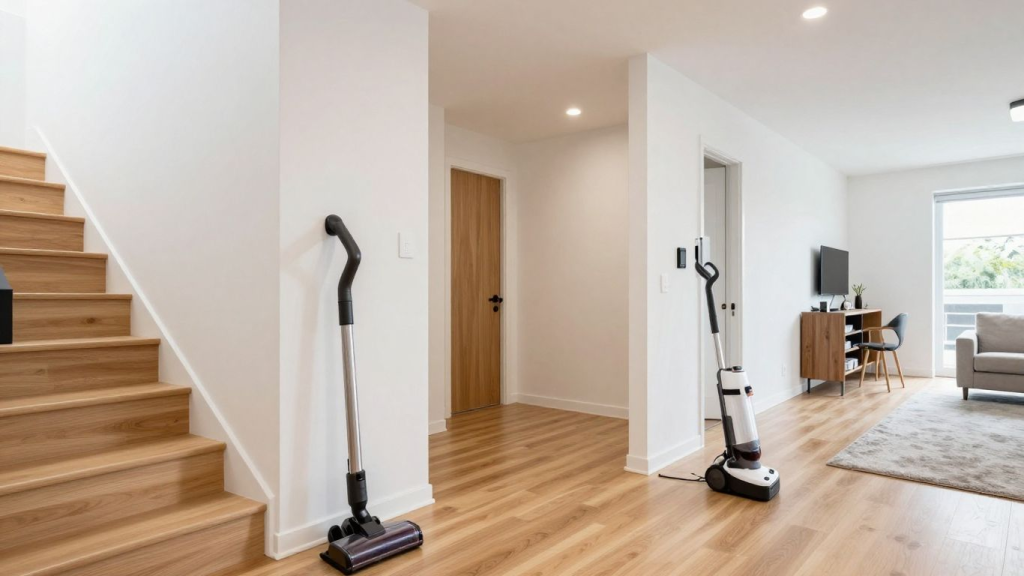
The answer changes with the building and the people using the machine. A compact apartment, a multi-level family home, and a large carpeted house place very different demands on a vacuum. Use the following situations as practical starting points.
Best for Apartments and Small Homes
A cordless vacuum is often the easier fit because it stores in a narrow space and can clean modest square footage within one charge. A compact corded vacuum may still be better when the apartment has dense carpet or when you prefer unlimited runtime and do not mind managing a cable.
Best for Large Homes
Corded vacuums are typically easier to use for long sessions throughout the house since they do not require charging breaks and can trap more debris. If the cordless model has a replaceable battery, a large enough bin, or if the home is cleaned in zones over multiple shorter sessions, it can still be used.
Best for Thick Carpet
Corded uprights and canisters are still good contenders as they can be used to make multiple passes without battery restrictions. But it’s not just the cable; floorhead, height setting, brush-roll design, and carpet compatibility are all more significant. A high-quality cordless carpet cleaner can work great on low or medium pile carpet but may be too short for max mode.
Best for Hard Floors
Both formats can perform well. Look for controlled airflow, a soft roller or hard-floor head, brush-roll shutoff, and good edge pickup. Cordless convenience is attractive for daily dust and crumbs, while a corded canister may be preferable for larger hard-floor areas and detailed tool cleaning.
Best for Pet Hair
Pet homes need effective floor agitation, upholstery tools, a bin or bag large enough for hair, and easy brush-roll access. Cordless is excellent for frequent touch-ups, while corded may be better during heavy shedding or deep carpet cleaning. Anti-tangle features reduce maintenance but do not eliminate inspection.
If pet hair is your biggest concern, take a look at our recommendations for the best vacuum cleaners for pet hair.
Best for Stairs, Cars, and Upholstery
Cordless generally wins because there is no cable to manage and many models convert to handheld use. A corded canister or lift-away upright can also work well when its hose and attachments provide enough reach without requiring the full machine to balance on a stair.
For even greater portability, the best handheld vacuums are ideal for stairs and upholstery, while the best car vacuum cleaners make it much easier to keep your vehicle’s interior clean.
Best for Allergy-Conscious Households
Look for verified HEPA filters, a sealed system, and low-contact disposal. Bagged corded vacuums tend to trap debris well when removing them, while sealed bagless cordless vacuums can also capture debris when emptied carefully. The power source is not as critical as the entire filtration and disposal system.
Cordless vs Cordless
Bissell Featherweight vs Shark Detect Pro
The Bissell Featherweight and Shark Detect Pro sit at opposite ends of the cordless spectrum, entry-level simplicity versus smart mid-range convenience. The Featherweight is built around one idea, make the vacuum as light and unintimidating as possible, at roughly 4 lbs it’s genuinely effortless to lift and carry one-handed, and its single-speed operation means there’s nothing to configure, you just turn it on and clean. The trade-off is real, though, its runtime tops out around 15-20 minutes, and suction is noticeably weaker on anything beyond light surface debris or thin carpet.
The Shark Detect Pro takes a more capable approach without sacrificing much portability. Its sensor automatically reads the floor type and debris level, adjusting suction so you’re not thinking about settings mid-clean, and its 0.4L bin, double the Featherweight’s capacity, means fewer interruptions during a longer session. It’s heavier than the Bissell, though still light by any reasonable standard, and it costs meaningfully more.
Choose the Bissell Featherweight if your cleaning needs are genuinely light, quick pickups, small spaces, minimal carpet, and price is the deciding factor. Choose the Shark Detect Pro if you want a vacuum capable of handling a full room or two without emptying the bin partway through, and you’re willing to pay a bit more for smarter suction control.
Bissell Featherweight vs Dyson V8
This comparison is really about two different philosophies of “lightweight”, accessible simplicity versus engineered performance. The Featherweight’s appeal is straightforward, it’s the cheapest, lightest option in this entire lineup, and for someone who just wants a grab-and-go vacuum for crumbs and light dust, it does that job without complication or expense.
The Dyson V8 is lightweight too, at 5.6 lbs it’s not far off the Featherweight’s weight, but it’s a fundamentally more capable machine. Boost mode gives it a genuine suction increase when you hit something stubborn, a stat the Featherweight simply can’t match, and it converts easily to a handheld tool for furniture and car interiors. The cost of that capability shows up in two places, a smaller 0.2L bin that needs frequent emptying, and a price point several times higher than the Bissell.
Choose the Bissell Featherweight if you want the lowest possible cost and your cleaning needs rarely go beyond quick surface pickups. Choose the Dyson V8 if you’re willing to pay for genuine suction power and versatility in a still-lightweight package, and don’t mind emptying a small bin more often.
Shark Detect Pro vs Dyson V8
Both of these sit in the mid-to-premium cordless tier, and both solve the same core problem, cleaning without a cord, in slightly different ways. The Shark Detect Pro leans on automation, its sensor detects floor type and debris level and adjusts suction accordingly, which means less thinking for the person doing the cleaning and a bin that, at 0.4L, holds noticeably more than the Dyson’s.
The Dyson V8 leans on manual control and refinement instead. Its boost mode puts real suction power in your hands exactly when you need it, and at 5.6 lbs it’s marginally lighter than the Shark, which becomes noticeable over a long session or repeated stair-carrying. Its smallest-on-this-list 0.2L bin is the clear trade-off, and boost mode draws down the battery fast.
Choose the Shark Detect Pro if you’d rather the vacuum handle suction adjustment for you and want fewer stops to empty the bin. Choose the Dyson V8 if manual control over suction intensity and the lightest possible carry matter more to you than bin capacity.
Corded vs Corded
Shark Navigator Lift-Away vs Kenmore Elite
Both of these are corded uprights built for serious, uninterrupted cleaning, but they’re tuned toward slightly different priorities. The Shark Navigator Lift-Away’s defining feature is its detachable canister, the “pod” separates from the base entirely, letting you carry a lightweight, self-contained unit up stairs or onto furniture without needing a separate handheld vacuum. At roughly 12.5 lbs, it’s also notably lighter than most corded uprights, making it easier to maneuver room to room despite the cord.
The Kenmore Elite Pet Friendly takes a more specialized approach, its entire design, from suction tuning to its 2L+ bag capacity, is built around handling heavy pet hair without stopping. It sacrifices some of the Shark’s versatility (there’s no detachable above-floor pod here) in exchange for sustained, no-compromise suction specifically suited to shedding.
Choose the Shark Navigator if you want a lighter corded vacuum with genuine above-floor versatility for stairs and furniture. Choose the Kenmore Elite if heavy, ongoing pet hair is your primary and most persistent cleaning challenge.
Shark Navigator Lift-Away vs Miele Complete C3
This comparison spans a real price and positioning gap within corded vacuums. The Shark Navigator Lift-Away is the accessible, mid-range option, lighter at around 12.5 lbs, more affordable, and versatile thanks to its detachable pod, but it uses standard filtration rather than anything specialized.
The Miele Complete C3 sits at the true premium end. Its sealed HEPA filtration system is a genuine step up for anyone dealing with allergies or wanting the cleanest possible exhaust air, and its 4.7L bag, the largest of any model in this lineup, means dramatically fewer bag changes over time. That capability comes at a real cost, though, it’s the heaviest and most expensive machine compared here, and its size demands more storage space than most households will have readily available.
Choose the Shark Navigator if you want strong, versatile corded cleaning without paying premium prices. Choose the Miele Complete C3 if allergen control and minimal maintenance frequency are worth a significant price and size increase.
Kenmore Elite vs Miele Complete C3
Both of these machines are built for serious, sustained cleaning power, but they’re solving for different problems. The Kenmore Elite Pet Friendly is laser-focused on pet hair specifically, its suction and bag design are tuned around that use case, and it delivers strong, consistent results without the premium price tag of the Miele.
The Miele Complete C3 broadens the ambition. Its sealed HEPA filtration matters most for allergy-sensitive households, not just pet owners, and its 4.7L bag capacity, larger even than the Kenmore’s, means the least frequent bag changes of any model in this comparison. That comes at the cost of being the single most expensive, heaviest, and bulkiest vacuum on this list.
Choose the Kenmore Elite if pet hair specifically is your main concern and you want strong performance without paying premium prices. Choose the Miele Complete C3 if allergen control is a genuine household priority and you’re willing to invest in it.
Cordless vs Corded
Bissell Featherweight vs Shark Navigator Lift-Away
This pairing captures the most basic version of the cordless-vs-corded trade-off, minimal portability against real cleaning power. The Bissell Featherweight is about as unencumbered as a vacuum gets, no cord, barely any weight, and a price point that makes it an easy, low-stakes purchase for quick surface cleanups.
The Shark Navigator Lift-Away represents what you gain by accepting a cord, unlimited runtime, meaningfully stronger and more consistent suction, and the added flexibility of its detachable pod for stairs and furniture. The trade-offs are exactly what you’d expect, more weight to manage and an outlet you need to stay near.
Choose the Bissell Featherweight if portability and minimum cost are what matter most, and your cleaning needs are genuinely light. Choose the Shark Navigator if you need real, sustained cleaning power and don’t mind the cord in exchange for it.
Bissell Featherweight vs Kenmore Elite
This is the widest performance gap in the entire lineup. The Bissell Featherweight is built for speed and simplicity, grab it, clean a small area, put it away, and its low price makes it an easy first vacuum or a lightweight backup. It was never designed to compete with a dedicated deep-cleaning machine, and it doesn’t pretend to.
The Kenmore Elite Pet Friendly is exactly that dedicated deep-cleaning machine, built specifically around the demands of heavy pet hair across an entire home, with unlimited runtime and a large bag that doesn’t need constant attention. The difference in weight, size, and capability is significant, and that’s by design.
Choose the Bissell Featherweight if your needs are limited to quick, light cleanups. Choose the Kenmore Elite if you’re managing real, ongoing pet hair across a full home and need a machine built for that specific challenge.
Bissell Featherweight vs Miele Complete C3
These two machines represent opposite ends of the entire six-model comparison, the most accessible, minimal option against the most premium, capable one. The Bissell Featherweight wins decisively on price and portability, it’s the vacuum you keep by the door for crumbs and quick messes, nothing more.
The Miele Complete C3 is a serious investment piece, its sealed HEPA filtration and massive 4.7L bag capacity are built for households where allergen control and thorough, infrequent deep cleaning genuinely matter. The gap in price, weight, and capability between these two is the largest in this entire comparison set.
Choose the Bissell Featherweight if budget is the primary constraint and your cleaning needs are minimal. Choose the Miele Complete C3 if allergy control and deep, thorough cleaning are real priorities, regardless of the cost or size involved.
Shark Detect Pro vs Shark Navigator Lift-Away
Interestingly, both of these are Shark products, but they represent the brand’s cordless and corded philosophies side by side. The Detect Pro (cordless) is built around convenience and smart automation, its sensor adjusts suction on the fly, and there’s no cord to manage as you move between rooms.
The Navigator Lift-Away (corded) trades that portability for unlimited runtime and generally stronger, more sustained suction, while still offering some cordless-style flexibility through its detachable pod for stairs and above-floor cleaning. It’s the heavier, more committed option of the two.
Choose the Shark Detect Pro if portability and quick, no-cord cleaning are what you value most. Choose the Shark Navigator if you want uninterrupted cleaning power while still getting some of that above-floor versatility.
Shark Detect Pro vs Kenmore Elite
This comparison plays out almost exactly like the article’s core question in miniature. The Shark Detect Pro’s auto-adjusting suction and light frame make it ideal for grabbing the moment you spot a mess, quick, convenient, no planning required. Its limitation shows up in sustained use, a 0.4L bin and roughly 40-minute runtime cap how much ground you can cover in a single session.
The Kenmore Elite Pet Friendly removes that ceiling entirely. With unlimited runtime and a bag built to handle heavy shedding without frequent changes, it’s designed for exactly the scenario where the Shark starts to struggle, an entire home’s worth of pet hair in one uninterrupted pass.
Choose the Shark Detect Pro if your pet mess tends to be manageable in short, frequent sessions. Choose the Kenmore Elite if you’re dealing with heavier shedding across a larger space and want to handle it all at once.
Shark Detect Pro vs Miele Complete C3
These two sit at genuinely different points on the spectrum, everyday convenience against specialized, premium performance. The Shark Detect Pro is light, affordable, and smart enough to handle daily cleaning without much thought, exactly what most households need most of the time.
The Miele Complete C3 exists for a more specific purpose, its sealed HEPA filtration is meaningfully better for allergy-sensitive households, and its bag capacity means far less frequent maintenance. That specialization comes with real costs, in price, in weight, and in how much storage space it demands.
Choose the Shark Detect Pro if budget and everyday convenience are your priorities. Choose the Miele Complete C3 if you have a specific need, like allergies or a very large home, that justifies the investment.
Dyson V8 vs Shark Navigator Lift-Away
The Dyson V8 is about as light and maneuverable as a vacuum gets, its manual boost mode gives real suction power on demand, and with no cord to manage, it moves through a home without any friction. Its limitation is capacity, the smallest bin in this entire comparison, and a runtime that shortens considerably in boost mode.
The Shark Navigator Lift-Away removes both of those limitations by trading portability for a cord, unlimited runtime means no planning around battery life, and its detachable pod still offers some of that cordless-style flexibility for stairs and above-floor cleaning.
Choose the Dyson V8 if lightweight maneuverability and quick, spot-focused cleaning sessions are your top priority. Choose the Shark Navigator if you want sustained cleaning power without giving up all of that cordless-style flexibility.
Dyson V8 vs Kenmore Elite
This pairing highlights the sharpest trade-off between the two categories. The Dyson V8 is exceptionally light and easy to maneuver, with boost mode offering genuine power exactly when you need it, ideal for quick, targeted cleaning around a home.
The Kenmore Elite Pet Friendly is built for the opposite scenario entirely, sustained, heavy-duty cleaning across a full home, with a large bag and unlimited runtime specifically suited to households dealing with real, ongoing pet hair. Where the Dyson excels at quick and targeted, the Kenmore excels at thorough and uninterrupted.
Choose the Dyson V8 if you want the lightest possible vacuum for quick, spot-focused cleaning. Choose the Kenmore Elite if you need to handle heavy pet hair across an entire home in a single, uninterrupted session.
Dyson V8 vs Miele Complete C3
These two represent the premium tier of their respective categories, but “premium” means something entirely different on each side. The Dyson V8’s premium comes from engineering and portability, remarkably light for the power it delivers, with a boost mode that adds real capability when needed, though its small bin remains its clearest limitation.
The Miele Complete C3’s premium comes from filtration and capacity instead. Its sealed HEPA system is the strongest in this entire lineup for allergen control, and its 4.7L bag dramatically reduces how often you need to deal with maintenance. What you give up, of course, is exactly what the Dyson offers, lightness and quick portability.
Choose the Dyson V8 if lightweight maneuverability and quick cleaning sessions matter more to you than filtration depth. Choose the Miele Complete C3 if allergen control and thorough, infrequent deep cleaning are the real priority.
How to Choose Between Cordless and Corded
A structured decision prevents attractive features from overshadowing the way the vacuum will be used. Work through these steps before comparing prices or brand names.
Step 1: Measure the Cleaning Area
Estimate how much floor you normally clean in one session. A short 10- to 20-minute routine may suit cordless operation, while a long whole-home session increases the value of continuous corded power.
Step 2: List Every Floor Type
Identify hard floors, low-pile rugs, plush carpet, stairs, and delicate surfaces. The floorhead and control system must support all important surfaces without scattering debris, scratching, or becoming difficult to push.
Step 3: Define the Main Debris
Pet hair, cereal, fine dust, litter, workshop debris, and embedded carpet soil place different demands on a machine. Capacity and brush-roll maintenance become more important as debris volume increases.
Step 4: Check Your Physical Comfort
Consider carrying weight, wrist balance, steering, bending, and stair use. A lighter vacuum is not always easier if it is top-heavy, while a heavier machine may feel manageable when most weight stays on the floor.
Step 5: Plan Storage and Charging
Confirm where the vacuum, charger, cord, hose, and attachments will live. A machine that blocks a walkway or requires inconvenient setup is less likely to be used regularly.
Step 6: Calculate Ownership Costs
Include filters, bags, belts, brush rolls, batteries, and replacement tools. A low purchase price can become less attractive when key parts are expensive or difficult to find.
Step 7: Compare Realistic Runtime or Reach
For cordless, use runtime with the expected floorhead and mode. For corded, measure cable and hose reach against outlet placement and stairs. Both figures should match your actual route.
Step 8: Verify Warranty and Parts Support
Check warranty length, battery coverage, authorized service options, and replacement-part availability. Long-term support matters more than a long feature list when the vacuum is used several times a week.
Common Buying Mistakes to Avoid While Choosing Corded vs Cordless
Most disappointing purchases happen because shoppers compare category labels instead of daily use. The following mistakes can make a technically capable vacuum feel wrong for the home.
- Assuming every corded vacuum has more suction than every cordless model.
- Treating maximum cordless runtime as the time available in every power mode.
- Ignoring battery replacement cost, availability, or whether the battery is removable.
- Choosing a vacuum without checking the floorhead on delicate hard floors or thick carpet.
- Focusing on a HEPA label without checking whether the airflow path is sealed.
- Underestimating bin size, bag costs, filter care, brush-roll cleaning, or storage needs.
- Buying a heavy machine without considering stairs, carrying, and furniture layout.
- Paying for attachments that do not match the areas where dirt and pet hair collect.
A short needs list is more useful than a long specification sheet. Rank floors, session length, mobility, capacity, and maintenance first, then choose the model that solves the highest-priority problems with the fewest unacceptable compromises.
Maintenance Tips for Better Performance
A vacuum can only maintain useful airflow when debris has a clear path through the floorhead, hose, bin or bag, filters, and exhaust. Both cordless and corded machines need regular care, even when the product is described as anti-tangle or self-cleaning.
- Empty the bin before the maximum line or replace the bag before it becomes overfilled.
- Inspect the brush roll for hair, thread, and fibers whenever pickup changes.
- Clean or replace filters according to the manufacturer’s exact instructions.
- Check hoses, wands, tools, and air channels for blockages before assuming the motor is weak.
- Store cordless batteries and chargers in a dry location within the recommended temperature range.
- Inspect corded power cables for damage and keep them away from the rotating brush roll.
- Allow washable filters to dry completely before reinstalling them.
Maintenance is also a useful diagnostic process. If performance drops, check the bin or bag, filters, brush roll, floorhead, and air path one item at a time. This prevents unnecessary replacement and helps the vacuum deliver the performance it was designed to provide.
Can a Cordless Vacuum Fully Replace a Corded Vacuum?
Yes, in many apartments and small to medium-sized homes, a cordless vacuum can be the only vacuum in the home, particularly if the floors are mostly hard or low-pile and cleaned often. The battery, bin, floorhead, tools, and maintenance routine should still be able to handle the entire workload without causing repeated interruptions.
It is less convincing in very large homes, on extensive plush carpet, during heavy pet shedding, or when one long session is the norm. In such cases, a two-vacuum system might be more convenient: cordless for daily use and corded for deep cleaning.
Final Verdict: Cordless or Corded?
Opt for cordless when mobility, stairs, car cleaning, compact storage, and speed of access are key. Opt for corded if you need unlimited runtime, more capacity, deep carpet sessions, and to clean a large area without battery planning.
No automatic winner. A high-end cordless vacuum cleaner can be more effective on certain surfaces than a lower-end corded vacuum cleaner, and a good quality corded vacuum cleaner can still be more effective for tough whole-home cleaning. Before making your final decision, compare our picks for the best vacuum cleaners for home to find the model that best matches your cleaning needs.
Frequently Asked Questions
Are cordless vacuums as powerful as corded vacuums?
Some modern cordless vacuums provide strong pickup, especially in higher power modes, but performance varies by model and surface. Corded vacuums have continuous electrical power, while cordless models trade runtime for mobility. Floorhead design, airflow, seals, and maintenance remain critical in both formats.
Do corded vacuums maintain full suction all the time?
Not automatically. They have continuous access to electricity, but a full bag or bin, dirty filter, clogged hose, tangled brush roll, or worn belt can reduce pickup. Regular maintenance is necessary for sustained performance.
How long does a cordless vacuum battery last per charge?
Runtime varies by model, power mode, motorized tool, floor type, and battery condition. Advertised maximum figures often reflect lower-power operation, so compare the claim with the setting and floorhead you expect to use.
How many years does a cordless vacuum battery last?
Battery lifespan depends on chemistry, heat, charging patterns, storage, and use. Capacity normally declines over time. Check whether the battery is removable, how the warranty treats it, and whether replacements are available.
Which is better for carpet: cordless or corded?
Corded vacuums are often easier for long carpet-cleaning sessions because they do not have a battery limit. However, carpet results depend on brush-roll design, height adjustment, airflow, floorhead contact, and the specific cordless or corded model.
Which is better for hardwood floors?
Either format can work well. Look for a hard floorhead, soft roller, brush-roll shutoff, controlled airflow, and wheels or materials that are safe for the floor. Cordless convenience can be especially useful for frequent dust and crumb cleanup.
Which type is better for pet hair?
Cordless is convenient for daily fur pickup, while corded can be more efficient for prolonged cleaning and high-capacity collection. Prioritize an effective floorhead, upholstery tool, easy brush-roll access, and a bin or bag sized for the amount of shedding.
Are cordless vacuums cheaper to run?
Not necessarily. They avoid bags on many models but may require a replacement battery. Corded models may need bags, belts, or filters. Compare the full cost of batteries, consumables, filters, tools, and repairs rather than only the purchase price.
Is a HEPA filter more common in corded vacuums?
HEPA options exist in both categories. What matters is verified filtration, a sealed airflow path, correct installation, and maintenance. Bagged disposal may reduce dust exposure, but sealed bagless models can also be effective when emptied carefully.
Can I use a cordless vacuum as my only vacuum?
Yes, when its realistic runtime, capacity, floor compatibility, tools, and charging routine suit the home. Large carpeted homes or heavy debris loads may still benefit from a corded backup for deep cleaning.
Is cordless better for stairs?
Usually, because the machine is easier to carry and there is no cable to manage. A corded lift-away or canister vacuum can also work well if its hose, pod weight, and tools make the stairs safe and comfortable to clean.
What should I compare before buying?
Compare floor compatibility, realistic runtime or total reach, dust capacity, weight distribution, filtration, storage, noise, attachments, maintenance, warranty, and replacement-part availability. Choose the format only after matching those factors to your normal cleaning route.