6 Best Brother Computerized Sewing Machine Features, Model Comparisons, and Buying Guide
A Brother computerized sewing machine can make everyday sewing, quilting, alterations, and creative fabric projects easier by combining digital stitch selection with beginner-friendly controls. The best model depends on how you sew: simple repairs may only need 60 to 70 built-in stitches, while quilting, lettering, and decorative projects may benefit from 100+ stitches, an extension table, speed control, and more presser feet.
In this guide, I compare popular Brother computerized sewing machines, including the CS7000X, CS6000i, CS5055, XR9550, CP100X, and HC1850, so that you can match the right machine to your skill level, budget, workspace, and project goals.
Key Takeaways
- Brother computerized sewing machines use digital stitch selection to make setup easier than many purely mechanical models.
- Stitch count matters, but usability, including feet, speed control, workspace, and project type, matters just as much.
- The CS7000X is a strong all-around option for beginners, sewing, and light quilting, while the XR9550 and HC1850 are better for users who want more stitch and lettering options.
- Most models in this guide are sewing or sewing-and-quilting machines, not true embroidery machines. For embroidery, look at Brother SE or PE series machines.
- Always verify the current product listing before buying because accessories, bundles, warranty terms, and availability can change by retailer.
Why Choose a Brother Computerized Sewing Machine?
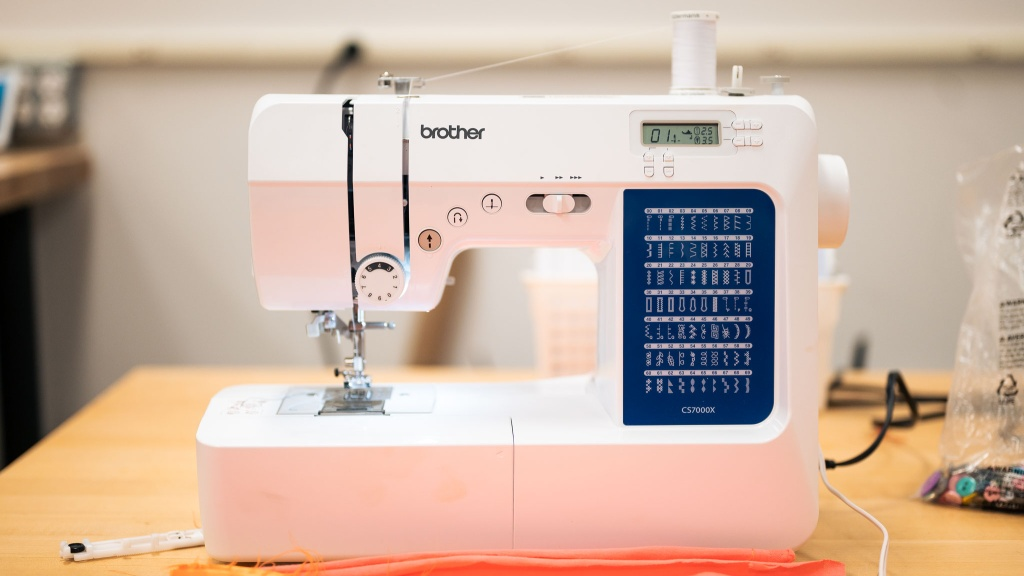
Many of Brother’s computerised machines are available to the home sewing market and are affordable, accessible, and suitable for beginners and hobby sewists, making the brand popular. Depending on the model, a computerized model can make tasks such as selecting a stitch, setting up buttons, positioning the needles, and controlling speed much easier. You can often select a stitch on an LCD screen and change width or length by using buttons, rather than turning multiple mechanical dials.
This is why Brother computerized machines are useful for those who wish to achieve cleaner results without having to go through the learning curve. They are generally used for clothing repairs, sewing, quilting, crafts, home decor, tote bags, pillow covers, and for those who are just starting. They are not all the same, however. Some models have been stripped down and simplified, and there are models with alphanumeric stitches, additional presser feet, extension tables, and quilting support.
If you’re new to the craft, learning how to learn sewing can help you get comfortable with computerized features faster.
What Makes a Computerized Sewing Machine Different?
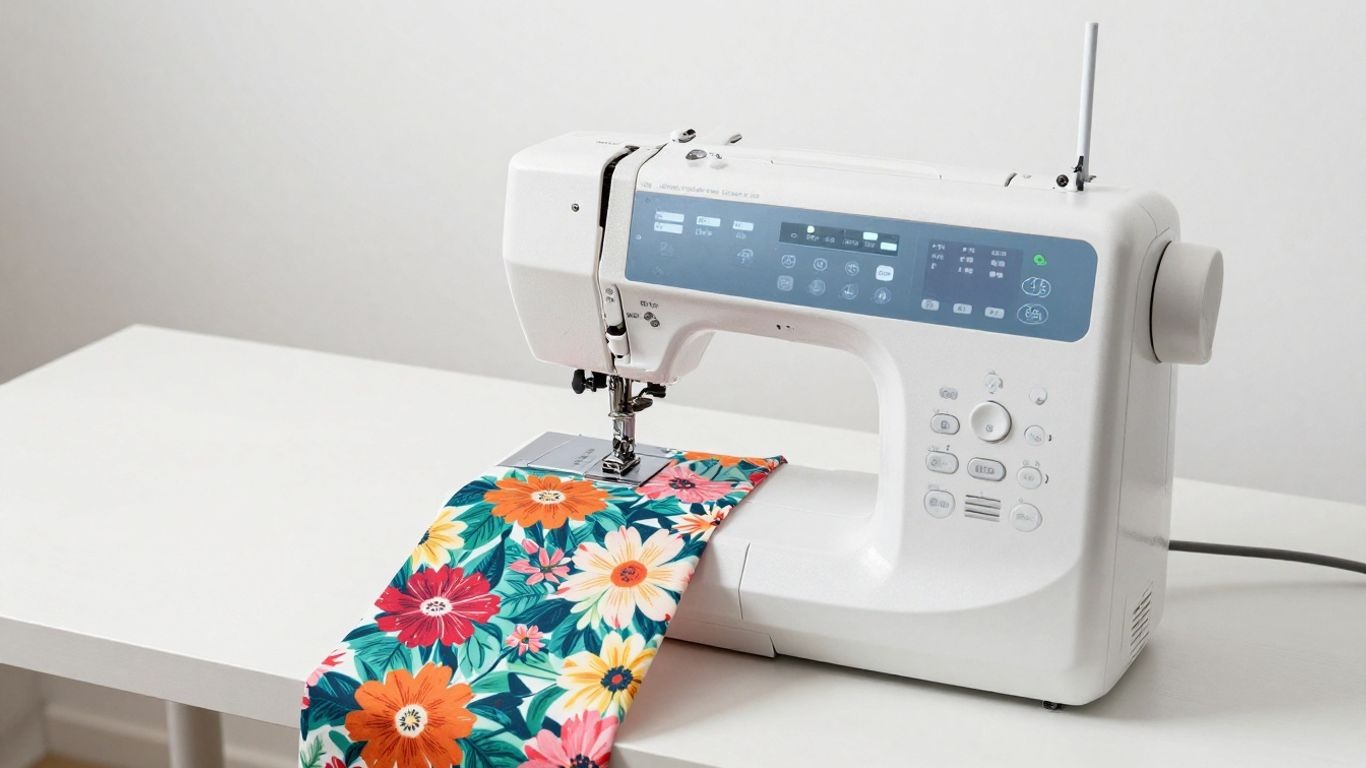
A computerized sewing machine is an electronic sewing machine that is controlled by a computer and has electronic controls to choose stitches, set sewing machine parameters, and provide information about the stitches. This does not imply that the machine sews itself, and it is not necessarily automatic for all settings. There are still many Brother machines that are computer-operated that need to be threaded, handled, and have the correct needle, and in some cases, manual thread tension adjustment.
The greatest benefit is convenience. Switching stitches is quicker, repeatable buttonholes are easier to make, stitch width and length are more easily adjusted, and speed is controlled on many models. This can help to minimize the guesswork for beginners. It can save time and create more consistency for experienced sewers on detailed projects.
Before getting started, it’s useful to understand how to thread a sewing machine correctly, since proper threading affects stitch quality on every computerized model. It can save time and create more consistency for experienced sewers on detailed projects.
Key Features to Look For in a Brother Computerized Sewing Machine
Stitch Selection and Customization
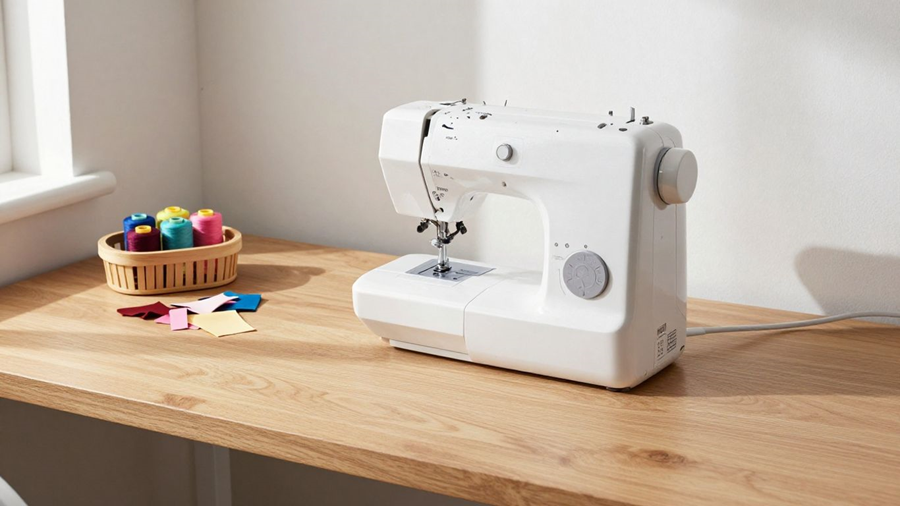
Built-in stitches are useful, as they provide a variety of options for construction, repair, stretching seams, quilting, buttonholes, and decoration. For most people, a machine that has 60 or 70 stitches is sufficient for the majority of sewing. The more stitches a machine has, the more useful it is for decorative designs, heirloom-style details, quilting patterns, and lettering.
Don’t purchase just for the number of stitches. Consider the ease of selecting stitches, the ease of reading the screen, and the ability to change stitch width and length on the machine. It’s better to have a smaller number of stitches on a machine you know, than a big stitch library you don’t use often.
Built-In Needle Threader
If you change the thread colors frequently or sew for extended periods of time, a built-in needle threader can save time and eye strain. This is a lever-assisted feature, not fully automatic, on many Brother models. It still needs to be used properly with the correct needle position and the correct placement of the thread to operate smoothly.
This is particularly useful for novices, the elderly, and anyone who has trouble with threading small needle holes. Read reviews of the manual before purchasing to see how the threader operates on the specific model you’re interested in.
If threading remains challenging, one of the best automatic needle threaders can make the process even easier. Read reviews of the manual before purchasing to see how the threader operates on the specific model you’re interested in.
LCD Display and Control Buttons
The LCD allows you to view the selected stitch number and the recommended settings. Many sewists choose computerized machines over the mechanical machines because of this. The display may help to prevent the selection of the wrong stitch or presser foot.
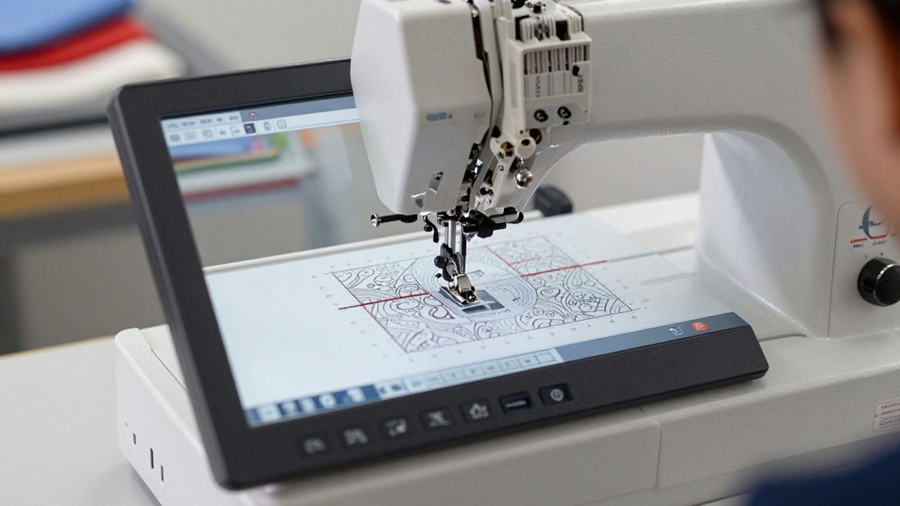
The majority of models featured in this guide have an LCD and button interface, rather than a large touchscreen. That’s a good thing for many users, as it helps to keep the machine affordable and user-friendly. The advanced embroidery machines or premium combo machines are more likely to have full-color touchscreens.
Speed Control and Start/Stop Button
Useful for curves, corners, delicate fabrics, or beginner projects where control is more important than speed. Alternatively, a start/stop button may be available on compatible models to allow sewing without the foot pedal for some people to make long, straight seams easier.
Not all Brother computerized machines come with the same speed controls, so check before purchasing. For beginners, a speed slider is one of the most useful options, as it allows you to ease your way into the machine’s speed.
Automatic Buttonholes
The one-step or auto-size buttonholes are a significant improvement over the traditional buttonhole techniques. When equipped with the proper buttonhole foot, the machine will produce uniform buttonholes of the same size as the button. Can be used for shirts, dresses, bags, children’s wear, pajamas, and craft projects.
Simple models can have a few one-step buttonhole types, and advanced models can have more types of buttonholes for various garments. If you’re just sewing garments, you can typically choose between seven or eight different buttonhole options.
Extension Table and Quilting Accessories
An extension table can make the machine easier to use if you want to quilt, create tote bags, or sew larger panels of fabric for curtains or other projects. Provides extra support to the fabric, preventing it from dragging or pulling during sewing. Some Brother models come with a wide table that is included in the box; others may need to be purchased separately.
If you’re considering additional workspace, compare different sewing machine extension table options before purchasing.
Quilters also need to look for presser feet included, such as a walking foot, quilting foot, overcasting foot, and 1/4 inch piecing foot. Some accessories may be different depending on the store, so make sure to always look at the latest list of products before you make a final decision.
6 Best Brother Computerized Sewing Machines By Me Reviewed
1. Brother CS7000X – Best Overall Brother Computerized Sewing Machine for Beginners and Quilting
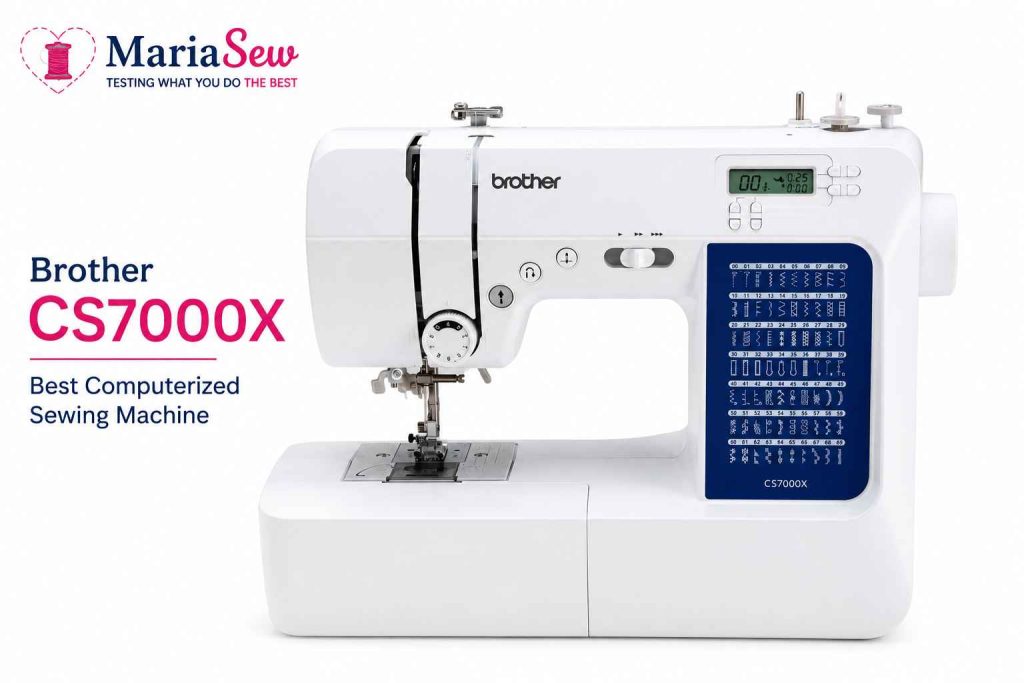
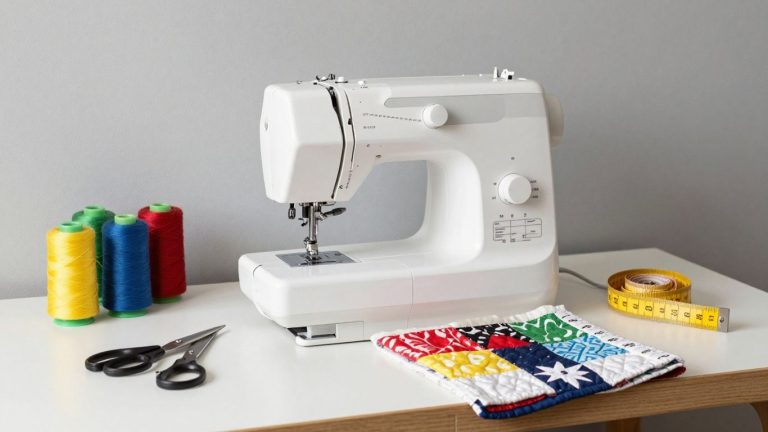
The Brother CS7000X is one of the best options for those who are new to sewing and wish to have a machine that is easy to learn but can also expand with them. It comes with 70 built-in stitches, 7 one-step buttonholes, an LCD, and a drop-in bobbin in many bundles, plus quilting accessories. It’s ideal for patching clothes, quick clothes, crafts, home decor, and light quilting.
This model is particularly helpful when you need a large table and a machine that doesn’t seem too cramped after a couple of projects. It’s not an embroidery machine, and it’s not intended for industrial sewing, but for home sewing and beginner quilting, it’s a good mix of value, features, and usability.
For a detailed breakdown of features and performance, see our Brother CS7000X review.
Reason To Buy
- Very beginner-friendly and easy to use
- 70 built-in stitches with plenty of variety
- Smooth and quiet operation
- Easy bobbin setup and threading
- Adjustable sewing speed
- Can sew with or without the foot pedal
- Good selection of presser feet
- Useful for quilting and everyday sewing
- Lightweight and easy to store
- Good value for the price
Cons
- Not designed for heavy-duty sewing
- Automatic needle threader can be awkward
- Tight space around the needle can make threading difficult
- Lightweight body can slide on the table
- Extension table may feel unstable
- Some users report uneven bobbin winding
- Plastic components can feel less premium
- Smaller workspace may limit large quilting projects
Final Recommendation
The Brother CS7000X is an excellent choice for beginners, hobby sewers, and casual quilters. The reviews consistently praise its ease of use, stitch selection, quiet operation, adjustable speed, and useful accessories. It offers enough features to grow with a new sewer without making the machine overly complicated.
The main thing to understand is that it’s a lightweight home sewing machine, not a heavy-duty or professional machine. Some buyers also found the needle area and extension table less convenient than expected. For everyday sewing, garments, crafts, and smaller quilting projects, though, it’s a very good value and an easy recommendation.
Our Rating: 9.5/10 — Excellent for Beginners | Great Value | Quiet & Easy to Use | Great for Everyday Sewing & Quilting | Not Heavy-Duty
2. Brother CS6000i – Best Classic Brother Computerized Sewing Machine for Basic Sewing
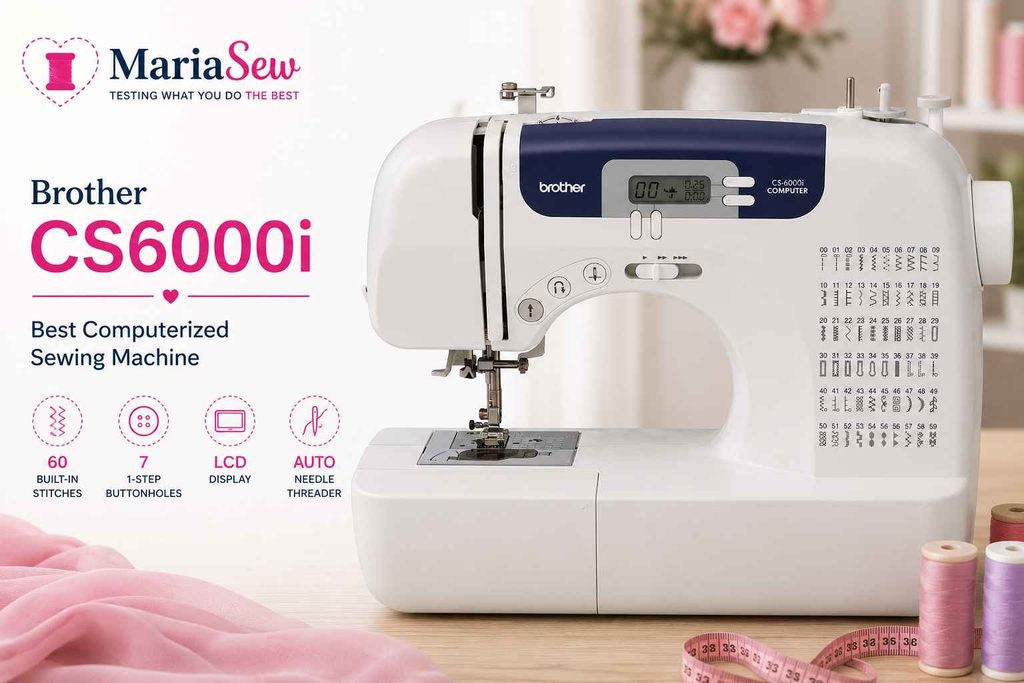
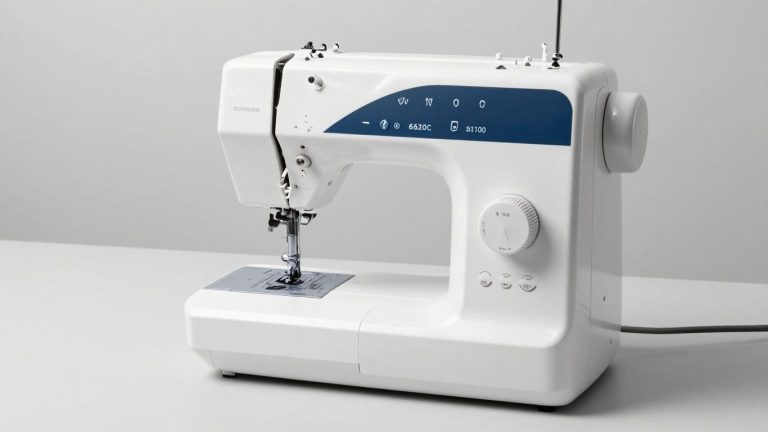
The Brother CS6000i is an old computerised sewing machine that has been around for a long time. It has 60 pre-programmed stitches, easy controls, a drop-in bobbin, and enough features to repair, hem, sew basic garments, and for beginner projects. It was popular because it made new sewists feel like they had the convenience of computers, but without the complexity.
It is an older model, so buyers should verify current availability, warranty terms, and see if a newer model of Brother may be a better value. It’s still worth talking about because there are still many people who are comparing used, renewed, or existing CS6000i machines with newer Brother computerized machines.
Reason To Buy
- Very beginner-friendly
- Plenty of useful stitches
- Automatic buttonhole feature
- Automatic needle threader
- Easy top-load bobbin
- Quiet operation
- Adjustable sewing speed
- Lightweight and easy to move
- Handles different fabrics well
- Excellent value when available
Cons
- Discontinued model
- Occasional tension issues
- Needle threader takes some practice
- Smaller throat space for quilting
- Some reported bobbin-winding problems
- Can be sensitive to certain thread types
- Not ideal for heavy-duty sewing
Final Recommendation
The Brother CS6000i remains a very good beginner sewing machine, with reviewers praising its ease of use, quiet operation, adjustable speed, and versatility. However, because the model is discontinued, I wouldn’t recommend going out of your way to buy one new today.
If you already own one, keep it — there’s plenty to like. If you’re shopping for a new machine, choose a current Brother model instead.
Our Rating: 9.0/10 — Great Beginner Machine | Excellent Value | Discontinued | Not for Heavy-Duty Sewing
3. Brother CS5055 – Best Simple Computerized Brother Sewing Machine for Everyday Projects
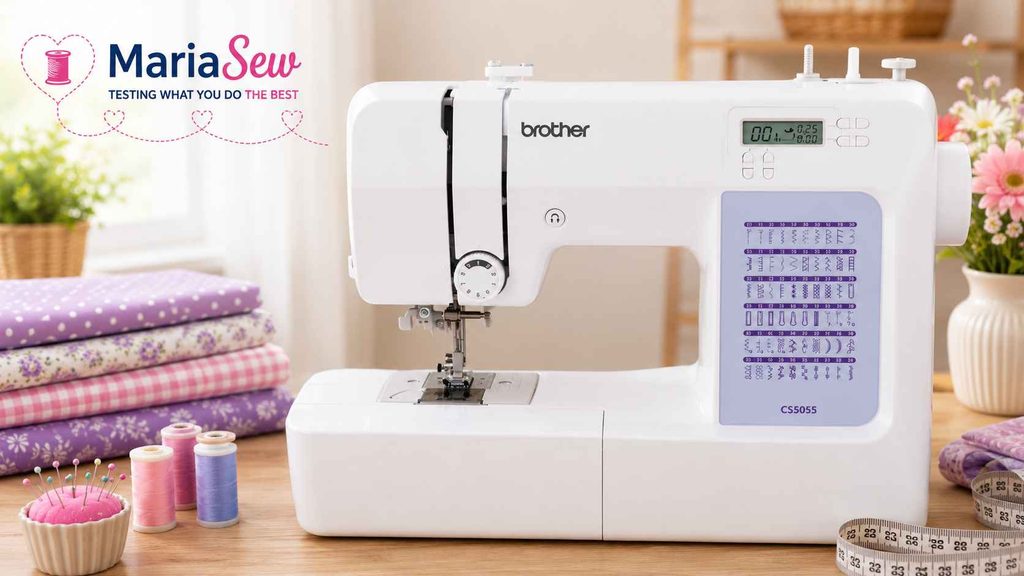
If you’re a sewist who wants a computerized stitch selection but doesn’t need to purchase a huge library of stitches that you’ll never use, the Brother CS5055 may be a good choice. It has 60 built-in stitches and 7 auto-size buttonhole styles, which can be used for basic clothing, mending, crafts, pillow covers, small home decor projects, and learning basic sewing skills.
You can read our complete Brother CS5055 review for a closer look.
This machine is ideal for a person who wants digital controls but doesn’t want too many settings. Not ideal for heavier fabrics or for more advanced quilting, but it is a good machine for sewing in a home environment on lighter to medium fabrics.
Reason to Buy
- Very beginner-friendly and easy to use
- Quiet and smooth operation
- Lightweight and easy to carry
- Clear, simple LCD display
- Good variety of stitches
- Easy bobbin setup and threading
- Adjustable for different fabrics
- Good value for the price
- Suitable for sewing, mending, and quilting
Cons
- Automatic needle threader can take some practice
- Lightweight, plastic-heavy construction may feel less durable
- Not designed for heavy-duty sewing
- Some users report difficulty with decorative stitches
- Zipper foot can feel loose
- Getting-started instructions could be better
Final Recommendation
The Brother CS5055 is a strong choice for beginners and everyday home sewing. The customer feedback consistently highlights its easy operation, quiet performance, portability, useful stitch selection, and good value. It also gives beginners enough features to grow into the machine without making the learning process unnecessarily complicated.
The main compromise is its lightweight construction and lack of heavy-duty capability. If you’re mainly sewing clothes, making repairs, quilting, or working on crafts, I think it’s an easy machine to recommend. For thick materials and demanding projects, I’d step up to a sturdier model.
Our Rating: 9.1/10 — Excellent for Beginners | Quiet & Easy to Use | Great Value | Lightweight | Not for Heavy-Duty Sewing
4. Brother XR9550 – Best Brother Computerized Sewing Machine for Lettering and Creative Quilting
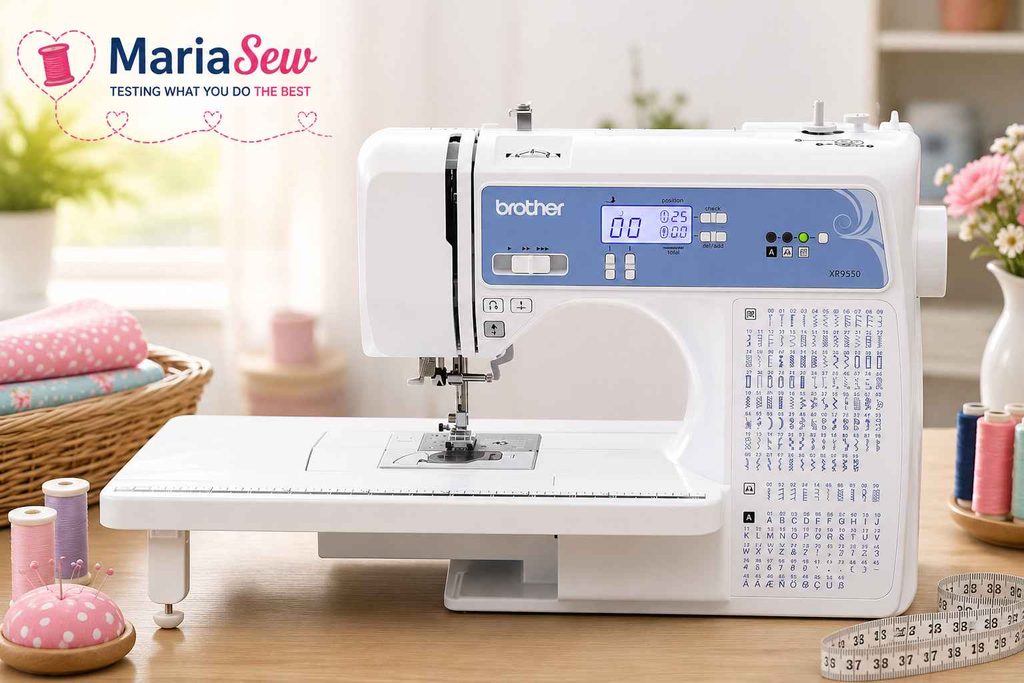
For those who desire more creativity, the Brother XR9550 is a better choice. There are 165 total stitch options: utility, decorative, quilting, alphanumeric, and 8 auto-size buttonholes. It comes in handy for personalized gifts, quilt labels, decorative borders, craft projects, and those who wish to try something new.
While the XR9550 can be a beginner’s machine, it has more features than a simple starter machine, so extremely new sewists might need additional time to read the manual. It’s ideal for ambitious beginners, intermediate users, quilters, and crafters who are looking for more options but don’t want to invest in professional equipment.
Reason to Buy
- Very easy to use for beginners
- Excellent stitch selection
- Great for quilting
- Wide extension table
- Quiet operation
- Lightweight and portable
- Adjustable sewing speed
- Automatic needle threader
- Clear LCD display
- Good value for the price
- Strong long-term reliability from many owners
Reason To Avoid
- Struggles with very thick fabrics and heavy seams
- Automatic needle threader can be frustrating
- Needle light could be brighter
- Some users find the machine somewhat plasticky
- Not advanced enough for experienced sewists looking for professional features
- Some users reported issues with the included quilting setup, such as the lack of a 1/4-inch seam guide
Final Recommendation
The Brother XR9550 is a very good choice for beginners, hobby sewers, and home quilters. The customer feedback consistently highlights its easy operation, useful stitch selection, speed control, wide table, and smooth, quiet performance. With 4.6/5 from 4,737 global ratings, the overall buyer response is strongly positive.
Its main limitation is heavy-duty sewing. If you regularly work with very thick fabrics or want advanced professional-level features, this isn’t the machine I’d choose. For everyday sewing, quilting, crafts, and learning, however, the XR9550 offers excellent value and is easy to recommend.
Our Rating: 9.1/10 — Excellent for Beginners & Quilting | Great Value | Easy to Use | Quiet & Versatile | Not Ideal for Heavy-Duty Sewing
5. Brother CP100X – Best Mid-Range Brother Computerized Sewing Machine for Dependability
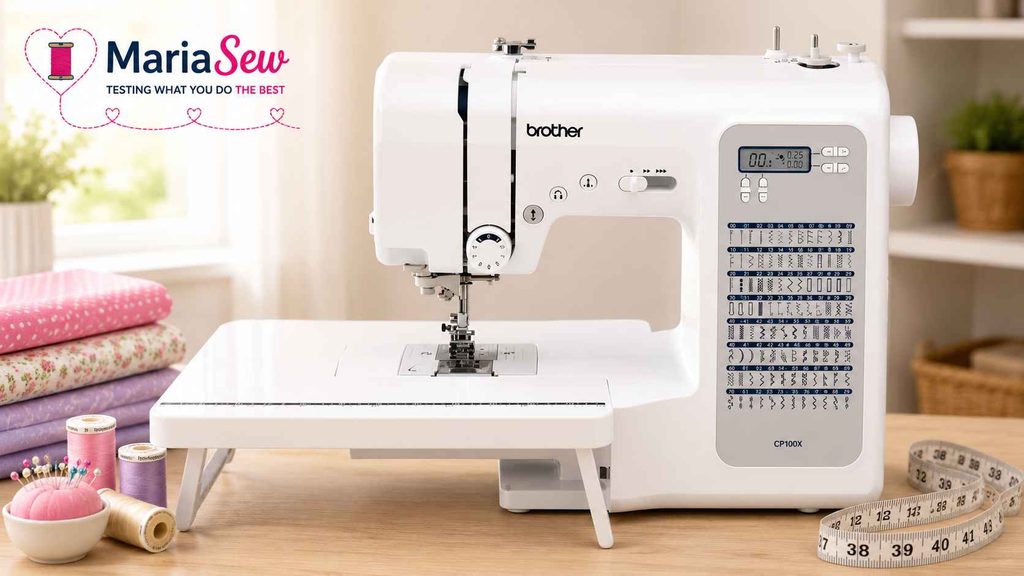
For sewists who desire more stitch options than the Brother 100X but fewer than the Brother 120X, the Brother CP100X is a better choice. It offers 100 built-in stitches and 8 auto-size buttonholes, providing a wider range of creativity without sacrificing ease of use for home sewing, quilting practice, and everyday projects.
If you are looking for a good computerised machine for regular use, but you don’t need embroidery or more advanced smart functions, then this model is worth considering. When combined with the appropriate needle, thread, and fabric management, it is a convenient solution for mending garments, easy quilting, handicrafts, bags, and home decor.
Learn more in our detailed Brother CP100X review.
The main drawback is that the lightweight construction comes with some compromises. One buyer specifically reported that it struggles with heavy fabric, while another criticized the machine’s plastic components. There are also occasional complaints about the bobbin winder, automatic threader, and fabric getting stuck.
Pros
- 100 built-in stitches
- Beginner-friendly controls
- Adjustable sewing-speed slider
- Lightweight and easy to transport
- Good for both sewing and quilting
- Large extension table for bigger projects
- Quiet operation
- Easy-to-use drop-in bobbin
- Good value for the price
- Suitable for beginners through intermediate users
- Several long-term owners report making multiple quilts and projects without major problems
Cons
- Not the best choice for consistently sewing heavy fabrics
- Lightweight construction may feel less substantial than heavier machines
- Some plastic components may not feel as durable
- Automatic needle threader can take some practice
- Some users report uneven bobbin winding
- Occasional reports of fabric getting stuck
- No automatic thread cutter
- Extension table may feel small for serious quilting projects
Final Recommendation
I recommend the Brother CP100X for beginners, hobby sewers, garment makers, and casual quilters. It offers an impressive amount of functionality without being intimidating, and the customer feedback strongly supports its value.
However, don’t buy this machine if your main priority is heavy-duty sewing or regularly working with very thick materials. In that situation, spending more on a heavier-duty machine would make more sense.
Our Rating: 9.0/10 — Best for Beginners & Everyday Sewing | Great for Quilting | 100 Built-In Stitches | Lightweight & Easy to Use | Not Ideal for Heavy-Duty Fabrics
6. Brother HC1850 – Best Brother Computerized Sewing Machine for More Stitches and Advanced Hobby Sewing
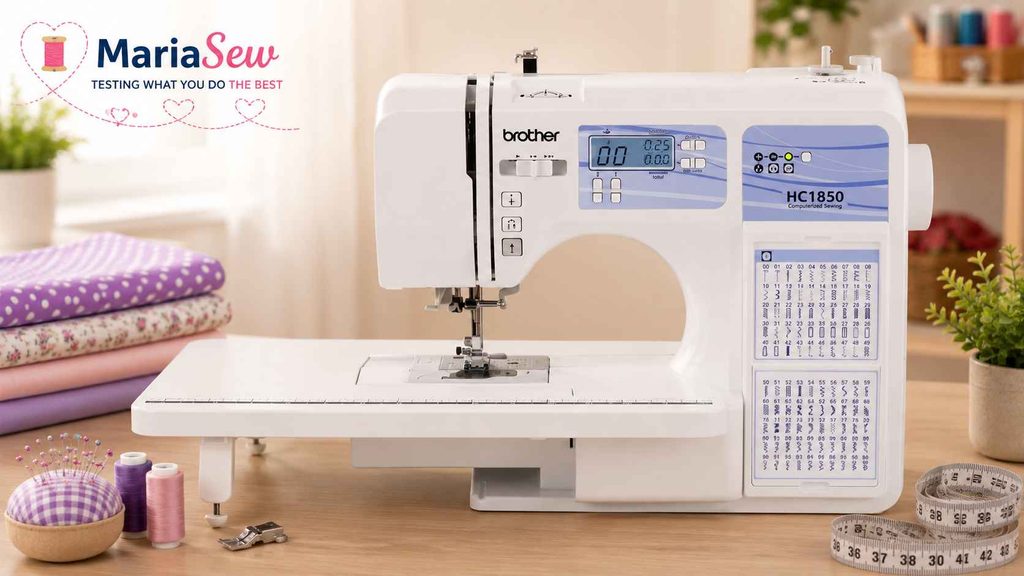
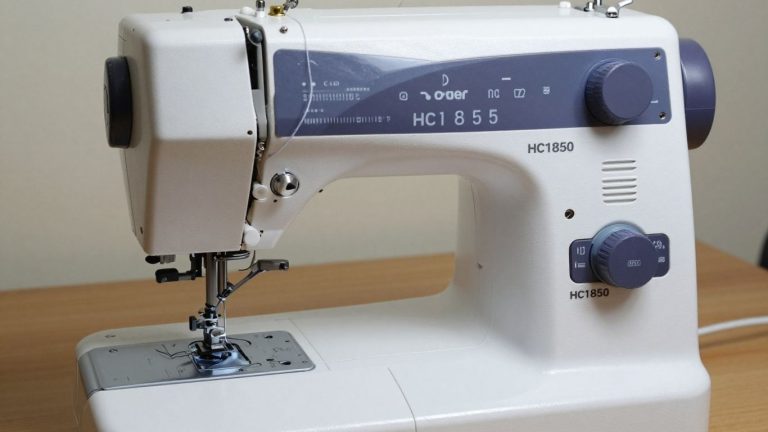
The Brother HC1850 is created for sewers who desire a bigger stitch library and more creative versatility. It comes with 185 total stitches, including alphanumeric stitches and several different buttonhole styles, and is ideal for decorative sewing, monogram-style lettering, quilting, heirloom-style accents, and other more involved craft projects.
This model is most appropriate for users who are aware that they will be utilizing the additional stitch variety. If you need only simple repairs, it may be more than you need. However, if you’re looking for a Brother computerized sewing machine that can take a lot of different creative paths, the HC1850 is one of the more versatile options in this category.
Reason To Buy
- Easy to use: Multiple buyers praise the straightforward setup and intuitive controls.
- Excellent stitch selection: The 100 built-in stitches give beginners and experienced users plenty of creative options.
- Great for quilting and garment sewing: Buyers report good results with clothing, quilting, crafts, and larger projects.
- Beginner-friendly speed control: The adjustable speed slider makes it easier for new sewers to learn without running the machine too fast.
- Lightweight and portable: Its relatively light build makes it convenient for classes, retreats, and moving between sewing areas.
- Useful computerized features: LCD display, automatic needle threading, drop-in bobbin, and stitch guidance simplify everyday sewing.
Cons
- Not ideal for heavy-duty sewing: Some buyers specifically warn that it isn’t the best choice for denim, vinyl, or heavy upholstery materials.
- Lightweight construction isn’t for everyone: One experienced sewer felt the machine was too light and preferred a sturdier machine for heavier work.
- Small lettering: The monogramming/lettering is useful, but buyers note that the font size is limited.
- Some accessories may vary by package: Buyer feedback indicates that the included accessories should be checked against the specific listing.
- Limited throat space for serious quilting: One experienced reviewer felt serious quilters may eventually want a larger machine with more throat space.
Final Recommendation
The Brother HC1850 is one of the better choices for beginners and intermediate sewers who want a versatile computerized machine without jumping into a much more expensive quilting machine. Its combination of easy controls, 100 built-in stitches, speed control, wide table, and useful computerized features makes it particularly appealing for everyday sewing, garments, crafts, and lighter quilting. The strong 4.6/5 rating across more than 5,000 global ratings also supports its overall reputation.
The main reason I wouldn’t recommend it to everyone is its lightweight design. If your priority is regularly sewing thick denim, vinyl, upholstery, or other demanding materials, I’d choose a heavier-duty machine instead. But for beginners, garment makers, hobbyists, and quilters who value portability and ease of use, the HC1850 is a very solid buy and earns our recommendation.
Best Brother Model by User Type
| User Type | Best Match | Why It Fits |
|---|---|---|
| Complete beginner | Brother CS5055 or CS7000X | Simple controls, manageable stitch count, and enough features for learning. |
| Beginner quilter | Brother CS7000X | Often includes a wide table and quilting-friendly accessories. |
| Budget-focused sewist | Brother CS6000i or CS5055 | Good basic features without advanced complexity. |
| Creative crafter | Brother XR9550 | Lettering and 165 total stitch options support personalization. |
| Growing hobby sewist | Brother CP100X or HC1850 | More stitch options and room to grow. |
| Embroidery user | Brother SE or PE series, not these models | The listed machines are sewing/quilting machines, not dedicated embroidery machines. |
Brother Computerized Sewing Machine: Pros and Cons
Pros
- Digital stitch selection makes choosing stitches faster and easier than using multiple mechanical dials.
- Many models include beginner-friendly features such as drop-in bobbins, needle threaders, LCD screens, and automatic buttonholes.
- A wide stitch range supports sewing, repairs, quilting, crafts, and decorative projects.
- Speed control on select models helps beginners sew slowly and accurately.
- Brother machines often provide strong value through included accessories and approachable pricing.
Cons
- Computerized machines may be harder to repair at home than purely mechanical machines.
- More stitch options can overwhelm beginners if the interface is not understood.
- Not every model includes the same accessories, speed control, or automatic features.
- Most models in this guide are not suitable for heavy-duty industrial fabrics or true embroidery.
- Older or discontinued models may have limited availability, changing prices, or fewer warranty options.
How to Choose a Brother Computerized Sewing Machine
Choose Based on Skill Level
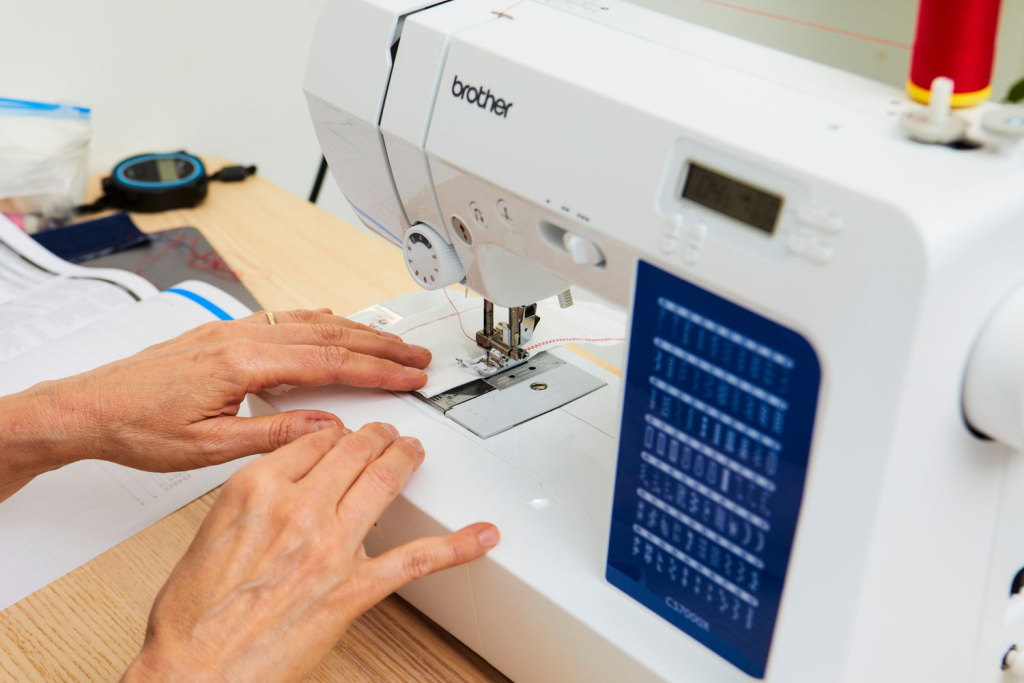
If you’re a beginner, look for easy threading, a clear LCD screen, a drop-in bobbin, easy stitch selection, and speed control if available. For learning purposes, a machine with 60 to 70 stitches is generally sufficient. Intermediate users might want to use 100+ stitches, additional buttonhole styles, quilting feet, and lettering.
For the advanced hobby sewer, consider space, accessory compatibility, stitch memory, fabric handling, and even whether they need embroidery. If you want to embroider, then you should use a Brother embroidery machine or a combination machine instead of a regular computerized sewing machine.
If you’re still selecting your first machine, our guide to the best sewing machines for beginners can help narrow down the options.
Choose Based on Project Type
Usually, a simple computer model is sufficient for repairs and hemming. When selecting a sewing machine for garments, consider the buttonhole feature, adjustable stitch length and width, zipper foot, and speed control. When choosing a table for quilting, the first thing you want is an extension table, throat space, a walking foot, a quilting foot, and fabric support.
If your projects often involve alterations, learning how to hem pants or how to hand sew a hem can help you get more value from your machine.
A model that has decorative stitches and alphanumeric stitches is more useful for crafts and personalization. When using a machine for heavy fabrics, consider the power of the motor, needle compatibility, presser foot pressure, and whether the machine is rated for heavier fabrics.
Choose Based on Workspace and Portability
A lightweight machine is helpful if you store your machine after each use or take it to classes. If you have a sewing table, a larger machine, or a machine equipped with an extension table will be more suitable. Consider your household configuration prior to picking a model.
Computerized machines should be kept in a clean, dry area, away from dust. It is helpful to have a hard case or dust cover, particularly if the machine is electronically controlled. When you are sewing in a small apartment or shared room, compact design could be as important as stitch count.
Consider investing in one of the sewing machine carrying cases to protect your machine during storage or travel.
Choose Based on Budget
Establish a reasonable budget that covers needles, thread, fabric, bobbins, presser feet, stabilizer, maintenance, and possibly an extension table. An inexpensive machine might not be the cheapest in the long run if you have to purchase missing parts right away.
Pricing may vary by season, so be sure to check out bundles in the current season. Occasionally, the higher price is for a wider table, extra feet, and a hard case, which makes it a better value than the lowest price.
Common Buying Mistakes to Avoid
| Mistake | Why It Matters | Better Approach |
|---|---|---|
| Buying only by stitch count | Many users never use most decorative stitches. | Match stitches to actual projects. |
| Assuming all computerized machines embroider | Sewing machines and embroidery machines are different. | Choose SE/PE models for embroidery. |
| Ignoring accessories | Included feet and tables affect the real value. | Compare full bundle contents. |
| Forgetting fabric type | Light machines may struggle with thick layers. | Match the machine to the fabrics you sew most. |
| Skipping the manual | Computerized features need a correct setup. | Read threading, bobbin, buttonhole, and maintenance instructions. |
| Expecting automatic tension on every model | Many models still use manual tension settings. | Check the exact model specs before buying. |
Maintenance Tips for Brother Computerized Sewing Machines
Even though sewing machines are computerised, they still require regular maintenance. Remove lint from the bobbin area, change needles frequently, use quality thread, and cover the machine when not in use. Don’t push through the machine too much because it may bend the needles, cause timing problems, or cause the motor to strain.
Use the manual to follow the oiling instructions, as many modern Brother machines do not need to be oiled by the user as much as the mechanical machines did. If you sew often or see skipped stitches, strange noises, or tension issues that don’t get better after rethreading and changing the needle, get professional service.
Is a Brother Computerized Sewing Machine Worth It?
If you prefer to have a smoother learning curve, more options for projects, cleaner buttonholes, and simpler stitch selection than many mechanical sewing machines can offer, then a Brother computerized sewing machine is worth it. It is best for those new to sewing and for hobby sewists who wish to expand their sewing space.
However, it is not necessary for everyone. If you only need to make occasional repairs, then a simple mechanical machine may suffice. For embroidery, select a Brother machine that is embroidery compatible. For heavy fabrics, a heavy-duty or industrial machine might be more suitable if you are sewing with them on a regular basis. The right choice is based on the actual work to be performed.
Final Recommendation
If you’re looking for the best overall combination of ease of use, quilting assistance, and value, you should consider the Brother CS7000X. If you’re looking for a more basic computerized sewing machine for casual home sewing, opt for the Brother CS5055. If you’re looking for lettering, additional decorative stitches, and a powerful, creative feature set, select the Brother XR9550.
If you need more space to expand, the Brother CP100X and HC1850 are good options; if you already own the CS6000i, or you can still find one, it’s still a worthwhile comparison. Check the existing specifications, accessories, warranty, and the retailer’s package before purchasing to ensure the machine you order is suitable for your sewing objectives.
Frequently Asked Questions
Are Brother computerized sewing machines good for beginners?
Yes. Many Brother computerized sewing machines are beginner-friendly because they use LCD screens, simple stitch buttons, drop-in bobbins, and built-in needle threaders. Beginners should choose a model with clear controls rather than the highest stitch count.
Is the Brother CS7000X better than the CS6000i?
For many buyers, the CS7000X is the better current choice because it offers 70 stitches and updated features compared with the older CS6000i. However, the CS6000i can still be useful if you already own it or find it in good condition.
Can these Brother machines do embroidery?
The models discussed here are mainly sewing or sewing-and-quilting machines. They do not create true hoop embroidery designs. For embroidery, look at Brother SE or PE series machines.
How many stitches do beginners really need?
Most beginners can complete common projects with 20 to 70 stitches. Extra stitches are useful for decoration, quilting, and lettering, but they are not required for basic sewing.
Can a Brother computerized machine sew denim?
Many can handle light to medium denim with the correct needle and slower speed. Thick denim seams, heavy canvas, leather, or industrial work may require a stronger heavy-duty machine.
Do computerized machines need more maintenance?
They need regular cleaning and proper handling like any sewing machine. Because they include electronic controls, avoid moisture, dust buildup, and rough storage. Professional servicing may be needed for internal issues.
What is the difference between a sewing machine and a sewing-and-quilting machine?
A sewing-and-quilting machine usually includes quilting-friendly features such as a wide table, quilting feet, or more workspace. It still sews regular projects, but may be better for larger fabric pieces.
Is the built-in needle threader fully automatic?
On many Brother models, the needle threader is a lever-assisted feature rather than a fully automatic electronic system. It helps thread the needle, but still needs a correct setup.
What accessories should I look for?
Useful accessories include a zipper foot, buttonhole foot, overcasting foot, walking foot, quilting foot, 1/4 inch piecing foot, bobbins, needles, seam ripper, extension table, and a protective case.
Which Brother computerized sewing machine is best for quilting?
The Brother CS7000X is a strong beginner quilting choice, while the XR9550 and HC1850 offer more stitch variety for decorative quilting and creative projects.