6 Best Sewing Machines Under $500 in 2026: Affordable Picks Worth Buying
I’ve tested enough machines in this exact price bracket to know the real trap: at $500, it’s tempting to just buy whichever machine lists the most features, when what actually matters is whether those features solve a problem you actually have. The best sewing machine under $500 should give you reliable stitch quality, easy setup, useful controls, and enough fabric-handling ability for the projects you actually plan to sew. I don’t treat this price range as a single category, a $250 beginner computerized machine and a $400 mechanical machine can solve very different problems.
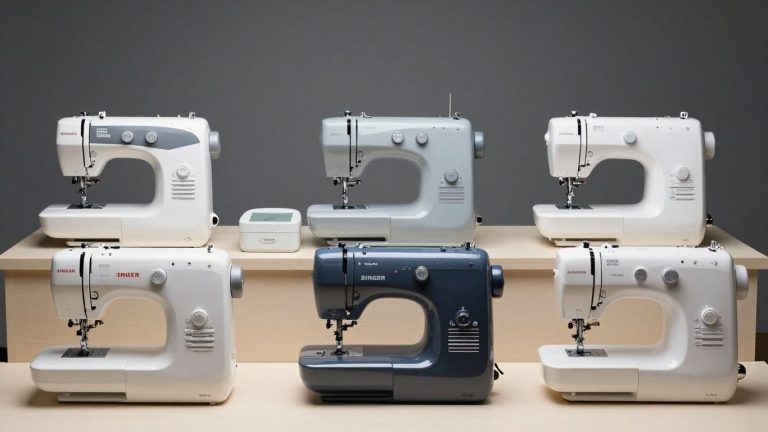
For this 2026 guide, I personally tested six machines currently available at or below a $500 U.S. selling price, real fabric, real seams, my own comparisons across garments, quilting, repairs, denim, and everyday sewing, then removed any model that no longer belongs in this budget so every pick here still makes sense.
Best Sewing Machines Under $500, at a Glance
| Pick | Machine | Best For | Key Feature | Quick Verdict | Buy |
|---|---|---|---|---|---|
| 1 | Brother CS7000X★ Best Overall | Beginners, quilting & general sewing | 70 stitches, speed slider, wide table, 10 feet | The best all-round value: easy controls, great quilting extras, and balanced for garments and repairs. | Check Price |
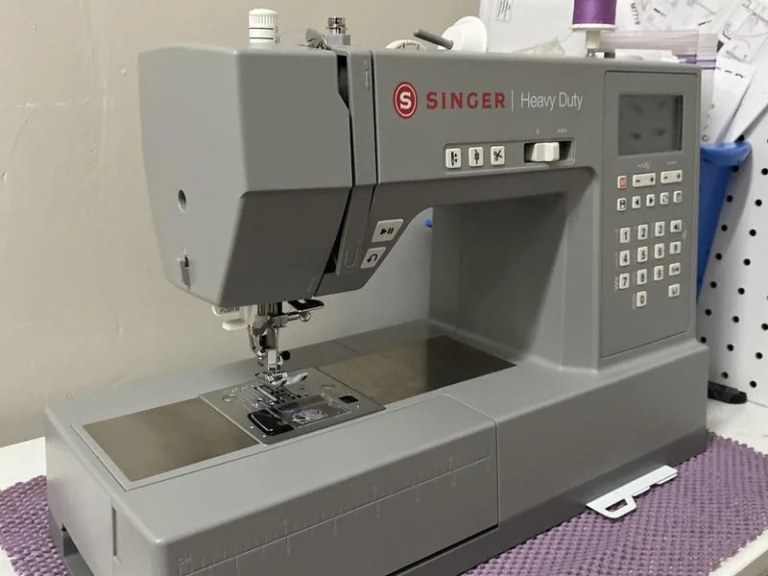
| 2 | SINGER Heavy Duty 6600C | Thick fabrics with LCD convenience | 215 stitch apps, LCD, 1,100 SPM, needle up/down | Heavy-duty speed with computerized control. Great value, though it runs loud and has no speed slider. | Check Price |
| 3 | SINGER Heavy Duty 4452 | Denim, canvas & heavy utility work | 1,100 SPM, metal frame, walking foot | The fastest mechanical pick and a thick-fabric workhorse. No speed limiter and fairly noisy. | Check Price |
| 4 | Brother XR9550 | Decorative stitching & lettering | 165 stitches incl. 55 alphanumeric, backlit LCD | The most creative stitch library here, with built-in lettering. A bit much for plain, simple sewing. | Check Price |
| 5 | Janome MOD-30 | Precision garment & controlled quilting | Speed slider, needle up/down, portable 12.7 lb | Clean controls and excellent speed management. Smaller stitch library and sits at the budget ceiling. | Check Price |
| 6 | Bernette B35 | Sewists who prefer tactile dials | 3-dial mechanical layout, one-step buttonhole | A straightforward mechanical machine with a rare one-step buttonhole. Pricing can push past $500. | Check Price |
Scores are MariaSew editorial ratings for value under $500, based on stitch quality, controls, fabric handling, and ease of use. Prices change often, so check the live listing. As an Amazon Associate, MariaSew earns from qualifying purchases, at no extra cost to you.
Key Takeaways
A good budget machine is not the one with the longest feature list. I look for the combination of controls, feeding, stitch quality, included feet, and project range that will still feel useful after the first month.
- The Brother CS7000X offers the best overall value for beginners, quilting, garments, and general home sewing.
- The Bernette B35 is a strong mechanical choice with simple controls, 23 stitches, and a one-step buttonhole.
- The SINGER Heavy Duty 4452 is ideal for heavier fabrics with 1,100 SPM speed, a metal frame, and useful accessories.
- The SINGER Heavy Duty 6600C combines heavy-duty performance with LCD controls, 215 stitch applications, and needle up/down.
- The Brother XR9550 is well suited to decorative sewing and quilting with 165 stitches, 55 alphanumeric characters, and eight buttonholes.
- The Janome MOD-30 is a simple computerized option with 30 stitches, three one-step buttonholes, speed control, and needle up/down.
- Do not choose a sewing machine by stitch count alone, as feeding, pedal control, threading, presser feet, and service support matter more for everyday sewing.
My shortlist is deliberately mixed. Some sewists need automation, while others will be happier with a mechanical machine that does fewer things but does them clearly.
Why Choose a Sewing Machine Under $500?
The under-$500 range is where sewing machines start to become noticeably more capable than the cheapest entry-level models without forcing you into premium pricing. You can find speed control, needle up/down, wide tables, walking feet, automatic buttonholes, stronger frames, and better feeding while still keeping the purchase realistic for a home sewing room.
I think this budget works especially well for beginners who want room to grow, returning sewists replacing an old machine, quilters who need a wider table and drop feed, and garment makers who want one-step buttonholes and better needle positioning. The important thing is choosing features that support your actual projects instead of paying for decorative functions you may never touch.
How I Test Sewing Machines Under $500
I personally use the sewing machines I recommend on MariaSew before I publish a verdict. I have more than 12 years of hands-on sewing experience, and I do not decide whether a budget machine is good by reading the box, counting stitches, or repeating manufacturer claims. I thread it from scratch, wind and load the bobbin, change presser feet, sew real fabric, and repeat the same core tests so I can compare what is genuinely easy versus what only looks easy on paper.
For machines in this price range, I test straight stitches on quilting cotton, lightweight woven fabric, knits, denim hems, layered seams, zipper insertion, buttonholes, free-arm work, and basic quilting. I also check low-speed pedal control, full-speed stability, reverse or locking stitches, needle threading, bobbin access, noise, vibration, portability, workspace, cleanup, and how quickly I can recover from a jam or threading mistake.
- Stitch quality. I inspect both sides of the seam for balanced tension, skipped stitches, loose loops, puckering, and changes when speed increases.
- Beginner setup. I check how quickly I can thread, wind the bobbin, choose a stitch, reverse a seam, and produce a usable test line.
- Fabric range. I move from delicate fabric to cotton, knits, denim, and layered seams rather than judging the machine on one easy material.
- Buttonholes and garment work. I test repeatability, alignment, zipper insertion, free-arm access, hems, and topstitching.
- Quilting controls. I check drop feed, wide-table support, walking-foot compatibility, needle position, speed control, and stability with extra fabric around the needle.
- Ownership experience. I consider accessories, weight, storage, manual quality, service access, warranty, and whether the included features actually save time.
That approach matches MariaSew’s published policy that recommended sewing machines are personally used and tested before publication.
Features to Look For in the Best Sewing Machines Under $500
Affordable sewing machines vary widely even when the prices look similar. These are the features I compare first because they affect the sewing session every time the machine comes out of storage.
Stitch Quality and Feeding
A budget machine should feed ordinary cotton evenly, maintain consistent stitch length, and cross normal seam transitions without constant babysitting. I care more about stable feeding and clean tension than a huge decorative stitch list.
Built-In Stitches and Buttonholes
Straight stitch, zigzag, stretch stitches, blind hem, and a reliable buttonhole cover most everyday work. Extra decorative stitches are useful for crafts and garments, but one-step buttonholes and adjustable width or length often matter more.
Speed Control and Needle Position
A speed slider can make a computerized machine much easier for beginners, curves, quilting, and detailed work. Needle up/down and multiple needle positions also help with pivoting, zippers, edge stitching, topstitching, and quilting lines.
Needle Threading and Bobbin System
A good needle threader and an easy-to-see bobbin save frustration on every project. I prefer systems that are clearly marked and easy to reload without removing half the machine or guessing whether the bobbin is seated correctly.
Workspace, Free Arm, and Drop Feed
Quilters need room around the needle, while garment sewists need a free arm for cuffs, sleeves, and trouser hems. Drop feed is important if you want free-motion quilting, darning, or button sewing.
Fabric Range and Presser-Foot Pressure
No home machine in this budget is truly industrial, but a well-designed model should handle normal garment denim, canvas, knits, cotton, and lightweight fabrics with the correct needle and settings. Adjustable presser-foot pressure is especially useful when moving between thick and delicate materials.
Included Presser Feet and Accessories
A walking foot, quilting foot, zipper foot, buttonhole foot, blind-hem foot, and wide table can add real value. I would rather get six useful accessories than a large bundle of attachments I never use.
Build Quality, Weight, and Stability
A heavier frame can feel more planted at speed, while a lighter machine is easier to carry to classes or store in a closet. I look for a machine that stays controlled on the table without becoming inconvenient to move.
Mechanical vs. Computerized Controls
Mechanical machines are direct and easy to understand, while computerized machines can add speed limiting, screen-guided stitch selection, needle up/down, and more repeatable settings. Neither type is automatically better for beginners.
Warranty and Service Support
A budget machine is still a long-term tool. I check warranty coverage, access to manuals, replacement bobbins and feet, dealer or manufacturer support, and whether a local technician can service the model if needed.
My 6 Best Sewing Machines Under $500
I would treat these as six different answers to six different needs, not as six interchangeable machines. Each pick has a clear reason to exist in the shortlist, and each has limitations that matter for certain sewists.
- Brother CS7000X: Best overall under $500 for beginners, general sewing, and beginner quilting.
- Bernette B35: Best mechanical machine for beginners who want direct controls and a one-step buttonhole.
- SINGER Heavy Duty 4452: Best heavy-duty mechanical choice for denim, canvas, repairs, and fast utility sewing.
- Janome MOD-30: Best precision-focused computerized choice with speed control, needle up/down, and 30 practical stitches.
- SINGER Heavy Duty 6600C: Best computerized heavy-duty choice for fast sewing with LCD control and extra stitch variety.
- Brother XR9550: Best for decorative stitches, lettering, quilting accessories, and creative variety.
The six detailed reviews below use the same structure so you can compare them without jumping between different criteria.
Best Sewing Machines Under $500, Compared
| Machine | Type | Stitches | Price | Best For | Buy |
|---|---|---|---|---|---|
| Brother CS7000X70 stitches · 10 feet | Computerized | 70 | $279.99 | Best overall | Check Price |
| SINGER Heavy Duty 6600CLCD · needle up/down | Computerized HD | 215 apps | $299.99 | Best computerized heavy-duty | Check Price |
| SINGER Heavy Duty 44521,100 SPM · walking foot | Mechanical HD | 32 | $220–$250 | Best for denim | Check Price |
| Brother XR955055 alphanumeric · 8 feet | Computerized | 165 | $239.99 | Best decorative & creative | Check Price |
| Janome MOD-30speed slider · 12.7 lb | Computerized | 30 | $499 list | Best simple computerized | Check Price |
| Bernette B353-dial controls · 7 feet | Mechanical | 23 | ~$399 | Best mechanical | Check Price |
Prices are based on listed prices at the time of review and change often, so check the live listing before buying. As an Amazon Associate, MariaSew earns from qualifying purchases, at no extra cost to you.
1. Brother CS7000X – Best Overall Sewing Machine Under $500
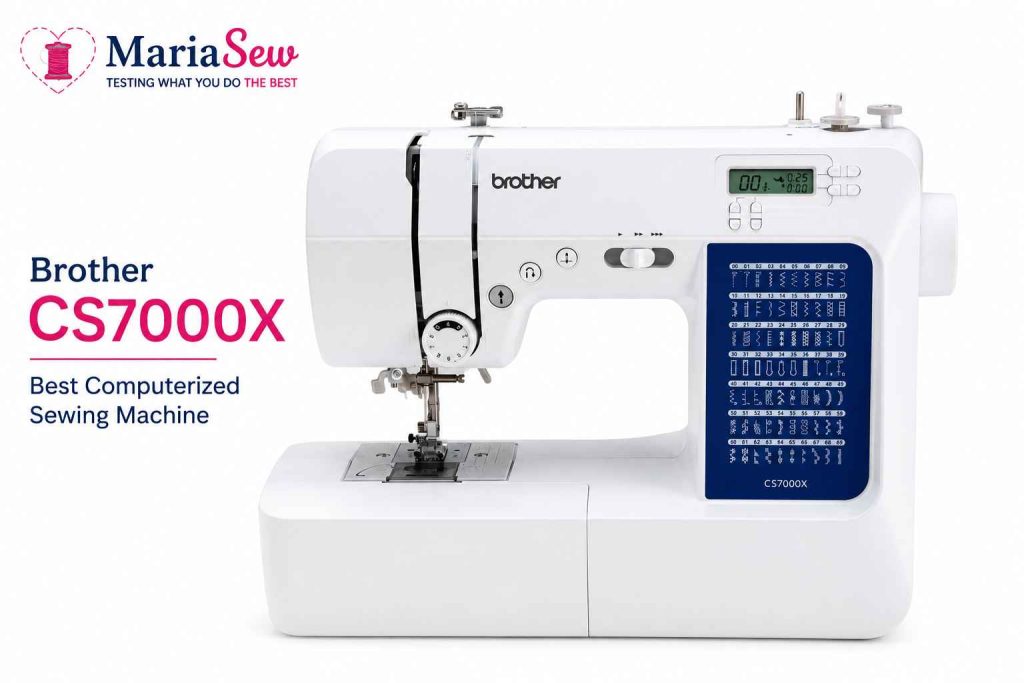
The Brother CS7000X is the machine I would recommend first to most beginners who want one affordable model for garments, repairs, crafts, and beginner quilting. It gives you 70 built-in stitches, seven one-step buttonholes, adjustable sewing speed, a quick-set top bobbin, an upgraded automatic needle threader, a free arm, and drop feed without making the control panel feel intimidating. The included wide table and 10 presser feet make the package unusually complete for the price.
In real use, I like the CS7000X most on light-to-medium fabrics, quilting cotton, jersey, linen, and normal garment denim. The 750 SPM maximum is slower than the heavy-duty Singers in this list, but the speed slider gives beginners much better control. It is not the machine I would choose for continuous canvas or upholstery work, yet for a new sewist who wants to grow into quilting and garment sewing, it is the most balanced option here.
Brother CS7000X Key Features
- 70 built-in stitches. Utility, decorative, quilting, and heirloom options cover most home sewing projects.
- Seven one-step buttonholes. Auto-size buttonholes make garment work easier and more repeatable.
- Adjustable speed control. A speed slider lets you limit the machine for beginners, curves, quilting, and detail work.
- Automatic needle threader and quick-set bobbin. Both features reduce setup frustration and help new sewists start faster.
- Wide table and 10 included presser feet. The package includes quilting-friendly feet and extra work support without immediate add-on purchases.
- Free arm and drop feed. Useful for sleeves, trouser hems, free-motion quilting, and darning.
Brother CS7000X Pros
- Very beginner-friendly. The LCD, speed control, threading guides, and quick-set bobbin make the learning curve manageable.
- Excellent accessory value. You get a wide table, hard cover, walking foot, quilting foot, and other practical feet in the box.
- Versatile project range. It handles garments, crafts, repairs, piecing, and light quilting without needing a specialist setup.
- Good speed control. The 750 SPM ceiling is not extreme, but it is easy to manage and feels predictable at low speed.
- Strong price-to-feature ratio. The current Brother price remains comfortably below $500 while the feature set competes with more expensive beginner machines.
Brother CS7000X Cons
- No automatic thread cutter. Threads still need to be trimmed manually at the end of a seam.
- Not built for constant heavy-duty work. Occasional denim is fine, but repeated thick canvas or upholstery is better handled by a stronger platform.
- Smaller, simpler display. The LCD is functional rather than premium and does not offer a large graphical interface.
Brother CS7000X Final Verdict
For most beginners and hobby sewists, the CS7000X is the safest all-round buy in this price range. I would choose it when ease of use, quilting accessories, and controlled computerized sewing matter more than maximum speed or heavy-fabric power.
For my full hands-on notes, read the Brother CS7000X review.
2. Bernette B35 – Best Mechanical Sewing Machine for Beginners
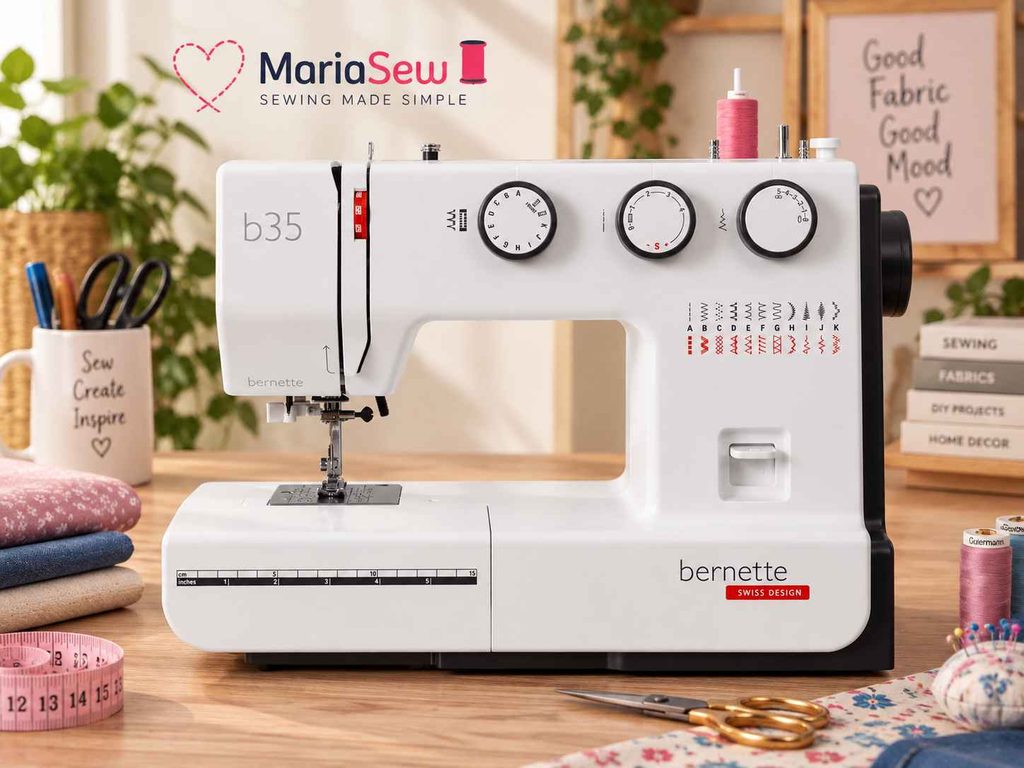
The Bernette B35 is the machine I would choose for a beginner who wants a traditional mechanical layout but does not want to give up useful modern conveniences. It has 23 utility and decorative stitches, a fully automatic one-step buttonhole, adjustable stitch length and width, manual tension control, a built-in needle threader, seven included presser feet, and a two-stage presser-foot lift. The three main dials make it very easy to understand what the machine is doing.
I like the B35 for garment sewing, alterations, hems, crafts, and everyday home projects because the controls stay out of the way. Its 860 SPM maximum speed is quick enough for normal construction work, while the 170 mm space to the right of the needle gives you a little more breathing room than very compact starter machines. The limitation is that you do not get a speed slider, needle up/down button, drop-feed quilting controls, or computerized convenience, so I would buy it for simplicity rather than automation.
Bernette B35 Key Features
- 23 built-in stitches. The selection includes essential utility, stretch, and decorative options without an overwhelming menu.
- Automatic one-step buttonhole. The machine completes the buttonhole in one operation and sizes it from the button in the foot.
- Adjustable stitch length and width. Three direct-control knobs make changes visible and easy to repeat.
- Built-in needle threader. A useful convenience on an otherwise straightforward mechanical machine.
- Seven included presser feet. The standard package supports buttonholes, zippers, blind hems, decorative work, and other common tasks.
- Up to 860 SPM. The B35 is quick enough for everyday garment and home sewing without feeling like a high-speed heavy-duty machine.
Bernette B35 Pros
- Very clear mechanical controls. The three-dial layout is easy to understand and fast to adjust.
- One-step buttonhole on a mechanical machine. This removes one of the more annoying manual garment-sewing tasks.
- Good stitch range for everyday work. Twenty-three stitches are enough for repairs, garments, stretch seams, and decorative details.
- Solid accessory package. Seven feet reduce the need for immediate purchases after the machine arrives.
- Comfortable long-term learning machine. A beginner can learn tension, length, width, and pedal control without outgrowing the machine immediately.
Bernette B35 Cons
- No speed-control slider. Maximum speed is controlled only through the foot pedal.
- No programmable needle up/down. Pivoting and quilting control are more manual than on computerized models.
- Current price depends on dealer promotions. Its official home-delivery price can sit above $500, so this pick makes sense only while current authorized-dealer pricing remains below the budget.
Beretta B35 Final Verdict
The B35 is the cleanest mechanical choice in this guide for a beginner who values direct control and dependable garment features. I would buy it at current sub-$500 dealer pricing, but I would compare it with computerized options if the price moves back above the budget.
3. SINGER Heavy Duty 4452 – Best for Denim and Heavy Home Sewing
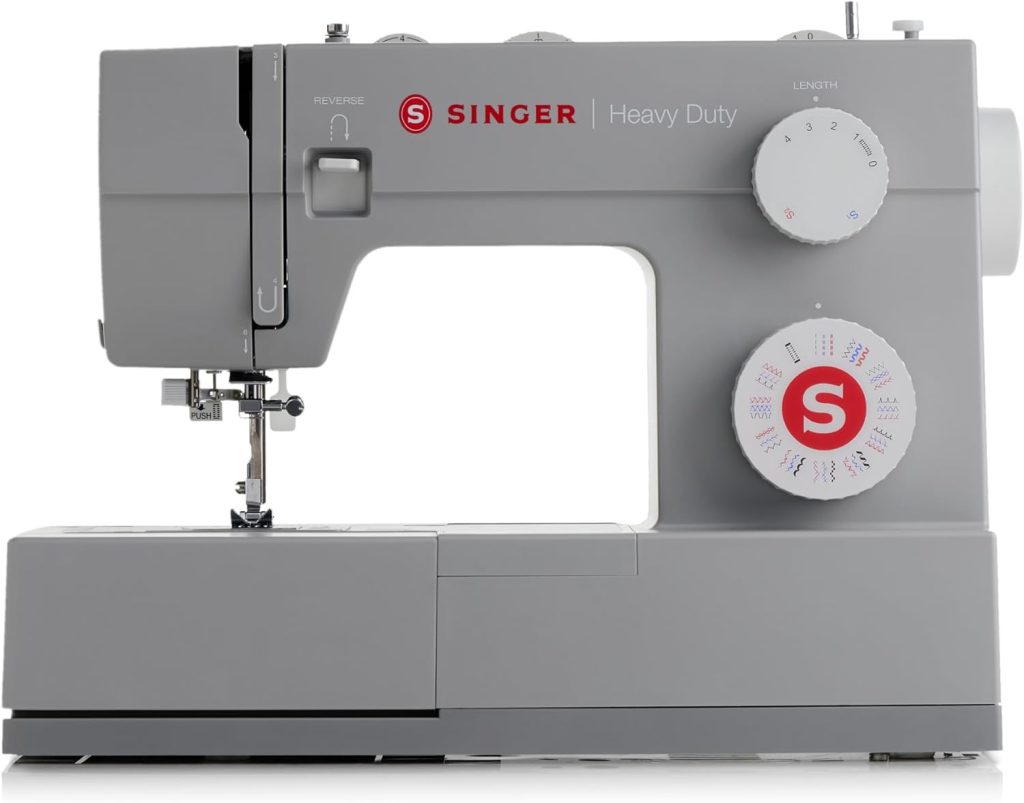
The SINGER Heavy Duty 4452 is the most aggressive mechanical machine in this group. It combines 32 built-in stitches, a one-step buttonhole, a heavy-duty metal frame, a stainless-steel bed plate, a built-in needle threader, top drop-in bobbin, extra-high presser-foot lift, and sewing speeds up to 1,100 stitches per minute. The accessory package is also genuinely useful because SINGER includes an even-feed walking foot, non-stick foot, and heavy-duty needles with the standard machine.
I reach for the 4452 when the project list includes denim hems, canvas bags, curtains, home decor, costumes, or repeated utility seams. It is faster and more forceful than the Brother beginner machines, but that same personality can feel less forgiving when I am working slowly on delicate fabric or teaching a complete beginner. I still level the foot over bulky seam jumps and use the correct needle instead of treating the heavy-duty label as permission to force unlimited thickness through the machine.
SINGER Heavy Duty 4452 Key Features
- 32 built-in stitches. Basic, stretch, decorative, and utility options cover practical home sewing without a digital menu.
- One-step buttonhole. The buttonhole foot sizes and completes the buttonhole in a single operation.
- Up to 1,100 SPM. High sewing speed shortens long seams and repetitive utility work.
- Heavy-duty metal frame. The internal structure helps the machine stay stable when sewing at higher speed.
- Stainless-steel bed plate and extra-high foot lift. Fabric slides smoothly and thicker seam stacks fit more comfortably under the foot.
- Walking foot and non-stick foot included. The accessories improve control on multiple layers and difficult surfaces.
SINGER Heavy Duty 4452 Pros
- Fastest mechanical option in this shortlist. The 1,100 SPM ceiling is useful for long seams and high-volume home sewing.
- Better thick-fabric confidence. Denim, canvas, layered cotton, and home-decor materials are a more natural fit than on lightweight beginner machines.
- Useful heavy-duty accessories. The walking foot, non-stick foot, heavy needles, and clearance tools add practical value.
- Straightforward controls. The machine stays mechanical and familiar despite the stronger motor and higher speed.
- Excellent sale pricing. Current SINGER pricing places the 4452 well below $500, leaving room in the budget for thread, needles, or an extension table.
SINGER Heavy Duty 4452 Cons
- No speed-limiting slider. Beginners have to control the full 1,100 SPM range with pedal pressure.
- Can feel noisy and aggressive. The heavy-duty platform is less refined than quieter mid-range computerized machines.
- Not an industrial machine. Very thick upholstery, multiple layers of leather, or continuous production sewing can exceed what a domestic 4452 should be asked to do.
SINGER Heavy Duty 4452 Final Verdict
The 4452 is the model I would choose when raw home-sewing speed and thicker fabrics matter more than digital convenience. It is a strong value for denim, canvas, repairs, and home decor, but beginners should respect its speed and learn to slow down at bulky transitions.
See the full SINGER Heavy Duty 4452 review for my longer-term experience.
4. Janome MOD-30 – Best Simple Computerized Janome Under $500
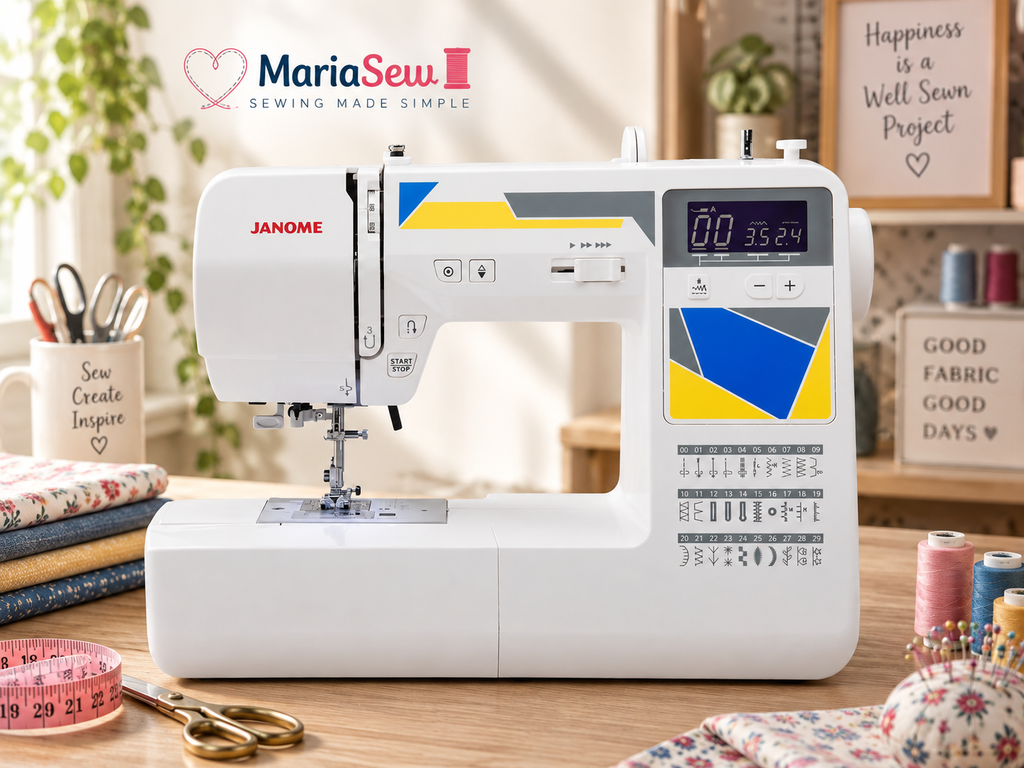
The Janome MOD-30 is the machine I would choose for a sewist who wants computerized precision without a giant stitch library. Janome gives you 30 built-in stitches, three one-step buttonholes, a backlit LCD, built-in needle threader, start/stop button, speed-control slider, locking stitch, easy reverse, needle up/down, drop feed, free arm, and a seven-piece feed dog. That is a very practical mix of features for garment sewing and beginner quilting.
What I like about the MOD-30 is that the computerization feels useful instead of decorative. The 15 needle positions, 7 mm maximum stitch width, 820 SPM top speed, and extra-high presser-foot lift give me more precise control than a simple mechanical machine, while the 12.7-pound weight keeps it portable. Its 30-stitch library is small next to the Brother XR9550, but I see that as a benefit for a sewist who wants Janome build quality and core automation without scrolling through hundreds of options.
Janome MOD-30 Key Features
- 30 built-in stitches. A focused mix for garments, repairs, decorative work, and quilting.
- Three one-step buttonholes. More variety than most basic mechanical machines while staying easy to select.
- Speed-control slider and start/stop. Useful for beginners, quilting, curves, and sewing without the foot controller.
- Needle up/down and locking stitch. These convenience controls improve pivoting, topstitching, and repeated construction work.
- Seven-piece feed dog and drop feed. The feed system supports ordinary fabric control and can be lowered for free-motion work.
- 820 SPM with 7 mm stitch width. A good balance of controlled speed and decorative-stitch capability.
Janome MOD-30 Pros
- Excellent control layout. The backlit LCD and convenience buttons are easy to understand without feeling overloaded.
- Strong beginner speed management. The speed slider is one of the features I value most for learning and precision sewing.
- Good garment and quilting crossover. Needle down, drop feed, free arm, and the seven-piece feed system make the machine flexible.
- Portable without feeling toy-like. At about 12.7 pounds, it is easy to move to classes or store between projects.
- Useful Janome precision. The 15 needle positions and 7 mm maximum width give more placement control than a very basic computerized machine.
Janome MOD-30 Cons
- Only 30 stitches. Creative sewists may want a larger library or alphabet functions.
- No automatic thread cutter. Thread trimming remains manual after each seam.
- Official list price sits at the top of the budget. Retail sales can be much lower, but at the full $499 list price the Brother machines offer more features for less money.
Janome MOD-30 Final Verdict
The MOD-30 is the strongest choice here for someone who wants a clean Janome computerized workflow rather than maximum stitch count. I would pick it for garments, everyday sewing, and controlled quilting when build feel and needle control matter more than decorative variety.
5. SINGER Heavy Duty 6600C – Best Computerized Heavy-Duty Sewing Machine Under $500
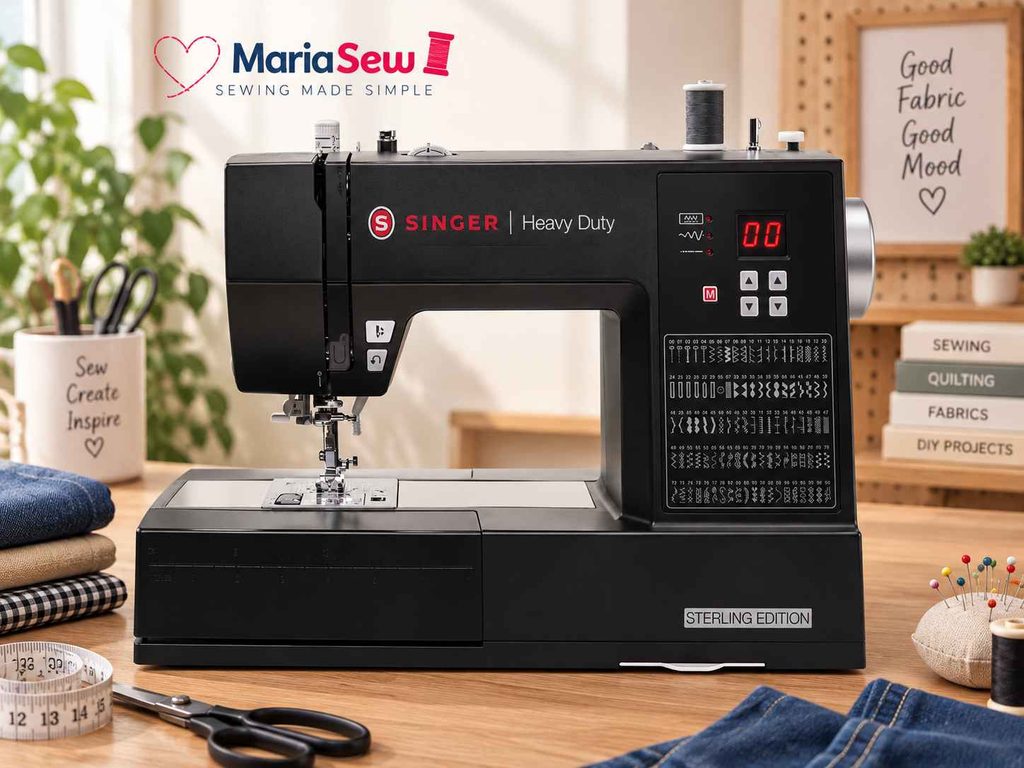
The SINGER Heavy Duty 6600C is the machine I recommend when a sewist wants the faster heavy-duty platform but does not want to give up an LCD screen and push-button stitch selection. It has 215 stitch applications, six one-step buttonhole styles, needle up/down, drop feed, adjustable stitch length and width, adjustable presser-foot pressure, built-in needle threading, a top drop-in bobbin, a metal frame, stainless-steel bed plate, and up to 1,100 stitches per minute.
I have used the 6600C on cotton, denim, silk, and layered fabric, and its best quality is the combination of speed and broader control. It gives me more stitch variety and convenience than the 4452 without moving out of the under-$500 range. The trade-off is that it still feels like a fast heavy-duty SINGER rather than a quiet premium computerized machine, and it lacks the speed-control slider I would ideally want for a complete beginner.
SINGER Heavy Duty 6600C Key Features
- 215 stitch applications. A broad selection of basic, stretch, decorative, and technique-specific options.
- Six one-step buttonhole styles. More garment finishing variety than the mechanical 4452.
- LCD screen and touch-button stitch selection. The machine displays the selected stitch and settings without relying on mechanical dials.
- Needle up/down and drop feed. Useful for pivoting, quilting, darning, and detailed sewing.
- Up to 1,100 SPM. The heavy-duty motor keeps long seams moving quickly.
- Adjustable presser-foot pressure and metal frame. The platform can move between lighter fabric and thicker home-sewing materials more confidently.
SINGER Heavy Duty 6600C Pros
- Strong heavy-fabric performance. Denim, canvas, layered seams, and home-decor work are natural use cases.
- Computerized convenience at a low price. The LCD and touch-button selection make the machine easier to switch between stitch types.
- Fast sewing speed. Up to 1,100 SPM gives it the pace of SINGER’s mechanical heavy-duty range.
- Needle up/down improves control. This is especially useful for corners, topstitching, quilting, and pockets.
- Good value while current pricing lasts. The official SINGER selling price remains far below $500 despite the computerized feature set.
SINGER Heavy Duty 6600C Cons
- No speed-control slider. You cannot cap the maximum speed the way you can on the Brother CS7000X or Janome MOD-30.
- Noticeably noisy. The heavy-duty motor and frame are more mechanical-sounding than quieter computerized machines.
- Not the best lettering or premium-automation machine. Buy it for power and practical computerization, not for advanced personalization or luxury features.
SINGER Heavy Duty 6600C Final Verdict
The 6600C is the under-$500 pick I would make for a sewist who wants thicker-fabric confidence plus an LCD and broader stitch selection. It is less beginner-friendly than the CS7000X, but more capable when speed, denim, canvas, and heavy home projects are regular parts of your sewing.
Read my full SINGER Heavy Duty 6600C review for fabric-by-fabric test notes.
6. Brother XR9550 – Best for Decorative Stitches, Lettering, and Quilting
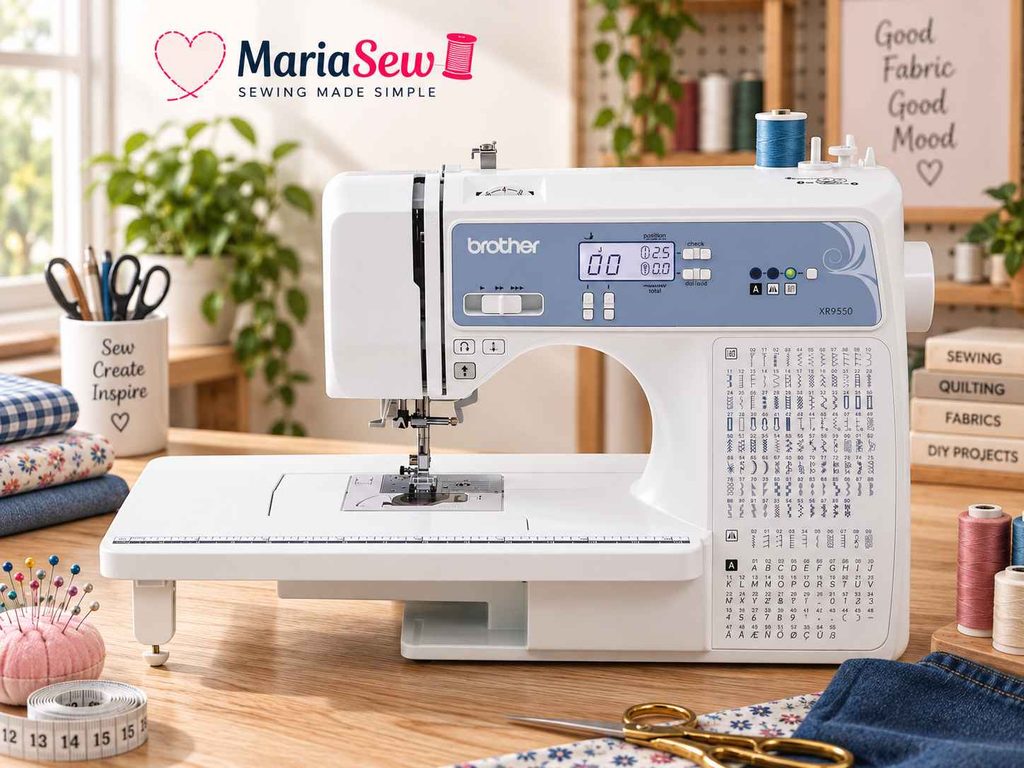
The Brother XR9550 is the most feature-dense creative machine in this group. It offers 165 built-in stitches, including 55 alphanumeric characters, eight one-step auto-size buttonholes, a large backlit LCD, an advanced needle-threading system, quick-set drop-in bobbin, free arm, drop feed, eight included presser feet, a wide table, and a hard case. For a sewist who enjoys decorative stitching, monograms, garment details, and quilting, the XR9550 gives you much more creative range than a simple 30- or 70-stitch model.
I would choose the XR9550 over the CS7000X when stitch variety and lettering are genuine priorities rather than features you might never touch. It is still light enough to move easily, and the wide table makes it useful for patchwork and small-to-medium quilting projects. The trade-off is that more stitches mean more menu navigation, and it is not the machine I would buy for repeated thick denim or canvas when the SINGER heavy-duty models are sitting at similar prices.
Brother XR9550 Key Features
- 165 built-in stitches. The library includes utility, decorative, heirloom, and 55 alphanumeric stitches.
- Eight one-step buttonhole styles. A broad garment-finishing selection for different button and fabric types.
- Large backlit LCD. Stitch selection is easier to read than on very basic computerized machines.
- Wide table and eight presser feet. The included quilting and sewing accessories make the package useful immediately.
- Advanced needle threading and quick-set bobbin. Both features reduce setup time and common beginner threading mistakes.
- Free arm and drop feed. Useful for sleeves, trouser hems, darning, and free-motion quilting.
Brother XR9550 Pros
- Largest creative stitch library in this list. The 165 stitches give crafters and decorative sewists far more options.
- Built-in lettering. Fifty-five alphanumeric stitches make labels, initials, and simple personalization possible without an embroidery machine.
- Strong quilting package. The wide table, quilting foot, drop feed, and lighter body work well for hobby quilting.
- Beginner-friendly setup. The needle threader, quick-set bobbin, LCD, and printed guidance lower the setup barrier.
- Excellent current price. Brother’s current selling price keeps the machine well under $500 despite the broad feature set.
Brother XR9550 Cons
- Feature overload for simple sewing. A sewist who only hems and repairs may never use most of the stitch menu.
- Not a heavy-duty platform. It is better suited to ordinary home fabrics than repeated thick canvas or bulky denim stacks.
- No automatic thread cutter. Despite the large stitch library, thread trimming remains manual.
Brother XR9550 Final Verdict
The XR9550 is the best under-$500 choice here for a sewist who wants creative stitches, lettering, quilting accessories, and an easy computerized interface in one package. I would choose something simpler if you mostly sew straight seams or something heavier if thick fabric is the priority.
Best Sewing Machines Under $500: Feature and Specification Comparison
The detailed reviews above explain how each machine feels in practice. The table below is only a final reference for the headline differences, especially control type, stitch range, buttonholes, speed or workflow, and current pricing.
Prices are the values I found when this guide was updated in September 2026 and can move without warning. I would use the table to narrow the shortlist, then read the model section before deciding.
- Choose CS7000X if you want the best balance of beginner controls, quilting accessories, and price.
- Choose B35 if you want a mechanical machine with a one-step buttonhole and clean tactile controls.
- Choose 4452 if denim, canvas, speed, and heavy home sewing are your main priorities.
- Choose MOD-30 if you want a simpler Janome computerized machine with speed control and needle up/down.
- Choose 6600C if you want heavy-duty speed plus LCD stitch selection and broader computerized features.
- Choose XR9550 if decorative stitches, lettering, quilting, and creative variety matter most.
| Model | Type | Stitches | Buttonholes | Standout Features | Price When Checked |
|---|---|---|---|---|---|
| Brother CS7000X | Computerized | 70 | 7 one-step | 750 SPM, speed slider, wide table, 10 feet | $279.99 |
| bernette B35 | Mechanical | 23 | 1 one-step | 860 SPM, 3-dial controls, 7 feet | About $399 at current dealers |
| SINGER Heavy Duty 4452 | Mechanical heavy-duty | 32 | 1 one-step | 1,100 SPM, metal frame, walking foot | About $220-$250 |
| Janome MOD-30 | Computerized | 30 | 3 one-step | 820 SPM, speed slider, needle up/down | $499 list; often lower at retail |
| SINGER Heavy Duty 6600C | Computerized heavy-duty | 215 stitch applications | 6 one-step styles | 1,100 SPM, LCD, needle up/down | $299.99 |
| Brother XR9550 | Computerized | 165 incl. 55 alphanumeric | 8 one-step | LCD, wide table, 8 feet, drop feed | $239.99 |
The table also shows why I removed the idea that the most expensive machine must be the best choice. The Brother models are less expensive than the B35 and MOD-30, but they include more automation. The mechanical machines justify themselves through workflow, feel, speed, and fabric handling rather than feature count.
Which Sewing Machine Under $500 Is Best for Beginners?
For most complete beginners, I would start with the Brother CS7000X because the speed slider, LCD, quick-set bobbin, automatic needle threader, wide table, and included feet reduce the number of extra purchases and make the first projects easier to control. If you prefer physical dials and want to understand every setting manually, the bernette B35 is the better fit.
The Janome MOD-30 is also excellent for a beginner who wants a calmer computerized layout and is willing to pay more for fewer, more focused stitches. I would not start a nervous beginner on the 4452 purely because its 1,100 SPM speed can feel aggressive until pedal control improves.
Which Sewing Machine Under $500 Is Best for Quilting?
For beginner and hobby quilting, the Brother CS7000X is the best value because it includes a wide table, walking foot, quilting foot, 1/4-inch piecing foot, adjustable speed, and drop feed. The Brother XR9550 is the stronger creative choice if you also want decorative stitches and lettering.
The Janome MOD-30 is a good controlled alternative with drop feed, needle up/down, speed control, and an optional accessory ecosystem, but it does not include the same quilting-focused accessory package as the CS7000X.
Which Sewing Machine Under $500 Is Best for Denim and Heavy Fabrics?
The SINGER Heavy Duty 4452 is my first choice when the project list includes regular denim hems, canvas, curtains, bags, costumes, or thicker home-decor fabric. The 6600C is the computerized alternative if you want similar speed with an LCD and broader stitch selection.
Neither machine is industrial. I still use the correct jeans or heavy-duty needle, reduce speed at bulky seam crossings, level the presser foot when necessary, and avoid forcing material that the domestic feed system cannot move cleanly.
Which Sewing Machine Under $500 Is Best for Garment Sewing?
For garments, I prefer the CS7000X when I want easy buttonholes and a broad accessory kit, the B35 when I want mechanical control, and the MOD-30 when needle up/down and speed limiting matter for topstitching and precision. The XR9550 becomes more attractive if I also use decorative stitches or simple lettering on labels and projects.
The 4452 and 6600C make more sense for workwear, denim, home-decor fabrics, or a sewist who values speed over quiet operation. Garment sewing does not automatically require a computerized machine, but automation can save time when you sew frequently.
Who Are These Sewing Machines Best Suited For?
These six machines cover beginners, returning sewists, hobby quilters, garment makers, crafters, and home users who want a capable machine without moving into premium pricing. The right match depends more on project type and control preference than on experience level alone.
- Complete beginners. Start with CS7000X, B35, or MOD-30 depending on whether you prefer computerized guidance or mechanical dials.
- Quilters. Prioritize CS7000X or XR9550 for wide tables, quilting feet, drop feed, and project support.
- Garment sewists. CS7000X, B35, and MOD-30 all offer useful buttonholes, free-arm access, and everyday construction controls.
- Heavy-fabric sewists. Choose 4452 or 6600C when denim, canvas, bags, and home decor appear frequently in your project list.
- Creative stitch users. XR9550 offers the largest stitch library and built-in alphanumeric options in this group.
- Class and travel sewists. CS7000X, MOD-30, and XR9550 are easier to carry than heavier or more aggressive heavy-duty setups.
If none of those descriptions feels exact, compare the machines by features and project type instead of forcing yourself into a beginner, quilter, or garment-maker label.
Compare more than 400 sewing machines side by side with MariaSew’s free comparison tool.
Tips for Maintaining an Affordable Sewing Machine
Maintenance does not need to be complicated, but budget machines benefit from consistent setup habits because lint, damaged needles, poor threading, and incorrect bobbins can make a healthy machine feel defective. I always follow the exact manual because lubrication and cleaning instructions differ between brands and models.
- Brush lint from the bobbin and feed area. Quilting cotton, fleece, flannel, and denim can build up debris quickly.
- Replace bent or dull needles. A damaged needle can cause skipped stitches, shredding, poor penetration, and needle-plate strikes.
- Rethread before changing tension aggressively. Many apparent tension problems are actually caused by a missed guide, raised presser foot during threading, or a mis-seated bobbin.
- Use the correct bobbins. Similar-looking bobbins are not always interchangeable, and the wrong type can create feeding or tension problems.
- Match the needle to the fabric. Universal, ballpoint, stretch, jeans, and microtex needles are designed for different materials and seam demands.
- Stop if the machine begins making unusual sounds. Forcing a jam or repeatedly striking a thick seam can turn a small setup problem into a damaged hook, needle plate, or timing issue.
A few minutes of cleaning and setup checks after lint-heavy projects will usually protect stitch quality better than randomly changing tension settings every time a seam looks wrong.
Common Mistakes to Avoid When Buying a Sewing Machine Under $500
The most common buying mistakes happen when the price or stitch count becomes the whole decision. A machine can be a great deal and still be wrong for the projects you actually sew.
- Buying only by stitch count. Seventy well-chosen stitches and good controls can be more useful than hundreds of options you never select.
- Assuming heavy-duty means industrial. Domestic heavy-duty machines are stronger home machines, not factory equipment for unlimited upholstery or leather production.
- Ignoring the included feet. A walking foot, 1/4-inch foot, zipper foot, or quilting foot can change the real value of the package.
- Skipping speed-control needs. A beginner may be happier with a 750-820 SPM machine plus a speed slider than a 1,100 SPM machine with pedal-only control.
- Forgetting workspace and free-arm access. Quilters and garment sewists need different physical spaces around the needle.
- Assuming computerized is always easier. Some beginners prefer dials, while others find an LCD and recommended settings more intuitive.
- Assuming mechanical is always more durable. Actual build quality, service, use, and maintenance matter more than the control type alone.
- Buying at the top of the budget without checking current sales. Prices in this category move constantly, and a $500 machine may sell for $300 during a manufacturer promotion.
- Not testing the fabric you actually sew. A machine that feels excellent on cotton may behave differently on denim seams, knits, chiffon, or layered quilting.
- Ignoring service and warranty support. A clear manual, available parts, and a reachable technician matter long after the sale ends.
My final check is simple: if I cannot explain which repeated sewing problem a feature solves for me, I do not pay extra for it.
Final Verdict: Which Sewing Machine Under $500 Should You Buy?
If I had to choose one machine for the widest group of home sewists, I would start with the Brother CS7000X because it balances price, beginner control, quilting accessories, garment features, and everyday versatility better than the rest of this list. The bernette B35 is the cleaner mechanical choice, while the Janome MOD-30 is the focused computerized alternative for sewists who care more about control than stitch count.
For thicker materials, I would choose the SINGER 4452 if I wanted a straightforward mechanical workhorse or the 6600C if I wanted heavy-duty speed plus an LCD. The Brother XR9550 is the better buy for decorative stitches, lettering, and creative quilting. All six can be excellent purchases under $500, but only when the machine matches the fabrics, controls, and projects you genuinely use.
Frequently Asked Questions
What is the best sewing machine under $500 for beginners?
The Brother CS7000X is my first choice for most beginners because it combines adjustable speed, an automatic needle threader, quick-set bobbin, 70 stitches, seven one-step buttonholes, 10 feet, and a wide table at a very accessible price.
What is the best mechanical sewing machine under $500?
The bernette B35 is the best mechanical beginner option in this guide when current dealer pricing is below $500. It has 23 stitches, a one-step buttonhole, adjustable length and width, seven feet, and direct three-dial controls.
What is the best sewing machine under $500 for denim?
The SINGER Heavy Duty 4452 is my first pick for regular denim and canvas because it reaches up to 1,100 stitches per minute and includes a metal frame, extra-high presser-foot lift, walking foot, non-stick foot, and heavy-duty needles.
What is the best computerized heavy-duty machine under $500?
The SINGER Heavy Duty 6600C combines 1,100 SPM sewing, a metal frame, LCD controls, needle up/down, six one-step buttonholes, drop feed, and 215 stitch applications.
Is the Brother XR9550 good for quilting?
Yes. It includes a wide table, drop feed, quilting foot, large LCD, 165 stitches, eight one-step buttonholes, and eight presser feet, making it a strong hobby quilting and creative sewing machine.
Is the Janome MOD-30 worth it under $500?
Yes if you value a focused 30-stitch layout, speed control, needle up/down, start/stop, three one-step buttonholes, a 7-piece feed system, and Janome-style precision more than a huge stitch library.
Can a sewing machine under $500 handle multiple layers?
Many can, but the result depends on the model, fabric, needle, thread, seam thickness, presser-foot pressure, and technique. Heavy-duty models are better for repeated thick-layer work, but no domestic machine should be forced through unlimited bulk.
Should I choose mechanical or computerized under $500?
Choose mechanical if you prefer direct controls and a focused workflow. Choose computerized if speed control, needle up/down, guided stitch selection, multiple buttonholes, and broader stitch libraries will save you time.
How many stitches do I actually need?
Most sewists can complete a large range of garments, repairs, quilts, and home projects with a modest group of utility and stretch stitches. Buttonhole quality, adjustability, feeding, and accessories often matter more than a very high stitch count.
Do I need an automatic thread cutter under $500?
No. It is a nice workflow feature but not essential. None of the main picks in this guide depends on an automatic thread cutter to justify its value.
Are sewing machine prices under $500 stable?
No. Manufacturer sales, dealer promotions, colors, bundles, and inventory can change the selling price quickly. Recheck the current price before buying.
What should I buy with the money left in my budget?
I would prioritize quality thread, fresh needles for different fabric types, compatible bobbins, a seam guide or useful presser foot, and practice fabric before buying decorative accessories you may never use.