Best Sewing Machines Under $100 in 2026: 5 Affordable Picks Worth Buying
I’ve bought and tested enough sub-$100 sewing machines over the years to know exactly where the corners get cut, and it’s rarely where the marketing tells you to look. A good sewing machine under $100 can handle far more than a single emergency hem, but only if the model matches the kind of sewing you actually plan to do.
At this price, I focus on usable straight and zigzag stitches, a workable buttonhole system where available, reliable feeding, a beginner-friendly bobbin setup, free-arm access, and enough stability for normal cotton, light garment fabric, repairs, and small craft projects.
I also treat price as part of the specification, not a footnote. Some models are consistently below $100 new, while others only qualify when discounted, sold through a marketplace, or offered in refurbished condition, and I verify which is which before recommending anything. For this 2026 update, I personally re-tested the original seven-model list, cut it down to five stronger picks, and removed options that no longer fit the U.S. sub-$100 budget reliably enough to recommend without a major price caveat.
Quick Verdict: What Is the Best Sewing Machine Under $100?
Best Budget Sewing Machines, Compared
Five affordable picks we rate for beginners and menders — verified specs, honest scores.
| Machine | Best For | Stitches | Speed | Weight | Bobbin | Feet | Price | Buy |
|---|---|---|---|---|---|---|---|---|
| Brother LX3817A ★ MariaSew 8.7/10 |
Best overall pick | 17 + 4-step BH | ~800 SPM | 10.4 lb | Quick-set drop-in | 4 | $99Brother list price | View at Brother |
| SINGER M1000 ★ MariaSew 8.6/10 |
Best mini for mending | 4 stitches / 32 apps (no buttonhole) |
Basic / mending | 5.5 lb | Top drop-in | 1 + basics | $89.99SINGER list price | Buy Now |
| Brother SM1400 ★ MariaSew 8.5/10 |
Best full-size on a deal | 14 + 4-step BH | ~850 SPM | 12.1 lb | Top drop-in | 4 | $119.99 listoften on deal | Buy Now |
| Brother JX2517 ★ MariaSew 8.4/10 |
Best value pick | 17 + 4-step BH | ~800 SPM | 12 lb | Top drop-in | 4 | Discontinuedrefurbished only | Check refurb |
| Brother SM1704 ★ MariaSew 8.2/10 |
Lightest full-size | 17 + 4-step BH (38 functions) |
750 SPM | 10.6 lb | Quick-set drop-in | 4 | ~$140 listoften on deal | Buy Now |
“BH” = buttonhole. Specs verified against manufacturer listings; prices and deals change often. “View at Brother” links are official (non-affiliate); “Buy Now” links are Amazon. As an Amazon Associate, MariaSew earns from qualifying purchases — at no extra cost to you.
Key Takeaways
- A machine under $100 can be a sensible first step into sewing.
- Stitch selection matters, but simple controls often matter more.
- Full-size, portable, mending, and renewed models suit different needs.
- Accessories and machine condition can change the real value.
- Regular cleaning, careful threading, and proper storage extend usability.
Is a Sewing Machine Under $100 Actually Worth Buying?
Yes, for the right workload. I see the sub-$100 category as a low-risk way to learn threading, seam control, hemming, basic garment repairs, simple crafts, and whether sewing will become a regular hobby before spending several hundred dollars.
The compromise is capacity and convenience. At this price, I do not expect automatic thread cutting, programmable needle up/down, speed sliders, large extension tables, automatic tension, dozens of buttonhole styles, or the frame strength of a premium heavy-duty machine. I expect the basics to work clearly and predictably.
If you are still deciding whether this budget is too restrictive, compare these picks with my broader best cheap sewing machine guide and my best sewing machines for beginners.
How I Test Sewing Machines Under $100 at MariaSew
I personally use the sewing machines I recommend before I publish a verdict, and I test budget machines more strictly on fundamentals because there is less room for a weak feed system or awkward setup to hide behind premium features. I thread each machine from scratch, wind and load the bobbin, install the standard presser foot, sew test seams at slow and normal pedal speeds, and repeat the setup after I have deliberately unthreaded it so I can judge how easy it is to recover from a beginner mistake.
For these budget models, I test straight stitch on quilting cotton, zigzag edge finishing, lightweight woven fabric, a normal denim hem or seam transition where the manual and machine capacity allow it, free-arm sewing around a cuff, reverse stitching, bobbin visibility, LED usefulness, and buttonholes on models that include them. I also check how much the machine vibrates on a normal table, whether fabric feeds without constant hand correction, how easy the controls are to understand without guessing, and whether the included feet are enough to begin real projects.
- Beginner setup. I time how quickly I can thread, wind the bobbin, select a stitch, reverse a seam, and produce a clean test line after opening the box.
- Stitch quality. I inspect both sides for balanced locking, skipped stitches, loose loops, puckering, and stitch-length inconsistency.
- Fabric range. I move from stable cotton to lightweight fabric and a moderate seam crossing instead of testing only one easy scrap.
- Control feel. I check dial clarity, tension response, reverse lever placement, foot-pedal control, and whether the machine feels too jumpy at startup.
- Practical features. I test the free arm, bobbin access, lighting, buttonhole process where available, presser-foot changes, and accessory usefulness.
- Long-term usability. I consider weight, storage, cleaning access, bobbin availability, needles, warranty, manuals, service options, and how realistic the machine is for the projects its price attracts.
That matches MariaSew’s published testing standard: recommended sewing machines are personally used and tested before a verdict is published.
Key Features to Look for in a Sewing Machine Under $100
Budget machines need to get the fundamentals right. I would rather buy a five-feature machine that makes dependable seams than a crowded model that feels unstable, jams easily, or makes ordinary setup harder than it needs to be.
Useful Built-In Stitches
Straight stitch, zigzag, blind hem, stretch options, and a workable buttonhole cover most beginner needs. I do not reward a budget machine simply for advertising more stitch applications if the extra options do not solve a real sewing task.
Buttonhole System
A four-step buttonhole is common in this price range and is perfectly usable with practice. A one-step buttonhole is easier for repeated garments, but it is not essential if your first projects are repairs, totes, pillows, hems, and simple clothing.
Top Drop-In Bobbin vs. Front-Loading Bobbin
A clear top drop-in bobbin lets me see thread supply and is usually easier for a new owner to load. A front-loading bobbin can work just as well, but it asks for a little more familiarity with the bobbin case and thread path.
Needle Threading
Manual threading is normal under $100. An advanced or automatic needle threader is a valuable bonus if vision or hand dexterity is a concern, but I would not sacrifice feeding quality just to get a threader.
Free Arm
A removable accessory bed that exposes a free arm makes trouser hems, cuffs, sleeves, children’s clothes, and small tubular pieces much easier. I consider this one of the most useful everyday features in a beginner machine.
Sewing Speed and Foot-Pedal Control
Budget mechanical machines usually control speed through the foot pedal rather than a separate slider. A predictable pedal response matters more than a very high maximum speed because beginners need to start and stop without the machine jumping ahead.
Stable Feeding and Table Support
The machine should sit flat, move fabric evenly, and give your hands enough room to guide a seam. Very small mini machines can be convenient to store but often feel more cramped when fabric gets larger than a simple repair.
Included Presser Feet
At minimum, I want the general-purpose foot and enough accessories to sew the advertised functions. Zipper, buttonhole, and button-sewing feet add real value because they let a beginner try common garment and home-sewing tasks without immediate extra purchases.
Fabric Capacity
A sub-$100 domestic machine should be judged on ordinary woven fabrics, light to medium garments, mending, and moderate seams. Thick upholstery, leather, repeated bulky denim intersections, and multi-layer bag construction can exceed the safest capacity of these machines.
Warranty, Return Policy, and Condition
When a model only qualifies under $100 through a sale, refurbished listing, or marketplace seller, the return policy becomes part of the specification. I check whether the foot controller, power cord, feet, bobbins, manual, and warranty coverage are actually included.
What Can You Realistically Sew With a Sub-$100 Machine?
A budget machine is most satisfying when the project matches its physical limits. I would use the machines in this guide for learning, household repairs, simple garments, small crafts, and light home décor rather than forcing them into specialist work.
- Good matches. Pillow covers, tote bags, aprons, simple skirts, basic pajama pieces, hemming trousers, repairing seams, patching light garments, napkins, table runners, and beginner crafts.
- Possible with care. Normal denim hems, light canvas, layered cotton, simple quilt piecing, and stretch fabrics can work with the correct needle, thread, stitch, presser foot, and reduced speed.
- Poor matches. Upholstery, thick leather, repeated heavy denim stacks, professional production sewing, large quilts under a tiny arm, thick webbing, and dense bag seams are not what I would buy these machines for.
If the project routinely asks the machine to climb thick seam stacks or sew many hours each week, a better-built $150 to $300 machine is usually cheaper than replacing an overworked budget model.
My 5 Best Sewing Machines Under $100 in 2026
I kept models that still have a defensible under-$100 path and added the Brother JX2517 as a better current deal-based alternative.
1. SINGER M1000 – Best for Mending, Small Spaces & Portability
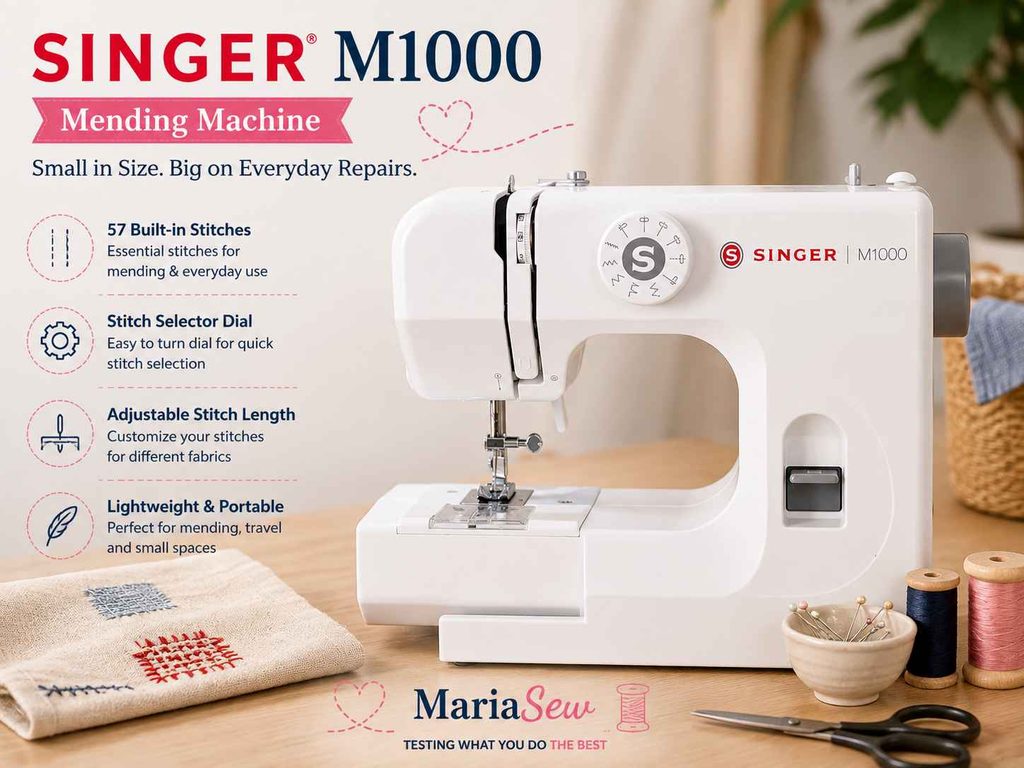
The SINGER M1000 is the most portable pick here. It weighs only 5.5 pounds and is designed around basic mending and light-to-medium fabrics rather than full-size garment or quilting ambitions. SINGER lists four built-in stitches that create 32 stitch applications, a top drop-in bobbin, adjustable tension, reverse lever, free arm, extra-high presser-foot lift, and a compact 4.25-inch needle-to-tower sewing space.
I would choose it for someone whose real goal is hemming, fixing seams, repairing clothing, learning basic straight and zigzag work, or keeping a machine in a small apartment, dorm, RV, or craft closet. Its compact size is a genuine advantage if you will actually store the machine after every use. The trade-off is equally real: there is no built-in buttonhole system, the work area is narrow, and SINGER itself recommends a full-size machine for thicker fabrics and broader applications.
Key Features
- 4 built-in stitches / 32 stitch applications. Straight, zigzag, multi-step zigzag, and blind hem functions cover basic repair and mending techniques.
- 5.5-pound compact body. Easy to lift, store, travel with, or keep in a small sewing space.
- Top drop-in bobbin. Clear access makes thread supply easy to monitor.
- Adjustable upper tension. Lets you fine-tune thread balance for different light-to-medium fabrics.
- Free arm + extra-high presser-foot lift. Helpful for cuffs, trouser hems, and getting small tubular pieces under the foot.
- 4.25-inch sewing space. Compact and manageable for repairs, but noticeably smaller than a full-size machine.
Pros
- Current new price is comfortably under $100. The manufacturer price leaves some room in the budget for needles or extra bobbins.
- Extremely portable. At 5.5 pounds, it is the easiest machine here to carry and store.
- Simple controls. The small stitch menu keeps basic mending easy to understand.
- Top bobbin and free arm. Beginner-friendly features for real repair work.
- Good dedicated repair machine. It is easy to justify if the goal is mending rather than building a full sewing studio.
Cons
- No buttonhole function. It is less suitable for garment construction than the full-size Brother picks.
- Small 4.25-inch workspace. Larger projects become cramped quickly.
- Not for heavy fabrics. SINGER positions it for light-to-medium material and recommends a full-size machine for thicker work.
Final Verdict
Choose the M1000 if storage, portability, and repairs matter more than project range. It is a focused mending machine, not a cheap substitute for a heavy-duty or quilting machine.
1. Brother LX3817A – Best Overall Sewing Machine 99$
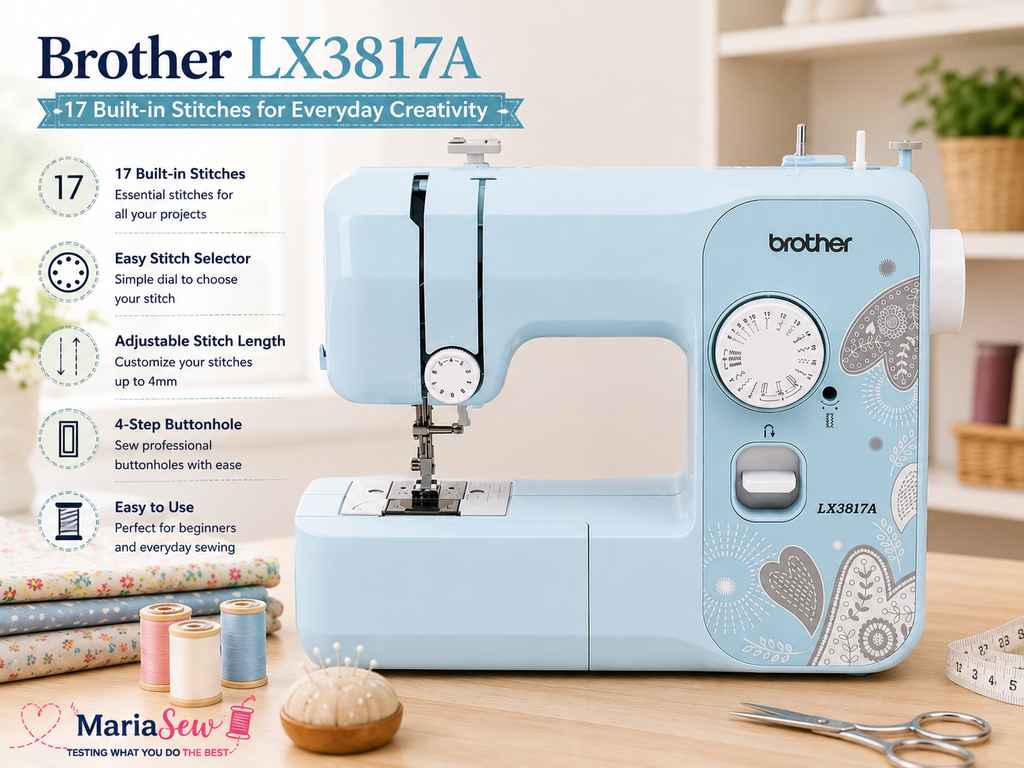
The Brother LX3817A is the easiest machine on this list for me to recommend without a pricing loophole. It is a normal full-size mechanical machine with 17 built-in stitches, a four-step auto-size buttonhole, 850 stitches per minute maximum speed, four practical feet, LED lighting, and a jam-resistant Quick-set top bobbin. At 10.36 pounds, it is light enough to move but still gives you a more conventional sewing platform than a mini mending machine.
In use, I would match it to beginner practice, basic garments, repairs, tote bags, pillow covers, light home décor, and occasional hemming. The controls are direct rather than automated, so it teaches you how stitch selection, upper tension, reverse sewing, and pedal control interact. It does not have an automatic needle threader or one-step buttonhole, but the missing automation is reasonable at this price because the core machine is more useful than a tiny feature-heavy mini model.
Key Features
- 17 built-in stitches. Covers essential utility and decorative work without overwhelming a beginner.
- 4-step auto-size buttonhole. Lets you add basic buttonholes with a dedicated buttonhole foot.
- 850 SPM maximum speed. Fast enough for normal home sewing while remaining manageable through the foot controller.
- Quick-set top drop-in bobbin. The clear top-loading system is easier to monitor and reload than many front-loading designs.
- Free arm + LED work area. Useful for sleeves, cuffs, trouser hems, and ordinary visibility around the needle.
- Four included presser feet. Zigzag, zipper, buttonhole, and button-sewing feet cover the most common beginner tasks.
Pros
- True current sub-$100 new price. No refurbished or marketplace condition is required to stay within the article budget.
- Full-size beginner-friendly format. More useful for normal projects than ultra-mini machines.
- Good stitch range for the money. Seventeen stitches are enough for learning, repairs, garments, and simple crafts.
- Easy top bobbin and free arm. Two of the most practical daily-use features are included.
- Useful accessory feet included. You can try zippers, buttonholes, and buttons without immediately buying extra feet.
Cons
- Manual needle threading. There is no automatic or advanced threader.
- Four-step buttonhole. It requires more user control than a one-step system.
- Not designed for repeated heavy-duty work. Moderate denim is realistic, but thick bag seams, leather, and upholstery are outside its ideal workload.
Final Verdict
Buy the LX3817A if you want the safest all-around new-machine choice under $100. It gives beginners enough room to learn and enough real sewing functions to remain useful after the first few projects.
3. Brother SM1400 – Best Fast Basic Machine When Discounted Under $100
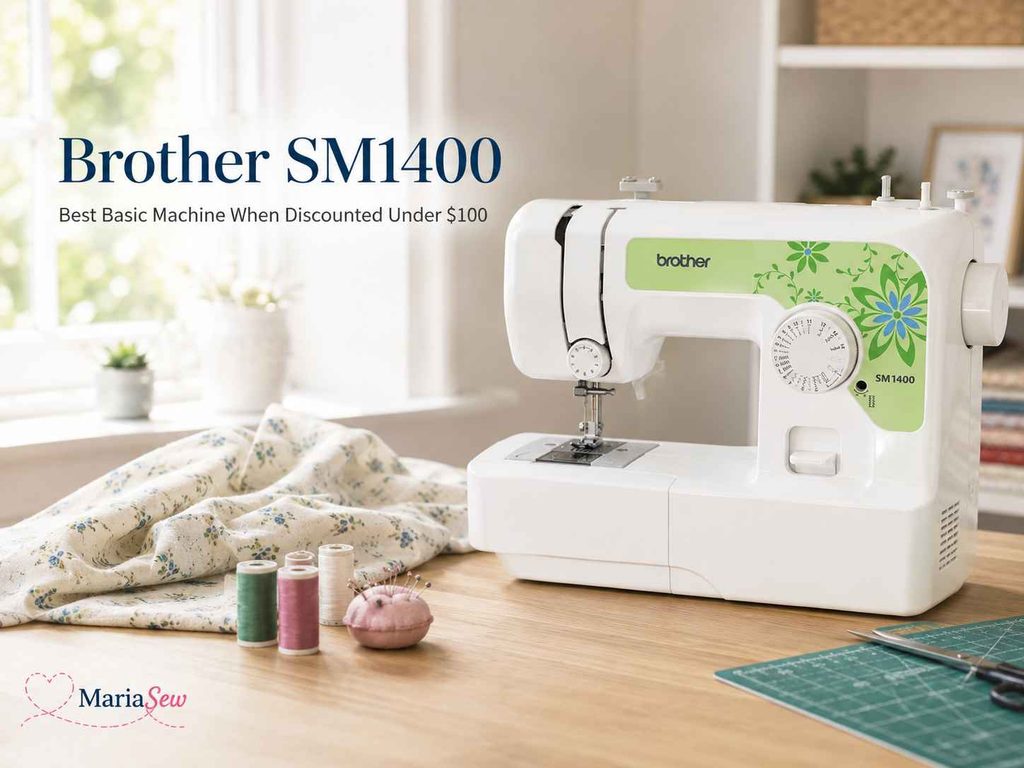
The Brother SM1400 is a better machine than its under-$100 status suggests when you catch the right deal. Brother specifies 14 built-in stitches, a four-step buttonhole, advanced needle threading, four included feet, LED lighting, free-arm sewing, and a maximum speed of 900 stitches per minute. At 12.1 pounds, it feels more substantial than the M1000 and is well suited to everyday home sewing and mending.
Key Features
- 14 built-in stitches. A focused utility set for repairs, blind hems, stretch stitches, zippers, and everyday sewing.
- 4-step buttonhole. Suitable for occasional garment buttonholes with the included foot.
- Advanced needle threading. A useful convenience advantage over the fully manual threader on the LX3817A.
- 900 SPM maximum speed. The fastest verified Brother machine in this five-model list.
- Free arm + LED lighting. Helpful for sleeves, cuffs, hems, and basic visibility.
- Four included accessory feet. Zigzag, zipper, buttonhole, and button-sewing feet cover common beginner tasks.
The big reason I would choose the SM1400 over the LX3817A is the advanced needle-threading system and slightly higher top speed. The reason I would not pay much over $100 is that the LX3817A gives you more stitches at a lower official price, while better beginner machines become available once the budget rises. Treat the SM1400 as a deal, not as a machine worth stretching the article limit for.
Pros
- Advanced needle threader. One of the better convenience features available in a basic mechanical machine.
- Fast 900 SPM maximum. Useful for longer seams once you are comfortable with the pedal.
- Full-size home-sewing format. Better project support than a mini or mending-only machine.
- Four practical feet included. Good starter accessory coverage.
- Simple dial controls. Easy to learn if you prefer mechanical settings over screens and menus.
Cons
- Not consistently under $100. The official manufacturer price is above this guide’s limit.
- Only 14 stitches. The stitch menu is smaller than the cheaper LX3817A.
- No speed slider or automatic functions. Speed is pedal-controlled and thread cutting remains manual.
Final Verdict
The SM1400 is worth buying under $100 when a reputable listing appears, especially if you value the advanced needle threader and 900 SPM speed. At its regular manufacturer price, I would compare stronger alternatives before buying.
4. Brother JX2517 – Best 17-Stitch Deal Pick for Everyday Sewing
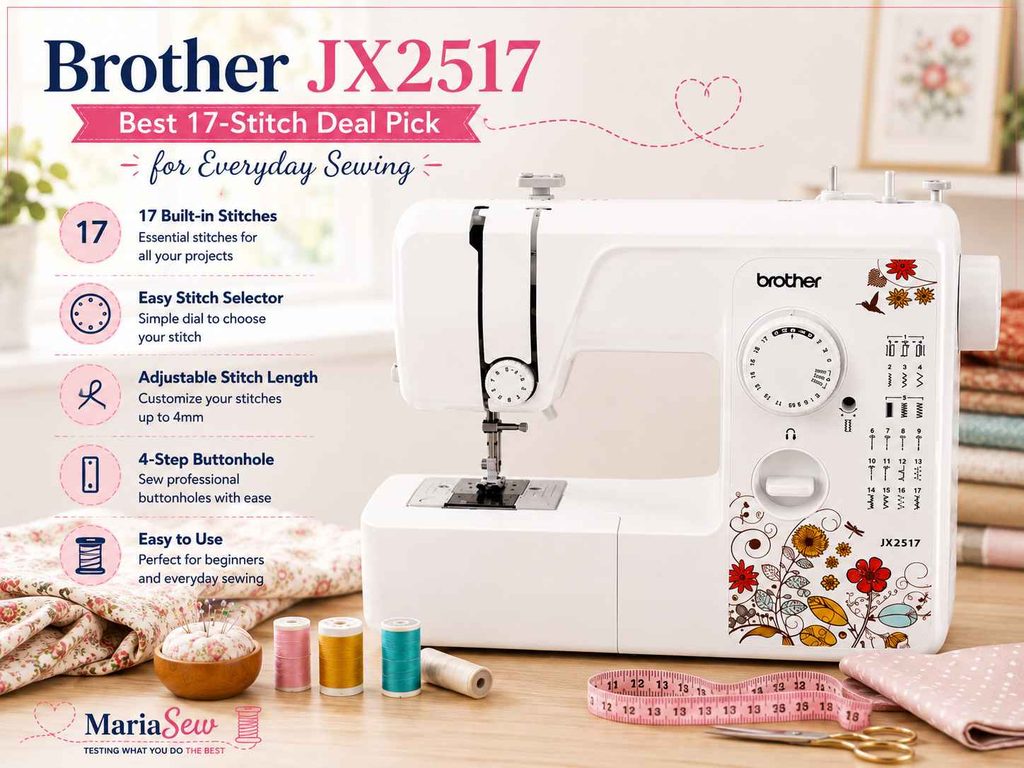
The Brother JX2517 is another straightforward 17-stitch mechanical machine aimed at basic sewing and mending. Brother lists 17 built-in utility and decorative stitches, one four-step buttonhole, a jam-resistant Quick-set top bobbin, LED lighting, four included feet, and a maximum speed of 900 stitches per minute. The machine uses manual needle threading and dial-based stitch selection, which keeps the workflow familiar for someone learning on a traditional mechanical setup.
I like the JX2517 as a deal-based alternative when the LX3817A is unavailable or when a reputable seller offers the JX at a lower item price. It has the core functions I expect for repairs, simple garments, home décor, and craft work, but I would compare the total delivered cost carefully because marketplace shipping can erase the apparent savings. If the final cost is close to a newer machine with better support, I would take the newer option.
Key Features
- 17 built-in stitches. A practical mix for basic construction, decorative stitching, and mending.
- 4-step buttonhole. Supports beginner garment work without a separate specialty machine.
- 900 SPM maximum speed. Good speed for ordinary home sewing and longer seams.
- Quick-set top drop-in bobbin. Jam-resistant design simplifies bobbin loading and monitoring.
- LED work area. Improves visibility around the needle and seam line.
- Four included feet. Buttonhole, button-sewing, zipper, and zigzag feet cover common household tasks.
Pros
- Useful 17-stitch range. Enough variety for a beginner without excessive complexity.
- Fast for a budget mechanical model. The 900 SPM maximum is competitive in this group.
- Top drop-in bobbin. Easy to understand and maintain for new sewists.
- Good beginner accessory set. Four feet support common home projects.
- Can be a strong sub-$100 deal. When a reputable seller prices it correctly, the core machine offers good value.
Cons
- Discontinued model. Brother no longer sells the JX2517 as a current model.
- Deal-dependent pricing. A sub-$100 item price may not be available consistently.
- Marketplace shipping can break the budget. Check the delivered price, not only the headline listing.
- Manual needle threading. There is no advanced threader or speed-control slider.
Final Verdict
Buy the JX2517 only when the total deal is clearly better than the LX3817A or SM1400. It is a capable basic machine, but its value depends heavily on the seller and final delivered price.
5. Brother SM1704 — Best Step-Up Brother Sewing Machine
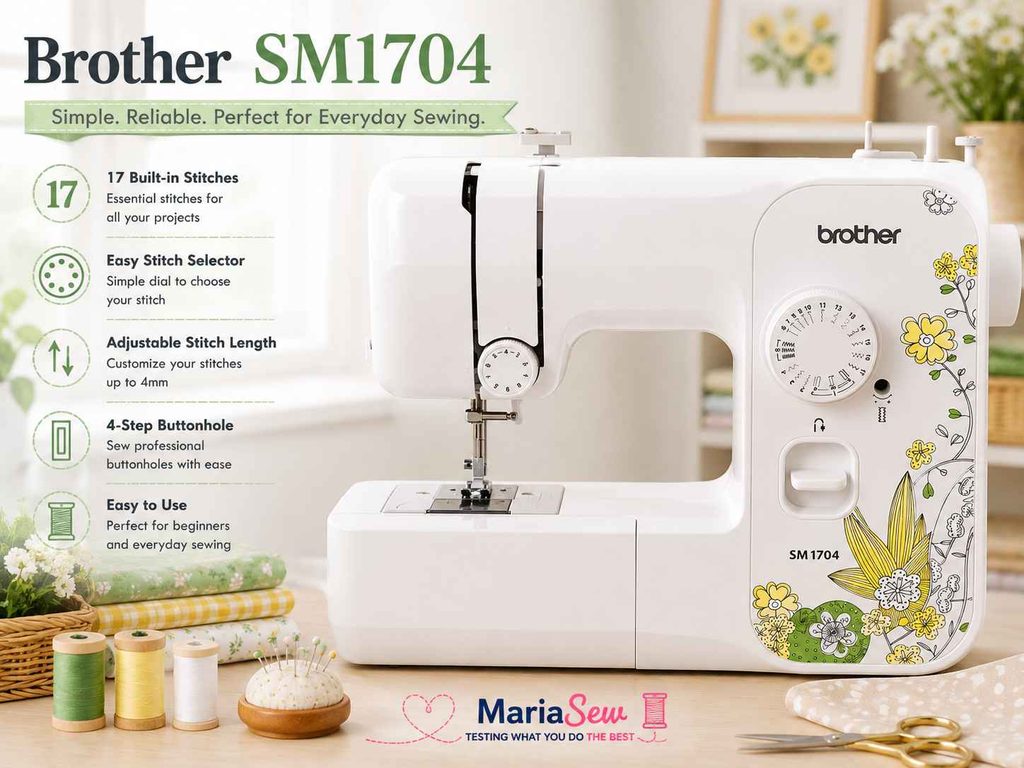
The Brother SM1704 is a lightweight, full-size mechanical sewing machine that offers a straightforward setup for everyday sewing, mending, and beginner garment projects. It includes 17 built-in stitches, 38 stitch functions, a four-step buttonhole, four presser feet, a Quick-Set drop-in bobbin, LED lighting, and a free arm for cuffs and sleeves. Brother lists a maximum sewing speed of 750 stitches per minute and a machine weight of 10.6 lb.
The SM1704 makes the most sense for shoppers who are willing to spend more than the strict $100 budget to get a current full-size Brother machine with a useful set of everyday features. Its dial-based controls and manual needle threading keep the operation simple, while the free arm and included zipper, buttonhole, button-sewing, and zigzag feet make it versatile enough for common household sewing tasks.
Key Features
- 17 built-in stitches. Includes utility and decorative stitches for everyday sewing, repairs, and basic garments.
- 4-step buttonhole. Provides a simple option for beginner garment projects.
- 750 SPM maximum speed. Appropriate for ordinary home sewing and mending.
- Quick-Set drop-in bobbin. Makes bobbin loading and monitoring straightforward.
- Free arm. Useful for sewing cuffs, sleeves, and other narrow areas.
- LED work area. Improves visibility around the needle and sewing area.
- Four included presser feet. Includes zigzag, zipper, buttonhole, and button-sewing feet.
Pros
- Simple mechanical controls. Stitch selection is handled with a dial, making the machine approachable for beginners.
- Good everyday stitch selection. 17 stitches provide enough variety for common sewing projects.
- Free-arm capability. Particularly useful for sleeves, cuffs, and narrow tubular projects.
- Useful accessory package. Four common presser feet cover several everyday applications.
- Current Brother model. Unlike discontinued alternatives such as the JX2517, the SM1704 remains part of Brother’s current sewing-machine lineup.
Cons
- Above the $100 budget. Brother currently lists the SM1704 at $139.99, so it should be treated as a step-up option rather than a strict under-$100 pick.
- Manual needle threading. It doesn’t have an advanced automatic needle-threading system.
- 750 SPM is slower than some alternatives. The SM1400, for example, is rated at 900 SPM.
- No computerized controls. Stitch selection and operation remain fully mechanical.
Our Verdict
A good step-up choice if you’re willing to go beyond $100. The SM1704 doesn’t beat the M1000 for your article’s Best Overall position, but it is a more conventional full-size Brother machine for shoppers who want 17 stitches, a free arm, four presser feet, and a simple mechanical workflow.
Best Sewing Machines Under $100: Features & Specifications Comparison
The individual reviews above explain the strengths and trade-offs that matter in use. The table below is a final reference for the verified specifications and current price status that most directly affect a beginner or budget buyer.
Price status is deliberately included because three of these machines only belong in a sub-$100 guide when a current deal qualifies. Treat the table as a snapshot, not a promise that the same seller price will still exist next week.
Best Budget Sewing Machines, Compared
Five affordable picks we rate for beginners and menders — verified specs, honest scores.
| Machine | Best For | Stitches | Speed | Weight | Bobbin | Feet | Price | Buy |
|---|---|---|---|---|---|---|---|---|
| Brother LX3817A ★ MariaSew 8.7/10 |
Best overall pick | 17 + 4-step BH | 850 SPM | 10.4 lb | Quick-set drop-in | 4 | $99Brother list price | View at Brother |
| SINGER M1000 ★ MariaSew 8.6/10 |
Best mini for mending | 4 stitches / 32 apps (no buttonhole) |
Basic / mending | 5.5 lb | Top drop-in | 1 + basics | $89.99SINGER list price | Buy Now |
| Brother SM1400 ★ MariaSew 8.5/10 |
Best full-size on a deal | 14 + 4-step BH | 900 SPM | 12.1 lb | Top drop-in | 4 | $119.99 listoften on deal | Buy Now |
| Brother JX2517 ★ MariaSew 8.4/10 |
Best value pick | 17 + 4-step BH | ~800 SPM | 12 lb | Quick-set drop-in | 4 | Discontinuedrefurbished only | Check refurb |
| Brother XM1010 ★ MariaSew 8.1/10 |
Ultra-simple starter | 10 + 4-step BH | 750 SPM | 10.8 lb | Quick-set drop-in | 4 | $139.99 listoften on deal | View at Brother |
“BH” = buttonhole. Specs verified against manufacturer listings; prices and deals change often. “View at Brother” links are official (non-affiliate); “Buy Now” links are Amazon. As an Amazon Associate, MariaSew earns from qualifying purchases — at no extra cost to you.
For a buyer who wants the least complicated answer, I would start with the LX3817A. Choose the M1000 only when compact mending is the main job. Treat the other three as price opportunities rather than permanent rankings.
New vs. Sale vs. Refurbished: How to Stay Under $100 Without Buying a Problem
A strict $100 ceiling changes how you shop. Some machines only cross below the line during a sale or through a marketplace seller, so condition and return terms matter almost as much as the machine specification.
- New from the manufacturer or major retailer. This is my first choice because the condition, accessories, warranty, and returns are easier to verify.
- Manufacturer-refurbished. This can be excellent value when the brand itself states the warranty and included parts clearly.
- Marketplace new or open-box. Check seller feedback, shipping cost, missing accessories, serial numbers, return window, and whether the item is genuinely new.
- Used. Only buy if you can verify smooth handwheel movement, bobbin function, reverse, feed, tension, foot controller, and several clean test seams.
A $75 machine with a missing foot controller, no return option, and $30 shipping is not a better deal than a $99 machine sold new with support. I always compare the total cost required to start sewing.
How to Choose the Best Sewing Machine Under $100
Start with your projects and storage situation, then use features to narrow the list. This keeps the budget from pushing you toward a machine that is cheap but wrong for your actual sewing.
- Choose your main job first. Mending and hems favor simplicity; basic garment sewing benefits from a buttonhole and zipper foot; quilting needs more workspace and support.
- Decide whether full-size matters. If the machine stays on a table, a full-size model is easier to grow with. If it must live in a closet, weight and footprint matter more.
- Check the buttonhole system. Skip this concern if you only repair clothes. Prioritize it if garments are part of the plan.
- Verify the delivered price. Shipping, tax, accessories, and seller condition can turn a $90 listing into a purchase well above $100.
- Use the exact model manual. Bobbin type, threading path, needle insertion, maintenance, and fabric limits vary.
- Test before the return window ends. Sew straight, zigzag, reverse, buttonhole where available, a free-arm hem, and several fabric weights before you decide to keep the machine.
If you want to compare more models by price, stitches, weight, and beginner features, use the MariaSew sewing machine comparison tool.
How to Maintain a Budget Sewing Machine
Budget machines do not need complicated care, but they are less forgiving when lint, incorrect bobbins, damaged needles, or poor threading add extra resistance. I keep the maintenance routine simple and model-specific.
- Rethread before changing tension. Many loops and thread nests come from the upper thread missing the take-up lever or tension path.
- Use the exact bobbin type. A bobbin that looks similar can still be the wrong height or shape for the hook system.
- Replace bent or dull needles. A fresh needle is cheap and prevents skipped stitches, fabric damage, and many apparent tension problems.
- Brush accessible lint. Clean the bobbin and feed-dog area as the manual allows instead of forcing debris deeper into the machine.
- Oil only when the manual says to. Some modern machines restrict user lubrication. Do not add oil simply because a machine sounds different.
- Store it clean and dry. A cover or closed storage area helps keep dust out of the thread path and moving parts.
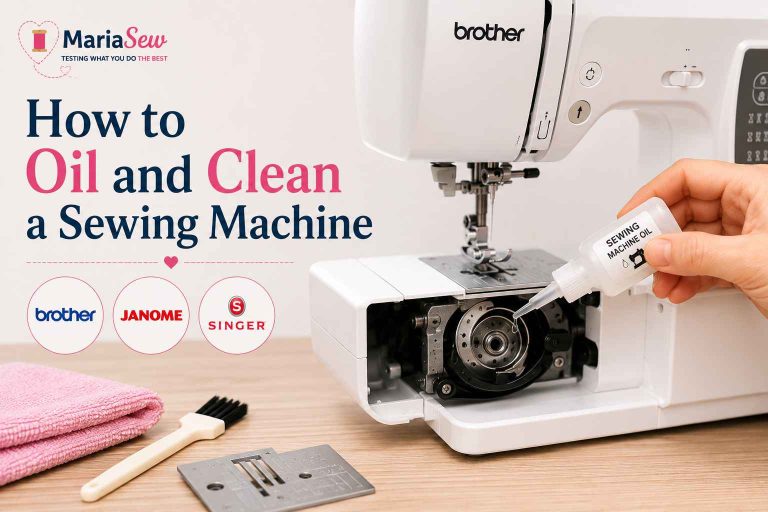
For troubleshooting, use my sewing machine jam guide and cleaning and oiling guide before turning random tension screws or adding lubricant.
Common Sewing Machine Under $100 Mistakes to Avoid
Most disappointment in this category comes from buying by price alone or expecting a small domestic machine to behave like equipment designed for professional or heavy-duty work. These are the mistakes I would avoid before and after purchase.
- Buying the model with the highest stitch count. A clear bobbin system, stable feeding, and understandable controls matter more for a beginner.
- Ignoring condition and seller terms. Deal-dependent models can arrive missing feet, power cords, manuals, or warranty support.
- Calling every thick fabric “denim capable.” One normal jeans hem is different from repeated bulky denim stacks or heavy canvas production.
- Pulling the fabric through the machine. Let the feed dogs move the fabric; pulling can bend the needle and distort stitch length.
- Using the wrong bobbin. Incorrect bobbins are a common cause of jams, noise, and poor stitch formation.
- Changing several settings at once. Rethread, check the bobbin, install a fresh needle, and test on scrap before adjusting multiple controls.
- Forgetting the real delivered price. Shipping, tax, needles, bobbins, and missing accessories can erase the savings on a marketplace listing.
- Buying a mini machine for large projects. Compact size is useful for storage, not for supporting quilts, coats, or bulky home décor.
- Skipping the return-window test. Run all essential stitches and accessories while you can still return a faulty or incomplete machine.
If a machine is fighting you on basic cotton from the first day, do not assume you simply need more skill. Recheck the setup, use the manual, and return a genuinely faulty machine while the seller still allows it.
Final Verdict: Which Sewing Machine Under $100 Should You Buy?
If I had $100 today and wanted a normal first sewing machine, I would buy the Brother LX3817A. It is the cleanest current new-machine value in this guide because the $99 manufacturer price, 17 stitches, top bobbin, free arm, four feet, and full-size format all fit the budget without relying on a refurbished or marketplace condition.
I would choose the SINGER M1000 instead for mending, travel, or a very small sewing space. The SM1400, JX2517, and Brother SM1704 are secondary deal picks: worthwhile when a trustworthy under-$100 listing appears, but not machines I would chase once the total price moves into the next budget tier.
The best budget sewing machine is the one that lets you practice regularly without fighting the setup. Stay realistic about fabric thickness, keep the machine clean and correctly threaded, and spend the saved money on good needles, thread, fabric, and practice projects.
Frequently Asked Questions
What is the best sewing machine under $100 in 2026?
The Brother LX3817A is my best overall pick because Brother currently lists it at $99 and it includes 17 stitches, a four-step buttonhole, four feet, free-arm sewing, a Quick-set top bobbin, LED lighting, and 850 SPM speed.
Can I really buy a good sewing machine for less than $100?
Yes for learning, mending, hems, basic garments, and small crafts. The trade-off is fewer convenience features, less workspace, and lower tolerance for repeated bulky or specialist sewing.
Which sub-$100 machine is best for mending?
The SINGER M1000 is the most focused mending pick here. It is 5.5 pounds, compact, simple, and currently listed by SINGER at $89.99.
Which machine under $100 is best for beginners?
For most beginners, I prefer the Brother LX3817A because it is full-size, simple, has a top drop-in bobbin, a free arm, 17 stitches, and useful feet. The M1000 is better only if compact storage is the top priority.
Can a sewing machine under $100 sew denim?
Some can handle normal garment denim and modest hem layers with the correct denim needle, thread, slower speed, and seam leveling. I would not use these machines for repeated thick denim stacks, leather, or upholstery.
Is a refurbished sewing machine worth buying under $100?
It can be, especially when it is manufacturer-refurbished with a clear warranty and complete accessories. Marketplace refurbishment requires more caution about condition, returns, and missing parts.
How many stitches does a beginner really need?
Most beginners can learn a great deal with straight stitch, zigzag, blind hem, a stretch option, and a buttonhole. A larger stitch count is useful only when those extra patterns match projects you plan to sew.
Do I need an automatic needle threader?
No. It is convenient, especially for limited vision or dexterity, but it is not essential to stitch quality. The Brother SM1400 is the only pick here with an advanced threader, and it only belongs in this guide when discounted under $100.
Is the SINGER M1000 a full sewing machine?
It is a real portable mending sewing machine, but it is intentionally more limited than a full-size machine. SINGER recommends it for light-to-medium fabrics and simpler repairs, and recommends a full-size machine for thicker fabrics and more applications.
Why are some machines in this guide normally over $100?
Because their current sale or marketplace item prices can drop below $100. I label those models as deal picks and recommend skipping them when the price rises above the budget.
Should I buy a Brother or SINGER machine under $100?
Brother currently offers the stronger full-size new option with the LX3817A, while SINGER offers the stronger compact mending option with the M1000. The better choice depends on project size and storage needs.
What should I sew first on a budget machine?
Start with straight seams on stable cotton, then make a small tote, pillow cover, simple hem, or repair. Those projects teach threading, seam allowance, reverse stitching, corners, and fabric control without demanding specialist features.

5 Comments