
How to Hem a Dress Without Sewing: Easy No-Sew Methods
Learning how to hem a dress without sewing is a simple way to shorten a dress, fix an uneven hemline, or make a last-minute outfit adjustment without using a sewing machine. No-sew hemming methods, such as iron-on hem tape, no-iron adhesive tape, and fabric glue, can help create a clean temporary or semi-permanent finish when they are matched correctly to the fabric.
The best method depends on the dress material, whether the hem needs to be washable, and how permanent you want the alteration to be. In this guide, you will learn the safest no-sew ways to hem a dress, what supplies to use, how to measure the length, how to avoid adhesive marks, and when a tailor or hand-sewn hem may be the better choice.
Quick Answer: What Is the Best Way to Hem a Dress Without Sewing?
The best way to hem a dress without sewing is to measure the new length carefully, press the fold, test your adhesive on a hidden area, and then secure the hem with either iron-on hem tape, no-iron hem tape, or fabric glue. Iron-on hem tape is usually best for cotton, polyester blends, and medium-weight fabrics. Fabric glue can work for some lightweight fabrics, but it must be tested first because certain glues can stiffen, stain, or show through delicate materials. For temporary changes, fashion tape or a removable no-sew hem tape is usually safer than permanent glue.
Key Takeaways
- No-sew hemming is useful for quick dress alterations, last-minute length fixes, and simple wardrobe adjustments.
- Always measure, pin or clip, and test the new length before using glue, tape, or cutting fabric.
- Iron-on hem tape needs heat, so it is not suitable for every fabric, especially some silks, chiffons, sequins, velvets, or heat-sensitive synthetics.
- Fabric glue can create a strong bond, but drying and curing times vary by product and fabric type, so follow the manufacturer’s instructions.
- For expensive, formal, pleated, beaded, bias-cut, or delicate dresses, a tailor or hand-sewn hem is often the safer option.
What to Know Before You Hem a Dress Without Sewing
When done properly and using a method that is appropriate for the dress material, no-sew hemming can be very neat. The worst error is to use all adhesives as if they were the same. There are temporary products, there are washable products, and there are products that are supposed to be permanent (after heat/curing time). If you’d like to learn traditional hemming techniques, see our guide on how to hand sew a hem.
Always test the adhesive on a hidden seam allowance and read the dress care label before using the adhesive. Delicate fabrics can be damaged by heat, and liquid glue can bleed through thin fabrics. For expensive or significant dresses, do not make permanent alterations until you are certain that the length is right for the occasion.
Learning more about sewing machine parts and garment construction can also help you understand how professional hems are created.
| No-Sew Method | Best For | Avoid On | Durability |
|---|---|---|---|
| Iron-on hem tape | Cotton, linen, polyester blends, medium-weight fabrics | Heat-sensitive fabrics, sequins, velvet, and some silks | Often long-lasting if applied and washed correctly |
| No-iron adhesive hem tape | Temporary fixes, travel, event-day adjustments | Very heavy hems or garments needing frequent washing | Temporary to semi-permanent, depending on the product |
| Fabric glue | Small repairs, some lightweight to medium fabrics | Thin silk, chiffon, satin, visible outer layers without testing | Varies; some are washable after curing |
| Fashion tape | Emergency temporary shortening | Long-term hems or washable alterations | Temporary |
| Clip/pin temporary fold | Photoshoots, fitting checks, very short-term use | Active movement or all-day wear | Very temporary |
Why Hem a Dress Without Sewing?
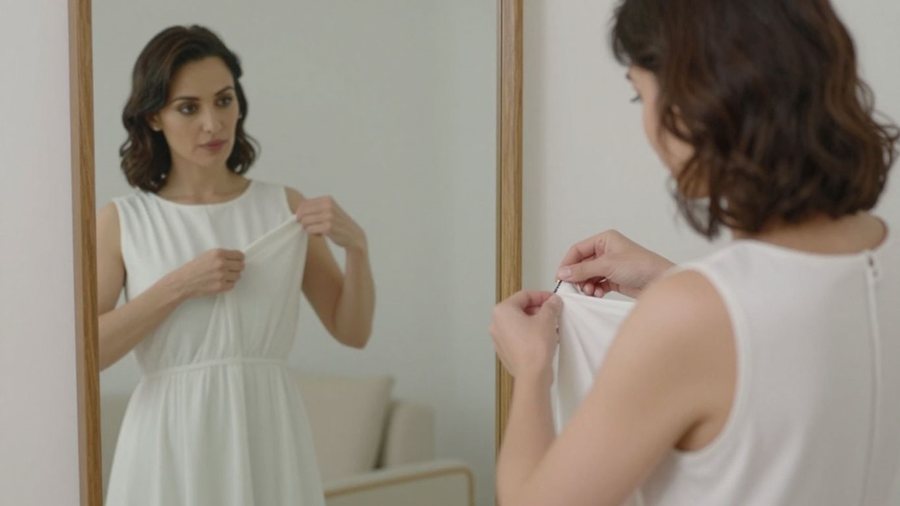
There are many dresses that have standard lengths that do not fit all heights, shoe styles, and event styles. A no-sew hem can be used to increase the length of a dress, to avoid dragging fabric, and to make a dress more comfortable without purchasing a new dress or using a sewing machine.
This is particularly useful for last-minute changes, travel, school events, bridesmaid dress changes, casual summer dresses, and simple wardrobe fixes. No-sew hemming should be used with care on fine fabrics, layered fabrics, pleated fabrics, or expensive fabrics because the adhesive might leave a mark or alter the drape of the fabric. If you are new to garment alterations, our guide on how to learn sewing covers foundational skills that make clothing adjustments easier.
Gather Your No-Sew Hemming Supplies
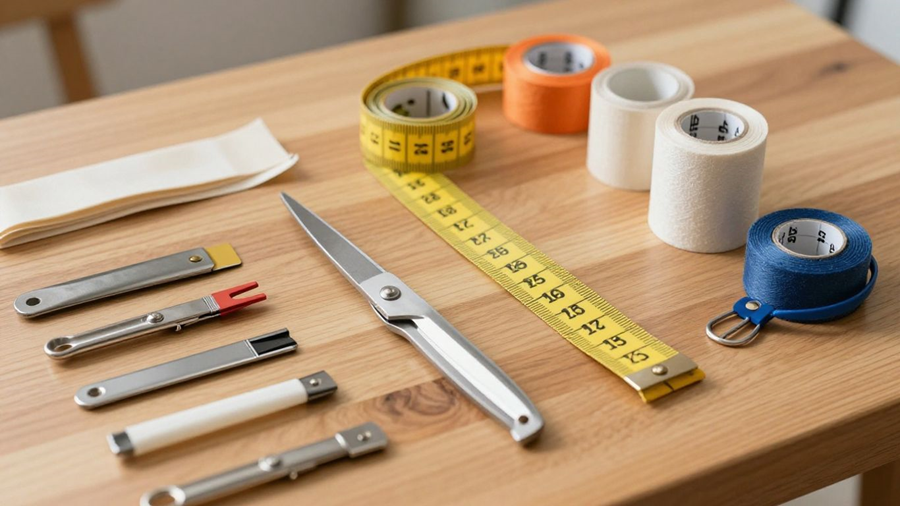
Having the right supplies makes the process cleaner and reduces the chance of crooked folds, glue stains, or weak adhesion. Choose your tools based on the dress fabric and whether the hem needs to be temporary, washable, or permanent. If you frequently work on clothing alterations and DIY projects, having one of the best sewing kits for beginners can help keep essential tools organized.
| Supply | Purpose | Helpful Tip |
|---|---|---|
| Fabric glue | Bonds folded fabric without stitches | Use a thin line and follow the curing instructions |
| Iron-on hem tape | Creates a heat-activated adhesive hem | Use the iron setting recommended by the tape and fabric label |
| No-iron hem tape | Sticks with pressure instead of heat | Good for temporary or heat-sensitive situations |
| Fabric scissors | Trim extra fabric if needed | Do not cut until the length is tested |
| Measuring tape or ruler | Keeps the hemline even | Measure from the floor or from the original hem consistently |
| Pins or fabric clips | Holds the folded hem while checking fit | Clips are safer for delicate fabrics that show pin holes |
| Tailor chalk or washable marker | Marks the fold line | Test first to make sure it disappears |
| Iron and pressing cloth | Presses the fold and activates the iron-on tape | Use a pressing cloth to protect the fabric |
How to Measure a Dress Hem Before Using No-Sew Tape or Glue
The secret to an intentional, not hurried, no-sew hem is good measuring. Put on the dress with the shoes you’ll wear, and then determine where the new hem should be. If you can, have someone else measure the length while you stand normally.
Once marked, take off the dress and spread it out. Measure the same distance around the entire hemline, and pin or clip the fold, and do not use any adhesive. Test the dress on again with the hem folded to ensure that the length is even from the front, sides, and back.
- Wear the dress with the shoes or undergarments you plan to use.
- Mark the desired finished length with chalk, pins, or clips.
- Add a hem allowance if you plan to fold fabric upward instead of trimming.
- Fold the hem evenly all the way around the dress.
- Press the fold lightly if the fabric allows heat.
- Try the dress on again before using permanent adhesive or cutting.
Best No-Sew Hem Method by Dress Fabric
Different dress fabrics react differently to glue, tape, heat, and pressure. This table helps you choose a safer starting method, but you should still test a hidden area first.
| Dress Fabric | Recommended Method | Important Caution |
|---|---|---|
| Cotton or linen | Iron-on hem tape or fabric glue | Prewash if the dress will be washed later |
| Polyester blend | Iron-on hem tape on low-to-medium heat or no-iron tape | Use a pressing cloth and avoid overheating |
| Chiffon or sheer fabric | Temporary tape or professional/hand-sewn hem | Glue and tape can show through easily |
| Silk or satin | Tailor, hand-sewn hem, or careful temporary tape | Heat, glue, and tape may leave shine or stains |
| Denim or thick cotton | Heavy-duty fabric glue or strong hem tape | Allow full curing time before wearing |
| Knit or stretchy fabric | Stretch-friendly adhesive or temporary tape | Rigid tape can restrict stretch and create waves |
| Pleated dress | Small pieces of tape, tailor, or hand sewing | Pleats must be aligned one by one |
Method 1: Hem a Dress with Fabric Glue
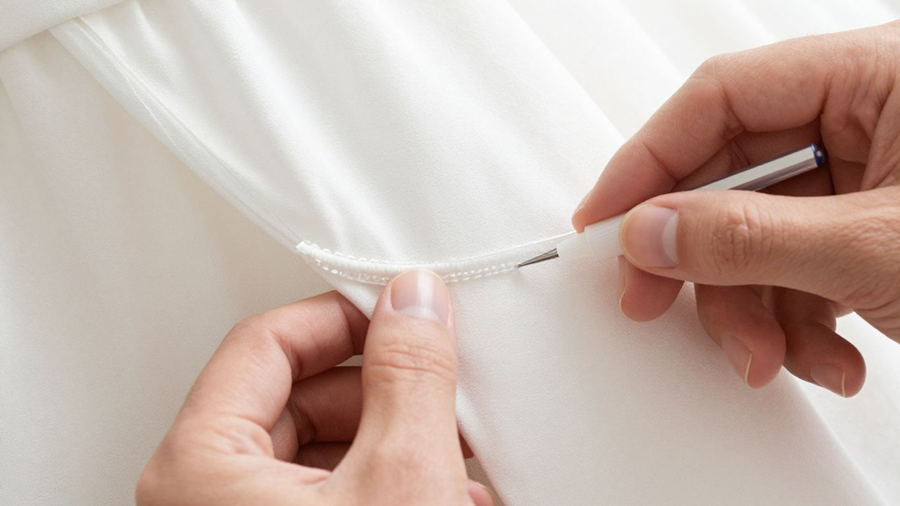
Fabric glue is an alternative to the no-sew method for making a bonded hem, but use it sparingly. Usually, a thin line of glue will suffice. Excessive glue can wet through the dress or cause it to become stiff or leave a stain on the exterior.
Fabric glue is used by folding and pressing the hem first, then gluing the inside of the hem. Apply pressure to the layers and ensure that the dress stays flat until the adhesive has set. The drying and curing times are different for each brand; wait until the product instructions indicate that the bond is dry before wearing or washing the dress. A similar measuring process is used when learning how to hem pants, where accurate length adjustments are essential for a professional-looking finish.
| Step | What to Do | Why It Matters |
|---|---|---|
| 1 | Test the glue on a hidden seam or scrap fabric | Prevents visible stains or stiffness |
| 2 | Fold and press the hem if the fabric allows heat | Creates a cleaner edge |
| 3 | Apply a thin line of glue inside the fold | Avoids bulk and bleed-through |
| 4 | Press the fold firmly and keep it flat | Helps the bond set evenly |
| 5 | Allow full drying and curing time | Improves durability before wearing or washing |
Method 2: Hem a Dress with Hem Tape
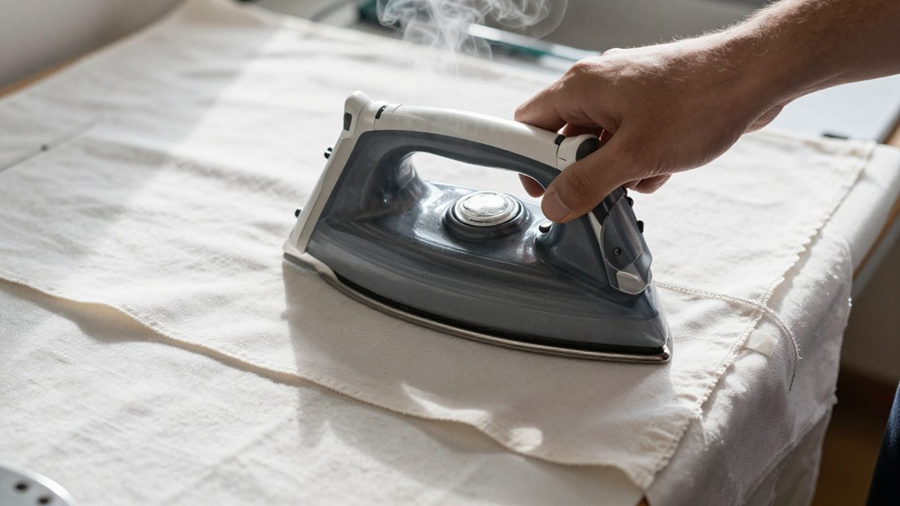
One of the simplest ways to hem a dress without sewing is by using hem tape, which forms a neat fold without stitching. There are two types: Iron-on hem tape and No-iron adhesive tape. The right choice will depend on the fabric and the desired permanency of the hem.
No-Iron Hem Tape Method
No Iron hem tape is a pressure-sensitive adhesive and can be used for temporary or quick dress changes. When heat is not an option or when you need a quick solution for an event.
Place the tape inside the folded hem, press firmly, and smooth the fabric with your fingers. Some no-iron tapes are temporary, so please make sure to see the package before washing the dress or wearing it for a long time.
Iron-On Hem Tape Method
Iron-on hem tape uses heat to melt the adhesive into the fabric layers. It often creates a stronger bond than temporary tape, but it is not safe for every dress. Always check the fabric care label and use a pressing cloth when needed.
- Fold the dress to the desired new length and press the fold if safe for the fabric.
- Place the iron-on hem tape inside the folded crease, keeping it away from the outer edge.
- Set the iron according to the tape instructions and the dress care label, not automatically to the cotton setting.
- Press with steady heat for the recommended time, usually in short sections.
- Let the adhesive cool fully before moving or trying on the dress.
Do not slide the iron back and forth while activating the hem tape, because that can shift the fold. Press, lift, and move to the next section instead. Before applying hem tape, make sure the dress is pressed and wrinkle-free. A compact pressing tool such as a mini iron for sewing can be especially useful when working on small hems and delicate fabric sections.
Method 3: Use Temporary No-Sew Hemming for Last-Minute Dress Fixes
Temporary hemming is helpful when you need to make a temporary change but do not want to make a permanent change. For photos, travel, or a specific event, you can use fashion tape, removable adhesive tape, or strategically placed fabric clips to shorten a dress.
Temporary methods are not generally durable enough to last long or withstand washing. They are most suitable for use when the dress is not to be dragged, pulled, danced in heavily, or exposed to moisture. Test hold before leaving home for important events.
Tips for a Perfect No-Sew Dress Hem
- Always test glue or tape on a hidden area before applying it to the full hemline.
- Use a pressing cloth when working with iron-on tape to reduce shine, scorching, or adhesive transfer.
- Do not cut fabric until you have tested the new length while wearing the dress.
- Apply glue in a thin line rather than a thick layer to avoid stiffness and staining.
- Let the adhesive cool or cure fully before wearing the dress.
- Use shorter pieces of tape around curved hems instead of one long strip, which can cause puckering.
- For pleats, secure each pleat separately, so the original shape stays aligned.
Common No-Sew Hemming Mistakes and How to Fix Them
| Problem | Common Cause | Simple Fix |
|---|---|---|
| Hem looks uneven | The dress was not measured while hanging or being worn | Re-pin the dress, check in a mirror, and measure again |
| Tape shows through the fabric | The fabric is too thin, or the tape is too thick | Use temporary tape, hand sewing, or a tailor instead |
| Glue leaves a stain | Too much glue or the wrong glue for fabric | Test first and use a thinner application |
| Hem feels stiff | The adhesive is too heavy for the fabric | Use a lighter tape or a hand-sewn hem |
| Hem peels after washing | Bond was not fully cured, or the product was not washable | Follow product care instructions and allow full curing time |
| Fabric puckers | Tape was applied in long strips on a curved hem | Use small sections and press gradually |
| Dress becomes too short | Fabric was cut before testing the length | Avoid cutting until the final length is confirmed |
How to Wash and Care for a No-Sew Hemmed Dress
The care instructions vary according to the adhesive product and the dress fabric. Some hem tapes and fabric glues can be washed after curing, while others are only used temporarily. Follow the product label when laundering.
To make the hem last longer, wash the dress on a gentle cycle when possible, avoid hot water in the washing machine and dryer, and hang dry if possible. If the hem starts to rise, press or reapply adhesive only after verifying that the fabric will not be damaged by the heat or adhesive.
When Not to Use a No-Sew Hem
No-sew hemming is convenient, but it is not always the best choice. Some dresses need a cleaner, more flexible, or more invisible finish than adhesive methods can provide.
- Wedding dresses, bridesmaid dresses, or expensive formal gowns
- Silk, chiffon, satin, velvet, sequined, or beaded dresses
- Pleated or layered dresses that must keep an exact shape
- Bias-cut dresses that stretch or hang differently when folded
- Dresses that will be washed often or worn heavily
- Any dress where glue or tape shows through the outer fabric
For these situations, a traditional hem created by hand is often more reliable. You can learn the process in our detailed guide on how to hand sew a hem.
Conclusion
If you want a quick, simple, and inexpensive length adjustment but don’t have time to sew, hemming a dress without sewing is a good choice. Iron-on hem tape, no-iron adhesive tape, and fabric glue can all be effective if used with the appropriate fabric and applied with care.
The best method is to measure first, test the adhesive, do not cut too early, and adhere to the product instructions on heat, drying time, and washing. No-sew techniques can be helpful for casual dresses or for a quick fix. A hand-sewn hem or a professional tailor is typically the best option for delicate, formal, or expensive clothes.
Frequently Asked Questions
Can I wash a dress that has been hemmed with iron-on tape?
Many iron-on hem tapes are washable after the adhesive has fully bonded, but this depends on the product. Use a gentle cycle and hang dry when possible to help the bond last longer.
Which no-sew hemming method is best for silk or chiffon?
Silk, chiffon, and sheer fabrics are risky with glue or tape because adhesives may show through, stain, or stiffen the fabric. For valuable, delicate dresses, a hand-sewn or tailor-finished hem is usually safer.
Is a no-sew hem permanent?
Some fabric glues and iron-on tapes are designed to be permanent, while others are temporary. Always check the product label before choosing a method.
Can I re-hem a dress if the length is too short?
You can usually re-hem a dress if you only fold the fabric. If you have already cut off fabric, you may not be able to add much length back without extra trim or a professional alteration.
How long should I wait before wearing the dress?
Wait until the adhesive is fully dry, cooled, or cured according to the product instructions. For many glues, waiting overnight or up to 24 hours is safer.
Do I need to clean the dress before hemming?
Yes. The fabric should be clean, dry, and free from oils, lint, and dirt so the adhesive can bond properly.
Can I use no-sew hemming methods on pleated dresses?
Yes, but pleats are more difficult. Secure each pleat separately with small pieces of tape or adhesive, and check the alignment carefully before bonding.
Can I hem a dress without cutting it?
Yes. For many no-sew hems, you can fold the extra length upward and secure it without cutting. This is safer if you may want to restore the original length later.
What is the fastest way to hem a dress without sewing?
The fastest method is usually no-iron adhesive hem tape or fashion tape. It is best for temporary fixes, not long-term hems that need frequent washing.
Why did my no-sew hem come loose?
The fabric may not have been clean, the adhesive may not have cured, the product may not be washable, or the method may not match the fabric weight. Reapply after testing a hidden area first.