Mini Iron for Sewing: 5 Picks That Won’t Ruin Your Fabric
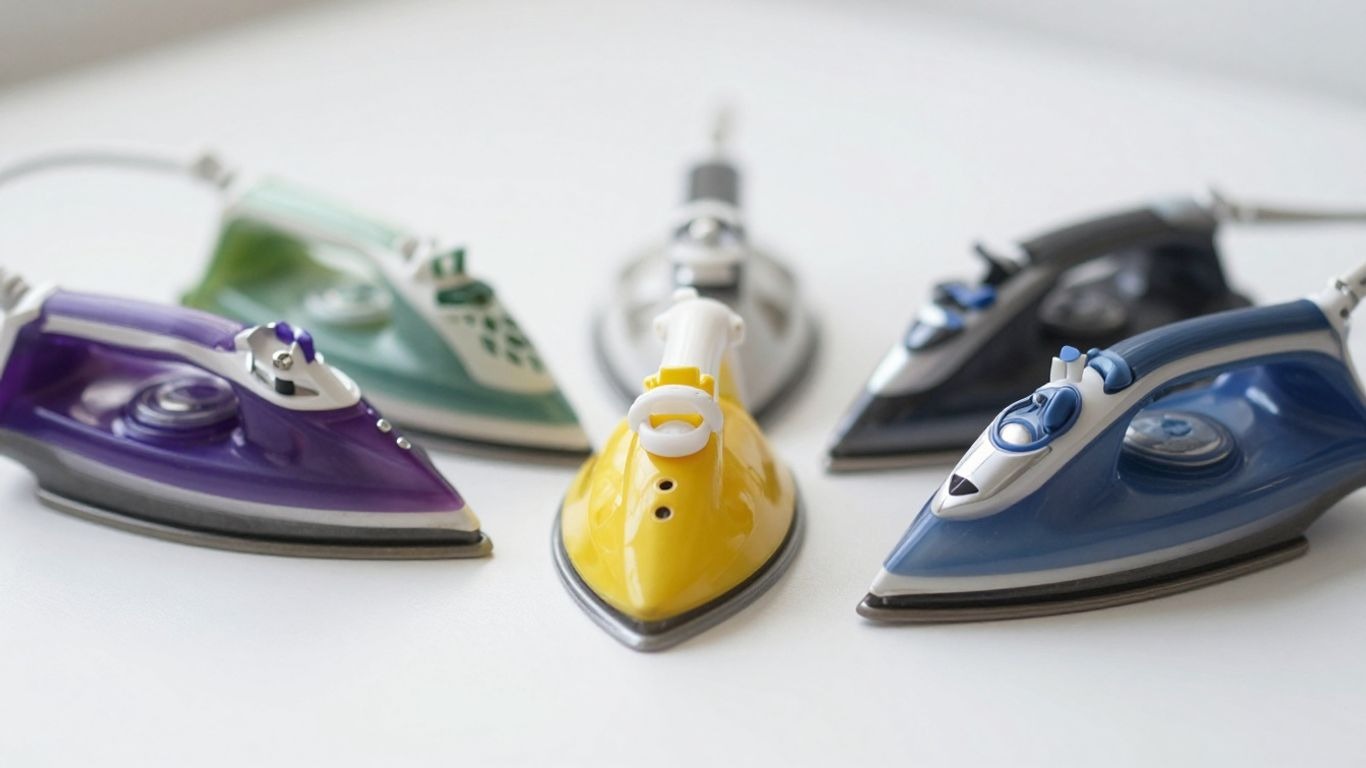
When I first started sewing, I remember thinking I needed a big, heavy iron to get good results. But then I discovered the magic of a mini iron for sewing. These little gadgets are surprisingly powerful and make working on small details so much easier.
I’ve tried a few, and honestly, they’ve become indispensable in my sewing room. Whether I’m quilting, working on tiny pieces, or just need to press a seam right at my machine, a mini iron is a game-changer. I’m excited to share some of my favorites with you.
Key Takeaways
- A mini iron for sewing is great for precise work and small details, saving you trips back and forth to your ironing board.
- They are also ideal for travel or sewing in small spaces due to their compact size.
- When choosing a mini iron, consider temperature control, soleplate material, size, weight, and cord length.
- Look for irons with non-stick soleplates and good temperature consistency for delicate fabrics.
- Many mini irons are designed for convenience, heating up quickly and being easy to maneuver right at your sewing machine.
Best Mini Irons for Sewing, at a Glance
| Pick | Mini Iron | Best For | Key Feature | Quick Verdict | Buy |
|---|---|---|---|---|---|
| 1 | BEAUTURAL Mini Steam Iron Dual voltage · precise temp control ★ Best Overall | Pressing a mix of fabrics with control | Adjustable temperature + pointed tip | The best all-round pick: real heat control protects delicate fabric while the pointed tip reaches seams and appliqué. | Check Price |
| 2 | PIOMATIC Mini Steam Iron Dual voltage · lightweight | Travel, classes, and retreats | Featherweight body + fast heat-up | Grab this when portability matters most. Just expect to refill the small tank more often on longer jobs. | Check Price |
| 3 | BEAUTURAL Detachable-Tank Iron Single temp · removable tank | Beginners who want no fuss | One-setting simplicity + easy-fill tank | Heat and press, no dials to overthink. Use a pressing cloth on very delicate fabric since there is no temp control. | Check Price |
| 4 | Mini Craft Iron (Ceramic) 2.5″×3.9″ plate · 59″ cord | Patches, appliqué & detail work | Quick-heat ceramic plate + long cord | A precision tool that reaches tight corners a full-size iron cannot. Not for pressing large pieces of fabric. | Check Price |
| 5 | HTVRONT Mini Heat Press Heat press, not an iron HTV & transfers | Vinyl and iron-on transfers | Even pressure + auto shut-off | The right tool for HTV where an iron struggles. Applies even pressure so transfers adhere, but it is not for seams or delicate fabric. | Check Price |
Scored on fabric safety, heat-up speed, control, and portability. Prices change often, so check the live listing before buying. This post contains affiliate links; MariaSew may earn a commission from qualifying purchases, at no extra cost to you.
Why Use a Mini Iron for Sewing?
When I first started sewing, a giant clunking iron was the only way to crisp pressing seams. And then I found the ultimate, portable sewing iron, and honestly, that was a game-changer. These little gadgets are more versatile than one would think, and I have found them to be essential in my sewing space.
Mini irons are especially helpful when you’re working on beginner-friendly projects like How to Make a Simple Tote Bag at Home or detailed crafts like How to Sew an Apron.
Precision and Detail Work
Things like a mini iron are the saviour of all those more intricate projects, such as quilting and small appliqué pieces with the matching tiny points, just knowing you can get in there! It is small enough to allow me to have the edge of the presser foot lined up right on top of that seam I just stitched, allowing me to sit there and hold it flat without disturbing all that other fabric around it.
I cannot achieve this type of precision as easily with my full-sized iron. It results in fewer errors and a significantly cleaner end product. This comes in handy, especially when I am working with delicate fabrics where they may burn or get snagged if they are not careful. I love that I can control the heat and put it exactly where I need it.
For quilting and intricate designs, having the right tools matters just as much as choosing the right machine, something you’ll notice if you’ve explored options like the Best Quilting Sewing Machine. A mini iron lets you press seams exactly where needed without disturbing surrounding fabric.
Travel and Small Spaces
Come on, no private sewing room with the big old board for you. I remember the days I feared packing for sewing retreats because of the heavyweight iron. On the other hand, a mini iron is so small. I can take it easily in my sewing bag, and I can even move it to a table (or heat-resistant mat) next to my sewing machine for easy ironing.
That also means I can press seams on the go, which keeps things efficient and neat. This is also ideal for on-the-go touch-ups if I haven’t been able to give my clothes a press when travelling. This will make the learning curve for sewing on a beginner sewing machine much easier to navigate.
If you don’t have a dedicated sewing room, mini irons are perfect. Pair them with compact tools from Sewing Kits for Beginners You Can Buy Online and you’ve got a portable setup anywhere.
Delicate Fabrics
There are fabrics (like silk, satin, or other synthetics) that can be very sensitive to heat. If you have a big iron with it set too high, that can easily scorch or maybe even melt them. Mini irons tend to have lower heat levels, and because their sole plates are smaller, the precision in heat application is superior.
In essence, it’s a prohibitive factor in damaging the delicate materials I can press with these approaches. For delicate fabrics, having the right tool for the job is everything, with a mini iron often being the best option.
A mini iron gives you much more control than just ease of use. It’s a great tool for any sewer, near or far from home, since it allows you to get up close and personal with your own work, manage heat down to the exact inch, and avoid scorching delicate materials.
When working with sensitive materials, precision matters. Just like choosing the right machine (for example, reviews like Brother CS7000X Review explain fabric handling), a mini iron helps avoid burning delicate fabrics.
What to Look for in a Mini Iron
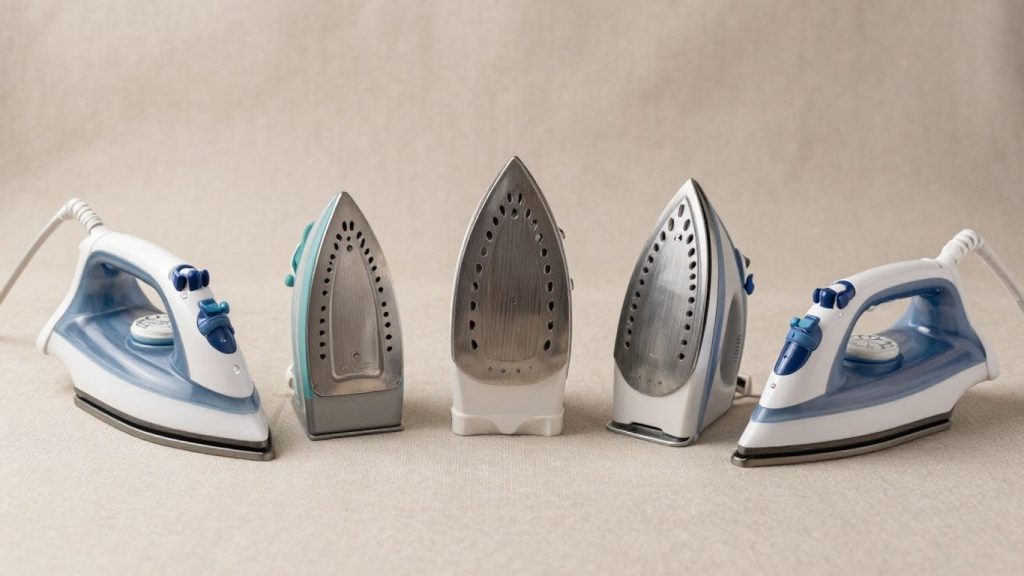
You have a mini iron to use for sewing projects, so you decided on this option. Smart move! There are plenty of them out there, but how do you choose the right one? I have learned a thing or two in my own trial and error, and this is how I think you should keep an eye on.
Understanding tools is key in sewing, similar to learning Sewing Machine Parts.
Temperature Control
This is a big one for me. You want an iron that will allow you to change the temperature. I mean, different fabrics call for different temperatures, no? Use the same heat on a knit silk that you would on an Oxford-weight cotton and prepare for fabric Armageddon.
Choose irons that have at least a few distinctive settings, significantly better perhaps simply attain with the dial to set the heat of the iron modestly. And controlled heating is vital to stop scorch marks or melted synthetics. There are irons out there, particularly ‘one temperature’ irons, which is alright if you’re working with 1 type of fabric most of the time (but I prefer to have options!)
Different fabrics need different heat levels. If you’ve read comparisons like Serger vs Sewing Machine, you already know how important the right tool is, same applies here.
Soleplate Material
That’s the part that actually touches your is the soleplate. Various materials will be observed in use. Non-stick soleplates are quite the norm and do an excellent job of making sure fabric does not stick to and burn on them.
They are heated up evenly and slide well over fabric, so ceramic plates work too. Others may be stainless steel, which is tough but can sometimes catch if you’re not paying attention. A quality non-stick or ceramic soleplate usually suits the majority of sewing tasks, at least for me.
A smooth glide matters, just like stitch quality matters in machines such as the Singer Heavy Duty 4423 Review.
Size and Weight
It may seem obvious with a mini iron, but it still needs pointing out. You want something that feels good in your hand. The heavier and more cumbersome it is, the faster you will tire, especially with all those ironing seams.
Out of the irons that I like, those feathers have an ergonomic shape. Just small enough to navigate between little pieces or sharp edges, but not so tiny that it becomes difficult to handle.
Compact and ergonomic tools improve efficiency, especially when working on DIY crafts like Macrame Wall Hanging Patterns.
Cord Length and Swivel
Figure out where you will be doing your ironing. A longer cord really saves your life if your outlet is like 3 months away from your sewing machine/ workspace. A swivel cord is also a nice addition since it helps avoid tangled cords while you’re working.
Even some of the irons have a retractable cord as well, which is good for storage purposes. Cordless irons do exist, but I really prefer a cord that doesn’t get in the way (and continuous heat and power) over the added inconvenience of regular charging.
When choosing tools, it helps to compare just like you would between machines such as Singer HD500 vs Singer 4452.
My Top 5 Mini Irons for Sewing
Ok, so knowing why you need a mini iron and what to look for in them, now which ones are really worth your money? I’ve been experimenting with a few, and it’s not always easy to find the right little guy! Some are perfect for simple spot-cleans, others punch way above their weight in terms of cleaning power, and some… well, they just look good being functional.
While we have narrowed it down to five, in our opinion, these are really the best ones for sewing and crafting. They are not always the lowest budget, but they balance features, performance, and ease of use. It is a real balancing act between ease of use and effectiveness.
Here’s my rundown of the mini irons that have earned a spot on my sewing table:
- BEAUTURAL Mini Travel Steam Iron: This is the best all-rounder of the bunch. It warms quickly, temp logging is fine, and the non-stick soleplate allows effortless glide without interruption. And if you travel, a dual voltage is a lifesaver.
- PIOMATIC Travel Iron mini with steam: Another little iron, this one is good for travel or simply keeping close to your machine, the same as the BEAUTURAL. It is portable, it has a non-stick surface, and it does its job without frills.
- This may be the pick for you, if simple appeals to you, BEAUTURAL Mini Travel Steam Iron (One Temperature Technology). And it only requires you to set the temperature once, making for a single safe choice that truly works on nearly all of your fabric types. Nice big detachable water tank
- Mini iron for crafting (ceramic plate), basically designed for smaller projects. The ceramic plate heats in an instant, and the small size is great for ironing patches or appliques as well as small seams. That long cord is certainly a bonus in this instance.
- You can get more heat pressing things, but because this mini iron is designed to do stuff all over with your sewing projects, it’s made for small and easy heat transfer/fuse pieces. The HTVRONT Heat Press Mini: It was advertised as a heat press (and though you can buy other similar presses, everyone I know uses theirs for fabric), people seem limited about what they use the tool on. It heats up and retains heat well.
The best mini iron for you just depends on what you’re using it mostly for. Consider whether you need steam, super-precise temp control, or just something highly portable. If you are unsure, don’t be shy to try a few; they’re small enough that they barely take up a ton of space if one doesn’t work for you.
Explore a detailed breakdown of features, performance, and real usability in this
SINGER HD500 sewing machine review to see if it fits your sewing needs.
1. BEAUTURAL Mini Travel Steam Iron, Dual Voltage (Sewing & Quilting)
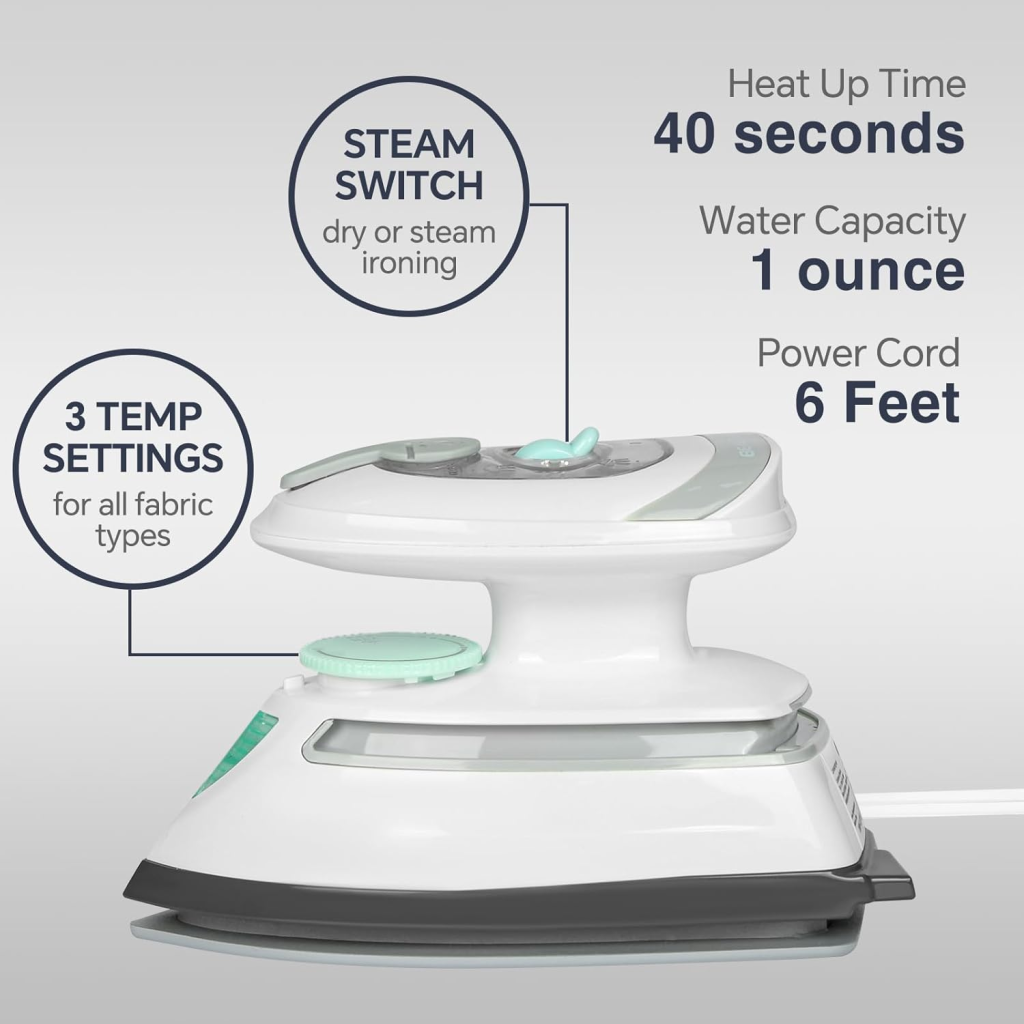
So when I first came across the BEAUTURAL Mini Travel Steam Iron, I was a little unsure. I wondered if something so small could really manage my sewing. As it turns out, yes, it very much can. For detailed work, this little iron is a lifesaver. Love that it heats up quickly, and I can get right to pressing seams without a long wait. And the temp control is nice and easy — excellent since I don’t need to be screwing about with some fancy-pants controller when I’m trying to quilt. And because it’s super lightweight, you can easily maneuver around small scraps and tricky corners.
My favorite use for it so far has been at home with appliqué and other detailed work that requires precision, as a full-sized iron would create too much bulk. And the super-smooth non-stick soleplate glides like butter, and won’t hitch on fabric. It is also a great choice if you travel frequently and want to take your sewing hobby with you while on the road, as it is small in size, inside a sewing machine carry case. Whether you are making garments or not, though, this is an absolute powerhouse of a tool!
Here’s what I appreciate most about it:
- Perfect Precision: The space between fabric and seams helps to press seams flat, but the pointed tip is designed specifically to get into tight spots.
- Small: It is very small; it takes up space neither in my craft room nor in my suitcase.
- Easy to Use: Simple controls (up to any range of your preference) and fast heat-up also make it a beginner’s choice.
I use this iron for pressing tiny quilt blocks to touching up apparel, and it does a superb job. It’s a dependable little beast of burden that doesn’t ask for much ground or labour.
This iron may not be a handheld steamer in the truest sense of the word, but its steam function is remarkably powerful for removing wrinkles and touching up fabrics directly at the sewing machine. You have a little extra treat as well. I didn’t expect to use it much, but I do.
2. PIOMATIC Mini Travel Steam Iron, Dual Voltage (Sewing & Quilting)
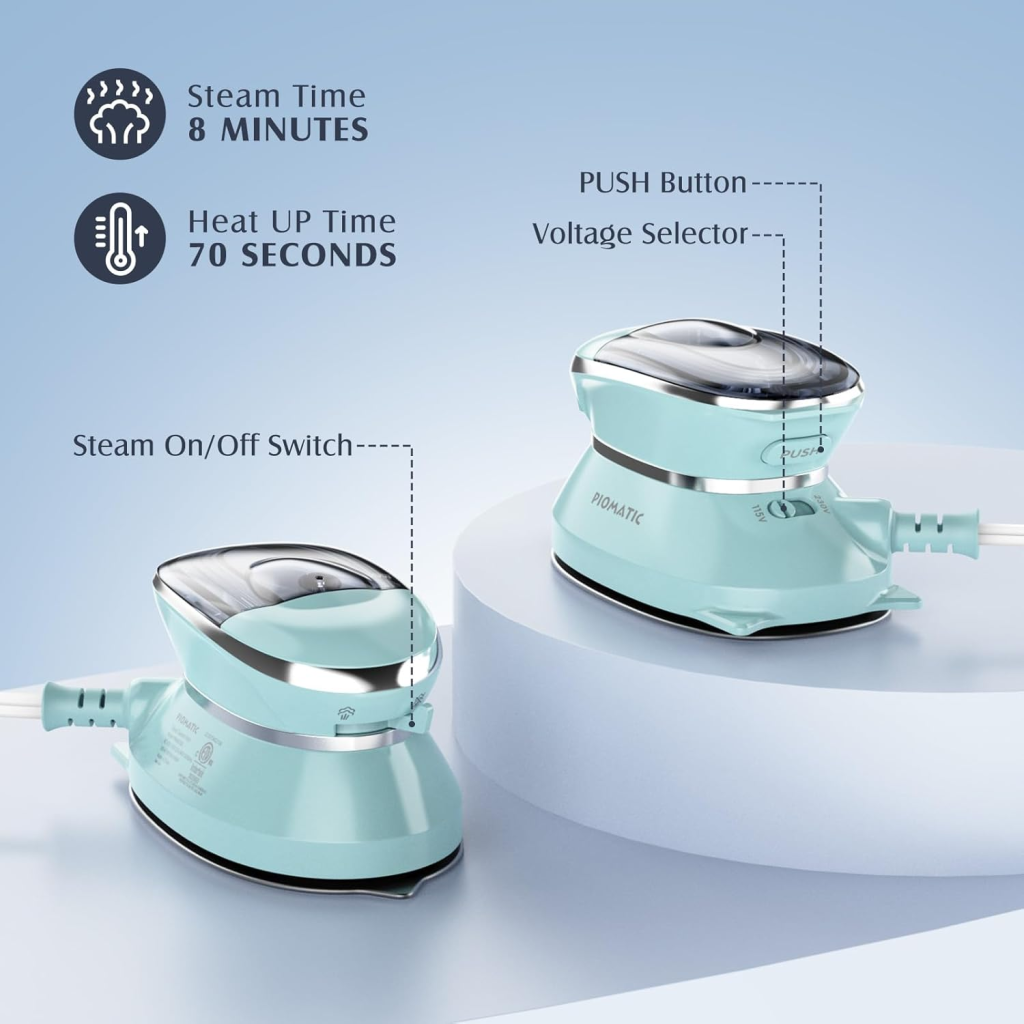
My first thought when I came across the PIOMATIC Travel Iron Mini was a bit of skepticism. I thought it looked so small, I wondered if it could really perform well. But honestly, it surprised me. This is another workhorse of a little guy, especially for those fiddly bits you often end up having to put together while sewing & quilting. It is so very convenient to keep right by my sewing machine and not have to walk back-and-forth to the ironing board every few stitches. That’s a time saver – especially when assembling little bits of fabric and trying to match points.
I love its portability for a few reasons. And lightweight and easy to maneuver, which makes a huge difference when you’re working on detailed projects. And it definitely feels less encumbering than a standard-size iron. Also, it’s dual voltage, which is an absolute boon to me, just in case I need to sew when on the road. It is definitely a good travel fabric iron choice as well.
Here’s a quick rundown of what I found:
- Heats up fast: I am not going to wait and wait until I can start pressing on.
- Big? Non-stick soleplate. This one is a big plus. What I love is that it glides, does not drag, and does not get snagged on fabric, which was perfect for my delicate fabrics.
- Low footprint: It does not take up much room in my sewing area or my travel bag.
This makes it ideal for touch-ups and detail work, but because of the smaller tank, expect to refill this more often than you might with a full-sized iron. It is not for pressing big items, but to press crinoline and quilting pieces, it will do great!
If you need a travel iron for quilting or a portable garment steamer that won’t break your back, this PIOMATIC model is as good an option as Amazon dreams of. So, it is a handy item for all sewer who loves fast and accurate work.
3. BEAUTURAL Mini Travel Steam Iron, Dual Voltage (Detachable Tank)
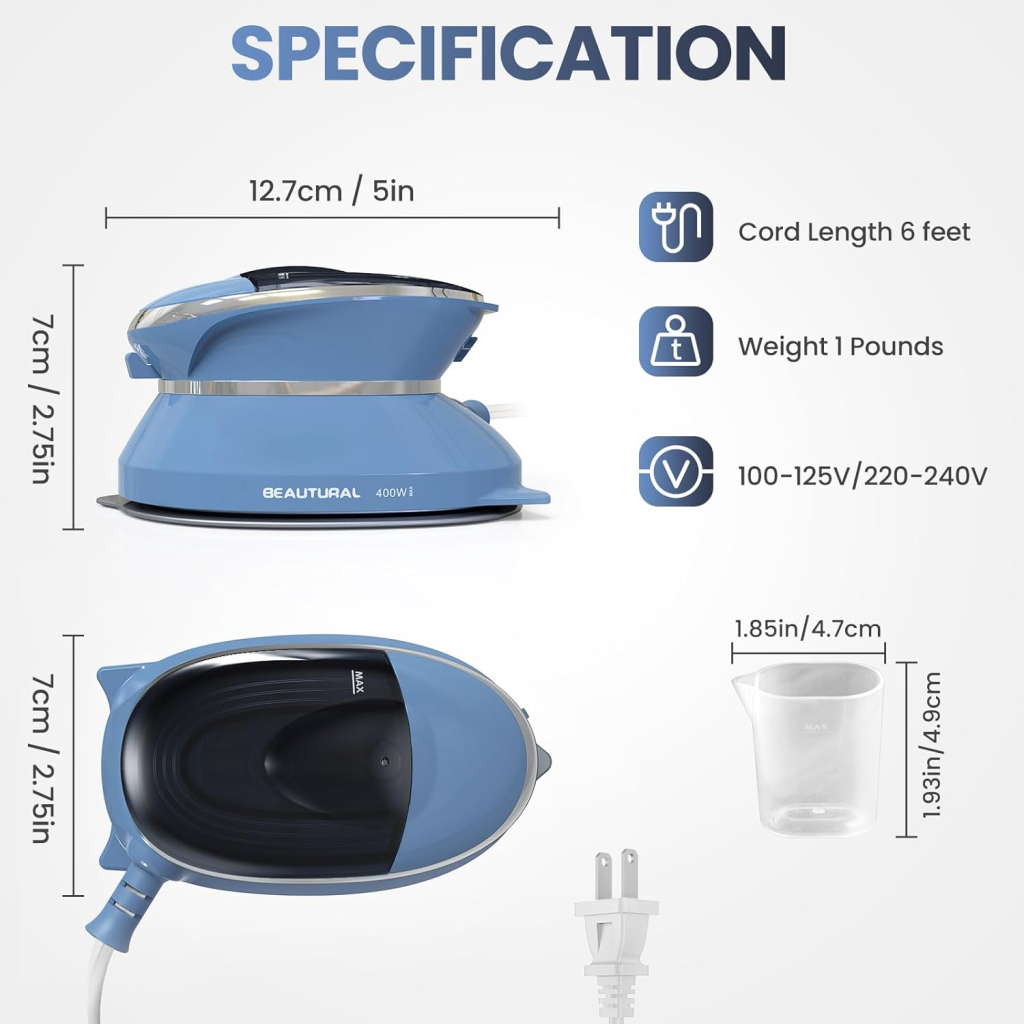
This BEAUTURAL mini iron is a pretty decent option if you’re interested in something basic for your sewing additions. It is dual voltage, which is nice because if I ever go on a quilting road trip, I can take it with me. The non-stick soleplate is another big plus; it slides over the fabric without snagging, which is just what you need as you’re working with delicate materials or trying to get those seams flat.
What I really love is the one temperature technology. It really helps eliminate guesswork. I don’t have to futz with a dial looking for the right setting on different fabrics. It works on nearly every sewing substance, and I can plug it in to sew. But the best part is that it can be really convenient when I’m midway through a project and just need to press now.
Here’s a quick rundown of what I like:
- Dual Voltage: Great for travel or if I move.
- Non-Stick Soleplate: Smooth ironing, no fabric sticking.
- Detachable Water Tank: Easier to fill and less mess.
- Single Temperature Setting: Simple to use, no complicated adjustments.
It is nice to have a water tank that detaches. Some of the other mini irons I’ve tried are difficult to fill up without spilling. But this one is so much easier! On top of that, it means I can just rinse and repeat when I’m finished. These little conveniences are all the difference when sewing.
It doesn’t have a ton of bells and whistles; however, its simplicity is its greatest asset. Heats up fast and is ideal for pressing seams & small pieces. This super-simple mini iron is worth shopping for if you want an uncomplicated unit to use for sewing or quilting. This is a very affordable workhorse that does not require any effort to be by your sewing machine, for quick and easy touch-ups.
4. Mini Craft Iron 2.5″ x 3.9″, Quick Heat Ceramic Plate
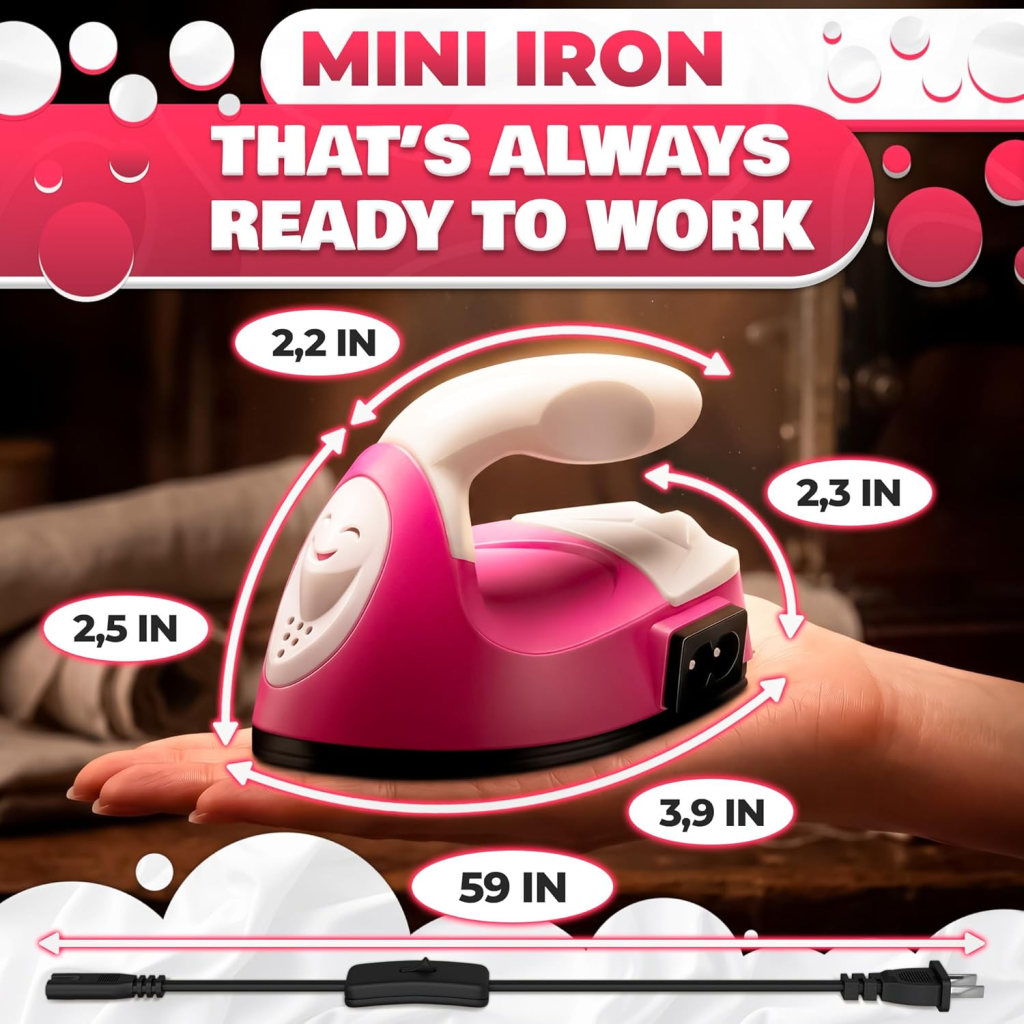
This little dude is really useful in those tiny projects when a full-blown iron just feels like overkill. For me, it’s ideal for use between patch jobs, bling-ups, or simply pressing some tiny seams when I’m in the middle of piecing a quilt at the sewing machine. So, when I’m in the zone, and I don’t want to wait around because it heats up surprisingly fast, that’s a big plus. The ceramic plate glides somewhat smoothly over fabric, and the 59-inch cord provides enough wiggle room.
It is certainly a small build iron that takes little room, making it perfect for small craft projects or maybe even taking on trips. Not every project, but when it comes to detail work, it’s a winner.
Here’s a quick rundown of what I like:
- Quick Heat-Up: Ready to go in just a few minutes.
- Ceramic Plate: Smooth and helps prevent sticking.
- Compact Size: Easy to store and handle for detailed work.
- Long Cord: 59 inches provides good reach.
The Panasonic Portable Multi Hand Iron is an invaluable addition to the arsenal of anyone who does small-detail sewing or crafting. This will not take the place of your primary iron, but for those specific tasks, it’s invaluable. I even have it by my sewing machine so I can quickly press between stitches. It is a tool that simplifies one of those little tasks hidden in our daily routine considerably.
The last thing you want here to happen, when you are looking for a small craft iron, is something that causes more problems than it solves. This one is good enough for small jobs. This is a perfect sewing accessory in my kit, especially if I want to be precise.
Quilters: This is designed for pressing smaller blocks or seams, so if you do a lot of that, it may fit into your quilting iron reviews nicely in its own niche. It’s also perfect if you want a portable (small) craft iron to take somewhere, like a sewing retreat or craft fair. So small you could even fit a sewing machine carry case around it if necessary,
5. HTVRONT Mini Heat Press Machine (Mint)
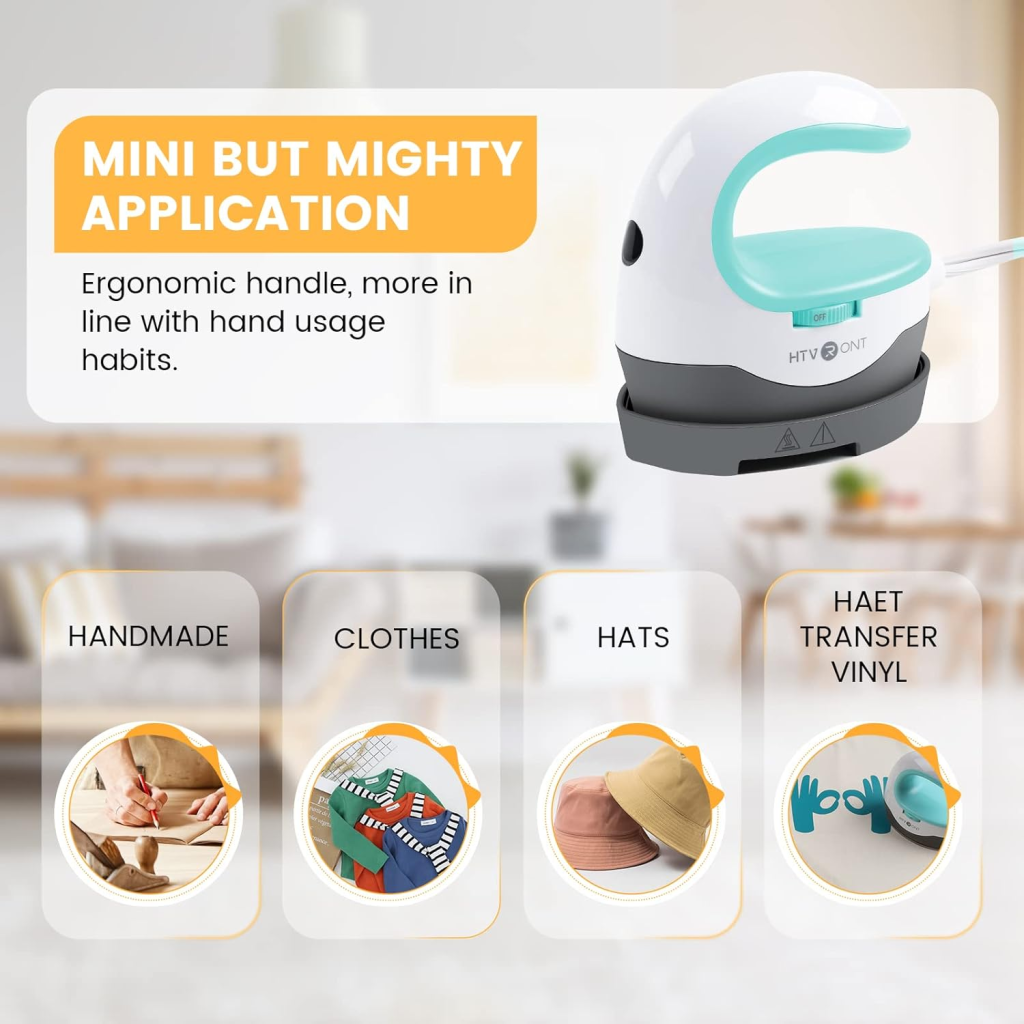
In fact, this little HTVRONT Mini Heat Press is somewhat different than the other mini irons I’ve examined. It’s more like a heat press for patches and other small transfer projects. You have until October 2023 to use the data taught, and if you like anything using vinyl or heat transfer on places such as t-shirts, hats, or even small fabric crafts, it could be a handy tool!
And it’s certainly a travel fabric press, though not super light for popping in a small bag. It’s not particularly compact or portable, more for the tabletop than it is for travel. For its size, the heating area is spacious, which allows you to press larger designs down in a more even manner than with an iron tip.
Here’s a quick rundown of what I found:
- Quick Heat-Up: It gets to temperature pretty fast, so you’re not waiting around forever.
- Even Pressure: The design allows for pretty consistent pressure across the plate, which is key for good transfers.
- Safety Features: It has an auto-shutoff, which is always a plus for peace of mind.
- Versatile: Works well for various heat transfer projects, not just patches.
It isn’t just an everyday sewing iron, but if you’re going to be doing a lot of crafting with heat transfers, then it’s a great option. It literally sits in the middle of a craft iron and a fully sized heat press, so to me it is the perfect little fabric pressing tool for the smaller items.
Although it is sold as a mini iron, consider it more of a tailored heat press for small projects. By traditional sewing standards, it’s not the best for pressing delicate fabrics, but I reckon it works a treat for applying transfers. To a lesser degree, the mint color is also certainly kind of cute, if that matters to you!
Tips for Using Your Mini Iron Safely
I lost my mini iron virginity a while back on a sewing project. I mean, it’s small, right? What kind of trouble do you think it can be? Why, I quickly learned, even these little guys require some respect.
First of all, you should never leave it unattended when plugged in. No, I cannot emphasize this enough. You burn through it so quickly, and a difficult seam or an unexpected call takes your mind off of things. If you need to go away for a moment, or from the moment in the checklist, or even just use its heel rest, unplug it. I found this out the hard way when I nearly burned my cutting mat.
Here are a few other things I do now:
- Consult the manual: I know this sounds a bit boring, but each iron is slightly different. But knowing its details, such as the times of the auto-shutoff or how to fill the water tank, is really essential.
- Don’t go plop it down at just any old place; well, use the right surface: Use a heat-resistant mat or the stand of iron. This protects you and your workspace from accidents.
- Watch the cord: Avoid leaving the cord near a hot soleplate and tripping over it. A mess of a wire is asking for trouble.
- Allow it to completely cool: Cool down thoroughly before storing away. I tend to leave mine on the mat for trousers for about 10-15 minutes.
Also, it is called a ‘mini’ iron, so obviously, they do get quite hot. If you take care of your item, you will never burn it or spoil your fabric, and avoid risking a fire. It is all about awareness and building the right habits.
And finally, if your iron has a steam function, be cautious when filling the water tank. I washed myself in a mix of showers, and that hot water is no trifle. Just take your time with it.
Safety matters in every workspace—whether it’s sewing or even organizing your home setup using ideas like Small Apartment Ideas.
Wrapping Up Your Mini Iron Search
So, there you have it. If you’ve been with me for a while, you know that finding a good mini iron can make a world of difference when sewing–like getting those seams just right without the fuss! Believe me, I’ve battled with plenty of uncooperative irons and some not-so-great results. With these options, though, I feel much more at ease knowing that if I press my fabrics, there isn’t going to be any unintentional scorching.
So, really, it comes down to which one suits your needs – portability, or a certain feature, or just because it’s a good price. So, I hope this list may finally help you to bring the little magic yourself.
A mini iron is a small upgrade—but it makes a huge difference. Whether you’re just starting out with How to Learn Sewing or upgrading your setup like you would with Best Sewing Box, this tool adds precision and convenience.
Frequently Asked Questions
Why should I use a mini iron for sewing instead of a regular one?
I find that mini irons are fantastic for detailed work. Because they’re smaller, I can get them right up to my sewing machine to press seams as I go. This saves me trips back and forth to the ironing board and makes matching points or working with tiny pieces much easier. Plus, they’re super convenient for travel or if I’m working in a small space.
What are the most important things to check when buying a mini iron for sewing?
When I’m looking for a mini iron, I always check for good temperature control to make sure I don’t scorch delicate fabrics. The soleplate material is important too; I prefer non-stick ones that glide smoothly. I also consider how small and light it is, and how long the cord is – a swivel cord is a nice bonus for easier maneuvering.
Can a mini iron handle delicate fabrics like silk or chiffon?
Yes, many mini irons are great for delicate fabrics! The key is temperature control. I look for irons that let me set a lower heat or have specific settings for different materials. A non-stick soleplate also helps prevent snags and shines on finer materials.
Are mini irons good for quilting projects?
Absolutely! I think mini irons are perfect for quilting, especially during the piecing stage. I can keep one right next to my sewing machine to press seams immediately after stitching. This is a huge time-saver and helps me achieve crisp seams and perfectly aligned points, which is crucial in quilting.
Do I need to worry about mini irons leaking water?
Leaking can be a problem with any steam iron, mini or full-sized. I’ve learned to be careful when filling the water tank and to make sure the iron is upright when not in use. Some models are better designed to prevent leaks than others, so I read reviews specifically mentioning this issue before I buy.
Can I use a mini iron for more than just sewing and quilting?
Definitely! I use my mini iron for all sorts of small projects. They’re great for ironing on patches, applying heat transfers for crafts, or even quick touch-ups on clothes when I’m traveling. Their small size and precision make them really versatile for various crafting needs.