
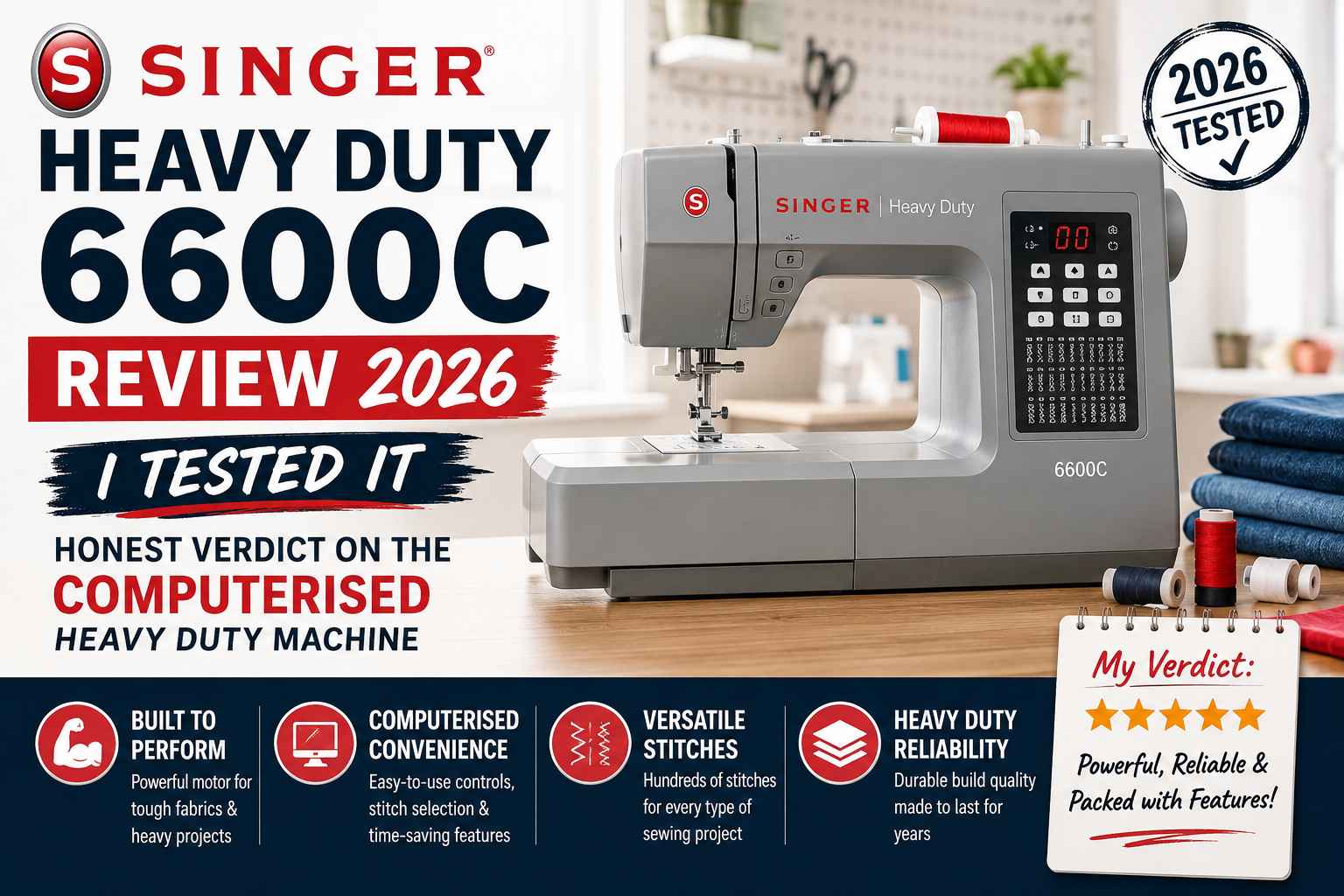
Singer Heavy Duty 6600C Review 2026: I Tested It — Honest Verdict on the Computerised Heavy Duty Machine
Singer’s Heavy Duty range has always been one of the most reliable product lines I have tested across 12 years of reviewing sewing machines. The 6600C is the most interesting model in that range, a machine that attempts to combine a powerful heavy-duty motor with a computerised interface and LCD controls. That combination either works very well or creates a machine that does neither thing as well as a dedicated option in each category.
I tested the 6600C on cotton, denim, silk, and multiple fabric layers before writing this review. Here is what I found.
Introduction: What is the SINGER Heavy Duty 6600C?
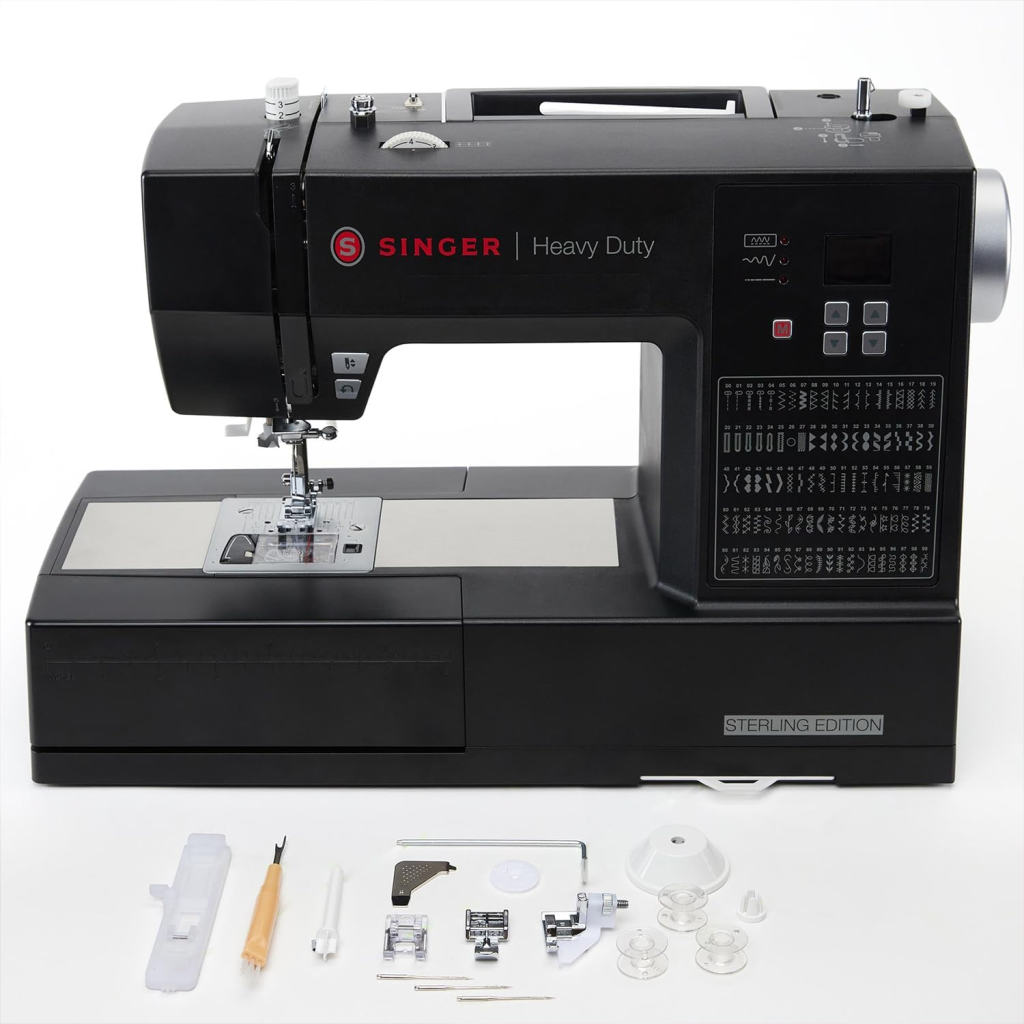
So, I have recently been researching sewing machines, and one that came up was the SINGER Heavy Duty 6600C Sterling. It’s billed as a “heavy-duty” version, and I am always trying to work with thick fabrics, such as denim or canvas, for my projects, and was drawn to this right away. It is not only a simple machine but a computerised machine as well. It has a digital interface; a mechanical beast is hard for me to deal with, so I’m hoping this will make things easier.
I was intrigued about what made the SINGER Heavy Duty 6600C Sterling stand out when I first saw it. The structure appears to be made of robust metal, adding to its strength and reliability. Not to mention, it has a pretty high number of stitch options – more than 200 applications of stitch in fact. I’m no longer used to that, and it implies that it can perform a variety of stitches and seams, including more decorative ones and even buttonholes.
Here are some of the key Singer sewing machine 6600c features that caught my attention:
- Computerised Control: An LCD screen and push-button controls for stitch selection and adjustments.
- Heavy-Duty Construction: A metal frame designed to handle tougher materials.
- High Sewing Speed: Capable of up to 1,100 stitches per minute.
- Extensive Stitch Library: Offers 215 stitch applications, including multiple one-step buttonhole styles.
- Adjustable Presser Foot Pressure: Allows for sewing both thick and very thin fabrics.
This machine’s concept appears to be melding brute force with the accuracy and convenience of modern technology. It’s supposed to be good for everything from making clothes to home decor, or for some of the thicker things that other machines can’t always handle.
I really want to determine whether it lives up to its “heavy duty” designation, and whether the computer aspects really help make sewing easier. Let’s dig in and find out what this machine is.
Key Features and Specifications of the 6600C
When I first got my hands on the SINGER Heavy Duty 6600C Sterling, I was curious about what made it stand out, especially with the “Heavy Duty” label. It turns out, this machine packs a punch with a solid set of features designed for both everyday sewers and those tackling tougher materials.
Stitch Options and Capabilities
The 6600C comes with a generous 215 stitch applications. This is not a number, it’s a lot of options for various projects! It includes your regular stitches, of course, but also stretch stitches for knits and a great choice of decorative stitches that can really make your projects stand out.
For a direct comparison of how the 6600C’s stitch library compares to Singer’s mechanical heavy-duty range, our Singer Heavy Duty 4452 review covers the differences between the computerised and mechanical approaches at a similar price point. Link:
Motor Power and Durability
The “Heavy Duty” comes into play here. The machine has a strong motor that lets one sew up to 1,100 stitches per minute. That’s pretty zippy! If you’re into home decor or working with upholstery, I found it worked great on thicker fabrics, such as denim.
The stainless steel bedplate also allows fabrics to glide easily, minimising friction and making sewing a more effortless experience. The metal frame provides genuine stability during sustained heavy sewing. At higher speeds, the machine stays firmly on the table without the lateral movement that lighter plastic-framed machines exhibit when driving through multiple fabric layers.
If you often work on demanding fabrics, you may also want to compare this model with the SINGER Heavy Duty 4423 review and the detailed SINGER 4452 Heavy Duty sewing machine review to see how Singer’s heavy-duty lineup differs in real-world use.
Computerised Interface and Ease of Use
The 6600C is a computerised machine, and selecting stitches is easy thanks to its LCD screen. All you have to do is press a button to switch between the options, and the screen will display which one is selected. It also features a very good drop-in bobbin system, which I think is far better to handle than the old front-loading systems.
Oh, and you can also check how much thread you have remaining so that there will be no more running out in the seam! It also has adjustable presser foot pressure, which is perfect when sewing delicate fabrics without the need to stretch them out.
If you’re comparing beginner-friendly computerised models, the Brother CS7000X review and Brother CS5055 review are worth checking out too.
Included Accessories and Attachments
This is quite the one SINGER put in the box. I receive an all-purpose foot, zipper foot, buttonhole foot, and satin stitch foot. Additional bobbins, spool pins, screwdrivers, a brush, and a seam ripper are also included.
Even includes a soft cover to protect from dust when not in use. It seems like the package has everything in it already, and that means you can start sewing most projects without actually having to purchase additional parts at the time. A nice touch is the value of approximately $100 worth of accessories they have included.
Throat space is the distance between the needle and the machine’s body, 6.4 inches. This offers a good space for larger items such as quilts or curtains, allowing easier movement around.
If you’re planning to organise sewing supplies properly, guides on the best sewing box and useful sewing machine parts can make setup and maintenance easier.
Here’s a quick look at what comes included:
- All-Purpose Foot
- Zipper Foot
- Buttonhole Foot
- Satin Stitch Foot
- 4 Bobbins
- Spool Holders and Pin
- Screwdriver, Brush, and Seam Ripper
- Soft Cover
- Pack of Needles
Performance Testing: Putting the 6600C to the Test
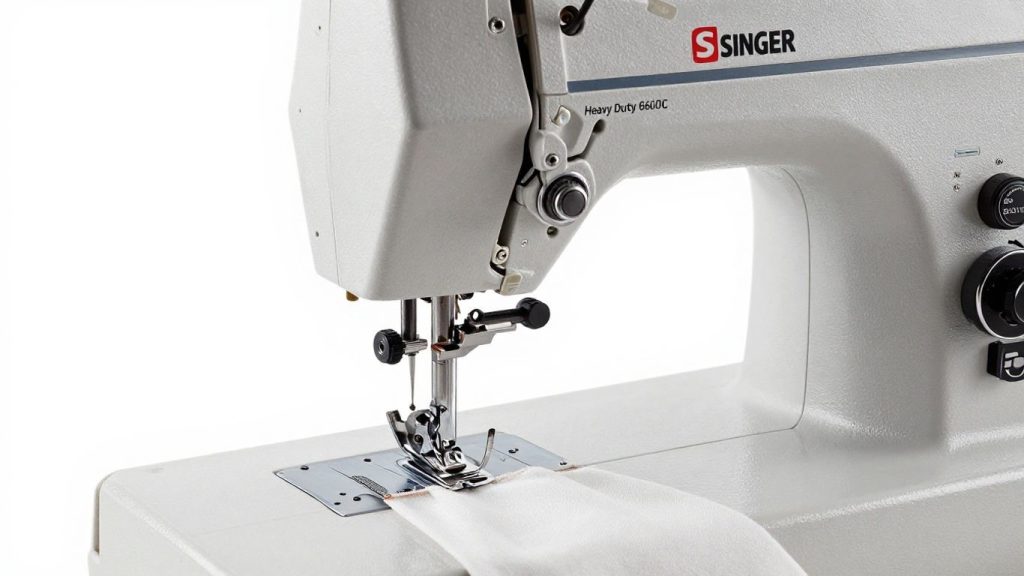
The test that matters most for any heavy-duty machine is not cotton or linen both pass through almost any machine without issue. The meaningful tests are denim layers, canvas, and the transition from heavy to delicate fabric without manual tension adjustment. Here is how the 6600C performed on each.
Sewing Different Fabric Types (Denim, Cotton, Silk)
First up was some good old quilting cotton. It passed through that, like butter, no problem. So, I grabbed a pair of old jeans that I was going to use for something else. This is where the “heavy duty” really comes into play. The 6600C coped very well with the denim. It wasn’t slow to start, and the stitches were even. I did notice that I had to run a little slower than I ran the cotton, but it did.
The next up was Silk. This will be the area where cheaper machines may start to get a little picky, either munching on the fabric or dropping stitches. I set the tension to what felt like it was just right, and it was pretty good. This was helped by the adjustable presser foot pressure, which prevented the light fabric from being pulled too far around. Not quite as flawless as I would have liked, but for a machine designed to handle heavy loads, I was impressed by its versatility.
Moving from the denim layers directly to silk was the most revealing test. The 6600C required a manual tension adjustment between the two, dropping from around 5 for the denim work to 3 for the silk. This is not unusual for a machine in this price range but it is worth knowing if you regularly switch between fabric weights mid-session.
The adjustable presser foot pressure handled the transition well — the silk did not bunch or get pulled into the feed dogs. The tension adjustment itself took under a minute once you know the settings, but it is one area where a more premium machine with automatic tension sensing would reduce the interruption.
If you enjoy beginner-friendly fabric projects, tutorials like how to sew an apron and how to make a simple tote bag at home are good ways to test different stitch settings and fabric handling.
Handling Thick Materials and Multiple Layers
This is the monumental one for me. I layered four times of denim and then on top of that, a layer of canvas. This is a rather thick amount of thickness. Just in case I had to use a heavier needle, I did that, and I was a little slow. It was a power ride for the 6600C. It was not a speed demon, but it didn’t stall or create any issues of concern. The stainless steel bedplate definitely assisted the fabric to move through with less friction.
I had another quilt project with a thick seam that I tried sewing through. The places where the fabric gets really crumpled and compacted, you know? The 6600C came out fairly easily. In such cases, it certainly didn’t seem like my old machine.
Machines designed for quilting and layered materials like the best quilting sewing machine guide and the Janome MC6650 review offer interesting comparisons here.
Accuracy and Consistency of Stitches
When it comes to stitches, I mostly stick to the basic utility stitches – straight stitch, zigzag, and a few of the stretch stitches. The 6600C offers a good range, and I found the computerised selection pretty straightforward. The LCD screen is clear, and picking stitches was easy enough.
Here’s a quick rundown of what I observed:
- Straight Stitch: Very consistent, even on the thicker fabrics. The stitch length stayed pretty much the same.
- Zigzag Stitch: Good coverage and consistent width. I used it on some stretch fabric, and it held up well.
- One-Step Buttonhole: This worked exactly as advertised. I made a few buttonholes on different fabrics, and they all came out looking neat and even. No more fiddling with manual buttonhole settings!
I did notice that sometimes the first few stitches can be a bit of a mess when starting a new seam, particularly at the beginning. It’s not a show-stopper, but it’s something to keep in mind. This was greatly facilitated by holding the thread tails for the first couple of stitches.
In my opinion, all things considered and as a comparison for the price, the SINGER Heavy Duty 6600C Sterling is a pretty good deal. For home use, particularly when working with thicker materials or simply wanting a dependable machine, it appears to be doing a pretty good job of a high-end industrial machine, but it won’t replace it.
Pros and Cons of the SINGER Heavy Duty 6600C
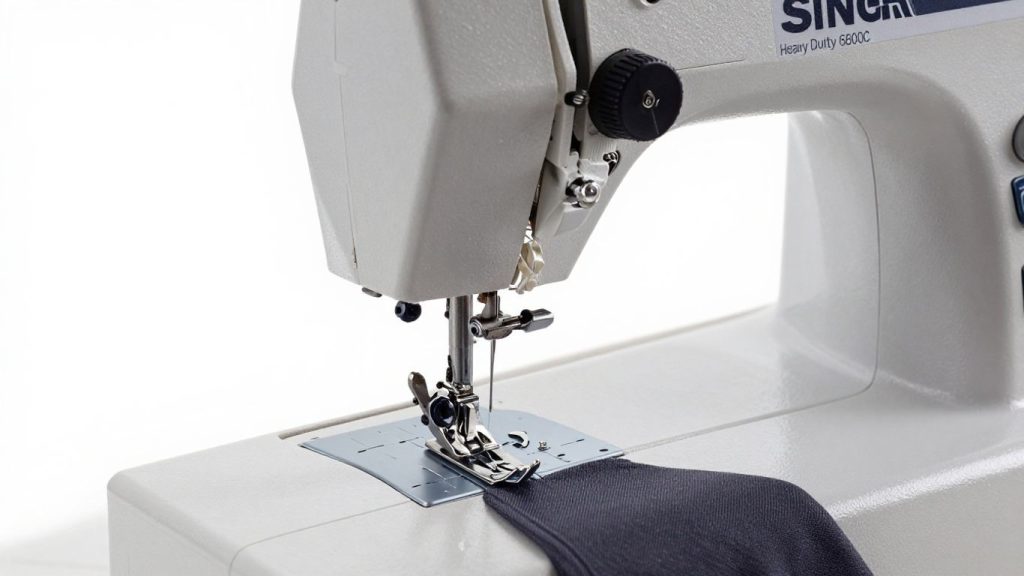
After spending some time with the SINGER Heavy Duty 6600C Sterling, I’ve got a pretty good handle on what it does well and where it might fall a little short for some folks. It’s a solid machine, no doubt, especially if you’re looking for something that can handle tougher fabrics.
Pros of the SINGER Heavy Duty 6600C
Here’s a quick rundown of what I liked:
- Powerhouse for Thick Fabrics: It really does live up to the “Heavy Duty” name. Sewing through multiple layers of denim was surprisingly easy.
- Good Stitch Selection: With 215 stitch applications, there’s a lot to play with. The one-step buttonhole function is a real time-saver and produces consistent results.
- User-Friendly Interface: The LCD screen is clear, and selecting stitches with the buttons is straightforward. The top drop-in bobbin is also a nice touch – easy to see and thread.
- Included Accessories: You get a decent set of feet and other bits and bobs right out of the box, which means you can start sewing a variety of projects without needing to buy extra stuff immediately.
Cons of the SINGER Heavy Duty 6600C
Now, it’s not perfect, and I did notice a couple of things that might be drawbacks depending on your needs:
- Noise Level: This machine isn’t quiet. The sturdy metal frame, it makes a noticeable “clanky” sound when it’s running. It’s not a dealbreaker for me, but if you need a super-silent machine, this might not be it.
- No Speed Control Slider: Unlike some other computerised models, there isn’t a physical speed slider. While it has a start/stop button, you can’t fine-tune the maximum speed with a slider. This is something beginners might miss, as it helps control the fabric feed.
- Built-in Lettering: While it has 215 stitch applications, the actual built-in lettering feature isn’t its strongest point. If you plan on doing a lot of personalised embroidery with letters, you might find this lacking.
The biggest drawback for me with this machine is the noise and no speed slider. If you are more interested in raw power and toughness for working with difficult materials, however, then those drawbacks are not so important. It’s like a workhorse with barely any frills.
I believe that the SINGER Heavy Duty 6600C Sterling is a pretty decent machine overall, particularly for the price. It has a lot of power for heavy tasks and more options to satisfy most domestic sewers. Just watch out for the noise, and just understand what you’re getting before you purchase.
Is the SINGER Heavy Duty 6600C the Best Computerised Sewing Machine for You?
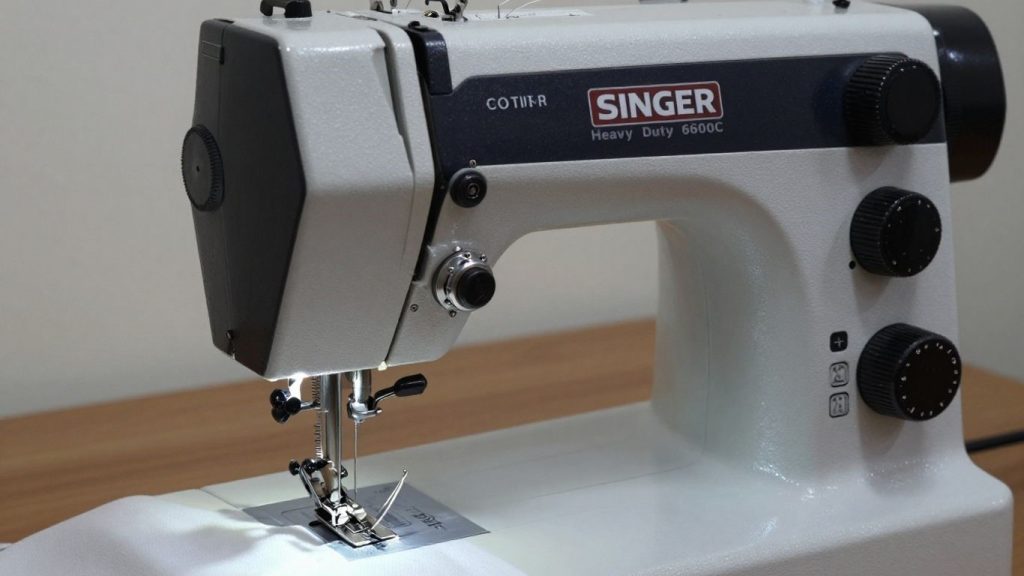
So after testing and reading all the specifications, I have to ask myself, is this SINGER Heavy Duty 6600C the right computerised sewing machine? More importantly, is it the right one for YOU?
The SINGER Heavy Duty 6600C Sterling is a workhorse in my opinion. It comes with a heavy-duty build and truly excels with thicker fabrics, like denim or canvas. Well, it just keeps going on layers where other machines wouldn’t. If you’re more into sewing for home decor, upholstery, or simply hemming a lot of jeans, this machine might be a good option. It has a robust structure and a motor that will never give up.
If you’re looking for a dependable machine for daily, more demanding jobs without the frills, the 6600C is a solid choice. It emphasises the most vital functions that are important for durability and consistent performance.
Here’s a quick rundown of who I think this machine is best suited for:
- The Practical Sewer: You need a machine that gets the job done, handles a variety of fabrics well, and doesn’t break the bank. You’re not looking for a million fancy stitches you’ll never use.
- The Home Decorator: Making curtains, pillows, or reupholstering a chair? This machine has the power and stability to handle those bulkier materials.
- The Beginner with Big Projects: If you’re starting but plan to work with tougher fabrics right away, the 6600C offers a good balance of capability and ease of use, especially compared to purely mechanical models.
However, it’s not the machine for everyone. Those who have a passion for quilting may not have access to functions such as the needle up/down button or stitch memory that are available in more expensive quilting machines. Meanwhile, it offers tons of stitches for most tasks, but if you’re a garment sewist who ever has to work with the most delicate of silks and chiffons and will need that stitched perfection, you may want to consider a machine that has a speed slider and start/stop button. These are the types of information you’d encounter in the best quilting sewing machine comparisons and other advanced machine reviews.
Overall, I believe the SINGER Heavy Duty 6600C Sterling comes out on top for many home sewers, given its cost and abilities. If you are looking for durability and simplicity of use, it is one of the best home-use sewing machines available. It may not be as fancy as the best computerised sewing machine reviews, but it will get the job done. It’s a machine that looks like it will last forever, and that’s something I appreciate.
Comparison of SINGER Heavy Duty 6600C with other Machines
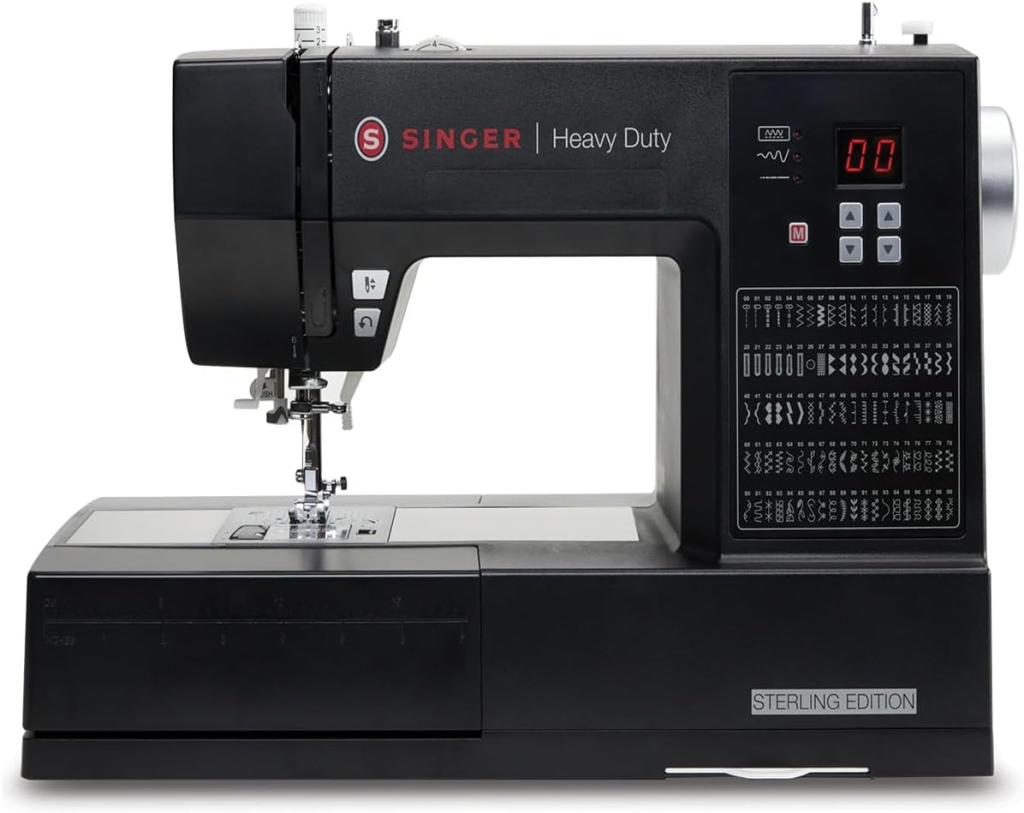
SINGER Heavy Duty 6600C vs SINGER Heavy Duty 6800C
I noticed, upon my initial research, that the SINGER Heavy Duty 6600C was being compared to the 6800C. It’s a well-made comparison, and one that has merit. Both are Singer computerised, heavy-duty machines, but some differences may make one machine more suitable for you than the other. The 6600C is a no-nonsense machine, and it will do a great job with heavy cloths such as denim and canvas. It has a decent amount of stitches, more than 200, and that is sufficient for most of the home projects, clothing, home décor, and more.
The 6800C is a step up, however. It has some things that serious quilters or those who sew a lot of garments may appreciate! Consider a needle up/down button that’s a great addition when pivoting on fabric and a speed slider for increased control when free-motioning, particularly. It also has a stitch memory feature, which means that you won’t have to reconfigure your favourite settings every time!
The 6600C is a workhorse, whereas the 6800C has convenience features that can make certain sewing tasks — such as quilting and elaborating garments — quicker and more successful. The price difference is clear, and ultimately depends on whether or not those additional features are worth it to you for your current sewing projects.
For a deeper look at the upgraded model, the SINGER Heavy Duty 6800C review explains its advanced features in more detail. These can be a real brake on the machine and in some cases may necessitate a warranty change. It does not appear that the 6800C has this reported as much, but it may just be that there are more of the latter out there, or it may be a quality control issue. This is definitely something that you need to think about, particularly if you’re shopping online and don’t want to deal with hassle or confusion.
SINGER Heavy Duty 6600C vs Brother CS7000X
The comparison of the SINGER 6600C to a Brother machine, such as the CS7000X, is of interest because both machines tend to be in the same price range, but have different strengths. As mentioned, the heavy-duty frame and motor are utilised in the Singer 6600C, so it can go the distance with thicker materials. It feels robust.
Another model that’s also a computer-controlled machine offering a stitched range of about 70 is the Brother CS7000X, which is regarded as a bit easier to use for newbies. If you are new to the craft or aren’t going to do super thick fabrics frequently, it’s lighter.
- Stitch Count: Singer 6600C (200+ stitches) vs. Brother CS7000X (70+ stitches). The Singer offers more variety, though many are decorative.
- Build Quality: Singer 6600C generally has a more robust, metal frame for heavy-duty tasks. Brother CS7000X is lighter, making it more portable.
- Ease of Use: Brother CS7000X is often praised for its intuitive interface, making it a great choice for beginners.
- Included Accessories: Both come with a decent set of feet, but check specific bundles as they can vary.
If your sewing involves a lot of thick denim, canvas, or multiple layers of upholstery fabric, I’d lean towards the Singer 6600C. If you’re more into general sewing and quilting and want something straightforward and easy to learn on, the Brother CS7000X is a strong contender. It’s a classic heavy-duty sewing machine comparison: power versus accessibility.
You can also compare it with the full Brother CS7000X review and the more advanced embroidery-focused Brother SE2000 review.
SINGER Heavy Duty 6600C vs SINGER Heavy Duty 6700C
This is where things get a little less talked about, but it’s important. Singer’s line actually comes in three varieties: the 6600C, 6700C, and 6800C. For some reason, most comparisons don’t include the 6700C, but I believe it merits mention as it’s in the middle. The 6700C is like a bridge between the 6600C and the 6800C. It has some of the high-end capabilities of the 6800C, minus the price tag.
The 6700C may be the middle ground for those who are unsure between the 6600C and the 6800C, if cost is a factor. It will also usually have additional features such as a start/stop button and speed control, which are nice quality of life additions to the standard 6600C, but may not include as many bells and whistles as the high-end 6800C.
It’s a good illustration of how the sewing machine models that come from the Singer can get complicated, but it’s possible that if you know about this mid-ground model, you can save a bit of cash or get a better value for your money. It is wise to do the necessary market research on each of the three and compare the prices before deciding, as the value proposition of the three might vary from time to time based on sales.
If you’re researching the mid-range option, the detailed SINGER Heavy Duty 6700C review gives a better breakdown of its features and performance differences.
Key Differences to Consider:
- 6600C: Solid heavy-duty performance, good stitch variety, but fewer convenience features and potential error code issues reported.
- 6700C: A balanced option, often adding speed control and a start/stop button over the 6600C, bridging the gap to higher-end models.
- 6800C: The premium choice with advanced features like needle up/down, auto thread cutter, and stitch memory, ideal for quilters and serious garment makers.
There are options with Singer for different levels of sewing enthusiasts, as I see these three. While the 6600C is a solid choice for heavy-duty tasks, those willing to invest in a bit more may want to consider the 6700C or 6800C for its enhanced features and user reviews, which can provide a more sophisticated sewing experience, particularly when it comes to the best heavy-duty sewing machines of 2024. The advanced sewing machine features are very important and will enhance the fun and efficiency of your sewing experience.
Comparing More Singer Sewing Machines?
If you are still deciding which Singer model fits your sewing needs, you may also find our full guide helpful. Check out our complete roundup of the best Singer sewing machines before making your final choice.
So, Is the SINGER 6600C Sterling the One?
After having used a little of the SINGER Heavy Duty 6600C Sterling, I’m not surprised that this machine is seen as a popular choice when it comes to handling heavier fabrics. It’s excellent for denim and canvas, and quite fast for a project, if you’re looking for something that will be quick.
The LCD screen and simple stitch selection are among the user-friendly computerised features, even if you’re not a sewing master. It may lack some of the features of some more expensive options, but it has plenty of oomph and functionality for the money. I feel this machine is a fantastic machine to look at every day, for decorating projects, or even some thicker fabric.
If you’re still exploring alternatives, reviews like the Brother XR3774 review, Janome JW8100 review, and SINGER Quantum Stylist 9985 review can help you compare different sewing styles and feature sets before making a final decision.
Frequently Asked Questions
Is the SINGER Heavy Duty 6600C a mechanical or computerised machine?
I found that the SINGER Heavy Duty 6600C is actually a computerised sewing machine. It has the tough build of a heavy-duty machine, but also comes with cool modern features like a screen and easy stitch selection buttons.
How many stitches does the 6600C model have?
This machine comes with 100 built-in stitches. These cover everything from basic stitches for everyday sewing to special ones for stretchy fabrics and even some pretty decorative stitches. Plus, it has multiple ways to make buttonholes in just one step!
What’s the fastest this SINGER Heavy Duty machine can sew?
I was impressed with its speed! The SINGER Heavy Duty 6600C can sew up to 1,100 stitches every minute. This means I can get my sewing projects done much quicker.
Can this machine handle sewing thick stuff like leather or denim?
Yes, it absolutely can. I noticed it has a strong motor and a sturdy metal frame, which makes it a great choice for sewing through multiple layers of tough materials like denim, canvas, and even thin leather.
Does the SINGER 6600C have a free arm for sewing tricky spots?
Yes, the SINGER 6600C does have a free arm. This feature is super helpful when I need to sew smaller, tube-shaped items like pant legs or sleeves.
What kind of accessories come with the 6600C?
I was happy to see that it comes with a good set of accessories. It includes several presser feet for different tasks (like zippers and buttonholes), bobbins, spool holders, a screwdriver, a brush, a seam ripper, and a soft cover to keep it dust-free.


One Comment