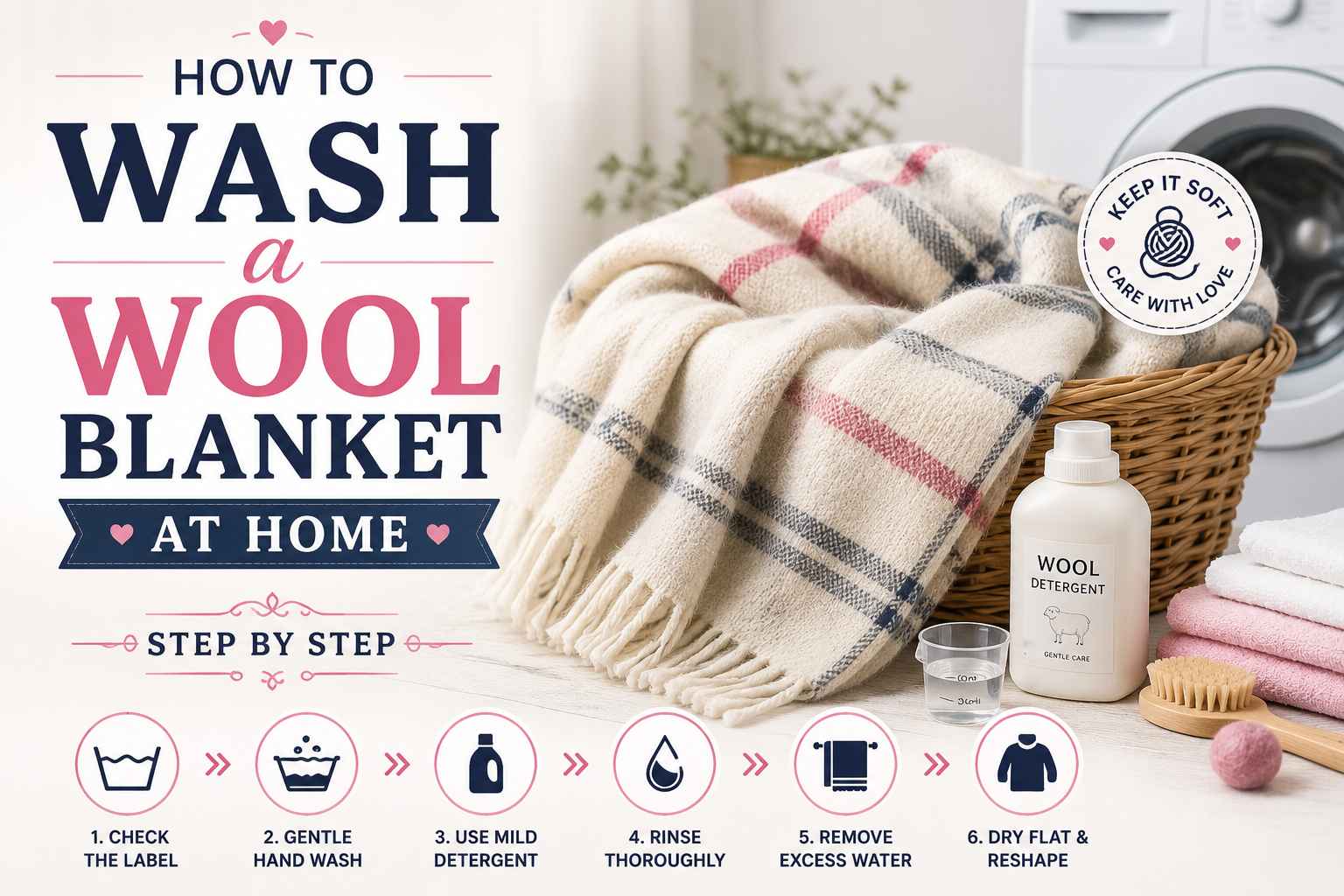
How to Wash a Wool Blanket at Home: Step by Step
After 12 years of working with fabric, including wool, merino, and cashmere blends in sewing projects, I understand how wool fibres behave under heat, agitation, and water better than most people who own a wool blanket. That knowledge makes washing a wool blanket straightforward once you understand what the fibre actually needs.
With a few simple steps and the right approach, I can keep my favorite blanket looking and feeling great for years to come. Let me share what I’ve learned about washing wool blankets safely.
Key Takeaways
- Always check the care label on your wool blanket before washing to understand its specific needs.
- Use cold or lukewarm water and a mild, wool-specific detergent for both hand and machine washing.
- Handle wool gently; avoid excessive agitation, wringing, or twisting to prevent felting and damage.
- Air dry your wool blanket by laying it flat on a clean surface, away from direct sunlight and heat.
- Avoid common mistakes like using hot water, harsh detergents, or tumble drying, which can ruin your blanket.
Why Wool Blankets Need Special Care
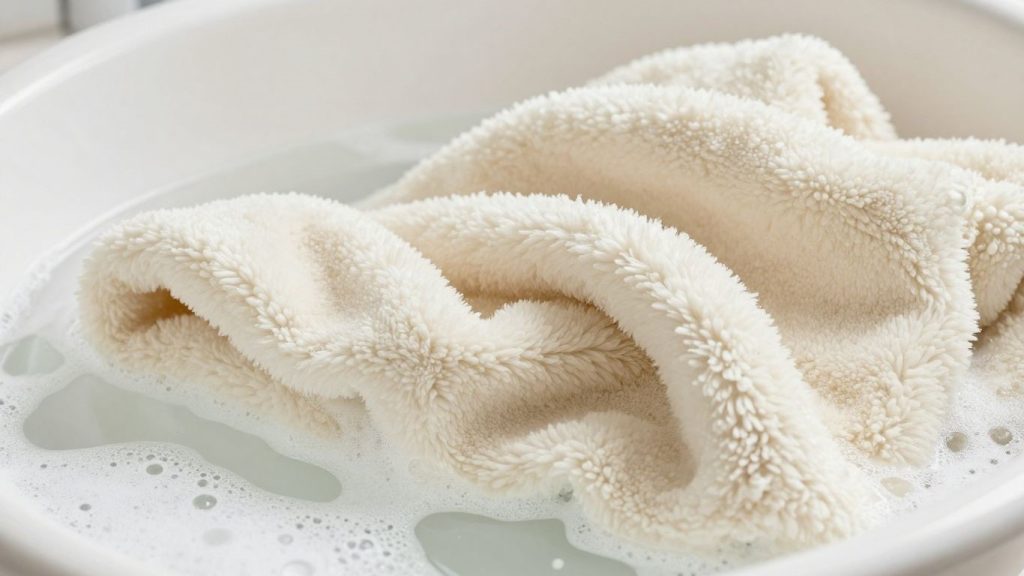
Wool blankets are great. They are warm, cozy, and just plain pretty. However, they require a little extra care as they are natural fibers, unlike the typical synthetic throw. I have found that a few simple steps will help wool to stay soft and fluffy for years.
Consider this: wool fibres are fragile. They can shrink, felt up, and lose their pretty drape when washed, particularly with heat or rough handling. It’s not as if you’re washing a polyester blanket! That’s why it is crucial to have a good wool blanket care guide. It can assist you in preventing common mistakes that can ruin your favorite blanket.
I was amazed at the amount of information I found when I began researching the care and maintenance of wool blankets. It isn’t only about cleanliness, it’s about maintaining the integrity of the wool.
Here are a few things that make wool special and require careful handling:
- Natural Insulation: Wool fibers have a natural crimp that traps air, providing excellent warmth. This structure is delicate and can be damaged by harsh washing.
- Moisture Wicking: Wool can absorb a surprising amount of moisture without feeling damp. This property can be compromised if the fibers are agitated too much.
- Durability: While durable, wool isn’t indestructible. Proper care ensures it maintains its strength and won’t break down over time.
The natural oils in wool, called lanolin, help repel dirt and stains, meaning you don’t have to wash your wool blanket as often as you might think. In fact, frequent washing can strip these natural oils, making the wool less resilient and more prone to damage. Airing out your blanket is often enough to freshen it up.
So, before you just toss it in the machine, take a moment to understand what your wool blanket needs. It’ll thank you for it by staying cozy and beautiful for a long, long time. For the rest of your home care routine, our tested guide to the best vacuum cleaners covers every floor type and home size
Before You Start: Check the Care Label
Before I even think about getting my wool blanket wet, the very first thing I do is find that little tag sewn into the seam. It’s the personal instruction manual of the blanket, and, in all honesty, most problems begin by ignoring it. These labels are not recommendations – they’re pretty critical to maintaining your blanket.
Not all wool behaves the same. A Merino blanket, a cashmere throw, and a rugged wool camping blanket all require slightly different handling, which is why the care label is the most important piece of information before you start
Understanding Wool Types (Merino, Cashmere, etc.)
Not all wool is created equal, and knowing what kind you’re dealing with makes a big difference. My favorite throw is a super soft merino blend, which feels amazing but needs a gentler touch than, say, a more rugged wool camping blanket. The care label usually gives you a hint about the fiber content. Sometimes it’s straightforward like ‘100% Wool,’ but other times you might see terms like:
- Merino: Known for being finer and softer than regular wool.
- Cashmere: Extremely soft and luxurious, often requiring dry cleaning or very delicate washing.
- Lambswool: Typically from younger sheep, it’s soft but can be more prone to felting if handled roughly.
- Alpaca: Similar to wool but often even softer and warmer, also needs careful handling.
When the label is not present or not legible, it is always best to be safe. I’m usually conservative about it and say it’s going to take a very gentle treatment, such as hand washing in cool water, to be safe. Better to be a little too careful than to end up with a shrunken felted mess.
The care label is your best friend when it comes to washing wool. It will let you know whether the blanket can be washed at home, whether it requires a special detergent, or whether it must be dry-cleaned. The omission of this step is like building a chair without instructions – you’re likely to get some things wrong.
Therefore, before you even collect your supplies, take a moment to read that label. It’s the key to a successful wash and a happy, cozy blanket for years to come.
What to Do If the Label Says Dry Clean Only
Dry clean only means the manufacturer is not confident the blanket will survive home washing without risk, it does not always mean home washing is impossible.
The genuine high-risk cases are fine cashmere, structured blankets with a shaped design, heavily dyed wool where colours may bleed, and vintage or antique wool pieces. A plain, flat wool blanket with a robust, even weave and no structural shaping can usually be hand-washed safely in cold water, even if labelled dry clean only.
The risk is yours to accept. If the blanket has high sentimental or monetary value, take it to a professional cleaner. If it is a straightforward, everyday wool throw, careful hand washing in cold water is unlikely to cause damage.
Hand Washing Your Wool Blanket: A Step-by-Step Guide
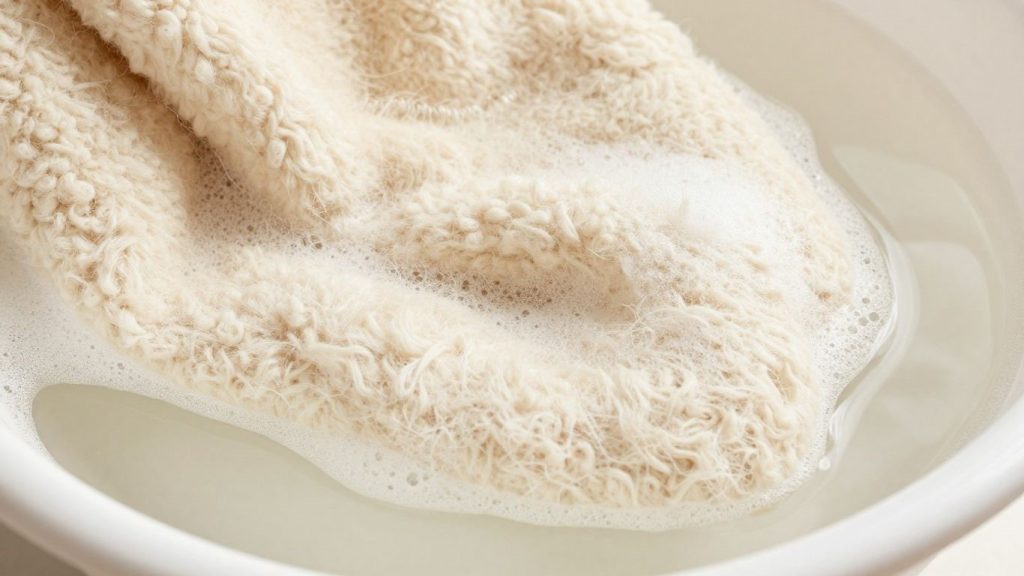
Hand washing is one of the most gentle and effective ways to wash your wool blanket. It may seem like a lot of work, but once you get used to it, it’s quite simple. This way, you can maintain the natural fibres of the wool, making your blanket soft and cosy for years to come.
Gathering Your Supplies
Before I even think about getting my hands wet, I make sure I have everything ready. It just makes the whole process smoother. Here’s what I usually grab:
- A mild, wool-specific detergent: You really don’t want to use regular laundry soap; it can be too harsh. Look for something labeled for wool or delicates.
- A clean basin or bathtub: Big enough to fully submerge the blanket without cramming it in. My bathtub works well for this.
- Cool or lukewarm water: Never hot water, as that’s a fast track to shrinking your wool.
- Large, absorbent towels: These are key for getting out excess water later.
The most widely recommended wool-safe detergents are Eucalan, which is a no-rinse formula that works well for large blankets because it eliminates one of the more difficult steps, Woolite Delicates, which is widely available, and Seventh Generation Natural Dish Liquid in a pinch for spot cleaning. Avoid Persil, Ariel, Bold, and any detergent that lists enzymes or optical brighteners in the ingredients; both damage wool fibres. Baby shampoo in a small amount works as an emergency alternative for hand washing.
The Washing Process
This is where the actual cleaning happens. It’s all about being gentle.
- Fill the basin: I fill my tub with cool or lukewarm water. Then, I add a small amount of the wool detergent and swish it around a bit to mix it in. You don’t need a lot of soap.
- Submerge and soak: Gently place the wool blanket into the water. I press it down so it’s fully covered. Then, I let it soak for about 10 to 15 minutes. This allows the water and detergent to work their way through the fibers.
- Gentle agitation: While it’s soaking, I might gently press down on the blanket or swish it around a little with my hands. The goal here is just to help loosen any dirt. I never scrub, twist, or wring the wool. That’s a big no-no and can damage the fibers, leading to a felted, misshapen blanket.
Rinsing Thoroughly
Getting all the soap out is super important. Leftover detergent can make the wool stiff.
- Drain and refill: Once the soaking time is up, I carefully drain the soapy water. Then, I refill the basin with clean, cool water.
- Rinse gently: I press the blanket down in the clean water to help rinse out the soap. I repeat this draining and refilling process several times until the water runs clear and there are no more suds. It might take a few rinses, but it’s worth it.
After rinsing, I gently press out as much water as I can without twisting or wringing. Then, I lay the blanket flat on a large, dry towel. I roll the towel up with the blanket inside, pressing gently to absorb more moisture. This step is crucial for preventing stretching and damage during the drying phase. I usually need a couple of towels to get it pretty dry before moving on to drying.
The towel rolling method significantly speeds up drying. Lay the blanket flat on two large dry towels, roll the towels and blanket together into a tight cylinder, and press firmly along the full length to transfer moisture into the towels. Unroll, replace with fresh dry towels, and repeat once more.
This removes up to 60 percent of residual moisture before flat drying begins, reducing drying time from 36 hours to 12 to 18 hours. A fan directed across the flat drying blanket also speeds the process without risk, moving air carries moisture away from the surface without adding heat.
How to Remove Stains from a Wool Blanket
Stains on wool need to be treated differently depending on what caused them. Using the wrong method can set a stain permanently into the fibres.
Blood
Use cold water only, never warm. Warm water sets protein stains in wool instantly and they cannot be removed afterwards. Dab cold water onto the stain with a clean cloth and a tiny amount of wool-safe detergent. Blot rather than rub.
Wine and Coffee
Blot immediately to absorb as much liquid as possible before it soaks in. Then dab with a solution of cool water and white vinegar in equal parts. Never rub — rubbing spreads the stain sideways into the surrounding fibres.
Pet Urine
Rinse with cold water immediately. Use an enzyme-free wool-safe detergent for cleaning — enzyme-based cleaners break down wool protein fibres the same way they break down organic stains, causing permanent damage. For dried urine, dilute white vinegar in cool water and dab gently.
Mud
Allow the mud to dry completely before doing anything. Brush off the dried mud first, then treat the remaining mark with cool water. Attempting to clean wet mud pushes it deeper into the weave and spreads it further.
Machine Washing Your Wool Blanket (Use With Caution!)
Hand washing is generally the best way to clean wool blankets safely, but sometimes convenience trumps safety. Some wool throws may be machine washable, but this should be done with caution.
Not exactly as simple as putting in your regular cotton sheets, and if you get it wrong, you may end up with a shrunken felted mess. If you are going to do this, then take time to pay attention to the details.
A lot of damage happens because people treat wool like standard fabric. The same principle that applies to any delicate material applies here — gentler handling produces a better result than forcing it through a process it was not designed for.
Selecting the Right Cycle and Detergent
Before machine washing a wool blanket, always check the care label first. Some wool blankets, especially cashmere or fine merino, may only be suitable for hand washing or professional cleaning.
If the care label allows machine washing, use the gentlest settings possible. Wool fibers can shrink, felt, or lose softness when exposed to heat, harsh detergent, or too much agitation.
Cycle Selection
Choose the gentlest cycle available, such as Wool, Delicate, Hand Wash, or a low-agitation setting. The goal is to reduce friction and protect the wool fibers.
Water Temperature
Always use cold water. Hot water can cause wool to shrink, felt, or lose its original shape. Cold water helps preserve softness and structure.
Detergent Choice
Use a detergent made for wool or delicate fabrics. Avoid regular detergent, bleach, enzymes, and fabric softener because they can damage wool fibers or reduce breathability.
Load Size
Do not overload the washing machine. A wool blanket needs enough room to move gently, rinse properly, and avoid unnecessary stress during the wash cycle.
Remember, the goal is to mimic the gentleness of hand washing as much as possible. If your machine has a very aggressive ‘heavy duty’ cycle, it’s probably best to stick to hand washing for cleaning wool throws.
Drying Your Wool Blanket Properly
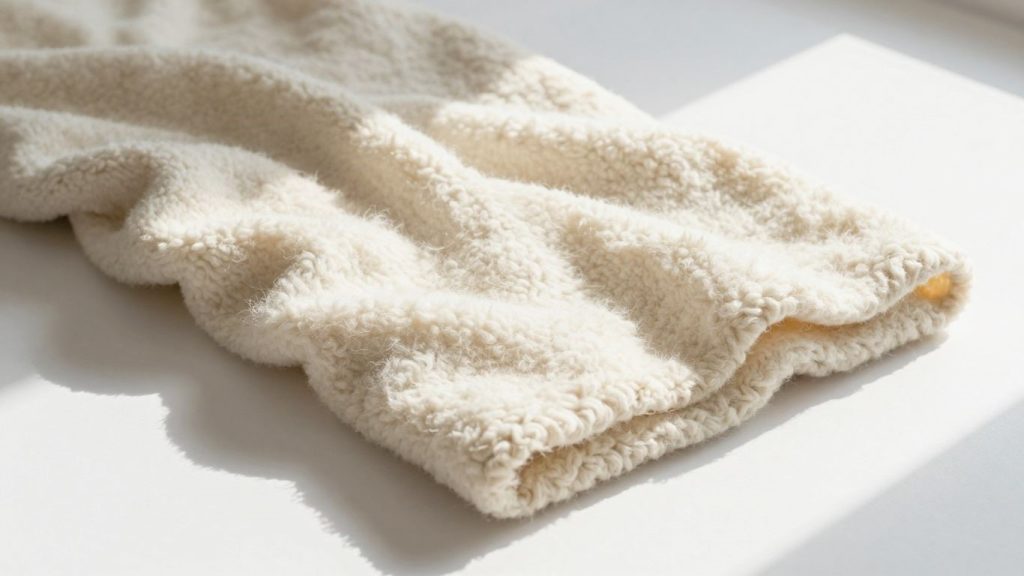
Congratulations, you’ve just finished washing your wool blanket, and now it’s time to be careful: drying it. This is where many people end up shrinking their favorite woolly sweaters, and that sucks.
The objective here is to properly dry wool blankets to keep them soft, fluffy, and the correct size. I’ve found out the hard way that you can’t put a wool blanket in the dryer like any other article of clothing.
If you discover mold on a wool blanket before washing, our complete guide to removing mold from clothes covers the exact safe method for wool fibres before you start the washing process.
Once your wool blanket is fully dry, you may want to lightly press any creased areas. Our best clothing irons guide covers which steam irons handle wool and delicate fabrics without risk of damage.
Common Mistakes to Avoid When Washing Wool
Wool blankets need a gentle washing routine. The wrong water temperature, detergent, cycle, or drying method can cause shrinking, felting, stiffness, or loss of softness.
Washing wool is not difficult, but it does require care. Before washing any wool blanket, always check the care label first and use the mildest method recommended by the manufacturer.
Using Hot Water
Hot water can cause wool fibers to shrink or felt. For most washable wool blankets, use cold water to help protect the blanket’s size, shape, and softness.
Being Too Rough
Too much rubbing, wringing, twisting, or machine agitation can make wool fibers mat together. Use gentle handling whether you are hand washing or using a delicate machine cycle.
Using the Wrong Detergent
Regular laundry detergent, bleach, enzymes, and fabric softener can be too harsh for wool. Use a wool-safe or delicate-fabric detergent to help preserve the fibers.
Ignoring the Care Label
Some wool blankets, especially cashmere, fine merino, vintage wool, or structured blankets, may be labeled dry clean only. Follow the label to avoid damage.
Overcrowding the Washer
A wool blanket needs room to move gently and rinse properly. Overloading the washer can cause uneven cleaning, trapped detergent, and extra stress on the fibers.
Machine Drying Without Checking
Dryer heat and tumbling can shrink or felt wool. Unless the care label clearly allows machine drying, lay the blanket flat to air dry instead.
Conclusion
So, after all this, I can say that it’s not as terrifying as it sounds to wash a wool blanket at home. I used to believe that it would ruin the first time I used it, but after a bit of patience and the right detergent, it was just fine. The key is to take it slow, use cold water, and never wring or twist the blanket.
Air drying is time-consuming, but it will help wool maintain its softness and quality. Now, I really do look forward to changing my blanket every season. With these tips, your wool blanket should remain cozy and last for years. It’s not as hard as it sounds, just a little caring goes a long way!
Frequently Asked Questions
How often should I wash my wool blanket?
Honestly, wool blankets don’t need washing very often. Just giving it a good airing out and a shake now and then usually does the trick. I only really wash mine when I notice it’s gotten dirty or has a stain that won’t come out.
What’s the safest way to wash a wool blanket at home?
For me, the best way is to use cold water with a special wool detergent. I either hand-wash it gently or use the delicate cycle on my washing machine. After washing, I always lay it flat to dry, never in the dryer!
How can I get rid of stains on my wool blanket without ruining it?
If it’s just a small spot, I try spot cleaning first. I’ll mix some water with a little white vinegar or a gentle wool cleaner and dab it on the stain. I always test it on a hidden spot first to make sure the color doesn’t fade. Then, I blot it gently with a clean cloth.
Should I air-dry or tumble-dry my wool blanket?
Air drying is definitely the way to go. I lay my blanket flat on a clean towel, away from direct sun or heat. It takes a bit longer, but it’s so much better for the wool fibers and prevents shrinking.
What kind of soap or detergent is best for wool blankets?
I always look for a mild detergent that’s specifically made for wool. These are usually pH-balanced and gentle. I steer clear of regular laundry soaps, bleach, or anything with enzymes, as they can really damage the wool. Fabric softeners are also a no-go for me because they make the wool less breathable.
What are some common mistakes I should avoid when washing wool?
A big one for me is using hot water – it can make the wool shrink! Also, I learned not to agitate it too much, whether I’m washing by hand or in the machine, because that can make it feel. And I never forget to check the care label before I start!






One Comment