Sewing Machine Carrying Case: Top Options for Protection & Portability
I’ve been sewing for years, and let me tell you, moving my machine around used to be a real pain. It’s heavy, awkward, and honestly, a bit scary to think about it getting banged up. That’s why I started looking into a sewing machine carrying case. It’s not just about making it easier to get to classes or retreats; it’s about protecting my investment.
I mean, these machines aren’t cheap, and a good case can save you a lot of worry and potential repair costs. So, I’ve checked out a bunch of options, and I’m ready to share what I found.
Key Takeaways
- A sewing machine carrying case is important for protecting your machine from damage during transport and for making it easier to move around.
- When looking for a case, consider how durable the material is, how much padding it has, and if it has enough pockets for your accessories.
- Handles and straps are key to making the case easy to carry, especially if it doesn’t have wheels.
- Make sure the case is the right size for your specific sewing machine model to avoid it shifting around too much.
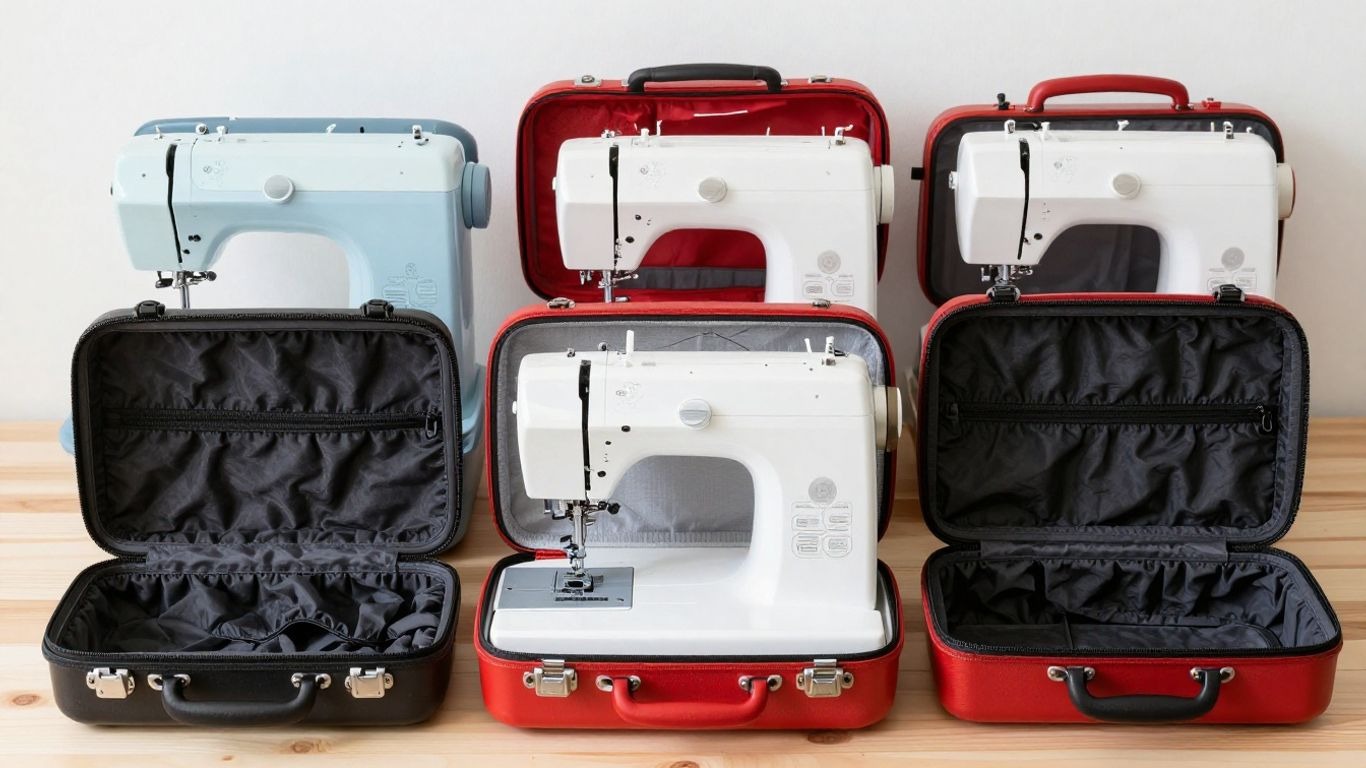
- There are many different types of sewing machine carrying cases available, including soft totes, hard cases, and even rolling options, so you can find one that fits your needs and budget.
Why You Need a Sewing Machine Carrying Case
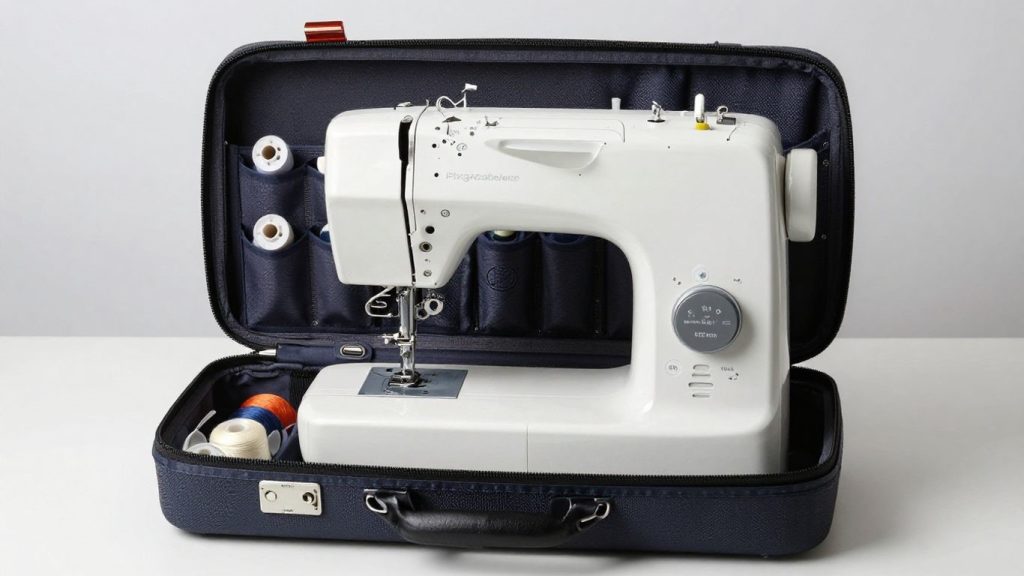
So, I’ve been sewing for some time now, and have made a few mistakes along the way. One of the biggest lessons? My sewing machine isn’t exactly just a tool; it’s quite an amazing investment. Like any other investment, it needs all the proper protection in the world.
This is where a well-designed carrying case comes into play. No, it’s not all about looking nice and shiny; it’s about protection: to avoid bumps, dust, or even evolving life issues that can affect my machine in an unrecoverable way.
Understanding your machine better through guides like sewing machine parts also shows how delicate and valuable it really is.
Protecting Your Investment
Think about it. A sewing machine contains many different small, more delicate components, such as needles, gears, and electronics. Because dropping one, even a tiny bump in the car, can be an expensive repair bill or worse yet, a completely effed machine. There was a time when I had to transport my machine across town, and I literally tossed it in the back of my car.
Big mistake. It jiggled and rattled the whole way there, and I swear it never sewed quite the same after. A case with good padding gives your machine a nice little padded hug and prevents it from getting knocked around. It is bubble wrap, but a billion times classier and functional.
If you’re using heavy-duty machines like Singer 4452 heavy duty sewing machine review models, protecting them becomes even more important because of their power and weight.
Ensuring Portability for Classes and Travel
Not only do I like keeping it safe at home, but I also love to grab my sewing projects and go. Whether it be a crafting retreat with friends on a weekend or just a weekly class at the local community center, I need to get my machine in and out easily. Going around with a heavy, bulky machine is simply not enjoyable. It’s pretty intense, and frankly a little shameful.
It makes it so much easier to have a nice case. The big handles or even shoulder straps allow me to tote it without worrying about pulling a muscle. Also, it gives my machine a home instead of rushing out to find a box or bag that might fit. Having everything sorted and organized means that I can just start sewing without all the fuss, such a time saver!
This means when having a dedicated case, I can just pick up my machine and all my crucial accessories and just walk out of that door. Thus making the whole process of carrying my hobby outside the house relatively simple.
If you’re working on beginner-friendly projects like how to sew an apron or how to make a simple tote bag at home, having your machine easily transportable makes things much more convenient.
Key Features to Look For in a Sewing Machine Carrying Case
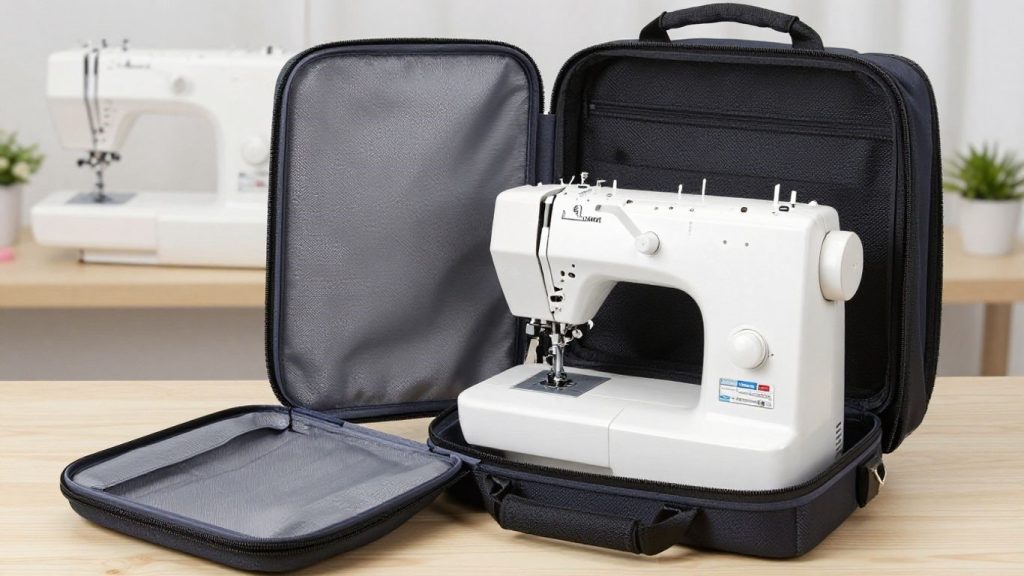
When I’m looking for a new sewing machine carrying case, I always think about a few things. It’s not just about finding something that fits my machine, but also about how well it’ll protect it and how easy it is to actually take with me.
Durability and Material
This is a big one for me. I want something that feels really stable, if you know what I mean. Almost like it can take a bit of a beating. I generally seek out hard-wearing fabric cases, such as those crafted from heavy-duty nylon. Hard-sided ones are not uncommon, which provide a lot of protection, basically a literal little fortress for your machine.
Some are soft and packable like a tote bag, which you can carry around or store much more conveniently. That material is really a huge part of the longevity of the case and how well it protects your machine from dings and scratches.
Machines like those discussed in Singer HD500 review are built tough — and they deserve equally tough protection.
Padding and Protection
I look not only for a good outer material, but also for decent interior padding. This is what actually takes the blows when you’re carrying the case. For my part, I like a good amount of foam or quilted lining.
In some instances, that pad at the bottom is removable and padded too, an addition we appreciate. Like providing your sewing machine with a soft yet secure bed.
If you’re using computerized machines like Brother CS7000X review, extra padding becomes even more important due to electronic sensitivity.
Storage Pockets and Organization
Since I roll around with my machine, I end up collecting all the little things that go along with it: foot pedal, power cord, additional bobbins, maybe a few favorite presser feet. Thus, pockets are pretty non-negotiable for me.
It keeps everything organized together, so I do not have to sift through a bunch of stuff trying to find what I need, and it makes my job easier. In some cases, only a few small pockets, in others, several and even pit compartments. It is helping a lot to keep everything organized.
A good companion to your case is having proper storage like the ones covered in best sewing box to keep everything organized.
Ease of Carrying (Handles, Straps)
If I have to carry my machine either over to a class or a friend’s house, it should feel nice holding it. The handles are sewn in well and secured. A shoulder strap is also extremely helpful, especially if the machine’s a bit heavy.
It distributes the load more evenly. And they come in fancier versions, some with wheels, as a plus if you have to walk for some distance.
For heavier machines like quilting models from best quilting sewing machine lists, ergonomic carrying options are a must.
Size and Compatibility
I know this sounds overly simplistic, but please do ensure that the case is the correct size for your machine. I have learned to take measurements for the width, depth, and height of the sewing machine first and then check those against the case dimensions.
You certainly don’t want it to rattle around inside, but at the same time, you don’t want to fight with getting it in. Most cases are made to suit most standard machines, so do check the specs.
Machines like Brother CS7205 review or Janome JW8100 review vary in size, so a proper fit is critical.
Top Sewing Machine Carrying Case Options
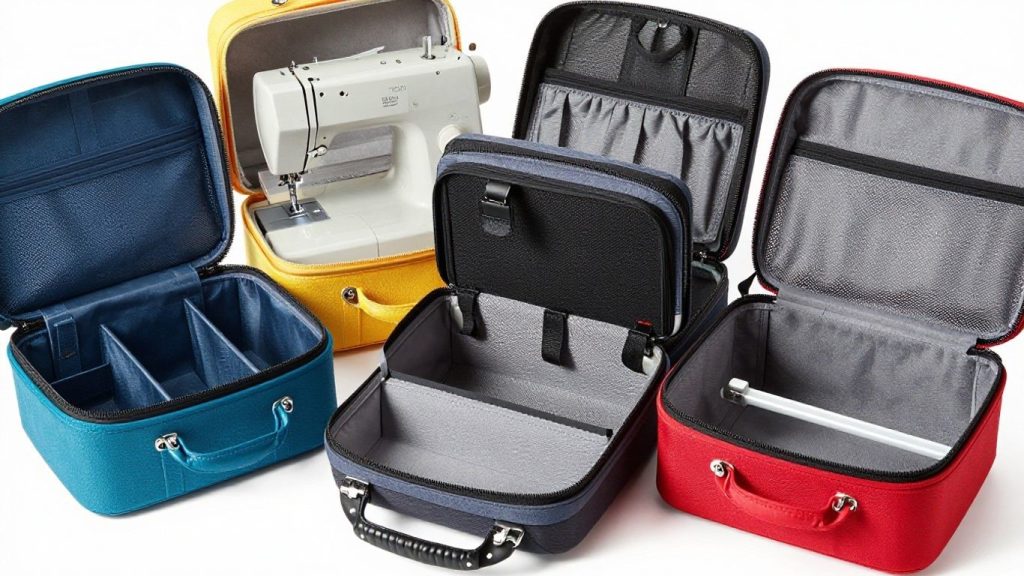
Going on an epic journey trying to find that perfect sewing machine carrying case? Here are a few that I checked, but highly recommend for the best protection of your sewing machine and getting from point A to B. These baits have definitely caught my eye, whether I’m off to a class, on retreat, or just want to make sure the fabric doesn’t get buried in home storage.
HOMEST Sewing Machine Carrying Case, Universal
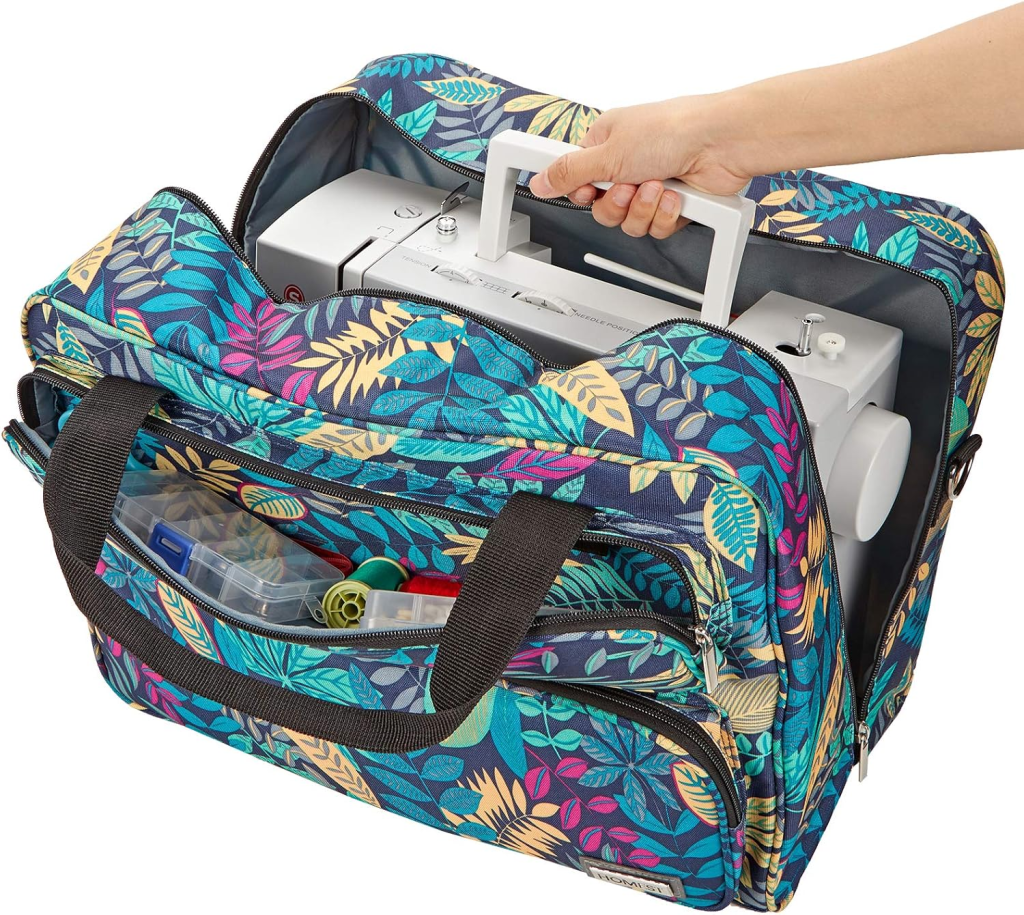
This piece is a floral tote, which can be easily mistaken for a purse rather than equipment. It should fit on basically all of the off-the-shelf machines; I am not too concerned. I like the shoulder strap, it is good when I have other things to carry. It adds a sense of solidity that makes the case feel more than suitable for everyday use and provides plenty of protection from dust and minor bumps.
This is a great option for those looking for something that works well but looks a little nicer than a plain black bag. Good sewing machine storage bag for those who like a little something extra in a few looks.
Perfect if you own versatile machines like those discussed in Brother SE2000 review.
Golkcurx Sewing Machine Case with Removable Padding
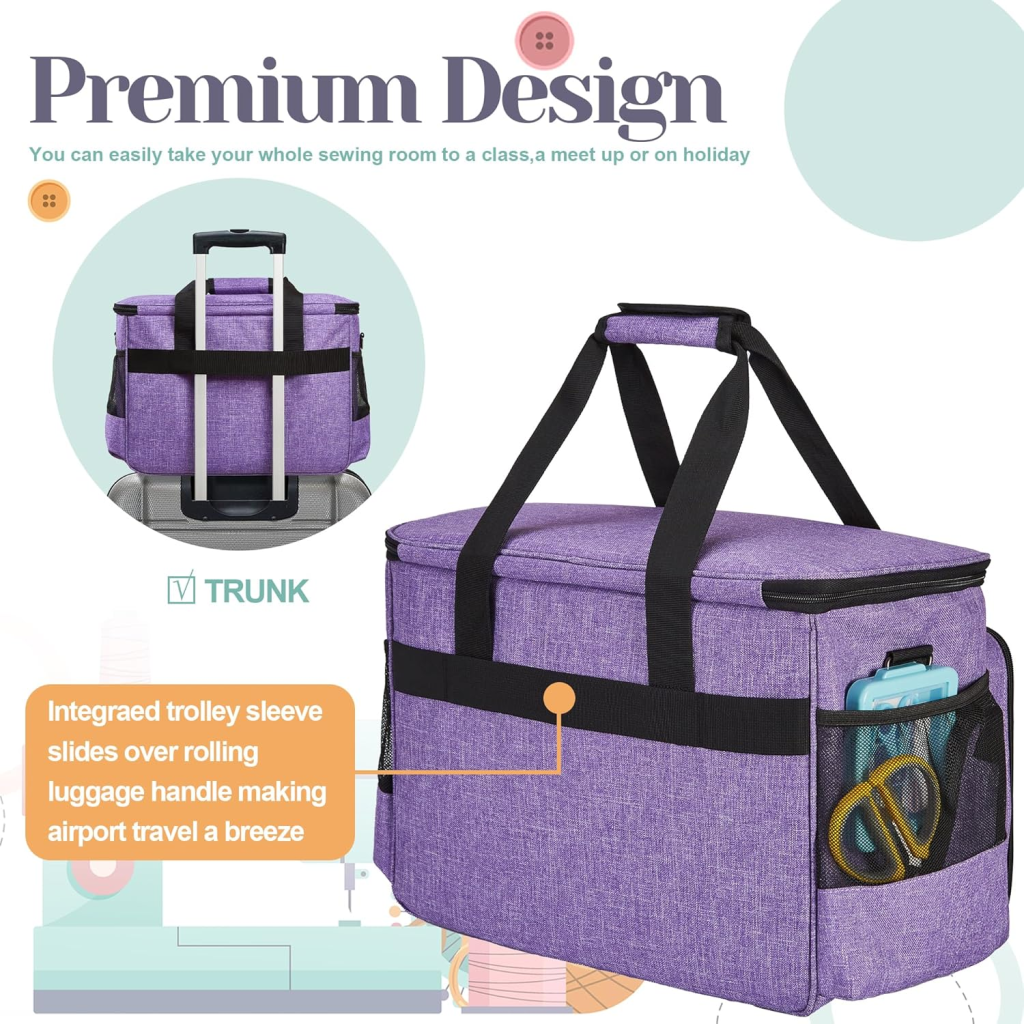
What I like about this Golkcurx case is the padding that can be removed. This means I can vary how much protection I need depending on my ability, and that’s a very useful feature. That purple is also a lovely departure from the norm. This is a simple tote bag style, so you can take it easily.
Shoulder strap adds mobility. Practical portable sewing machine holder. This is also going to be a good-sized tote for taking my sewing machine with me to my sewing group. This provides good protection for a sewing machine without being overly bulky.
TLBTEK Sewing Machine Carrying Case, Padded Canvas

This TLBTEK case is a more straightforward, no-frills option. It’s a canvas tote, which I find is usually quite durable. The black color means it won’t show dirt easily, which is a plus for me. It has pockets, which are always a win for keeping my accessories organized – think bobbins, scissors, and that little seam ripper I always misplace.
It’s a practical sewing machine transport case for keeping things tidy and protected from dust when not in use. It’s a reliable sewing machine storage bag.
Pairs well with basic setups, especially if you’re just starting with sewing kits for beginners.
LUXJA Sewing Machine Case with Removable Padding
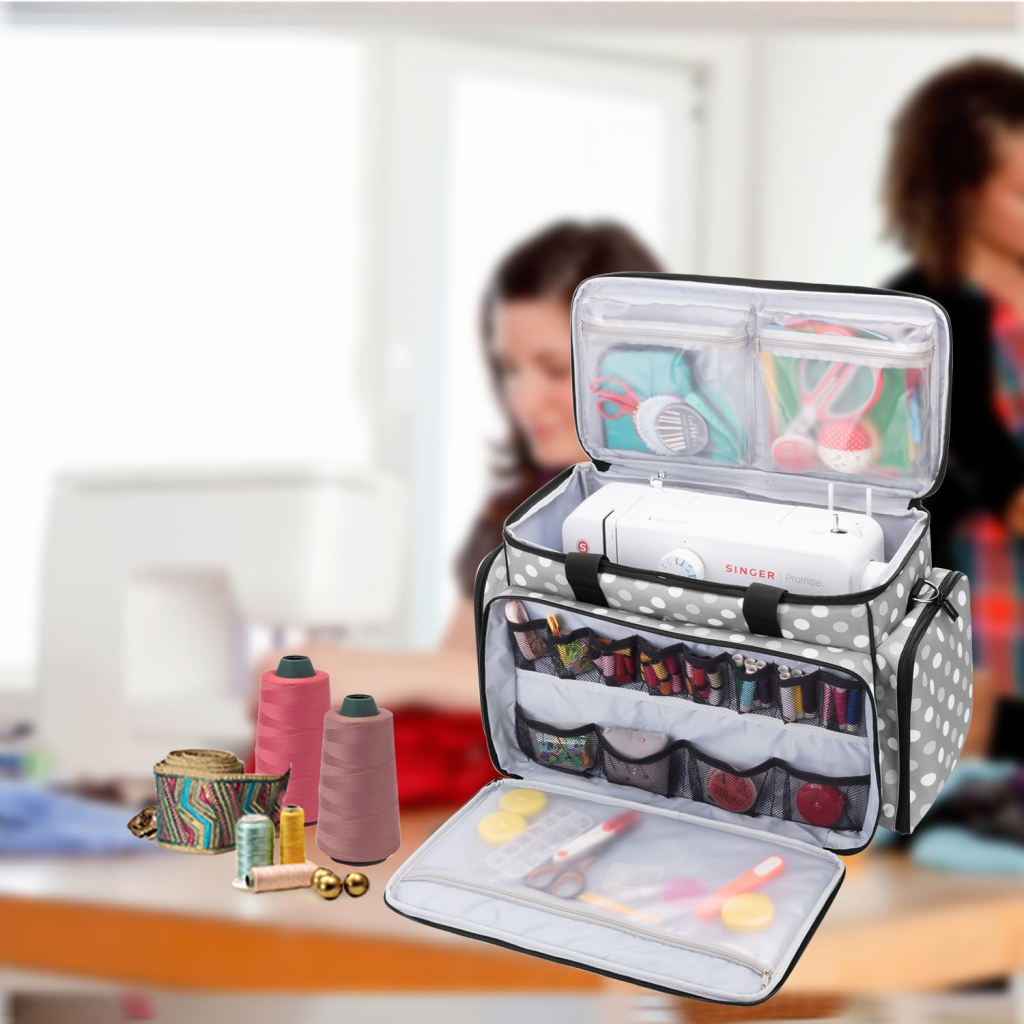
Another removable padding case is the LUXJA, and I like that too. It even talks about room for your accessories, which is a good thing because I just really hate having to lug my sewing bits and pieces around in a separate bag. Subtle and modern, the gray dots pattern
Described as a travel case, I would expect it to stand up well when transferring. Looks like a nice sewing machine cover for the sewing machine and essentials, it seems like an all-rounder!
Arcoyard Rolling Sewing Machine Case with Wheels
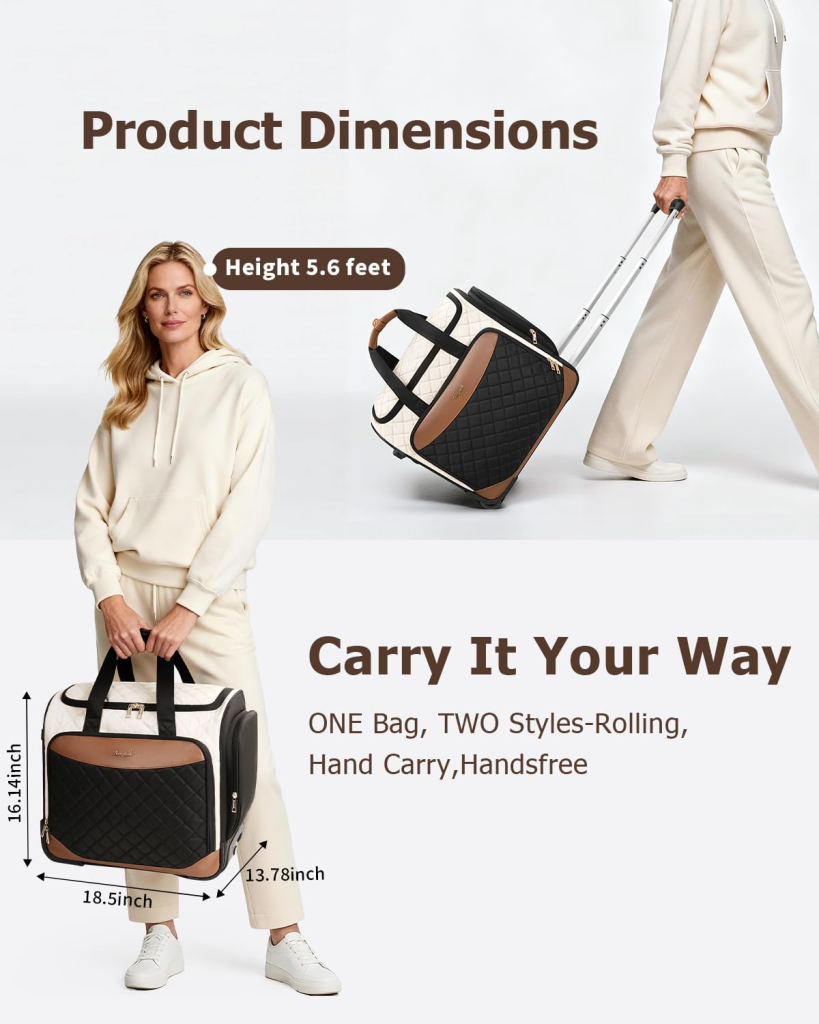
This Arcoyard case is in some ways unique because of its wheeled design. Wheels: Wheels make a world of difference if I have to move my machine around a lot, particularly if it’s going over longer distances or is heavier. There are also packing cubes included, which is a nice way of controlling the smaller gear inside the larger case.
Part removable bottom pad for additional stability. If portability is priority #1, this is easily one of the strongest candidates for a sewing machine travel bag on my list. Perfect for the travelling sewer, this is a super pretty, serious satchel sewing machine transport case.
Wrapping Up Your Search
Therefore, seeing all these alternatives, I am quite confident in discovering a terrific rolling situation for my embroidery machine. It’s not just keeping it safe, you know? For me, this is about making it easier to just use my machine, whether that’s when I have a class or just locally.
I feel like I’ve got a much better sense of what to look for, for example, whether the clothes actually fit well and whether my various bits and bobs are going to be accommodated. To be honest, being able to choose the appropriate case feels like a real leap away from unnecessary difficulty towards sewing enjoyment. Time to put on my creative suit and get to work!
Whether you’re working on small DIY crafts like macrame wall hanging patterns or larger projects, having your machine protected and portable makes a huge difference.
Frequently Asked Questions
Why should I get a carrying case for my sewing machine?
Imagine your sewing machine is a useful tool, similar to an amazing, highly sophisticated paintbrush. A carrying case is like its bodyguard. This prevents it from being jostled, dusted, or scratched when I take it to a sewing class or simply transport it around the house. In addition, it keeps all my small sewing tidbits organized, so that I am not searching for a needle when I should be sewing!
What’s the most important thing to look for in a sewing machine case?
What you need to know is that I am mostly concerned about how well it protects the machine and its portability. It’s like I want something with a lot of padding in there, like a big pillow for my machine. For one, I really need good handles or a shoulder strap because sewing machines can get heavy. Bonus points if it has additional pockets to keep my thread and feet in one convenient place!
Are cases with wheels worth the extra cost?
Oh, absolutely! Wheeled case, when in doubt, wheels save the day! If you need to pop your machine around a lot, like heading out to classes or extra workshops as I do, you will not survive without it. It’s like a mini suitcase for my machine. Ah, much easier than straining my back and just rolling it. It helps a lot, especially if I need to walk some or carry other stuff as well.
How do I know if my sewing machine will fit in a specific case?
This is super important! The first thing I do is get a tape measure and note the size of my sewing machine, width, depth, and height. After that, I check the dimensions in the product details for the carrying case and make a comparison with those measurements. Most cases will specify which brands or categories of machines they are suitable for, or provide you with the internal dimensions so that you can check them yourself.
Can I store accessories in my sewing machine case?
Definitely! Sewing machine cases are made that way, mostly. They generally also have additional pockets or compartments. These are awesome for me because I can keep my foot pedal and power cord, bobbins, scissors, and even a few spools of thread all so close to the machine as they’re in the case with it. This means I can skip the packing of a separate bubble with all my sewing corners.
What’s the difference between a soft case and a hard case?
A soft case can also be a fabric, resembling a heavy tote bag. They’re thinner and frequently more malleable, which allows you to store them when not being used more simply. More like a suitcase and assembled of very hard plastic or other polymer (talcum, etc.). They provide really good bump and drop protection, basically creating like a little fortress for your machine. For a short trip, I prefer a soft case that’s well-padded, although if I am planning to travel much with them & fear some abuse, in that case I’ll go for a hard shell.