Best Kitchen Appliances for Baking 2026: Tested and Ranked: Only the Ones Worth Buying
I love baking, and having the proper tools can really make all of the difference! I’ve been in the kitchen a lot, testing out various gadgets to see what actually stands up when it comes time to make cakes, cookies, and bread.
Whether you’re ready to upgrade your baking game or just getting started, I’ve come up with a list of some of the best kitchen gadgets that can make a HUGE difference and will save your life when it comes to baking. These are the things that have made their permanent homes in my kitchen.
Key Takeaways
- A digital food scale is a game-changer when it comes to exact measurements in baking, as it allows you to measure ingredients by weight for “perfect” results.
- An electric mixer, whether in the form of a stand or hand version, will save you time and energy when it comes to beating batters and doughs.
- Invest in a decent oven thermometer to know your oven is actually at the temperature it purports to be.
- Silicone baking sheets are great for keeping cookies from spreading too much and being a total pain to clean up.
- A good set of baking pans, particularly half sheet pans is essential to baking many items.
Best kitchen appliances for baking
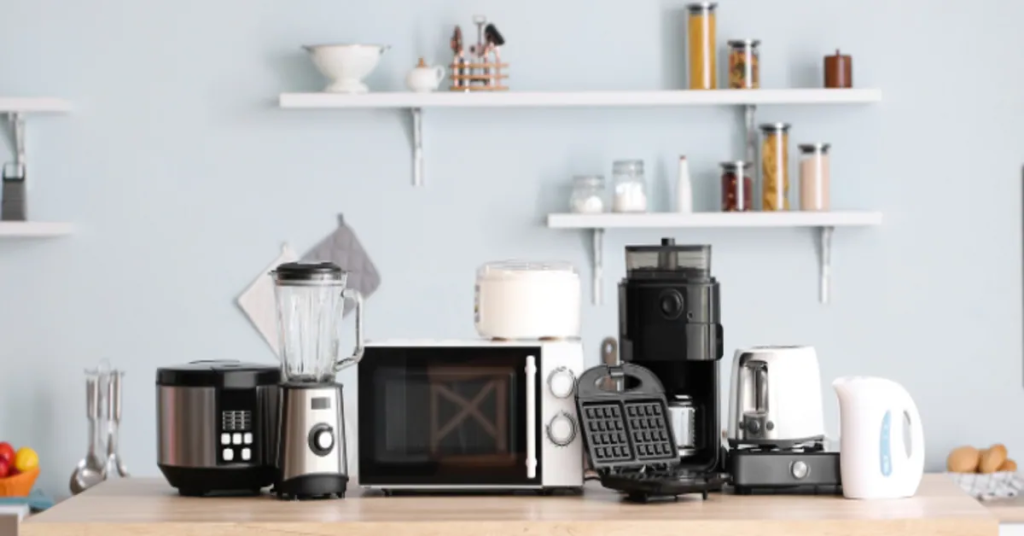
Getting started with baking can be daunting, especially when it comes to navigating which gear you really need. I’ve had a lot of time in the kitchen to experiment with various tools and gadgets, and I’ve picked up a thing or two about what makes for easier (and better!) baking at home.
This isn’t just about having the fanciest equipment, it’s about finding tools that really work, and help you get consistent results whether you’re baking up a simple batch of cookies or tackling something more complicated with a bread recipe.
When I began, I felt like I needed it all but, really, a few essentials can transform things. What do you really, truly like to bake? If it’s cakes and pastries, you’ll be in need of items that help with precise measurements and even mixtures. When it comes to bread making, a solid mixer is game changing.
Quality equipment for making pastries results in less frustration and better results. I’ve learned that investing in a couple of high-quality baking tools is really worth it. It makes the whole rigamarole more fun, and frankly, the baked goods are better.
It can be overwhelming how many baking appliance reviews and recommendations are out there! But honing in on a few must-have kitchen gadgets for cakes or premium mixers for bread baking, and you likely set yourself up for success.
I’ve learned that IDG channels check out my kitchen gadgets and I spend less time hunched over the counter troubleshooting, more time scarfing down things having been cooked in them. When it comes to becoming a better baker, the right gear is a good place to start. You don’t have to slap together a professional setup overnight, but you can make a big difference by choosing wisely from the beginning.
For example, you can simply avoid so many of the classic baking mistakes by investing in a good oven thermometer. There are some awesome styles of “kitchen ranges” that offer precise temperature control, something a baker needs.
Vitamix Propel Series 750 Blender
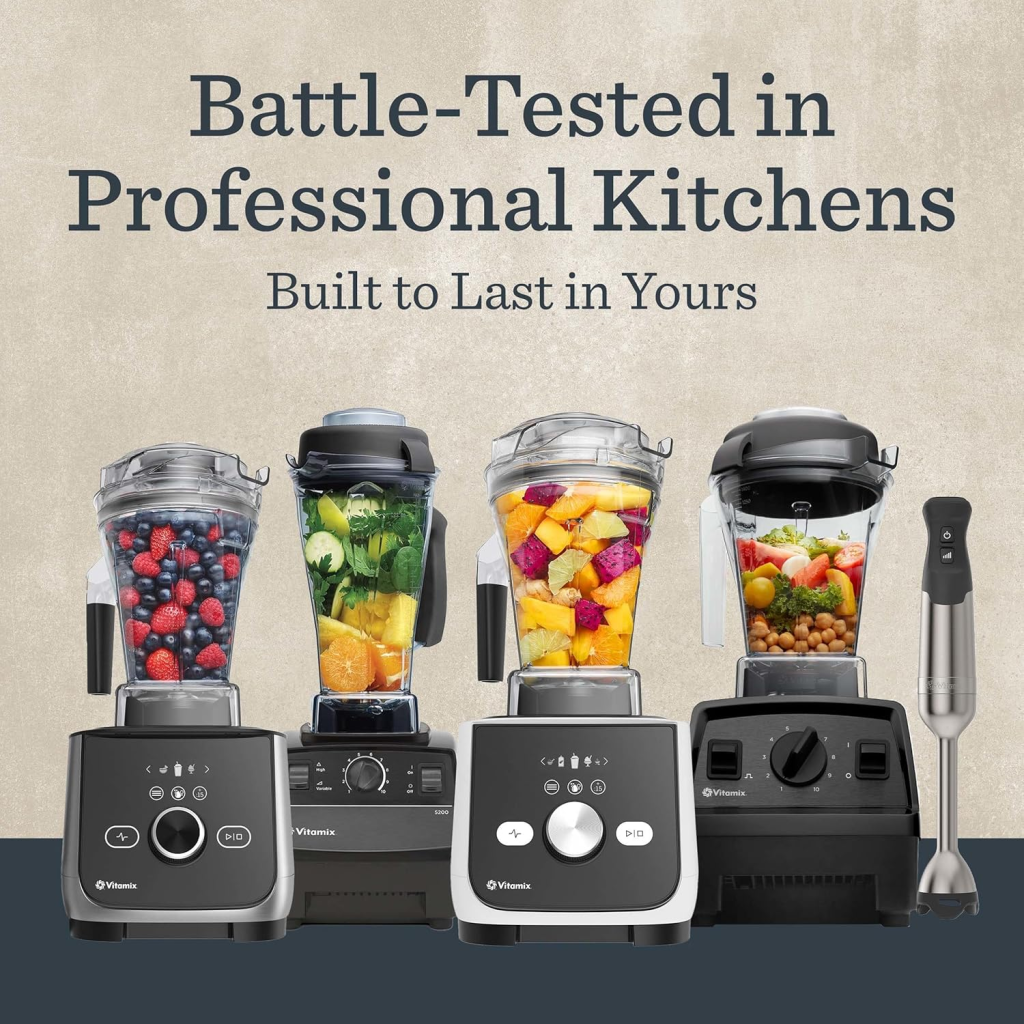
When I first began to get serious about baking, a blender was only for smoothies in my mind. Boy, was I wrong. Not just for drinksThe Vitamix Propel Series 750 has really become a relentless cornerstone in my kitchen, no less so than when it comes to drinks.
I’ve made fine, powdery nut flours for gluten free cookies in it with no problems, and it blends silky smooth custards and ganaches in no time. It’s also strong enough to do some heavy lifting, like grinding oats into flour or making my almond butter for pie crusts. I absolutely love the variety in settings; we can get perfectly ground or coarsely chopped, and anything between.
Sure, it’s a little bit of an investment, but for what it adds to my baking repertoire I think it’s completely worth it. You can read more about this multifaceted kitchen utensil on their site. It really does matter when you require those exact results for delicate recipes.
Breville Smart Oven Air Fryer Pro.
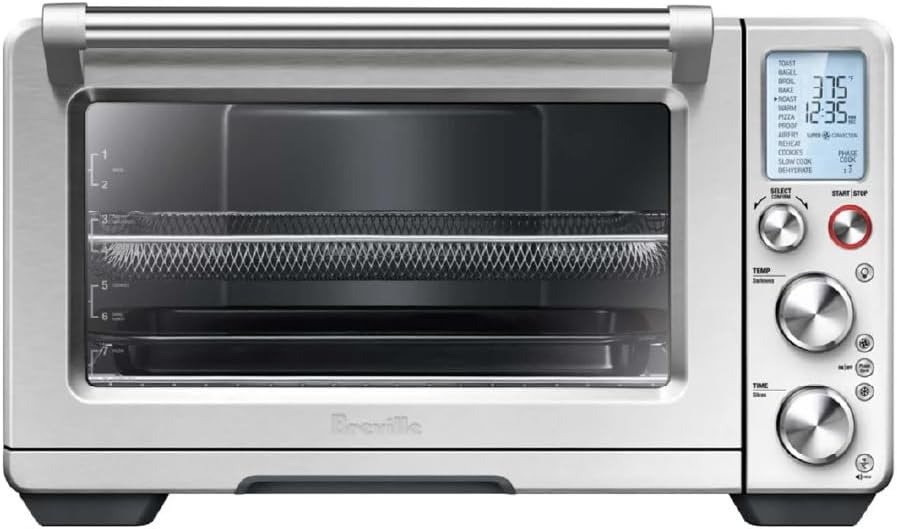
When I first started to get serious about baking at home, I thought I needed a big, fancy oven. But then I took the Breville Smart Oven Air Fryer Pro for a spin, and frankly, it was game-changing. This thing is not just an air fryer; it’s like a mini convection oven on my countertop.
It preheats super quickly, and this is a saving grace when I’m using the broiler in a recipe and don’t want to wait forever for it to warm up. I’ve used it for everything from bagels and toast to roasted vegetables, but where it really shines for me is baking.
The convection feature bakes my cakes and cookies super evenly, and it makes things really crispy without burning. It also has a ton of presets, and those are pretty accurate.
I’ve been using it in place of my big oven more and more, especially for small batches or when I need something fast. Yes, it’s a bit of an investment, but the amount of versatility that this gets used for in my kitchen is so worth it. It’s a beast with cookies, pies, and even baby loaves of bread.
I once believed a full-size oven was mandatory for serious baking. After comparing heat consistency while researching Best Kitchen Appliances, I realized countertop convection ovens can outperform traditional setups.
The convection function ensures even browning. It performs beautifully for cookies, mini loaves, and pastries. If you’re unsure about convection benefits, my detailed comparison in Air Fryer vs Convection Oven explains the differences clearly.
🎯 Final Verdict
Smart countertop ovens are best for serious home bakers who want precision, consistency, and versatility. They deliver excellent baking performance but trade off speed, simplicity, and long-term durability.
Cuisinart CPT-122BK 2-Slice Compact Plastic Toaster, Black
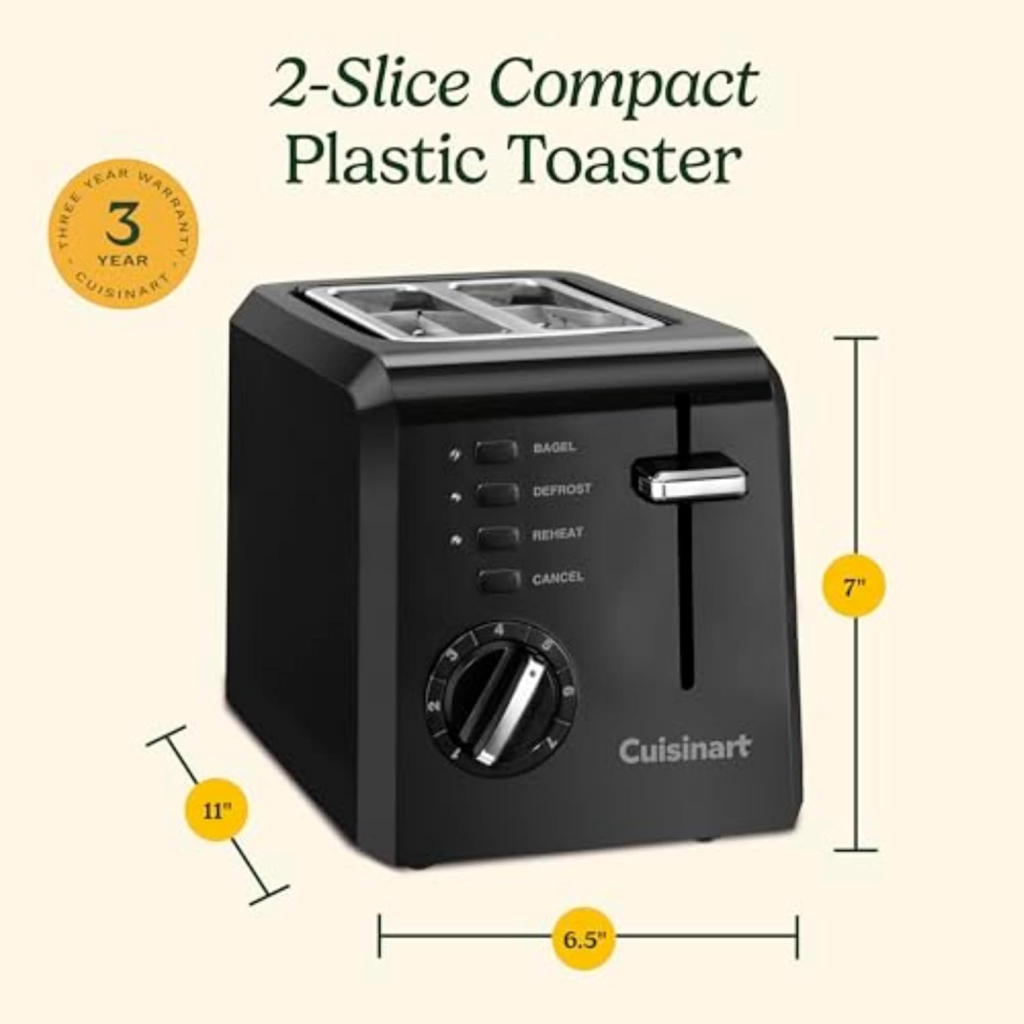
When I need a fast solution to make toast or bagels in the morning, I always grab my Cuisinart CPT-122BK. It’s a simple, basic 2-slice toaster, and in all honesty, it does what it’s supposed to do quite unremarkably.
I do appreciate how small it is, a real plus for me as my kitchen counter isn’t particularly large and I love anything that doesn’t take up too much space. It also has a nice, clean look to it, which I like.
I haven’t noticed a huge difference in the browning settings. You can dial it up from light golden brown to dark, and it usually nails the color. There’s also a bagel setting, which is useful because it toasts one side of the cut bread more aggressively while warming the other.
And if you’re the type to forget about your toast until a minute after it’s finished, the high-lift lever means you can easily get those smaller pieces out without burning your fingers.
It’s not an exciting or glamorous kind of a gadget, but sometimes it is the case that simple is best, especially when I just want some breakfast on the table quickly. This little toaster has served me well for simple toasts.
This compact toaster fits perfectly in smaller kitchens, especially if you’re optimizing space like I discussed in Small Apartment Ideas.
🎯 Final Verdict
Basic toasters are a good choice for simple, everyday use and budget-conscious buyers. However, they often struggle with consistency and precision. If you care about even results and serious baking performance, upgrading to a higher-end appliance is the better long-term investment.
Ninja Fit Compact Personal Blender
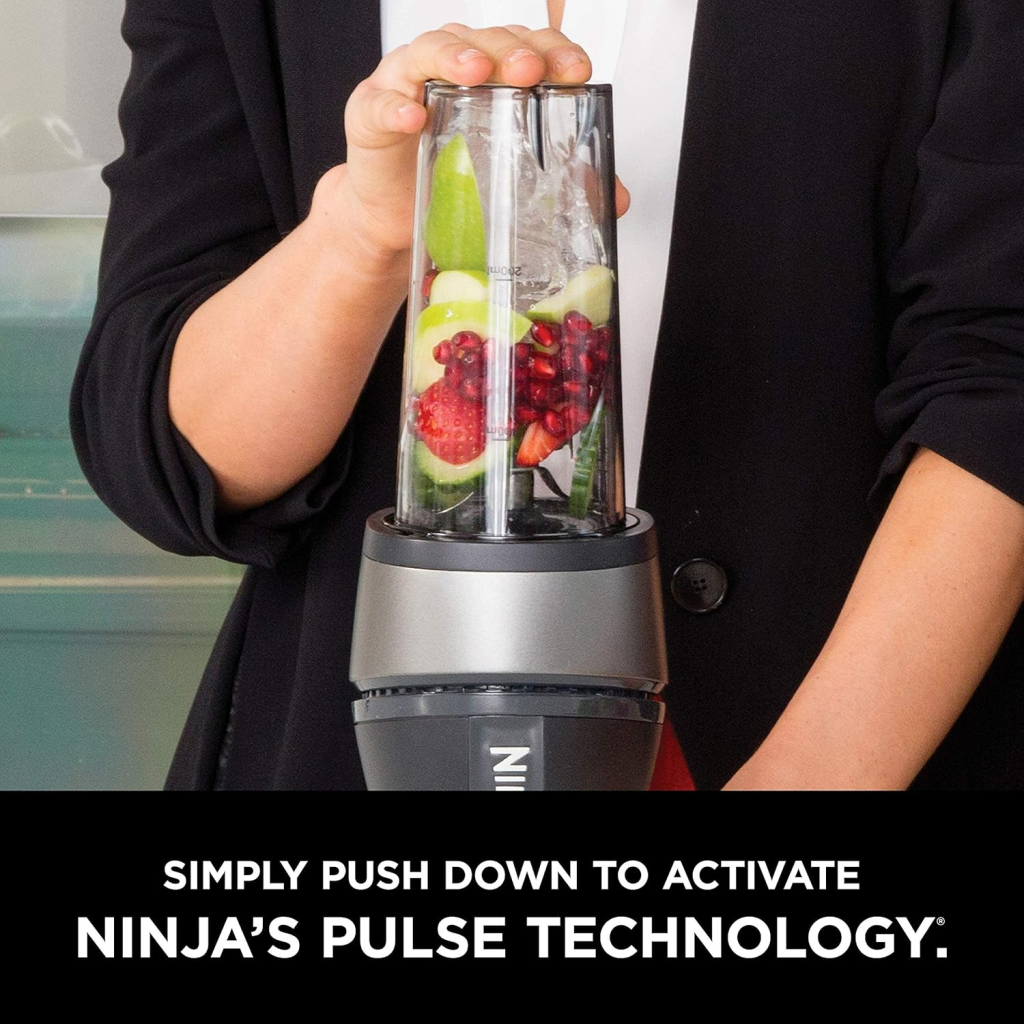
When I started baking in earnest, I believed that what I needed were the biggest, most pro-looking gadgets. But really, sometimes a smaller, more specialized tool is just the thing. That’s where the Ninja Fit Compact Personal Blender comes in. It won’t take the place of your stand mixer when you’re making hundreds of cookies, but for smaller jobs, it’s unexpectedly useful.
It’s fantastic, I’ve discovered, for things like fruit purees for fillings or sauces. When you need a recipe to blend just a few nuts or seeds, this little guy has no problem. It also works pretty great for making single serving smoothies, which although not technically baking can certainly make a nice pre or post-baking treat.
It’s a decent motor for its size, and I haven’t had it overheat on me during short blending gigs. The mess is generally really easy to clean up too, which is always a win in my book.
It doesn’t occupy too much of the counter, and I’ll just tuck it away in a cabinet when finished. It’s a good option if you want something to quickly chop up those small blending jobs that don’t require you to bring out some kind of large appliance.
🎯 Final Verdict
Personal blenders are perfect for quick smoothies and single servings, especially for busy routines or small kitchens. However, they are not a replacement for full-sized blenders or baking appliances and are best used as a secondary kitchen tool.
Cuisinart Ice Cream Maker Machine, 2-Quart ICE-30BC (Renewed)
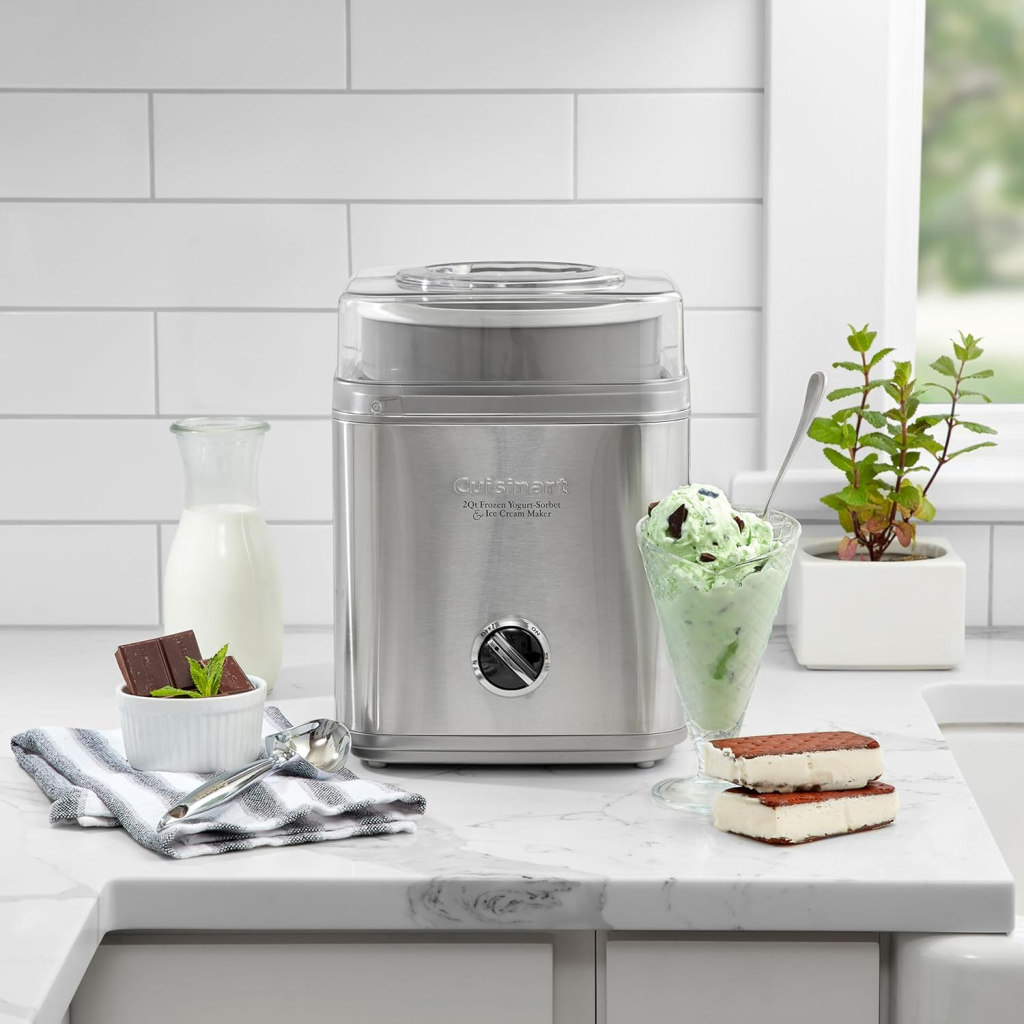
Slaving over a homemade ice cream can be very rewarding (if you keep experimenting). I’ve found that a real ice cream maker is just much better than trying to rig something up with a stand mixer attachment.
Those attachments just don’t scrape down the sides well enough on their own, and you’re left with icy bits. A dedicated machine, such as this Cuisinart model, excels at the job and in most cases will produce a much smoother, creamier textured butter that we all love.
It’s pretty simple to use, you just have to make sure the bowl is completely frozen in advance. I generally freeze mine the day before. It’s a fabulous way to churn up a batch of homemade ice cream for a summer party or just for Tuesday night dessert. Two quarts is pretty generous, okay for a family or if you really like ice cream.
🎯 Final Verdict
Ice cream makers are a great addition for dessert lovers and home bakers who enjoy experimenting with flavors. However, they are not essential for everyday baking and work best as a specialty appliance rather than a primary kitchen tool.
This machine produces smooth, creamy ice cream far better than improvised mixer attachments. For seasonal inspiration, check Best Christmas Lights to Buy and Best Outdoor Christmas Lights to set the mood for holiday baking.
Hamilton Beach Digital Programmable Rice Cooker
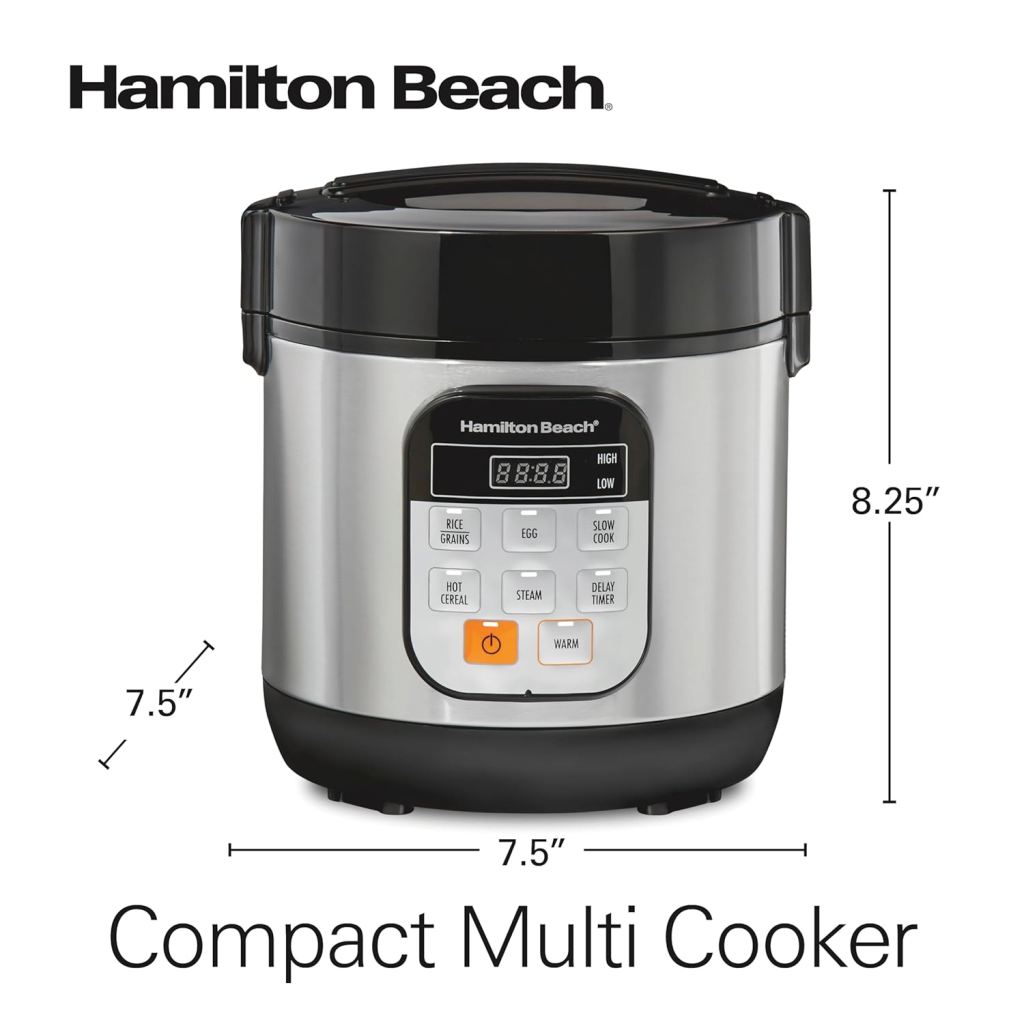
Okay, so you’re probably thinking: a rice cooker? For baking?’ Hear me out. It’s not a traditional baking tool like a stand mixer or an oven, but I’ve come to rely on my Hamilton Beach Digital Programmable Rice Cooker as an unexpectedly helpful ally in the kitchen when it comes to some baking projects. It’s not only for rice, you know.
I’ve used it to steam fruits for fillings, softening them so that they can be easily mashed to a smooth texture for pies or tarts. It’s also perfect for simple syrups or custards as it maintains a nice, even gentle heat without requiring me to hover over a stovetop and stir constantly.
The programmable feature is a game changer; I can program it and forget it, which gives me the freedom to get other things done like mix up dough or measure out my ingredients. It’s a small kitchen tool, yes, but sometimes the most basic tools are what can transform my baking experience and make it just that little bit easier for me.
🎯 Final Verdict
Rice cookers are useful for everyday cooking and meal prep but are not essential for baking. They are best considered a supporting kitchen appliance rather than a core tool for bakers.
Things to Consider When Buying Baking Appliances
I always think through a few things first when I’m considering buying a new thing for my kitchen, particularly for baking. It’s not that it looks cool or all the right people are buying it. The biggest question in my case is how much I will use it.
If I’m only whipping up life’s very simplest things once a month (chocolate chip cookies forever), maybe the most heavy-duty, chef-grade mixer ain’t for me. But if I’m baking handmade bread every weekend, durability and power really count. It’s just like shopping for tools on a job, but you wouldn’t use a butter knife to hammer in a nail, would you?
Not Sure Where to Start?
Upgrading your kitchen doesn’t have to be overwhelming. Start by comparing the best appliances based on your budget, space, and cooking needs.
See Our Complete Buying Guide →Another big one is space. Install the baskets on your own wall; they don’t take up a ton of space (my kitchen is certainly not huge, so there’s no room to be unrealistic here).
A giant stand mixer might be extravagant, but if it’s going to live most of its life in a cabinet, is it worth the cost? I just try to think about where are things going to live when they’re not in use. Sometimes a sleek, compact appliance that does the job well is better than a big one that only adds counters clutter.
And then there’s the budget. Certain appliances are absolutely an investment. I’ll examine the price, but try to discern what kind of long-term value I’m getting. Is this appliance built to last for years? Will it save me money over time, perhaps by enabling me to create things from scratch rather than purchasing them?
A nice food scale could help me measure (and therefore waste) less, leading to fewer failed batches and saved money. It’s about the balance, cost versus what you get out of it. A little reflection on how often you cook can go a long way in matching up your tools to your needs.
How to choose based on what you bake (cakes, breads, cookies, desserts)
As I’m trying to figure out what tools are actually essential for baking, it comes down to what do I bake the most? If I am making a lot of cakes, I will make sure to have the right pans, like a two-piece aluminum tube pan for angel food cakes (which need to cool on a rack without caving in), or a good nine-by-13-inch pan for brownies and sheet cakes.
When I make bread, a dark, nonstick loaf pan is invaluable for achieving an evenly browned crust, particularly with something like banana bread or pound cake. How funny that different pans can make such a difference, don’t you think?
Now, cookies are a whole other matter. If I’m baking one kind of no-fuss drop cookie or another, a spring-load scoop is my best friend when it comes to making sure all of my cookies are the exact same size from batch to batch, whether that means using a two-tablespoon size for standard and giant cookies or relying on a diminutive version for little bite-size dreams.
If I want my cookies to be a bit more decorative say, around the holidays, they might bring out plunger cutters or special tips used for decorating. Pie crusts, however, do require a pan that gets very hot.
I lean toward glass or aluminum pie plates, because of all the support they lend that back crust, their ready transmitance of heat to achieve a really crispy bottom where you might stop just short of burning it, versus heavier ceramic ones which don’t and can be frustrating when you sat down 90 minutes ago but still have half your slice to go.
And when it comes to making desserts in general, I’ve learned that get-your-ingredients-measured-correctly is important. A digital kitchen scale was a game-changer for me, I made the switch from measuring cups to using this one years ago. It is quite a flavor enhancer, particularly with something delicate.
For creative baking inspiration, you might even enjoy design-focused reads like Macrame Wall Hanging Patterns or Window Treatment Ideas, since kitchen creativity often overlaps with home aesthetics.
And never underestimate the power of precision. Switching to a digital scale improved my results dramatically, just like upgrading machines improved performance in my Best Quilting Sewing Machine comparisons.
I’ve had one for just about everything from flour to sugar, and it even has a convenient pull-out display so I can properly see what it says even when there’s a gigantic bowl on top of the whole thing. It’s one of those things that seems insignificant, but it really takes your baking game to the next level. So yeah, consider what you love to bake and then get the tools that will help those things turn out just right.