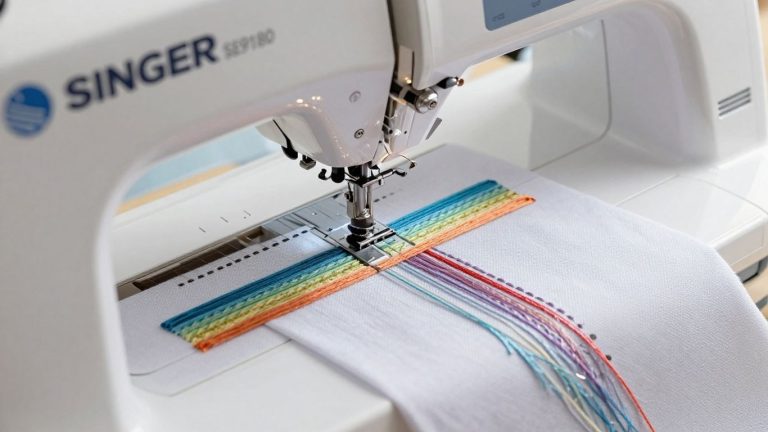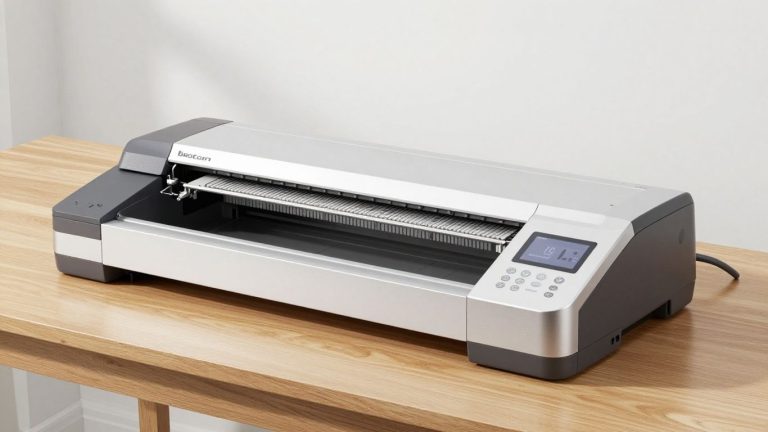
Brother Air1800 Air Serger Review: Is It Worth Buying in 2026?
I’ve been testing out the Brother Air1800 Air Serger, and honestly, I was pretty curious to see if it lives up to the hype, especially with that air threading feature. I wanted to figure out if this machine is a solid buy for someone like me, who does a bit of everything with sewing.
So, I put it to the test, and I’m ready to share my honest thoughts on whether the Brother Air1800 Air Serger is worth your hard-earned cash, especially as we look ahead to 2026.
Key Takeaways
- The Brother Air1800 Air Serger’s standout feature is its jet-air threading system, which makes threading loopers incredibly fast and simple, removing a major hurdle for new users.
- I found the differential feed on this machine to be very effective for handling tricky fabrics like knits, preventing unwanted stretching or puckering, and giving a smooth finish.
- The built-in rolled hem function is a nice addition, allowing for quick and professional-looking edges on lighter materials without needing special feet.
- For its price point, the Brother Air1800 Air Serger offers good stitch quality for overlock, flatlock, and rolled hem stitches, making projects look more polished.
- Overall, I think the Brother Air1800 Air Serger is a user-friendly option, especially for beginners, thanks to its easy threading and straightforward controls, making it a solid choice for those new to serging.
Introduction to the Brother Air1800 Air Serger
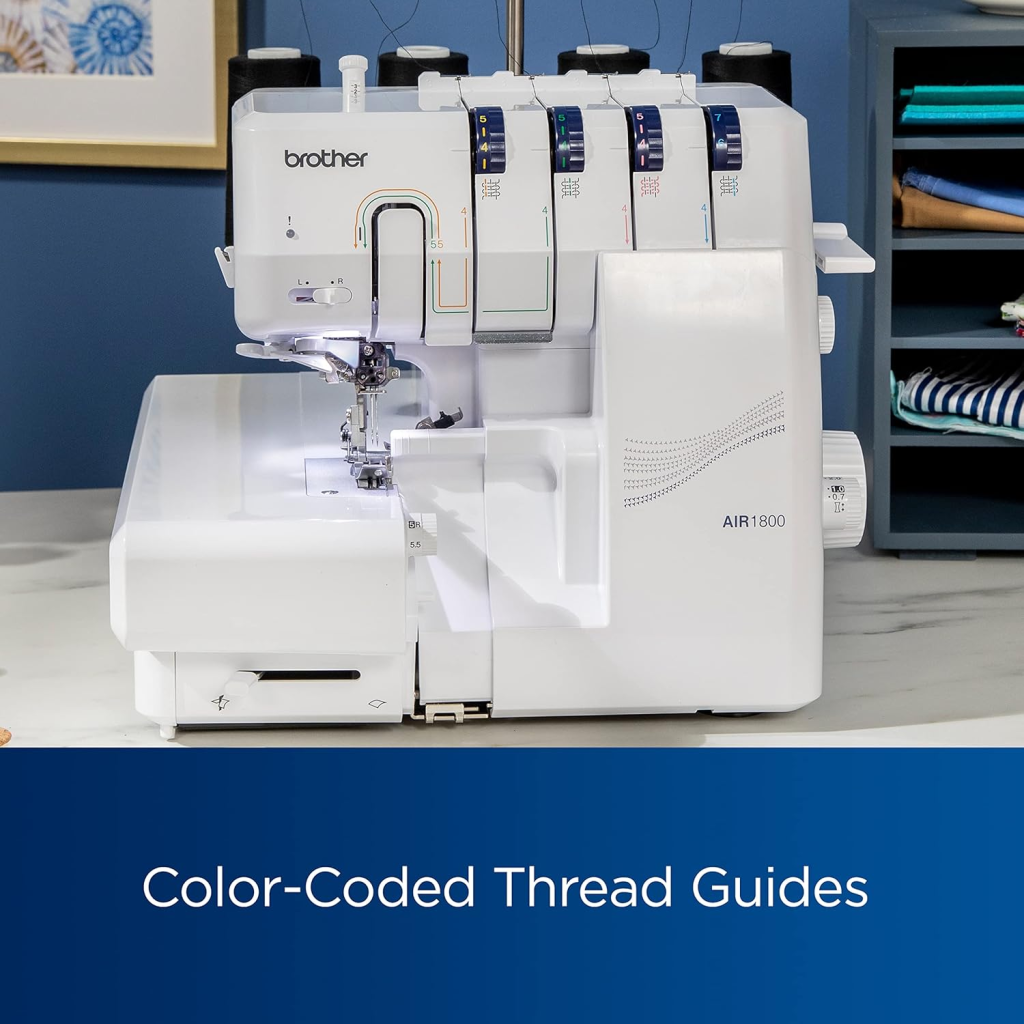
I was interested in the Brother AIR1800 when I first heard about it. But an air threading system on a serger felt almost sci-fi, and after the overhype of other products in this field before, he was curious if it lived up to what sounded too good to be true. I have a lot of experience battling with serger threads, and the glorious idea of having something that was indeed a “game changer” was music to my ears.
This machine is generally talked about when individuals are comparing sergers and is one of the best air threading sergers in use at home. Were the Brother 1800 serger features enough to explain a listing in the top few and stand out among all those sewing machines today? Should the average home sewer buy the Air1800 serger? Let’s get into it.
This is a new machine I have been messing around with, and my first impressions are pretty favorable. It is not flimsy, always a good sign. The Brother AIR1800 is advertised as a beginner-friendly machine, which I always appreciate. This makes this incredible world of possibility that is often so intimidating more accessible.
The main selling point of the AIR1800 is that it makes adding serging a little less intimidating, especially for someone who may be unfamiliar with this type of machine. It’s designed with features that target common annoyances.
The Jet-air threading system is one of the best Brother 1800 serger features. And this is the biggest attraction for many, which I can understand. It is meant to enable you to put the threadings through the loopers super easily. This would, honestly, be enough of a reason to consider it for anyone who has ever had trouble threading a serger before! This certainly marks an upgrade over the traditional methods, and places the AIR1800 amongst some of the best air thread serger machines out there.
I’ll be looking at how well this system works in practice, alongside its other capabilities, to determine if it’s truly the best air threading serger for home sewing enthusiasts like myself. If you’re looking for a reliable sewing machine for detailed work, you might also want to check out mini irons for sewing.
Here’s a quick look at what it offers:
- Jet-Air Threading: A blast of air guides threads through the loopers.
- Differential Feed: Helps prevent fabric puckering or stretching.
- Rolled Hem Capability: Easy switch for delicate edge finishes.
- Safety Features: Sensors prevent operation when covers are open or the presser foot is raised.
I’m excited to see how these features perform and if they make this Brother serger air threading a truly revolutionary experience.
This machine is generally talked about when individuals are comparing sergers and is one of the best air threading sergers in use at home. If you’re exploring alternatives, you can also check best quilting sewing machine for regular machines.
Key Features and Specifications of the Brother Air1800
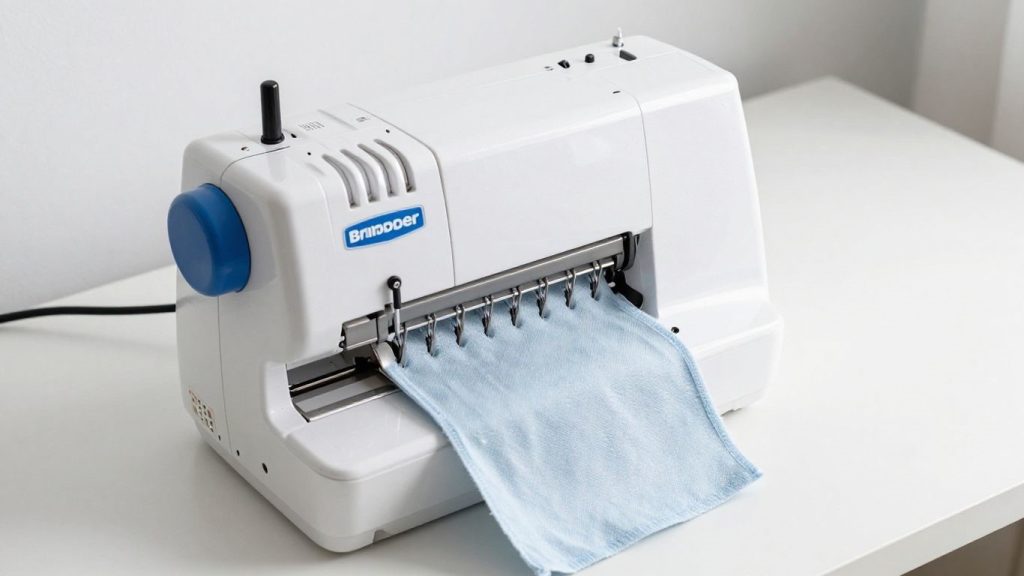
When I first looked at the Brother Air1800, I was really curious about what it could actually do. It’s a serger, so its main job is to finish seams and make edges look neat, but there’s more to it than that.
Before using a serger, it’s helpful to understand basics like sewing machine parts and how to thread a sewing machine.
Air Threading System: A Game Changer?
And this is probably the biggest selling point for this machine, and to be honest, I understand why. It is called Jet-Air Threading, and it’s pretty cool. All you need to do is push a button; the air flows and helps to blow the thread through the loopers.
If you have tried to thread a serger and have run into that aggravation as well. The ability to change thread colors is such a damned hassle on its own. For me, it takes a lot of the initial frustration out and is a real win.
If you’ve ever struggled with threading, you’ll appreciate this. Many beginners struggle here, which is why tools like best automatic needle threaders can also help.
Stitch Options and Versatility
It is capable of working with 2, 3, and 4 threads (depending on the type of fabrics you are sewing or the project you are working on). It can also make different kinds of stitches, including overlock, rolled hem, and flatlock. So this means I can tackle everything from fine silks through to heavier knits. I like that switching between these stitch configurations is pretty easy.
Here’s a quick look at what it offers:
- Overlock Stitches: ideal for sewing and finishing seams to avoid unraveling.
- Rolled Hem stitches: Great for use on thin fabrics such as scarves or napkins.
- Flatlock Stitches: Ideal for both creating a decorative effect and for a flat seam on stretch fabrics.
Another interesting feature is its differential feed. It has a 0.7mm to 2.0mm ratio, which proves helpful in providing good stitch quality. Nice add-on for finishing decorative edges on specialty materials, by creating custom lettuce edges
If you’re into DIY sewing projects, you can try how to sew an apron or even beginner-friendly projects like how to make a simple tote bag at home.
Speed and Performance
Now, the Brother Air1800 is not the fastest serger on the market, but it has a fairly decent speed that can be considered appropriate for most home sewing projects. I was satisfied with its performance too, and it works well on many different fabrics. Another good safety feature is that it has a safety sensor that stops the machine from running if the covers are open or the presser foot raised.
Anyone searching for a sewing machine that is known to do the trick for some of the more difficult materials, more than just fine knits, will be satisfied with this one. It’s a good option if you’re looking for beginner-friendly sewing machines that still offer professional results.
| Feature | Specification |
| Threading System | Jet-Air Threading |
| Stitch Capability | 2, 3, and 4-thread options |
| Differential Feed | 0.7mm to 2.0mm |
| Max Speed | Not explicitly stated, but adequate for home use |
| Work Area Lighting | Bright LED lighting |
| Safety Features | Cover/foot sensor with error LED. |
Ease of Use: Who is the Air1800 For?
I was intrigued right from the time I got my hands on the Brother Air1800 at how conveniently it would actually be to use. It promises to be an easy machine, and this is a huge selling point for me. None of us has time to spend struggling with a new gadget for hours on end, do we? The real question is, who is this machine for? I’ve played with it a little bit, and it’s on the right track for a couple of different kinds of sewists.
Beginner Friendliness
If you are new to serging, I would recommend the Air1800 as a great beginner option. The most daunting aspect of learning how to serge for most people is threading the machine. Its jet-air threading system is where the Air1800 really comes into its own. It’s literally just a button pressed, and it gives the thread a puff of air to help guide it through the loopers. On the surface, this seems easy, yet it takes away so much of that frustration and fear you can feel getting started with serging.
The story of my first serger is one that I remember quite vividly, and the sewing machine alone nearly caused me to quit. For anyone just getting started, this machine definitely makes that part easy. It also means you can change the colours of threads more often without it becoming labour-intensive, allowing you to play with those professional-looking finishes on your projects. Oftentimes, it can be difficult to set up your sewing space, but if you have a machine that is easy to thread, the whole process becomes easier.
If you’re completely new, I’d suggest starting with a basic machine like Brother CS7000X review or Singer M3330 review before upgrading to a serger.
Advanced Sewer Experience
Now for Beginner Only? Not at all. Though the air threading is nothing short of a miracle, experienced sewers will rejoice in all the other features. Adjusting the differential feed is also very simple, which comes in handy when working with delicate fabrics like knits and extra-light fabrics. That way you avoid that ughhh wavy torching or warped fabric stretching. Also, the rolled hem built-in functionality is very handy.
You still don’t have to go messing about with a different kind of presser foot or doing all sorts of other complicated setups, it gives that really lovely, delicate edge on say scarves or similar kinds of things like napkins. These little conveniences make the workflow mellower, particularly when you have been sewing for a while. While this is a pretty basic machine, it really does most everything that you will need, and with no learning curve at all for those of us who have been sewing for years. It is also a compact machine that is great if space is tight, making it the perfect sewing room addition.
Here’s a quick look at what makes it user-friendly:
- Jet-Air Threading: This minimalist design couples with a unique jet-air threading feature, which significantly simplifies the setup.
- Differential Feed: Allows you to adjust the feed on your fabric for easier sewing and a cleaner seam, especially when sewing knits.
- Built-in Rolled Hem: A method for finishing edges of lightweight fabrics in record time.
- Well-marked controls: Buttons and dials are primarily intuitive and well-marked.
The Air1800 is an excellent machine for many, but it remains primarily an overlock machine, which some may forget. You use a different machine for coverstitch, so if you need that functionality, you’ll have to get a separate machine as well. That is why it specializes in just one task, which means that it can finish seams and edges as professionally and as efficiently as possible.
For experienced users, machines like Janome MC6650 review or Brother NQ1700E review offer more advanced features.
Pros and Cons of the Brother Air1800
My first deep dive into the Brother Air1800 zoomed in on what unique value it has. I was like most of the people and wanted to know both sides, good and bad, before flipping any cards. As with all models, it’s always wise to weigh the pros and cons of air thread sergers.
Here’s what I found:
Pros of the Brother Air1800
- The big one, right? Air Threading system. The jet-air threading on the loopers is really a time-saver. It sure made changing thread colors a much less tedious process. This is not perfectly idiot-proof, and there is a bit of a learning curve to get the hang of it, but once you do, it’s so unbelievably fast. It certainly eliminates the annoyance that often comes with serger threading.
- Stitch Quality: I was happy with it. It performs excellent overlock, rolled hem, and flatlock stitches that professionalise seam finishes. This makes it very versatile because it stitches evenly on all fabrics from thin silks to knits.
- Differential Feed: An easy, adjustable, and effective differential feed. Super useful to keep knit fabrics from stretching out or looking wavy on the edges, and also in making decorative lettuce edges.
- Sewing Speed: It sews up to 1300 stitches per minute. This means I always have projects to churn through quicker, which is a nice win for me.
- Build Quality: The Device Feels Sturdy. It has a metal frame inside, and I experienced virtually no vibration even when I hammered it at serious velocity. It does not feel weak or cheap.
- Easy to Learn & Use: Colour-coded thread guides and LED error indicator assist you with easier setup and troubleshooting.
Cons of the Brother Air1800
- Cost: Generally, air-thread sergers are more expensive than standard sergers—and the Air1800 follows that trend. It’s an investment.
- Tension Control: Although the solid stitch quality is good, tension control isn’t fully automatic like a few high-end models. I still had to manually set it, which you should be aware of if you’re coming from a fully automated system.
- NOT a coverstitch machine: This is an important note. Air1800 — An overlock machine only. However, a coverstitch machine is required for any form of hem stitching on t-shirts or stretchy items since you cannot use a serger to do the same.
In summary, I guess the Brother Air1800 packs in a lot for its target audience. Air threading is a huge convenience, and the stitch quality is good. However, the price point and absence of automatic tension and coverstitch functions make it not the best fit for everyone.
The stitch quality really impressed me. Compared to heavy-duty machines like Singer 4452 Heavy Duty review, this one focuses more on finishing rather than power stitching.
Is the Brother Air1800 Worth Buying in 2026?
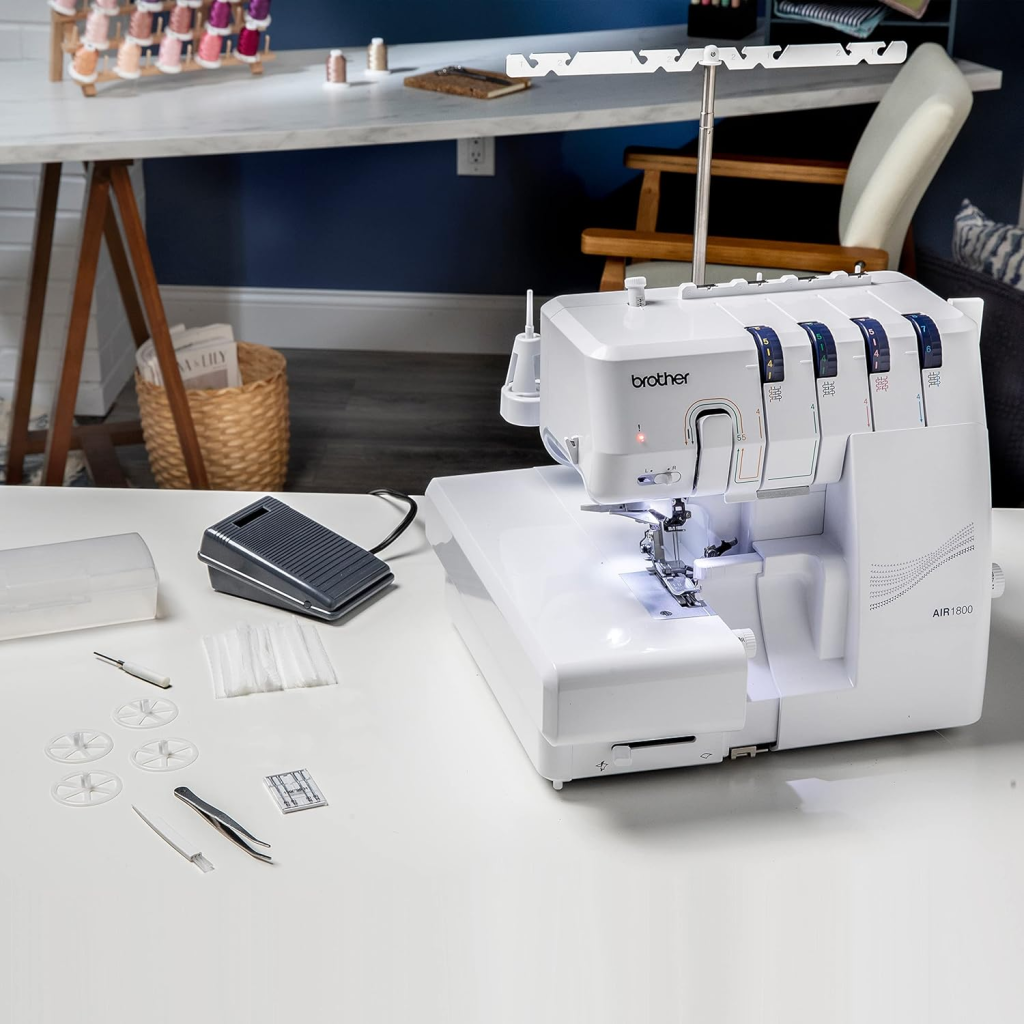
Well, I’ve spent a fair amount of time with the Brother Air1800, and I have to say I’m pretty impressed. So if you are wondering whether this machine can still hold its own and is worth your money in 2026, the answer is probably a yes, but maybe only with an asterisk on it, depending on what you need.
First up, that air threading system? It’s still a game-changer. I mean, really, that used to be my least favorite part of sewing: threading a serger. Trying now to chase little threads, squinting and feeling frustrated, this was the worst. With the Air1800, all it takes is a push of a button, and the air does all the work for you. It kind of takes the headache out of changing thread colours so much quicker. This one function alone is enough to put it in the number one spot, particularly if you are new to serging or just despise fiddly setups.
I likewise liked the stitch quality. From lightweight silks to knits, it powers through most things without too much fuss. The differential feed is super easy to adjust, and it allows you to get nice flat seams on stretchy fabrics without that wavy look. The integrated rolled hem will allow you to get those professional-looking edges to your scarves or napkins without requiring special feet.
Still, it’s not going to be for everyone. It is definitely in the higher price range than your basic sergers, and while air threading is great, you still have to check manual thread tension, as it isn’t fully automatic like some other machines on this list. Note also, this is not a coverstitch machine but a serger. If you want to cover hems, you’ll have to get a different machine for that.
Here’s a quick rundown of who I think this machine is best suited for:
- Air threading and clear guides are neat features for fearless serging! Me1: We are beginners, but the first step is to thread the mystery machine. But where does it go?
- For those with small spaces: It is not a space hog, takes up its place on the table of my sewing room nicely without overrunning it.
- Professional finishes for home sewers. Please, if you are looking to have neat seams and edges with a minimum of fuss, then here is your answer.
- For anyone who lives for speed: It sews up to 1,300 stitches per minute, pretty darn fast for getting stuff done.
In conclusion, the Brother Air1800 is one of the simplest to use sergers, particularly when it comes to the setup. Stitch quality is very reliable, and versatility is good for the day-to-day tasks and sewing projects. Although it lacks some of the fancier features found on more expensive models, its basic characteristics, particularly the air threading, make it a great option for many sewists even today.
Should it be on your shopping list for 2026? If you can locate it at an adequate price & & its functions fit your stitching requirements, I would recommend going for it. It is a very useful machine and takes away an otherwise annoying part of sewing.
Comparison of Brother Air1800 with Other Sewing Machines
So one of the things that kept me busy while trying to try out the Brother Air1800 was comparing it to other machines on the market. With so many choices, this can be a tad overwhelming, but I thought I would compare it with some other popular models in this space (and the brother serger machine reviews tend to pop up frequently for these types of critiques). In this air threading sewing machine comparative overview, we concentrate on a handful of players.
Brother Air1800 vs. Janome 8002D Serger
The Janome 8002D was another serger that I checked out as well, and it is a great machine. Great for completing seams and preventing fraying, it can actually do simple overlocking and rolled hems too. It’s usually also a little more wallet-friendly than the Air1800, which could be a pretty important consideration for some.
But the Air1800 really excels with its air threading system. To be honest, that’s a ton of time and headache saved. The Janome 8002D needs a more conventional threading that may feel somewhat finicky, especially when frequently changing thread colors.
Brother Air1800 vs. Juki MO-654DE Serger
The Juki MO-654DE is another commonly mentioned serger that I found in my research. With its notoriously sturdy build, it can handle just about any fabric. Similar to the Janome, it is a dedicated serger, which means it only does seam finishing and edge treatment.
The last review often mentions that the Juki has been called good quality and long-lasting stitches. JEWELI Juki MO-654DE What the Juki MO-654DE does not have is Air Threading. That’s a pretty big difference for me. The Juki is a good workhorse, but for speed and ease of threading, the Air1800 wins out for those of you who value those factors.
Brother Air1800 vs. Brother 1034D Serger
It’s fascinating to compare the Air1800 with its sibling, the Brother 1034D. Very affordable and user-friendly machine, the 1034D is one of the most popular sergers on the market & widely recommended for beginners. It includes the same stitches as the Air1800, including overlock and rolled hems. However, and this is a huge however for me, the 1034D also uses old-school threading.
You can read more about the Air1800 in our overview. The most noteworthy feature here is its air threading system. For anyone who hates threading a serger, the additional cost for the Air1800 is probably justified just for that feature. This really alters the experience of using the machine.
When I considered these comparisons, it was much more about what you value. If budget is your highest priority and you do not care to hand-thread a bit, take a look at models like the 1034D or even the Janome 8002D. By contrast, if you want to save time on threading and improve the flow of your serging process vastly, there’s really no ignoring the air threading on the Brother Air1800.
Comparing More Brother Sewing Machines?
If you are still deciding which Brother model is right for your projects, our full guide can help you compare more options. Check out our complete roundup of the best Brother sewing machines before making your final choice.
So, Is the Brother AIR1800 Worth It?
After a little time sewing with the Brother AIR1800, I can say it is, quite honestly, a great machine and perfect for beginning sergers. That jet-air threading system? This is not just a gimmick; it really makes setting up the machine so much less of a headache. It made adjusting threads and getting started much easier, which I was quite impressed by.
The stitch quality was also good, allowing me to make my finished projects look a lot cleaner than I could with even my basic sewing machine. This guy is not the highest-end version with all the bells and whistles, but at this price point and how easy it is to use, I think it does a decent job. And you are a beginner and looking for an easy-to-use, reliable serger that won’t make you want to pull your hair out. The AIR1800 is definitely worth considering.
If you’re setting up your sewing space, you might also enjoy ideas like small apartment ideas or reading nook ideas to create a comfortable workspace.
Frequently Asked Questions
What’s the coolest thing about the Brother AIR1800 for someone just starting with sergers?
For me, the absolute best part is the air threading system. It makes threading the machine so much easier, which is a huge relief when I’m just starting with a new machine. I don’t have to wrestle with tiny threads as much, and it makes changing thread colors a breeze.
How does the differential feed on the AIR1800 help my sewing projects?
The differential feed is really helpful because it stops my fabric from looking all wavy or stretched out, especially when I’m working with stretchy materials like knits. I can adjust it to make sure my seams look neat and professional, not all bunched up.
Is the rolled hem feature on this machine easy to use?
Yes, I found the rolled hem feature to be quite straightforward. It has a quick-change lever that lets me switch to it without a lot of fuss or re-threading. It’s great for giving lightweight fabrics a nice, clean edge quickly.
What kind of fabrics can I expect the AIR1800 to handle well?
I’ve found that the AIR1800 does a good job with a variety of fabrics. Because of the differential feed, it handles knits and lighter materials without much trouble. It seems pretty capable for most of the projects I’ve thrown at it, like fine knits and stretchy stuff.
If I’m on a budget, is the Brother AIR1800 a good choice?
From what I’ve seen, it offers a lot of great features for its price point. The air threading and easy controls make it a good value, especially if I want professional-looking results without spending a fortune. It’s definitely more than an entry-level serger, but the features justify the cost for me.
How does the AIR1800 compare to other beginner sergers I might be considering?
Compared to some other beginner models, I think the AIR1800 really shines with its air threading system. It simplifies a step that many beginners find challenging. Plus, features like the differential feed and rolled hem are really useful for getting started and achieving professional finishes.