Best Macrame Table Runner for Your Home 2026 Buying Guide, DIY Tips and Top Picks
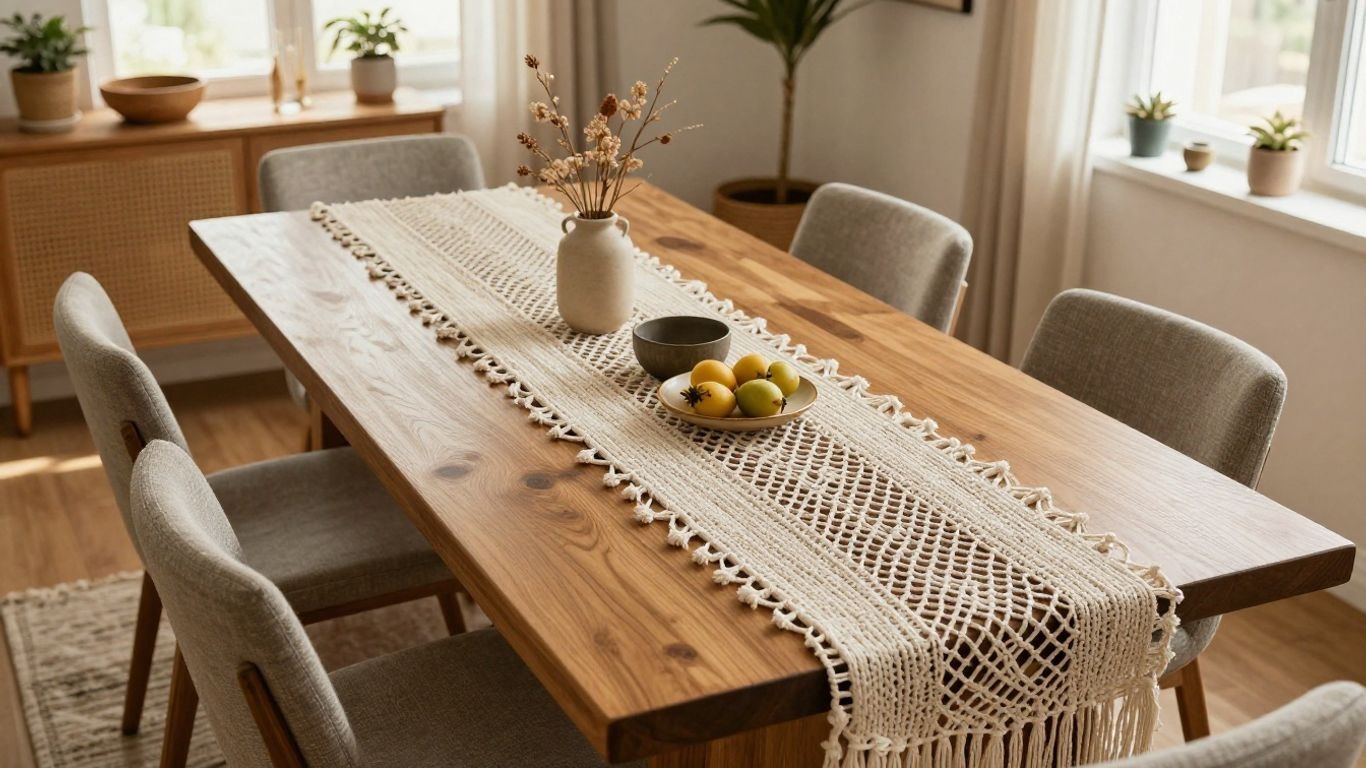
Choosing the best macrame table runner for your home is about more than finding a pretty piece of boho decor. The right runner should match your table size, interior style, material needs, cleaning routine, and the way you actually use your dining space.
This guide explains how to choose, style, clean, and even make a macrame table runner while comparing popular ready-made options for everyday dining, weddings, farmhouse tables, and seasonal decorating. Use it to pick a runner that feels handcrafted, fits correctly, and adds warm texture without overwhelming your table.
Key Takeaways
- Measure your table before buying so the runner has a balanced 6 to 12 inches of overhang on each end.
- Cotton and cotton-blend runners are the most common choices because they offer softness, texture, and everyday durability.
- Macrame is created with knotting techniques, so avoid confusing it with crochet, lace, or standard woven table linens.
- Chunkier cords create a bold boho look, while thinner cords feel lighter, more formal,l and easier to layer with tablecloths.
- Most macrame runners are decorative rather than waterproof or heatproof, so use trivets, placemats, and gentle cleaning methods.
- Handmade and macrame-style pieces can vary slightly in size, fringe length,h and knot placement, which is normal for this decor style.
| Pick | Best For | Size | Price Range |
|---|---|---|---|
| Mkono 100-Inch Boho Runner | Long farmhouse and banquet tables | ~12 × 100 in | Mid |
| ZeeMart Ivory 72-Inch Runner | Standard dining tables, everyday use | 12 × 72 in | Budget |
| Cream Beige Boho Runner with Tassels | Warm rustic and natural wood tables | 12 × 71 in | Budget |
| SnugLife 86-Inch Macrame Runner | Weddings, styled tables, relaxed overhang | 13 × 86 in | Mid |
| Wracra 72-Inch Taupe Boho Runner | Modern farmhouse and darker rooms | 14 × 72 in | Budget |
| OurWarm 72-Inch Rustic Runner | Rustic events, bridal showers, farmhouse | 12 × 72 in | Budget |
Quick Answer: What Is the Best Macrame Table Runner?
The best macrame table runner is the one that fits your table length, complements your home decor and uses a material that is easy for you to maintain. For standard dining tables, a 72-inch runner is usually a practical starting point, while longer farmhouse or banquet tables often look better with 86-inch to 100-inch options. If you want a soft, natural look, choose ivory, cream, beige or taupe in cotton or a cotton-blend fabric.
For everyday use, choose a runner with a flatter weave and moderate thickness so plates, vases and candles sit securely. For weddings, holiday tables or statement styling, a longer macrame runner with tassels, fringe and heavier texture creates more visual impact. Always verify the current size and care details before ordering because product dimensions can vary by seller, color and batch.
What Is a Macrame Table Runner?
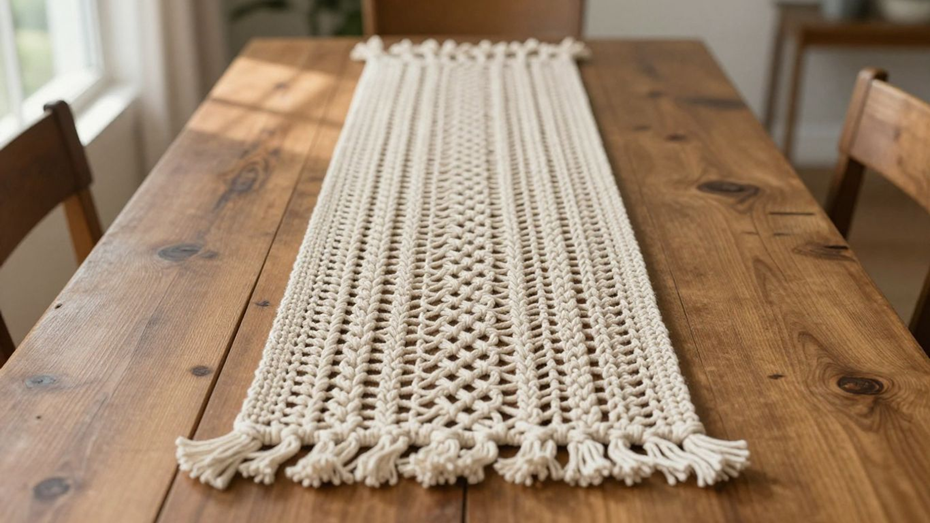
A macrame table runner is a decorative textile that is created by knotting techniques instead of traditional weaving, embroidery, or crochet. Usually made with cotton cord, repeated knot patterns, fringe, tassels, or openwork with lace-like designs that give a relaxed bohemian style. It is located in the middle of the table and serves as a visual anchor for candles, vases, greenery, serving bowls, and seasonal centerpieces.
The primary purpose of a macrame runner is to give texture. It is used to soften hard surfaces such as wood, glass, stone, or metal and to create a warmer dining area without a full tablecloth. The neutral color tones work well with farmhouse, rustic, coastal, cottage, and modern boho decor, making macrame runners a popular choice for dining tables, coffee tables, dressers, console tables, wedding tables, and holiday displays.
Why Choose a Macrame Table Runner?
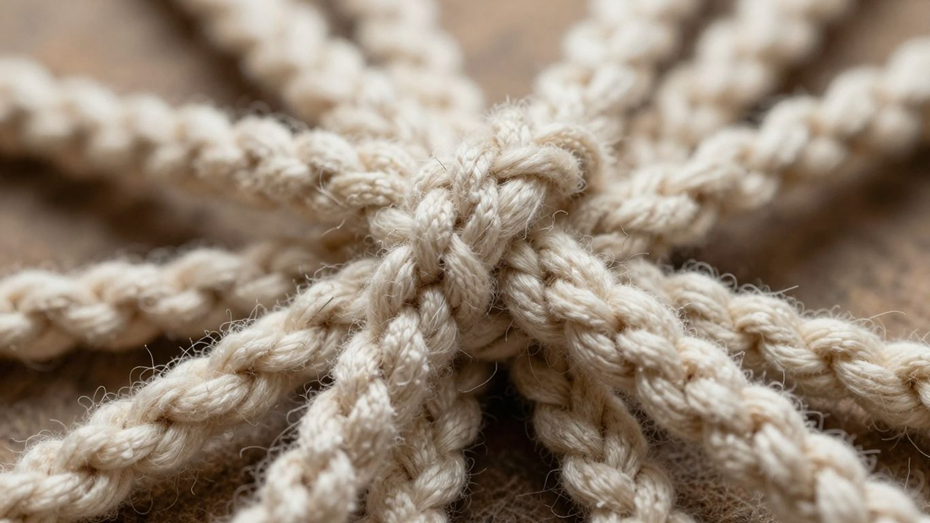
A macrame table runner is perfect if you are looking for a table that looks like it’s been dressed up but is not quite ready for a state party. It looks handmade, giving it a soft and moving quality, particularly if tassels dangle over the edge of the table. It can add some purpose and tie in other natural elements in the room, like wood, rattan, linen, ceramic, and dried florals.
Flexibility is another advantage of macrame. The same runner can be used for everyday meals, bridal showers, Thanksgiving dinner, Christmas dinner, rustic weddings, or simple weekend brunch by changing only the centerpiece. Neutral macrame is easier to use than bold printed linens for a variety of seasons and decor styles.
Adding Texture and Warmth
The texture is the most significant design feature of a macrame table runner. The raised knots and fringe edges and the twisted cords reflect light in a different way from a flat cloth runner, giving the table dimension without bright colors. It can be particularly effective in neutral spaces where the aim is to add depth without adding too much excitement to the overall palette.
With wood tables, macrame can add a natural texture contrast between the smooth grain and the soft fibre. It eliminates the coldness of glass or metal tables and makes them more inviting. That’s why macrame is frequently employed in boho, rustic, farmhouse, and organic-modern designs.
Versatile Decor Piece
A macrame runner doesn’t have to be used at a dining table. It can be used as a dresser runner, bed scarf, console table layer, coffee table accent, or event table centerpiece. The important thing is to select the right size and to ensure that the fringe doesn’t block drawers, chairs, or high-traffic zones.
A neutral macrame runner can be used for seasonal decorating and can be changed out with accessories. For everyday use, use greenery and candles, for fall use, pumpkins and dried wheat, for winter tables, pine branches or dried wheat candle holders.
Handmade Charm
The design is based on repeated knots and cord placement, giving Macrame a handcrafted feel. Even mass-produced macrame-style runners attempt to replicate the relaxed irregularity of handmade ones. A slight variation in fringe length, tightness, or measurement is often part of the look and not a fault.
Macrame runners look great in photos, too, because of that handmade charm. They are used for adding texture, depth, and softness to tablescapes and are popular for weddings, bridal showers, rustic dinners, and product styling. Macrame is a good option if you wish to make the table feel personal and warm.
Key Factors to Consider When Buying Macrame Table Runner
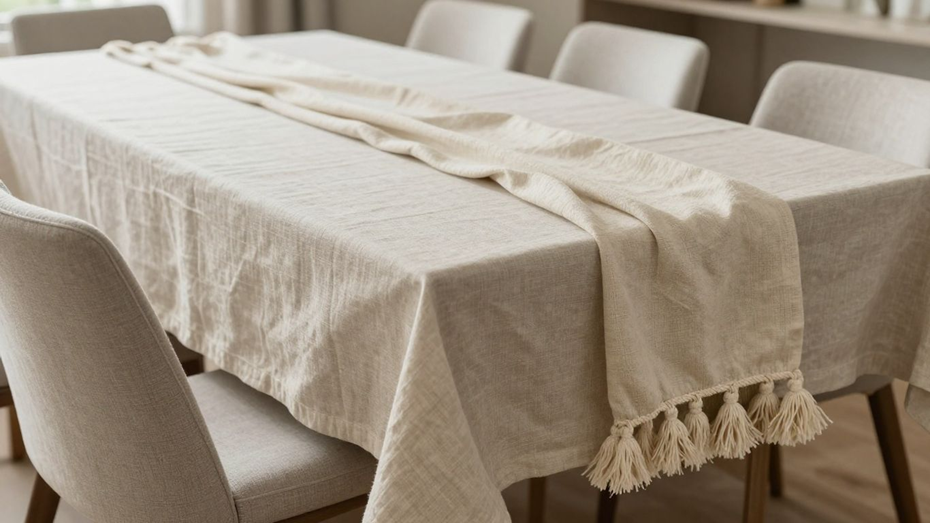
When looking for a macrame table runner, you should first consider the size and length of your table. A too-short runner may appear as a misplaced placemat, and a too-long runner can get caught on chairs or pulled by children and pets. The ideal overhang for most dining tables is 6 to 12 inches on each side.
Measure, review material, thickness, color, and care instructions. A heavier cord will provide a more robust boho look, but may not be suitable for plates or glassware. A flat woven or macrame style runner is typically more appropriate for daily dining, whereas a thicker handmade runner is better for decorative tables or special occasions.
Macrame Table Runner Size Guide
Sizing is the first place buyers make mistakes, so measure your table length before comparing products. A simple formula is to add 12 to 24 inches to your table length if you want a traditional overhang. If you prefer the runner to sit fully on top of the table, choose a length slightly shorter than the tabletop.
| Table Type | Common Table Length | Suggested Runner Length | Best Styling Fit |
|---|---|---|---|
| Small bistro or coffee table | 36 to 48 inches | 36 to 60 inches | Petite runner, dresser scarf, or compact accent |
| Standard 4-6 seat dining table | 60 to 72 inches | 72 to 86 inches | Everyday dining and farmhouse styling |
| Long dining or banquet table | 84 to 96 inches | 100 inches or longer | Event tables, holiday spreads, and dramatic tassel overhang |
| Console or dresser | 40 to 70 inches | 36 to 72 inches | Decor layering with vases, lamps, or trays |
The above table is meant to be used as a practical guide and not a hard and fast rule. A shorter runner might be more comfortable and safer if your table has ornate legs, a narrow surface, or high-traffic seating. For a wedding or editorial runner, a longer runner with flowing fringe may appear more purposeful.
Width also matters. Runners that are approximately 12 to 14 inches wide will work well on most dining tables, allowing for room for plates and place settings. Wider pieces can be a beautiful addition to large farmhouse tables, but can be overwhelming for a narrow table when used for everyday dinnerware.
Material and Construction
Most macrame table runners use cotton, cotton-blend, polyester-cotton, linen-style fabric, burlap, or decorative lace accents. Cotton feels soft and natural, while cotton-blend styles can be easier to flatten and may resist wrinkles better. Burlap and crochet-lace styles lean more rustic and are often best for events or farmhouse decor.
| Material Type | Feel and Appearance | Best For | Care Notes |
|---|---|---|---|
| Cotton cord | Soft, textured, and natural | Boho dining rooms, weddings, handmade look | Hand wash or spot clean; air dry flat |
| Cotton-polyester blend | Smoother and often easier to lay flat | Everyday dining and lower-maintenance decor | Follow label; gentle spot cleaning is safest |
| Burlap with lace or cotton detail | Rustic, textured, and vintage-inspired | Farmhouse events and bridal showers | Avoid soaking for too long; dry thoroughly |
| Fine lace-style macrame | Delicate and decorative | Formal tables and layered styling | Handle gently to prevent snagging |
The material decides whether the runner is suitable for everyday meals or for decoration. A flatter design is more useful if plates, glasses, and serving dishes are placed directly above the runner. A thicker knot pattern may be more impressive if the runner is primarily decorative.
No macrame runner should be used as a substitute for trivets, coasters, or placemats. Hot pans, oily dishes, and dark liquids can stain or damage fibers. To keep the runner clean and retain its shape, use protective layers when serving food.
Color and Decor Style
Ivory and cream are the most versatile colors as they complement light wood, dark wood, white tables, and most tableware. Beige, taupe, and greige are slightly more grounded and can pair more effectively with warm woods, leather chairs, or darker floorings. Pure white can be crisp, but may stain more rapidly.
If you’re looking for something more contemporary for your farmhouse decor, opt for a plain striped or woven design with tassels that are not too prominent. If you’re going for a boho-style interior, you’ll want to find more open knots, fringe, and organic texture. Off-white, beige-white, and cream runners tend to look best for weddings and special occasions, as they won’t clash with the flowers or candles.
How to Style Your Macrame Table Runner
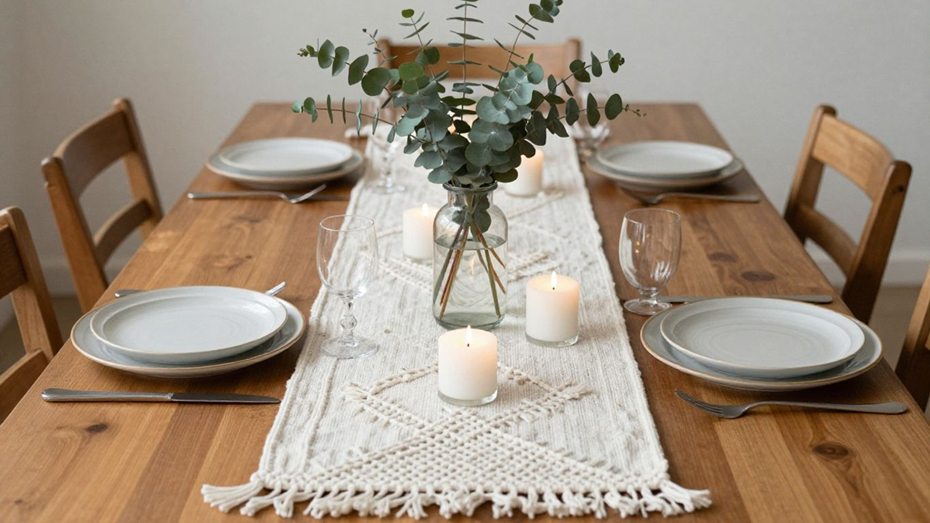
It is easiest to style a macrame table runner when you leave the knots visible. First, position the runner in the middle of the table and brush the fringe with your fingers. Then place one large focal point (like a vase, bowl, or candle cluster) and balance it with smaller accents at the ends.
The objective is to achieve balance. For a busy knot pattern, stick to simple centerpieces. For a flat and minimal runner, add height with branches, greenery, taper candles, or ceramic pieces. Always leave enough open space for plates, serving dishes, and conversation across the table.
1. Center the runner and align it with the table edges.
2. Add a protective tray or base under vases, candles, and serving bowls.
3. Place the tallest centerpiece in the middle, then use smaller accents toward the ends.
4. Keep at least part of the knot pattern visible so the texture remains the focus.
5. Comb or smooth the tassels so the fringe looks intentional and neat.
How to Make a Macrame Table Runner
If you’re looking for a size, color, or knot pattern that is not available, you can create your own macrame table runner. It doesn’t need to be complicated and is really a matter of patience; the beginner can begin with simple square knots, half hitch knots, and fringe. The most crucial aspect is planning your measurements before you cut the cord, since more cord is used in macrame than most people realize.
A handmade runner also allows you to specify the amount of open space within the design. A dense knot pattern is strong and dramatic, and a more open pattern is airy and delicate. If you’re using a dining table, opt for something decorative but not too high that plates or glasses will wobble.
Materials You’ll Need to Make a Macrame Table Runner
The materials for a macrame table runner are simple, but quality matters. Cotton cord is the most popular choice because it is soft, flexible, and easy to knot. You will also need scissors, a measuring tape, a clipboard or rod for anchoring, and a comb if you want a brushed fringe at the ends.
- 3mm to 5mm cotton macrame cord, depending on how chunky you want the runner to look.
- Sharp fabric scissors for clean cord cuts.
- Measuring tape or ruler for consistent length and spacing.
- A dowel, rod, clipboard, or tape to hold cords steady while knotting.
- A comb or fringe brush for finishing tassels.
- Optional fabric glue or clear thread to secure delicate finishing points.
Choose natural or unbleached cord if you want a classic boho runner. Choose bright white for a cleaner wedding look, or taupe and beige for rustic farmhouse interiors. If the runner will be near food, avoid loose dyes or heavily treated cords that may bleed during cleaning.
How to Choose the Best Macrame Cord for a Table Runner
The best macrame cord for a table runner depends on the finish you want. A 3mm cord creates a lighter and more detailed pattern, while a 4mm or 5mm cord creates bold knots and heavier texture. Single-strand cord creates a soft fringe, while braided cord holds shape better and resists unraveling.
| Cord Type | Best Use | Look | Beginner Friendliness |
|---|---|---|---|
| Single-strand cotton | Soft fringe and delicate boho patterns | Fluffy, natural, and relaxed | Easy to comb but can untwist |
| 3-ply twisted cotton | Classic macrame knots and fringe | Textured and traditional | Very beginner-friendly |
| Braided cotton cord | Cleaner edges and structured runners | Firm and polished | Easy to knot, less fringe-friendly |
| Jute or burlap-style cord | Rustic farmhouse accents | Rougher and more natural | Less forgiving on hands |
Most beginners prefer to use 3-ply twisted cotton as it is easy to knot and it produces a nice fringe. Braided cord is also good for use if you need a runner that will retain its shape and shed less. A very thick cord can be beautiful, but it can make a runner too thick for plates and glasses.
Always purchase a cord that is longer than the table length indicated. A lot of material is used in knotting, and fringe needs to be added to both ends. If you run out halfway, it will be more difficult to match the same shade and texture later on.
How to Measure and Cut Macrame Cord Correctly
The correct measurement for cord is to determine the desired length of the finished runner and then add length for knots and fringe. A basic estimate for beginners is to cut the cords 4 to 6 times the length of the finished piece if the design is knot-heavy. If the design is open and has fewer knots, you might not need as much, but it’s better to have more cord than less.
Before starting, cut all cords and keep them in order by length. If your pattern includes center cords, border cords, and fringe cords, mark each type with tape or little tags. This will make the process of knotting quicker and will avoid uneven ends that will be hard to rectify later on.
Basic Macrame Knots Every Beginner Should Learn
You do not need to master every macrame knot to make a table runner. Most beginner-friendly runners use a small set of repeated knots arranged in rows, diamonds, or borders. The square knot, lark’s head knot, half hitch, and double half hitch are the most useful for flat runner designs.
- Lark’s head knot: useful for attaching cords to a rod or anchor line.
- Square knot: the most common knot for building repeated macrame patterns.
- Half square knot: creates a spiral effect when repeated.
- Double half hitch: good for borders, diagonal lines, and diamond patterns.
- Gathering knot: useful for finishing tassels or bundled fringe.
Practice each knot with scrap cord before starting the full runner. Consistent tension matters more than speed. If some knots are much tighter than others, the runner can twist or curve instead of lying flat on the table.
How to Make a Macrame Table Runner: Step-by-Step Guide for Beginners
Start by anchoring your cords to a dowel, cord line, or clipboard so the top edge stays even. Work from the center outward when possible, especially if your design includes a diamond pattern or central motif. Keep measuring the width as you work to make sure the runner remains straight.
1. Measure the Table and Decide the Finished Runner Length and Width
First, determine the size of the table you will be using the macrame table runner on. Choose the amount of overhang you would like at each end; some like the runner to hang 6 to 12 inches over the table. Also, calculate the finished width depending on the size and design of the table. Accurate measurements before you begin will help you avoid running out of cord or making a cord that does not fit in the space you have.
2. Cut Your Cords Based on the Pattern
Once you know the finished dimensions, cut your macrame cords according to your chosen pattern. Always leave extra length because each knot shortens the cord significantly, especially in detailed designs. It’s much easier to trim excess cord at the end than to replace cords that are too short. Organize the cut cords neatly before you begin knotting.
3. Attach Cords to an Anchor
Use lark’s head knots or other preferred starting method to secure cords to a wooden dowel, mounting cord, or clipboard. The spacing of the cords will give a straight top edge and will simplify the remainder of the project. Ensure that the anchor is secure and the cords will not move as you work. A secure setup also ensures a uniform knot tension throughout the job.
4. Create the Center Pattern
Begin to knot the design in the middle of the table runner with square knots, double half hitch knots, or diamond patterns. Working from the center outwards will ensure that both sides are symmetrical and balanced. Spend time to tighten each knot evenly for a neat look. Make a comparison now and then to keep the pattern in line.
5. Build the Side Borders
After completing the center design, create border rows along both sides of the runner. Side borders frame the pattern and give the finished piece a clean, professional appearance. Keep the spacing and knot tension consistent from top to bottom to avoid uneven edges. Straight borders also help the runner lie flat on the table.
6. Repeat the Pattern Until the Desired Length
Repeat the pattern of knots you have chosen until you have reached your desired length. Measure periodically to ensure that the design remains straight and proportional. If the runner is getting narrower or wider, change the tension of the knot before proceeding. The little corrections along the way will yield a much cleaner final product.
7. Trim and Finish the Fringe
Once the knotting is done, cut the fringe off the ends of the rope evenly with sharp scissors. The fringe can be left straight, combed into a V-shape, or combed for a softer, fuller look. Remove any loose fibers and make final adjustments to the overall shape. A well-crafted fringe adds a touch of elegance to your macrame table runner.
While running, periodically lay it flat to check shape and tension. If the runner starts to narrow, loosen the side knots a bit. If it is not expanding evenly, tighten the outer knots, realign the cords, and proceed.
How to Add Fringe and Decorative Finishing Touches
One of the most well-known elements of a macrame table runner is the fringe. Trim the ends after the runner is finished, not too soon, to get a clean finish. Measure with a ruler or straight edge to ensure that both ends are the same length; if you want a softer tassel look, comb the fibers.
Wooden beads or small tassel bundles or decorative knots can be added near the ends as well, but take into account the practicality of eating at the table. Excessive decorations may make the runner more difficult to clean and less stable when placed under centerpieces. A simple fringe is the best choice for everyday wear.
Common Mistakes to Avoid When Making a Macrame Table Runner
The most common DIY mistake is cutting cords too short. Macrame uses more cord than expected because each knot consumes length, and dense patterns need substantially more material. Another mistake is pulling knots too tight, which can cause the runner to curl, twist, or shrink in width.
- Skipping the measurement step before cutting the cord.
- Choosing a cord that is too thick for a table surface used for dining.
- Using inconsistent knot tension across the runner.
- Forgetting to leave extra length for fringe.
- Adding heavy decorations that make the runner hard to clean or store.
- Not testing the finished runner with plates, glasses, or centerpieces before using it for guests.
If you are new to macrame, start with a small coffee-table runner or dresser runner first. It will help you understand cord consumption, knot tension, and finishing techniques before you invest time in a full-length dining table piece.
How to Clean and Care for a Macrame Table Runner
Most macrame table runners should be spot cleaned or hand washed gently. Machine washing can distort knots, tangle fringe, and shrink some natural fibers. If the runner has beads, burlap, lace, or mixed fibers, spot cleaning is usually safer than full soaking.
| Care Situation | Best Method | What to Avoid |
|---|---|---|
| Dust or crumbs | Shake outdoors and lightly vacuum with a brush attachment | Hard suction that pulls knots loose |
| Small spill | Blot immediately with a clean, damp cloth | Rubbing the stain deeper into the fibers |
| General refresh | Hand wash gently in cool water with mild soap | Hot water, bleach, and harsh detergents |
| Wrinkled tassels | Comb gently and steam lightly from a safe distance | Flattening knots with a hot iron |
| Storage | Roll loosely and store in a dry, breathable bag | Plastic bags in humid spaces |
The most effective cleaning method will be determined by the fiber and construction. Generally, cotton runners can be washed gently in the sink, while burlap and lace-detailed runners require special attention. Before soaking the whole runner, always read the care label or the seller’s instructions.
To prevent stains, avoid them in the first place for daily wear. Place trays under candles, coasters under glasses, and trivets under hot dishes. These are some of the small habits that make the runner look clean and will not cause any damage due to heat or moisture that the macrame fibers do not absorb.
Creative Ways to Style a Macrame Table Runner in Your Home
A macrame runner can be used in the dining room, but it can also be used in other areas of the house. It can be used on a dresser to add softness under a mirror, lamp, or jewelry tray. It is great for use under stacked books, vases, and seasonal decor on a console table. A shorter runner can be used to create a casual layered effect on a coffee table with candles or a wooden tray.
When using for events, add a plain tablecloth underneath and then macrame on top to create a contrasting pattern. When used for day-to-day meals, place it on a wooden table to accentuate natural texture. If there are already a lot of patterns in your room, opt for a simpler runner to avoid a table that looks crowded.
9 Best Macrame Table Runners to Choose for Your Home
The products below have been reorganized and expanded from the original list, with each recommendation having a more distinct purpose, more effective guidance for buyers, and a more helpful organization of the review. For some of the original entries, they have been repeated but rewritten with different use cases to keep the section useful and not thin or duplicated.
Please check the current size, colour name, material information, and care with the seller before purchasing, as macrame products may differ from batch to batch and size to size. The table below provides a quick comparison, followed by detailed explanations, pros, cons, and final verdicts.
| # | Product | Best For | Typical Size / Style |
|---|---|---|---|
| 1 | Mkono 100-Inch Boho Macrame Table Runner | Long farmhouse and banquet tables | About 12-13 x 100 inches, tassel finish |
| 2 | ZeeMart Ivory 72-Inch Macrame Style Runner | Standard dining tables | 12 x 72 inches, ivory cotton-blend look |
| 3 | Cream Beige Boho Table Runner with Tassels | Warm rustic wood tables | 12 x 71 inches, cream/beige tassel style |
| 4 | SnugLife 86 x 13 Inch Macrame Table Runner | Weddings and photo-ready tables | 86 x 13 inches, off-white cotton style |
| 5 | Mkono 100-Inch Runner for Matching Event Tables | Two-table event styling | Long neutral runner with fringe |
| 6 | Wracra 72-Inch Taupe Boho Table Runner | Darker rooms and modern farmhouse decor | 14 x 72 inches, taupe cotton-blend style |
| 7 | ZeeMart 72-Inch Ivory Runner for Everyday Use | Simple minimal dining setups | 72-inch ivory macrame-style design |
| 8 | SnugLife 86-Inch Runner for Relaxed Overhang | Soft boho table drape | 86-inch off-white runner |
| 9 | OurWarm 72 x 12 Inch Rustic Macrame Table Runner | Rustic, bridal shower, and farmhouse settings | 72 x 12 inches, burlap/cotton/lace style |
This comparison will help you match a runner to your table rather than just by looking at them. For banquet tables and dramatic use, longer options are best; for most standard dining spaces, 72-inch runners are best. Taupe and beige hues are great to help brighten up darker rooms, and ivory and off-white are always fashionable and versatile.
When it comes to product reviews, the best way to do it is to take into account size, material feel, decor compatibility, cleaning expectations, and stability when using table accessories. None of these products should be used as a waterproof, heatproof, or protective serving mat; they are just decorative runners
1. Mkono 100-Inch Boho Macrame Table Runner – Best for Long Farmhouse Tables
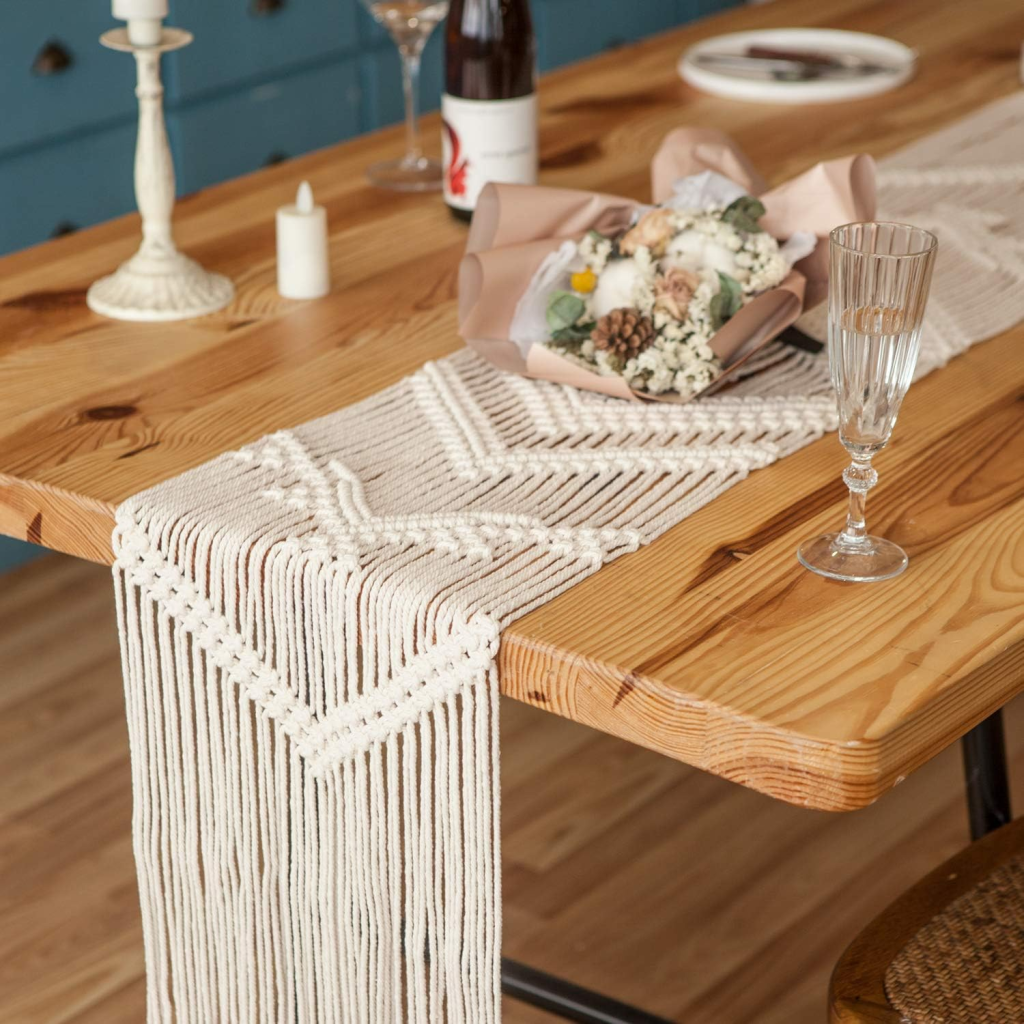
The boho macrame table runner, which measures 100 inches, is a great option for longer farmhouse tables, holiday dining, or event-style tables. It is longer than normal day-to-day runners, and as such, will create a more dramatic overhang, which can be helpful if you are looking to have the tassels and fringe be part of the table design. The neutral color palette complements wood, white dishes, greenery, and seasonal focal points.
This runner is ideal for those who wish to have a statement piece instead of a small accent. Long macrame runners can consume a small table, so take measurements before selecting this size. It is a great option for rectangular dining tables, kitchen islands, bridal shower tables, and Thanksgiving or Christmas tables where a warm handcrafted appearance is desired.
Pros
- Long length suits large dining tables and event setups.
- Neutral boho style works with many color palettes.
- Tassel detail adds visual movement at the table edges.
- Useful for holidays, weddings, showers, and everyday farmhouse decor.
- Can be styled with candles, greenery, ceramic vases,s or wooden bowls.
Cons
- May be too long for compact dining tables.
- Fringe can be pulled by children, pets, or chair movement.
- Not ideal under very heavy serving dishes without a protective tray.
Final Verdict
Best for homeowners who need a long, decorative macrame runner with strong farmhouse appeal.
Choose it for larger tables, not for small spaces where a 72-inch runner would look more balanced.
2. ZeeMart Ivory 72-Inch Macrame Style Boho Table Runner – Best for Standard Dining Tables
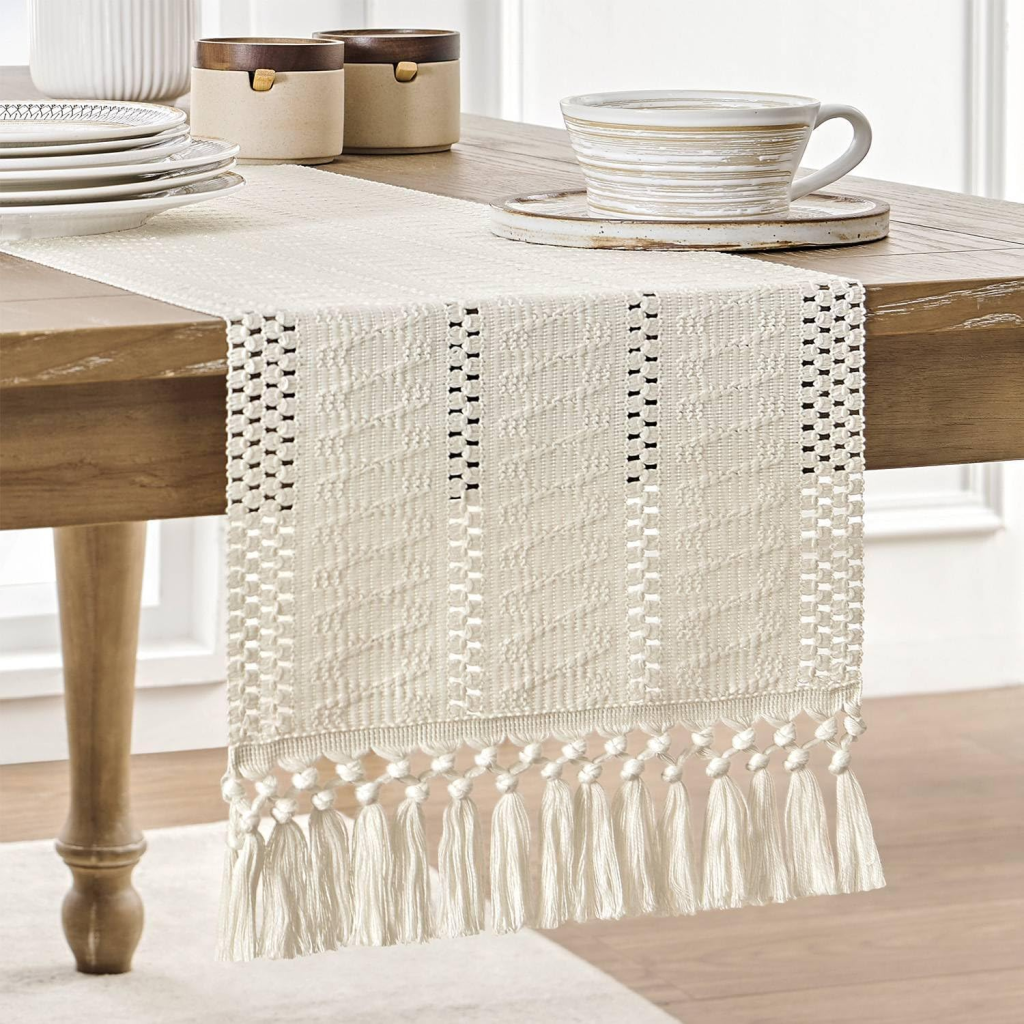
The ZeeMart ivory 72-inch macrame style runner is one of the most practical sizes for a typical dining table. It is 12″ wide to allow for plates and place settings, and it is ivory colored to keep the table bright and simple. This is great for those who want boho texture but not too dramatic or heavy.
It is made of a cotton blend fabric and is helpful to buyers who want a runner that will lie flatter than chunky rope macrame. That is great for use under low centerpieces, trays, and smaller items of decoration. This type of runner is easy to style all year round, if your dining room leans farmhouse, cottage, neutral, or modern casual.
Pros
- 72-inch length fits many standard dining tables.
- Ivory color blends with farmhouse, boho, and coastal interiors.
- Flatter construction is easier for everyday table use.
- Good option for layering over a plain tablecloth.
- Works with casual meals and simple seasonal centerpieces.
Cons
- May feel too simple for dramatic event tables.
- Ivory can show stains more easily than taupe or beige.
- Cotton-blend construction may not feel as handmade as thick cord macrame.
Final Verdict
Best for a clean, low-maintenance everyday boho table look.
It is a safe pick for standard dining tables where balance and versatility matter most.
3. Cream Beige Boho Table Runner with Tassels – Best Warm Neutral Option
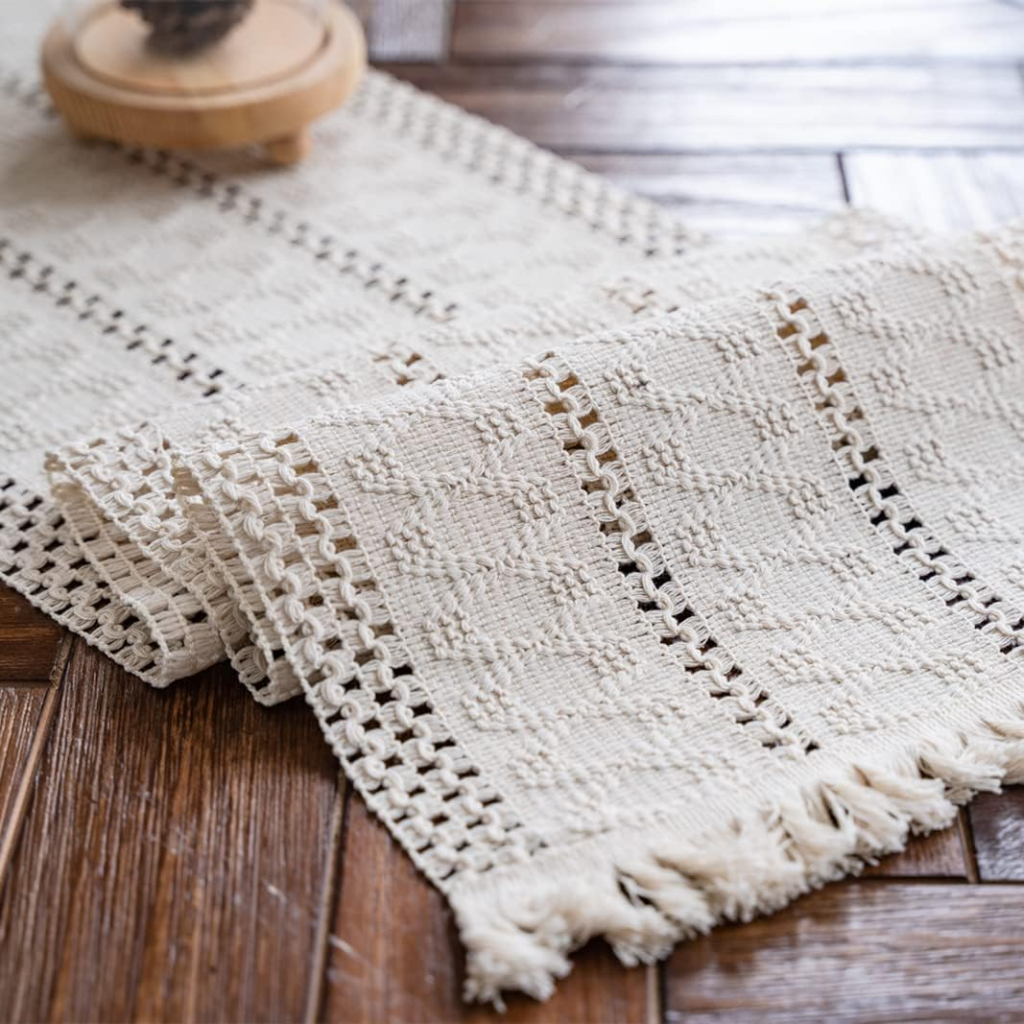
Boho table runners in cream beige are ideal for those who prefer a more neutral and earthy shade than a bright ivory or white. Stained wood, black metal accents, terracotta, dried flowers, and rustic tableware are all great color pairings with beige. The tassels bring a personality to the piece without it being too formal.
This runner would be suitable for bohemian kitchens, farmhouse dining rooms, and casual family get-togethers. It can also help to break up a dark dining table by introducing a lighter fabric in the middle. The 12 x 71-inch size is similar to the standard size of a dining table, making it ideal for medium tables, but not for large banquet tables.
Pros
- Warm cream-beige tone pairs well with natural wood.
- Tassels add casual boho character.
- Useful size for medium dining tables.
- Works with rustic, farmhouse, and bohemian styling.
- Less stark than pure white runners.
Cons
- May not provide enough length for very large tables.
- Tassels need smoothing after storage or shipping.
- Light beige still requires careful stain prevention.
Final Verdict
Best for warm, natural dining rooms where ivory feels too bright.
Choose it if you want a relaxed boho accent with enough texture for everyday styling.
4. SnugLife 86 x 13 Inch Macrame Table Runner – Best for Weddings and Styled Tables
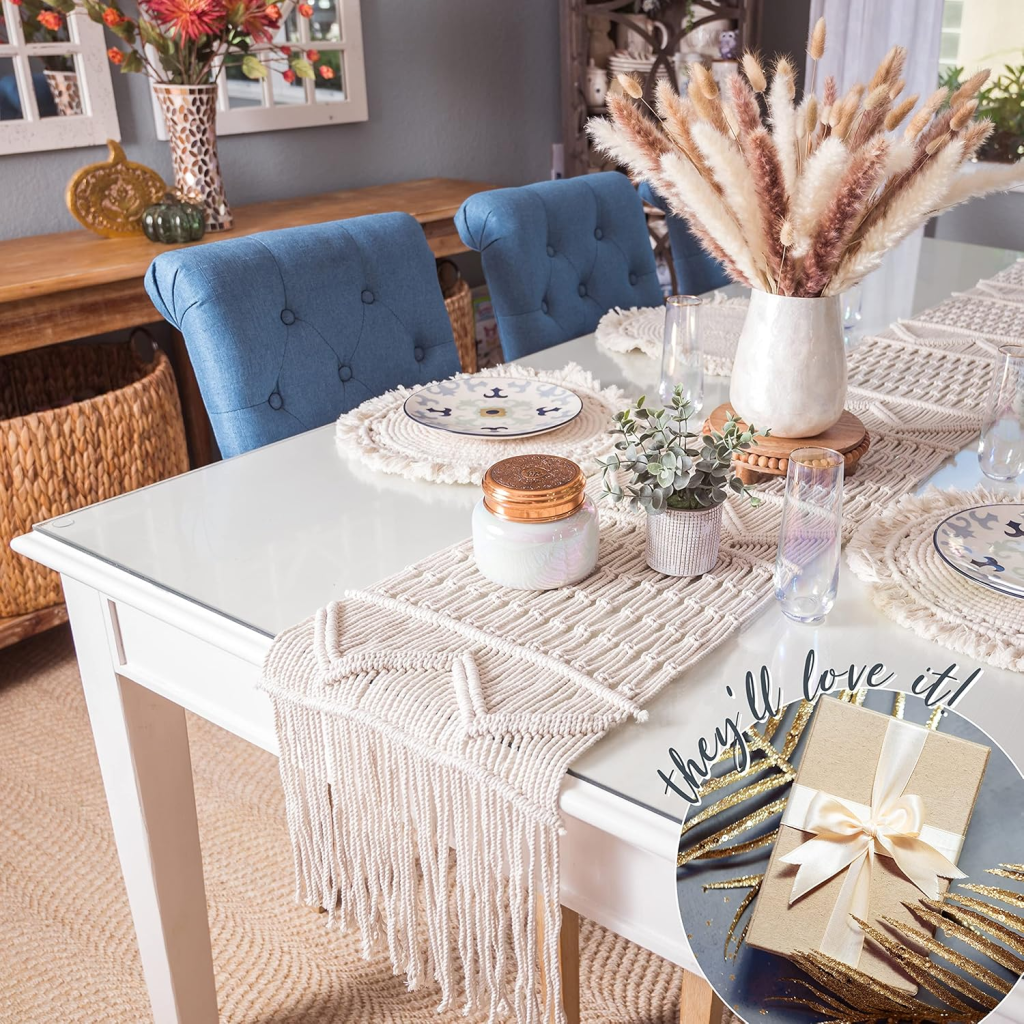
The SnugLife 86 x 13-inch macrame table runner is a good option for weddings, showers, holiday dinners, and styled dining rooms. The off-white color and length of its overhang make it a great choice for many standard tables, and it will photograph beautifully with candles, florals, and natural wood. The 13-inch width also offers a definite center layer without taking up the entire table surface.
This is particularly attractive for those who prefer a more upscale boho running style. It’s not the thinnest of table runners, so it’s best suited when you want the table runner to be seen and remembered. Serve with plain dinnerware and simple soft greenery to make the knotwork the predominant decoration.
Pros
- 86-inch length creates a more elegant overhang.
- Off-white color is photo-friendly for events.
- Good width for wedding and farmhouse tables.
- Textured macrame look makes the table feel styled.
- Works as a dining runner, event runner, or bedroom accent.
Cons
- LA longer length may be excessive for small tables.
- Hand-wash or gentle care is usually needed.
- Raised texture can be less practical under unstable glassware.
Final Verdict
Best for events and photo-ready tables where texture matters.
It is a better choice for decorative impact than for messy everyday meals.
5. Mkono 100-Inch Boho Runner – Best for Matching Event Tables
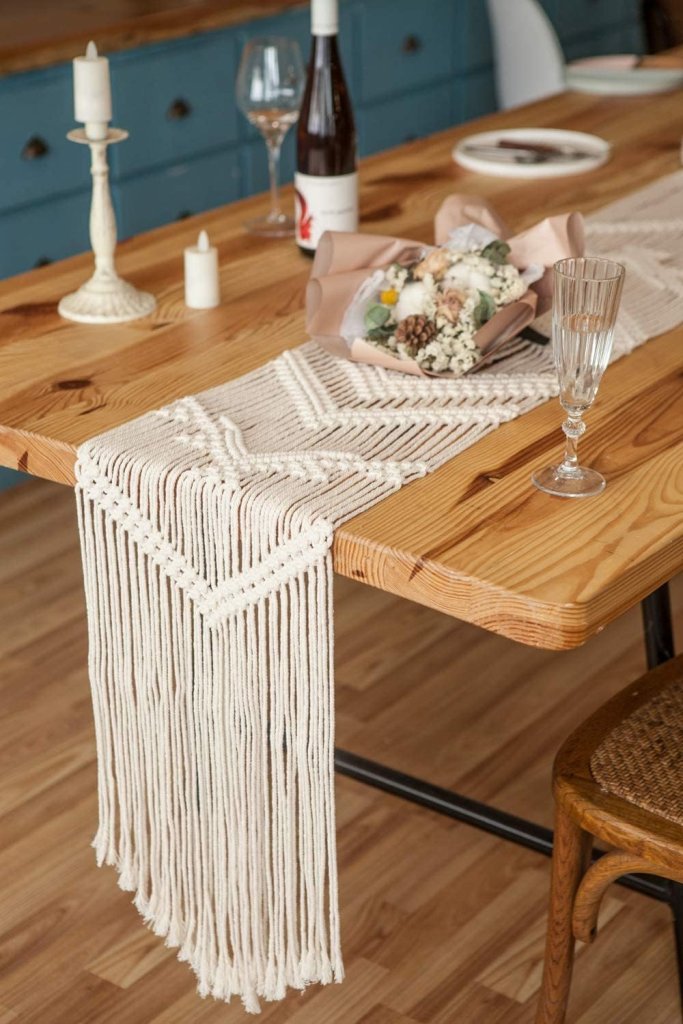
This Mkono 100-inch runner is great for when you need a uniform appearance on several tables, like a long dining room, party setup, or two identical buffet tables. Rather than consider it a repeat recommendation, consider it a practical styling choice for those who wish to repeat decor in a larger area. Runners that match can help to make a room look more organized and professional.
The neutral design is long enough to be layered as well. It can be used over a simple white, beige, or linen tablecloth to provide contrast, or directly on wood for a more organic farmhouse style. The runner will be the focal point of the table, so keep the rest of the table decoration simple and use the same style throughout each table.
Pros
- Great for matching multiple event or dining tables.
- Long size supports buffet, banquet, and holiday layouts.
- Neutral color helps create a cohesive design theme.
- Works well layered over plain tablecloths.
- Tassels add finished detail to table ends.
Cons
- Repeated use of the same runner may feel less unique in small rooms.
- Requires storage space to keep the long fringe neat.
- Not ideal for round or very short tables.
Final Verdict
Best for hosts who want coordinated decor across multiple tables.
Use it when consistency and long-table coverage are more important than compact everyday practicality.
6. Wracra 72-Inch Taupe Boho Table Runner – Best for Modern Farmhouse Rooms
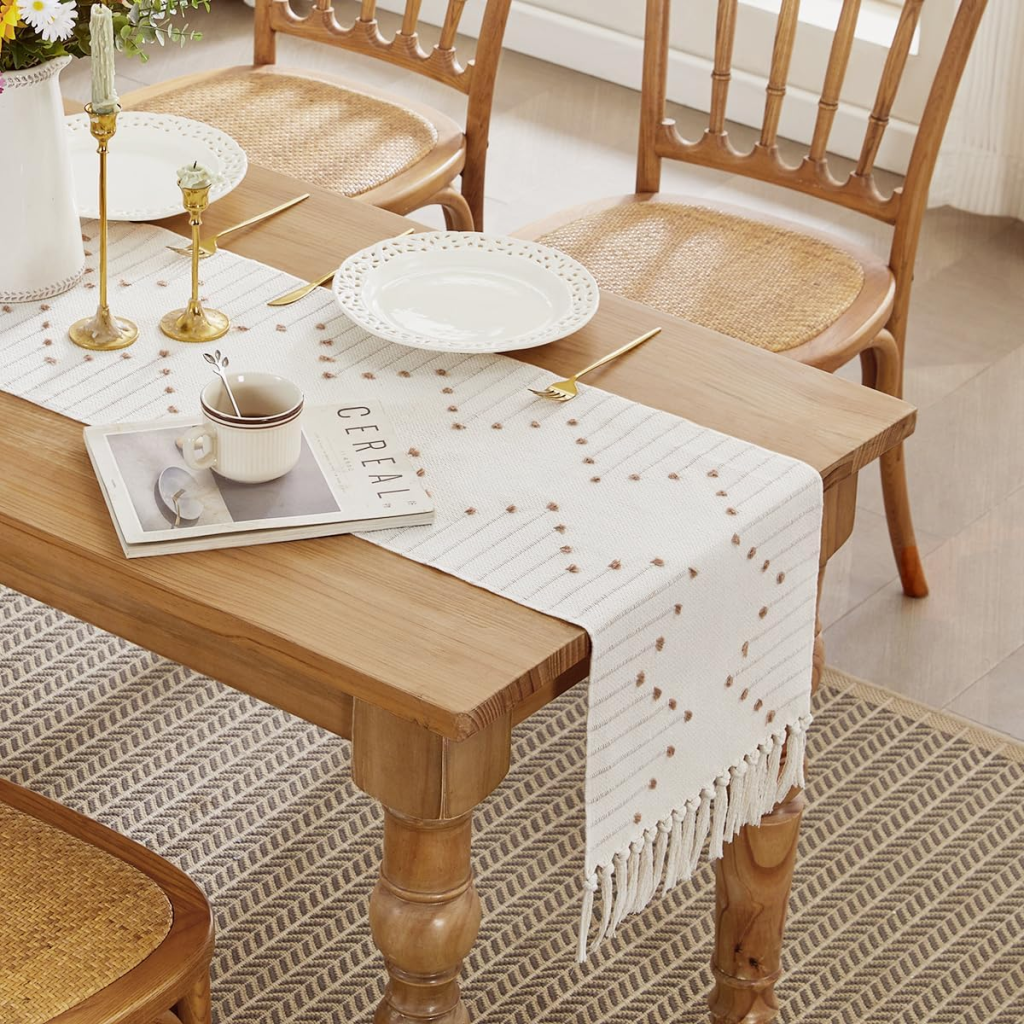
If you are looking for a taupe table runner for your dining room but ivory is too bright, the Wracra 72-inch taupe boho table runner is a good choice. Taupe is a warm and deep color that adds a sense of richness to spaces featuring walnut, oak, black hardware, woven chairs, or darker flooring. It is 14 inches wide, so it has a bit more presence than the narrower runners, but it will fit many standard tables.
This style is a great option for contemporary farmhouse homes since it creates a textured look that is still grounded. The cotton-blend material may allow it to flatten and work with normal styling. Combine with matte ceramic plates, greenery, or brass candle holders for a sophisticated yet casual table style.
Pros
- Taupe color hides minor dust better than bright ivory.
- 14-inch width gives a fuller table presence.
- Good fit for modern farmhouse and rustic-modern interiors.
- Cotton-blend fabric can be easier to flatten.
- Works with darker wood and warm neutral rooms.
Cons
- Taupe may not suit very cool-toned or all-white rooms.
- A wider design can crowd narrow tables.
- Not as delicate-looking as fine lace-style runners.
Final Verdict
Best for buyers who want a warmer, more grounded neutral than ivory.
It is a strong everyday option for modern farmhouse dining rooms.
7. ZeeMart Ivory 72-Inch Runner – Best Minimal Everyday Accent
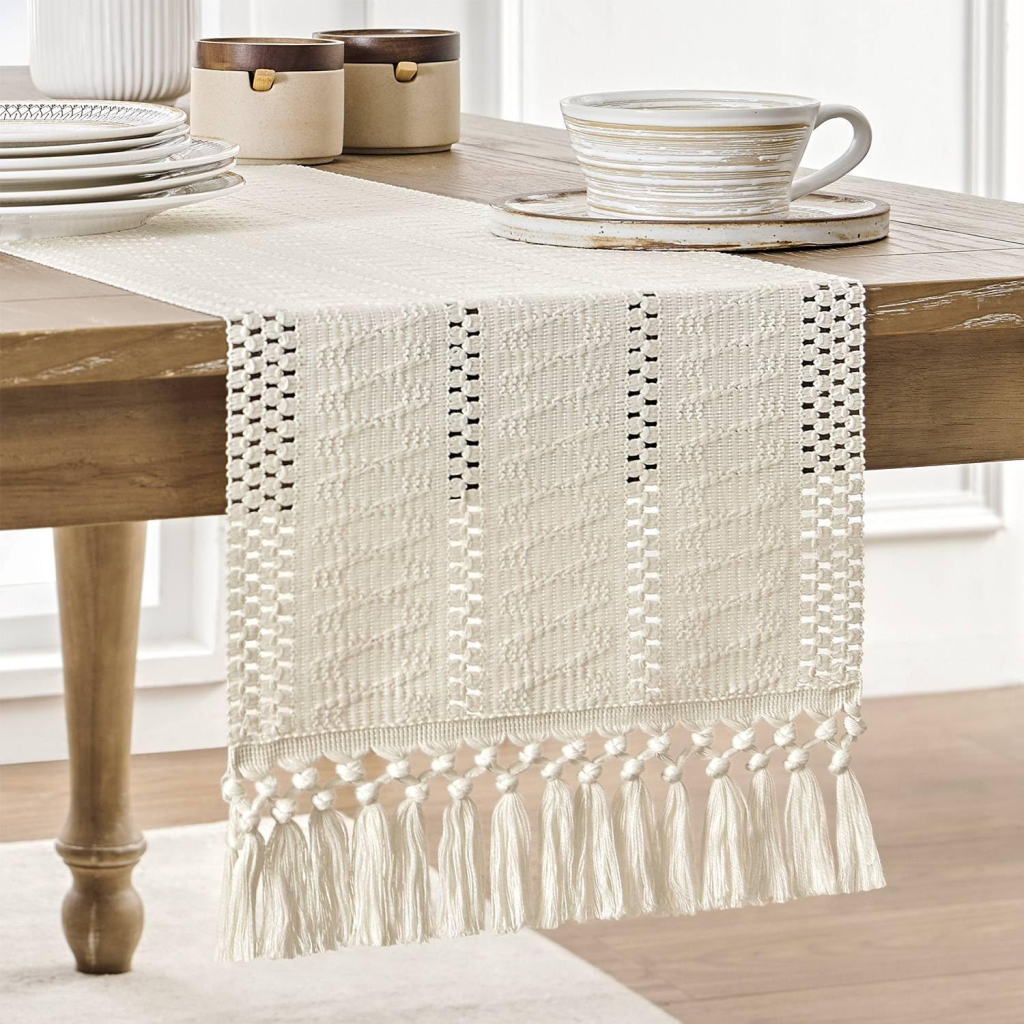
The ZeeMart ivory 72″ runner is also suitable for those who like to keep their tables simple for everyday use. The simple ivory style makes dishes, flowers, and candles pop without overpowering a heavy knot pattern. This simple style can help prevent a cluttered dining room in smaller rooms.
A great option for renters, first apartments, casual kitchens, and anyone looking to create a neutral decor base. Easy to change color with the seasons as the base color pairs with greenery, fall leaves, winter branches, or spring florals. This easy-to-live-with 72-inch format is ideal for a runner you want to leave out often.
Pros
- Simple style is easy to use daily.
- Ivory tone works with many tableware colors.
- Good starter runner for neutral home decor.
- Easy to pair with trays, bowls, and small vases.
- Practical length for many 4-6 seat tables.
Cons
- May not feel special enough for formal events.
- Light color needs quicker cleanup after spills.
- Less dramatic texture than chunkier macrame designs.
Final Verdict
Best for simple everyday styling and neutral dining spaces.
Choose it if you want a subtle runner that supports the table decor rather than dominating it.
8. SnugLife 86-Inch Macrame Runner – Best for Relaxed Overhang
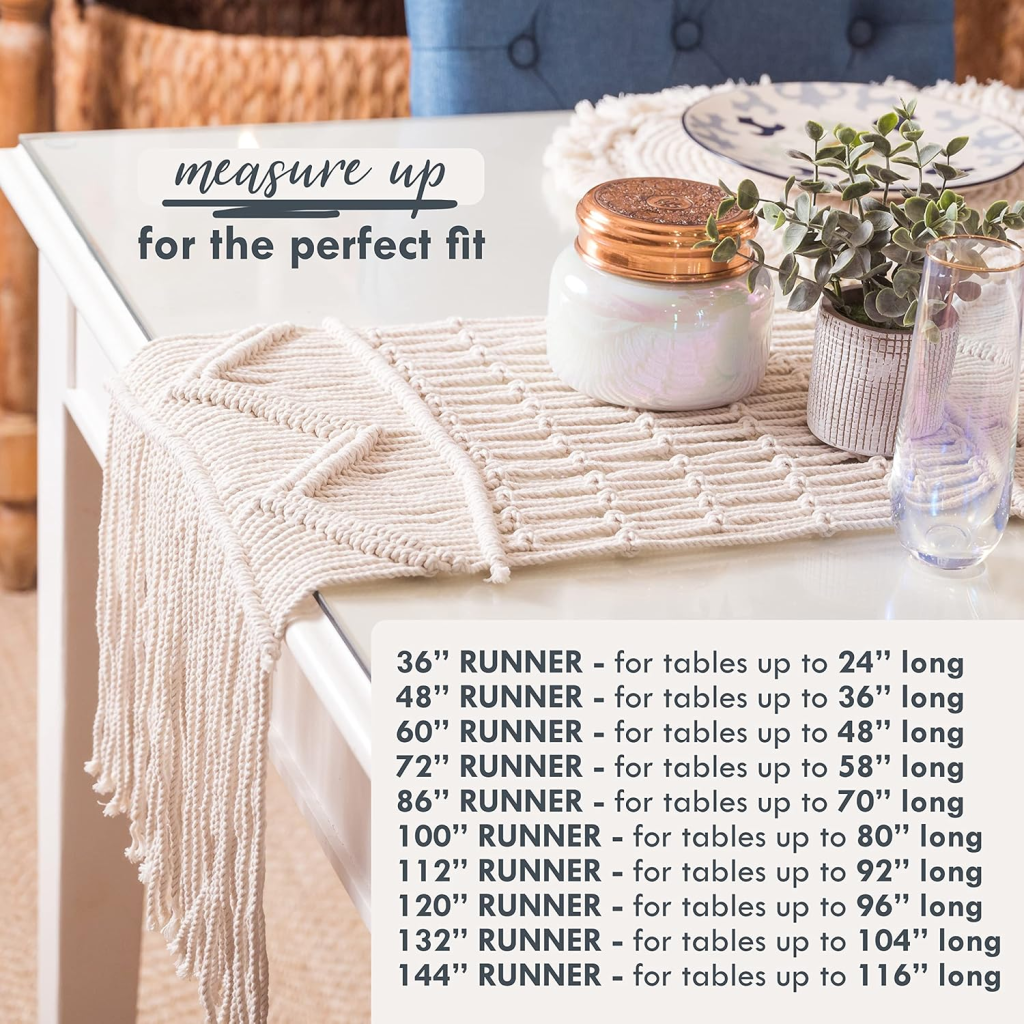
The SnugLife 86-inch macrame runner is also a good runner for when you want the runner to hang more prominently over the table ends. For a simple table, an overhang can add a sense of completion, particularly for a dinner party or seasonal table design. The off-white color ensures that the overall appearance is not too cluttered.
This style is ideal for people who have a long enough table to allow the tassels to dangle without interfering with the table. Complementary colors are eucalyptus, pillar candles, wood chargers, and neutral napkins. This runner is perfect for boho and vintage farmhouse homes that don’t require bright colors to create a soft focal point.
Pros: A relaxed overhang creates a styled designer look.
- Relaxed overhang creates a styled designer look.
- Works well with greenery, candles, and neutral dinnerware.
- Good for holiday tables and special dinners.
- Soft off-white color feels warm and elegant.
- Can be reused as a dresser or bed accent.
Cons
- Overhang may not be practical around young children or pets.
- Needs careful storage to prevent tangled fringe.
- May require hand washing or gentle spot care.
Final Verdict
Best for relaxed, layered tables where the runner is part of the visual centerpiece.
Avoid it if you need a compact, no-fuss runner for a busy family table.
9. OurWarm 72 x 12 Inch Rustic Macrame Table Runner – Best for Rustic Events
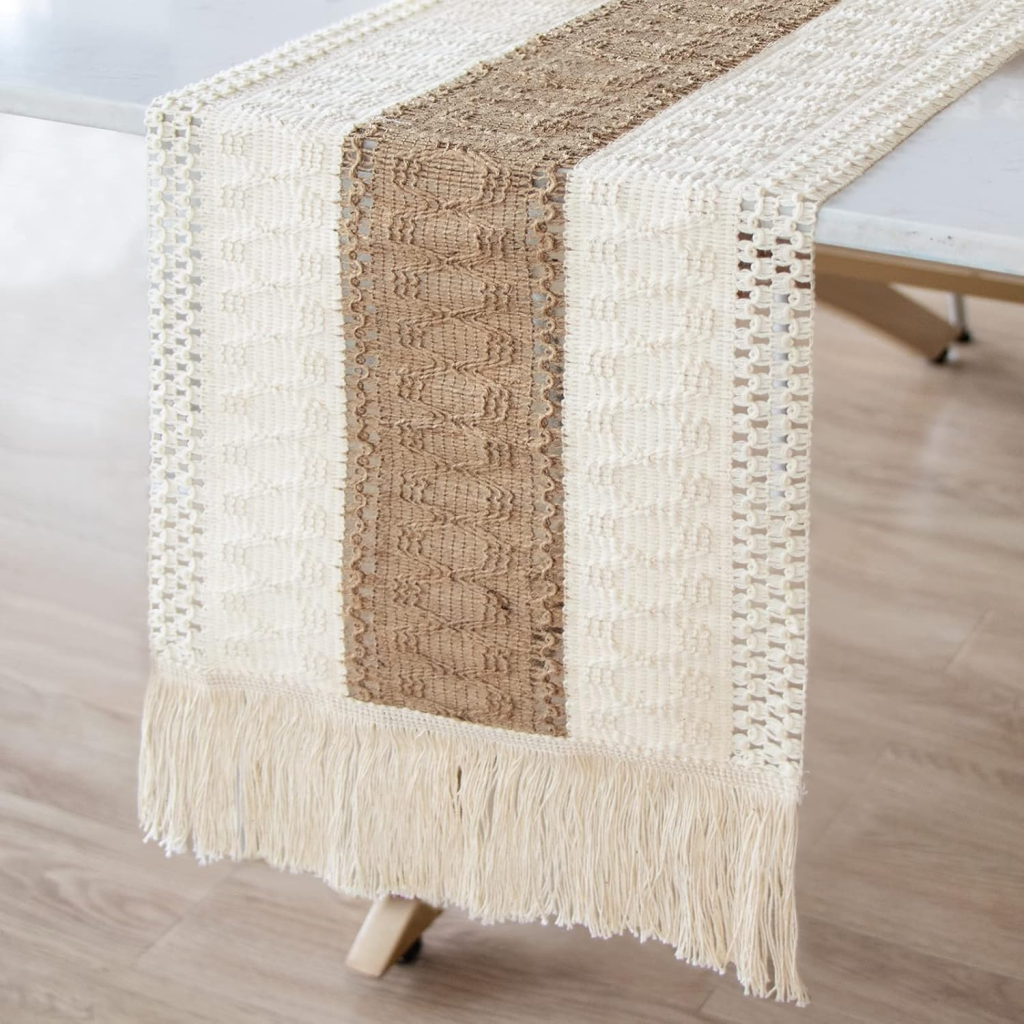
OurWarm 72 x 12-inch rustic macrame table runner is perfect for farmhouse parties, bridal showers, rustic weddings, and snug season tables. The natural burlap-inspired style, cotton-style woven detail, and lace-like texture give it a more vintage feel than a simple ivory runner. This creates a “layered” look for tables without the need for a tablecloth.
This product is ideal for decorative applications where the texture is a feature of the design. It can be used wonderfully under wood slices, mason jars, dried flowers, candles, or plain ceramic plates. If you’re using it around food and drinks, it’s important to take care of it and protect it from damage, as the rustic fibers and lace details may be more fragile than smooth fabric.
Pros
- Rustic texture is ideal for farmhouse and event decor.
- 72 x 12-inch size fits many standard tables.
- Natural tone works with burlap, lace, wood, and greenery.
- Good option for bridal showers and boho-themed dinners.
- Adds more vintage character than plain cloth runners.
Cons
- Burlap-style textures can feel rougher than cotton cord.
- Lace details may snag if handled carelessly.
- Not waterproof or heat-resistant without protective layers.
Final Verdict
Best for rustic event styling and farmhouse tables with natural textures.
Choose it when you want a more vintage, crafted look rather than a simple everyday runner.
How to Choose Between the 9 Products
For a standard dining table, begin with a 72″ runner like ZeeMart, Wracra, or OurWarm. For larger farmhouse tables and/or event setups, consider 86-inch or 100-inch tables like SnugLife or Mkono. The right choice will depend on the length of the table, the decor style, and the use of the table by the runner.
A neutral color and medium thickness are best for the first-time buyer. Ivory and cream are the easiest to style, taupe for darker rooms, and rustic burlap-lace styles for events. Use a flatter runner and trays to protect when serving meals, often with kids, pets, and lots of dishes.
Common Applications: Where Can You Use a Macrame Runner?
Macrame runners are most common on dining tables, but they also work on coffee tables, dressers, consoles, buffets, pianos, benches, and wedding sweetheart tables. Their natural texture makes them useful wherever a hard surface needs softness and visual interest. The trick is to choose a length that looks intentional in that location.
- Dining tables for everyday meals and seasonal centerpieces.
- Kitchen islands for softening a long countertop display.
- Console tables with lamps, vases, or framed art.
- Dressers and bedroom surfaces as a relaxed bed-and-breakfast style accent.
- Wedding, bridal shower, and baby shower tables.
- Coffee tables when using shorter runners or folded longer styles.
For outdoor garden tables, use macrame only during dry weather and bring it inside afterward. Natural fibers can absorb moisture, develop odors, or attract mildew if left outside in humidity or rain.
Final Thoughts on Choosing or Making a Macrame Table Runner
One of the simplest ways to create boho, farmhouse, or rustic texture in your home without replacing furniture is by creating a macrame table runner. The top runner should complement the table, the room’s color scheme, and your lifestyle. A neutral runner, whether cotton or cotton-blend, in the right length, will be more valuable for most houses than a large, fancy runner for special occasions.
If you like to do your own projects, you could create your own runner, which means you have complete control over the size, cord, and knot pattern. If you want a pre-made one, make sure to check the dimensions and make sure it’s suitable for your needs, not just the pictures. A good macrame runner should be comfortable, balanced, and versatile enough to wear all year round.
Frequently Asked Questions
What size macrame table runner should I buy?
Measure your table and add 12 to 24 inches if you want the runner to hang over the ends. A 72-inch runner fits many standard dining tables, while 86-inch and 100-inch options work better for long farmhouse or banquet tables.
Can I wash a macrame table runner in a machine?
Hand washing or spot cleaning is usually safer because machine washing can distort knots and tangle fringe. Always check the care instructions for your specific runner before using a washer.
Is macrame the same as crochet?
No. Macrame is made with knotting techniques, while crochet uses a hook to create loops and stitches. Some products combine macrame-style knots with crochet-lace or woven details, but they are not the same technique.
Will a macrame runner protect my wooden table?
It adds a soft decorative layer, but it is not waterproof or heatproof. Use coasters, placemats and trivets to protect the table from drinks, hot dishes and oily foods.
How do I get wrinkles out of tassels?
Smooth the fringe with your fingers, use a wide-tooth comb gently, and apply light steam from a safe distance. Avoid pressing the knots flat with a hot iron.
Can I use a macrame table runner outdoors?
Yes, for short dry-weather events. Bring it indoors after use because moisture and humidity can damage natural fibers and encourage mildew.
What color runner is best for farmhouse decor?
Ivory, cream, beige, and taupe are the most versatile colors for farmhouse decor. Taupe and beige feel warmer, while ivory and off-white create a lighter, cleaner look.
Are long tassels practical for everyday dining?
They look beautiful but can be less practical around young children, pets, or chairs that slide close to the table ends. For daily use, choose a runner with shorter fringe or keep the overhang modest.
Can I make a macrame table runner as a beginner?
Yes. Start with a simple square-knot pattern, use 3mm or 4mm cotton cord, and make a short runner first. Consistent tension and accurate measuring matter more than advanced knotting.
How should I store a macrame runner?
Roll it loosely instead of folding it sharply, then keep it in a dry, breathable bag or drawer. Comb the fringe gently before using it again.