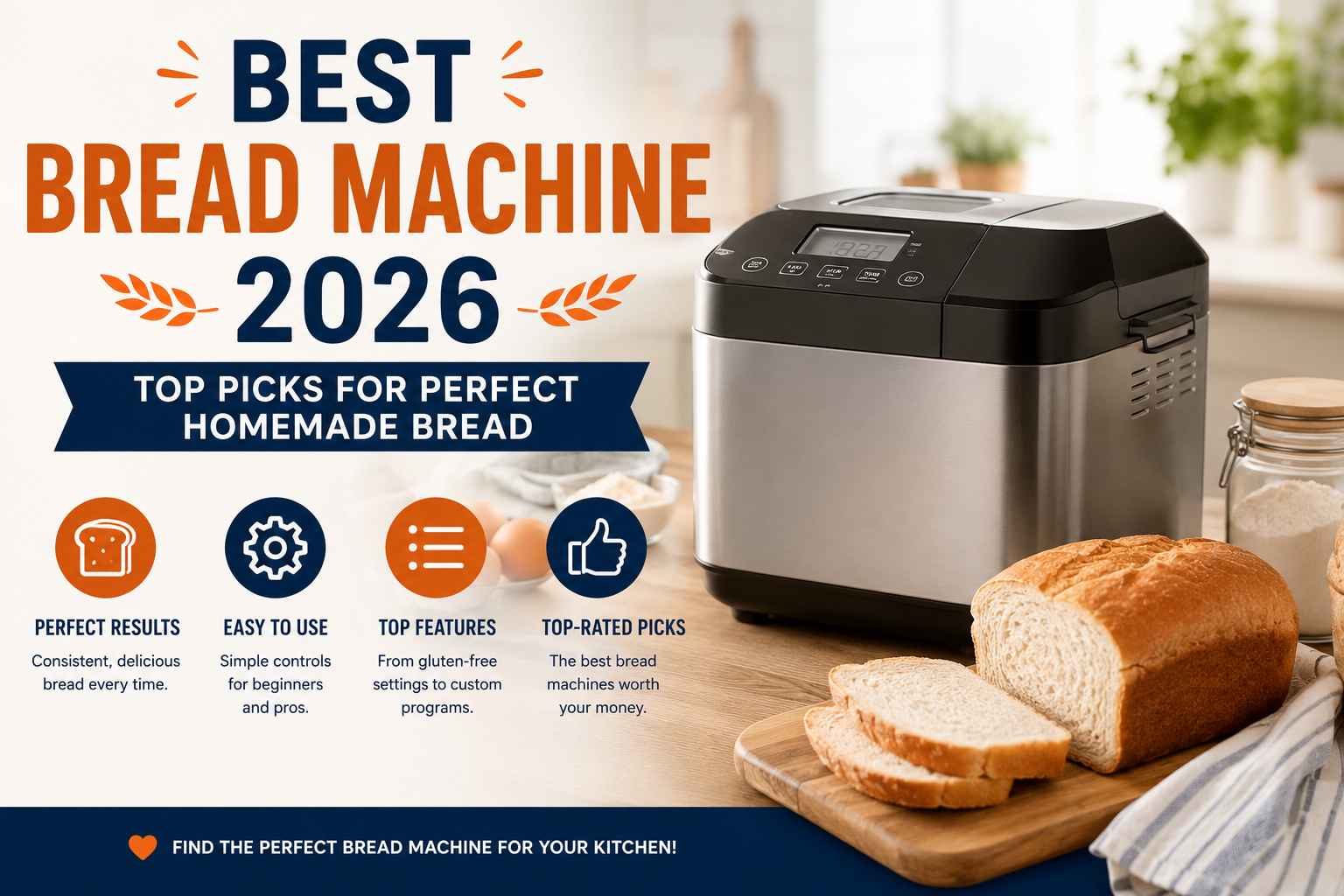
Best Bread Machine 2026: Top Picks for Perfect Homemade Bread
After testing and comparing several popular bread machines, I narrowed this guide down to the best bread machines of 2026 for beginners, families, gluten-free bakers, and regular home bakers. A good bread maker can handle mixing, kneading, rising, and baking, making homemade bread much easier and more consistent.
In this review, I compare top bread machines based on loaf size, preset programs, pan quality, delay timer, ease of use, cleaning, and overall value. Whether you want a budget bread machine, a premium Zojirushi bread maker, or a large-capacity model for family use, this guide will help you choose the right one.
Best Bread Machines of 2026
Quick overview of the top 5 bread machines — price, best use, main strength, and who should buy each.
| Bread Machine | Price | Best For | Main Strength | Quick Verdict |
|---|---|---|---|---|
| Elite Gourmet Programmable Bread Maker, 2 lb Loaf | $70.00 | Beginners and budget buyers | 19 presets, 3 loaf sizes, gluten-free setting, and delay timer. | Best Budget Beginner Pick Simple, affordable bread machine for basic homemade bread. |
| Elite Gourmet Bread Maker with PFAS-Free CERALAST™ Ceramic Pan | $74.00 | Health-conscious beginners | PFAS-free ceramic pan, 19 presets, 2 lb capacity, and delay timer. | Best PFAS-Free Budget Pick Best if you want a budget bread maker with a ceramic PFAS-free pan. |
| Zojirushi BB-PDC20BA Home Bakery Virtuoso Plus | $454.95 | Serious home bakers | Dual kneading blades, horizontal 2 lb loaf, lid heater, and premium consistency. | Best Overall Premium Pick Best for frequent bakers who want consistent, bakery-style results. |
| KBS 2.2LB 710W Convection Bread Machine | $144.99 | Feature-focused users | Dual heaters, convection baking, ceramic pan, touchscreen, and auto dispenser. | Best Feature-Packed Pick Strong middle-ground pick with modern features and good value. |
| KBS 750W Programmable Bread Maker, 3LB Ceramic Pan | $199.99 | Families and frequent bakers | 3 lb capacity, 20 programs, ceramic pan, fruit dispenser, and quiet motor. | Best Large-Capacity Pick Best for families who want larger loaves and more program options. |
Why Invest in a Bread Machine?
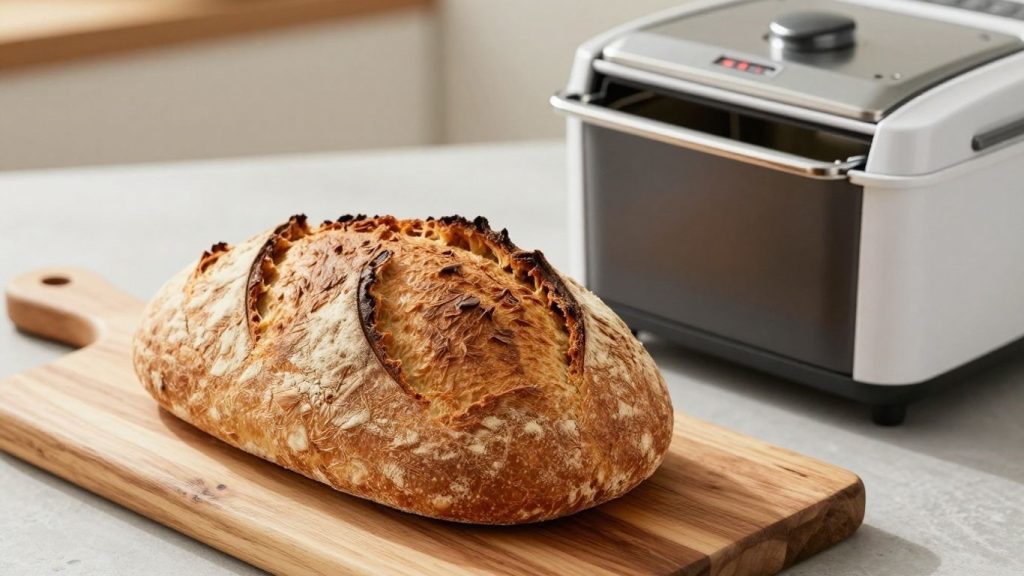
I used to believe that bread machines were a little of a novelty. Why do I need to buy a whole appliance if I have an oven? After some time with them, though, I understand. These are really handy items! For starters, the cost savings can really add up.
Consider the amount of money you spend on bread at the store every week. Now compare that to the cost of flour, yeast, and a little salt. It’s a dollar and a half worth of pennies. Even if you only make one loaf every couple of weeks, the machine can pay for itself within a year. Not to mention the smell. There’s nothing like walking into your kitchen and smelling freshly baked bread. Just another level of cosy.
If you’re building a better-equipped kitchen for baking, it also helps to explore the best kitchen appliances that support everyday cooking and baking tasks.
In addition to the cost and the smell, these machines remove a lot of the guesswork from baking. You simply add ingredients, press a few buttons, and leave. Don’t have to worry about kneading the dough just right or if the kitchen is too cold for it to rise. They take care of everything for you. This is a great way to start baking your own bread without having to be a master baker. They also work well for people with special dietary requirements, such as gluten-free, since you know exactly what you’re putting in your loaf. Easy home baking of tasty bread.
Here’s a quick look at why I’ve come around:
Convenience
Add ingredients, choose a setting, and let the bread machine mix, knead, rise, and bake.
Cost Savings
Homemade bread can cost less than store-bought bread, especially if you bake regularly.
Ingredient Control
You decide exactly what goes into your loaf, which is helpful for allergies or special diets.
Recipe Variety
Many machines include settings for white bread, whole wheat, gluten-free, dough, cake, and jam.
For anyone who loves fresh bread but finds the traditional baking process a bit daunting or time-consuming, a bread machine is a game-changer. It simplifies the entire experience, making homemade bread accessible to almost everyone.
How I Tested and Rated the Best Bread Machines
Then how did I determine which bread machines are worth your cash? I can tell you that it wasn’t just a quick look at the box. I tested these machines, baking and baking bread. I wanted to find the best automatic bread maker reviews, rather than a list of bread makers. I checked out a few important factors.
Loaf Quality
I checked crust color, crumb texture, rise, softness, and whether the loaf baked evenly.
Ease of Use
I looked at controls, display clarity, instructions, recipe setup, and beginner-friendliness.
Program Options
I compared presets for white bread, whole wheat, gluten-free, dough, sweet bread, cake, and jam.
Pan and Paddle
I checked pan quality, paddle design, sticking issues, loaf shape, and cleanup experience.
Special Features
I considered delay timers, fruit/nut dispensers, ceramic pans, dual heaters, and keep-warm settings.
Value for Money
I compared price, performance, durability, features, and who each bread machine is best suited for.
The bread, first of all. Did it come out evenly baked? Was the crust good, not too hard, not too soft? The crumb inside was tender, and was it the right consistency? I experimented with various recipes, both white and whole wheat, and even some gluten-free ones, to find out how the machines would fare. This is where you’ll really know the difference between a good machine and a mediocre machine.
Of course, there’s usability. When it comes to obtaining fresh bread, no one wants a complicated gadget. I explored the controls – were they easy to use? Did the manual make sense and be useful? I also looked at the ease of clean-up after use. There are definitely some machines that are more of a pain in the ass than others.
Similar testing standards were used when evaluating the best kitchen appliances for baking and other home baking equipment.
Features are also important. We’re referring to programmable settings, delay timers to get up to a fresh loaf of bread, various sizes of loaves, and fancy features such as nut and fruit dispensers. I recorded the machines that were the most versatile, but not too cumbersome. It’s about getting the balance right between having options that are useful and a machine that is easy to use. I even thought about the ease of use they would have compared to the top-rated bread makers or even top-rated bread ovens.
Finally, price. After all, what’s the point of the best automatic bread maker reviews if the price is too high? I ensured that all the machines that I recommended were good value for the money. You want something that will work and last, but not cost too much.
In the end, I was testing to see if I could get the same results I would get at home with a bit less hassle and more consistency of flavor. It’s about discovering that dependable kitchen pal who makes baking bread fun, not a task.
My Top 5 Bread Machine Picks for 2026
These are the top five bread machines to consider for 2026 after testing a variety of popular bread machines for loaf size, preset programs, pan quality, ease of use, delay timer, gluten-free support, and value.
These bread makers serve various budgets and baking requirements, ranging from beginners to regular home bakers, gluten-free bakers, and those seeking a bigger family-sized loaf.
As you’re reading through all the bread machine reviews, keep in mind that the best bread machine for your neighbor may not be the best for you. If you’re still exploring beginner-friendly options, comparing some of the best sewing machines for beginners can offer a similar perspective on choosing feature-rich yet easy-to-use equipment.
| Machine | Best For | Loaf Size | Main Feature | Quick Verdict |
|---|---|---|---|---|
| Elite Gourmet 2 lb Bread Maker | Beginners and budget buyers | Up to 2 lb | 19 presets and delay timer | Best Budget Beginner Pick |
| Elite Gourmet CERALAST™ Ceramic Pan | Health-conscious beginners | Up to 2 lb | PFAS-free ceramic pan | Best PFAS-Free Budget Pick |
| Zojirushi BB-PDC20BA Virtuoso Plus | Serious home bakers | 2 lb horizontal loaf | Dual kneading blades and lid heater | Best Overall Premium Pick |
| KBS 2.2LB 710W Convection Bread Machine | Feature-focused users | Up to 2.2 lb | Dual heaters, convection, and nut dispenser | Best Feature-Packed Pick |
| KBS 750W 3LB Bread Maker | Families and frequent bakers | Up to 3 lb | Large capacity and 20 programs | Best Large-Capacity Pick |
1. Elite Gourmet Programmable Bread Maker, 2 lb Loaf – Best Budget Bread Machine for Beginners
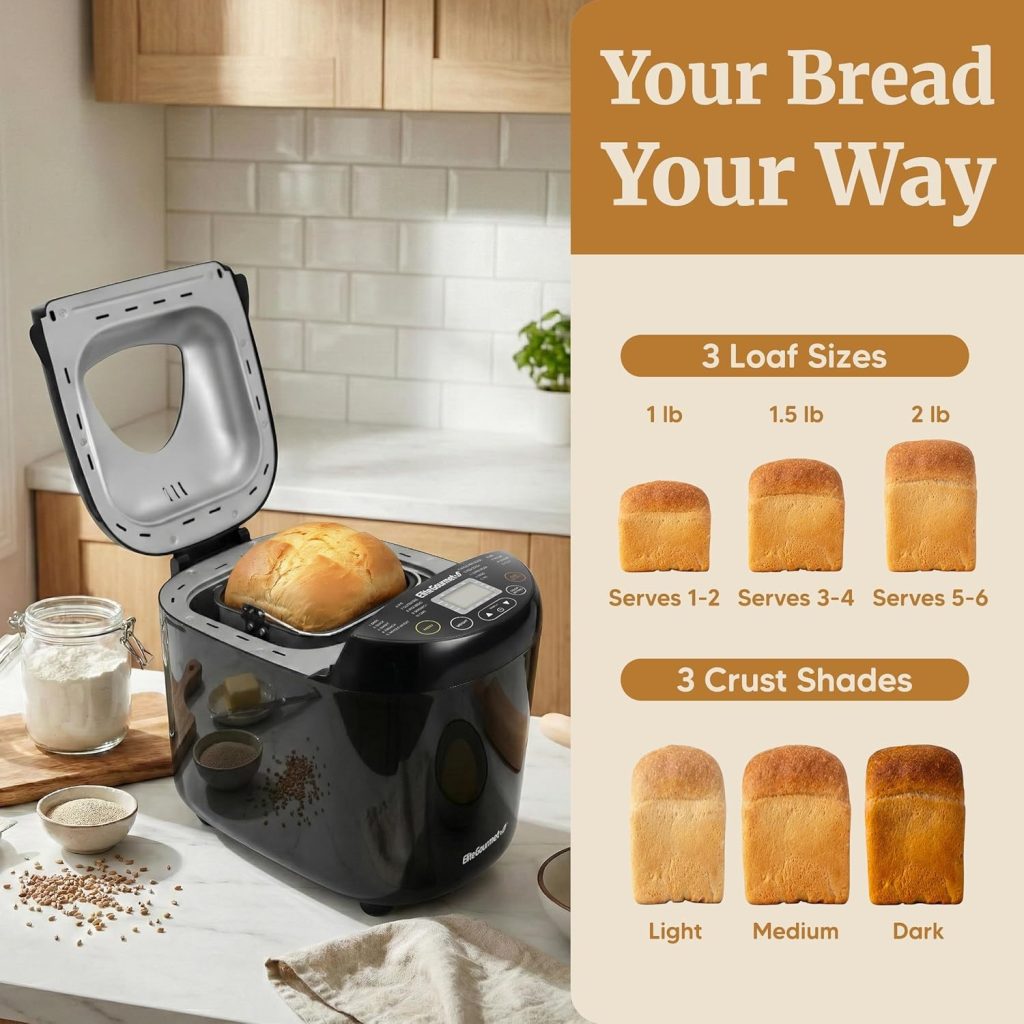
The Elite Gourmet Programmable Bread Maker is a good bread machine for novices who do not want to learn a lot of complicated instructions to make bread at home. It can hold up to a 2 lb loaf and has 3 loaf size options, which is great for small families, couples, or those who bake a couple of times a week.
It has 19 pre-programmed settings, such as basic bread, whole wheat, French, sweet bread, gluten-free, dough, cake, and jam, which provide ample flexibility for new bakers. The 15-hour delay timer also comes in handy when you want to get up to fresh bread or have one ready later in the day.
Pros
- Beginner-friendly controls.
- 19 preset programs for bread, dough, gluten-free, cake, and jam.
- Makes 1 lb, 1.5 lb, and 2 lb loaves.
- 15-hour delay timer for scheduled baking.
- Good budget option for everyday homemade bread.
Cons
- Not as premium or durable as high-end bread machines.
- Vertical loaf shape may not feel like bakery-style sandwich bread.
- May require recipe adjustments for perfect texture.
Final Verdict:
The Elite Gourmet Programmable Bread Maker is best for beginners who want an affordable, easy-to-use bread machine.
It is not the most advanced model, but it offers strong value for basic homemade bread, dough, and gluten-free baking.
2. Elite Gourmet Programmable Bread Maker with PFAS-Free CERALAST™ Ceramic Pan – Best PFAS-Free Budget Bread Maker
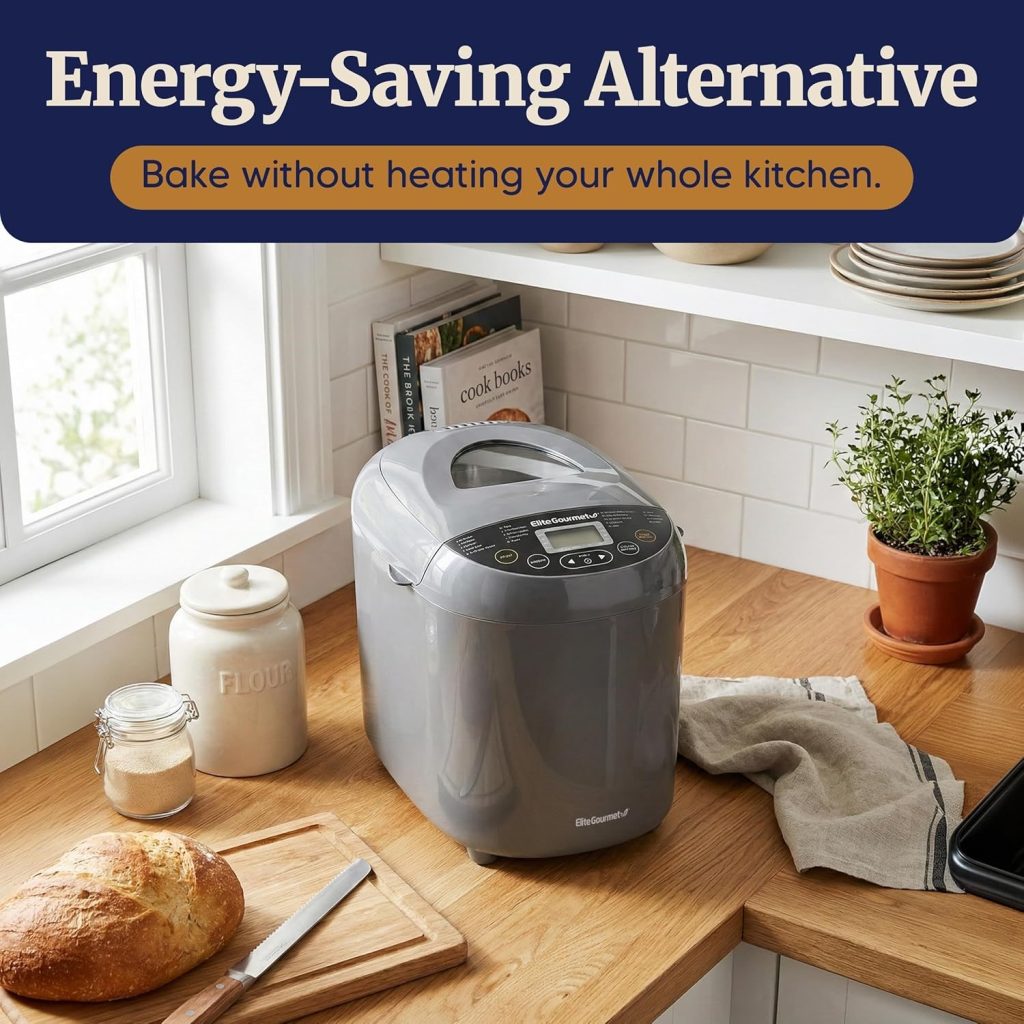
For those who prefer the original Elite Gourmet design but wish to purchase a PFAS-free ceramic-coated pan, this is the better model. It still has the same practical 2 lb loaf capacity, 3 loaf sizes, 19 preset programs, and a delay timer, but the ceramic pan makes it more attractive for health-conscious consumers.
Ideal for use in regular breads, gluten-free cooking, pizza dough, sweet breads, and jams. It is the PFAS-free CERALAST™ ceramic pan that is upgraded from the standard Elite Gourmet version, providing an added layer of assurance for the buyer.
Pros
- PFAS-free CERALAST™ ceramic pan.
- 19 preset programs for different bread and dough recipes.
- Supports 1 lb, 1.5 lb, and 2 lb loaf sizes.
- Good option for gluten-free bread and everyday baking.
- More health-conscious pan choice than standard nonstick models.
Cons
- Usually costs more than the basic Elite Gourmet version.
- Still not as powerful or premium as Zojirushi-style machines.
- Long-term pan care is important to protect the coating.
Final Verdict:
Choose this Elite Gourmet CERALAST™ model if you want a budget-friendly bread maker with a PFAS-free ceramic pan.
It is best for health-conscious beginners who want simple controls and reliable everyday bread-making features.
3. Zojirushi BB-PDC20BA Home Bakery Virtuoso Plus – Best Overall Premium Bread Machine
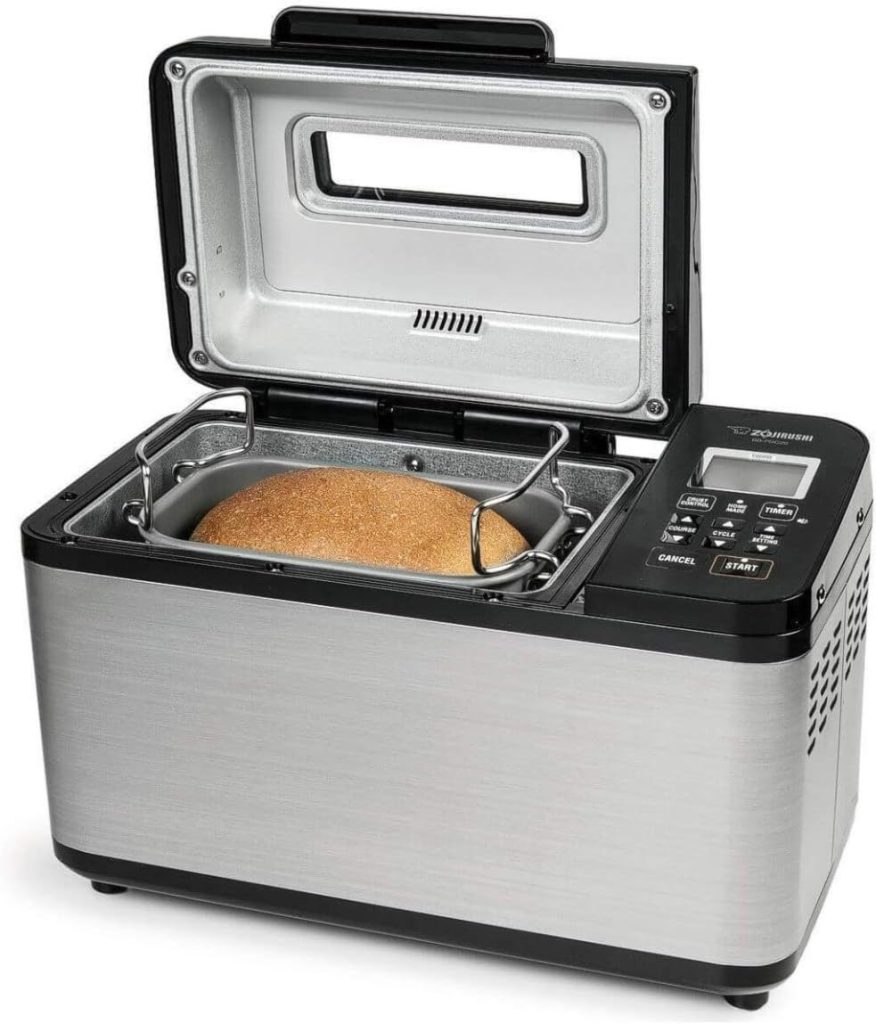
For serious home bakers, the Zojirushi BB-PDC20BA Home Bakery Virtuoso Plus is the best premium option. It produces a classic 2 lb horizontal loaf and features dual kneading blades that provide more even mixing and kneading than many single-paddle bread machines.
It also features a lid heater for even browning, and helpful course options like Multigrain, Whole Wheat, Gluten Free, Salt Free, Sugar Free, and Vegan. If you are looking for consistent loaves, improved loaf shape, and a bread machine that is closer to bakery-style bread, this is one of the best bread makers to consider.
Pros
- Makes a traditional horizontal 2 lb loaf.
- Dual kneading blades improve dough mixing.
- The lid heater helps with more even baking and browning.
- Strong options for gluten-free, vegan, whole wheat, and multigrain bread.
- Excellent choice for serious and frequent home bakers.
Cons
- Much more expensive than budget bread machines.
- A larger footprint takes more counter space.
- Maybe more machine than casual beginners need.
Final Verdict:
The Zojirushi BB-PDC20BA Virtuoso Plus is the best overall bread machine for serious home bakers.
It is expensive, but its loaf quality, dual kneading blades, and consistent performance make it a premium long-term choice.
4. KBS 2.2LB 710W Convection Bread Machine – Best Feature-Packed Bread Maker with Nut Dispenser
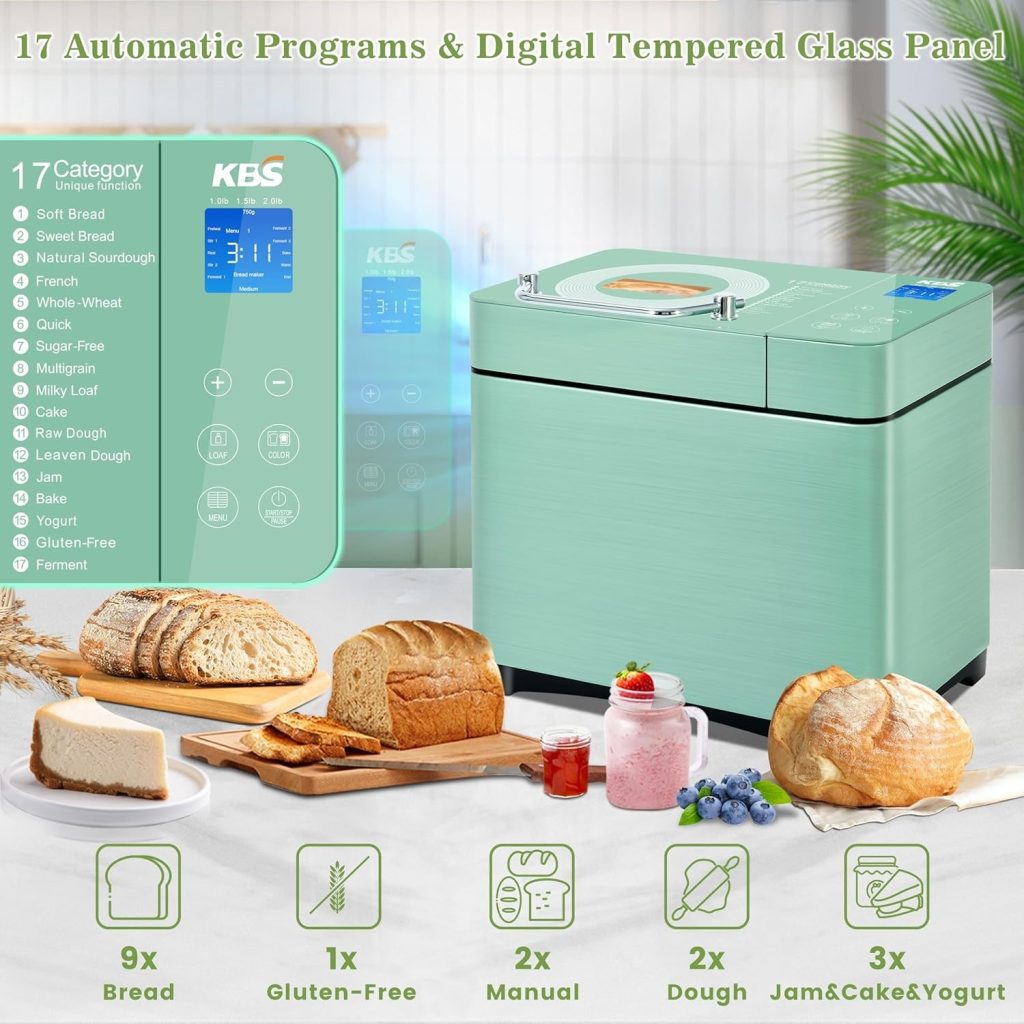
If you’re looking for more than a basic bread machine, the KBS 2.2LB 710W Convection Bread Machine will not disappoint. Features two heaters, convection baking, a ceramic pan, touchscreen controls, 17 automatic programs, and an automatic fruit and nut dispenser for mix-ins.
This model is a good option for those who make various types of bread, sweet loaves, dough, gluten-free breads, and breads containing nuts or dried fruit. The convection-style heating and dual-heater feature help to bake evenly, and the dispenser eliminates the need for manual timing of additional ingredients.
Pros
- 17-in-1 program selection for versatile baking.
- Dual heaters and convection baking support more even results.
- The ceramic pan is easy to clean and useful for regular baking.
- The auto fruit/nut dispenser is convenient for mix-in recipes.
- Touchscreen controls feel modern and easy to use.
Cons
- More features can feel unnecessary for basic users.
- Replacement parts and warranty support should be checked before buying.
- Larger and more complex than simple beginner bread machines.
Final Verdict:
The KBS 2.2LB 710W model is best for users who want a feature-packed bread machine with a ceramic pan and auto dispenser.
It is a good middle-ground choice between budget bread makers and premium Zojirushi-style machines.
5. KBS 750W Programmable Bread Maker, 3LB Ceramic Pan – Best Large-Capacity Bread Machine for Families
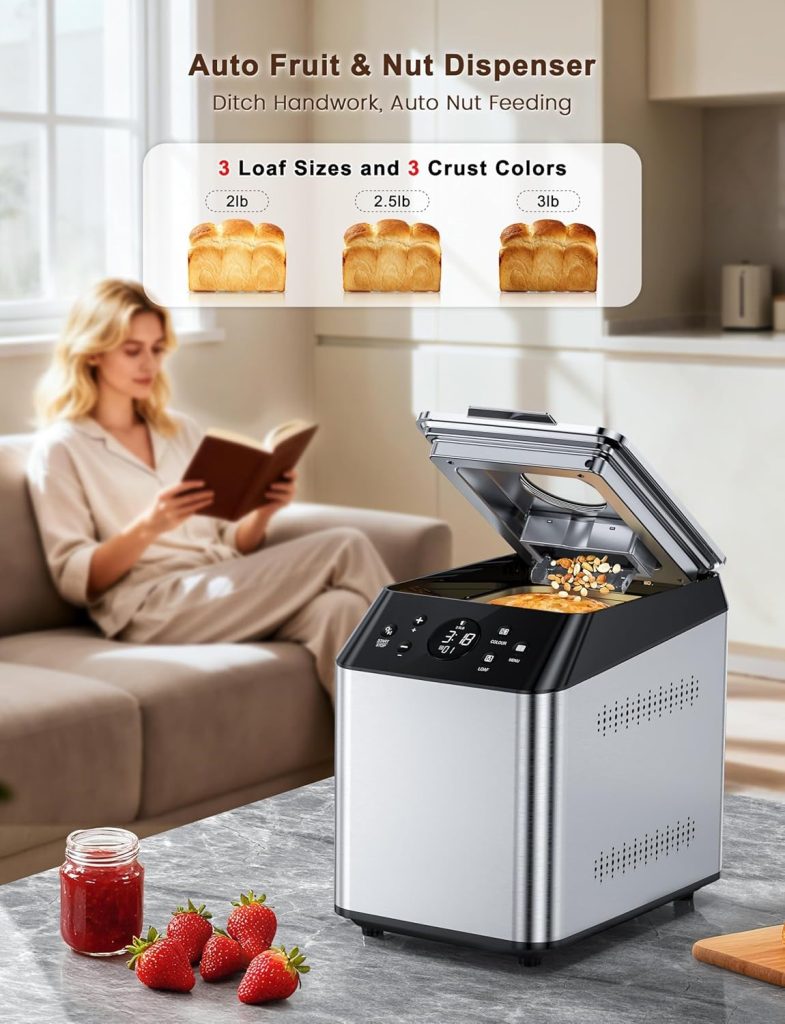
For larger families, the KBS 750W Programmable Bread Maker is the top option in this list, with a loaf capacity of up to 3 lb. This is more convenient for families, frequent bread eaters, or those who prefer to bake larger loaves rather than smaller ones.
It also features 20 automatic programs, a ceramic pan, dual heaters, a brushless motor, a fruit dispenser, a 15-hour timer, and a quiet motor. This KBS model is a good blend of capacity, convenience, and versatility if you desire a larger bread machine with more program options and modern features.
Pros
- Large 3 lb loaf capacity is great for families.
- 20-in-1 programs give more baking flexibility.
- The ceramic pan supports easier cleaning.
- The fruit dispenser is useful for raisin, nut, and sweet bread recipes.
- A quiet brushless motor is a nice upgrade for home kitchens.
Cons
- A larger size may take more counter or storage space.
- May be too big for singles or small households.
- Extra features may require more time to learn.
Final Verdict:
The KBS 750W 3LB Bread Maker is best for families or frequent bakers who want larger loaves and more program options.
It is not the smallest bread machine, but it offers strong capacity and modern features for regular home baking.
Bread Machine Buying Guide: What to Look For in 2026
Are you considering purchasing a bread machine? That’s awesome. I have been using these for quite some time, and I can tell you, not every bread machine is the same. When I see them, I’m not just seeing the shiny surface; there are some things I always look for.
Here’s a quick rundown of what I consider:
Loaf Size Options
Choose a machine that matches your household size, whether you need 1 lb, 2 lb, or 3 lb loaves.
Preset Programs
Look for settings like white bread, whole wheat, gluten-free, dough, sweet bread, cake, and jam.
Pan Quality
A good nonstick or ceramic pan makes baking and cleaning easier. PFAS-free options are a plus.
Delay Timer
A delay timer lets you schedule bread so it is ready in the morning or later in the day.
Ease of Cleaning
Check whether the pan and paddle are easy to remove and clean after each bake.
Counter Space
Bread machines can be bulky, so measure your counter or storage area before buying.
As you’re reading through all the bread machine reviews, keep in mind that the best bread machine for your neighbor may not be the best for you. Consider your own kitchen area, how you bake, and what types of bread you will be baking the most. It’s all about getting it just right.
Last but not least, don’t overlook the details. If you enjoy setting it and forgetting it, then you will find a delay timer to be very convenient. In all honesty, how easy is it to clean? This is one point that is sometimes overlooked, but can go a long way in determining the frequency of the machine’s use.
Tips for Baking Perfect Bread Every Time
Making bread at home with a machine is pretty straightforward, but there are a few things I’ve learned that really make a difference between a good loaf and a great one. It’s not just about dumping ingredients in and hitting start, though that’s part of the appeal.
Having reliable kitchen equipment can also improve consistency, much like using the best kitchen appliances for everyday meal preparation.
Here’s a quick rundown of the order I usually follow:
- Liquids (water, milk, oil, eggs)
- Dry ingredients (flour, sugar, salt)
- Yeast (placed in a little well on top of the dry ingredients)
I’ve seen bits of flour stuck on the sides of the pan with some gluten-free recipes or whole wheat. I will stop the mixer about halfway through the first mixing cycle and then use a silicone spatula to scrape down the sides. It ensures that all the ingredients are well incorporated and that there are no dry spots in the loaf.
Also, look for some recipes that are designed for bread machines. They have already been tested and fine-tuned for their operation. When using a standard recipe, you may have to make some modifications to the liquid or flour quantities or even add an additional egg. It’s worth the effort to find a good machine-specific recipe.
Last but not least, don’t be afraid to try a little once you have mastered it. Just start with the basics, follow the instructions, and you’ll be baking a delicious bread in no time.
Bread Machine vs Oven Baking: Which Is Better?
When I began to consider baking bread at home, I was not sure if it was the best route to take or if I should simply use my oven. In truth, they’re rather different animals.
The oven provides a great deal of control. If you’re up for a challenge, you can shape your dough as you like, add that rustic, crusty crust, and bake several loaves at once. Not to mention that you won’t have that little hole in the bottom from the kneading paddle. However, if you want to bake bread in an oven, there’s a lot more work to do. You need to knead it, let it rise (sometimes twice!), shape it, and then watch it bake. It’s a whole process.
A bread machine, on the other hand, is all about convenience. You add your ingredients, press a button, and then you leave. It kneads, rises, and bakes the dough all by itself. It’s as if you have a small automatic bread oven that does all the work. The loaves might be a bit more uniform in shape, and yes, there’s usually that paddle hole, but the ease of use is undeniable. The machine is a lifesaver for busy weeknights or when I just don’t have the energy to do a full baking project.
If baking has become a regular hobby, you may also want to explore the best kitchen appliances for baking to expand your capabilities beyond bread.
Here’s a quick rundown of what I’ve found:
| Feature | Bread Machine | Oven Baking |
|---|---|---|
| Convenience | Better for hands-off baking. | Requires kneading, shaping, rising, and monitoring. |
| Control | More limited because the machine controls the process. | Better for shaping, crust, and artisan-style loaves. |
| Effort | Add ingredients and press start. | Needs more hands-on work. |
| Loaf Shape | Usually vertical or machine-shaped. | More traditional and flexible loaf shapes. |
| Crust | Good for everyday sandwich bread. | Usually better for crisp artisan crusts. |
| Best For | Busy users, beginners, and simple homemade bread. | Experienced bakers and artisan-style baking. |
An oven gives more artistic freedom and can be used to make a bakery-style crust, but a bread machine makes the whole thing much easier. It’s a compromise between creativity and convenience.
In the end, if I am looking for a particular artisan loaf or a party of people, my oven is the one I will use. My bread machine is my go-to for consistently good, fresh bread with little to no hassle.
Is a Bread Machine Worth It in 2026?
So, the big question: do you really need to purchase a bread machine? It’s become pretty clear to me that yes, in 2026 in particular. Consider this: A good loaf of bread at the supermarket can cost up to $4 or $5, and even more for a specialty loaf. That’s a far cry from the price of ingredients – flour, yeast, a pinch of salt, perhaps some sugar – which is typically under a dollar, and often as low as 50 cents for a complete loaf. If you’re not a big bread fan, perhaps one loaf a week or two, the savings really do add up quickly. I’ve found that my bread machine pretty much pays for itself within the first year. From then on, it’s all about the savings and the added convenience of having fresh bread when you’re hungry.
There’s nothing like the aroma of freshly baked bread in your kitchen, besides the money. It’s a simple thing, but it makes a house feel like a home. Plus, if you have any dietary requirements or allergies, a bread machine will allow you to have complete control over what you are eating. No more squinting at ingredient lists to decipher what’s what. Some machines even have gluten-free bread options, which is a lifesaver for many.
Of course, it’s not for everyone. It may simply take up counter space if you already have a lot of gadgets in your kitchen or if you only bake bread once in a while. If you don’t like all the drama of buying fresh bread and you want to make your own bread without the hassle, and want to save some money, I think a bread machine is a great option to consider. It’s an appliance that, when you get going with it, you realize how you ever lived without it.
Here’s a quick look at the potential savings:
Potential Bread Machine Savings
A bread machine can be worth it if you bake often, want more control over ingredients, or prefer fresh bread at home without doing all the kneading and proofing yourself.
It really comes down to how much bread you eat and how much you value the convenience and quality of homemade.
Common Bread Machine Mistakes to Avoid
Even with the best bread machine, things can go wrong. I’ve learned a few things the hard way, and I bet you might too if you’re not careful. It’s easy to think you can just toss everything in and hit start, but there’s a bit more to it.
Here are a few other things to watch out for:
Not Weighing Ingredients
Measuring cups can be inconsistent. A kitchen scale gives better results for bread recipes.
Using the Wrong Recipe
Recipes made for oven baking may need adjustments. Start with bread-machine-specific recipes.
Scratching the Pan
Avoid metal utensils because they can damage the nonstick or ceramic coating.
Using Old Yeast
Expired or weak yeast can stop your bread from rising properly.
Adding Too Many Mix-Ins
Too many nuts, seeds, or dried fruits can affect dough structure and loaf rise.
Expecting Artisan Crust
Bread machines are convenient, but they may not match the crust of oven-baked artisan bread.
Another thing to keep in mind is that bread machines are not magic wands! They can’t make the exact texture of a slow-fermented sourdough or a crusty artisan loaf from a professional bakery. It’s important to know their boundaries so they can have realistic expectations.
Finally, don’t forget to check your machine’s paddle and pan. When the nonstick coating is scratched or worn, it’s time to consider replacing it. Of course, no one wants to eat bread with bits of coating, do they?
Best Flour and Ingredients for Bread Machines
I initially used my bread machine with any kind of flour. Well, that’s not exactly true. The quality of the flour you use does make a difference in the final loaf of bread, particularly if you’re trying to make one of those easy homemade bread recipes machine wonders. While most machines are pretty forgiving, the right ingredients can make your bread from ‘okay’ to ‘wow’.
Here are a few things I’ve learned to keep in mind:
- Weigh your ingredients: Seriously, this is a game-changer. Measuring cups can be inaccurate, especially with flour. Using a kitchen scale for both dry and wet ingredients leads to much more consistent results. It’s one of the simplest ways to improve your easy bread maker recipes.
- Follow the order: Most manuals tell you to add liquids first, then dry ingredients, and finally, make a little well for the yeast. This keeps the yeast from getting activated too early, which is super important, especially if you’re using the delay timer.
- Scrape down the sides: Sometimes, especially with thicker doughs or gluten-free mixes, a bit of flour can get stuck around the edges. A quick scrape with a silicone spatula halfway through the first mixing cycle can make sure everything gets incorporated.
- Use recipes made for machines: While you can adapt some recipes, easy bread machine recipes designed specifically for these appliances tend to yield the best results. They account for the machine’s mixing and baking cycles.
Using fresh yeast is also key. Old yeast may not be as active as it should be to rise your bread. Always verify the expiration date, and if in doubt, you can check by dissolving it in a small amount of warm water and adding a pinch of sugar. After about 5-10 minutes, if it becomes foamy, it is fine to use.
Remember to include add-ins such as nuts and seeds. Add them if they have a dispenser. If not, you’ll usually add them towards the end of the kneading cycle. Be careful not to go overboard with the add-ins, though, as too many can impact the structure of the dough.
Bread Machine Maintenance Tips
Maintaining your bread machine is relatively simple, and it can really make a difference in the quality of your bread. Little and often does help a lot. The first step is to clean. After each use, make sure to remove the bread pan and the kneading paddle.
Here are a few more things I try to remember:
- Clean the pan after each use: Remove crumbs and residue once the pan cools down.
- Wash the kneading paddle: Check for stuck dough around the paddle and shaft area.
- Avoid metal utensils: Use silicone or plastic tools to protect the nonstick or ceramic coating.
- Check for pan wear: Replace the pan or paddle if the coating becomes scratched or damaged.
- Keep the exterior dry: Store the machine in a clean, dry place when not in use.
Following these simple steps helps ensure your bread machine continues to perform well for years to come. It’s not complicated, just a bit of consistent care.
Conclusion
Thus, you have it! Baking bread at home doesn’t need to be a tedious task. When you have the right bread machine, you can have fresh and delicious loaves without the fuss. Whether you’re a seasoned baker or just starting, these machines make it easy to get started.
I have used many, but these are the best that I have found for performance and usability. Try one and show yourself (and maybe your friends and family) how good a baker you can be! Happy baking!
Frequently Asked Questions
Quick answers about homemade bread, gluten-free baking, cleaning, counter space, loaf sizes, and cost savings.
QWhat is the biggest advantage of using a bread machine? +
The biggest advantage of using a bread machine is convenience. You add the ingredients, choose a setting, and the machine handles mixing, kneading, rising, and baking for you. It is a great option for busy people who want fresh homemade bread without doing every step by hand.
QDo bread machines make good bread? +
Yes, a good bread machine can make soft, fresh, and flavorful bread at home. Premium models like the Zojirushi can produce more consistent loaves, while budget models are still useful for everyday sandwich bread, dough, and simple recipes.
QAre bread machines hard to clean? +
Most bread machines are not hard to clean because they usually include a removable nonstick or ceramic pan and a removable kneading paddle. After baking, let the pan cool, remove the paddle, and wash both gently by hand. Avoid metal utensils because they can scratch the coating.
QCan I make gluten-free bread in a bread machine? +
Yes, many modern bread machines include a gluten-free setting. This is helpful because gluten-free dough behaves differently from regular wheat dough. For best results, use recipes designed specifically for bread machines and check that the model you choose has a gluten-free program.
QHow much counter space does a bread machine need? +
Bread machines can take up a moderate amount of counter space, similar to a large toaster oven or small kitchen appliance. Compact models work better for smaller kitchens, while larger 2 lb or 3 lb machines may need more storage space. Always check the product dimensions before buying.
QIs it cheaper to make bread in a machine than buy it? +
In many cases, yes. Homemade bread often costs less per loaf than store-bought bread, especially if you bake regularly. It also gives you more control over ingredients, which is useful if you want fewer additives, custom recipes, or gluten-free options.
QWhat loaf size should I choose in a bread machine? +
For one or two people, a 1 lb or 1.5 lb loaf is usually enough. For families, a 2 lb bread machine is more practical. If you bake often or have a larger household, a 3 lb bread machine can be a better choice.
QIs a bread machine better than oven baking? +
A bread machine is better for convenience because it handles most of the work automatically. Oven baking gives you more control over loaf shape, crust, and artisan-style results. Choose a bread machine for easy everyday bread and oven baking for more hands-on, bakery-style loaves.