
Janome Horizon Memory Craft 8200QCP Special Edition Review 2026: Is It the Best Sewing Machine for Quilting?
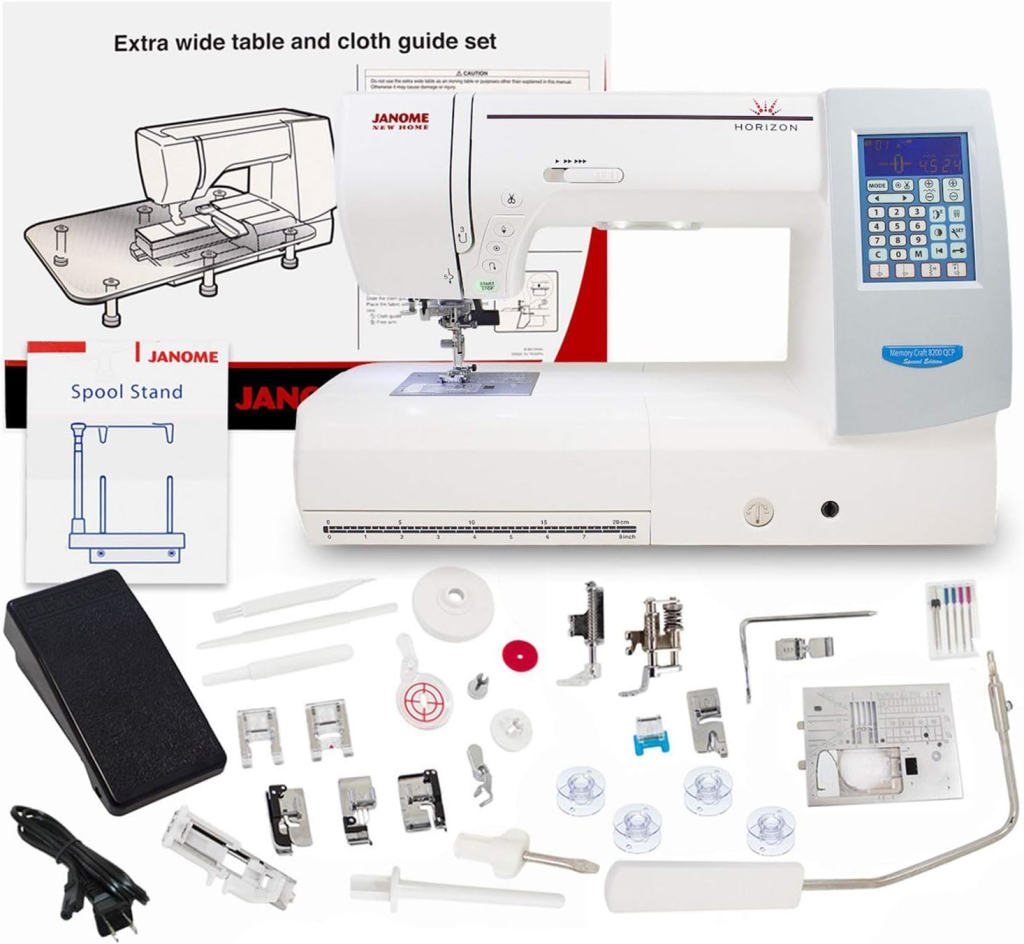
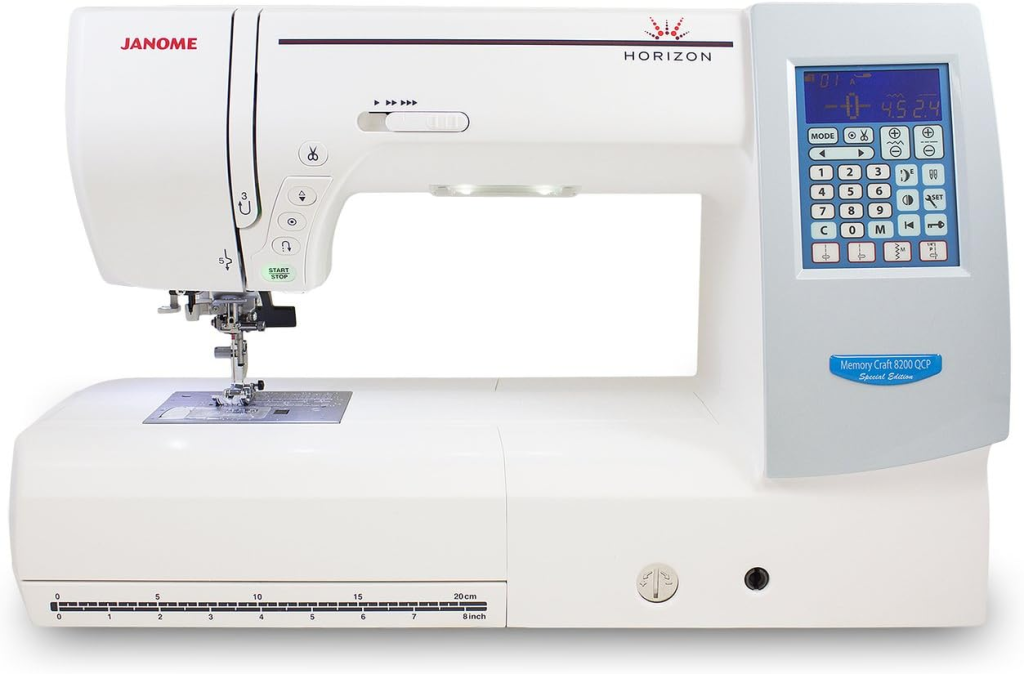
The Janome Horizon Memory Craft 8200QCP Special Edition is a large-workspace computerized sewing and quilting machine built for sewists who want room to manage quilts without giving up garment, decorative, and everyday sewing functions. Its 11-inch space to the right of the needle, AcuFeed Flex system, 170 built-in stitches, three alphabets, automatic tension, 91 needle positions, and 1,000-stitch-per-minute top speed make it far more versatile than a straight-stitch quilting specialist.
The current U.S. model is the Special Edition, while Janome lists the earlier non-SE Horizon Memory Craft 8200 QC as discontinued. The real buying question is whether the 8200QCP SE gives you enough quilting space and workflow control to justify its 26.5-pound weight, large footprint, and premium dealer price.
Key Takeaways
- 11-inch workspace is the defining advantage. The 11 x 4.7-inch needle-area workspace provides substantially more room than compact domestic machines and is the main reason I would choose it for bed quilts, coats, bags, and bulky home-decor projects.
- It is a true all-purpose sewing and quilting machine. Janome lists 170 built-in stitches up to 9 mm wide, three alphabets, 10 one-step buttonholes, a free arm, drop feed, stitch editing, and combinations of up to 50 stitches.
- AcuFeed Flex helps with layers. The detachable dual-feed system supports more even feeding of quilt sandwiches, slippery layers, plaids, and long seams, although fabric preparation and the correct foot still matter.
- The machine is stable but not portable. At 26.5 pounds with a 20.4 x 12.4 x 9.1-inch footprint, it is better suited to a dedicated table than frequent classes, retreats, or closet storage.
- It is slower than straight-stitch specialists. Its 1,000 SPM maximum is fast enough for home quilting, but the Janome 6700P reaches 1,200 SPM and the Juki TL-2010Q and Brother PQ1600S reach 1,500 SPM.
- The current U.S. MSRP is $3,499. Janome directs shoppers to authorized dealers for actual pricing, so dealer discounts, trade-ins, lessons, and accessory bundles can materially change value.
Janome 8200QCP at a Glance
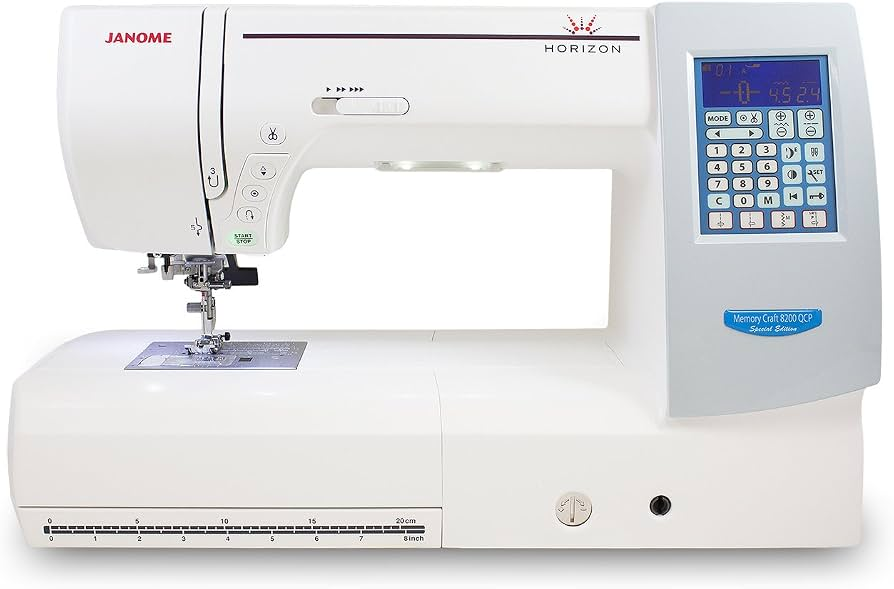
Before getting into individual features, I like to define the machine by the work it is designed to do. The 8200QCP is a premium household sewing and quilting machine, not an industrial machine and not an embroidery machine.
- Best for: large quilts, garment construction, home decor, decorative sewing, layered projects, free-motion quilting, and sewists who want one machine for multiple techniques.
- Skill level: confident intermediate through advanced; a motivated beginner can learn it, but the feature set is more than most first-time users need.
- Main strength: 11-inch workspace combined with AcuFeed Flex and full computerized stitch capability.
- Main limitation: large 26.5-pound body and 1,000 SPM maximum speed compared with dedicated straight-stitch quilting machines.
- Current U.S. MSRP: $3,499 on Janome’s U.S. product page, with dealer pricing varying.
- Current status: active Special Edition model sold through authorized Janome dealers; the earlier non-SE 8200 QC is discontinued.
This positioning is important for search intent. Someone looking for the “best sewing machine for quilting” may actually need a versatile domestic machine, a high-speed straight-stitch machine, or a longarm. The 8200QCP belongs in the first group.
How I Test Sewing Machines
I have been sewing for over 12 years and personally test the sewing machines I recommend on MariaSew.com before I give a verdict. My sewing-machine reviews are not a showroom demonstration or a specification sheet, but rather a review of what I have used them for during the past few weeks. I am interested in how the controls feel after the honeymoon period and if the stitch quality remains the same on various fabrics and project types.
I’m especially focused on straight stitch consistency, quarter-inch piecing, feeding the quilt sandwich, bulky seam crossings, free motion control, decorative stitches, buttonholes, garments, and long sewing sessions with my quilting machine, the 8200QCP. I also try the things that will impact the daily use of the machine: threading, bobbin access, needle-plate changes, AcuFeed setup, foot-pressure adjustment, knee-lift use, lighting, automatic cutting, noise, vibration, table space, storage, and cleaning.
- Stitch quality. I check the top and underside of the seam for skipped stitches, looping, puckering, inconsistent stitch length, and tension changes when I vary speed or fabric thickness.
- Fabric feeding. I compare standard feeding and AcuFeed Flex on quilting cotton, layered projects, slippery fabrics, bulky joins, and long seams where small alignment errors can accumulate.
- Quilting ergonomics. I look at how much of the quilt can sit to the right of the needle, how easily I can pivot with needle-down, whether the knee lift frees both hands, and how much drag the table setup creates.
- Control layout. I judge how quickly I can change speed, needle position, stitch width and length, tension, presser-foot pressure, and needle plates without breaking the sewing rhythm.
- Ownership reality. I consider weight, cleaning, dealer support, accessory costs, storage, and whether I would realistically keep the machine set up and use its premium features often enough to justify the price.
My final recommendation is based on how a machine behaves during real projects, not on which model has the largest stitch count. A feature only earns points when it improves accuracy, control, comfort, or workflow.
For troubleshooting inconsistent stitches, it is also useful to understand how sewing machine tension works and which adjustments should be made before changing the machine’s settings.
Janome 8200QCP Features and Specifications
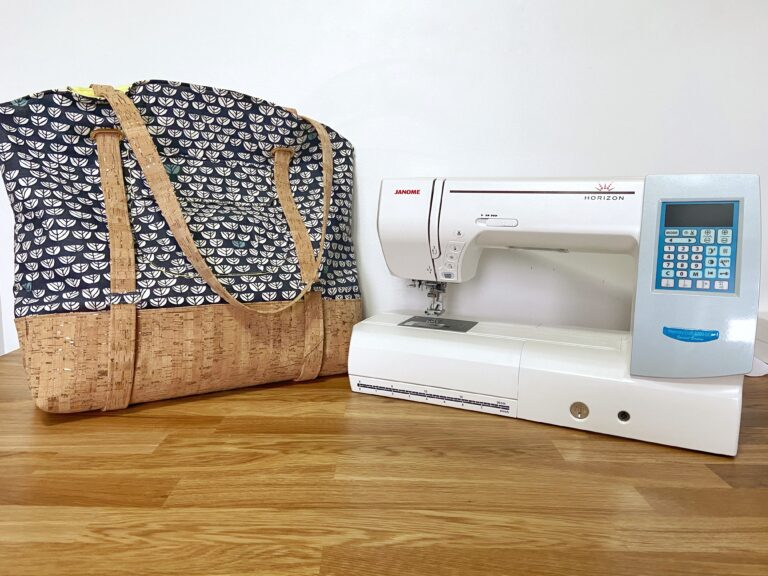
The 8200QCP has a long feature list, but I find it more useful to explain what each feature changes in actual sewing. Every item below is a separate buying factor rather than a marketing bullet.
For a machine this large, choosing an appropriate sewing machine table and supportive sewing chair can make a noticeable difference during long quilting sessions.
11-Inch Workspace to the Right of the Needle
Janome offers 11 inches of horizontal workspace and 4.7 inches of vertical space. The machine’s greatest benefit for quilting is that there is more room for the needle to work on a quilt, coat, bag, or home-decor panel than when they are all stacked together.
1,000 Stitches per Minute
A 1,000 SPM top speed is useful for piecing, garment making, borders, and long seams. I don’t use full speed nearly every time I do free-motion quilting or bulky intersections, so the value is that I have enough headroom to do repetitive work without making the machine a 1,500-SPM straight stitch machine.
Detachable AcuFeed Flex System
AcuFeed Flex feeds fabric from above while the standard feed system moves it from below. It is especially useful for quilt sandwiches, matched stripes and plaids, slippery layers, long seams, and projects where the upper layer tends to creep.
170 Built-In Stitches up to 9 mm Wide
The stitch library includes utility, stretch, quilting, heirloom, decorative, and creative sewing. The 9 mm maximum width allows for the decorative patterns to be more prominent than the narrower 5 mm or 7 mm machines, yet the machine can still be used for standard garment and repair tasks.
Three Alphabets
The three alphabets that are built in are helpful for quilt labels, names, dates, simple personalization, and decorative text. They’re not a replacement for an embroidery machine, but they do provide functional labeling without hoops, software, or imported design files.
Ten One-Step Buttonholes
Janome includes 10 automatic one-step buttonhole styles. The stabilizer plate is particularly useful when a buttonhole sits near an uneven edge, bulky seam, or thick fabric where an ordinary buttonhole foot can tilt.
Automatic Thread Tension
This machine features automatic thread tension, lessening the need for manual adjustments when sewing normally. Needle, fabric, stabilizer, and thread combinations can affect the balance, so I still test visible quilting, decorative work, and specialty threads on scraps.
91 Needle Positions
Fine needle position control is useful for quarter-inch piecing, edge stitching, topstitching, zippers, applique, and accurate seam allowances. It’s one of those things that is more important in everyday sewing than the big number of decorative stitches.
High-Resolution LCD Touchscreen
A wide array of computerised functions are organized, and the touchscreen allows you to access stitch selection and adjustments. It requires more learning than a mechanical machine, but once the layout is learned, it requires less dial reading and printed charts.
Five Ultra-Bright LED Lamps
Janome offers five LED lamps to help minimize shadows on the work area. A wide illumination is helpful when quilting dark fabrics and/or large pieces that may obstruct room lighting, but in a dedicated sewing room, a task light can be used.
One-Step Needle Plate Conversion
I can switch between the zig zag plate and straight stitch plate without taking off the screws with the plate-change system. For quilting and precision piecing, that is a lot more realistic than just having the right plate because it will be easier to change the plate.
Straight-Stitch Needle Plate
The included straight-stitch plate gives the fabric more support around the needle opening and can improve control on fine fabrics and precise straight sewing. Janome also provides right-needle positioning for quarter-inch seam-foot use.
Free Arm
Janome’s current specification states that the 8200QCP Special Edition has a free arm, as opposed to the Janome Memory Craft 6700P. This makes sleeves, cuffs, trouser hems, bags, and other tubular projects much simpler, and the machine becomes an all-purpose sewing and quilting machine.
Drop Feed for Free-Motion Quilting
The feed dogs can be lowered to allow the sewist to manipulate the fabric during free-motion quilting and other methods. Even though the quilt is free-motion, the speed, hand, foot, tension, needle, thread, and quilt support remain important considerations for free-motion quality.
Adjustable Presser-Foot Pressure
Foot-pressure adjustment gives another way to manage delicate, stretchy, bulky, or layered fabrics. When fabric is stretching or refusing to feed evenly, pressure can be a more relevant control than immediately changing thread tension.
Adjustable Knee Lift
The knee lift raises the presser foot without taking both hands off the quilt or garment. It is especially useful for pivoting at corners, applique, chain piecing, and repositioning bulky work while keeping the needle area controlled.
Extra-High Presser-Foot Lift
The extra-high position creates more room to place thick layers under the presser foot. It helps with bulky quilt intersections and padded projects, but it should not be interpreted as unlimited heavy-material capacity.
Automatic Thread Cutter
The upper and bobbin threads are cut off after a seam has been cut, eliminating the need for additional scissor cuts when piecing or batch sewing. This is a small convenience that can be a useful workflow over an extended quilt or garment session.
Memorized Needle Up/Down
One of my favorite quilting controls is needle-down, as it holds the work in place when I pause to pivot. The memorized setting allows the machine to go back to the stop position I like, instead of having to adjust it each time I restart the machine.
Start/Stop and Speed Control Slider
When the foot control is not attached, the machine will sew from the start/stop button located on the front panel, and the speed slider will restrict the maximum speed. Useful for decorative sewing, free-motion practice, and those who like to have a controlled speed.
Locking Stitch and Easy Reverse Buttons
Dedicated locking and reverse controls make seam starts and finishes faster and more predictable. The locking function is particularly useful on decorative patterns where a traditional reverse seam is not appropriate.
Twin-Needle Guard
The twin-needle safety setting restricts incompatible stitch choices to reduce the chance of the needle striking the presser foot or plate. It is a valuable safeguard for decorative parallel stitching and garment finishing.
Pattern and Combination Editing
The 8200QCP supports individual stitch editing and combinations of up to 50 stitches. This gives creative sewists more control over decorative borders and labels without turning the machine into an embroidery platform.
Pattern Stitch Length Calculator
The built-in calculator helps plan repeated decorative patterns across a defined length. It is a niche feature, but useful when borders and motifs need to fit a project without ending awkwardly halfway through a repeat.
Top-Loading Full Rotary Hook Bobbin
The drop-in bobbin is clearly visible and easily accessible, and the complete rotary hook ensures smooth household sewing. Proper bobbin positioning, proper threading, and consistent lint removal are still essential for proper tension and automatic cutting.
Auto-DeClutch Bobbin Winding
The bobbin-winding system disengages automatically during winding. It reduces setup friction and helps keep bobbin preparation separate from sewing, especially during long quilting projects where multiple bobbins are needed.
Seven-Piece Feed Dog
The seven-piece feed system gives the machine multiple contact points under the fabric. Combined with adjustable foot pressure and AcuFeed Flex, it provides a strong foundation for controlled feeding across ordinary and layered sewing.
20.4-Inch Body and 26.5-Pound Weight
The machine is approximately 20.4 inches wide, 12.4 inches tall, 9.1 inches deep, and 26.5 pounds. Size adds stability and workspace, but is much more advantageous for a permanent sewing station than for frequent carrying.
Dual Voltage 80 to 240 V
Janome lists dual-voltage compatibility, which is useful for buyers who move internationally or use the machine in different electrical regions. Plug type and local electrical requirements still need to be handled correctly.
Full Janome 8200QCP Special Edition Specifications
The above feature explanations give an idea of how the machine works in practice. The table below is a compilation of the official Janome specifications to help you compare the 8200QCP with other quilting and sewing machines without having to navigate to each retailer’s page.
A specification table won’t tell you if the touchscreen is intuitive, if your quilt will drag on your table, or if a specific thread and batting combination will work flawlessly. These numbers are the facts; then use the projects you sew to judge the machine.
| Feature / Specification | Official Detail |
|---|---|
| Current U.S. model | Horizon Memory Craft 8200QCP Special Edition |
| Machine type | Computerized household sewing and quilting machine |
| Hook/bobbin | Top-loading full rotary hook bobbin |
| Built-in stitches | 170 |
| Alphabets | 3 |
| Buttonholes | 10 one-step |
| Maximum stitch width | 9 mm |
| Maximum stitch length | 5 mm |
| Needle positions | 91 |
| Workspace | 11 in W x 4.7 in H to the right of the needle |
| Maximum speed | 1,000 stitches per minute |
| Feed system | Detachable AcuFeed Flex plus 7-piece feed dog |
| Thread tension | Automatic |
| Needle threader | Built-in, one-hand |
| Needle up/down | Memorized |
| Free arm | Yes |
| Drop feed | Yes |
| Needle-plate change | One-step conversion |
| Speed control slider | Yes |
| Start/stop | Yes |
| Locking stitch | Yes |
| Reverse | Yes |
| Automatic thread cutter | Yes |
| Twin-needle guard | Yes |
| Knee lift | Adjustable / included |
| Presser-foot pressure | Adjustable |
| Presser-foot lift | Extra high |
| Bobbin winding | Auto-declutch |
| Stitch combinations | Up to 50 stitches |
| Display | High-resolution LCD touchscreen |
| Lighting | 5 ultra-bright LEDs |
| Dimensions | 20.4 in W x 12.4 in H x 9.1 in D |
| Weight | 26.5 lb |
| Voltage | Dual voltage 80 to 240 V |
| Cover | None listed in Janome U.S. machine specifications. |
| Official U.S. MSRP | $3,499, with dealer pricing varying |
The numbers reinforce the 8200QCP’s identity: large workspace, broad stitch capability, strong fabric-control features, and a substantial table-based body. It is not the fastest machine in its price class, but speed is only one part of quilting performance.
How the Janome 8200QCP Performs on Real Sewing and Quilting Projects
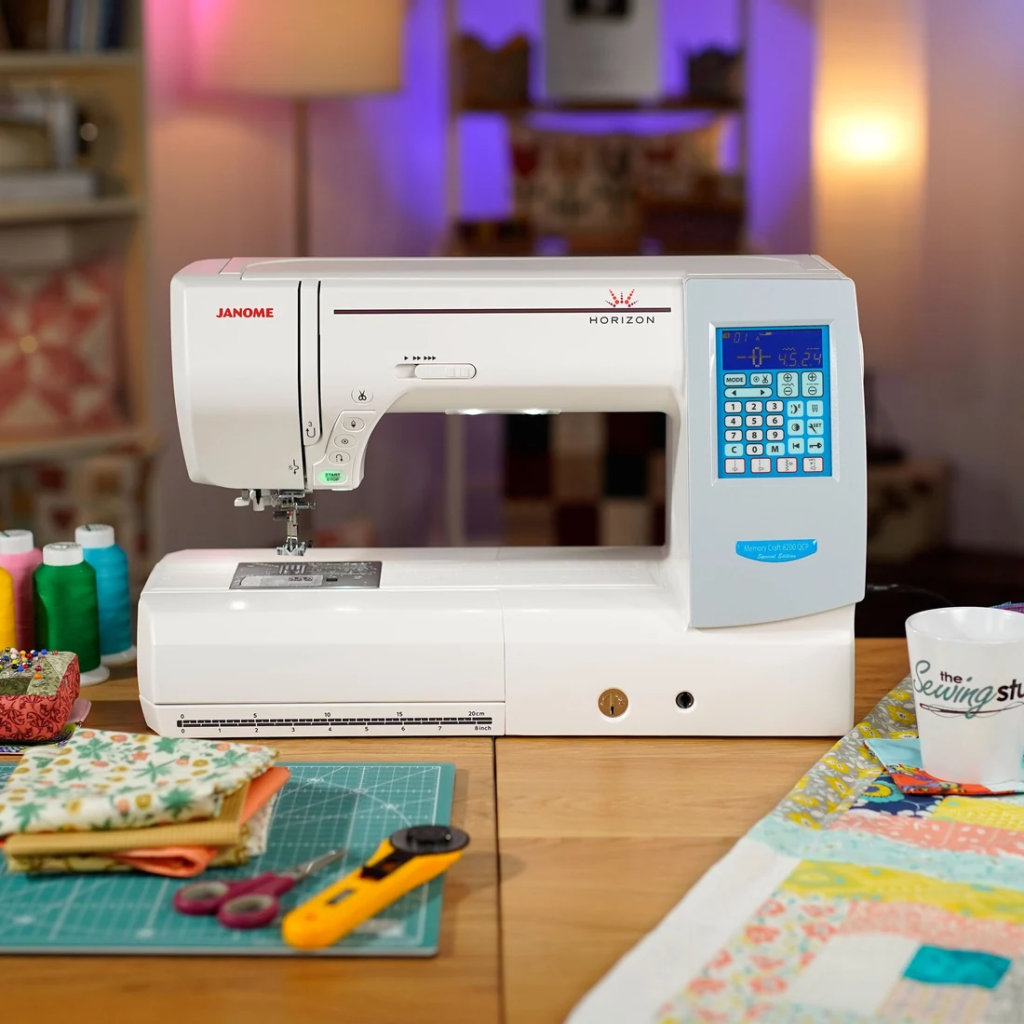
The most useful test is not whether the machine can produce one perfect sample. I want to know whether it stays predictable when the project becomes larger, thicker, more repetitive, or more awkward to maneuver.
Quilt Piecing
The 11-inch work area provides more room than most blocks require for piecing, but the stable bed, fine needle positioning, straight-stitch plate, quarter-inch foot, knee lift, thread cutter, and needle-down feature ensure that repetitive seams are efficient. The 1,000 SPM speed is sufficient to chain piece without the machine running away from me.
The primary accuracy benefit is managing rather than brute force. I always check the quarter-inch seam allowance on scrap fabric since the size of the block can be affected by the foot, needle position, thread, and pressing technique.
Walking-Foot and AcuFeed Quilting
One of the biggest selling points of this Janome is AcuFeed Flex. The upper feed minimizes creeping between the quilt top, batting, and backing when quilting straight lines or working with multiple layers.
I still support the quilt on a table and don’t pull it through the machine. Dual feed helps to move layers, but it can’t overcome a heavy quilt that hangs off the edge and drags against the needle.
Free-Motion Quilting
With the 11″ throat space and drop-feed, the 8200QCP has enough room for some good free-motion quilting on home-size quilts. Needle-down, speed control, the knee lift, and the available free-motion feet give me the chance to concentrate on my hand movements and not constantly reaching for controls.
It remains a domestic machine, though, and a king-size quilt will need to be supported, rolled and folded. While a longarm is still easier for very large edge-to-edge quilting, the 8200QCP offers a lot more space than a small domestic machine.
Garment Sewing
More versatile than straight-stitch quilting specialists with the free arm, buttonholes, alphabets, stretch stitches, 91 needle positions, automatic tension, and a wide stitch range of 9 mm. I can sew from piecing quilt blocks to zippers, hems, buttonholes, stretch seams, and decorative finishes without moving the machine.
This is a big plus for quilters who work with fabrics frequently. If quilts are only occasional and garments are the primary use, a smaller computerized machine might be sufficient, but it will be lighter and less expensive.
Denim, Bags, and Home Decor
The extra-high foot lift, AcuFeed Flex, pressure adjustment, stable body, and controlled low-speed operation facilitate many denim, bag, cushion, curtain, and layered home-decor projects. Works well with regular, bulky intersections if I use the right needle, thread, stitch size, and leveling method.
I wouldn’t sell the 8200QCP as an industrial leather or upholstery machine. Very dense webbing, hard leather, oversized thread, and excessive layer stacks can be beyond the capabilities of a household machine.
Decorative Stitches, Lettering, and Buttonholes
The 170 stitches, three alphabets, 10 buttonholes, 9 mm width, combination editing and pattern-length tools provide creative sewists with much more versatility than a straight-stitch quilting machine. This is particularly helpful when using it for quilt labels, quilt borders, clothing, crafts, and custom home projects.
The wider the decorative stitches, the more important stabilizer and fabric preparation will be. I test the entire pattern repeat on scrap before adding a visible border, as puckering or feeding errors are more noticeable at 9 mm.
Long Sewing Sessions
The automatic cutter, knee lift, needle-down memory, top-loading bobbin, AcuFeed Flex, large storage spaces, bright lighting, and direct controls minimize repetitive hand motions during extended work periods. The body is also 26.5 pounds and remains stable on a solid table at greater speeds.
The sewing table, chair height, quilt support, and lighting of the room are still important for comfort. An ergonomic setup cannot be corrected by a high-quality machine.
Ease of Use and Learning Curve
The 8200QCP is easier to operate than its feature count suggests, but it is not a beginner-simple machine. The touchscreen, automatic tension, direct buttons, needle threader, easy-set bobbin, speed slider, and one-step plate change remove several routine frustrations, while the deeper stitch-editing and quilting controls take time to learn.
- Easy daily functions. Threading, bobbin insertion, speed limiting, needle up/down, cutting, reverse, locking stitches, and basic stitch selection are straightforward once the machine is set up.
- Advanced functions need practice. AcuFeed feet, straight-stitch plate use, free-motion setup, combination editing, pattern calculations, presser-foot pressure, and specialty buttonholes reward time with the manual.
- The touchscreen helps, but it is not fully automatic. The machine can suggest and automate many settings, yet the sewist still chooses the correct needle, thread, stabilizer, foot, pressure, technique, and project support.
- Dealer support has real value. An authorized Janome dealer can explain setup, accessories, warranty, lessons, and servicing, which matters more on a $3,499 MSRP machine than on an entry-level model.
I would not reject the machine because the interface looks busy on day one. The more important question is whether you enjoy learning a capable computerized machine or prefer the direct simplicity of a mechanical or straight-stitch model.
For newer sewists, learning basic machine operation before moving into a premium model can also help. A guide on how to learn sewing can provide a useful foundation.
Pros and Cons of the Janome 8200QCP
The strongest benefits all support the same goal: making large, layered home sewing more manageable without losing general-purpose versatility. The drawbacks are mostly the cost and physical consequences of building that much capability into one domestic machine.
Pros of the Janome 8200QCP
- Excellent 11-inch quilting workspace. The wide area to the right of the needle gives quilts and bulky projects more room than typical domestic machines, while still keeping the machine manageable on a home sewing table.
- AcuFeed Flex and adjustable fabric control. Dual feeding, a seven-piece feed dog, automatic tension, foot-pressure adjustment, a straight-stitch plate, and needle-position control give several ways to improve alignment and stitch consistency.
- Versatile beyond quilting. The free arm, 170 stitches, three alphabets, 10 buttonholes, 9 mm width, stitch editing, and garment-friendly controls mean one machine can cover quilting, garments, crafts, and home decor.
- Strong workflow conveniences. Automatic cutting, knee lift, memorized needle up/down, start/stop, speed limiting, one-step needle-plate change, bright LEDs, and a top-loading bobbin reduce repetitive setup work.
- Stable premium build for long sessions. The 26.5-pound body is not portable, but the weight helps the machine stay planted during long piecing and quilting sessions on a proper table.
For an active quilter, these benefits are not isolated extras. They work together to reduce the amount of fighting, repositioning, stopping, and resetting that can make a large quilt tiring.
Cons of the Janome 8200QCP
- Large, heavy, and expensive. The 20.4-inch-wide body and 26.5-pound weight favor a permanent setup, while the $3,499 U.S. MSRP places it far above many capable quilting machines.
- Only 1,000 SPM. The speed is adequate for domestic quilting, but dedicated straight-stitch machines such as the Juki TL-2010Q and Brother PQ1600S reach 1,500 SPM, and the Janome 6700P reaches 1,200 SPM.
- More features than some quilters need. If you only piece and quilt with a straight stitch, the alphabets, buttonholes, decorative stitches, touchscreen editing, and garment functions may add cost without improving your core workflow.
These are not hidden flaws. They simply define who should buy the machine. The 8200QCP is strongest as an all-purpose premium sewing and quilting workstation, not as the cheapest or fastest way to make a straight stitch.
Who Should Buy the Janome 8200QCP?
The ideal buyer is not simply “a quilter.” It is a sewist whose current machine feels cramped or limited and who will use the 8200QCP for several kinds of work over many years.
- Quilters working on larger projects. The 11-inch throat area, AcuFeed Flex, drop feed, knee lift, needle-down memory, and available quilting feet directly address common frustrations with larger quilt sections.
- Sewists who quilt and make garments. The free arm, buttonholes, stretch and decorative stitches, alphabets, zipper capability, and fine needle positioning make it much more flexible than a straight-stitch-only quilting machine.
- Intermediate and advanced users upgrading from a compact machine. If you already understand basic threading, needles, tension, and fabric handling, the 8200QCP provides enough new control to feel like a meaningful upgrade rather than just a larger version of the same machine.
- Sewists with a dedicated table. The machine is most enjoyable when it can remain set up, plugged in, and ready, rather than being carried in and out of storage for every session.
- Home-based makers who value workflow. Thread cutting, knee lift, needle-down, automatic tension, dual feed, and the broad workspace can save meaningful time across repeated sewing and quilting tasks.
If three or more of those descriptions match your weekly sewing, the 8200QCP is much easier to justify at a premium price.
Who Should Not Buy It?
A premium quilting machine becomes poor value when the buyer needs portability, simplicity, or one specialized function more than broad capability. I would consider another model in the situations below.
- Absolute beginners on a tight budget. A less expensive computerized machine can teach piecing, garments, buttonholes, and free-motion basics without tying up several thousand dollars before you know which features matter to you.
- Quilters who only want straight stitch. A Juki TL-2010Q or Brother PQ1600S offers higher 1,500 SPM speed and a simpler single-purpose workflow for piecing, topstitching, and quilting.
- Sewists who travel to classes often. At 26.5 pounds, the machine is technically movable but not a pleasant retreat or class machine compared with compact quilting models.
- People with very limited sewing space. The 20.4-inch body plus project support and optional extension surfaces require more desk depth and width than the footprint alone suggests.
- Anyone expecting embroidery. The alphabets and decorative stitches are sewing functions. The 8200QCP does not use embroidery hoops or import embroidery files.
A smaller or more specialized machine is not a downgrade if it better matches the work you actually do. Buying fewer unused features is often the smarter long-term choice.
Janome 8200QCP vs Other Quilting Machines
The first step in making a meaningful comparison is to have a purpose. The 8200QCP is a versatile computerized quilting and sewing machine. The Janome 6700P is a high-speed flat-bed domestic machine that’s faster than the standard domestic models; the Juki TL-2010Q and Brother PQ1600S are high-speed straight-stitch machines.
This is not to say that the 8200QCP must meet all of the specifications. It’s unique because it has an 11″ workspace, free arm, AcuFeed Flex, decorative and utility stitches, buttonholes, alphabets, automatic tension, and quilting controls all in one body. The alternatives are better in situations where speed, simplicity of straight stitch, or a specific feeding system is more important.
Janome 8200QCP vs Janome Memory Craft 6700P
The 6700P delivers 1,200 SPM, a 10-inch all-metal flatbed, 200 stitches and five alphabets (all included), three additional needle plates, a professional HP foot and plate, and AcuFeed Flex. More production-oriented and precise for quick construction, the 8200QCP provides an additional inch of workspace, automatic tension, a free arm, and a more quilting-oriented layout.
I would use the 8200QCP for large quilts and for all kinds of sewing for garments and home. I would prefer the 6700P if it meant that I could get faster straight stitching, the HP precision system, and a heavy flat-bed workflow, than the additional inch of space.
For readers comparing other Janome models, the Janome MC6650 is another relevant large-workspace machine to consider, particularly if you want a more straightforward comparison within Janome’s lineup.
Janome 8200QCP vs Juki TL-2010Q
Juki TL-2010Q is a one-needle lock stitch machine with a speed of up to 1500 SPM. It features speed control and an automatic thread trimmer, not a big computerised stitch library, and is based on straight stitching, quilting, tailoring, apparel, and home decor.
If I wanted a workhorse that was focused, quick, and good for straight stitching, and I already had a machine for zig-zag, buttonhole, and garment stitching, I would go for the Juki. If I wanted one machine to do quilting and a much wider variety of sewing, I would opt for the Janome.
Janome 8200QCP vs Brother PQ1600S
Brother’s PQ1600S is also a straight stitch specialist with a rating of up to 1,500 SPM. It comes with a pin feed mechanism, four feed-dog height settings, a knee lifter, automatic thread cutting, and an 8.7 x 23.3-inch extension table.
The Brother is a good choice when fast quilting, straight stitch quilting, and cost are more important than decorative sewing. The 8200QCP provides greater throat width at the machine, full computerized stitch, free arm sewing, buttonholes, alphabets, and AcuFeed Flex.
For readers considering Brother as a brand alternative, our guide to Brother vs Singer sewing machines can also help put brand differences into perspective.
Quick Comparison
The detailed sections above explain why the machines differ. The table is only a final decision aid, not a replacement for testing the controls, feeding, and workspace with your own fabric.
- Choose the 8200QCP for the largest machine throat in this group, versatile computerized sewing, free-arm access, AcuFeed Flex, automatic tension, and quilting plus garment capability.
- Choose the 6700P for 1,200 SPM speed, a 10-inch metal flatbed, HP precision system, 200 stitches, and a more professional-style domestic workflow.
- Choose the Juki TL-2010Q for 1,500 SPM straight-stitch speed, a simple semi-professional lockstitch workflow, and minimal distraction from decorative features.
- Choose the Brother PQ1600S for 1,500 SPM straight stitching, pin feed, a large included extension table, and a lower-cost quilting specialist.
| Category | Janome 8200QCP SE | Janome 6700P | Juki TL-2010Q | Brother PQ1600S |
|---|---|---|---|---|
| Primary role | Versatile quilting + sewing | Fast premium domestic sewing | Semi-pro straight stitch | High-speed straight stitch |
| Max speed | 1,000 SPM | 1,200 SPM | Up to 1,500 SPM | Up to 1,500 SPM |
| Needle-area width | 11 in | 10 in | Approx. 8.5 in arm width | 8.7 in |
| Stitch scope | 170 + 3 alphabets | 200 + 5 alphabets | Straight stitch only | Straight stitch only |
| Feed highlight | AcuFeed Flex | AcuFeed Flex + HP system | Precision straight-feed system | Pin feed + adjustable feed dogs |
| Free arm | Yes | No | No | No |
| Best for | Large quilts + general sewing | Fast precision + quilting | Focused piecing/quilting | Fast straight-stitch quilting |
If possible, bring your own quilt sandwich and garment fabric to a dealer. The best comparison is how the machine feels during the motions you repeat most: quarter-inch seams, bulky crossings, pivoting, free-motion movement, foot changes, bobbin access, and moving a large quilt around the needle.
Maintenance and Ownership Tips
The 8200QCP is not maintenance-free. Janome’s instruction manual tells owners to clean the hook area at least once a month and also clean the thread-guide area under the top cover at least monthly. Frequent quilting with batting, flannel, fleece, or lint-producing fabrics can justify even more frequent cleaning.
- Clean the hook area at least monthly. Unplug the machine, remove the needle plate, needle, presser foot, bobbin, and bobbin holder as instructed, then use the lint brush and a soft cloth on the specified areas.
- Clean around the feed dogs and automatic cutter. Lint accumulation can interfere with feeding and cutting, especially after quilting with batting or fuzzy fabrics.
- Do not dismantle the machine beyond the manual. Janome specifically warns against taking the machine apart beyond the user-maintenance steps described in the care section.
- Rethread before chasing tension problems. Automatic tension still depends on correct upper threading, proper bobbin insertion, an undamaged needle, and a clean hook area.
- Use dealer service for internal faults. Electrical problems, persistent warning messages, timing issues, repeated cutter faults, or abnormal noise should be handled by an authorized technician rather than home disassembly.
A clean machine is easier to diagnose. I change one variable at a time, starting with threading, the needle, the bobbin, lint, and fabric setup before assuming an internal adjustment is needed.
Common Mistakes to Avoid with the Janome 8200QCP
Most problems with an advanced sewing machine come from using the correct feature at the wrong time, changing too many settings together, or buying a machine for features that do not match the projects you actually sew. I use the following checks to keep the 8200QCP predictable.
- Buying it only because of the 11-inch throat. Large workspace is useful, but a straight-stitch specialist or longarm may still be better if all you care about is quilting speed or very large edge-to-edge work.
- Treating AcuFeed Flex as a cure for poor setup. Dual feed helps layer alignment, but basting, quilt support, needle choice, foot pressure, stitch length, and speed still affect the result.
- Using the wrong needle plate for a wide stitch. A straight-stitch plate has a narrow opening. Select a compatible stitch and confirm the plate before sewing to avoid a needle strike.
- Running full speed through bulky intersections. The 1,000 SPM ceiling is not a target. Slow down, level the foot when necessary, and let the feed system move the project without pulling.
- Adjusting tension before checking threading. Automatic tension cannot compensate for a missed thread guide, incorrect bobbin placement, damaged needle, or lint in the hook.
- Ignoring table support. An 11-inch throat does not help if half the quilt is hanging off the table and dragging the work sideways. Support the project so the feed system is not fighting gravity.
- Assuming the machine replaces an industrial unit. The manual identifies it as a household sewing machine. Heavy materials still have limits based on density, needle, thread, motor load, and seam construction.
- Buying without checking the exact dealer bundle. Retailer packages can include different tables, feet, cases, lessons, and warranties. Compare the actual included items rather than assuming every 8200QCP listing is identical.
The best way to learn the machine is to keep the fabric, needle, thread, and number of layers constant while changing one setting at a time. That makes it much easier to identify what actually improved or worsened the stitch.
Is the Janome 8200QCP the Best Sewing Machine for Quilting?
For the home quilter who desires lots of sewing versatility and space for large projects in a single machine, it may be one of the best options. The 11″ workspace, AcuFeed Flex, automatic tension, drop feed, knee lift, straight stitch plate, 91 needle positions, thread cutter, needle down memory, and wide stitch library provide a complete quilting platform.
Not the best for everyone. For straight stitching, the Juki TL-2010Q or Brother PQ1600S is faster, the Janome 6700P is faster and more precision-oriented, and a longarm provides a lot more physical space for large quilt tops. The 8200QCP is the winner if you want one quilting machine that can also do serious quilting, buttonholes, decorative sewing, and free arm quilting while still being good for quilting garments.
This kind of sewist doesn’t just use the machine for quilting. It is a high-quality all-purpose sewing station with the quilting feature being the primary reason for the higher price of the larger body.
For readers specifically comparing quilting-focused machines, our guide to the best quilting sewing machines provides additional options beyond the 8200QCP.
Final Verdict: Is the Janome 8200QCP Worth It in 2026?
Yes, if you’re the right sewist. The Janome Horizon Memory Craft 8200QCP Special Edition is a heavy-duty home sewing machine that offers an 11-inch workspace, AcuFeed Flex, automatic tension, 170 stitches, three alphabets, 10 buttonholes, free-arm sewing, drop feed, 91 needle positions, and powerful quilting controls.
It has its compromises: 26.5 pounds, a large permanent footprint, high dealer pricing, and a maximum of 1,000 SPM, which is less than dedicated straight-stitch competitors. If you’re looking for one machine that can do it all for serious quilting, clothing, crafts, and home sewing, those weaknesses are not that significant.
I would say that if you have problems that you are able to solve with large project room and wide sewing versatility, then you should get the 8200QCP. For speed, portability, or low cost, select a more specialized machine.
Frequently Asked Questions
Is the Janome 8200QCP discontinued?
The earlier Horizon Memory Craft 8200 QC is listed by Janome as discontinued. The Horizon Memory Craft 8200QCP Special Edition is currently listed on Janome’s U.S. site and is the version used for the specifications in this 2026 review.
How much throat space does the Janome 8200QCP have?
Janome lists 11 inches of workspace to the right of the needle and 4.7 inches of vertical workspace. This is one of its biggest advantages for quilts and bulky home-sewing projects.
How fast does the Janome 8200QCP sew?
The maximum published sewing speed is 1,000 stitches per minute. The speed-control slider lets you cap the pace for detailed quilting, curves, corners, and unfamiliar fabrics.
Does the Janome 8200QCP have AcuFeed?
Yes. The Special Edition includes a detachable AcuFeed Flex layered-fabric feeding system that helps move multiple layers more evenly.
Does the Janome 8200QCP have a free arm?
Yes. Janome’s current specifications list a free arm, which is useful for cuffs, sleeves, trouser hems, bags, and other tubular sewing.
Is the Janome 8200QCP good for free-motion quilting?
Yes. It has an 11-inch workspace, drop feed, speed control, knee lift, needle-down memory, and compatible free-motion feet. A large quilt still needs good table support and careful fabric handling.
Can the Janome 8200QCP sew denim and canvas?
It can handle many denim, canvas, bag, and home-decor projects with the correct needle, thread, foot, pressure, stitch length, and speed. It should not be treated as an unlimited industrial leather or upholstery machine.
How many stitches does the 8200QCP have?
Janome lists 170 built-in stitches up to 9 mm wide, three alphabets, and 10 one-step buttonholes.
Does the 8200QCP have automatic tension?
Yes. Janome lists automatic thread tension. I still recommend testing visible quilting, specialty thread, and decorative work on scrap fabric before sewing the final project.
What is the difference between the Janome 8200QCP and 6700P?
The 8200QCP has an 11-inch workspace, automatic tension, a free arm, 170 stitches, three alphabets, and a 1,000 SPM top speed. The 6700P has a 10-inch metal flatbed, manual tension, no free arm, 200 stitches plus five alphabets, the HP precision system, and a faster 1,200 SPM top speed.
How often should I clean the Janome 8200QCP?
Janome’s manual instructs owners to clean the hook area at least once a month and to clean the thread-guide area under the top cover at least monthly. Linty quilting fabrics may justify more frequent cleaning.
Is the Janome 8200QCP worth $3,499?
It can be worth the premium for a serious sewist who uses the 11-inch workspace, AcuFeed Flex, free arm, computerized stitch library, and quilting controls regularly. For occasional sewing or straight-stitch-only quilting, less expensive machines can offer better value.


2 Comments