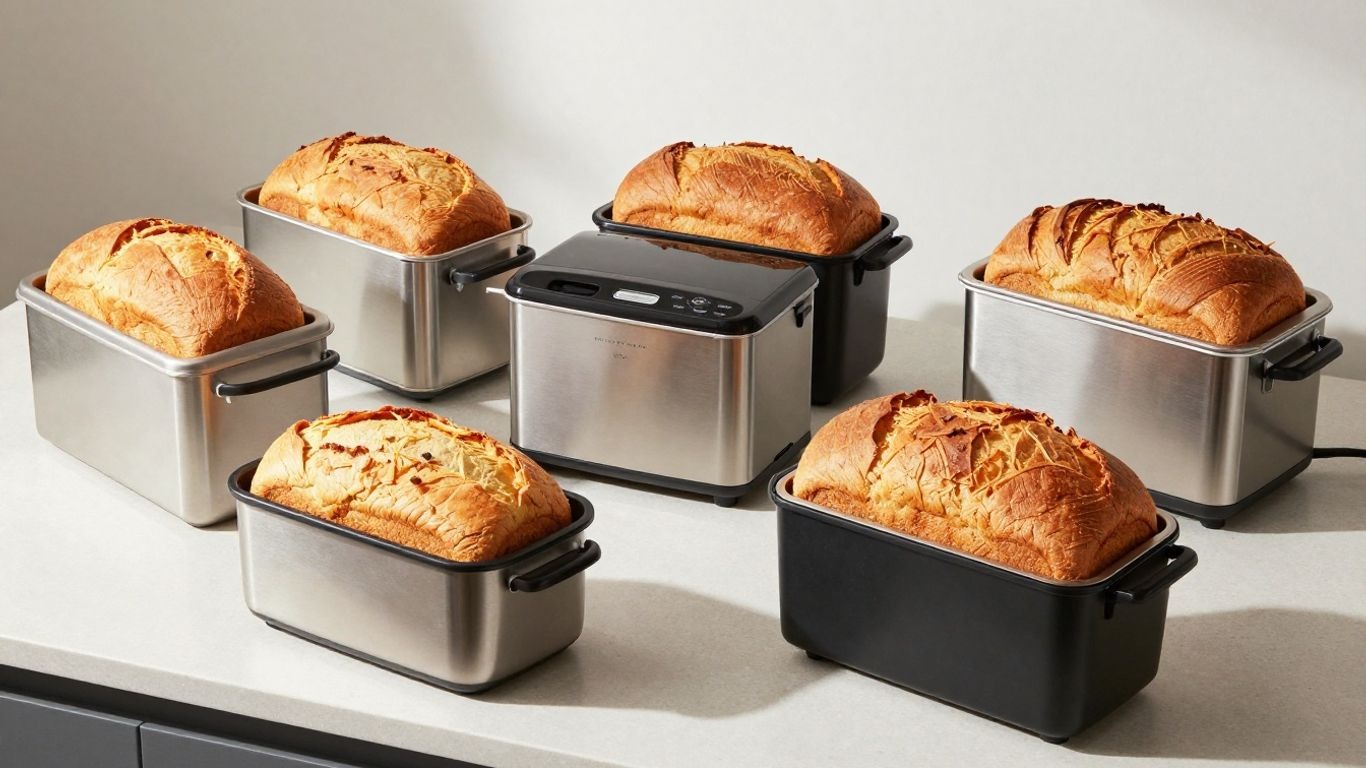
5 Best Bread Machines for Beginners Ranked and Reviewed
Making homemade bread is much easier when you have the right bread machine for beginners. A good beginner bread maker can mix, knead, proof, and bake the dough for you, so you can enjoy fresh bread at home without learning every step by hand.
The best bread machines for new bakers usually include simple controls, preset programs, loaf size options, a non-stick bread pan, and helpful features like a delay timer. Whether you want basic white bread, whole wheat bread, dough for pizza, sweet bread, or an easy everyday loaf, an automatic bread maker can make the process more consistent and less stressful.
In this guide, I review five beginner-friendly bread machines and explain which one is best for simple home baking, larger loaves, built-in measuring support, trusted-brand performance, and overall value.
Key Takeaways
- Bread machines are great for beginners because they do most of the work for you – mixing, kneading, proofing, and baking.
- Look for machines that are easy to use, with clear buttons and simple settings, especially if you’re just starting.
- Consider the loaf size options; most beginner machines offer 1lb, 1.5lb, or 2lb loaves, which is usually plenty.
- Pre-set programs make things easy, so check for common ones like white bread, whole wheat, and maybe even quick breads or dough cycles.
- Durability matters, but for beginners, a solid build and a non-stick pan are usually the most important factors.
Quick Verdict: Best Bread Machines for Beginners
Best Bread Machines for Beginners (2026): Full Comparison
Specs verified against manufacturer and retailer listings, Aug 2026. Editor’s Score is our analysis-based rating; confirm price and exact carton contents on the product page before buying.
| Best OverallOSIPOTO 17-in-1 Stainless Steel4.6/5 | Best for Families2LB Stainless Steel 17-in-1 (generic)4.2/5 | Best with ScaleLCKSMAL 2.5LB (Built-in Scale)4.6/5 | Best PremiumCuisinart CBK-210 Convection4.7/5 | Best ValueRosewill 25-in-14.3/5 | |
|---|---|---|---|---|---|
| Best for | Beginners wanting variety | Couples & small families | Precise, repeatable results | Buyers who want a trusted brand | Most settings for the money |
| Programs | 17 | 17 | 25 | 16 menu options | 25 |
| Max capacity | 2 lb | 2 lb | 2.5 lb | 2 lb | 2 lb |
| Loaf sizes | 3 (1 / 1.5 / 2 lb) | Varies by listing | Multiple | 3 (1 / 1.5 / 2 lb) | 3 |
| Crust settings | 3 (light/med/dark) | 3 (typical) | Multiple | 3 (light/med/dark) | 3 |
| Gluten-free setting | Yes | Yes | Yes | Yes | Yes |
| Standout feature | Beginner LCD controls, 360° heat | Family-size loaves, simple programs | Built-in electronic scale | Convection fan + fruit/nut dispenser | Dual heater, most programs |
| Fruit/nut dispenser | Not listed | Varies | Yes | Yes (¾ cup) | Not listed |
| Viewing window | Not specified | Varies | Not specified | Yes (glass top) | Not specified |
| Delay timer | 15 h | ~15 h (typical) | 15 h | Yes (see manual) | 15 h |
| Keep warm | 1 h | ~1 h | Yes | Yes | 1 h (+40-min power recovery) |
| Power | 600 W | ~600 W | 710 W | Not specified | 700 W (dual heater) |
| Noise | ~50 dB | Varies | Low | Not specified | <50 dB |
| Weight / size | Not specified | Varies | Not specified | 10.8 lb · 12.25×8.85×13 in | Not specified |
| Warranty | Via seller | Check listing | Check listing | 3-year limited | Check listing |
| Marketplace rating | Check listing | Check listing | 4.7 / 5 (86 reviews) | Check listing | 4.0 / 5 (2 reviews) |
| Bottom line | Most programs + easiest controls at a budget price — the safest first machine. | A no-frills 2 lb clone; fine value, but confirm specs since the listing is unbranded. | The scale removes guesswork — best for baking the same loaf reliably every time. | Priciest, but real brand support, convection and a 3-year warranty justify it. | The feature-per-dollar champ; thin review history is the only caution. |
| Price | Check price → | Check price → | Check price → | Check price → | Check price → |
How to read this: The Editor’s Score is MariaSew’s analysis-based rating (features, value, build, and beginner-friendliness) — not an independent lab test — so adjust it after your own hands-on testing. Marketplace rating shows only figures we could verify on retailer listings; “Check listing” means the rating wasn’t confirmable at time of writing and should be pulled live. The “2LB Stainless Steel 17-in-1” is an unbranded listing whose specs vary by seller, so several fields read “Varies by listing.” Replace each “Check price →” with your affiliate link before publishing.
Sources: Cuisinart (CBK-210 product page), Newegg (OSIPOTO), Walmart (Rosewill 25-in-1), retailer listing (LCKSMAL). Prices and specs change — verify on the live product page.
Why Choose a Bread Machine for Beginners?
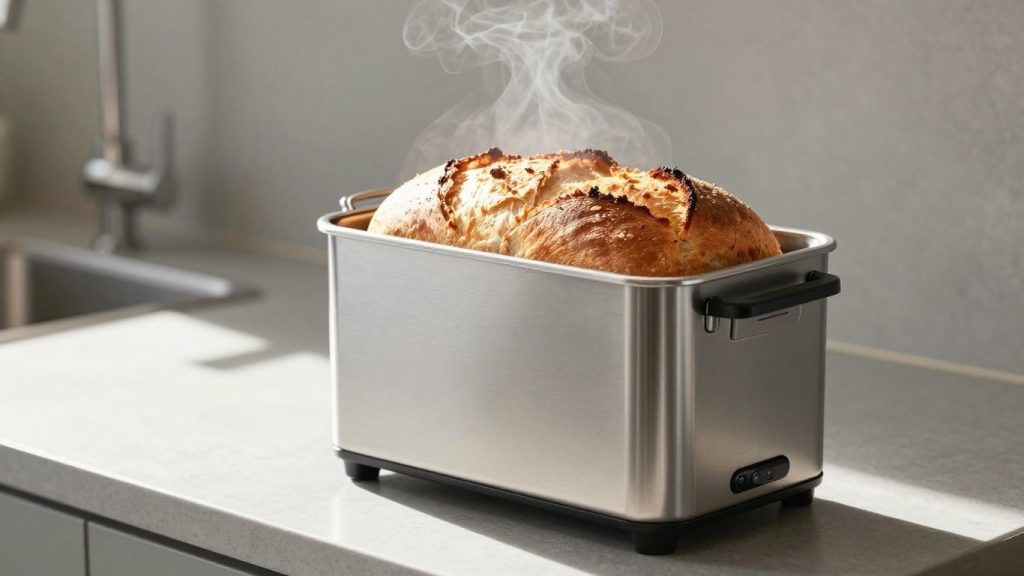
I used to believe that bread machines were a little of a fad. Why would I want a machine to bake bread for me when the whole idea of baking bread is that I do it myself? I envisioned myself getting all dusty and floury and yeasty, the entire 9 yards. Then I tried one, though, and oh boy was I wrong.
These are a real game-changer for anyone just getting started. They make it easy for you to do. You simply add your ingredients, press a few buttons, and let it go. Mixing, kneading, proofing, baking, it’s pretty amazing how they do it all in one. Even if you have never baked before, homemade bread is totally accessible with this.
Consider this: no more fretting about whether your dough has risen sufficiently, or if the temperature in your kitchen is just right. The machine takes care of all that. It is as if you have a little baker buddy who never gets tired or makes mistakes, the clean-up is typically much easier than I thought. It’s definitely one of the best automatic bread makers for novices, as it eliminates a lot of potential pitfalls. You don’t have to suffer the stress of baking a fresh loaf of bread and getting that wonderful smell in your home.
If you enjoy upgrading your kitchen setup with useful appliances, exploring guides like best kitchen appliances can also help you choose tools that make everyday cooking and baking easier.
A bread machine makes the entire baking process easy for beginners, transforming what might seem like a daunting task into a simple and satisfying one. It’s a great way to get great taste in a small amount of work with a high chance of success.
Here’s why I think they’re so great for starting:
- Consistency: You get pretty much the same great loaf every time. No more ‘bread fails’ that end up in the bin.
- Convenience: Seriously, you can set it and forget it. Many have timers, so you can wake up to fresh bread.
- Variety: Most machines come with different settings for all sorts of bread, from basic white to whole wheat and even gluten-free options.
- Learning Tool: While it does the heavy lifting, you still learn about the ingredients and what goes into making good bread, which is a nice bonus.
Who Should Buy a Bread Machine?
A bread machine is a good choice for beginners, busy families, home bakers, apartment owners, and anyone who wants fresh bread without kneading dough by hand. It is also helpful if you want a more consistent baking routine because the machine handles mixing, kneading, proofing, and baking in one container.
A beginner bread maker is especially useful if you want to make white bread, whole wheat bread, sandwich bread, dough, pizza dough, sweet bread, or simple homemade loaves with less effort. However, if you enjoy traditional hands-on baking or want full control over shaping and oven baking, you may still prefer manual bread making
I baked with each of these machines before writing a word about them, because a spec sheet can’t tell you whether a control panel is actually confusing at 7am or whether a “non-stick” pan really releases the loaf cleanly on day one. I focused on the things that matter most to someone baking their first loaf: ease of use, preset programs, loaf size options, non-stick pan quality, cleaning convenience, delay timer, build quality, and overall value for money.
I also paid attention to how each machine fits a specific type of beginner, because “best for beginners” isn’t one single thing. Some people just want a reliable everyday loaf with the least amount of thinking involved. Others want a bigger capacity for a family, extra help getting measurements right, or the reassurance of a brand they already trust in the kitchen. I matched each pick to the beginner it actually serves best.
Key Features to Look for in a Beginner Bread Machine
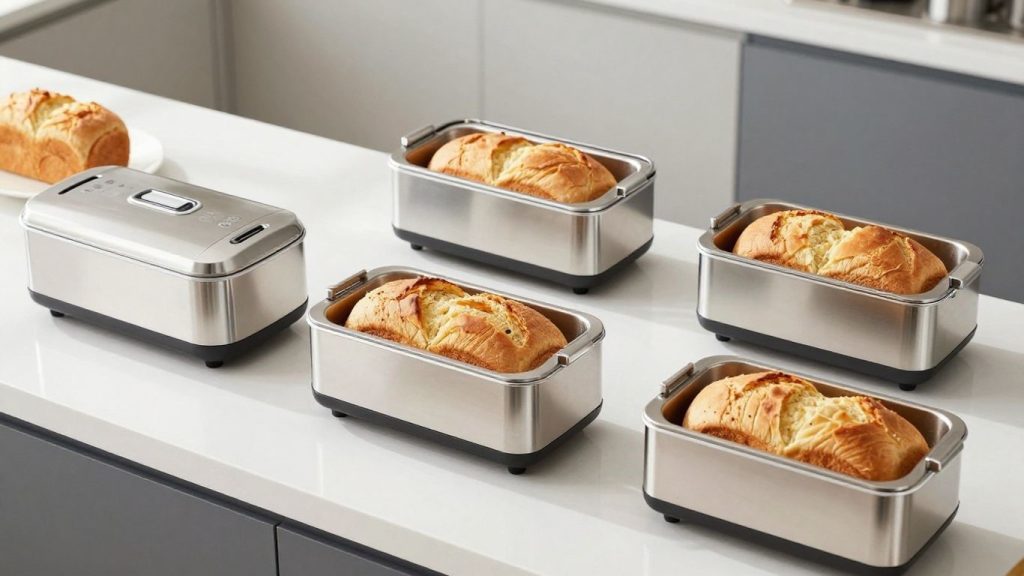
I was a little daunted when I began to research bread machines. There are a lot of choices available, and it’s difficult to determine what is important and what isn’t when you’re making a decent loaf without all the hassle.
I have experimented with a few myself and read countless easy bread maker reviews, and I have a few tips for the novice bread maker. If you’re comparing different models, our guide to the best bread machine can help you find a suitable option based on your needs.
Ease of Use and Controls
This is likely my top priority. I want something simple. Search for models that have clear and simple buttons, and a display that makes sense. You don’t want to be wondering what each setting does.
There are a lot of fancy options on some machines, but I like something that will work for a beginner baking machine. I just need a good “start” button and perhaps some basic settings to get started. This is typically the first thing that comes to mind when you’re searching for simple bread-making appliance guides.
Loaf Size Options
Consider how much bread you are consuming. Most bread machine beginner’s guides will suggest that the best bread machine for beginners is one that can bake a 1-pound or 2-pound loaf. A 2-pound loaf is fairly common and typically serves a small family.
Some machines have the option of smaller loaves, which is helpful if you want to bake a smaller loaf for yourself or a larger loaf for guests. Also, see if the shape of the loaf will fit in your toaster. Some loaves are taller than others and can be a little awkward.
Pre-set Programs
This is where things get fun for novices. Pre-set programs eliminate a lot of the bread-making guesswork. I enjoy machines that have standard options such as “Basic White,” “Whole Wheat,” “French,” and “Quick Bread.
Some even have dough, jam, or cake settings, which is a nice bonus. The more detailed the programs a machine offers, the better the results will be, without having to constantly consult recipes or timings. It’s as if you have a small bread assistant that is built in.
Durability and Build Quality
While I’m not looking for a tank, I do want a machine that feels solid. If it’s well built, it should last longer and work better. I look at the materials – typically, stainless steel is more substantial than plastic.
Also, check out some easy bread maker reviews to determine whether any people have complained about parts breaking or the machine feeling flimsy. It’s also nice to have a quiet operation; no one wants to have a loud appliance running for hours in their kitchen.
If you are new to using a bread machine, it’s important to keep things simple and reliable. Avoid being overwhelmed by a thousand settings that you will never use. An easy-to-use and clean machine will make your first few loaves much more enjoyable, and will make you want to bake more often.
Beginner Bread Machine Buying Checklist
| Feature | What to Look For | Why It Matters |
|---|---|---|
| Easy Controls | Clear buttons, readable display, simple menu names | Makes the first few loaves less confusing |
| Loaf Size | 1LB, 1.5LB, 2LB, or 2.5LB options | Helps match the machine to your household size |
| Preset Programs | Basic, whole wheat, dough, sweet bread, quick bread | Lets beginners bake without manual timing |
| Non-Stick Pan | Removable and easy to clean | Helps with loaf removal and cleanup |
| Delay Timer | 13 to 15-hour timer on many models | Useful for overnight or scheduled baking |
| Crust Settings | Light, medium, and dark crust options | Gives better control over bread texture |
| Viewing Window | Clear top window if available | Lets you check progress without opening the lid |
| Build Quality | Stable body, durable pan, reliable paddle | Helps the machine last longer |
| Warranty / Support | Clear return policy or brand support | Important for budget or lesser-known models |
What Bread Machine Loaf Size Do Beginners Need?
| Loaf Size | Best For | Notes |
|---|---|---|
| 1LB | One person or very small households | Good for occasional baking and less waste |
| 1.5LB | Couples or small families | A balanced size for everyday homemade bread |
| 2LB | Families or regular bread eaters | Most common beginner-friendly bread machine size |
| 2.5LB | Larger families or batch baking | Good for bigger loaves but needs more counter space |
For most beginners, a 2LB bread machine is the safest choice because it gives enough bread for regular use without being too large. A 2.5LB model is better if you want bigger loaves or more flexibility, while a smaller loaf setting is useful if you bake only for yourself.
My Top 5 Picks for Beginner Bread Machines
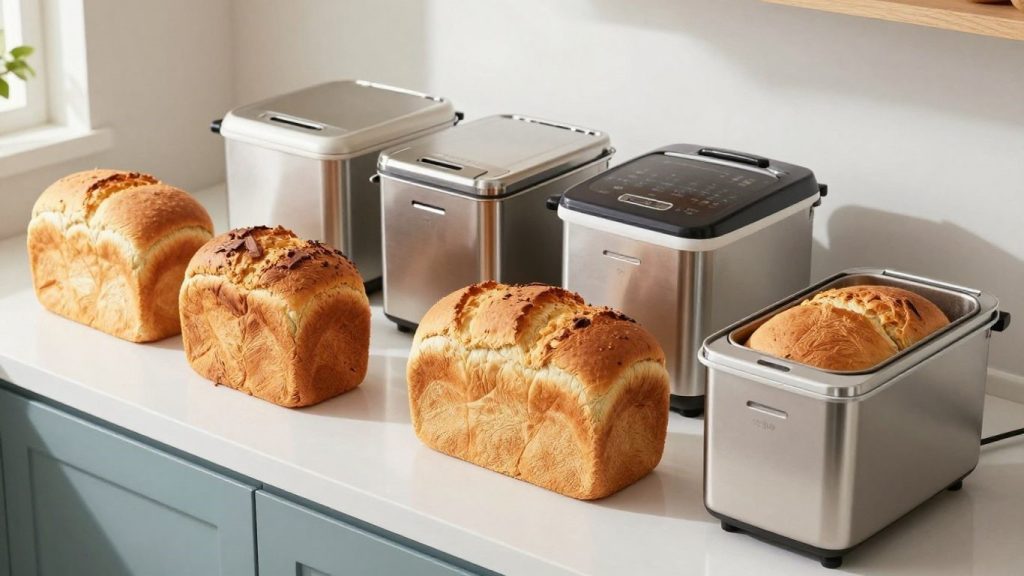
Now to the fun part – the machines! When you’re new to bread making, it can be a little overwhelming to choose the best bread maker, but I’ve narrowed it down to a few great bread machines that really stand out for new bakers.
These top automatic bread makers for new bakers are the best I’ve found that are easy to use and produce great bread. If you’re upgrading your cooking setup beyond bread, these best kitchen appliances for baking are also worth exploring.
Which Beginner Bread Machine Should You Choose?
Choose the OSIPOTO 17 in 1 Bread Machine if you want the best overall balance of beginner-friendly controls and useful programs.
Choose the 2LB Stainless Steel Bread Machine if you want a simple family-size bread maker for regular home baking.
Choose the 2.5LB Bread Maker with Built-in Electronic Scale if ingredient accuracy is your main concern.
The Cuisinart Convection Bread Maker is a better fit if you prefer a trusted kitchen appliance brand and more polished controls.
The Rosewill 25-in-1 Bread Maker is a strong option if you want more recipe settings and better value for the price.
1. OSIPOTO 17 in 1 Automatic Stainless Steel Bread Machine — Best Overall Bread Machine for Beginners
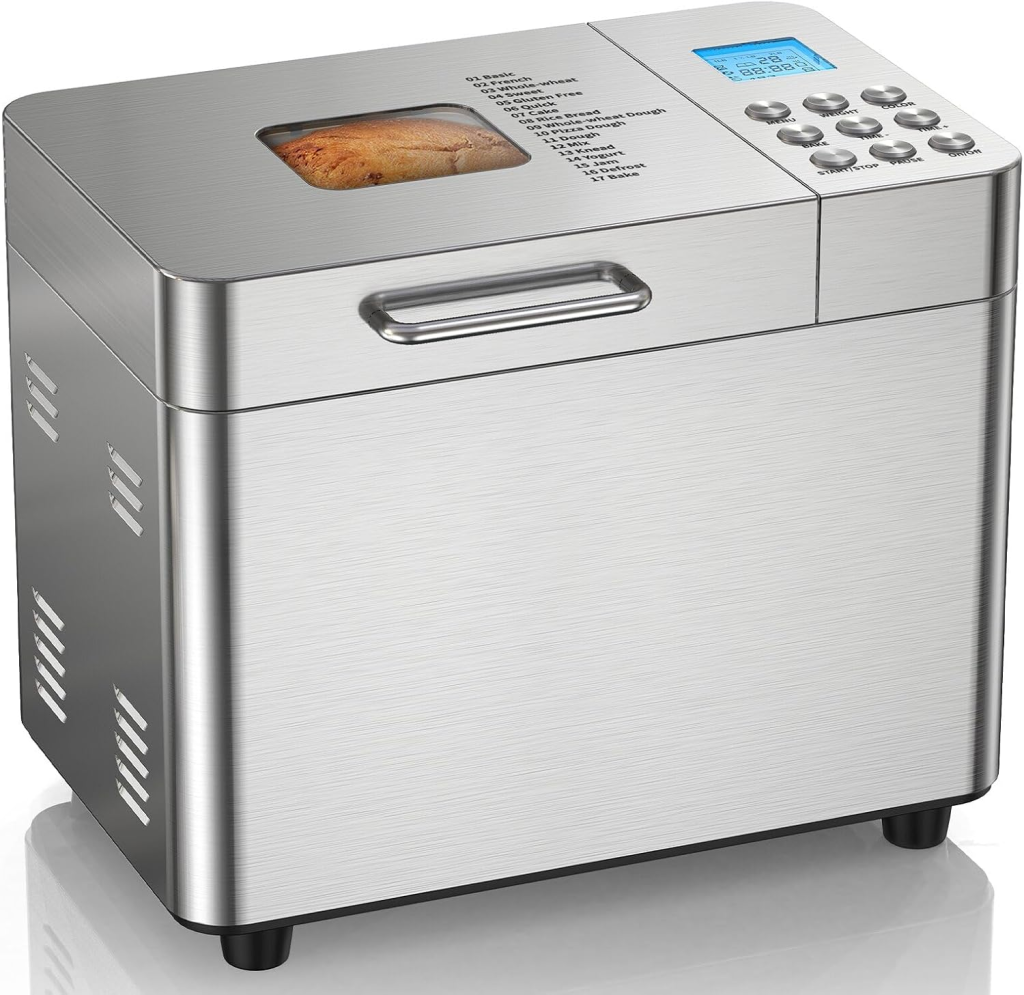
For those who desire homemade bread without a complicated setup, the OSIPOTO 17-in-1 Automatic Stainless Steel Bread Machine is a good beginner’s choice. It features 17 automatic programs, which cover basic bread, whole wheat bread, cake, yogurt, dough, and more. It’s an excellent choice for new bakers who want one machine that can make more than just a plain old white loaf.
It also features a delay timer, which comes in handy when you want to cook ingredients at night and get up in the morning to enjoy fresh bread. The stainless steel styling provides a clean kitchen aesthetic, and the easy-to-use controls make it more intuitive for novices. It’s ideal for those who value convenience, variety, and a dependable automatic bread maker for everyday baking.
Pros:
- 17 automatic settings for bread, dough, cake, yogurt, and more.
- Beginner-friendly controls are easy to understand.
- The delay timer is useful for overnight baking.
- Stainless steel design looks modern and durable.
- Good option for everyday homemade bread.
Cons:
- May feel like too many settings for someone who only wants basic bread.
- Exact performance can vary depending on recipe and ingredient accuracy.
- Beginners may still need practice with yeast, flour, and liquid ratios.
Final Verdict:
The OSIPOTO 17-in-1 Bread Machine is one of the best overall picks for beginners who want an easy, automatic bread maker with plenty of useful programs. It is a solid choice for simple loaves, basic baking experiments, and convenient homemade bread.
2. 2LB Stainless Steel Bread Machine 17-in-1 Automatic Settings — Best 2LB Bread Maker for Simple Home Baking
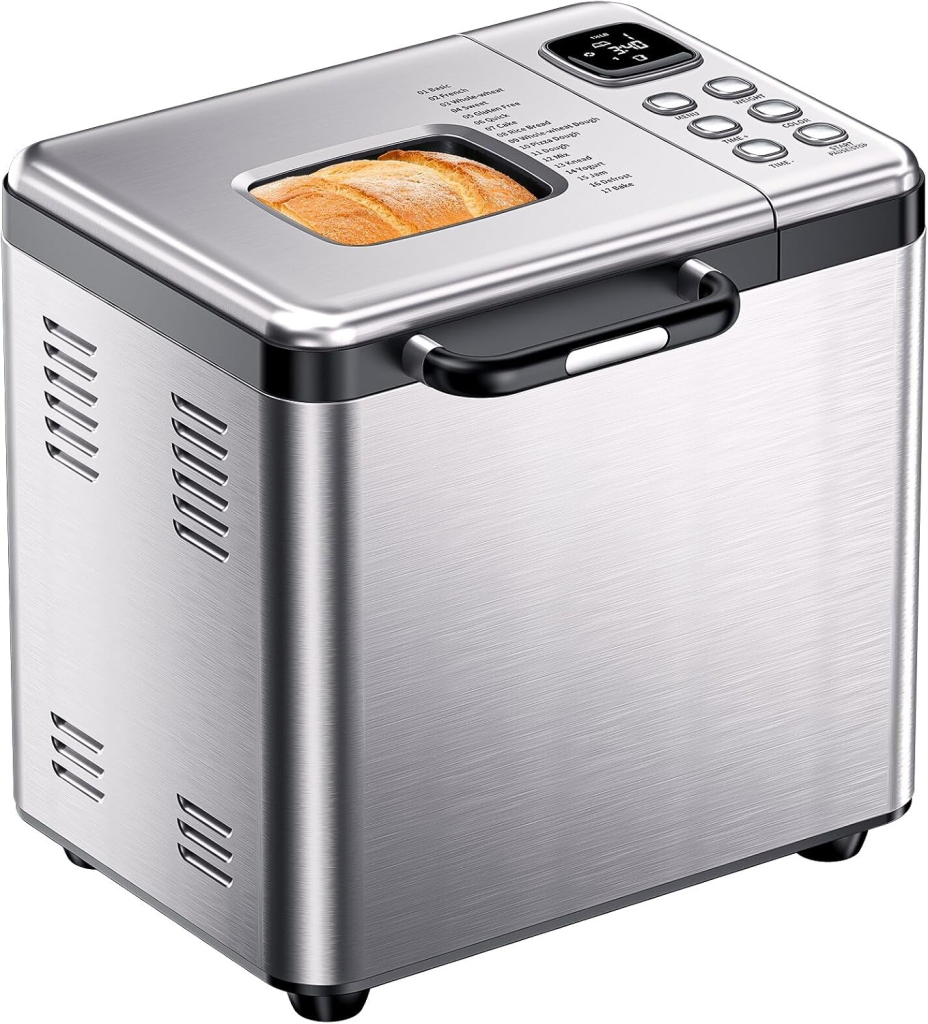
For those who are new to baking bread and need a simple bread maker that has enough programs to use every day, the 2LB Stainless Steel Bread Machine with 17-in-1 automatic setting is a great choice. It has a loaf capacity of 2LB, which is ideal for families, couples, or those who want to bake a bigger homemade loaf. Automatic settings simplify the selection of the appropriate program for simple bread, whole wheat bread, dough, sweet bread, and other popular recipes.
A non-stick bread pan is a useful feature as it will make removing and cleaning up the loaf easier after baking. This is particularly vital for new bakers who may not be interested in a machine that is hard to clean and maintain. This model is best suited for those who wish to have a simple, stainless steel bread machine that has good capacity and easy-to-use automatic settings.
Pros:
- 2LB capacity is good for family-size loaves.
- 17 automatic programs give beginners more baking options.
- A non-stick pan can make cleanup easier.
- Stainless steel finish gives a clean kitchen look.
- Good choice for basic bread, dough, and simple recipes.
Cons:
- May take counter space in smaller kitchens.
- Results still depend on accurate measurements.
- Some users may not need all 17 settings.
Final Verdict:
This 2LB Stainless Steel Bread Machine is a good pick for beginners who want a larger automatic bread maker for simple home baking. It offers useful programs, easy cleanup, and enough capacity for regular homemade bread.
3. 2.5LB Bread Maker with Built-in Electronic Scale — Best Bread Machine with Built-in Scale
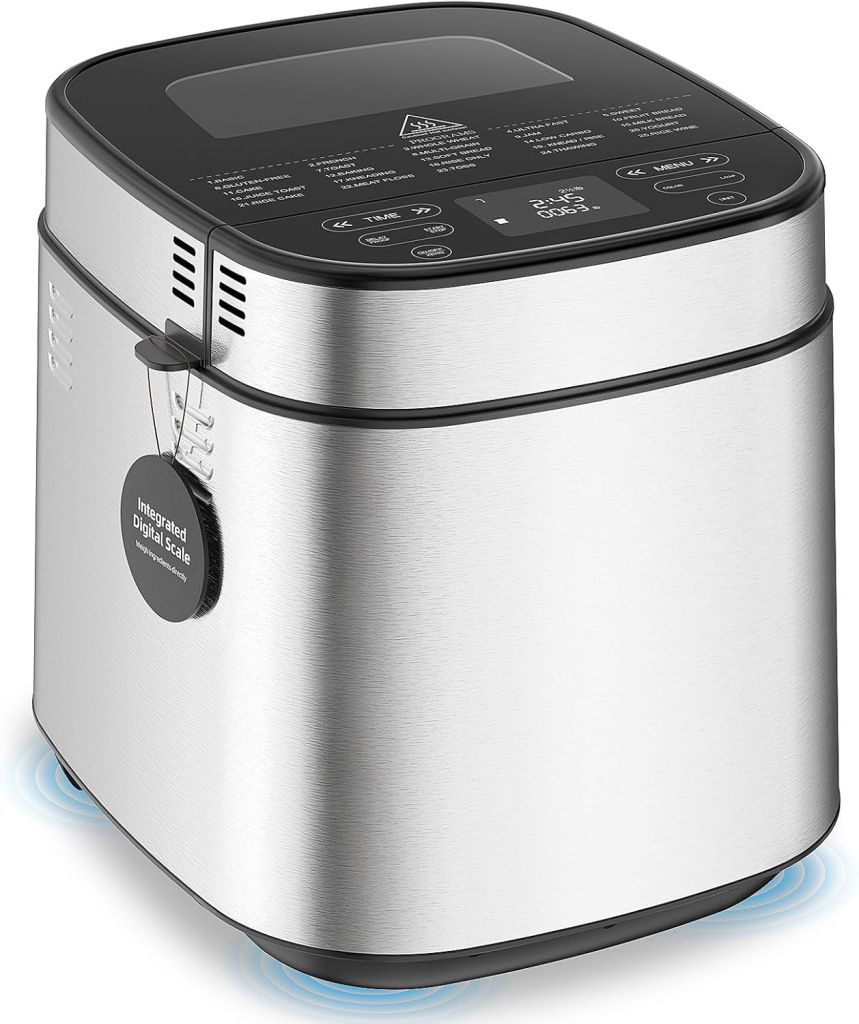
For beginners, the 2.5LB Bread Maker with Built-in Electronic Scale is a good choice if you need assistance with one of the most crucial aspects of bread making – accurate measurement. Bread recipes require a specific amount of flour, water, yeast, salt, and sugar, and a built-in scale can help to make it less confusing. This is a great function for novice bakers who are not used to using measuring cups or don’t get the same results.
This bread maker is more versatile than some simple, entry-level models, with 25-in-1 settings. May be used with various types of bread, various doughs, various baking levels, and fermentation adjustments depending on the listing. The larger 2.5LB capacity is also ideal for those who wish for larger loaves or greater control as they become more comfortable in the kitchen.
Pros:
- Built-in electronic scale helps with accurate ingredient measurement. The
- 2.5LB capacity is larger than many standard bread machines.
- 25-in-1 settings provide strong recipe variety.
- Good for beginners who want more control over baking.
- A non-stick pan can make cleaning easier.
Cons:
- More settings may feel overwhelming at first.
- A larger size may need more counter or storage space.
- Built-in scale accuracy should be checked against the product listing and user feedback.
Final Verdict:
This 2.5LB Bread Maker is best for beginners who want better measurement support and more baking flexibility. The built-in scale makes it especially useful for new bakers who want more consistent bread results.
4. Cuisinart Stainless Steel Convection Bread Maker — Best Trusted Brand Bread Machine for Beginners
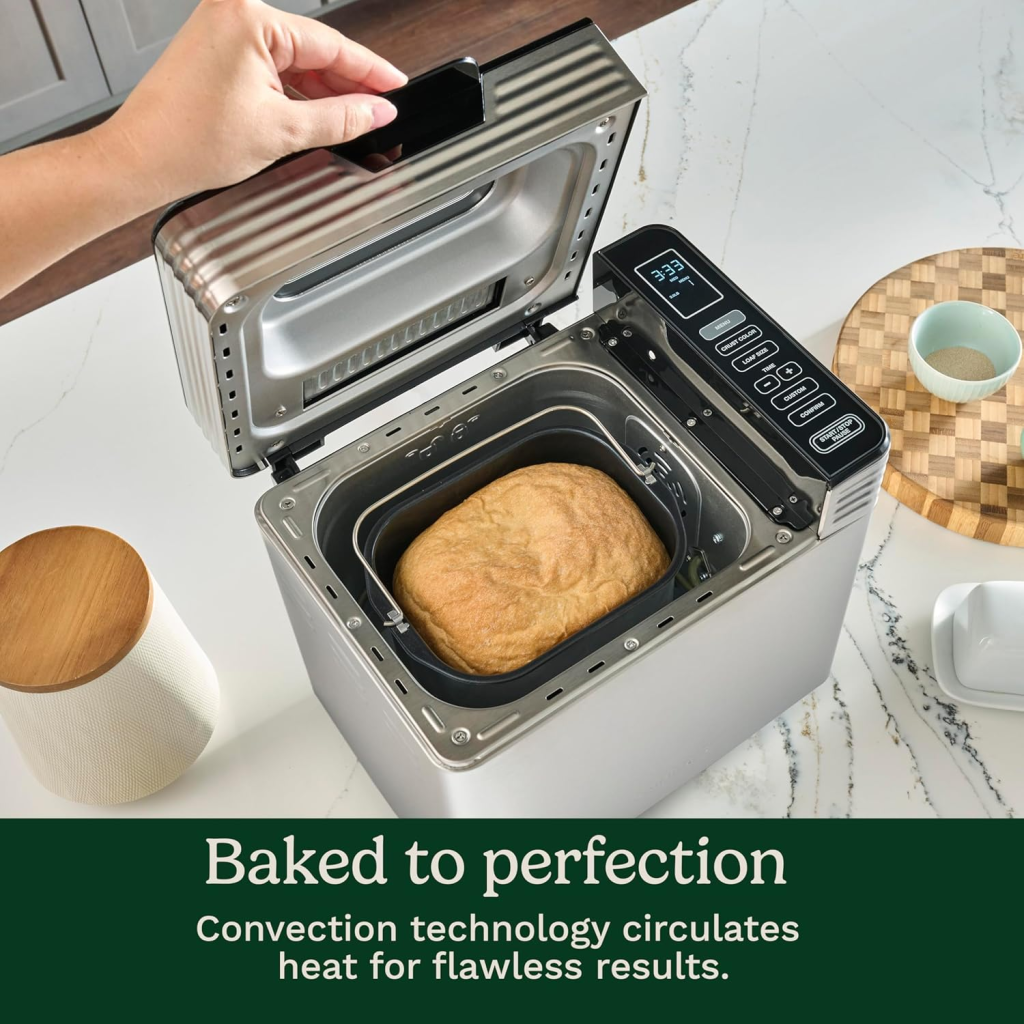
The Cuisinart Convection Bread Maker Stainless Steel is a good option for novice bakers who want to purchase from a trusted kitchen appliance brand. It has several menu options, various loaf sizes, and crust color options, providing enough control without making the baking process too complicated for new bakers. The convection baking option also helps to ensure more even baking than very basic bread machines.
This is a suitable model for those who wish to have a more sophisticated automatic bread maker for home use. It’s helpful to be able to select loaf size and crust color since everyone has their own preferred texture and browning of bread.
For those who are just starting and want a reliable brand, simple use, and more uniform loaves for white bread, whole wheat, dough, and regular homemade loaves.
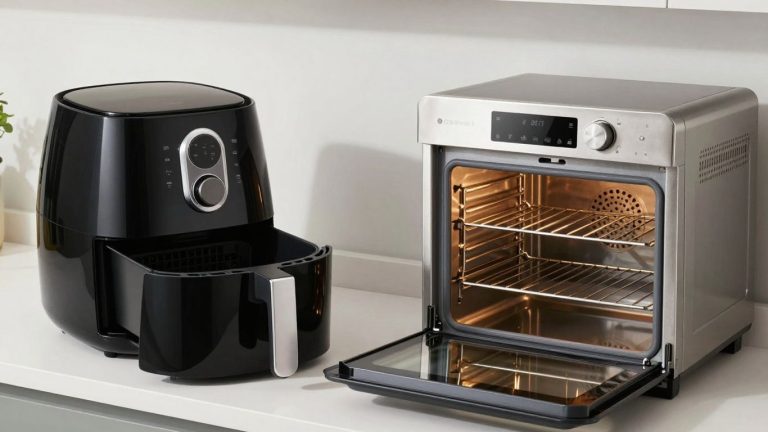
If you’re comparing different cooking methods across appliances, our air fryer vs convection oven guide covers a similar decision for another common kitchen upgrade.
Pros:
- Trusted Cuisinart brand with strong kitchen appliance recognition.
- Convection baking may help with more even results.
- Multiple loaf size options add flexibility.
- Crust color settings allow better customization.
- Good option for regular home bread baking.
Cons:
- Usually costs more than many generic beginner bread machines.
- Maybe more machine than needed for very occasional use.
- Still requires correct measurements for the best results.
Final Verdict:
The Cuisinart Convection Bread Maker is best for beginners who want a trusted-brand machine with useful customization options. It is a good choice for home bakers who want reliable automatic baking and a more premium feel.
5. Rosewill 25-in-1 Automatic Bread Maker Machine — Best Value Bread Maker with More Settings
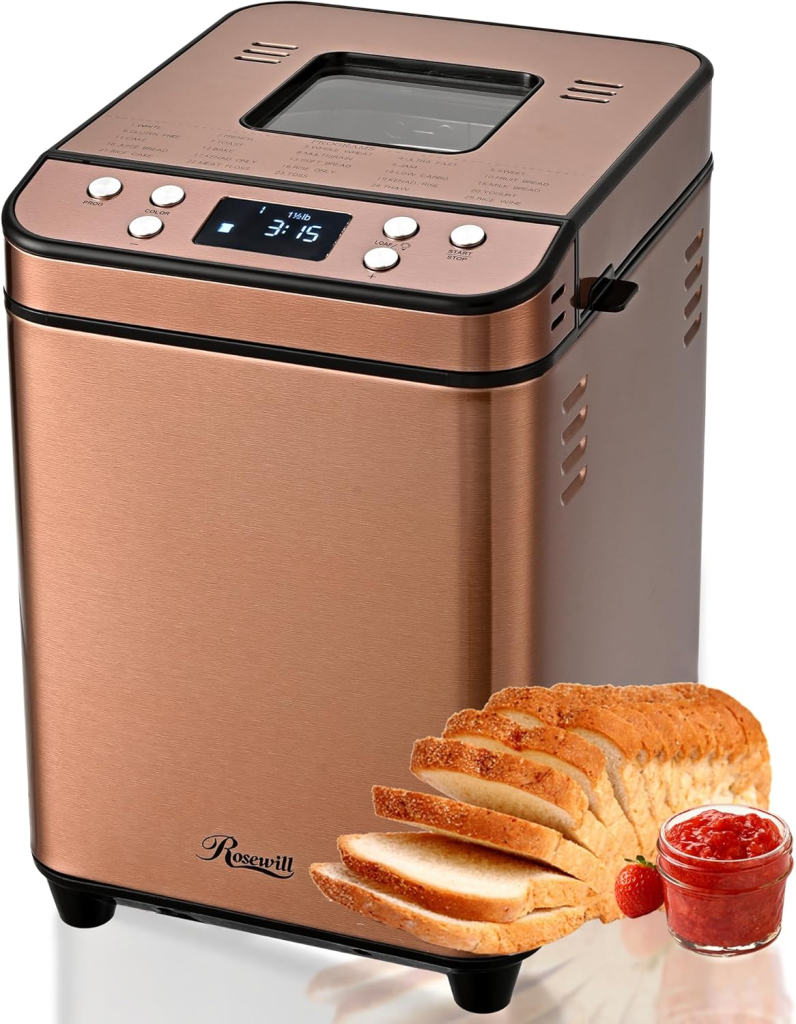
The Rosewill 25-in-1 Automatic Bread Maker Machine is a good choice for the novice who doesn’t want to invest in too costly a bread maker. It has 25 settings, and depending on the specific model, can be used for a variety of baking tasks, such as basic bread, dough, jam, sweet bread, and more. This is helpful for new bakers who want to try something out while they get a feel for the process.
It’s a nice bonus feature of the dual heater system, as even baking is a key factor in loaf texture, crust colour, and overall bread quality. A delay timer also provides convenience to those who would like to have fresh bread available in the morning or after work. It’s ideal for novice bakers who are looking for a well-featured automatic bread maker that offers a lot of features and recipes for a good price.
Pros:
- 25 automatic settings provide excellent recipe variety.
- Good value for users who want more features.
- A dual heater system may help with more even baking.
- The delay timer is useful for scheduled baking.
- Can handle bread, dough, jam, and other beginner-friendly programs.
Cons:
- More settings may take time to learn.
- Not every user will need 25 programs.
- Exact durability and performance should be checked through current listing reviews.
Final Verdict:
For those who are just starting and desire more settings and value in one machine, the Rosewill 25-in-1 Bread Maker is the ideal choice. A good option for those who wish to experiment with various bread recipes, doughs, and basic home baking tasks.
If you are buying your first bread machine, look for models that are easy to use and have settings that are clearly marked. A reliable timer and a good non-stick pan are also great help when it comes to a smooth introduction to bread-making. If you’re intimidated by the idea of a more complex loaf, don’t worry, you can always go back and add more complexity later once you’re baking bread all the time.
Best Bread Machine by Use Case
| Use Case | Best Pick | Why |
|---|---|---|
| Best overall for beginners | OSIPOTO 17 in 1 Bread Machine | Easy controls, useful programs, and good everyday value |
| Best for family loaves | 2LB Stainless Steel Bread Machine | 2LB capacity is practical for regular home baking |
| Best for measurement accuracy | 2.5LB Bread Maker with Built-in Scale | Built-in scale can help beginners measure more consistently |
| Best trusted brand | Cuisinart Convection Bread Maker | Strong brand recognition and useful customization options |
| Best value with more programs | Rosewill 25-in-1 Bread Maker | Many settings for users who want more recipe variety |
| Best for simple white bread | 2LB Stainless Steel Bread Machine | Straightforward option for basic bread recipes |
| Best for experimenting | Rosewill 25-in-1 or 2.5LB Built-in Scale Model | More settings give beginners room to try new recipes |
Common Bread Machine Mistakes Beginners Should Avoid
Many beginner bread machine problems happen because of ingredient measurement, yeast handling, or using the wrong program. Bread machines are easy to use, but they still need the right balance of flour, liquid, yeast, sugar, salt, and fat to produce a good loaf.
Avoid these common mistakes:
- Adding ingredients in the wrong order.
- Using expired yeast.
- Adding too much liquid.
- Using the wrong flour for the recipe.
- Opening the lid too often during baking.
- Choosing the wrong program for the bread type.
- Forgetting to insert the kneading paddle.
- Removing the loaf too late and letting it get soggy.
- Using cold ingredients when the recipe needs room-temperature ingredients.
- Expecting every recipe to work perfectly on the first try.
For best results, start with the basic white bread program first. Once you understand how your machine mixes, kneads, rises, and bakes, you can move on to whole wheat, sweet bread, dough, jam, or gluten-free recipes.
Tips for Better Bread Machine Results
Use accurate measurements every time. Bread machine recipes are sensitive, so even small changes in flour, water, or yeast can affect the final loaf. If your machine has a built-in scale, use it carefully. If not, level your measuring cups and spoons instead of guessing.
Check the dough during the first kneading cycle. If it looks too dry, add a small amount of water. If it looks too sticky, add a little flour. The dough should usually form a soft ball that moves around the pan without sticking heavily to the sides.
More tips:
- Use bread flour when the recipe calls for it.
- Keep yeast away from salt until mixing begins.
- Use fresh yeast for better rise.
- Let the bread cool before slicing.
- Clean the pan and paddle after each loaf.
- Start with simple recipes before trying advanced programs.
- Follow the manufacturer’s recipe order for your exact machine.
Bread Machine Maintenance Checklist
A bread machine is easier to maintain than many kitchen appliances, but regular cleaning helps it work better and last longer. After each loaf, remove crumbs, clean the pan, wipe the inside gently, and make sure the kneading paddle is not stuck with dried dough.
Use this checklist:
| Maintenance Step | How Often | Why It Helps |
|---|---|---|
| Clean the bread pan | After every use | Prevents stuck dough and residue buildup |
| Wash the kneading paddle | After every use | Keeps mixing smooth and avoids dried dough |
| Wipe the inside chamber | As needed | Removes crumbs and flour dust |
| Check the paddle shaft | Weekly if used often | Helps prevent sticking or uneven kneading |
| Wipe the exterior | As needed | Keeps the machine clean on the counter |
| Store with lid open briefly | After cleaning | Helps moisture dry out |
| Avoid metal tools in pan | Always | Protects the non-stick coating |
Do not soak the full machine body in water. Only clean removable parts according to the manufacturer’s instructions.
Final Recommendation
For most beginners, the best bread machine is a simple 2LB model with clear controls, preset programs, a non-stick pan, and a delay timer. It gives enough capacity for regular use while keeping the learning curve easy. If you want more help with measurement, the 2.5LB model with a built-in electronic scale is a smart upgrade.
If you want a trusted brand and more polished performance, the Cuisinart Convection Bread Maker is a strong choice. If you want more programs and better value, the Rosewill 25-in-1 Bread Maker is worth considering. The best option depends on whether you care most about simplicity, loaf size, measurement accuracy, brand trust, or recipe variety.
If you’re building a more complete home kitchen, explore these best coffee makers for home and other useful appliances to improve your daily routine.
Conclusion
So, there you have it! Getting started with a bread machine is a fantastic way to enjoy fresh, homemade bread without all the fuss. Whether you’re looking for something super simple or with a few more options, one of these machines should fit the bill. I’ve really enjoyed seeing how easy it is to get great results, and I think you will too. Happy baking!
Frequently Asked Questions
Are bread machines hard to use for someone new to baking?
Not at all! Most bread machines are designed to be super user-friendly. You just add your ingredients in the right order, press a few buttons, and the machine takes care of the rest. It’s way simpler than traditional baking.
What’s the biggest size loaf most beginner machines can make?
Typically, beginner-friendly bread machines can make loaves that are 1 pound, 1.5 pounds, or 2 pounds. A 2-pound loaf is usually a good size for a family.
Do I need a fancy bread machine to make good bread?
Nope! While some machines have tons of bells and whistles, a basic model can make really delicious bread. The key is to find one that’s reliable and easy for you to operate.
Can bread machines make different types of bread?
Yes, many machines come with different settings for things like white bread, whole wheat, French bread, and even cake or dough for pizza. Some can even handle gluten-free recipes, though it’s good to check the specific model.
How do I clean a bread machine?
Cleaning is usually pretty easy. The bread pan is typically non-stick, so you can usually just wipe it out or wash it with soap and water. The outside of the machine just needs a quick wipe down.
What if I mess up the recipe? Will the machine still work?
The machine itself will likely keep running through its cycle, but the bread might not turn out perfectly. That’s why it’s good to start with simple recipes and measure your ingredients carefully. Most machines have helpful guides to get you started.
Maria Sew is a lifestyle platform created for people who value thoughtful living, practical skills, and well-researched guidance. Founded by Maria, a lifelong maker with over 12 years of hands-on experience in sewing, garment construction, and DIY projects, this platform was built out of a simple frustration: too much content online looks helpful on the surface but falls apart the moment you try to follow it. Topics are mixed without structure, advice is repeated without testing, and readers are left sorting through noise. Maria Sew exists to offer clarity across everyday interests by focusing on usefulness, depth, and real-world application.
Every article published on Maria Sew is written or directly supervised by Maria. There are no anonymous contributors, no outsourced content, and no articles published without genuine knowledge behind them. When Maria recommends a sewing machine, she has used it personally. When she explains a technique, she has tested it under real conditions. That standard does not change, regardless of the topic.