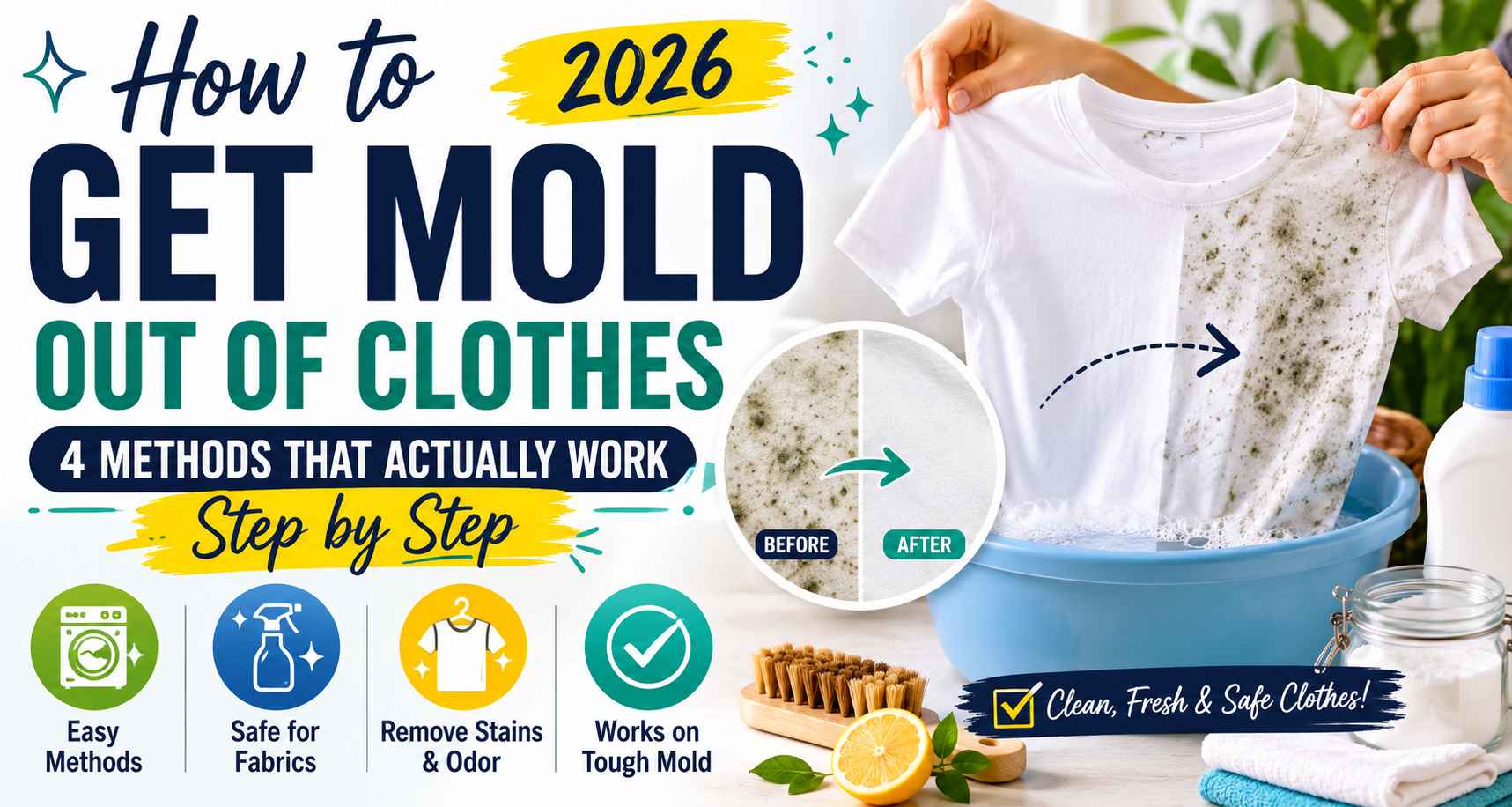
How to Get Mold Out of Clothes 2026: 4 Methods That Actually Work — Step by Step
Mold on clothes is one of the more urgent fabric care problems because it gets worse the longer you leave it, the spores spread to surrounding fabric, and the smell becomes harder to remove.
After 12 years of working with fabric and textile care, I know how different fibres respond to cleaning agents, which makes mold removal less guesswork and more a straightforward process of matching the right method to the fabric type.
Most moldy clothes can be rescued with things already in the kitchen. Here is the exact process for each method, starting with the gentlest and working up to the strongest.
Key Takeaways
- Always start by taking safety precautions like wearing a mask and gloves when dealing with moldy clothes.
- Gently brush off loose mold spores outdoors before washing to avoid spreading them.
- Vinegar and baking soda are effective natural cleaners for removing mold and odors from most fabrics.
- For tougher mold, consider using Borax or, with caution, bleach on white or colorfast items.
- Thoroughly drying clothes, preferably in sunlight, is crucial to prevent mold from returning.
Understanding Mold on Clothes: Why It Happens and Why It’s a Problem
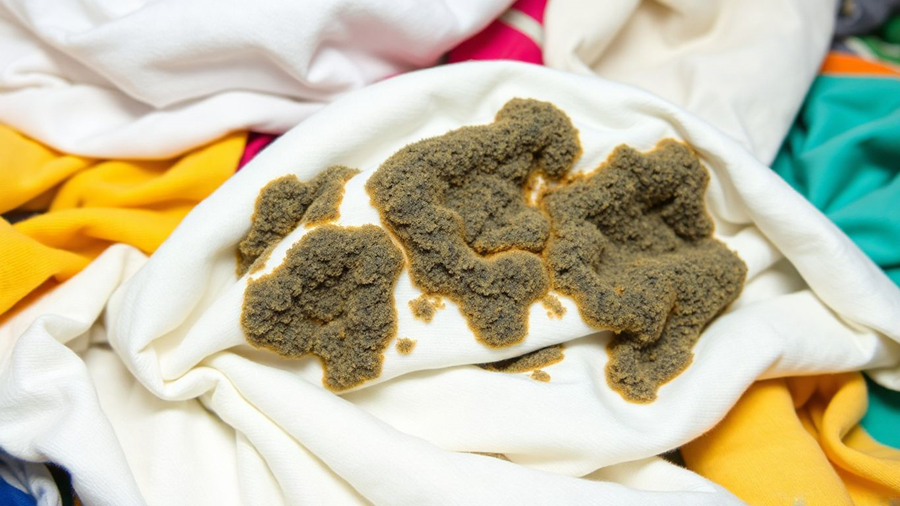
I’m going to explain to you something that many people don’t know until it happens to them: Mold in clothes isn’t just about the smell. Mold is a sign of excess moisture. Perhaps you left some damp towels in a pile after the gym or left a shirt in the washing machine on the overnight setting.
Mold can grow in high humidity, inadequate air movement, or even when you put away slightly moist laundry. Believe it or not, this is actually more prevalent than you’d expect!
Not only is mold unsightly on fabric, but it can also pose a health risk and a problem for your clothing. As I’ve observed, what happens is:
- Some mold species trigger allergic reactions—sneezing, rashes, and itchy eyes are all possible.
- Folks with asthma or weak immune systems are especially vulnerable.
- The smell of mold is stubborn and almost impossible to ignore.
- Mold actually eats away at natural fibers over time, ruining favorite shirts and pants.
Safe mold removal clothing isn’t always as simple as having everything put in the laundry. Mouldy clothing can even contaminate clean clothing in your closet! Therefore, before you start to get worried about clothes that have been stained with mold, it is important to know the root cause and the importance of acting fast to remove the mold.
It doesn’t take more than one wet object left on the bottom of the hamper to become a bigger issue than you anticipate. The secret of mold is that it gets sneaky – address it promptly!
If you’re storing seasonal fabrics, blankets, or handmade items, proper fabric care becomes even more important. You can also learn more about cleaning delicate materials in our guide on how to wash a wool blanket.
Safety First: Precautions Before You Start
Before I even consider toying with that fuzzy green gunk on my favourite shirt, I need to be sure that I won’t end up getting sick. Mold is not only gross, but it can also produce some pretty nasty health issues if you’re not careful. A lesson learnt the hard way, and I always take a few minutes to prepare.
Protecting Yourself from Mold Spores
My first step is always to gear up. It might feel a bit overkill, but trust me, it’s worth it. I grab:
- A mask: An N-95 respirator is best, but even a good-quality dust mask helps keep those tiny mold spores out of my lungs. Breathing in mold is definitely not on my to-do list.
- Gloves: Rubber or nitrile gloves protect my skin from direct contact with the mold and any cleaning solutions I’ll be using.
- Eye protection: Old safety glasses or goggles stop spores from getting into my eyes.
- Old clothes: I wear something I don’t care about because mold spores can transfer easily, and I’ll want to wash these clothes separately in hot water right after I’m done.
I also make sure I’m working in a place with good airflow. If it’s nice out, I’ll take the moldy items outside to deal with them. If I have to work inside, I open up windows and maybe even turn on a fan to keep the air moving away from me.
Handling moldy items requires a bit of caution. It’s easy to spread spores around if you’re not careful, so think about where you’re working and how you’re moving the clothes.
Testing Fabrics for Colorfastness
This is a big one, especially if I’m planning to use stronger cleaning agents like vinegar or borax. I don’t want to end up with a clean shirt that’s also lost all its color, right? So, here’s what I do:
- Find an inconspicuous spot: This is usually an inside seam, the hem, or a small area on the inside of a pocket.
- Apply a small amount of the cleaning solution: I use a cotton swab or a clean white cloth dipped in the cleaner I plan to use (like vinegar or a baking soda paste).
- Blot and wait: I gently blot the area and then let it sit for a few minutes, just like I would on the main part of the garment.
- Check for color transfer: After waiting, I check the swab or cloth. If any color has come off onto it, the fabric isn’t colorfast, and I need to be extra careful or maybe even skip that particular cleaning method.
This little test saves me a lot of heartache later. It’s a quick step that makes a big difference in protecting my clothes.
Method 1: Using Vinegar for Mold Removal
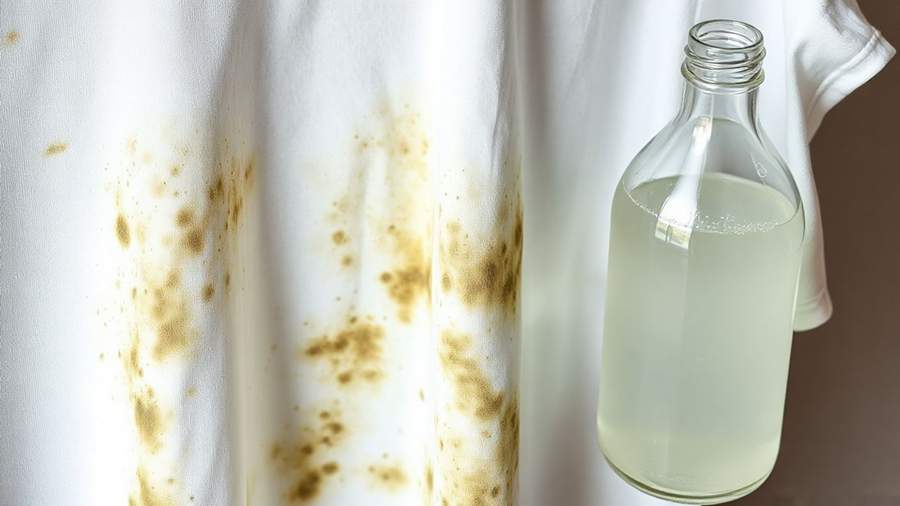
Well, you’ve discovered a couple of greenish or blackish patches on your garments. Don’t panic! Using vinegar is an unexpected solution to this. I have used it on my own fabric, and it works to remove mildew without being too rough on the fabric.
Step-by-Step Vinegar Wash
First things first, you’ll want to get rid of any loose mold spores before you start washing. Take the affected clothing outside if you can. This is important to avoid spreading the mold spores inside your home. Use a soft brush to gently sweep away any visible mold. Think of it like dusting, but for mold.
Once you’ve brushed off the loose stuff, it’s time for the vinegar soak. Here’s what I do:
- Prepare the soak: Mix one cup of white vinegar with a gallon of water in a bucket or your sink. Use hot water for cotton and synthetic fabrics that can handle heat — check the care label first. For delicate fabrics, including wool, silk, or anything labelled cold wash only, use lukewarm water instead.
- Soak the clothes: Submerge the moldy items in the vinegar-water solution. Let them soak for at least an hour. For really stubborn spots, you might want to soak them for longer, even overnight.
- Wash as usual: After soaking, wring out the clothes and toss them into your washing machine. Add your regular laundry detergent, and then add another cup or two of white vinegar directly into the drum with the clothes. Use the hottest water setting that’s safe for the fabric, according to the care label.
- Extra rinse: Once the wash cycle is done, I like to run an extra rinse cycle. This helps make sure all the vinegar and any remaining mold residue are completely washed away.
Vinegar is a natural acid that hinders the growth and spread of mold. Good substitute for strong chemicals to clean up mould on fabric.
Once you’ve washed them, it’s extremely crucial to dry your clothes properly. If possible, air dry in the sun – the sun will also kill mold. If you need to use a dryer, be sure to remove all moisture from the clothes before storing them.
Method 2: Harnessing the Power of Baking Soda
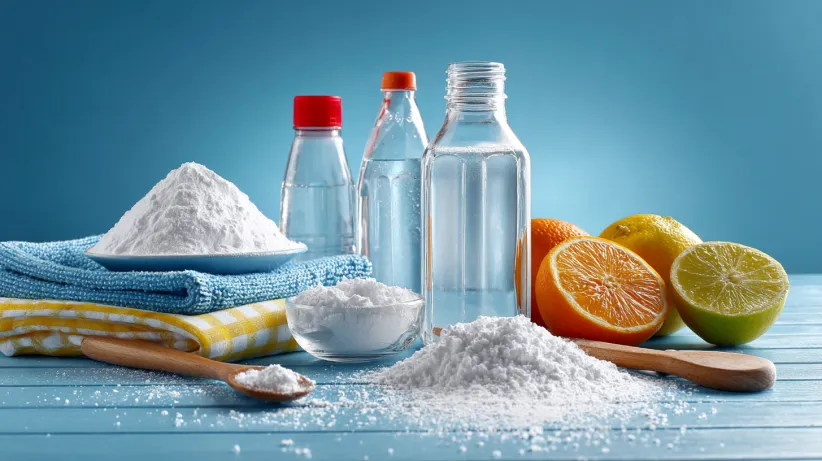
Okay, so vinegar is awesome, but sometimes you need to have another trick up your sleeve. Another of those household heroes that can be extremely helpful to eliminate moldy clothes is baking soda. Not only for baking, you know! Natural deodorant and mild abrasive, very helpful for lifting stains and odours.
How to Use Baking Soda Paste and Wash
As to the visible mould, the first thing I do is to remove as much as I can, before I even consider washing. So I will take the clothes outside – I don’t do a lot of this in my living room – you don’t want mold spores floating around your living room. Then, I take a soft brush, such as an old toothbrush or something like that, and I rub away the mould if it’s dry and powdery. Simply brush it away, without spreading around too much.
Now, for the cleaning part. You have a couple of options here, depending on how bad the mold is.
- For light mold or just that musty smell: I like to make a paste. Just mix some baking soda with a little bit of water until it forms a thick paste. You don’t want it too runny. Then, I apply this paste directly onto the moldy spots or stains. Let it sit there for a good hour or two. This gives the baking soda time to work its magic.
- For tougher spots or a stronger clean, you can also just add about half a cup of baking soda directly into your washing machine drum along with your regular detergent. This is especially good if the mold isn’t super obvious, but the smell is definitely there.
Once the wash has been amended with the paste or baking soda, it’s time to wash the clothes. Typically, I wash them on the hottest temperature that I can get the fabric to withstand. Read those care labels! Hot water is essential in destroying mold. If you used the paste, gently scrub with your brush before discarding it into the wash.
After the wash cycle is done, I don’t just throw the clothes in the dryer. I always air-dry them, preferably in the sun, as this kills off any mold and gets rid of the smell. If they still smell slightly bad or appear as if there is still some mold, I may repeat the process (or use another method).
So, to recap the washing part:
- Brush off loose mold outdoors.
- Apply baking soda paste to stains and let it sit, OR add baking soda directly to the wash.
- Wash the garment using the hottest water safe for the fabric.
- Air dry the clothes, ideally in direct sunlight.
Method 3: Tackling Stubborn Mold with Borax
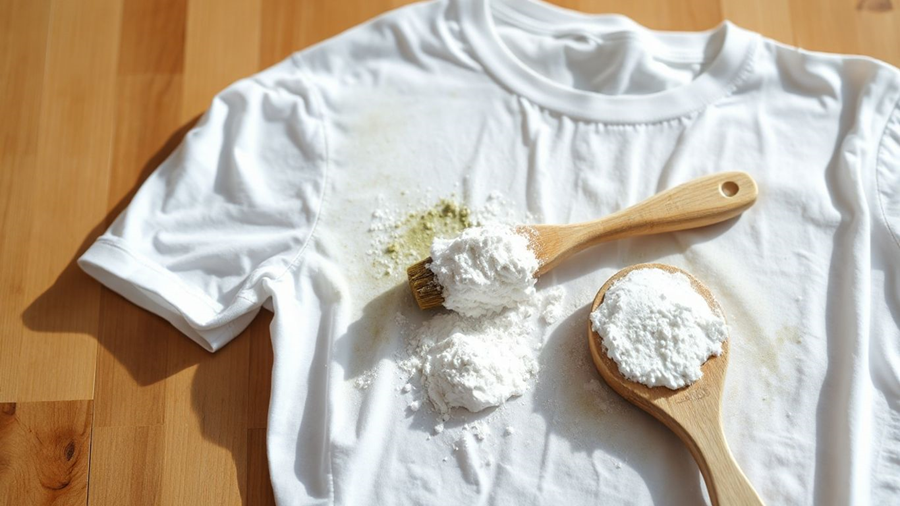
If vinegar and baking soda don’t seem to be working, I resort to borax. A natural mineral substance that is rather effective against mold and mildew. When fabric mold stains are a little stubborn, I find it’s one of the best ways to get rid of them.
Borax Pre-Soak and Laundry Cycle
Before I even get the clothes into the washing machine, I like to give them a good soak. This helps the borax really get to work on those tough mold spots. Here’s how I do it:
- Prepare the Borax Solution: I usually mix about half a cup of borax powder with two cups of hot water. Stir it really well until all the powder dissolves. It’s important to use hot water here to help it dissolve properly.
- Soak the Clothes: I’ll take a bucket or a sink and pour the borax solution in, then add enough cool water to fully submerge the moldy items. I let them soak for at least 8 hours, or even overnight if the mold is really bad. Sometimes I’ll give them a little stir now and then to make sure the solution gets everywhere.
- Wash as Usual: After the soak, I wring out the clothes and toss them directly into the washing machine. I add my regular laundry detergent and then add the borax solution I used for soaking (or a bit more if needed) directly into the drum. I wash them on the hottest water setting that’s safe for the fabric, according to the care label.
- Extra Rinse: Once the cycle is done, I always run an extra rinse cycle. This helps make sure all the borax and any loosened mold residue are completely washed away.
Borax is a fantastic natural cleaner, but it’s always a good idea to test it on an inconspicuous area of the fabric first, especially if you’re dealing with colored items. This way, you can be sure it won’t affect the color.
After washing, I hang the clothes to dry, preferably in the sun. The sun’s UV rays are another great way to help kill any lingering mold spores and get rid of any musty smells.
What About Bleach? When and How to Use It (With Caution)
I’ll admit it, bleach is a great solution for really bad mold stains, but not a solution I would turn to first. Bleach is a powerful product, and you should know when it is safe to use and when it’s best kept on the shelf.
Bleach may work best on a white, tough piece of clothing. However, with coloured fabric or something fragile, it’s pretty much a dead risk unless the care label states “colorfast.
Here’s how I approach bleach safely:
- Always check the care label to make sure bleach is OK—for anything questionable, just don’t risk it.
- Put on gloves and crack a window or work outside. Bleach smells, and those fumes aren’t good.
- Mix about 1/3 cup of bleach for a regular-size load with the hottest water your fabric can handle.
- Let clothes soak for at least five minutes (but don’t walk away forever).
- Wash as usual with your regular detergent.
If you’re unsure about fading, always test a hidden spot of the fabric. Old stains sometimes need a second round, but don’t overdo it; bleach can weaken fibers with repeated use.
Here’s a quick look at when to use bleach:
| Fabric Type | Bleach Safe? | Recommended Use |
|---|---|---|
| White cotton | ✓ Yes | Mold, heavy stains |
| Colorfast fabric | ⚠ Maybe (patch test) | Spot cleaning only |
| Delicate / Silk / Wool | ✕ No | Never |
| Synthetic colors | ⚠ Rarely (patch test) | Only if labeled safe |
Bleach is great for white sheets or towels that just won’t lose that mold spot or smell. For everything else, I stick with milder methods, because once color is gone, it’s not coming back.
For delicate fabrics, handmade garments, or anything made from natural fibres like wool or linen, always choose the mildest method first — vinegar or baking soda — before considering borax or bleach. Harsh chemicals can permanently damage natural fibres even when the care label does not specifically warn against them.
Drying Your Clothes Properly to Prevent Mold Recurrence

Sounds like you’ve finished all the work to get rid of the mildew on your laundry and are now itching to get those clothes dry. This is an extremely crucial step, truly. If you don’t dry them completely, then you’re basically letting mold come back for a repeat visit. I’ve been there, done that — you put damp towels in a pile and then come back to discover fuzzy green spots. Not fun.
The absolute best option for drying your clothes after washing them, after they have gotten moldy, is to hang them outside in the sun. If you can, avoid direct and strong sunlight, since that may impair the appearance of your favorite shirts. The sun is a good source to destroy any mold spores that escaped and to make clothes smell fresh.
If being outside is not an option, use your dryer on a setting that will ensure they are completely dry, but not damage the fabric. Consider it, moisture is the friend of mold; get rid of all that moisture.
Here’s what I do to make sure I’m getting mold out of laundry for good:
- Visual Check: Before anything else, I look over the garments. Are there any spots left? I check seams and folds carefully.
- Smell Test: Even if it looks clean, I give it a good sniff. That musty odor is a dead giveaway that some mold might still be hanging around.
- Full Dryness: I make sure everything feels completely dry to the touch. No damp spots anywhere.
Once clothes are fully dry, a warm press with a steam iron finishes the job — the iron’s heat provides a final pass over any residual moisture in the fibres. Our best clothing irons guide covers which models handle cotton, linen, and delicates safely.
Use moisture absorbers when storing clothes, particularly if stored in a damp place such as a basement or a less ventilated closet. It’s the little packets of silica gel that can make a difference in keeping clothes mold-free. In addition, don’t pack your dressers, closets, and drawers to the brim; let clothes breathe.
Mold can be prevented by proper air circulation. And of course, don’t neglect to clean your washing machine as well – that’s another battle with mold, but it’s worth it to get dirty laundry clean.
How to Prevent Mold on Clothes — Stop It Coming Back
Mold needs three things to grow, moisture, warmth, and organic material to feed on. Removing any one of those three stops it forming.
Never put damp clothes away. This is the single most common cause. Clothes that feel almost dry but have retained moisture in thicker seams or waistbands will develop mold within 24 to 48 hours in a closed wardrobe or drawer.
Do not leave wet laundry in the washing machine. Clothes sitting in a finished wash cycle for more than two hours in a closed drum create ideal mold conditions, warm, damp, and airless.
Wash gym clothes and towels promptly. Moisture-heavy items left in a bag or hamper are the most common starting point for a mold problem that spreads to surrounding items.
Store clothes in breathable containers. Plastic bags and vacuum seal bags trap residual moisture. Cotton storage bags allow air circulation that keeps moisture levels too low for mold growth.
Vacuum Cleaner Guide: Our guide covers the best options for home cleaning including attachments that reach into corners and storage spaces.
Read the Guide →Use silica gel packets in drawers and storage boxes. These absorb ambient moisture and are particularly useful in basements, under-bed storage, and wardrobes on external walls that can be cool and damp.
Clean your washing machine regularly. A machine drum with mold growth will transfer spores to every load. Run an empty hot cycle with two cups of white vinegar monthly to keep the drum clean.
For homes in humid climates or rooms that retain moisture, basements, bathrooms adjacent to bedrooms, and older properties, an air purifier with a HEPA filter captures airborne mold spores before they settle on fabric. Our best air purifiers guide covers the top-rated options for bedroom use.
So, What’s the Takeaway?
I know how it can be to deal with mold on clothing. I’ve been there and found that fuzzy spot in my favorite shirt after I’ve left it in the laundry basket. However, looking into it, I have found that oftentimes it is not hopeless. Most moldy items can be rescued, be it a soaking in vinegar, a borax scrub, or simply a good old-fashioned sun-drying session.
Remember to protect yourself, always work in a well-ventilated area, and be sure to keep things bone dry before storing them away. We hope these techniques are able to help you feel secure enough to work those hard-to-get-rid-of spots of mold and rejuvenate the freshness of your clothing.
Frequently Asked Questions
How can I tell if my clothes have mold on them?
You’ll usually see fuzzy spots that can be black, green, white, or even orange. Sometimes, mold just makes your clothes smell musty, like old gym socks. If you notice either of these, it’s time to take action!
Is it safe to wash moldy clothes with other clothes?
It’s best not to. Mold spores can spread easily to other items in the wash, making the problem worse. I always separate moldy clothes from the rest of my laundry before I start cleaning.
Can I just throw moldy clothes in the washing machine?
While the washing machine is part of the solution, I wouldn’t just toss them in without any preparation. It’s important to brush off loose spores first and maybe even pre-soak them in a special solution to really kill the mold before the main wash.
How long should I soak moldy clothes?
For most methods, like using vinegar or borax, soaking for about an hour usually does the trick. For really tough mold, I’ve sometimes left them soaking for longer, even overnight, to make sure I get rid of it all.
Why is drying clothes outside in the sun so important?
Sunlight is a natural mold killer! The sun’s rays help zap any remaining mold spores that the washing might have missed. Plus, the fresh air helps get rid of any lingering musty smells. I always try to hang my clothes outside to dry if I can.
What should I do if the mold doesn’t come out after washing?
Try repeating the strongest method appropriate for the fabric, borax for colours, and diluted bleach for white cotton. If, after two rounds of treatment, the stain remains visible or the smell persists, the mold has likely penetrated deep into the fibre structure and broken down the fabric itself. This is most common with natural fibres like cotton and linen, where the mold has been present for weeks rather than days. At this point, the garment is unlikely to recover and continuing to treat it risks further fibre damage.