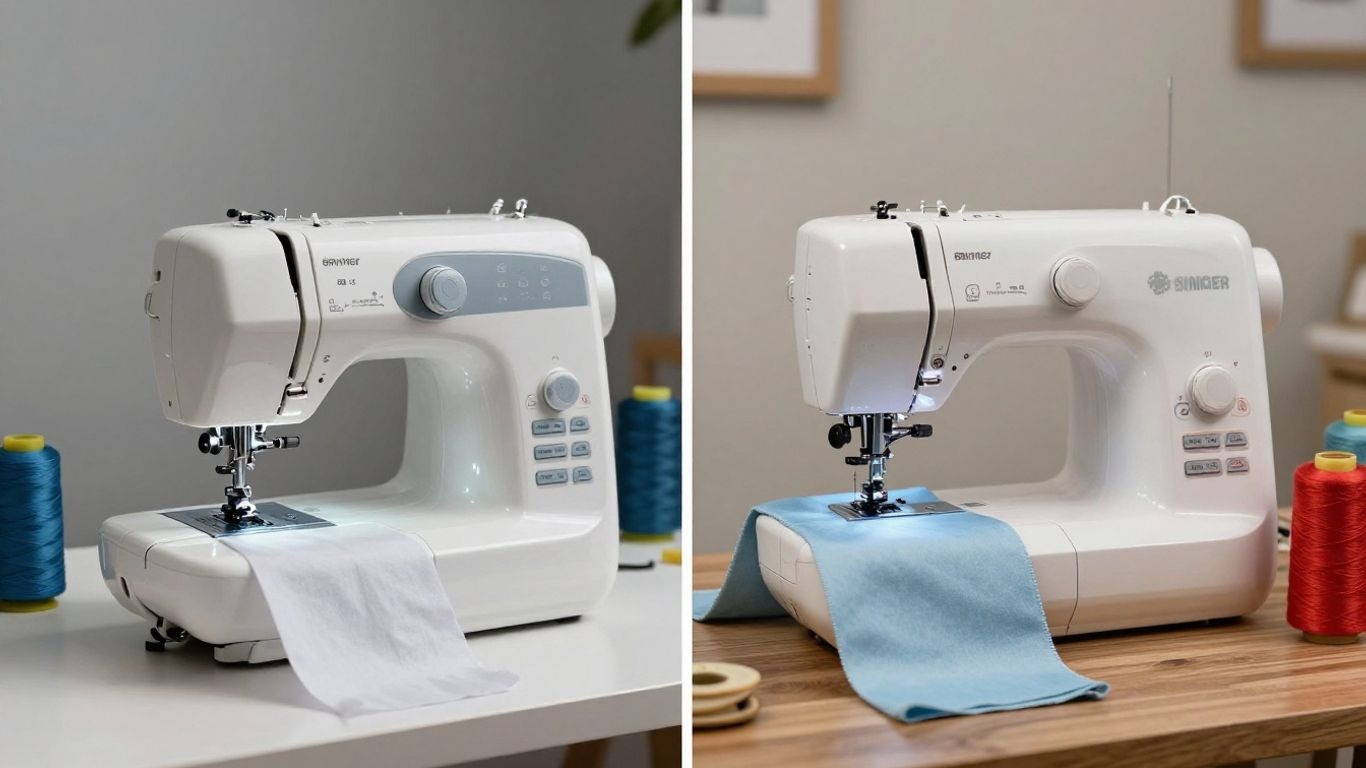
Brother vs Singer Sewing Machines 2026: I Tested Both — Here Is the Honest Verdict
After 12 years of testing sewing machines across every price range and skill level I have used machines from both Brother and Singer extensively, from budget entry-level models through to mid-range computerised machines. I know exactly what each brand does well and where each one falls short.
Here is the honest verdict. Singer wins for motor power, mechanical durability, and heavy fabric performance. Brother wins for stitch variety, accessories, beginner-friendly features, and value in the mid-price range. Neither brand is universally better. The right choice depends entirely on what you sew and how you prefer to work.
This article gives you a direct answer based on real testing, not a list of features that leaves you more confused than when you started.
Key Takeaways
- When comparing Brother vs Singer sewing machines, Brother often leans towards modern tech and user-friendly features, while Singer tends to focus on a strong mechanical build and simpler operation.
- For beginners, Brother machines are frequently recommended due to their automated features and easier learning curve, though some prefer Singer’s straightforward manual controls.
- Both brands offer machines across various price points, but Brother may include more features at similar price ranges compared to Singer.
- When it comes to quilting and embroidery, Brother machines often have an edge with a wider variety of stitches and advanced digital capabilities.
- Ultimately, the best choice between a Brother vs Singer sewing machine depends on your personal sewing style, the types of projects you plan to tackle, and your comfort level with technology.
Brother vs. Singer: A Quick Overview
| Category | Winner | Reason |
|---|---|---|
| Heavy duty and thick fabric | Singer | Stronger motor, all-metal frame |
| Stitch variety | Brother | 70+ stitches vs 30–40 on comparable Singer |
| Accessories out of the box | Brother | Walking foot, extension table standard |
| Long-term mechanical durability | Singer | Simpler construction, fewer failure points |
| Best for beginners | Brother | Automatic features reduce frustration |
| Best for quilting | Brother | Better accessories at same price point |
| Value under $150 | Singer | More durable build at budget price |
| Value $200 to $400 | Brother | More features per dollar in this range |
With the first searchers for a new pattern worked sewing machine, two names kept appearing, Brother and Singer. They’re like the Coke and Pepsi of sewing, right? They are both ancient, and let’s face it, they both make a significant number of different machines. It gets confusing trying to work out which one is going to be the best fit, actually do what I want.
Singer feels like old faithful, solid, predictable, built to last. Their machines prioritise mechanical reliability over digital features, and that philosophy shows in how they perform on demanding fabrics.
These machines are like the old car of sewing machines, solid as a rock, not quite as shiny but built to last. They seem to deliver simple, rugged devices that just work. I’ve heard that if you want a more tactile mechanical way of controlling your equipment.
But Brother, on the other hand, appears focused on updating your sewing room with newer technology. Mostly, they will include more digital functionalities, more stitch options, and simply aim for a very user-friendly experience, especially for beginners.
They seem to want to open it up with clearer displays and automated functionality. If you like to have all the options at your fingertips and a little bit of digital hand-holding, then Brother might be right up your alley.
“Over the last 12 years of sewing, I’ve used both Brother and Singer machines for everything from beginner hemming projects to quilting and lightweight upholstery. In my experience, Brother machines are usually easier for beginners to learn quickly, while Singer mechanical models often feel sturdier for basic heavy-fabric work.”
Here’s a quick look at what each brand generally leans towards:
- Singer: Famed for stout construction, classic appointments, and a long history.
- Brother: Frequently known for built-in features, user-friendliness, and diverse stitch options.
There is not one that makes the “better” of the two. Its sorta like, which Brand of philosophy matches how I work best… and what type of projects are you pushing for? If I am a total beginner, Brother is usually the stronger starting point due to its automatic features and clearer interface. But if I’m doing some real upholstery work and want a mechanical, no-nonsense feel to it, then Singer might be the direction I go. And to be fair, this is entirely about what you prefer and the specific features that are most important to me.
If you are still deciding which type of machine suits you best, our serger vs sewing machine guide explains the key differences between machine types before you commit to a brand.
A Brief History of Brother and Singer
Brother Industries
Brother Industries traces its roots back to 1908 in Nagoya, Japan, where it was first established as a manufacturer of sewing machines called Yasui Sewing Machine Co. In 1934, it then changed its name to Brother Industries and set out on the path towards manufacturing. After all, Brother was synonymous with economical computerized & embroidery machines for home sewists that were always affordable over time, thus making an appearance in every country that finally had access to domestic and industrial sewing machines.
In the Early 1900s, Brother pioneered or brought a lot of breakthroughs and advances to market, including the 1928 chain-stitch sewing machine for straw hats, and its home market’s first lockstitch home sewing machine in 1932.
Singer Corporation
Founded in New York City in 1851 by Isaac M. Singer, the Singer Corporation made sewing machines without much utility widely available around homes. Singer was a major player in popularizing the vibrating shuttle system at the end of the nineteenth century, and into the early 20th century, Singer machines were instrumental in integrating electric sewing machines into mainstream home use. Sewing history was forever changed, as one of the biggest brands came to be.
Singer is known today as the company that gave us many game changers, including the first vibrating shuttle system in 1885 and one of the first electric sewing machines in 1910. Even today, Singer sewing machines have remained a favorite of beginners and experienced sewers alike for their durability, mechanical simplicity, and affordable price.
“Brother machines usually offer more features per dollar, especially in computerized entry-level models. Singer machines, however, still remain popular among sewists who prefer mechanical simplicity and a heavier feel.”
Key Features to Consider When Choosing a Sewing Machine
Whether I’m choosing or recommending a sewing machine for myself or someone else, there are a few basic things I have in mind. Yes, you do not have to just select the prettiest one or the most feature-rich.
There are a few practical features that really enhance your experience and affect performance.
Ease of Use and User-Friendliness
This one is a biggie for me, mainly when it comes to entry-level sewing machine ideas. I won’t use something if it’s such a machine, right? I need something where threading is not a wrestling match and winding the bobbin is easy!
A good manual is golden, especially when new to the machine. I also try to find the most intuitive controls. If it takes me forever to figure out how to adjust a stitch, I could have been sewing!
This is a big one. Even basic things like threading matter. If threading feels confusing, check this guide on how to thread a sewing machine.
Stitch Options and Versatility
It’s very tempting to lean toward a hundred different stitches because you just never know, but honestly, I’ve learned you really only need a few good stitches for 98% of sewing projects. For simple clothing and home decor, a good straight stitch, a decent zig-zag (and perhaps a stretch for knits) is usually sufficient. Now, if I am going to be doing something more specialized, like quilting or decorative type work, then it is all about finding machines that offer specific stitches.
Variable stitch length and width are also quite a useful option. Another thing that I really value is a free arm, it’s also an extremely convenient feature when you’re sewing smaller, tubular items (think sleeves or pant legs). So much easier to get hit with those tight spots.
You don’t need 100 stitches. For most projects like how to sew an apron or how to make a simple tote bag at home, basic stitches are enough.
Durability and Build Quality
I want a machine that feels like it has some heft, not one that feels flimsy. I also want the machine not to vibrate across the table when I’m sewing. I can’t see those inner workings directly, but they matter. A machine built will last longer and be more consistent.
In my own experience, some machines just feel more rugged than others, and generally, a good indicator of how long they will last. This is when the overall construction and brand reputation for building solid machines come into play.
Price Range and Value for Money
Naturally, the budget always plays a role. With a sewing machine, you can buy a low-cost or high-cost, it all depends on your needs, as a more expensive one does not necessarily mean that it is better for your needs. I try to strike an appropriate balance of features, quality, and price.
It is often better to get a machine that is slightly more expensive, but built correctly and with the features I actually need, because in the long run, this may prove to be much less expensive than getting a cheaper one, breaking it, or not being able to do what you want. This is more about how much you get for the money and what your intended use will be, and for how long. With home sewing machines, I always look for good-performing ones that are not too pricy.
When looking at a sewing machine, I would suggest asking yourself what you want to sew. If you are only going to use straight stitch, do not be fooled by a big stitch count. Because at the end of the day, your machine must be all about features, not specs that sound impressive on paper.
Here’s a quick look at what to prioritize:
- Ease of Use: Simple threading, clear controls, and a helpful manual.
- Essential Stitches: Straight, zig-zag, and stretch stitches are usually sufficient.
- Build Quality: A sturdy machine that feels stable while sewing.
- Value: Features that match your needs without an excessive price tag.
Thinking about these points helps me narrow down the choices when I’m comparing different best sewing machine brands and models, ensuring I find a machine that’s a good fit for the task at hand.
If you’re just starting, it’s better to explore best sewing machines for beginners instead of overspending.
Brother vs. Singer: Which is Right for You in 2026?
After this win and the stitches and all the features by price tag, who even wins the brand in 2026? To be honest, I don’t believe there is a clear ‘best’ brand. It just comes down to what you need and what type of sewing you like to do.
To be 100% honest, there are both pros and cons. I have seen people who tend to get upset with the two brands. This tends to stem from either one buying a machine beyond their abilities, or they purchased a machine that was certainly incorrect for what they are trying to do.
It’s like attempting to make an intricate cake with only a whisk and a bowl – you can do it, but it’s going to be hard. I had invested in a ridiculously basic machine, so I was attempting to make an intricate quilt, and the fabric was bunching up everywhere, with my stitches looking like a bird’s nest. Total nightmare.
Here’s a quick breakdown to help you decide:
- Choose Brother if: You’re a beginner who wants a little tech assist, are quilting or embroidering often, or you’re looking for the most stitch varieties without the high-end price tag. They tend to cram in more features into their machines for the same price, which is often a great advantage.
- Select Singer if: You want something a bit simpler and more mechanical, you’re just sewing basic projects for mending or home decor, or you simply want reliable and no-frills. When it comes to Singer, you have that long history, and their more entry-level models will come up pretty solid.
In the end, the best sewing machine is the one that keeps you having fun with your sewing. Do not just get attracted by big brand names. Consider what projects you plan to work on, how tech-savvy you are, and which features will truly be worth it for your sewing lifestyle. That can become an extension of your hands to create what you envision is golden.
The right sewing machine is the one that matches how you actually sew, not the one with the most impressive spec sheet. Think about what fabrics you use most, how much you value automatic features, and whether you want to grow into quilting or embroidery. Those three answers will point you to the right brand every time.
So breathe in, reflect on your sewing journey, and select the right machine to partner with for your creative ventures. Happy sewing!
| Feature | Brother Sewing Machines | Singer Sewing Machines | Best Choice |
|---|---|---|---|
| Best For | Beginners, quilting, embroidery, decorative stitching, and users who like computerized features. | Basic sewing, mending, denim, canvas, and users who prefer simple mechanical controls. | Depends on project |
| Ease of Use | Often easier for beginners because many models include LCD screens, automatic needle threading, and simple stitch selection. | Easy for users who prefer manual dials and fewer digital settings. | Brother |
| Stitch Variety | Usually offers more built-in stitches at similar price points, especially in computerized models. | Usually focuses more on essential stitches, with fewer decorative options on entry-level models. | Brother |
| Heavy Fabric Handling | Good for regular home sewing, but some beginner models may struggle with thick denim or multiple fabric layers. | Many Singer Heavy Duty models handle denim, canvas, and thicker fabrics better than basic beginner machines. | Singer |
| Computerized Features | Strong choice for digital controls, stitch menus, embroidery options, and beginner-friendly automation. | Offers computerized models too, but many popular Singer models are more mechanical and traditional. | Brother |
| Durability | Durability depends on the model; many home-use Brother machines are reliable but may include more plastic parts. | Many Singer models, especially Heavy Duty machines, feel sturdier due to their metal frame construction. | Singer |
| Quilting | Often better for quilting features such as stitch variety, speed control, extension tables, and computerized settings. | Can work well for basic quilting, especially if the model has enough throat space and drop-feed capability. | Brother |
| Embroidery | Brother is usually stronger for home embroidery machines and beginner-friendly embroidery features. | Singer has some embroidery options, but Brother generally offers a wider embroidery-focused lineup. | Brother |
| Portability | Many Brother models are lightweight and easy to move, making them good for classes or small spaces. | Singer Heavy Duty models may feel heavier, which improves stability but reduces portability. | Brother |
| Value for Money | Often includes more features for the price, especially for beginners and hobby sewists. | Offers strong value if you want a simple, durable machine for basic sewing and thicker fabrics. | Both |
| Final Verdict | Choose Brother if you want modern features, easier learning, quilting tools, or embroidery options. | Choose Singer if you prefer mechanical simplicity, a sturdy feel, and better handling of thicker fabrics. | No single winner Choose based on your sewing style. |
Once you have chosen your machine, our Singer HD500 vs Singer 4452 comparison and our individual machine reviews will help you narrow down the exact model within your chosen brand.
Brother Sewing Machines: Pros and Cons
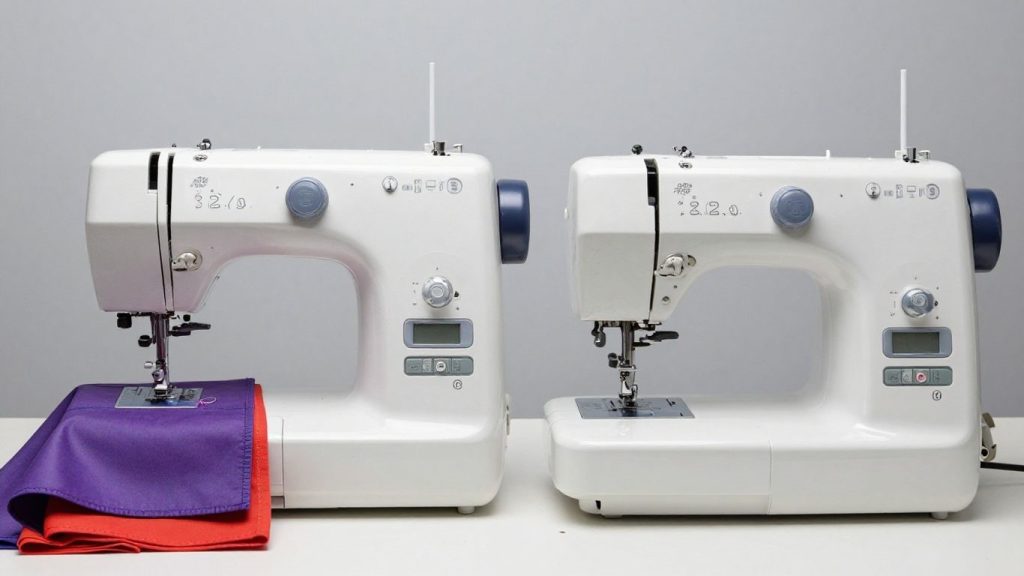
One of the first things that usually catches my eye when I look at Brother sewing machines is how much tech they manage to squeeze in, particularly for the price. A sort of continuous winner and dividends semblance to feel like they are giving you more for your dollar.
One common comment in published Brother sewing machine reviews is that they often have more built-in stitches than similarly-priced Singer models. This is a definite advantage if you enjoy testing out decorative stitches or want specific ones for items such as quilting.
Also, for me, user-friendliness is another area where Brother excels. They typically have easy-to-understand digital displays and friendly guides to help you select which stitches to use, how much tension should be incorporated into your fabric, or a multitude of other settings that can be tweaked. This is especially evident in their computerized models.
For example, Brother sewing machine features usually come with simple methods of getting back or fixing errors. Such recovery from error is a boon, especially while we are in the midst of some work and feeling hurried.
For example, machines like Brother CS7000X Review or Brother HC1850 Review show how feature-rich Brother machines can be.
Pros and Cons of Brother Sewing Machines
Where Brother machines perform well — and where they may not be the best fit.
- Wide range of built-in stitches for quilting, garments, and decorative work
- Beginner-friendly with clear stitch selection and easy navigation
- Automatic needle threading and thread cutting on higher-end models
- Lightweight and portable — easy to move, store, or take to classes
- Smooth, quiet operation compared to older mechanical machines
- Excellent value for money — more features per dollar than most competitors
- Many models include extension tables and quilting accessories
- Speed control, LCD screens, and automatic buttonhole on computerized models
- Wide product range — home sewing, quilting, embroidery, serging, and crafts
- More plastic parts than heavy-duty mechanical machines
- Entry-level models struggle with heavyweight denim, canvas, or leather
- Computerized features can feel overwhelming for users who prefer simple controls
- Smaller throat space on some models limits large quilting projects
- Thread tension control can feel limited on lower-cost machines
- Computerized models can cost more to repair than basic mechanical machines
- Not suited for heavy daily commercial sewing
- Accessories and replacement parts for high-end models can be expensive
- Not every model has strong piercing power for multiple thick fabric layers
Singer Sewing Machines: Pros and Cons
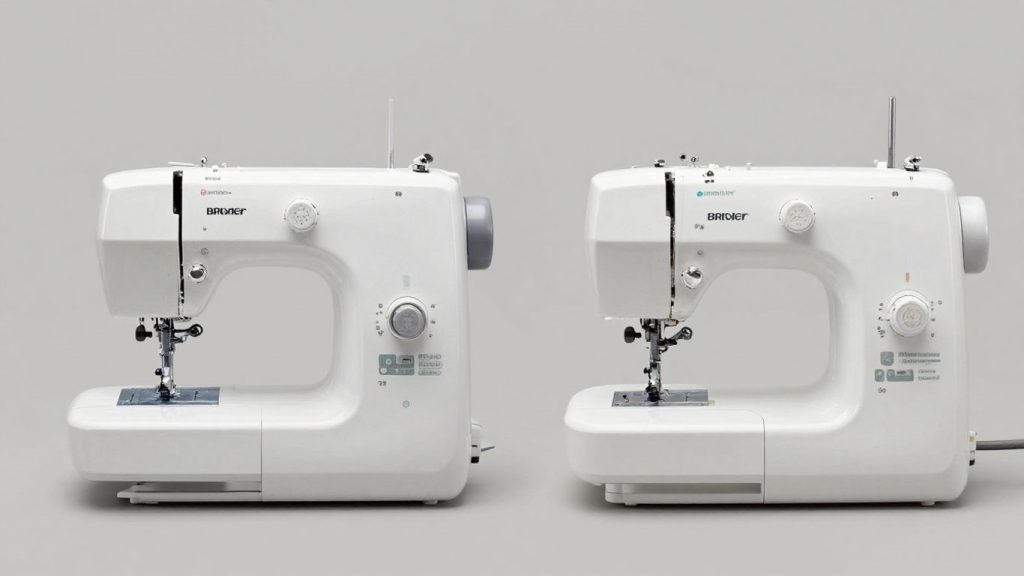
Each time I look at Singer sewing machines, flood my mind with their long history. They exist forever, and there is a level of reliability that goes with that. Almost everyone I know learned to sew on a Singer, and there is some comfort in tradition.
I’ve read hundreds of Singer sewing machine reviews, and one of the biggest strengths they have is build quality. They tend to be more sturdy, made of metal. This translates to less vibration at the top speeds during sewing and is a good thing.
It feels solid, you know? This physical robustness also tends to equate to a machine that is more adept at working with heavy fabrics. When sewing heavier fabrics such as denim or several layers of canvas, a Singer is often up to the job.
The features of Singer sewing machines generally tend to be on the conservative side. It has a decent set of basic stitches, and they are generally pretty easy to select & sew. If you’re less for digital bells and whistles, more for tangible control, Singer could be your thing. Although they usually offer a good selection of built-in stitches, you won’t discover the absolute variety that some competing brands include.
However, it’s not all perfect. At times, the user interface on Singer machines comes off as a little old relative to some newer models with other brands. The screens could be smaller, or the menu navigation may not be as intuitive. From what I’ve heard, people, a bit of eyeballing, trying to figure out how some settings work, can spend more time digging through the manual.
A great example is Singer 4452 Heavy Duty Sewing Machine Review which is perfect for thick materials.
Pros and Cons of Singer Sewing Machines
Where Singer machines perform well — and where they may not be the best fit.
- Heavy Duty models use a metal frame for durability and stability
- Handles denim, canvas, and thicker home-sewing fabrics well
- Reliable stitch quality for hemming, repairs, and everyday sewing
- Simple mechanical controls — beginner-friendly for manual operation
- Built to last with proper care and regular maintenance
- Sturdy build reduces vibration at higher sewing speeds
- Affordable entry-level and mid-range options for home sewists
- Long-established brand — trusted by beginners and experienced sewists alike
- Includes the essential stitches needed for most general home sewing projects
- Fewer advanced computerized features compared to many Brother models
- Interface feels less modern than newer computerized machines
- Fewer decorative stitches than competing computerized models
- Less automation for speed control and stitch customization
- Heavier models are less portable for classes or frequent moves
- No touchscreen or highly digital features on most models
- Mechanical adjustments like tension can take time to learn
- Some advanced accessories require separate purchases
- May feel less innovative compared to newer computerized competitors
Best Brother Machines for Beginners
Choosing a machine was rather daunting for me when I started sewing. There are a ton of them, and to be completely honest, they all kind of looked the same to me. However, if you are just dipping your toes into the world of machine embroidery, Brother does have some really great machines that take a lot of the intimidation out there for you. They appear to understand that people just starting want no part of spending hours on complicated settings.
My brother’s machines typically are closer to feeling like the technology I’m already familiar with, like my phone. The displays are generally sharp and vibrant, and locating what you need is relatively simple. Less time messing with buttons and more time sewing. If you are new to sewing, this ease of use is a really, really big deal! What it acts as is to make you more confident and not frustrated.
Here are a few things I noticed that make Brother a good choice for beginners:
- Easy Controls: Most Brother beginner machines have simple controls. That way, you are not immediately overloaded with choices.
- Helpful Guides: Some models come with tutorials or guidelines that appear as a pop-up on the screen, which is really nice if you are learning a technique.
- Good Stitch Selection: Even the basic machines have a good number of stitches, so you can experiment with your projects without needing to get highly technical on it!
- Sturdy: For day-to-day sewing, you want a machine that is going to treat you well since that’s what you’re using it for, and these are common explanations for this.
For beginners, Brother offers several easy-to-use machines that balance price, features, and learning comfort. The Brother XM2701 is a great affordable option for basic sewing, repairs, and simple home projects. The Brother CS7000X is better if you want a computerized sewing machine with more stitch options, speed control, and quilting accessories.
The Brother XR3774 is a strong choice for beginners who want to try quilting because it includes a wide table and 37 built-in stitches. Another good option is the Brother CS5055, which offers 60 built-in stitches, an LCD display, and a smooth computerized setup for beginners who want more room to grow.
Overall, choose Brother XM2701 for budget-friendly basic sewing, Brother CS7000X for the best all-around beginner computerized machine, Brother XR3774 for beginner quilting, and Brother CS5055 if you want a simple computerized machine with more creative stitch options.
Models like Brother CS5055 Review or Brother XR3774 Review are great starting points.
Best Singer Machines for Beginners
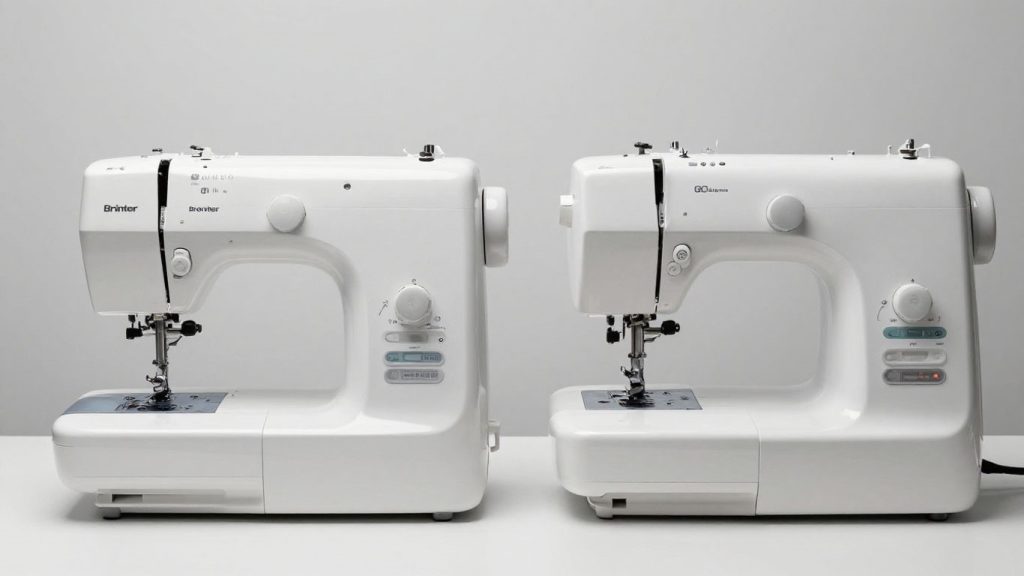
Singer was one of the first brands that came to mind when I started researching sewing machines. They’ve been around forever, right? For beginners, Singer equals basic and simple, no-nonsense. Their machines are mostly good and fairly simple, which is nice when just trying to learn the ropes.
Singer has a handful of models that are best for those just beginning. They have enough basics, which is all the stuff you need when you definitely do not want to be inundated with a gazillion complicated stitches that you will never employ.
- Singer Heavy Duty 4411: A very popular option. It has 11 stitches — enough for most beginner sewing projects like pant hems and basic tote bags. It can also lower the feed dogs, which is great if you decide to give free-motion sewing or quilting a try. So, some people talk about bobbin problems, but that’s mostly a really easy-to-fix tension problem once you learn how.
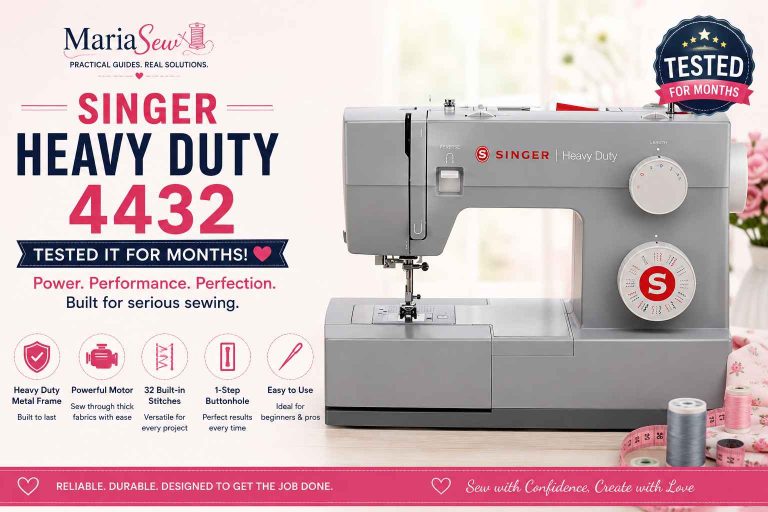
- Singer Heavy Duty 4452: If you need a little more range, this is the next step up. It has 32 utility sewing machine built-in stitches. It nevertheless retains that “heavy duty” construction, meaning it feels solid, but bear in mind it’s not a bulldozer. Designed for the home, this model can tackle rather more than a few of the lighter models.
These machines tend not to be particularly pricey, so it’s good since you don’t want to spend a load of money on something that’s going to end up out of the house after some time anyway. This is a great way to sit both feet in the sewing pool without diving into paycheck-unfriendly waters. Also, Singer machines are pretty rugged for the price, so you’re going to get good usage out of them.
Take into account what you really want to create when choosing a novice machine. A mechanical Singer is generally a great starting point if it is just basic, no frills clothing repairs or simple home decor. They simply get the job done and also do not come with a bunch of menus to sift through.
Even if you are like me and just want to get going with sewing without it being too complex, then one of these Singer models is a great buy. They provide that solid backing with a lack of excess features that can end up getting in the way while learning. You can usually score these on sale too, so be sure to check places like Amazon or Sewing Machines Plus. This is a reliable way to find an effective machine that can do simple sewing tasks.
Along with 4452, you can also consider Singer M3500 Review for basic everyday use.
A Comparion of Singer and Brother Sewing Machines
Singer 4452 vs Brother ST371HD (Heavy Duty Sewing Machines Comparison)
Price range: $180 to $220
This is one of the most searched heavy-duty sewing machine comparisons between Singer and Brother. Both models are designed for thick fabrics, denim, and regular home use.
Singer 4452 delivers stronger performance with a high-speed motor of 1,100 stitches per minute, making it ideal for heavy fabrics and multi-layer stitching. It maintains stable stitch quality even at high speed, and its metal frame improves durability and vibration control during long sewing sessions.
Brother ST371HD offers 37 built-in stitches, giving more versatility compared to Singer’s limited stitch options. It is also more beginner-friendly due to its LCD interface and included accessories, making stitch selection easier for new users.
Choose Singer 4452 if: You need maximum power, speed, and heavy fabric performance.
Choose Brother ST371HD if: You want more stitch variety and beginner-friendly controls.
Singer HD500 vs Brother CS7000X (Best for Intermediate Sewers)
Price range: $200 to $280
This is one of the most popular Singer HD500 vs Brother CS7000X comparisons among sewing enthusiasts and quilting communities.
Singer HD500 is a mechanical, heavy-duty machine built for durability. It performs exceptionally well on cotton, denim, and upholstery fabrics without electronic dependency. Its all-metal frame ensures long-term reliability and consistent stitching performance.
Brother CS7000X is a computerized sewing machine offering 70 built-in stitches, LCD control, automatic needle threader, and a full quilting accessory set. It is designed for users who want modern features and versatility.
Choose Singer HD500 if: You prefer mechanical strength and long-lasting durability.
Choose Brother CS7000X if: You want advanced features, stitch variety, and quilting tools.
Singer 4411 vs Brother CS6000i (Best Budget Sewing Machine Comparison)
Price range: $130 to $180
This is a highly searched entry-level Singer vs Brother sewing machine comparison for beginners.
Singer 4411 is a mechanical powerhouse with 1,100 stitches per minute and strong performance on heavy fabrics. It is simple, durable, and easy to use, making it ideal for beginners who want reliability without complexity.
Brother CS6000i offers 60 built-in stitches, LCD display, automatic needle threader, and multiple presser feet. It is feature-rich and ideal for users who want more creative flexibility from day one.
Choose Singer 4411 if: You want strength, speed, and simplicity.
Choose Brother CS6000i if: You want features, accessories, and stitch variety.
Singer MX231 vs Brother XM2701 (Best Beginner Sewing Machines)
Price range: $80 to $120
This is a common budget sewing machine comparison for beginners choosing Singer or Brother.
Singer MX231 provides 57 stitches, portability, and basic sewing functionality. It is suitable for simple repairs, light sewing, and beginner projects, but not designed for heavy-duty use.
Brother XM2701 includes 27 stitches, automatic needle threader, and multiple presser feet. It is easier for beginners due to its user-friendly setup and smoother operation.
Choose Singer MX231 if: You want more stitch options and portability.
Choose Brother XM2701 if: You want the easiest beginner-friendly experience.
Singer Quantum Stylist 9960 vs Brother CS7205 (Advanced Sewing Machines)
Price range: $280 to $380
This is a high-end Brother vs Singer computerized sewing machine comparison for advanced users.
Singer Quantum Stylist 9960 offers an impressive 600 built-in stitches, extension table, and 13 presser feet. It is ideal for users who want maximum creativity and decorative stitch options.
Brother CS7205 provides 100 built-in stitches, an automatic thread cutter, and strong computerized control. While it has fewer stitches, it delivers smoother operation and reliable performance.
Choose Singer 9960 if: You want maximum stitch variety and creativity.
Choose Brother CS7205 if: You prefer reliability, automation, and balanced performance.
Comparing More Singer Sewing Machines?
If you are still deciding which Singer model fits your sewing needs, you may also find our full guide helpful. Check out our complete roundup of the best Singer sewing machines before making your final choice.
Who Should Buy a Brother Sewing Machine in 2026?
A Brother sewing machine is usually the best choice for beginners, hobby sewists, quilters, and users who want modern computerized features without spending a fortune. If you prefer an easy learning curve, automatic needle threading, built-in stitch guides, LCD screens, and a large variety of decorative stitches, Brother machines are often a better fit than traditional mechanical models.
Brother sewing machines are especially popular among beginners because many models are lightweight, beginner-friendly, and simple to set up. They are also a strong choice for users interested in quilting, embroidery, DIY crafts, fashion sewing, and creative sewing projects that benefit from computerized controls and extra stitch options.
You should consider buying a Brother sewing machine if you:
- Are completely new to sewing
- Want a beginner-friendly computerized sewing machine
- Need more built-in stitches and creative sewing options
- Plan to do quilting or embroidery projects
- Prefer lightweight and portable sewing machines
- Want modern features at a reasonable price
Popular Brother machines like the Brother CS7000X, Brother XR3774, and Brother XM2701 are often recommended for beginners because they combine ease of use, affordability, and useful features for everyday sewing.
Who Should Buy a Singer Sewing Machine in 2026?
A Singer sewing machine is usually a better choice for users who prefer simple mechanical controls, a more traditional sewing experience, and a machine that feels sturdy and reliable. Singer machines are especially popular for basic sewing, home repairs, denim projects, canvas work, and users who do not want complicated computerized settings.
Many sewists choose Singer because of its long-standing reputation, solid build quality, and beginner-friendly mechanical operation. Models like the Singer Heavy Duty 4411 and Singer 4452 are commonly recommended for sewing thicker fabrics and everyday household sewing tasks.
You should consider buying a Singer sewing machine if you:
- Prefer mechanical sewing machines over computerized models
- Sew denim, canvas, or thicker fabrics regularly
- Want a sturdy machine with a traditional feel
- Mainly do basic sewing, hemming, and home repairs
- Prefer simple controls with fewer digital settings
- Want a reliable entry-level or heavy-duty sewing machine
Singer sewing machines are often ideal for sewists who value durability, simplicity, and dependable everyday sewing performance more than advanced digital features or embroidery functions.
Frequently Asked Questions
What’s the main difference between Brother and Singer sewing machines?
Think of it like this: Singer machines often feel more like sturdy, old-school tools that get the job done simply. Brother machines, on the other hand, tend to pack in more modern tech and digital bells and whistles to make sewing a bit easier and more varied.
Which brand is usually better for someone just starting with sewing?
For beginners, I often lean towards Brother. Their machines usually have helpful screens and features that guide you, which can make learning less tricky. Singer can also be good if you prefer a more hands-on, manual feel without too many digital distractions.
Are Singer sewing machines built to last longer than Brother ones?
Both brands make machines that can last a long time! It really depends more on the specific model you choose and how much you use it, rather than just the brand name. Good care and maintenance are key to any machine.
Do Brother sewing machines have cooler tech features?
Yes, many Brother models come with more built-in stitches and digital options. If you like having lots of choices for different patterns and effects right at your fingertips, Brother often delivers on that.
How do Singer and Brother machines compare when it comes to price?
Both brands offer machines at different price points, from budget-friendly to more expensive. Generally, Brother might give you more features for a similar price, while Singer might focus on solid, basic performance.
Which brand is better if I want to do quilting or embroidery?
For quilting and especially embroidery, I usually find Brother machines to be a bit more suited. They often have a wider range of stitches and features that are really helpful for these more detailed types of sewing.

3 Comments