Brother CV3550 Review 2026: Advanced Coverstitch Machine Tested
I’ve been sewing with coverstitch machines for a while now, and I’ve tried out quite a few different models. For this article, I wanted to take a closer look at the Brother CV3550.
It’s a machine that’s been on my radar, and I was curious to see how it holds up, especially with its advanced features. So, I put it through its paces to see what it can really do.
Key Takeaways
- The Brother CV3550 is a solid choice for sewists who want a professional finish on their projects, especially activewear and t-shirts, thanks to its top-cover stitch option.
- It’s quite accessible for its features, making it a good value compared to some higher-end machines.
- Threading is made easier with color-coded guides, which is a big help, though it’s still a manual process.
- The machine offers a good amount of working space, which is nice when you’re dealing with larger pieces of fabric.
- While it comes with basics, Brother offers a wide range of affordable accessories, letting you customize it for specific tasks like binding.
Introduction to the Brother CV3550
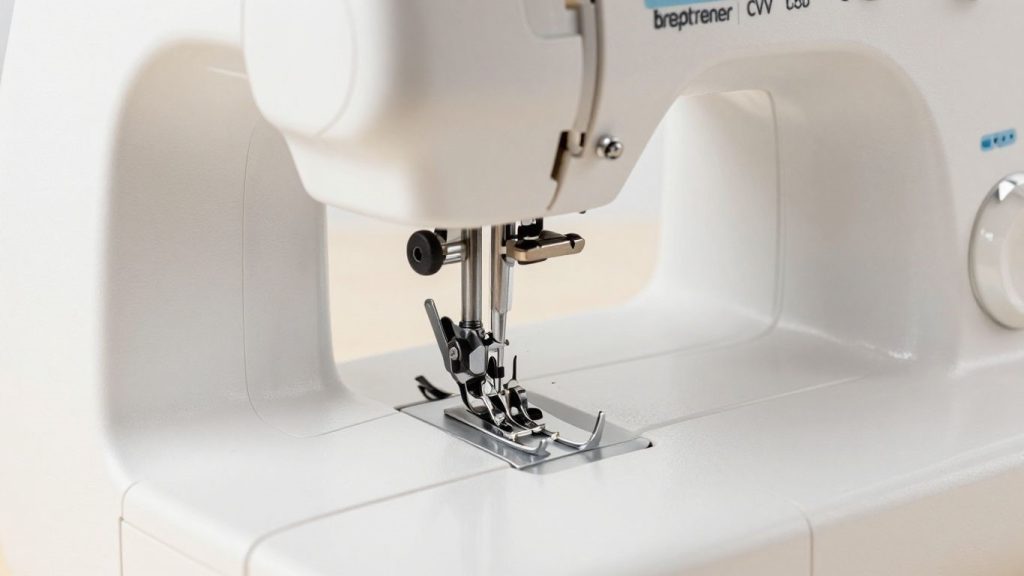
Well, I finally purchased the Brother CV3550 and have been working with it. This is an interesting machine, particularly if you are into sewing clothes that require that professional-looking stretchy finish like activewear or t-shirts. It’s a coverstitch machine, so it creates those tidy, sturdy stitches that you find on the hems and seams of many store-bought clothes.
What’s really special here is that this machine does top cover stitches, so you get that decorative stitch on both sides of the fabric. I have been searching for a machine to do just that, and the CV3550 has appeared to be it.
I did not think about it a lot when I first opened the box, but it felt pretty solid. It includes a handful of basic accessories in the box, but like most machines, odds are you’ll want to pick up some extra bells and whistles over time, particularly if you plan on doing a lot of binding.
The written manual is serviceable, but if I am honest, watching a couple of YouTube videos online proved to be far more advantageous in getting started. To be honest, what I’m most interested in is the sewing machine performance of the CV3550; so far, it’s been decent.
If you’re still learning garment basics, projects like how to sew an apron or even a simple tote bag can help you practice before moving to advanced machines like this.
Here are some of the things I’ve been looking at:
- The various types of stitches you get (chain, 1-, 2-, 3-, and 4-needle cover stitches as well as double-sided top cover stitches).
- How easily it threads, which is huge for me, always.
- Stitching quality on varied fabric surfaces.
- The general ease of use for someone not a professional seamstress.
Make no mistake, it is definitely a step up from a basic sewing machine, and I can’t wait to see how it works on more complex projects. The Brother coverstitch machine features are pretty extensive. I am excited to see if they actually live up to the hype.
Key Features and Specifications
Coverstitch Capabilities
Where the Brother CV3550 really shines is in its coverstitch options. This machine is not limited to one or two stitches; it gives you an entire range. You also get single-sided and double-sided tri-cover stitches, which are fantastic for a really professional-looking hem. There are wide and narrow cover stitches, plus a standard chain stitch.
The versatility means I can take on nearly any fabric and every project, delicate knits to sturdy wovens, and get a clean, polished finish every time. It can sew decorative and constructive coverstitching, which is pretty cool.
The versatility means I can take on nearly any fabric and every project. If you’re comparing machine types, you might also want to read serger vs sewing machine to better understand where a coverstitch machine fits in.
Adjustable Presser Foot
I thought the adjustable presser foot pressure was a super convenient feature. It allows me to adjust how much pressure the foot puts on the fabric. This is really important when I am playing with different materials, especially very thin or stretchy ones.
The fact that I can turn it down means that I don’t skip stitches or get puckering, and when I need more pressure for heavier fabrics, I can turn it up. It is easy, but it makes a significant impact on getting consistent results.
Differential Feed
This is that one feature that, after using it, you wonder how boring your sewing was without this. The CV3550 has a differential feed, which I can use to increase or decrease the speed of my feed dogs. If I’m working with knits, it goes to help eliminate that irritating wavy effect you get when the fabric gets a bit stretched.
Or if I’m working with a finicky fabric, I can dial it in to assist in feeding the material smoothly. I do appreciate that the dials for this are conveniently sitting on the right side.
Thread Tension Control
Finding the right tension for every stitch is important, and coverstitch is not an exception. Thread tension control on the CV3550 is fairly straightforward. It has color-coded guides, which is great when I’m getting the machine set up for the first time or re-threading it after a break.
There’s also a one-touch lever that releases the tension, so it’s easy to pull the threads out when I’m done with any sewing. And it doesn’t seem overly complicated, which is good for me because I just want to sew without hassle.
Thread tension is crucial, and understanding sewing machine parts can really help you master adjustments like this.
Ease of Use and Setup
Threading System
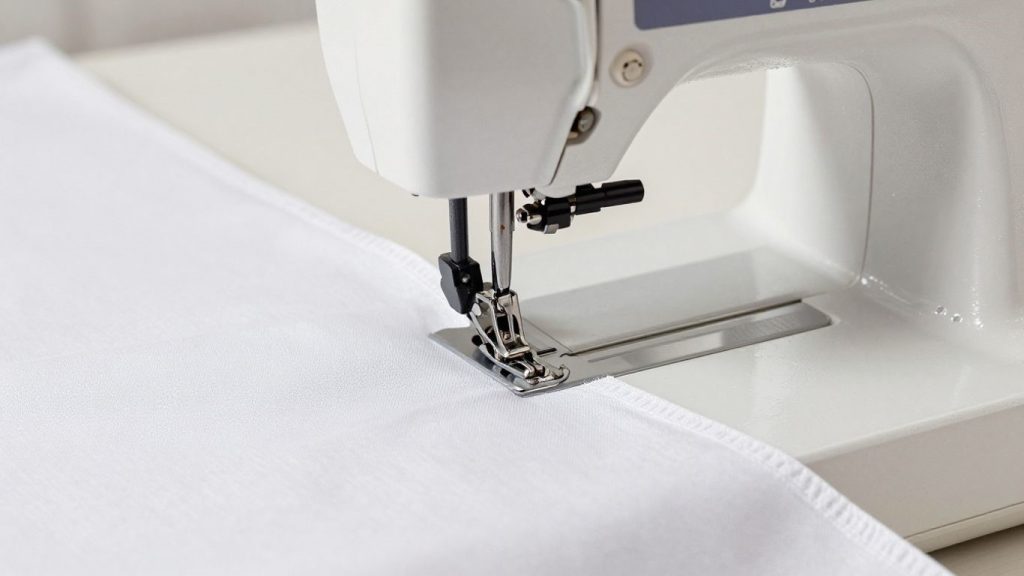
To be honest, threading the Brother CV3550 is fairly easy. It’s not one of those fancier ones with a built-in air-threading device, but there are diagrams printed right on the cover that prove helpful. The color-coded pathways really helped me understand where each strain was supposed to go.” It took me five minutes the first time, and now faster now. The manual threading method of fill, needle, and looper is fairly standard for coverstitch machines, and while it may seem a bit excessive at first, you can learn pretty quickly.
The threading is, for a machine that does what this one does, I feel quite manageable. “It’s such a huge improvement over some older machines I’ve used that you practically needed an engineering degree to get the threads into place.” If you’ve never done coverstitch, just be patient with the first few threads, and you will be OK.
To be honest, threading the Brother CV3550 is fairly easy. Beginners should definitely explore sewing kits for beginners to make the learning process smoother.
User Interface and Controls
The CV3550 has a refreshingly simple control panel. There aren’t a million buttons, nor are you lost in menus; everything you need is laid out clearly. You have your stitch width and length adjustments (which you can still find on the front, as well), and the differential feed dial is easy enough to locate and turn. The presser foot lifter is also well located.
Thank you, Brother, for keeping it simple. I loved the clean interface, as that’s one less thing I have to fiddle with during sewing! The LED lighting also helps out by giving you a clear vision of the sewing space, which is always a nice feature when you’re trying to be exact. It allows for much easier work on darker fabrics.
Thread the machine, select your stitch, adjust tension, and differential feed. An included accessory tray keeps everything organized and within reach, which I found super handy. The aim is to get you sewing with minimal fuss.
Here’s a quick rundown of what you’ll be adjusting:
- Stitch Length: Controls how long each stitch appears.
- Stitch Width: Determines how wide the coverstitch is.
- Differential Feed: Adjusts how the fabric feeds through, preventing stretching or gathering.
- Thread Tension: Fine-tuning for different fabrics and thread types.
Performance and Stitch Quality
I was eager to see how it performed with various fabrics when I sat down with the Brother CV3550 for the first time. I’ve tested many machines, and the truth is that some simply perform better than others, especially when you’re starting to push them. But this machine felt quite solid from the get-go. It hummed right along, and the stitches it made were consistently uniform.
I tested it on a few different materials that varied in weight, from a lightweight jersey knit to a thicker ponte fabric. Overall, the CV3550 dealt with them all without breaking a sweat. This is where the differential feed on my sewing machine has saved me: I found that using it between 1.0 and 1.5 was always spot on for knits; you want to avoid that wavy hem treatment, obviously! But where this machine really shines is the double-sided coverstitch, which gives you a clean, professional finish on both sides of your fabrics, great for when seams will be visible or if you’re adding in some decorative elements.
I tested it on different materials, and overall performance was strong. Machines like the Singer 4452 Heavy Duty or Singer HD500 are also great alternatives if you need heavy-duty performance.
Here’s a quick look at how it performed on some common tasks:
- Hemming T-shirts: The 3mm narrow coverstitch created a clean, stretchy hem that was identical to a store-bought shirt. Fast, skipping stitches even on thin cotton jersey.
- Seaming Activewear, Athletic Leggings: I seamed some active leggings using the 6mm wide coverstitch. The seam was strong and had some give to it, while the differential feed made for a nice, smooth finish.
- Fun Topstitching: I played with the double-sided stitches, and they really do look lovely. It’s a clever way to make a decorative stitch appear on both sides of the fabric without having to do any extra effort.
Threading the loopers is sometimes a bit of a pain on coverstitch machines, but Brother has kept it pretty simple with color-coded guides. The tension dials are easily accessible, which is nice, because the key to a good coverstitch is in the tension. On very fine silks, I did find that the tension settings had to be done with a light touch indeed, but this is exactly what any coverstitch sewing machine guide would tell you.
I ended up working at a much slower pace, while the machine is able to work at 1000 stitches per minute, for accuracy’s sake (and getting more comfortable with my craft), everything was done at a much more measured pace when starting. This is the usual for me, especially when I’m testing out new machines or working with more finicky fabrics. Even when I wasn’t at full tilt, the stitch quality remained consistent.
Overall, I came away impressed by the stitch quality and versatility of the Brother CV3550. It promises professional-looking finishes and delivers on that, making it a strong contender in the professional coverstitch machine reviews I was compiling. It’s a workhorse that can tackle all kinds of projects and deliver consistent results, which is exactly what I look for when assessing how to get the most out of a coverstitch machine.
Who is the Brother CV3550 For?
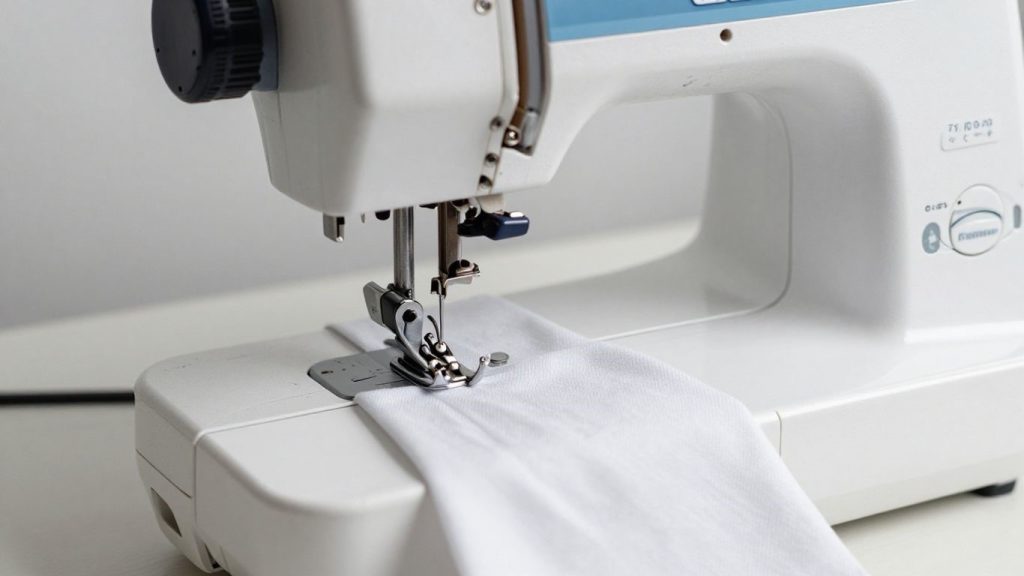
So, just who is the Brother CV3550 for? I think this is a really strong choice for home sewists who want to level up their game, especially in terms of finishing garments. If you’re an established maker and find yourself wishing for the clean, polished hems and seams of your store-bought items, this machine is worth having in your arsenal.
If you’re someone upgrading from a beginner machine like the Singer HD4411 Prisma, this will feel like a big step forward.
For embroidery lovers, something like the Brother SE2000 might be worth exploring as well.
Here’s a quick breakdown of who I think would benefit most:
- Home garment makers: If you sew many clothes for yourself or your family, this machine will greatly enhance the appearance of your finished projects.
- Activewear and sportswear fans: The top-cover stitch is the secret weapon behind these kinds of projects, achieving that retail-ready finish.
- Newbies looking to invest: Even though it has features that are above beginner level, the threading system and controls are quite simple. I wouldn’t call it for just advanced users; this is a machine that you can grow with.” Whatever you throw at it, you probably won’t outgrow its capabilities any time soon.
- For those wanting a specific stitch type: If you need a coverstitch, and also do top-cover stitching with it, this is one of the more accessible options out there.
It’s not really for a casual sewist who makes occasional simple projects, or someone looking for a sewing machine that also serges. It is a dedicated coverstitch machine, and it does that job quite well. If you’d like to get an idea of what this bad boy can handle, have a look at some samples showing coverstitch capabilities.
I discovered that although it’d be an upgrade from simple machines, the learning curve wasn’t as steep as my imagination had suggested. It also comes with a surprisingly helpful video, and the color-coded threading guides do help quite a bit as well. It’s a machine that seems powerful but is not overly complex for the home sewer.
Pros and Cons of the Brother CV3550
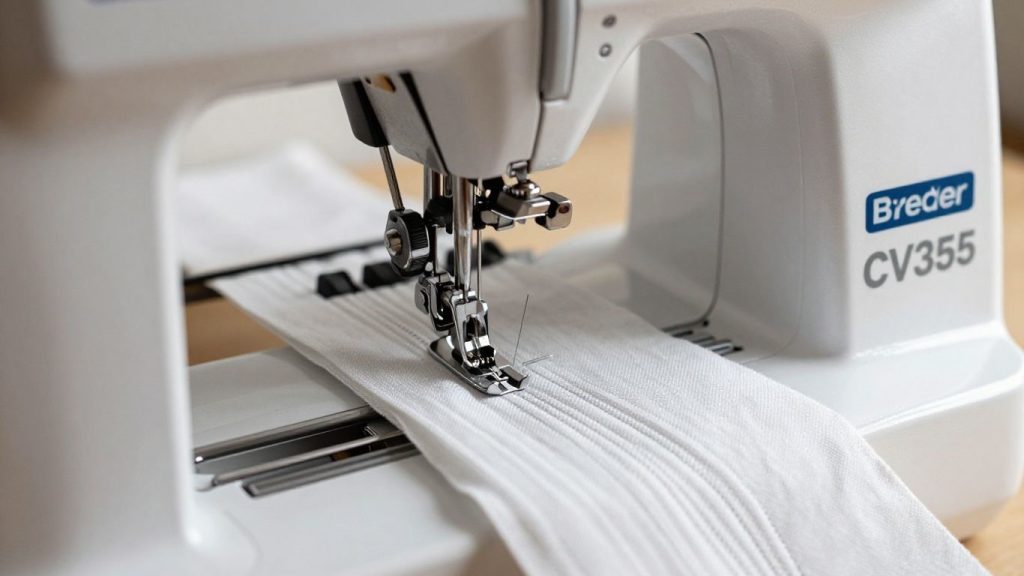
After spending some time with the Brother CV3550, I’ve got a pretty good handle on what it does well and where it could be better. It’s definitely a machine that has its strengths, especially if you’re looking for specific coverstitch finishes.
Pros of the Brother CV3550
Here’s a quick rundown of what I found good:
- Top Coverstitch Capability: This is the standout feature, allowing for decorative and functional top stitching. It really elevates the look of finished garments.
- Adjustable Presser Foot Pressure: Great for handling a variety of fabrics, from thin knits to thicker materials, without damaging them.
- LED Lighting: Bright and clear illumination over the sewing area.
- Relatively Affordable: Compared to some other machines with similar top coverstitch features, the CV3550 sits at a more accessible price point, making it a good option for those wanting this specific functionality without breaking the bank. It’s one of the more affordable dedicated options out there.
- Good Stitch Range: Offers a decent variety of coverstitch widths and lengths for different project needs.
Cons of the Brother CV3550
Here are a few things that could be improved:
- Manual Looper Threading: While manageable, it’s not as quick as air threading systems found on higher-end machines.
- Accessory Package: Some useful accessories might need to be purchased separately.
- Noise Level: While subjective, some users find it louder than expected.
For anyone specifically looking for the added benefit of a top coverstitch without spending a fortune, the Brother CV3550 is a strong contender. It provides that professional finish that’s hard to achieve otherwise, and the adjustable pressure foot is a real plus for fabric handling. Just be prepared for the manual threading and potentially needing to buy a few extras down the line.
If you’re curious about other options in this category, you might want to look at the Janome CoverPro 2000CPX as well.
Comparison with Other Sewing Machines
When I set out to look at a new sewing machine, especially something like a coverstitch machine, I always want to see how it compares to the competition. It helps me decide whether I’m getting the most bang for my buck, and what meets my needs anyway.” I’ve put the Brother CV3550 head-to-head with other popular models for this review.
When comparing machines, models like the Janome JW8100 or Janome MC6650 also come into consideration depending on your needs.
Brother CV3550 vs Brother CV3550
All right, this one is a bit of a joke, I know. But on the level, there are times when I get so lost in a project, I have to remind myself what this machine actually does that’s special. The CV3550 has a double-sided coverstitch, so it will give you that professional-looking coverstitch on both the top side and the underside of your fabric.
This is an important point for many garments, ones where the inside is as significant as the outside: activewear or fancy tops. It’s not a feature you always find, so it makes a strong case for the best coverstitch machine if you plan to use it at home.
Brother CV3550 vs Juki MCS-1500
The Juki MCS-1500 has come up a lot in sewing machine reviews for more advanced machines, and there’s plenty of good reason for that. It boasts a powerful motor, allowing it to sew faster than most home machines. If speed is your first, second, and third priority, the Juki might have a leg up.
But the Brother CV3550 tends to be my front-runner for its ease of use and that fabulous top-coverstitch option. As much as the Juki delivers a dose of industrial power, I found that with the Brother, the threading guides and setup overall are easier for most day-to-day use. It’s a classic trade-off of raw speed versus accessible features.
Brother CV3550 vs Janome CoverPro 3000P
It’s interesting to compare the Brother CV3550 with the Janome CoverPro 3000P because they are both strong machines, but serve slightly different needs. The Janome scores big points with its Seam Tightening System (STS) and generous workspace, which get a lot of attention. This all makes it feel like a really solid machine.
That double-sided top-coverstitch is THE unique selling point that the CV3550 can do, and the 3000P really can’t. For me, that particular stitch quality on both sides is what makes the Brother a top contender in this coverstitch sewing machine face-off. It boils down to whether you value that particular decorative finish or the construction and tension systems more.
Taking a glance at professional coverstitch machine comparison shows that more advanced sewing machine features are being offered to the home sewer, too, with models like the Brother CV3550 even offering differential feed. The decision you end up making is often based on which stitch types you’ll use, and how much ease of use matters to you versus raw speed or specialized tension systems. If you want that professional coverstitch for home use, the CV3550 is a really strong option, which is why it ranks as the best coverstitch machine for home.
Comparing More Brother Sewing Machines?
If you are still deciding which Brother model is right for your projects, our full guide can help you compare more options. Check out our complete roundup of the best Brother sewing machines before making your final choice.
So, What’s the Verdict on the Brother CV3550?
Having spent some time with the Brother CV3550, I can certainly say that this is a decent machine. It copes with a nice variety of fabrics, and the top-cover stitch option is handy for making things look polished. This can come in really handy for activewear.
It doesn’t have every single feature under the sun, like air threading or anything, but it does a good job at what it was designed to do. Honestly, though, for the price, this offers a lot of bang for your buck, and I really think that it’s an excellent selection if you want to take their sewing game up a notch without the cost. It’s certainly found a home in my sewing room.
Honestly, for the price, this offers a lot of value. If you’re still deciding, you can also explore a full list of options in best quilting sewing machine to compare similar machines.
Frequently Asked Questions
What makes the Brother CV3550 special for sewing clothes?
When the aim is to make clothes look ultra-shop-bought, this machine is great for those types of finishes! It can do a special stitch, called a coverstitch, that is great for stretchy fabrics such as t-shirts and activewear. It also has a cool ‘top-cover stitch’ feature that allows your seams to look nice from both sides, so it’s excellent for gym clothes or swimwear.
Is this machine hard to set up for someone new to coverstitching?
Getting started was relatively easy for me. It has guides in clear color that indicate exactly where the thread goes. It also comes with a helpful video that makes threading the machine much easier than I expected.
Can I use this machine for more than just basic hemming?
Absolutely! Though it excels at ensuring a neat hem, the CV3550 is capable of much more. It features varying stitch widths and the top-cover stitch, enabling you to add pretty embellishments or superstrong seams for garments that need a lot of stretch.
What’s the difference between this and the Brother CV3440?
The only real difference is that the CV3550 has an additional ‘top-cover stitch’ option. That means it can make that fancy double-sided stitch, which is perfect for activewear. The CV3440 is somewhat stripped down and lacks this top-cover stitch, but if you don’t need it and want to save a little coin, it’s a great choice.
Does it come with everything I need to start sewing?
It includes the essentials to get you started, but several additional helpers are extra. Likewise, the likes of special presser feet or binders for creating your own edges may have to be purchased separately. But Brother has a load of these accessories, and they’re typically not all that pricey.
Is the working area big enough for larger projects?
Yes, I feel the space around the needle is relatively large. It’s about 6 inches wide and 4 inches deep, enough space for most projects, even larger ones like blankets or dresses. It also includes a ‘free arm’ feature, which is really handy when sewing difficult parts like sleeves or pant legs.