Brother PS500 Review: Built-In Stitches, Speed, and Ease of Use
I spent the last week putting the Brother PS500 through its paces, and let me tell you, I have a lot of thoughts. I’m not a professional seamstress, just someone who likes to fix up things around the house and maybe try a few crafts now and then.
The Brother PS500 Review is something I wanted to write because I kept seeing this machine pop up everywhere, and I was curious if it really made sewing easier. I’ll break down what I liked, what I didn’t, and who I think would actually enjoy using this machine.
Key Takeaways
- The Brother PS500 has a ton of built-in stitches, which makes it fun for creative projects or simple repairs.
- Speed control is easy to use, so I didn’t feel rushed or overwhelmed while sewing.
- Threading the needle can be tricky at first, but it gets easier once you get the hang of it.
- It’s user-friendly for beginners, but there are enough features to keep experienced sewers interested.
- Some folks might find the lettering a bit small, and the machine struggles with really thick fabrics.
Overview of the Brother PS500 Sewing Machine
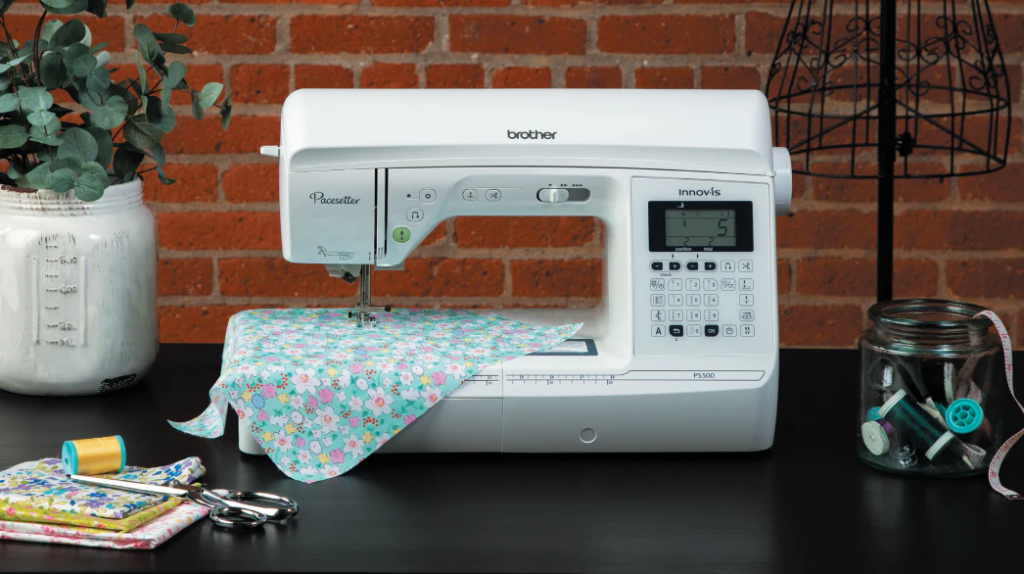
The first time I saw the Brother PS500, I wondered why it was special. It’s a good option, especially if you’re someone who might be newer to sewing, or just want a reliable machine that doesn’t empty your bank account. This machine is jam-packed with features inside its body, and it’s designed to help streamline your sewing projects.
I was immediately impressed by the speed. The Brother PS500 sewing machine has a maximum sewing speed of about 850 stitches per minute, which is quite zippy for this type of machine. That means you can zip through bigger projects more quickly, and that’s always a good thing, if you ask me. It’s certainly one of the faster models available, and that makes it a candidate for the best Brother sewing machine for beginners who want plenty of room to grow.
Apart from speed, the PS500 includes quite a range of inbuilt stitches. At 100 stitches and seven one-step buttonholes, it has far more sewing options than the knit basics required to create everything in my handmade-closet rotation, and way too many for mending or occasional decorative work. A small mix of lettering fonts is also included, which is a nice feature to personalize items. Some of the time-saving functions of the Brother PS500 sewing machine include the automatic needle threader and thread cutter.
Apart from speed, the PS500 includes quite a range of built-in stitches. With 100 stitches and seven one-step buttonholes, it has more options than most casual home sewers will need. If you’re just getting familiar with different stitch types, it also helps to understand basic sewing machine parts and what each function does.
Key Features of the Brother PS500
When I first used the Brother PS500, I was hit by how it seemed like features were designed not only for an already-experienced sewer, but for a beginner. Here’s a roundup of what makes us sit up and take notice, and that makes sewing with this machine seem more like a pleasure than work.
Built-In Stitches and Stitch Variety
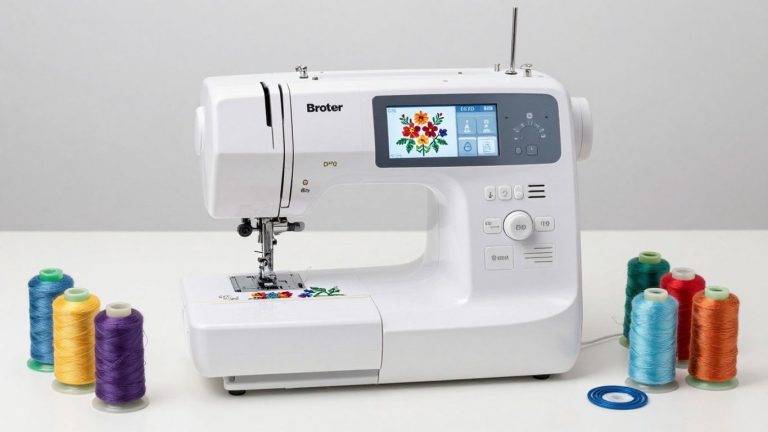
One of the best highlights of the Brother PS500 is the wide variety of built-in stitches. With 100 built-in and decorative stitches, plus 7 buttonhole styles and 4 lettering fonts, it’s simple to add personality to just about any project.
Here’s a quick breakdown of its stitch features:
| Feature | Number / Type |
|---|---|
| Utility & Decorative Stitches | 100 stitches |
| Buttonhole Options | 7 (one-step) |
| Lettering Fonts | 4 |
| Max Stitch Length | 5 mm |
| Max Stitch Width | 7 mm |
If you love decorative elements for things like aprons or home décor, you might enjoy trying them on a simple project like this how to sew an apron tutorial.
Changing stitches is straightforward using the clear LCD display. It’s far more convenient than older mechanical machines like the one I reviewed in my Janome JW8100 review.
Changing stitches is straightforward using the clear LCD touchscreen. It’s miles ahead of the dial-and-guess routine from my old machine.
Adjustable Speed Control
Sometimes I like to sew slowly for tight corners, and other times I want to zip through long seams. The Brother PS500’s adjustable speed control lets me set the pace I want, no foot pedal needed if I’m feeling hands-free.
Highlights of the speed feature:
- Top speed: 850 stitches per minute
- Slider to easily set your pace
- Start/Stop button for pedal-free sewing
I honestly wish every machine had a speed slider. It took away a lot of the tension, especially on fiddly projects.
Ease of Use for Beginners and Experienced Users
I’ll confess that at first I was a little concerned about those buttons and menus. But when I dropped in, I was surprised at how easily I got into it. Some things I loved:
- The automatic needle threading? Total game changer, I can’t be doing with squinting and fiddling.
- Easy-to-read threading guilde and numbered guide. Automatic thread cutter, so I didn’t have to keep looking for my sewing scissors
- LCD touch screen with icons for easy operation of the machine, remote thread cutting, quilting, and sewing tutorials and patterns, and a digital stitch length and width control.
- On-screen tutorials are waiting if you get stuck (I did, albeit temporarily). It’s a way to get less time flipping through the manual, and more time stitching.
Overall, I feel that the Brother PS500’s ease of use do live up to their guarantees. Whether you sew a lot or are returning to it after some time away, its features seem to be working with you, not against.
If you’re assembling your first sewing toolkit, pairing this machine with one of the best sewing box options or beginner-friendly sewing kits for beginners you can buy online makes the setup much smoother.
Performance and Stitch Quality
When I sat down with the Brother PS500 for the first time, my mind was racing with thoughts about how it would perform under different types of fabrics and stitches. OTHERS I’ve had machines that promise lots, but are then crap at anything other than plain cotton. This one, though, surprised me.
I began with a few straight stitch lines on a quilting cotton, and the PS500 glided through easily. The quality of the stitches was uniform, and I experienced no skipped stitches or inconsistent tension. Then I took to it with a swatch of denim, and lo and behold, it took care of that too without even a whimper. The machine offers good sewing speed, with a maximum of 850 stitches per minute, which seemed quite fast enough for me, especially when using the speed control feature.
Here’s a quick look at how it performed with different stitch types:
- Straight Stitch: Excellent, consistent, and strong.
- Zigzag Stitch: Even and adjustable for width.
- Satin Stitch: Dense and smooth, great for decorative elements.
- Buttonhole Stitches: Clean and well-formed, though I only tested a couple.
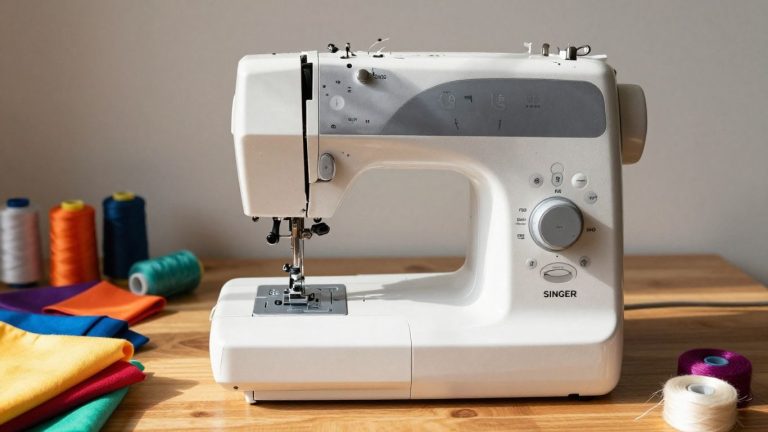
Compared to heavier mechanical machines like the one in my Singer 4452 heavy duty sewing machine review, the PS500 feels lighter but still stable for everyday sewing.
If you want to compare stitch performance with another computerized model, take a look at my Janome MC6650 review as well.
I enjoyed the fact that it stitched all of the fabrics quite well.3943 In general, I was amazed by how perfect in quantity were the stitches it made. It seems like a sturdy workhorse for everyday sewing.
User Interface and Controls
As soon as I keyed in on the Brother PS500, one of its most defining features came shooting out at me. The interface isn’t cluttered with buttons or complicated settings, and immediately struck me as being friendly, especially compared to some other machines I’ve used with overwhelming displays. The LCD screen is a little plain but readable, and the physical buttons make it easy to change stitches or adjust settings.
Pros and Cons of the Brother PS500
Here are the pros and cons of the Brother PS500 that can help you in deciding whether you should consider it or not.
Pros of the Brother PS500
- The buttons are labelled with good readability, which is nice when you need to whip the machine in a hurry.
- The LCD screen displays just as much information as you need to without flashing any distracting icons or menus.
- Speed is just as simple to adjust; flick the speed dial back and forth with your thumb, and you’re good to go.
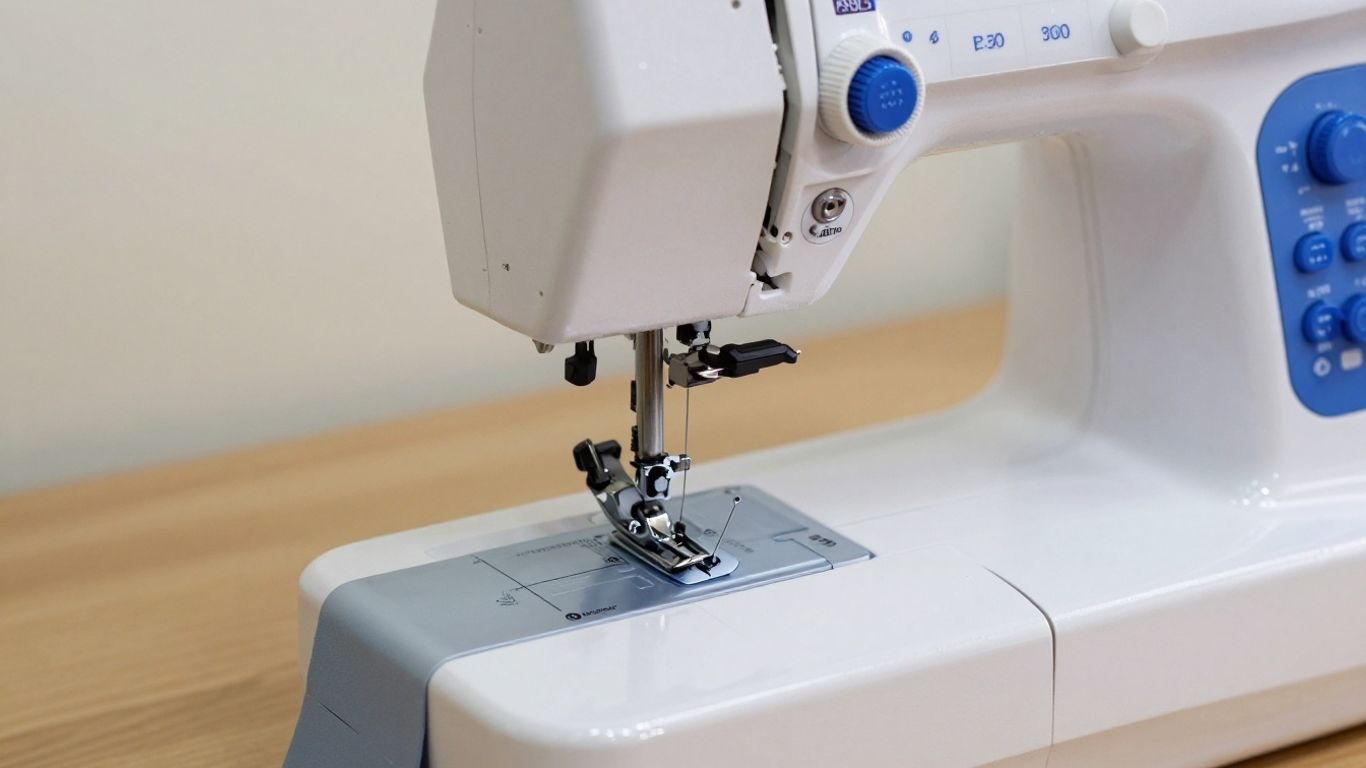
- Threading and bobbin-winding are easily accessible without the need to lift or lower the work surface.
All of this adds up to an approachable PS500, whether I’m teaching my son something new or figuring out a troublesome project myself.
Here’s a short table comparing the main user control features:
| Feature | Brother PS500 | Average Competitor |
|---|---|---|
| LCD Screen | Yes | Sometimes |
| One-touch Stitch Change | Yes | Rarely |
| Speed Control Slider | Yes | Sometimes |
| Memory for Custom Stitches | No | No |
The fewer controls and easy layout on the PS500 mean I spend less time fiddling and more time actually sewing.
Cons of the Brother PS500
- The LCD is unilluminated, so it can be hard to see in dim rooms.
- Needs you to get physical: No touchscreen, all control is with buttons, which may not appeal to those wanting more modern controls.
- And if you’re in a hurry, it’s easy to accidentally push the wrong button, because some are near one another.
- I wish that there were a direct numerical input for the stitch length on your machine instead of little tiny increment buttons.
While it doesn’t have the flashiest controls compared to some, like the Brother CS7205, the PS500’s simplicity actually helps me stay focused on my sewing instead of the tech. For me, that’s a big positive, even with a few minor annoyances. If I needed lots of storage or a brightest-possible screen, I might look for something else, but I appreciate just how easy it is to just sit down and get started.
Comparison with Other Sewing Machines
When researching the Brother PS500, I knew that this would be a popular model, so naturally, we wanted to see how it measures up against other project runway and comparable models on the market. In my experience and in looking at easy-to-use sewing machine reviews, the PS500 falls into a very competitive category, right alongside machines like the Baby Lock Presto, Janome 4120QDC, and even its brother (pun intended), the Brother PS700.
Here’s a practical breakdown to make this clearer:
| Feature | Brother PS500 | Baby Lock Presto | Janome 4120QDC | Janome 5300QDC |
|---|---|---|---|---|
| Built-In Stitches | 100+ | 100+ | 120 | 300 |
| Automatic Thread Trimmer | Yes | Yes | Yes | Yes |
| Throat Space (inches) | 8.5 | 8.5 | 6.7 | 6.7 |
| Speed Control | Yes | Yes | Yes | Yes |
| Price Range (USD) | $850 – $900 | $800 – $850 | $700 – $800 | $900 – $1000 |
A couple of biggies have popped for me from testing and doing some hands-on sewing:
- A more generous throat space on the PS500 (and others built off it, like the Presto) means you can truly stretch out with larger projects, like quilts.
- The thread trimmer and the needle up/down are basic features, but once you get used to having them, machines that don’t have them start to feel a little sad.
- While the Janome 5300QDC has a lot of stitches, the touchpoints and screen on the PS500 just seem slightly more streamlined if you don’t yet have an intuitive grasp of computer controls.
The Brother PS500 strikes a nice balance for me, it’s simple enough for beginners, but you won’t age out of it in six months. And with a speed of up to 850 stitches per minute at your disposal (per the effective PS500 specs), you won’t find yourself hanging around on larger seams either.
Long story short, if you like a good smattering of stitch choices, some workspace, and an interface that won’t make you feel lost in the snowstorm when working on a project, the PS500 is pretty kick-butt relative to others I’ve tried. It’s not going to match the features of some of Janome or Baby Lock’s higher-end machines (you know, like those multi-function knee lifts), but at this price, it’s very hard to beat.
Brother PS500 vs Janome HD3000
When I went to the machine for testing the Brother PS500 and Janome HD3000, I didn’t think they’d be such a close match on some aspects, but that’s because they’re really designed for different types of sewists. The PS500 is packed with modern features, while the HD3000 plays Luddite and sticks to mechanical. If you’re concerned with convenience and digital controls, the PS500 is light years ahead. On the other hand, if you prefer something a bit more rugged with a no-nonsense feel, learn towards the HD3000.
Here’s a quick rundown to compare the two with what I think matters most when you’re bouncing between basic projects and more creative sewing:
| Feature | Brother PS500 | Janome HD3000 |
|---|---|---|
| Stitch Options | 100 built-in | 18 built-in |
| Buttonholes | 7 one-step | 1 one-step |
| Max Sewing Speed (SPM) | 850 | 860 |
| Interface | LCD touch screen | Mechanical dials |
| Weight | Lighter, portable | Heavier, sturdy |
| Automatic Needle Threader | Yes | Yes |
| Thread Cutter | Yes | Manual |
| Workspace (inches) | 8.3 × 4.1 | Standard |
Here are some reasons I might prefer one over the other:
- The 500 is packed with creative features, including free-arm sewing, automatic buttonholes, and a drop feed for free-motion stitching; it also includes decorative stitches such as scallop, and five styles of one-step buttonhole.
- The Janome HD3000 does a little better with heavy fabrics, due to its sturdy frame and comparatively simplistic construction.
- For rapid preparation and cycle-through of many stitches, the PS500 provides wonderful time-saving ease, particularly for those who enjoy this type of computerized convenience.
And on some days, I love the extra stitch selection and faster setup of the Brother PS500 because it makes my sewing SO much more fun and less frustrating.
Brother PS500 vs Brother XM2701
As I was researching sewing machines, I saw the Brother PS500 and Brother XM2701 talked about a lot. They’re both Brother, which is a brand I trust, but they felt pretty different. I wanted to try to determine which one might be a better choice for someone like me, who is not a complete beginner but also isn’t sewing haute couture.
It seems that the PS500 is intended for further developed sewers as it has a touch screen and an automatic thread cutter. It has 100 built-in stitches, which is a lot, and even some lettering. I noticed that it has a big workspace, around 8.3 inches, cool if you’re going to be working on larger projects or quilting. I also loved the speed control and start/stop button, which makes it easier to maneuver when I am not using the foot pedal.
Here’s a quick look at some of the differences I found:
| Feature | Brother PS500 | Brother XM2701 |
|---|---|---|
| Built-in Stitches | 100 | 27 |
| Workspace | 8.3 inches | Standard |
| Automatic Thread Cutter | Yes | No |
| Display | Color LCD Touch Screen | Dial and buttons |
| Price Range | Higher | Lower |
For me, the PS500 seemed a step up, with more creative options and convenience features that I imagine would save time. The XM2701 is solid, there’s no question, but it seemed more basic, a good thing if all you’re after are a few indispensable stitches to get started.
Brother PS500 vs JUKI HZL-29Z
When I see the Brother PS500 and the JUKI HZL-29Z, it’s like two different approaches to home sewing. Juki, as a company, is pretty industrial focused and you can really see that come through in some of their more speciality models. They’re newer to the everyday home machine market here in the States, and while they also make some really good machines, I personally found that with several of their home models out there, it seemed as though the little finishing touches just didn’t come together on them as well as some of what Brother or Janome is dishing out.
The PS500, however, feels like it’s built with habitual home use squarely in mind. (It’s part of a platform that Brother shares across several of their machines, and it has some features, like a spacious throat space and automatic thread trimming, that I consider pretty big conveniences.) The JUKI HZL-29Z is a less advanced model and sometimes regarded as a nice beginner choice. It gets the job done for simple projects, but it’s missing some of the bells and whistles that can make sewing more fun and easier.
Here’s a quick rundown of how they stack up:
- Brother PS500: Same built-in stitches, auto thread trimming, and stitch throat space is bigger. It’s made for a more fluid and feature-rich experience.
- JUKI HZL-29Z: A basic, no-nonsense machine. This is less complicated. It’s dependable for simple sewing needs but it doesn’t come with the advanced features of the PS500.
As for me, I’d go with the PS500 for all-around home sewing. The powered thread cutter alone is a total game changer for me, and the short time I’ve spent using it has been as much about keeping myself calm as keeping my thinning hair in my head. And the extra stitches and the slightly more polished feel of the machine give it a nicer hand to use, day in, day out.
Comparing More Brother Sewing Machines?
If you are still deciding which Brother model is right for your projects, our full guide can help you compare more options. Check out our complete roundup of the best Brother sewing machines before making your final choice.
Who Should Buy the Brother PS500?
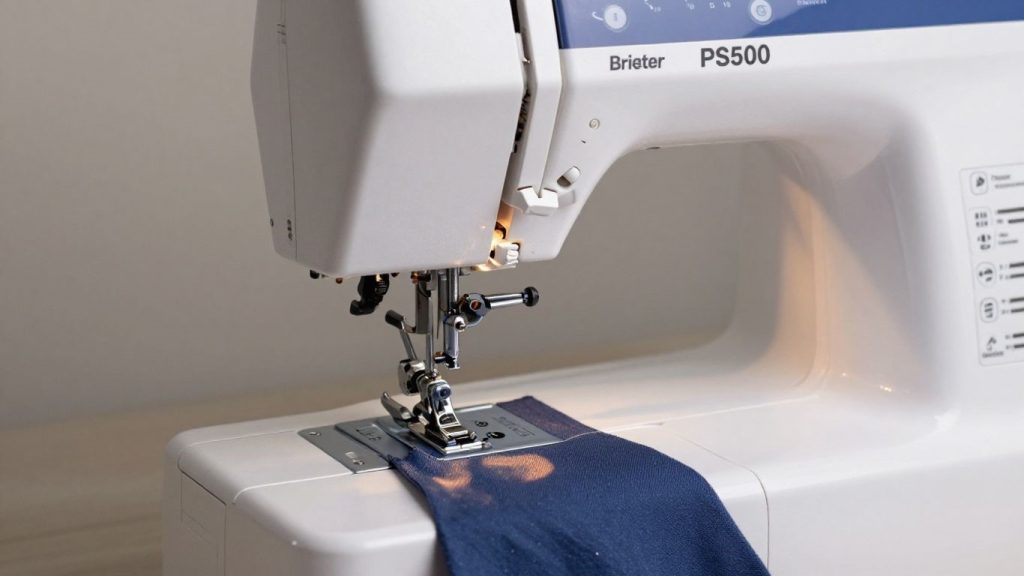
So, who exactly is the Brother PS500 sewing machine for? Having spent a little time with it, I think it’s a sweet spot for certain kinds of sewers.
First of all, if you’re someone who used to sew but has maybe taken a break as I did, this machine could act as the perfect re-entry point. It has plenty of modern features to simplify things. Have you ever tried an automatic needle-threader and thread cutter? , without being so complex that it makes your head spin. The 100 included stitches offer a wide variety of applications for all types of projects, including fashion, quilting and home decor. It’s a good upgrade from an older basic machine.
Here’s a quick rundown of who I think would benefit most:
- Intermediate Sewers: Those who want even more stitch options and conveniences such as an automatic thread cutter.
- Hobbyists: Who need a dependable machine for projects from quilting to clothing construction.
- Newcomers with a Dream: Those who need a machine they can grow with as their skills develop.
- Those Seeking Convenience: If you are looking for time-saving and frustration-reducing features such as the auto-threader and speed control.
If quilting is your main focus, my roundup of the best quilting sewing machine may also help you compare options.
My Final Thoughts on the Brother PS500
After spending some time with the Brother PS500 review, I’ve been relatively impressed. It’s not perfect, sure, some people complain about threading issues, it is too light or the stitches aren’t working perfectly for them- but it’s been a good machine for me. I love the automatic thread cutter and start/stop button combo, especially on arthritic days.
If you’re comparing it directly with other Brother models, make sure to also read my Brother CS7205 review and Brother CS7000X review before making a decision.
For everyday sewing, creative projects, and steady growth as a hobbyist, the PS500 makes sewing feel less intimidating and more enjoyable.
Frequently Asked Questions
What makes the Brother PS500 good for beginners?
I found the Brother PS500 to be super easy to get started with. The instructions are really clear, and it has features like an automatic needle threader that make things much simpler. Plus, the speed control lets me go slow when I need to, which is great when I’m just learning.
How many stitches does the Brother PS500 have, and are they useful?
This machine comes with 100 built-in stitches, which is a lot! I can do all sorts of basic sewing, plus some fancier decorative ones. It also has different buttonhole styles, which I really appreciate for making my projects look more professional.
Is the Brother PS500 good for sewing thicker materials?
From my experience, it handles most fabrics well. However, some users have mentioned that it can struggle with very thick materials, and a needle might break. It’s probably best for medium-weight fabrics and standard sewing projects.
What are the main convenience features of the Brother PS500?
I really love the automatic thread cutter – it saves so much time! The automatic needle threader is also a lifesaver. Plus, there’s a start/stop button, so I don’t always have to use the foot pedal, which is nice for my hands.
How easy is it to thread the Brother PS500?
For me, threading the machine is pretty straightforward, especially with the automatic needle threader. Some people have found it a bit tricky at first, but once you get the hang of it, it becomes much easier.
Can I use the Brother PS500 for projects like quilting?
Yes, I think it’s a good option if you’re interested in quilting. It has a decent workspace size, and the smooth sewing makes it work well for piecing quilt blocks. Some people even use it for larger quilting projects, though a dedicated quilting machine might be better for very advanced work.