
Best Kitchen Appliances for Everyday Cooking in 2026: 5 Picks Worth Buying
The best kitchen appliances are not the ones with the longest feature lists; they are the tools that remove friction from meals you already cook. For everyday use, I prioritize appliances that save prep or cooking time, fit the available counter and storage space, are realistic to clean, and perform more than one useful job without becoming clutter.
For this 2026 guide, I focus on five current small appliances that cover crisping, blending, chopping, pressure cooking, baking, roasting, reheating, and batch meal prep. I also explain how to choose capacity, wattage, controls, materials, storage, and maintenance so you can tell whether an appliance will actually earn a permanent place in your kitchen.
Quick Answer: What Are the Best Kitchen Appliances to Buy in 2026?
For most home cooks, the most useful upgrades are a good air fryer, a high-performance blender, a full-size food processor, a 6-quart multicooker, and a versatile countertop convection oven. My five 2026 picks are the COSORI TurboBlaze 6-Quart Air Fryer, Vitamix Propel 510, Cuisinart Custom 14-Cup Food Processor, Instant Pot Duo 6-Quart, and Breville Smart Oven Air Fryer Pro. Each had a current or recent Amazon US listing in October 2026; inventory, seller, color, bundle, and price can change, so verify the live listing before buying.
Key Takeaways
The right appliance should solve a repeated task without creating a bigger problem with storage, cleanup, installation, or maintenance. I use these principles before I compare brands or special modes.
- Choose appliances that simplify tasks you do every week.
- Match appliance capacity to your household size and storage space.
- Measure counter space, clearance, ventilation, and storage access before buying.
- Look for dishwasher-safe and easy-to-clean removable parts.
- Consider motor performance, airflow, blade design, and temperature control, not just wattage.
- Prioritize useful, easy-to-repeat settings over unnecessary presets.
- Verify current Amazon availability, pricing, seller, color, and bundle before buying.
How I Test and Use Kitchen Appliances at MariaSew
I test kitchen appliances in the way I would actually live with them: on a normal counter, with everyday recipes, repeat batches, awkward cleanup, storage limits, and the kinds of rushed weeknight decisions that expose whether a product is genuinely convenient. I look at how quickly I can understand the controls, whether the stated capacity is useful in practice, how consistently the appliance repeats a result, and whether I still want to use it after the novelty wears off.
For air fryers and countertop ovens, I compare browning, reheating, batch size, preheat behavior, hot spots, and cleanup. For blenders, I work through smoothies, frozen ingredients, sauces, purées, and thicker mixtures. For food processors, I check chopping, slicing, shredding, dough or mixing tasks, feed-tube convenience, and bowl cleanup. For multicookers, I focus on pressure cooking, sautéing, rice, batch meals, steam release, lid cleaning, and whether one-pot cooking actually saves effort.
- Everyday usefulness. I ask whether the appliance solves a real task often enough to justify permanent counter or cabinet space.
- Performance consistency. I repeat common tasks instead of judging one best-case result.
- Capacity and ergonomics. I check bowl, basket, pitcher, rack, lid, handle, feed-tube, and control placement with normal household portions.
- Cleanup. I time how much disassembly, hand-washing, wiping, and drying are required after realistic use.
- Noise and heat. I note motor noise, fan noise, hot exterior areas, steam, and ventilation needs because these affect where the appliance can live.
- Safety and maintenance. I follow the manufacturer manual for pressure release, hot liquids, blades, heating surfaces, dishwasher use, and replacement parts.
MariaSew publishes kitchen and home appliance reviews under the same hands-on editorial standard described on the About MariaSew page and review policy.
How to Choose the Best Kitchen Appliances for Everyday Cooking
I start with the meals I actually make, not the kitchen I imagine I might have one day. A smoothie drinker, batch-meal cook, baker, and air-fryer user need different tools, and buying all four only makes sense if all four jobs really happen in the household.
Before comparing models, I measure the available space and check power, ventilation, lid or door swing, delivery path for larger appliances, and where the cord reaches. I also compare long-term cleanup and maintenance because a powerful appliance that is annoying to wash often becomes an expensive cabinet resident.
What You Cook Most Often
Start with repeated meals and prep steps. If you regularly reheat crispy food, an air fryer can earn daily use; if you make smoothies, soups, sauces, or nut-based blends, a strong blender may save more time.
Capacity and Household Size
Capacity should match normal portions rather than the largest meal you cook once a year. A 6-quart air fryer or multicooker suits many small-to-medium households, while a 14-cup food processor is most useful when prep volume is genuinely high.
Counter Space, Height, and Storage
Measure width, depth, height, handle projection, lid swing, and ventilation clearance. A countertop oven can replace several small appliances, but it also claims far more permanent space than a compact blender or pressure cooker.
Power, Temperature, and Motor Design
Wattage helps describe electrical demand, but it is not a quality score. Airflow design, heating elements, temperature control, blade design, gearing, and motor engineering determine how efficiently that power turns into cooking or blending performance.
Controls and Learning Curve
I prefer controls that make the common task obvious. Presets are useful when they repeat a result reliably, while manual time, temperature, speed, pulse, or pressure controls matter when recipes vary.
Cleaning and Dishwasher-Safe Parts
Removable baskets, bowls, pitchers, lids, racks, and blades should be easy to rinse and safe to clean according to the manual. Dishwasher compatibility is valuable, but I still check for crevices around seals, blade hubs, heating elements, and control panels.
Safety and Materials
Pressure cookers need correct lid locking and steam-release habits; blenders need care with hot liquids and blades; air fryers and ovens need ventilation and heat clearance. I also verify food-contact materials and follow the manufacturer instructions instead of assuming every coating or container handles the same temperatures.
Warranty, Parts, and Long-Term Value
A useful warranty, replacement bowls, baskets, seals, racks, blades, and service support can matter more than one extra preset. I prefer established models with parts ecosystems when the appliance is expensive enough to repair rather than replace.
Kitchen Appliance Features & Specifications That Matter
Specifications are most useful when they answer a practical question. Capacity tells me how much I can prepare, dimensions tell me whether the product fits, and power or temperature range tells me what kind of cooking or processing the appliance is designed to handle.
The table below is a buying checklist rather than a ranking. The exact target changes by appliance category, so I use it to compare models doing the same job rather than comparing a blender watt-for-watt with an oven.
| Feature / Spec | Why It Matters | What I Check |
|---|---|---|
| Capacity | Determines useful batch size | Basket/bowl/pitcher volume and realistic serving size |
| Dimensions | Controls counter and storage fit | Width, depth, height, handle/lid/door clearance |
| Power | Describes electrical demand and available output | Watts, voltage, required circuit, motor or heating design |
| Temperature / speed range | Controls versatility | Useful low and high settings, not just maximum number |
| Programs / functions | Can reduce setup time | Whether presets solve tasks you actually repeat |
| Food-contact parts | Affects cleanup and long-term use | Dishwasher-safe status, coatings, stainless steel, BPA-free plastics |
| Controls | Affects learning and repeatability | Manual dials, digital display, pulse, timers, memory, safety locks |
| Warranty & parts | Affects long-term value | Warranty length, replacement seals, bowls, baskets, racks, blades |
I treat these specs as filters, then judge the actual workflow. A slightly smaller appliance that cleans quickly and fits the counter can be a better everyday purchase than a larger model that is constantly moved in and out of storage.
5 Best Kitchen Appliances Worth Buying for Everyday Cooking in 2026
These five picks cover five different high-frequency jobs: crisping and reheating, high-power blending, large-batch chopping and slicing, pressure cooking and one-pot meals, and countertop baking or roasting. I would not buy all five automatically; I would start with the one that replaces the most repeated work in my own kitchen.
- Best air fryer: COSORI TurboBlaze 6-Quart Air Fryer for fast crisping, reheating, roasting, and a compact 6-quart footprint.
- Best blender: Vitamix Propel 510 for smoothies, frozen blends, soups, sauces, purées, and variable texture control.
- Best food processor: Cuisinart Custom 14-Cup DFP-14BCNY for large-batch chopping, slicing, shredding, and dough or mixing prep.
- Best multicooker: Instant Pot Duo 6-Quart for pressure cooking, rice, slow cooking, sautéing, steaming, yogurt, and meal prep.
- Best countertop oven: Breville Smart Oven Air Fryer Pro BOV900 for baking, roasting, toast, air frying, reheating, proofing, and dehydrating.
Each review below includes the current manufacturer specifications I consider most relevant, plus practical strengths, limitations, and the type of cook I think should buy it.
1. COSORI TurboBlaze 6-Quart Air Fryer – Best Air Fryer for Everyday Meals
The COSORI TurboBlaze is the product I would put first for a household that wants faster weeknight vegetables, chicken, frozen foods, leftovers, and smaller roasted meals without heating a full-size oven. Its dark-gray CAF-DC601-KUS model combines a 6-quart basket with 1,725 watts, a 90°F to 450°F temperature range, nine cooking functions, and five fan speeds that COSORI assigns automatically to different modes.
What makes it practical is the balance between capacity and cleanup. The 6-quart basket is large enough for many 3-to-5-person sides or mains, yet the footprint is still manageable, and the PFAS-free ceramic-coated basket and crisper plate are dishwasher safe. I would choose it over a large oven-style air fryer if crisping speed and easy basket cleanup matter more than cooking on multiple racks.
6-Quart Capacity and 1,725W Heating
COSORI has a 6 qt / 5.7 L capacity for roughly 3 to 5 people and 1,725 watts of rated power. The square basket uses space efficiently for vegetables, proteins, frozen food, and reheating.
90°F to 450°F Temperature Range
The low end supports proofing and dehydrating-style tasks, while 450°F gives the appliance enough headroom for browning and broiling-style finishes. I still follow the programmed mode and recipe rather than assuming maximum heat is always faster.
9 Cooking Functions and 5 Fan Speeds
Air Fry, Roast, Bake, Broil, Dehydrate, Frozen, Proof, Reheat, and Keep Warm cover the tasks I would actually use. COSORI pairs those functions with five fan speeds rather than asking the user to tune airflow manually.
PFAS-Free Ceramic-Coated Basket
The dark-gray model uses a PFAS-free ceramic-coated nonstick basket and crisper plate. Both are dishwasher safe, which is one of the biggest reasons I would use an air fryer repeatedly rather than only for occasional recipes.
Compact Angled Controls and Auto Shutoff
The angled control panel is easy to read from a normal standing position, and the appliance pauses or shuts off when the basket is removed or an overheating condition occurs. That makes routine checking less awkward.
Pros
The TurboBlaze is strongest when speed, crisping, and cleanup are more important than multi-rack capacity.
- Fast high-airflow cooking. A strong choice for fries, vegetables, chicken, reheating pizza, and other foods that benefit from rapid surface drying.
- Useful 6-quart size. Large enough for everyday family portions without taking the space of a countertop oven.
- Wide temperature range. Supports reheating, proofing, dehydrating, roasting, baking, and higher-heat finishing.
- Dishwasher-safe food-contact parts. The basket and crisper plate are easy to remove and clean.
- Simple mode-based airflow. Nine functions and five automatically matched fan speeds reduce setup guesswork.
Cons
The trade-offs are mostly about basket format and the limits of a single cooking chamber.
- One basket only. Two foods needing different times or temperatures cannot cook independently.
- Not a full oven replacement. Large casseroles, sheet pans, pizzas, and multiple racks are better suited to a countertop or full-size oven.
- Large batches can lose crisping. Crowding the basket reduces airflow and may require shaking or multiple batches.
Final Verdict
I would buy the TurboBlaze for fast weeknight crisping, vegetables, proteins, frozen foods, and leftovers. It offers one of the best combinations of 6-quart capacity, temperature range, cleanup, and simple controls in this group.
For more category picks, see MariaSew’s Best Air Fryers in 2026.
2. Vitamix Propel 510 – Best Blender for Smoothies, Soups & Sauces
The Vitamix Propel 510 is the blender I would choose when texture matters more than bargain pricing. Its 2 HP motor, 48-ounce container, 10 variable speeds, Pulse control, and three programs for Smoothie, Hot Soup, and Frozen Dessert give me enough manual range for sauces and purées while still offering walk-away convenience for the recipes I repeat most often.
The 48-ounce pitcher is a smart middle size for individual servings and family-sized blends without making small batches awkward. Vitamix also makes the container and lid dishwasher safe, and the laser-cut stainless-steel blades are designed for repeated high-performance blending. It costs much more than a basic personal blender, so I would only choose it if smoothies, soups, frozen mixtures, sauces, or purées are regular parts of the week.
2 HP High-Performance Motor
Vitamix rates the Propel 510 at 2 horsepower. The motor has enough reserve for frozen fruit, ice, fibrous greens, sauces, thick purées, and recipes that overwhelm smaller personal blenders.
48-Ounce Container
The 48-ounce pitcher is sized for midsize batches rather than commercial-volume blending. I find that more practical for everyday smoothies, soups, dressings, and family sauces.
Three Automatic Programs
Smoothie, Hot Soup, and Frozen Dessert programs handle the three jobs where repeat timing is most useful. I still use manual speeds when I want a specific chopped or textured result.
10 Variable Speeds and Pulse
The manual dial gives far more texture control than a simple low/high blender. Pulse helps with chunky salsa, coarse chopping, or layering texture over an already smooth base.
Dishwasher-Safe BPA-Free Container
The Eastman Tritan container and lid are BPA-free and dishwasher safe. Easy cleanup matters on a blender because dried food around the lid and blade area is one of the fastest ways to stop using it.
Pros
The Propel 510 justifies its premium price through power, control, and repeatable texture rather than through a huge menu of presets.
- Excellent texture control. Ten speeds and Pulse let me move from coarse chopping to smooth purées.
- Strong frozen-ingredient performance. The 2 HP motor is built for ice, frozen fruit, greens, and thick mixtures.
- Useful midsize container. The 48-ounce pitcher works for everyday household batches without being oversized.
- Three practical programs. Smoothie, Hot Soup, and Frozen Dessert are more useful than dozens of niche presets.
- Five-year limited warranty on the current new model. The warranty and established parts ecosystem improve long-term value for an expensive blender.
Cons
This is a premium blender, so its disadvantages are mostly cost, noise, and the space required for a full-size motor base.
- Expensive. It costs several times more than a basic personal blender.
- Loud at high speed. High-power blending is not quiet, especially with ice or frozen ingredients.
- No small personal cup included. The standard package centers on the 48-ounce container and mini tamper rather than grab-and-go cups.
Final Verdict
I would choose the Propel 510 for someone who blends several times per week and cares about smooth texture, frozen ingredients, hot soup programs, and long-term serviceability. For occasional protein shakes, it is more blender than you need.
It also fits the kinds of multi-purpose tools covered in MariaSew’s kitchen appliances for baking guide.
3. Cuisinart Custom 14-Cup DFP-14BCNY – Best Food Processor for Batch Prep
The Cuisinart Custom 14-Cup is the food processor I would buy when prep volume is the problem. A 14-cup bowl and 720-watt motor make sense for repeated vegetable chopping, slicing, shredding cheese, mixing, and dough-related prep, while the extra-large feed tube reduces how much produce needs to be cut down before processing.
This model is intentionally simpler than touchscreen processors with many automatic modes. The value is in the large work bowl, stainless chopping/mixing blade, 4 mm slicing disc, medium shredding disc, durable motor, and straightforward controls. It is a serious countertop appliance at 15.7 pounds, so I would buy it for real batch prep rather than one onion at a time.
14-Cup Work Bowl
The large bowl is the main reason to choose this Cuisinart. It handles family meal prep, shredded vegetables, chopped ingredients, sauces, and larger batches without constant emptying.
720-Watt Motor
Cuisinart pairs the large bowl with a 720-watt motor designed for chopping, shredding, slicing, mixing, and dough prep. The motor is covered by a longer five-year warranty than the rest of the unit.
Extra-Large Feed Tube
The wide feed tube accepts larger pieces of fruit and vegetables, which cuts down on pre-chopping. That convenience matters when the processor is supposed to save prep time.
Stainless Slicing, Shredding & Chopping Tools
The standard package includes a 4 mm slicing disc, medium shredding disc, chopping/mixing blade, detachable stem, and spatula. Those cover the everyday prep jobs I would use most.
Dishwasher-Safe Removable Parts
Cuisinart states that all parts except the motor base are dishwasher safe. That makes a large processor much easier to justify after messy shredding, dough, or sauce tasks.
Pros
The Custom 14 is strongest for volume, durability, and classic food-processor tasks rather than digital automation.
- Large 14-cup capacity. Excellent for meal prep, families, holidays, and larger chopping or shredding jobs.
- Powerful 720W motor. Strong enough for the processor tasks this bowl size is designed to handle.
- Wide feed tube. Reduces the amount of knife work needed before slicing or shredding.
- Useful included discs and blade. The core accessories cover chopping, mixing, slicing, and shredding without filler attachments.
- Strong warranty structure. Cuisinart has a five-year motor warranty and three-year warranty on the full unit.
Cons
A large food processor only makes sense when you have the counter or cabinet space and enough prep volume to justify it.
- Bulky and heavy. At roughly 15.7 pounds, it is not a tool I would want to move from a high shelf every day.
- Overkill for tiny jobs. A knife, mini chopper, or blender can be faster for one small ingredient.
- Storage for discs and accessories. The processor is only part of the footprint; the removable tools need a safe storage spot too.
Final Verdict
I recommend the Cuisinart Custom 14 for cooks who batch-chop, slice, shred, or prep dough often enough to exploit the large bowl. It is a workhorse, not a space-saving gadget.
4. Instant Pot Duo 6-Quart – Best Multicooker for One-Pot Meals & Meal Prep
The Instant Pot Duo 6-Quart is the appliance I would pick for someone who wants to reduce active cooking time rather than make food crispy. It combines pressure cooking, slow cooking, sautéing, steaming, rice, yogurt, and keep-warm functions in one 6-quart pot, with 13 customizable one-touch programs for common dishes.
The stainless 18/8 inner pot with a tri-ply bottom can go from sautéing aromatics to pressure cooking without changing pans, and the 6-quart size is rated for up to six servings. I especially like it for beans, soups, stews, rice-based meals, shredded meats, batch cooking, and meal prep. The learning curve is mostly about pressure and steam release, so I would read the manual before the first real recipe instead of learning while the pot is hot.
7 Cooking Functions
Pressure Cook, Slow Cook, Sauté, Steam, Rice, Yogurt, and Keep Warm cover the high-frequency one-pot jobs. The value comes from replacing several single-purpose appliances, not from owning another countertop gadget.
13 Customizable Programs
The one-touch programs can speed up common recipes, but I still treat them as starting points because ingredient quantity and recipe style affect cook time and release method.
6-Quart Stainless Steel Inner Pot
The 18/8 stainless steel pot uses a tri-ply bottom and is sized for up to six servings. Stainless steel avoids a permanent nonstick coating and handles sautéing before pressure cooking.
Easy-Release Steam Switch and Safety Systems
Instant Pot uses an Easy-Release switch and has more than 10 safety mechanisms. Safe pressure cooking still requires correct sealing, liquid quantity, fill level, and release method.
Dishwasher-Safe Lid and Inner Pot
The removable lid components and inner pot can go in the dishwasher as directed, which makes batch cooking much easier to repeat during the week.
Pros
The Duo is the most versatile one-pot appliance in this group and can replace several separate cooking tools for the right household.
- Seven core cooking functions. Pressure, slow cook, sauté, steam, rice, yogurt, and keep warm cover a wide range of everyday meals.
- 6-quart family capacity. A practical size for meal prep and up to about six servings.
- Stainless steel inner pot. Durable, coating-free food-contact surface with a tri-ply base for sautéing.
- Fast pressure cooking. Instant Pot states pressure cooking can be up to 70% faster than traditional slow cooking methods for suitable recipes.
- Easy cleanup. The lid and inner pot are dishwasher safe according to current manufacturer guidance.
Cons
Pressure cooking is powerful, but it is not the best method for every texture and adds a safety learning curve.
- No crisping or browning after pressure cooking without another step. Foods needing a dry crisp finish still need broiling, air frying, or pan finishing.
- Pressure-release technique matters. Quick release is not appropriate for some fatty, starchy, expanding, or thick foods.
- Large lid and base need storage. Even a 6-quart multicooker occupies significant counter or cabinet space.
Final Verdict
I would buy the Instant Pot Duo for soups, beans, rice, stews, meal prep, and one-pot cooking where unattended time matters more than crisp texture. It remains one of the most practical ways to combine multiple wet-cooking methods in one appliance.
5. Breville Smart Oven Air Fryer Pro BOV900 – Best Countertop Oven for Versatility
The Breville Smart Oven Air Fryer Pro is the appliance I would choose when one large countertop machine needs to handle baking, roasting, toast, pizza, air frying, proofing, reheating, slow cooking, and dehydration. Its 1-cubic-foot interior can fit nine slices of toast, a 13-inch pizza, most 9 x 13-inch pans, a 12-cup muffin tray, or a 14-pound turkey, which makes it much closer to a compact second oven than a basket air fryer.
Breville combines 1,800 watts with six independent quartz heating elements, Element IQ power management, PID temperature control, and Super Convection. I like it for households that frequently bake or roast smaller meals and want to avoid heating a full-size oven. The trade-off is obvious: it is large, heavy, and far more expensive than a dedicated air fryer, so the versatility only pays off if you use several of its cooking modes.
13 Cooking Functions
Toast, Bagel, Broil, Bake, Roast, Warm, Pizza, Proof, Air Fry, Reheat, Cookies, Slow Cook, and Dehydrate cover far more than air frying. This is the best pick here for replacing several countertop cooking appliances.
1-Cubic-Foot Interior
The oven fits nine slices, a 13-inch pizza, most 9 x 13-inch pans, a 12-cup muffin tray, or a 14-pound turkey. That capacity is the main reason it can act as a true second oven.
Element IQ and PID Temperature Control
Breville uses six heating elements and electronic power management to direct heat where it is needed. PID control helps reduce temperature overshoot for more stable baking and roasting.
Super Convection Airflow
The high-speed convection fan is designed to move hot air aggressively for faster cooking and crisping. It can shorten cooking time on suitable modes while also helping with dehydration and air frying.
80°F to 480°F Range and 1,800W Power
The wide official temperature range supports proofing at the low end and high-heat roasting or crisping at the top. The 1,800W draw means I would confirm available counter clearance and circuit load before making it a permanent station.
Pros
The Breville earns its counter space when it replaces several jobs rather than being used only for toast.
- Huge countertop versatility. Thirteen functions cover baking, roasting, air frying, proofing, reheating, slow cooking, dehydration, and more.
- Large usable interior. It can handle common bakeware and larger foods that simply do not fit in basket air fryers.
- Strong temperature control. Element IQ and PID control are useful for baking and roasting, not just crisping.
- Super convection. High airflow improves browning and can reduce cooking time on suitable foods.
- Useful as a second oven. It is especially valuable for small batches, holidays, hot-weather cooking, or kitchens where the full-size oven is often occupied.
Cons
This is the largest and heaviest appliance in the list, and it only makes sense if its multi-function capacity gets frequent use.
- Large footprint. At roughly 21.4 inches wide and nearly 39 pounds, it needs a permanent counter position and ventilation room.
- Premium price. It costs much more than a basket air fryer or basic toaster oven.
- More cleaning surface. Racks, crumb tray, air-fry basket, pans, and the oven interior create more cleanup than a removable air-fryer basket.
Final Verdict
I recommend the Breville BOV900 to serious home cooks and bakers who will use it as a genuine second oven. If you mainly want fries and reheated leftovers, the COSORI is smaller, faster to clean, and easier to justify.
If you are deciding between basket and oven-style air frying, read Air Fryer vs. Convection Oven.
Best Kitchen Appliances Comparison
These five products should not be judged only by price or wattage because they solve different cooking problems. I compare them by the job they replace, usable capacity, main control strength, and the reason I would choose each one.
Before using the table, decide whether your biggest daily friction is crisping, blending, knife prep, one-pot cooking, or oven capacity. That one answer will usually eliminate most of the list immediately.
- Choose COSORI for fast crisping, reheating, vegetables, proteins, and frozen foods.
- Choose Vitamix for smoothies, sauces, soups, purées, frozen mixtures, and texture control.
- Choose Cuisinart for high-volume chopping, slicing, shredding, and prep.
- Choose Instant Pot for pressure cooking, rice, soups, stews, beans, and meal prep.
- Choose Breville for baking, roasting, toast, pizza, countertop oven cooking, and air frying in one large cavity.
| Product | Type | Capacity / Power | Core Specs | Best For | Amazon US Check |
|---|---|---|---|---|---|
| COSORI TurboBlaze | Air fryer | 6 qt / 1,725W | 90–450°F; 9 functions | Fast crisping + easy cleanup | Active Amazon US listing checked Oct. 2026 |
| Vitamix Propel 510 | Blender | 48 oz / 2 HP | 10 speeds; 3 programs | Smooth texture + power | Recent Amazon US listing checked Oct. 2026 |
| Cuisinart DFP-14BCNY | Food processor | 14 cup / 720W | Slice, shred, chop/mix | Large-batch prep | Active Amazon US listing checked Oct. 2026 |
| Instant Pot Duo 6QT | Multicooker | 6 qt / 1,000W | 7 functions; 13 programs | One-pot meals + pressure cooking | Active Amazon US listing checked Oct. 2026 |
| Breville BOV900 | Countertop oven | 1 cu ft / 1,800W | 13 functions; 80–480°F | Second-oven versatility | Active Amazon US listing checked Oct. 2026 |
The comparison also shows why there is no single best appliance for every kitchen. A high-performance blender can be a better investment than an air fryer for one household, while a countertop oven can replace multiple smaller appliances for another.
Essential Small Kitchen Appliances: What Actually Earns Counter Space?
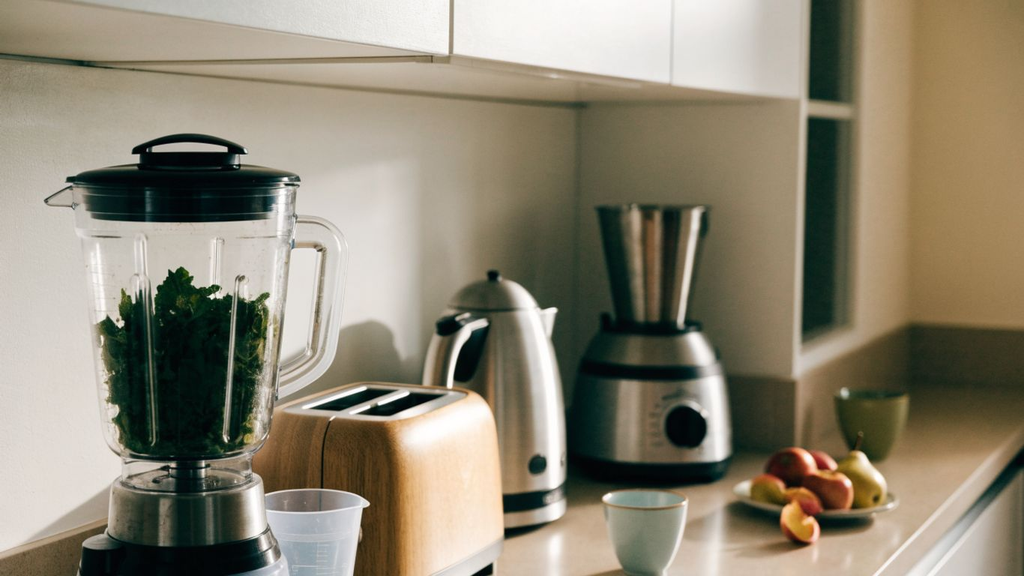
Small appliances are most valuable when each one has a defined job. I do not recommend filling the counter with overlapping tools; I would rather keep one strong appliance for each repeated task and store the lower-frequency tools.
- Air fryer or countertop oven. Useful if you repeatedly reheat, crisp, roast, toast, or cook small meals.
- Blender. Worthwhile for smoothies, soups, sauces, purées, frozen drinks, or emulsified dressings.
- Food processor. Best when chopping, shredding, slicing, dough, or bulk prep is a repeated bottleneck.
- Multicooker. Useful for beans, rice, soups, stews, braises, meal prep, and hands-off pressure cooking.
- Coffee maker. A high-use appliance for coffee households, but the right type depends on brew method, capacity, and morning routine.
- Kettle or toaster. Simple single-purpose appliances can still offer excellent value when the task happens every day.
Coffee is a separate category with very different needs, so I keep those picks in MariaSew’s Best Coffee Makers for Home guide.
The useful question is not whether an appliance is popular. It is whether I can name the specific task it will save me from doing slowly or inconsistently next week.
Large Kitchen Appliances Worth Prioritizing First
Before buying countertop appliances, make sure the permanent kitchen basics fit the way the household cooks and cleans. Refrigerators, ranges or cooktops, dishwashers, and microwaves affect every day and are expensive to correct if the dimensions or installation needs are wrong.
For major appliances, I focus less on feature count and more on fit, layout, electrical or fuel requirements, ventilation, service access, and the full cost of ownership.
Refrigerator
Choose capacity and shelf/freezer layout around grocery habits, then measure the opening, door swing, handle clearance, ventilation gap, and delivery path. Smart features are secondary if the drawers and shelves do not fit the food you actually buy.
Range or Cooktop
Match fuel type, burner or element layout, oven capacity, ventilation, and controls to your cooking style. If you use several pans at once, usable spacing can matter more than a long list of specialty modes.
Dishwasher
Rack design, loading access, capacity, filter maintenance, cycle options, and noise matter more than a decorative control panel. Bring your typical plates, bowls, glasses, and pans to mind when comparing rack geometry.
Microwave
Size the cavity and power around the dishes you normally reheat, then check counter or built-in dimensions. Clear controls, sensor reheating, defrost behavior, and easy interior cleaning are more useful than modes you never select.
Which Kitchen Appliances Are Worth the Investment?

I consider an appliance worth the investment when it improves a routine often enough that the time, consistency, or convenience is obvious. Purchase price is only one cost; counter space, storage, replacement parts, cleaning time, accessories, electricity, and eventual repair all belong in the decision.
The most expensive appliance is not automatically the best value, and a cheap gadget is not a bargain if it gets used twice. I would rather buy one durable appliance that solves a weekly problem than three overlapping products that live in a cabinet.
- Frequent use. An appliance used three to five times per week can justify a higher price more easily than a specialty tool used monthly.
- Multi-function without compromise. Extra functions add value when they perform well enough to replace another appliance you would otherwise own.
- Easy maintenance. Replaceable seals, blades, baskets, racks, and bowls can extend useful life.
- Appropriate capacity. Paying for oversized capacity wastes space if you rarely fill it.
- Service and warranty. An established support network matters more as the purchase price rises.
If the appliance does not solve a recurring problem, waiting is often the better purchase decision. Track the task for a few weeks and see whether the inconvenience is frequent enough to justify dedicated equipment.
How to Get the Most From Your Kitchen Appliances
I get more value from an appliance when I learn the basic manual controls instead of relying only on presets. A quick read of the manual is especially important for pressure release, hot liquids, dishwasher-safe parts, ventilation, blade handling, heating surfaces, and any food-contact coating limitations.
- Use the correct capacity. Overfilling an air fryer, blender, processor, or pressure cooker reduces performance and can create safety problems.
- Clean soon after use. Food residue is easier to remove before it dries around blades, seals, baskets, racks, and heating areas.
- Keep vents and heating zones clear. Countertop ovens, air fryers, and motor bases need airflow and safe distance from walls or heat-sensitive objects.
- Inspect wear parts. Pressure-cooker seals, blender containers, processor blades, baskets, cords, and plugs should be replaced when damaged.
- Store accessories together. A labeled bin or drawer prevents discs, racks, tampers, steam racks, and manuals from becoming separated from the appliance.
Good maintenance does not make every appliance last forever, but it protects performance and makes it easier to recognize a real fault before forcing a damaged part or unsafe cooking cycle.
Common Kitchen Appliance Buying Mistakes to Avoid
Most disappointing appliance purchases are predictable. They happen when the buyer optimizes for a sale price or impressive feature list before checking the actual kitchen, recipe habits, cleaning tolerance, and overlap with tools already owned.
- Buying before measuring. Counter depth, cabinet height, lid swing, handle projection, ventilation, and outlet location can make an otherwise excellent appliance unusable.
- Choosing the largest capacity by default. Oversized appliances consume counter space and can perform poorly on very small batches.
- Ignoring cleanup. If removing and washing the food-contact parts feels like a project, the appliance will be used less often.
- Comparing wattage as if it were performance. Power is only one input; heating design, airflow, blades, controls, and vessel geometry matter.
- Paying for overlapping appliances. A large countertop oven may already cover toast, air fry, reheat, bake, and roast, reducing the need for separate tools.
- Assuming every blender handles hot liquids the same way. Follow the specific manufacturer instructions for hot ingredients and venting.
- Treating pressure release as a generic step. Use the release method specified by the recipe and manufacturer, especially with thick, fatty, starchy, or expanding foods.
- Ignoring replacement parts and warranty. A cheaper appliance can cost more long term if a failed seal, bowl, basket, or blade cannot be replaced.
- Publishing or buying from stale stock information. Amazon inventory and pricing change quickly, so verify the exact model, ASIN or listing, seller, and delivery status at the time of purchase.
A good buying decision feels boring on paper: the appliance fits, the task is frequent, cleanup is acceptable, replacement parts exist, and the controls make sense. Those are the traits that create real daily value.
Final Verdict: Which Kitchen Appliances Are Actually Worth Buying?
The appliances worth buying are the ones that remove repeated friction from cooking. For fast crisping, I would start with the COSORI TurboBlaze; for serious blending, the Vitamix Propel 510; for large-batch prep, the Cuisinart Custom 14; for one-pot cooking, the Instant Pot Duo; and for a versatile second oven, the Breville Smart Oven Air Fryer Pro.
I would not buy all five simply because they are good products. Start with the appliance that solves the most frequent problem in your kitchen, measure the space, confirm the cleanup and electrical requirements, and add another tool only when it handles a genuinely different job.
Frequently Asked Questions
What kitchen appliances are most useful for everyday cooking?
For many households, an air fryer, blender, food processor, multicooker, or countertop oven can provide the biggest time savings. The best choice depends on whether your repeated bottleneck is crisping, blending, chopping, one-pot cooking, or baking and roasting.
Which kitchen appliance should I buy first?
Buy the appliance that solves the task you perform most often. If you reheat and crisp food daily, start with an air fryer; if you make smoothies or sauces constantly, a blender may deliver more value.
Is an air fryer worth buying if I already have a convection oven?
Sometimes. A basket air fryer usually heats a smaller chamber and can be faster for small crispy portions, while a convection oven handles larger batches and bakeware. MariaSew has a dedicated air fryer vs convection oven comparison for this decision.
What size air fryer is good for a family?
A 6-quart basket works well for many small-to-medium households, but actual capacity depends on the food shape and whether you need a single layer for crisping. Larger families may prefer dual-basket or oven-style models.
Is a Vitamix worth the price?
It is easier to justify if you blend several times per week, use frozen or fibrous ingredients, care about smooth texture, and value the warranty and parts ecosystem. Occasional smoothie users can spend much less.
What is the difference between a blender and a food processor?
A blender is optimized for liquids, smoothies, purées, soups, and emulsions. A food processor is better for chopping, slicing, shredding, mixing, and high-volume solid-food prep.
Is a 6-quart Instant Pot big enough?
For many households, yes. Instant Pot rates the Duo 6QT for up to six servings, making it a practical size for meal prep, soups, rice, beans, and family one-pot meals.
Can a countertop oven replace a full-size oven?
For many small meals and baking tasks, a large countertop oven can reduce use of the main oven, but it does not replace the capacity, built-in ventilation, or multi-rack volume of every full-size range.
How do I know if an appliance is easy to clean?
Check which food-contact parts are removable and dishwasher safe, then look at seals, blade hubs, racks, crumb trays, basket coatings, and areas where grease or food can collect.
Should I buy kitchen appliances from Amazon?
Amazon can be convenient for pricing and delivery, but verify the exact model, seller, warranty eligibility, return policy, and current stock. Availability can vary by ZIP code and seller.
How often should kitchen appliances be cleaned?
Follow the specific manufacturer instructions. Food-contact parts should generally be cleaned after use, while vents, heating areas, seals, filters, or internal surfaces have model-specific maintenance schedules.
How can I avoid buying appliances I will not use?
Track the kitchen task you want to improve for two or three weeks. If it happens often and the appliance clearly reduces time or effort without creating a storage problem, the purchase is easier to justify.




3 Comments