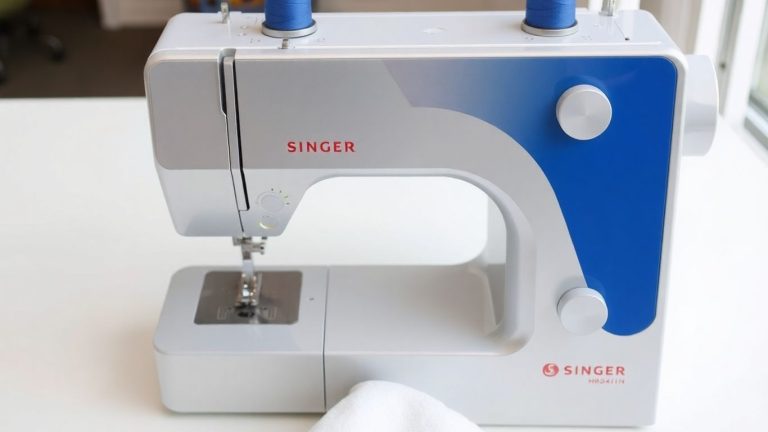

SINGER M2100 Review (2026): Best Lightweight Sewing Machine for Beginners?
I’ve been looking into sewing machines lately, and the SINGER M2100 keeps popping up. It’s marketed as a lightweight option, perfect for beginners or anyone with limited space.
I wanted to see if it really lives up to the hype, especially for someone just starting in the sewing world. So, I decided to dig into what this machine actually offers and how it performs.
Key Takeaways
- The SINGER M2100 is a lightweight and portable machine, making it easy to move around and store, which is great for small spaces or taking to classes.
- It’s designed with beginners in mind, featuring simple controls and clear instructions, though some users have found the manual less than helpful.
- The machine offers a decent selection of stitch options for basic sewing tasks like hemming and crafting.
- While many find it easy to use, some users report issues with the machine jamming or needles breaking, suggesting inconsistent build quality.
- It’s a budget-friendly option, but potential buyers should weigh the ease of use against reports of reliability issues and consider alternatives if they need a more robust machine.
Introduction: Is the SINGER M2100 the Right Choice for You?

So, you’re considering taking the plunge into sewing, or perhaps you just need a basic machine to make quick fixes at home. And that is where I was a few months ago. I wanted something simple, not very complicated, and certainly not an enormous investment. The SINGER M2100 kept showing up in my searches, frequently referred to as a great beginner option. So I tried it to see if it was the real deal.
Basically, at first sight, the M2100 was just what I wanted, pretty basic. It’s lightweight, which is a huge perk if you don’t have a permanent sewing area and need to stash it when not in use. I know some machines are massive, and frankly, that’s not right for me. This one feels manageable.
I wondered how many actual different stitches it had. Some reports indicate 8, others indicate 63 applications stitching. This can be a bit confusing, but essentially means it can do a good range of basic sewing tasks. For someone like me, who just wants to hem pants or fix a ripped seam or maybe try a piece of simple craft work, that seems like plenty. Having the right stitches and having them work properly is far more important than a million fancy options.
For anyone just starting, the most important question is: ‘Is this going to work for me without turning into a total headache?’ I knew I was concerned about this. The thought of having to thread it and then wind bobbins and just get it running smoothly seems like a big hurdle. Many users, myself included, happily reported that the instructions were surprisingly clear. It’s not like building IKEA furniture from sketchy diagrams.
Those seeking a machine that won’t break the bank and will allow them to dive into projects without having a steep learning curve, then the SINGER M2100 is definitely worth checking out. It’s a decent option for basic sewing needs, and I’m glad I made it part of my own sewing journey.
So, you’re considering taking the plunge into sewing, or perhaps you just need a basic machine to make quick fixes at home. If you’re just starting, learning basics like how to thread a sewing machine and understanding sewing machine parts can make things much easier.
Key Features and Specifications of the SINGER M2100
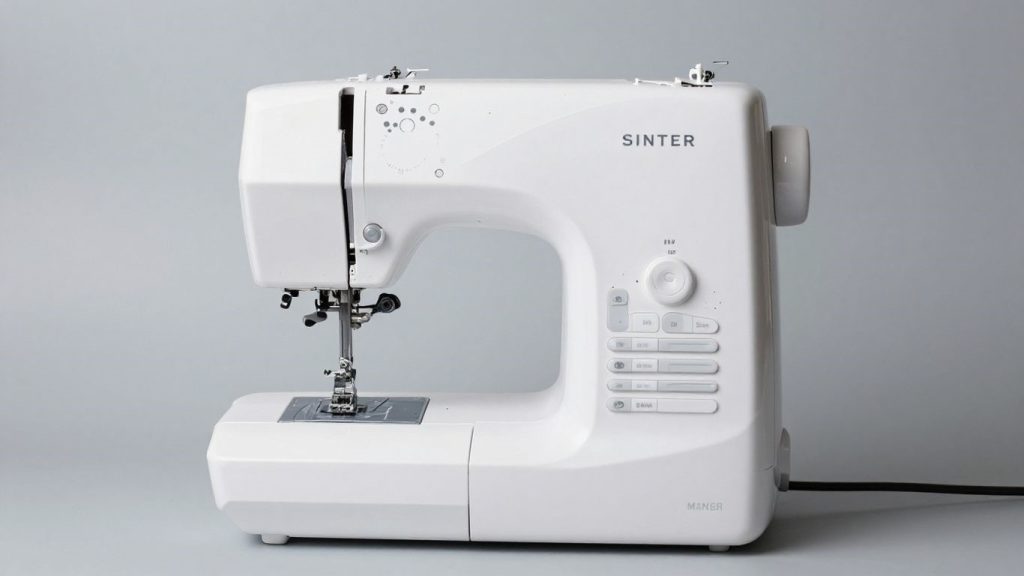
When I first looked at the SINGER M2100, I wanted to know what made it tick, especially since it’s marketed as a beginner-friendly machine. It’s not just about the stitches; it’s about how it all comes together.
Stitch Options and Capabilities
M2100 features 63 stitch applications, which doesn’t sound nimble for a sewing machine, but you are going to see in reality what that means. These are mostly variations of basic stitches, such as straight stitches and zig-zags with pre-determined lengths and widths. This removes any guesswork for beginners, which is a huge positive.
You receive essential stitches for everyday tasks like hemming, mending, and simple decorative work. It’s no fancy machine for quilting or embroidery, but it hits the ground running, if only with basic garment repair and beyond.
It’s no fancy machine for quilting or embroidery, so if you’re specifically looking for quilting machines, you might want to explore best quilting sewing machine for more advanced options.
Ease of Use for Beginners
That’s where the M2100 should excel, or so it hopes. Singer has worked hard to make the threading process easy. There are obvious diagrams right on the machine, and bobbin winding is pretty easy, too. For a newbie, the pre-established stitch settings are really a lifesaver.
No twiddling with little dials to achieve the correct length and width of a stitch, you simply select the one that’s required. It genuinely makes sewing tasks even easier for users of pretty much all skill levels, a definite benefit when you’re still figuring out how to sew.
For a newbie, the pre-established stitch settings are really a lifesaver. Pairing this with the right beginner tools like those in sewing kits for beginners can make your sewing journey even smoother.
Build Quality and Durability
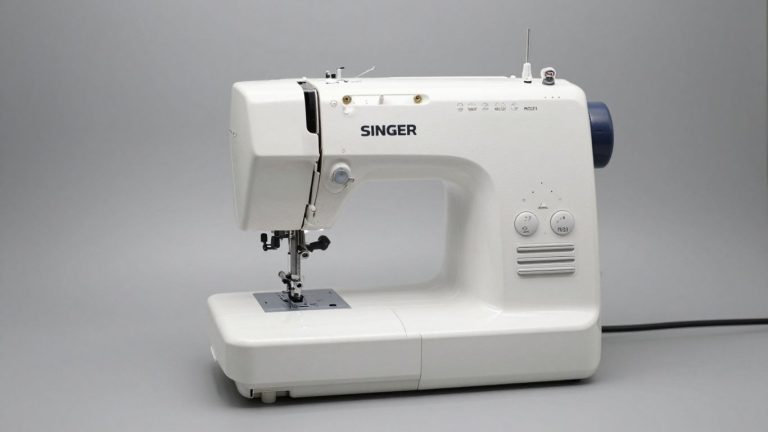
For an ultralight, the M2100 feels quite solid. It sported a metal frame on the inside, which adds some weight and stability to it, as you need a bit of that so that the sewing machine doesn’t move around too much while you’re creating. It’s not a heavy-duty industrial machine, but it appears to be built to withstand years under typical home conditions.
Functional and apparently durable for their intended purposes, the accessories that come with it (e.g., all-purpose foot, zipper foot, and buttonhole foot) are sufficient.
Weight and Portability
This is a big selling point. The SINGER M2100 is very light: it weighs ~12lbs. This makes moving around super easy! It’s simple to stash away in its soft cover after use if space is an issue. It’s also ideal if you plan on bringing it to sewing classes or over to a friend’s home. It’s not exactly pocket-sized, but it is very portable.”
The machine includes a fair assortment of accessories, such as needles, bobbins, a seam ripper, and several types of presser feet. It’s nice of them to provide the essentials so you can jump straight into sewing, although you will eventually want to expand your collection of feet for advanced projects.
Performance: How Does the SINGER M2100 Sew?
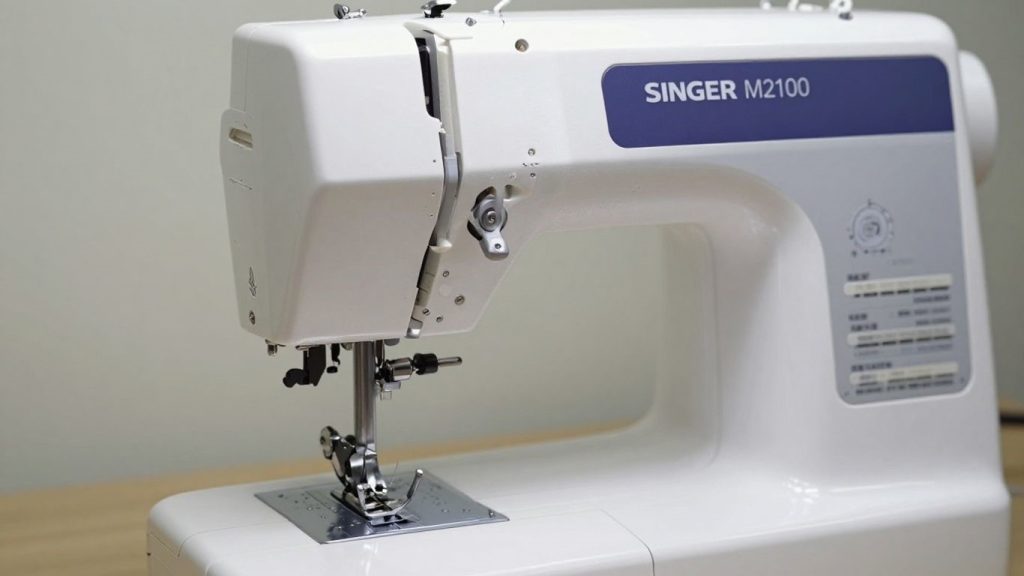
I wondered if the SINGER M2100 could match the hype of all those lightweight sewing machine reviews when I first got my hands on it. To be honest, I wanted something that wouldn’t frighten me off as a new sewer, but would still stand up to my random home projects, and it’s been interesting to see how it fares.
When I searched for beginner sewing machines, I also compared it with other popular models like Brother CS7000X review and Brother CS7205 review to see how it stacks up.
Sewing Different Fabric Types
The first aspect I wanted to test out was the M2100’s material management. Since I mostly work with cotton and light denim, that was the first material I made my way through. Here’s what I noticed:
- Cotton fabric stitches easily, with no skipped stitches.
- Light denim feeds through easily (use the right needle), but I wouldn’t attempt anything thicker, like heavy canvas.
- Stretch fabrics (like T-shirts) are a little more challenging to prevent puckers, but the adjustable tension helps with that.
- Thin fabric, such as muslin, is perfectly fine, but you just must take the process slowly and ensure that your thread and needle match.
| Fabric Type | Stitch Quality | Difficulty Level |
|---|---|---|
| Cotton | Good | Easy |
| Light Denim | Decent | Moderate |
| Jersey / Stretch | Fair | Moderate |
| Canvas / Heavy | Struggles | Difficult |
If you’re mostly into alterations, crafts, or if you’re looking for a singer sewing machine for small projects, this model will handle your needs—so long as you don’t expect to sew heavy curtains or thick quilts.
Thread Tension and Stitch Quality
The thread tension is also well set up out of the box, making for some surprisingly easy first runs. I had only minor problems using really thin or thick threads, but the tension dial is easy to change. When you’re after the best beginner sewing machine quality, most stitches come out crisp and even. Here are a few observations:
- Many stitches come with preset stitch length and width, taking away a lot of guesswork.
- Reverse lock start and end of seams.
- I do occasionally get thread jams (typically when I am in a hurry with bobbin winding), but they are easy to clear.
- The needle-spotlight is plenty bright for evening sewing, which helps in seeing the stitching details.
When I searched for beginner sewing machines, the features essential for an easy-to-use sewing machine kept coming up. The M2100 hit those notes, no elaborate LCDs or myriad buttons, and you can really sense how it’s marketed to neophyte sewers.
For basic mending, simple clothes, and crafty stuff, the SINGER M2100 seemed like the best portable sewing machine for home that I’ve used to date.
This is not the sewing machine for those with zero experience, but if you want a lightweight sewing machine for your kitchen table or a sewing machine at home for new sewers in particular, this model won’t let you down. Just remember it’s built for lightweight stuff, not big heavy workloads. And it covers all the bases of what people need for getting started.
Pros and Cons of the SINGER M2100
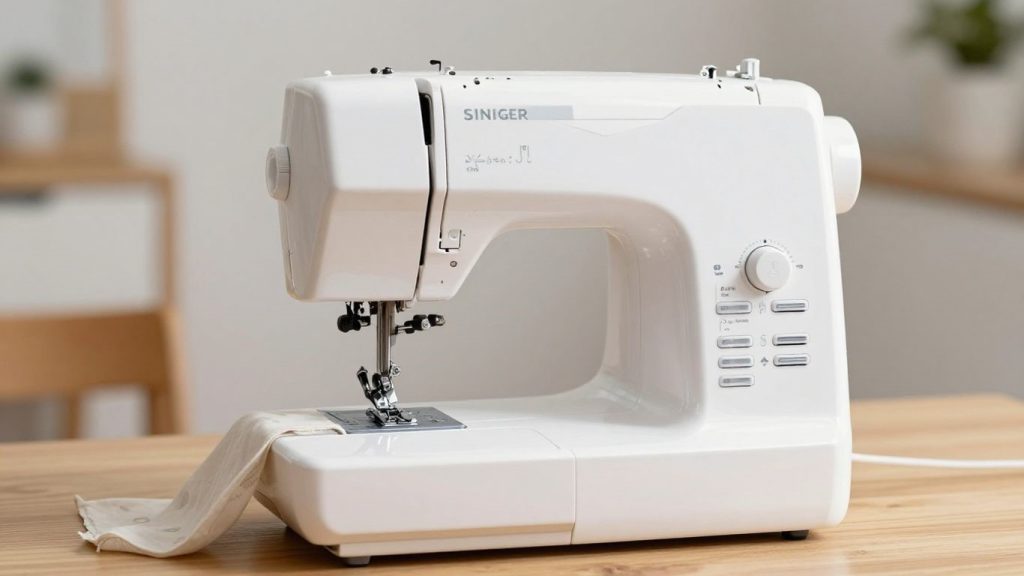
So, after spending some time with the SINGER M2100, I’ve put together my thoughts on what’s great about it and where it might fall a little short. It’s definitely a machine with a lot going for it, especially if you’re just starting.
It’s more focused on simpler tasks. For embroidery or more advanced sewing, machines like Brother SE2000 review or Janome MC6650 review might be better suited.
Pros of the SINGER M2100
- Easy to Operate for Beginners: This is arguably its biggest selling point. The controls are simple, the directions mostly unambiguous. I found that it was pretty easy to set up and get started, which is a huge relief when you’re new to sewing. It really removes the intimidation factor from consideration.”
- Compact and Portable: This thing is so light. I can pick it up and move it from my craft table to a shelf, without breaking a sweat. If you don’t have a lot of space or intend to take it to classes with you, this is a real bonus. It’s not such a burden to carry.
- Good Basic Stitch Variety: The M2100 isn’t a computerized powerhouse, but it does have an ample selection of stitch applications. It does well for basic tasks like hems, seam fixes, or simple craft projects. You can spend less time fussing and more time sewing with preset stitch settings.
- Great Value: M2100, amongst many machines, is affordable. It’s a great entry-level machine that doesn’t require a huge investment, making it attainable for many people getting started sewing.
Cons of the SINGER M2100
- Build Quality Can Feel Basic: While there is a lot of aluminum here, some of the parts are on the plasticky side. It doesn’t exude that heavy-duty, all-metal feel of older and tougher machines. For light projects, it’s all right, but I wouldn’t push it too much with thicker fabrics or constant, heavy use.
- Little to No Advanced Features: For those who intend on doing intricate quilting or complex garment construction, this machine could feel a bit rudimentary. It’s missing some of the finer adjustments and specialized stitches that more experienced sewers may look for. It’s more focused on simpler tasks.
- Intermittent Threading Quirks: The instructions for threading were generally excellent, but there were a few times I found threading the bobbin or the top thread was slightly fussy. It wasn’t an issue all the time, but it is something to watch out for, particularly when you’re rushed.
On the whole, the SINGER M2100 is a great machine for beginners or if you simply need easy, no-nonsense sewing on a basic level. Its portability and ease of use are its strong suits, making it a good starting point for those interested in sewing without feeling intimidated. This is a good option for mending and basic projects.
Alternatives to the SINGER M2100
If the M2100 doesn’t seem quite right for you, there are other machines to consider. A competing model is the Brother XM2701, which is often compared and also has a similar beginner-oriented feature set. If you just want the barest essentials, check out the Singer Start 1304, which is even more basic than this (and both cheaper and simpler).
For those wanting a slightly more capable but beginner-friendly machine, the Singer M1500 can also be considered an upgrade. If you are considering simpler models, it is also always wise to check out reviews for machines like the SINGER M1000 sewing machine.
If you’re exploring alternatives, you can also look into more capable machines like Janome JW8100 review or even compare different machine types in this guide on serger vs sewing machine.
Comparing the Singer M2100 with Other Machines
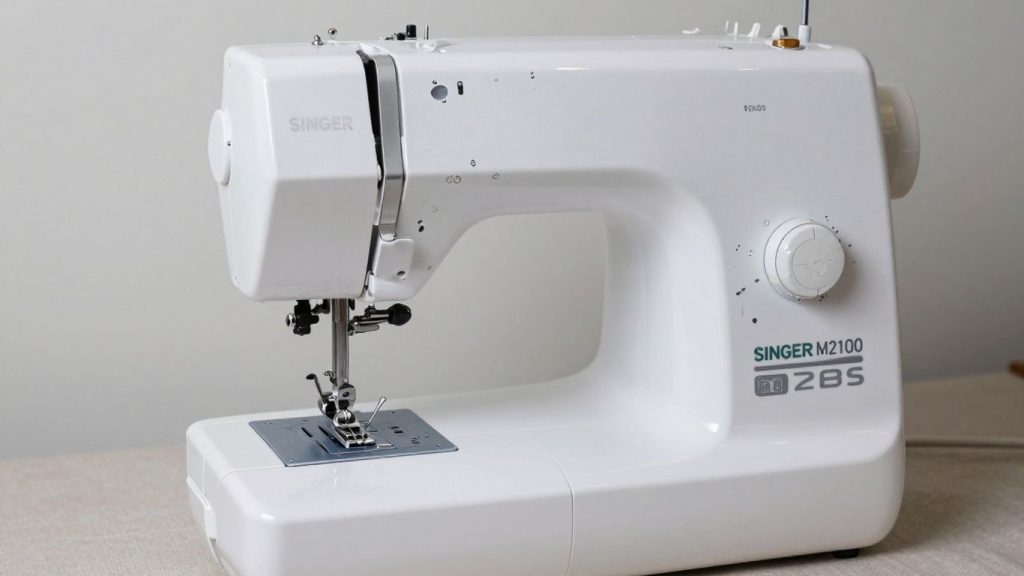
When I’m looking at a new sewing machine, especially one for beginners, I always like to see how it stacks up against some of the other popular options out there. It helps me get a better feel for what I’m actually getting for my money. So, let’s put the Singer M2100 next to a couple of its close competitors.
When comparing machines, it’s always helpful to understand your needs first. Whether you want something basic or more advanced, reviewing options like SINGER HD500 review can give you better perspective.
SINGER M2100 vs Brother XM2701
This is a pretty familiar comparison, and for good reason. Both are frequently touted as good options for new users. The Brother XM2701 comes with a few more built-in stitches; if you think you’ll want to do some variety early on, that might be appealing.
But I thought the M2100 was a little simpler to use. That simplicity can be a game-changer for someone just starting. Despite both being pretty featherweight, the M2100 does feel a little more solidly built.
SINGER M2100 vs Singer Start 1304
The Singer Start 1304 and the M2100 are in comparison. The Start 1304 is even more bare-bones, which may be good if you truly want the most basic machine possible. It has fewer stitches, and it keeps the essentials.
The M2100 is a few notches up in flexibility with stitch selection (about 63 stitch applications compared to the basic 6 of the 1304), but without being a complex one. If I had to choose one for a beginner who might want to try several things in the future, then I’d go for the M2100.
SINGER M2100 vs Singer M1500
Another best-selling machine that is frequently mentioned when discussing compact sewing machine recommendations is the M1500. It is practically the same size and weight as the M2100, so portable. The biggest difference I noticed is again in the stitch selection. The M1500 has a reasonable number of stitches; the M2100 frequently has a higher number, which is enticing. Both are excellent sewing machines for new users, but the M2100 appears to have a slight edge in terms of balancing features with ease of learning (for me anyway). It’s not super complicated, but there’s enough there to grow into for a bit.
Throughout the entire machine-honing process, I always think about the learning curve. A machine that’s too simple may soon leave you wanting more, while one that’s too complex can be off-putting. For a lot of beginners, the M2100 tends to hit that good spot.
So, What’s the Verdict on the Singer M2100?
After getting to know the Singer M2100 a little better, it’s easy to see why this model is so popular for beginners. It is extremely lightweight, though, which can be a big advantage if you don’t have a dedicated sewing space or need to store it away. As far as setup and getting the basic stitches going, it went pretty directly, and I didn’t feel completely lost, which is always a good sign. It coped well with simple tasks like hemming pants and mending seams without too much fuss.
I did encounter a few hiccups, however, literally, with the thread getting jammed up from time to time, and on a couple of occasions, the needle gave up. It’s not a top-of-the-line machine for serious projects, but to learn the basics or take care of everyday repairs, it works. If you just want a no-frills, easy-to-thread machine to get your sewing journey off the ground, the M2100 is worth consideration. It’s very affordable, as long as you don’t mind a hiccup or two along the way.
Frequently Asked Questions
Is the Singer M2100 really good for beginners?
Yes, I believe the Singer M2100 is a good option for beginners. It is something that many users have said they find super easy to work out, even if you’d never seen inside a sewing machine. The instructions tend to be fairly straightforward, and it offers simple controls that won’t overwhelm you.
How heavy is the Singer M2100?
It is known to be a lightweight machine. It is also convenient if you have a small area in your house that will be used to sew, if you need to take it to sewing class. It was easy to get around without straining yourself.
What kind of projects can I do with the Singer M2100?
This machine can handle a wide range of projects. It’s ideal for simple tasks like hemming a pair of pants, mending clothing, or tackling easy craft projects. It can also manage home decor items, basic fashion pieces, and a little bit of quilting.
Does the Singer M2100 come with everything I need to start sewing?
It includes a nice assortment of accessories to help you get started, including several presser feet for differing functions, bobbins, and a seam ripper. To have your own, you will need to purchase the thread separately.
I’ve heard some machines jam easily. Does the M2100 have this problem?
Users have reported that the machine can occasionally jam, particularly in the bobbin area. Frustrating, yes, and often just a simple matter of re-threading it or cleaning up the area. It feels more common for newer sewers, but it’s better for the watch.
How many different stitches does the Singer M2100 offer?
Another positive aspect of the Singer M2100 is that it has around 63 stitch applications, which is a good number of stitch options. These are typically self-adjusting, so you don’t have to think too hard about setting the stitch length and width up yourself, big help when you’re a beginner.