SINGER M1150 Review 2026: Compact Portable Sewing Machine Tested
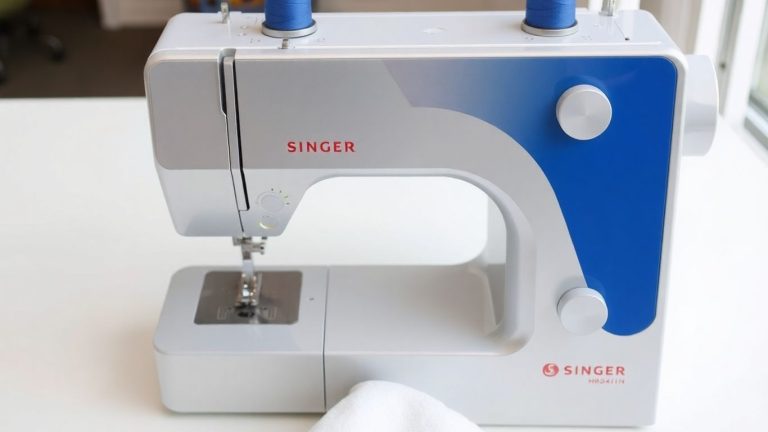
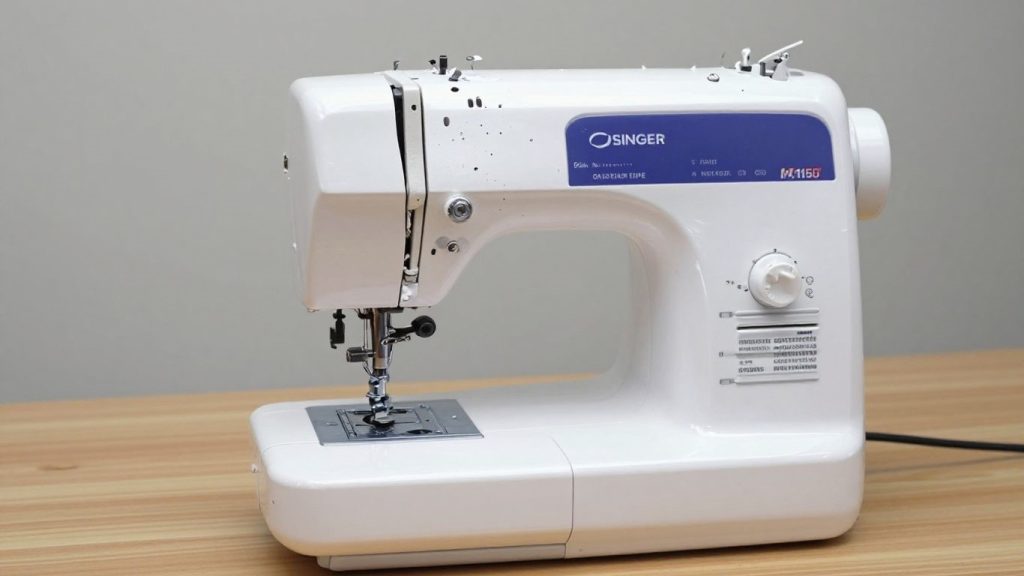
A few weeks ago, I finally got my hands on the SINGER M1150. I’d been looking for something small and easy to use, since my old machine was big and always in the way.
I wanted to see if the M1150 could handle my basic projects and maybe even surprise me with a few extras. Here’s what happened when I put it to the test.
Key Takeaways
- The SINGER M1150 is lightweight and easy to move around, which is perfect if you don’t have a lot of space.
- It comes with 16 built-in stitches and 45 stitch applications, so there’s enough variety for most basic projects.
- The preset stitch length and width save time and take the guesswork out for beginners like me.
- It’s simple to thread and set up, making it a good pick for anyone new to sewing.
- While it handles light and medium fabrics well, it can struggle with heavy materials like denim if you’re not careful.
Introduction: What is the SINGER M1150?
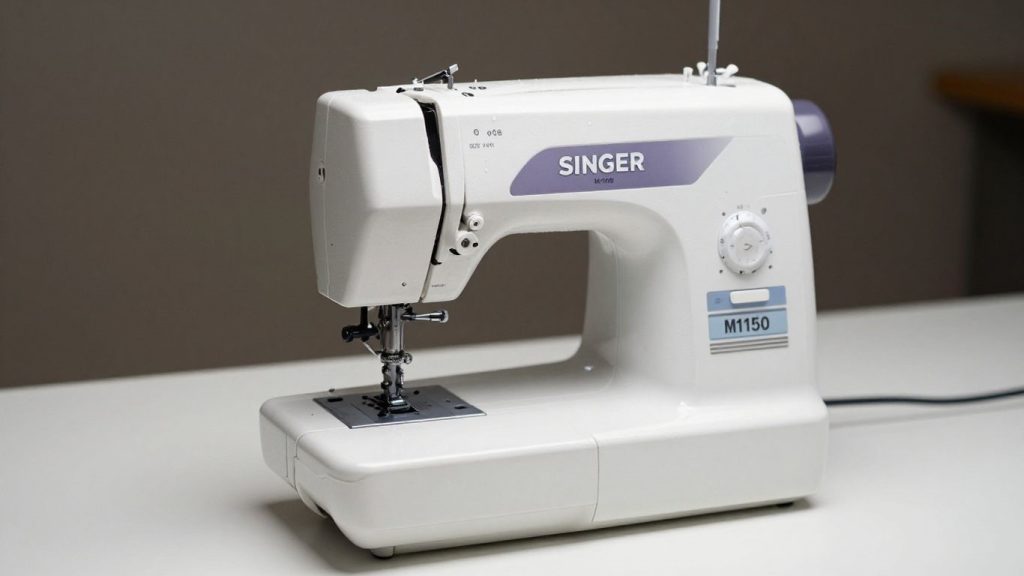
I recently received the SINGER M1150 and thought I’d share my reviews. The machine itself has seen a lot of marketing as a portable beginner sewing machine, and that caught my eye right off the bat. I’m constantly on the lookout for something that takes up not a ton of space but will still do the basic sewing tasks.
That allows the M1150 to be designed for maximum user-friendliness. It’s a very simple setup, and they’ve put a lot of emphasis on making it accessible to beginners. Think basic fixes, such as hemming clothes or even some beginner sewing projects. It has a handful of built-in stitches, which are all the basics you’ll need for most typical jobs.
For one, it is very lightweight out of the box.” It’s not a multi-ton beast; you can truly pick it up without sweating. That makes it a suitable choice for anyone with limited space, or for taking sewing classes.
If you’re just getting started, understanding basics like sewing machine parts and how to thread a sewing machine can make your experience much smoother.
Here’s a quick rundown of what it offers:
- Compact and Portable Design: Easy to store and move.
- Beginner-Friendly Features: Simple controls and setup.
- Essential Stitch Options: Covers basic sewing needs.
- Durable Metal Frame: Built to last, despite its size.
It’s not attempting to be a professional-grade machine, and that’s fine. SINGER appears to have designed this product to be useful on an everyday basis. You’ll have to stay tuned for the performance test. I’m interested to see how it fares with other fabrics. As an easy-to-use machine, you should consider checking out this NO-FORMALITY SINGER M1150 sewing machine.
Key Features and Specifications
When I first got my hands on the SINGER M1150, I was curious about what this compact machine could really do. It’s definitely small, which is a big plus for me since I don’t have a ton of space.
Compact and Lightweight Design
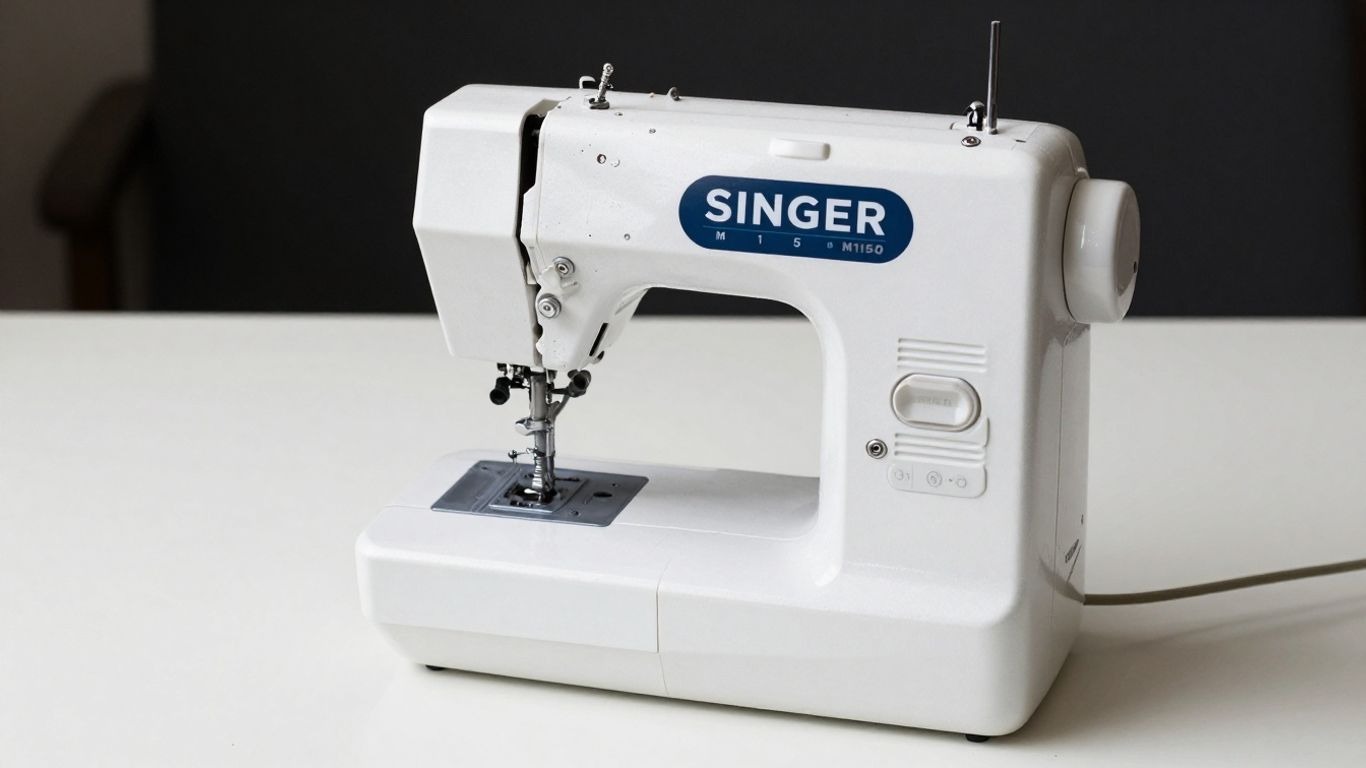
M1150 lives up to its name; it’s rather “compact.” It’s surprisingly light, allowing me to easily pick it up from a shelf and shuffle it over to my sewing table and back. This portability is a big selling point if you don’t have much space or want to bring your machine with you to a class.
It feels solid enough, at least, with a metal frame that would indicate it wouldn’t crumble after a couple of uses. It’s not exactly light as a feather, but most people can handle it. You don’t see it here, but I found it compact and easy to stuff into a closet when not in use, which was a blessing compared with some of the bigger machines I’ve seen.
Stitch Options and Capabilities
Don’t let its size deceive you; the M1150 features 16 built-in stitches. That may not sound like a lot compared with some of those fancy computerized models, but for basic sewing, mending, and even passing simple decorative work, it’s more than enough. I managed to work through a couple of different projects, from hemming some pants to sewing up a simple tote bag.
The stitches comprise the basics like straight stitch, zigzag, and a four-step buttonhole. The machine also has built-in stitch length and width, which makes setup guesswork-free. You simply select your stitch, and that’s it. It also has an adjustable tension control, which can come in handy when you’re trying to get a nice, clean stitch on different fabrics. I did see that although it has 16 stitches, there are 45 stitch applications included, so some stitches may be used in different ways or for varying purposes. That’s a decent quantity to get done for daily usage.
If you want to try beginner-friendly projects like this, check out this guide on how to make a simple tote bag at home.
Ease of Use for Beginners
Now, where I really think the M1150 shines. Its drop-in bobbin system is one of the easiest to thread and observe. You can see just how much thread you have left, which avoids those infuriating moments when you run out in the middle of a seam. Stitch selection dial – quite simply, it is turned to the number of the stitch you want.
The simplicity of this is great for beginners. I liked the fact that this model has a removable free arm, which means it’s great for sewing cuffs, sleeves, and other small or circular pieces. It’s a feature you’ll often see on pricier machines, so it’s nice to find on here. The LED lighting is a nice addition too, offering good illumination of the sewing area.
The machine’s simple build and preset stitch settings make for a major win for anyone getting started. It lets you concentrate on mastering sewing fundamentals instead of getting lost in convoluted controls. I found it pretty intuitive, and I think many beginners will too.
For those comparing machines, you might also want to explore options like the Brother CS7000X review or the Brother CS7205 review.
Here’s a quick look at some of the specs:
| Feature | Specification |
| Stitches | 16 built-in |
| Bobbin Type | Top Drop-in |
| Buttonhole | 4-Step |
| Sewing Space (Right of Needle) | 5.7 inches |
| Sewing Space (Height) | 4 inches |
| Weight | Lightweight (specific weight not provided, but easily portable) |
| Frame | Heavy Duty Metal Frame |
For those looking for more advanced features, you might want to check out a machine like the SINGER SE9180, which offers a lot more in terms of stitch variety and embroidery capabilities. But for basic needs, the M1150 is a solid choice.
Performance Test: Putting the M1150 to Work
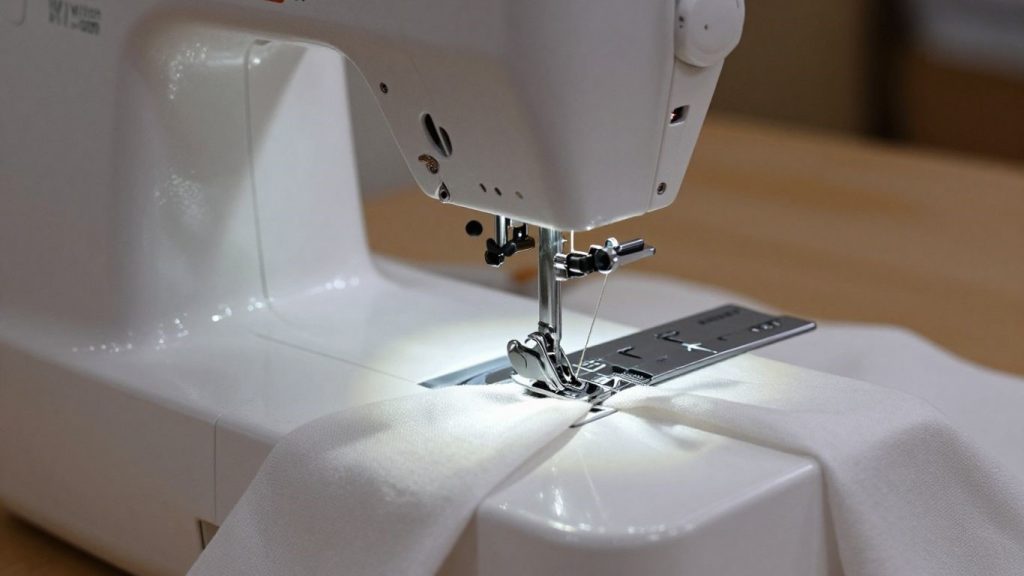
I spent some time with the SINGER M1150 to see how it really handles different sewing tasks. My goal was to push it a bit, not just for simple hemming, but to see if it could manage a variety of fabrics and hold up over time.
If you’re planning quilting projects, you might need a stronger machine like those listed in best quilting sewing machine.
Sewing Different Fabric Types
Initially, I picked up some plain cotton. This is where most machines typically excel, and the M1150 was no different. It fed the fabric evenly, and the stitches appeared even. I played with a few different stitch patterns, and they all turned out looking decent. Next came something a touch more challenging: a lightweight linen. It handled this well too (though I did find I had to pay a little more attention to tension).
Next was a scrap of quilting cotton with interfacing fused to it. This is where I really began to feel the limitations of the machine. It coped, but it was certainly more arduous than the plain cotton. The motor also seemed to work a little harder, and could be heard straining slightly. I wouldn’t recommend this for heavy-duty quilting projects or anything that requires many layers of thick material.
I also tried it out on a stretch knit fabric. This can be a source of difficulty for simple machines. The M1150 has a zigzag stitch, which is vital for knits, and it performed decently. The stitches held, but they weren’t as stretchy as I’d like.” It may be a bit too spindly to deal with when doing very stretchy activewear, but for basic t-shirt repairs or decorative and stretch stitches, it works well enough.
Durability and Build Quality
I noticed the M1150 was heavier than I expected when I opened its box. It feels sturdy, not flimsy like a few other compact machines I’ve tested. Underlying that the metal frame inside is a huge plus; it gives it a sense of stability not always achieved with plastic-heavy models. I didn’t wobble wildly even when I was going something of a faster pace with the sewing.
The stability and perceived durability, especially for a portable unit like this, are impressive due to the internal metal frame of the machine. It feels like it could handle everyday tasks with a plan of service beyond just weekend projects.”
Now, I do see that the plastic casing is quite neat looking, but may be a little on the vulnerable side for scratches if you are not too careful. But the mechanical bits seem to be sound construction. The dials rotate easily, and the threading pattern is fairly normal. I did not have any trouble with the bobbin winder or the needle threader. All in all, at its size and price point, the build quality feels fairly decent. It is, not to put too fine a point on it, not an industrial-strength machine, but bending between classes at home, if you’ve lugged your work around before this week, you know it can be like that; it seems durable enough. I feel optimistic about its durability for more basic sewing needs.
However, if you’re looking for a more heavy-duty option, machines like the SINGER 4452 heavy duty sewing machine review or SINGER HD4411 Prisma review are worth checking out.
Pros and Cons of the SINGER M1150
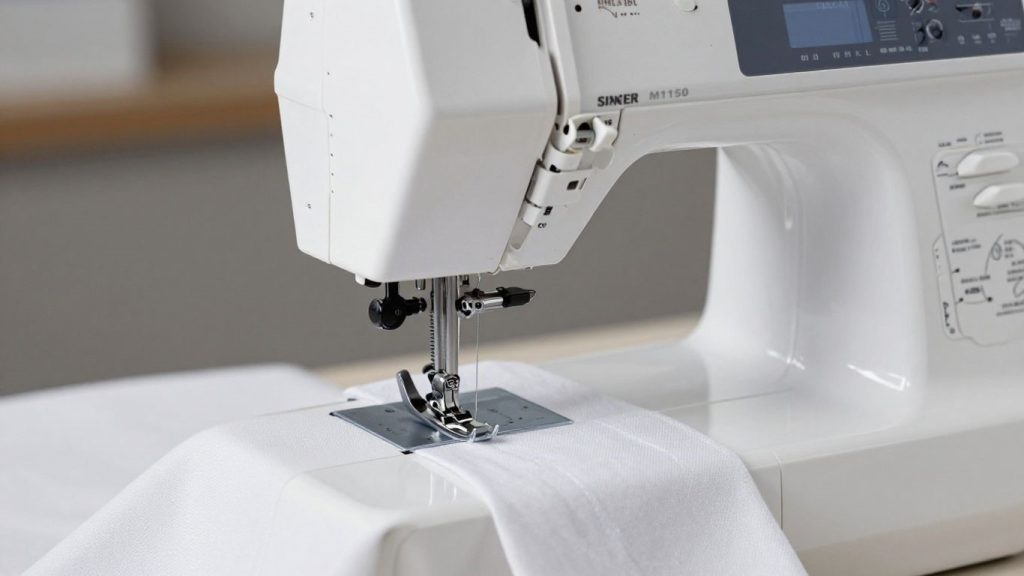
After spending some time with the SINGER M1150, I’ve put together my thoughts on what makes it stand out and where it might fall a little short. It’s a pretty straightforward machine, and for the most part, that’s a good thing.
Pros of the SINGER M1150
- Lightweight and portable (GE), this is a big deal for me. It’s not heavy at all, making it easy for me to move from a shelf to my sewing table or even take it over to a friend’s house. It feels solid enough, but it’s not a behemoth to haul around.
- Beginner-Friendly: I knew this was a solid machine, honestly, if you’re just starting. The stitch selection is easy; you just turn a dial. And it has a preset stitch length and width, so you won’t have to mess with those settings very often. It just works, and when you’re trying to learn, that’s great.
- Good for Basic Tasks: It got the job done well when I used it to mend some clothing, make a simple alteration, and even whip up a tote bag. It’s not designed for heavy lifting, but for everyday tasks; it certainly gets the job done.
- Affordable: You definitely get a lot of value here. It’s not going to break the bank, which is huge when you’re investing in your first-ever sewing machine or if you just want something reliable without a massive price tag.
- Durable Build: The metal frame makes it more durable, although it’s lightweight. While it doesn’t feel like an expensive piece of equipment, it also doesn’t feel like a cheap toy either; rather, it feels like something built to last for specific tasks.
For beginners, having the right tools matters — you can explore useful options in sewing kits for beginners you can buy online.
Cons of the SINGER M1150
- Limited Stitch Options: You’ll get the basic stitches, but not much more. You won’t bring this machine out for fancy embroidery or elaborate decorative stitching. It adheres to the basics, which is good for me, but may also be a downside for some.
- Not for heavy fabrics: I attempted to sew through a few layers of denim, and while it pushed through using a new needle, it was definitely struggling. Ideal for light to medium-weight fabrics, this machine performs admirably. Overdemanding it could cause trouble down the road.
- Basic Accessories: The included accessories are exactly what you need for your initial start, just basic. If you get more serious about your projects down the line, you’ll probably want to upgrade some of the presser feet or needles.
In score, the SINGER M1150 is a no-fuss machine which does what it says on the tin. It’s a solid entry-level choice that won’t be too much for new users to take on. Just be practical about what it can and can’t do; it’s not a heavy-duty workhorse, but an all-around reliable helper when it comes to common sewing projects.
Who is the SINGER M1150 For?
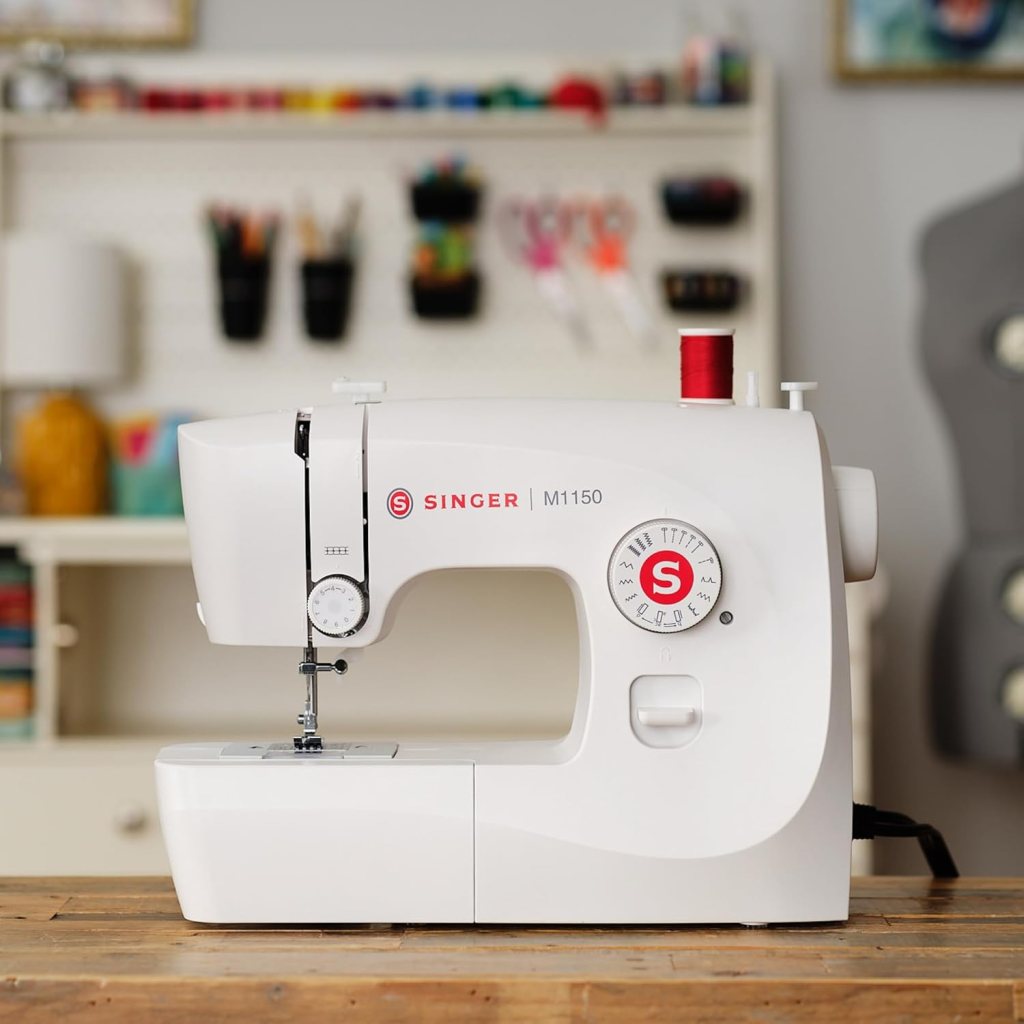
So who exactly should consider the SINGER M1150? Between its price and the way it feels to use, I definitely think this machine is best for beginners in their sewing experience. If you are a beginner and don’t want to get frustrated by fancy buttons and settings on another machine, the M1150 is your buddy. It’s got an easy stitch selection dial, and the set length and width for stitches mean you don’t have to mess around too much to get a nice stitch. It’s also a fantastic choice if you don’t have much room or need to take it to a sewing class. I thought it was exceptionally portable.
This machine is also good for basic home repairs and simple projects. Some examples include hemming pants, repairing a ripped seam, or even sewing your own simple tote bag. It sews pretty well on light to medium-weight fabrics, which encompasses a bulk of everyday sewing needs. I’d say that’s not quite as industrial workhorse territory, even though it can tackle those types of projects occasionally when equipped with the right needle. It’s not going to supplant a beefier machine for serious quilters or garment makers working with difficult fabrics, but in your everyday life, it’s perfectly capable.”
You can even try easy DIY projects like how to sew an apron to build your skills.
Here’s a quick rundown of who I think would get the most out of it:
- Absolute beginners: The simplicity is its biggest selling point. You can get sewing quickly without a steep learning curve.
- Students: Its lightweight design makes it easy to transport to and from classes.
- Apartment dwellers or those with limited space: It doesn’t take up much room and can be easily stored away.
- Home repair sewers: For quick fixes and mending around the house, it’s incredibly convenient.
If that’s the type of machine you just want, to get the basics done, without a lot of hassle, then look no further than the M1150. It’s not pretending to be something it’s not; it’s an honest little workhorse for simple sewing needs. For more advanced features, you might want to consider something like the SINGER Quantum Stylist 9985, but this one is a winner in my book for getting started.
Comparison with Other Sewing Machines
SINGER M1150 vs Brother HC1850
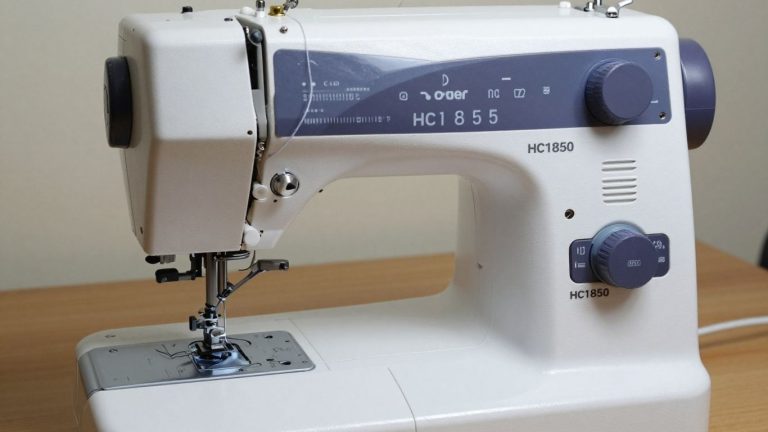
I kept seeing the Brother HC1850 come up when searching for a sewing machine. It’s a computerized model with far, far more stitches than the M1150 — 130 built-in stitches, to be exact, including some fancy lettering. That’s quite the leap from the M1150’s 16. It also features an automatic needle threader and a top drop-in bobbin, which are super convenient.
It is a little more machine, yes, and likely better if you’re planning to do stuff beyond basic mending or simple projects. If you want a more complex design or want extra variety of stitches, the HC1850 might intrigue, but for pure simplicity and portability, the M1150 is a champion.
SINGER M1150 vs Janome 2212
Janome 2212: Another popular choice, often recommended as a solid mechanical machine. It’s really simple, like the M1150, you’ll get a good number of stitches for effective daily use. I’ve seen that it has a few more sewing options than the M1150, typically around 20-25, and is supposed to be fairly reliable.
The M1150 has a slight advantage in that respect, as being lighter and more compact, and slightly easier to put away or carry. Both are fine for beginners, but if you need something a bit easier to move around because space is really tight or your goal is the easiest possible movement, I think in that case I would probably lean towards the M1150.
Machines like those covered in Janome JW8100 review or Janome MC6650 review offer more advanced functionality.
SINGER M1150 vs SINGER 1304
It is interesting to compare the M1150 to its sibling — the SINGER 1304. The 1304 is also a very straightforward, mechanical machine and is marketed as one of the simplest available. It has probably only about six stitches, full whistles and bells for the M1150. They are both easy to use and perfect for beginners.
The M1150 has 16 stitches, so it gives you a little more versatility and is nice for doing some things outside of the most basic ones without getting complicated. If I had to choose the most basic of the basics, it would be the 1304, but for a balance between no-frills operation and having just enough stitch options for small projects, then it’s got to be the M1150.
My Final Thoughts on the SINGER M1150
So, after giving the SINGER M1150 a spin for a little while, I can honestly say it’s actually a pretty good little machine. It’s not going to take the place of your heavy-duty industrial behemoth, but for basic everyday stuff or quick fixes, or if you’re just starting, it really does the trick. It was easy to get started with, and the preset stitch settings are a lifesaver when you don’t feel like fiddling too much.
It’s not heavy, so it isn’t a hassle to move around. I see that as a plus. The bobbin winder is not my favorite setup, but it works. To conclude, for the price and what it delivers, the M1150 is a pretty good option for any beginner or advanced user who wants a straightforward sewing device.
If later you want to upgrade to embroidery machines, you can explore something like the Brother SE2000 review.
Frequently Asked Questions
Is the SINGER M1150 really good for someone just starting with sewing?
Yes, I believe it is an excellent option for newcomers to sewing! It’s also meant to be really user-friendly, with simple ways to select your stitches and thread the machine. It clarifies learning to a large extent.
What kinds of stitches can I do with the M1150?
This machine provides a fairly wide range of basic stitches. There are basic repairs, garment sewing, and even a few whimsical decorative stitches. It suits most everyday sewing needs.
Can I sew thicker materials like jeans with this machine?
The M1150 is strongest with lighter-weight fabrics, although it can sew thicker materials like denim if you use the correct needle. This is a lightweight machine, so just don’t take it too far.
What comes in the box with the M1150?
You have everything you need to get sewing immediately! It typically comes with various presser feet, bobbins, needles, and sometimes a stitch removal guide. Everything packs away nicely in a small storage compartment.
How easy is it to wind a bobbin on this machine?
The first thing I found to be a little tricky was setting up the bobbin winder. It is up on top of the machine now, which I know is common, but misses the old way when it wound where it lay. It is a little disorienting.
Does the SINGER M1150 come with a warranty?
Yes, it does! The manufacturer provides a limited warranty on the machine. You’ll want to look at the papers that come with it for exact coverage details and the duration of the coverage.