Honest SINGER Heavy Duty 6800C Computerized Sewing Machine Review for Home Sewists
I’ve been sewing for a while now, and honestly, my old machine was on its last legs. It was time for an upgrade, but I wasn’t sure where to start. There are so many options out there, and I wanted something that could handle a bit more than just basic stitches.
That’s when I came across the SINGER Heavy Duty 6800C. It’s a computerized model, and I was curious if it would really make a difference in my sewing projects. I’ve gathered some thoughts after looking into it, hoping it helps you decide if this machine is the right fit for your home sewing needs.
Key Takeaways
- The SINGER Heavy Duty 6800C is a computerized machine that feels solid, thanks to its heavy-duty build and metal frame, which helps keep it steady while sewing.
- It comes with a lot of stitch options, over 300 with 568 applications, including different stitches for sewing, stretch, and decoration, plus lettering fonts for personalizing projects.
- This machine can handle thicker fabrics like denim and canvas, making it suitable for more demanding projects beyond light cottons.
- It has a good speed, up to 1100 stitches per minute, but you can easily adjust it down using a slider for more control, especially for detailed work.
- The LED panel makes it easy to see your stitch settings, and you can even save them for later, which is a nice touch for repetitive projects.
Introduction: What is the SINGER Heavy Duty 6800C?
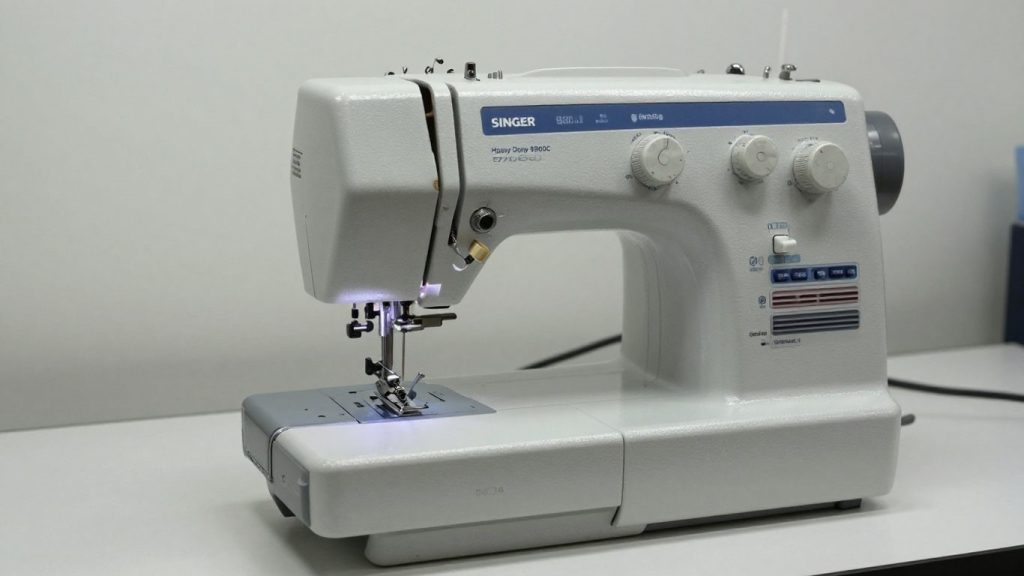
So, you are interested in the SINGER Heavy Duty 6800C? I’ve played around with this machine, and I’m ready to share my opinion. This is not some cutesy-poo sewing machine; this is a serious piece of gear for people who want to get down to business with their fabric. It’s part of SINGER’s recent range of computerized “Heavy Duty” models, which tells you a lot right there. They mean heavy-duty when they say it.
This device has a certain sturdiness to it, and that’s because of the internal metal skeleton. It’s designed for more than your basic cotton project. So if you are looking for a singer sewing machine, thick fabrics, or a heavy-duty quilting sewing machine, you’re mostly in the right place. If you plan to sew tougher material for garments, this is also an excellent contender if you’re into a Singer sewing machine.
If you’re still deciding what type of machine is best for quilting projects, you might also explore the best quilting sewing machines for home use.
I thought it was a really impressive machine for all kinds of sewing, from day-to-day stuff to mega projects. It’s a notch above entry models, dishing out plenty of power and features without getting too complicated. It feels like a machine that’s going to be around for years to come, and ready for whatever project you throw at it. This is a solid choice if you’re looking for a powerful sewing machine for working with thicker fabrics and garment making.
The SINGER HD 6800C is a top-tier computerized model in the SINGER Heavy Duty lineup. Its goal is to offer a lot of functionality for its price point, and it could be a really great value for intermediate sewers and up, who need a more robust machine.
The weight was the first thing I noticed when I could get my hands on it. It’s not the sort of lightweight plastic machine; it has some weight to it. That’s in fact a good thing, since it keeps the machine stationary on your table at any speeds you might be working at.
That stability is important when you’re working with multiple layers of denim or canvas, and this machine breezed through it. Once a challenge is set, it’s certainly a heavyweight machine for quilting + garment making that won’t back down. I’ve experienced some machines bog down with thicker materials, but the 6800C has powered through. It’s a good option for anyone seeking a stalwart workhorse.
If you’re new to sewing and want to build your skills first, you may want to start with guides like how to learn sewing at home before upgrading to a more advanced machine like this.
Key Features and Specifications
When I first looked at the SINGER Heavy Duty 6800C, I was pretty impressed with what it packs under the hood. It’s not just about looking tough; it’s got some serious capabilities that make sewing a lot more interesting, and honestly, a bit easier.
Built-in Stitches and Buttonholes
This machine features a staggering 300 built-in stitches, aka: 568 stitch applications. That’s a lot of options! You have your basic straight stitches, stretch stitches for knits, and a whole slew of decorative ones for when you want to get a little creative. There are also 9 styles of automatic 1-step buttonholes.
I had a little fear of buttonholes, but this feature makes life so much easier. It even comes with two fonts for lettering, which is a cool addition if you want to personalize your projects with names or simple messages.
If you enjoy experimenting with decorative sewing projects, you might also enjoy simple DIY projects like how to make a simple tote bag at home or how to sew an apron step by step.
Speed and Motor Power
That’s the reason they call it “Heavy Duty. There’s a full metal frame on this machine that lends it a solid feel. It weighs a fair amount, which helps it stay put on my table even as I’m pushing the speed. It has a lot of power and can sew through bulkier fabrics like denim or canvas without getting bogged down.
I haven’t attempted to sew through a dozen layers of jeans just yet, but it definitely feels like I could do it. There’s also a speed control slider, which is really useful for novices like myself or when I want to slow down on tricky curves or corners.
It has a lot of power and can sew through bulkier fabrics like denim or canvas without getting bogged down.
Machines in the heavy-duty category are designed specifically for demanding sewing tasks, similar to models like the SINGER Heavy Duty 4452.
Computerized Functionality and Display
As a computerized machine, the 6800C has an LCD screen, and selecting stitches is relatively simple. No guessing anymore as to which dial to turn! It’ll show you the currently selected stitch, its recommended settings, and other helpful info.
Local control over basic functionality, needle up/down, tie-off, and even thread cutting, you can do it all straight from the panel on the “tower” at the front of the machine. It has a start/stop button, too, so I can sew without having to use the foot pedal if I want, which is nice for longer seams.
If you’re comparing computerized sewing machines, you might also want to check detailed reviews of Brother CS7000X or Brother CS7205.
Durability and Construction
The full metal frame, as I noted in my review, is a big deal. This adds weight and minimizes vibration for a more stable sewing experience. It is this build quality that makes it suitable for heavier fabrics and more demanding projects.
No machine is perfect, but the sturdy construction seems like it’s made to mean it’ll hold up for years with regular use, as long as I’m not trying to sew through anything it wasn’t meant to. It really feels like just a machine that you can beat up on and keep sewing.
Ease of Use for Home Sewists
Setup and Threading
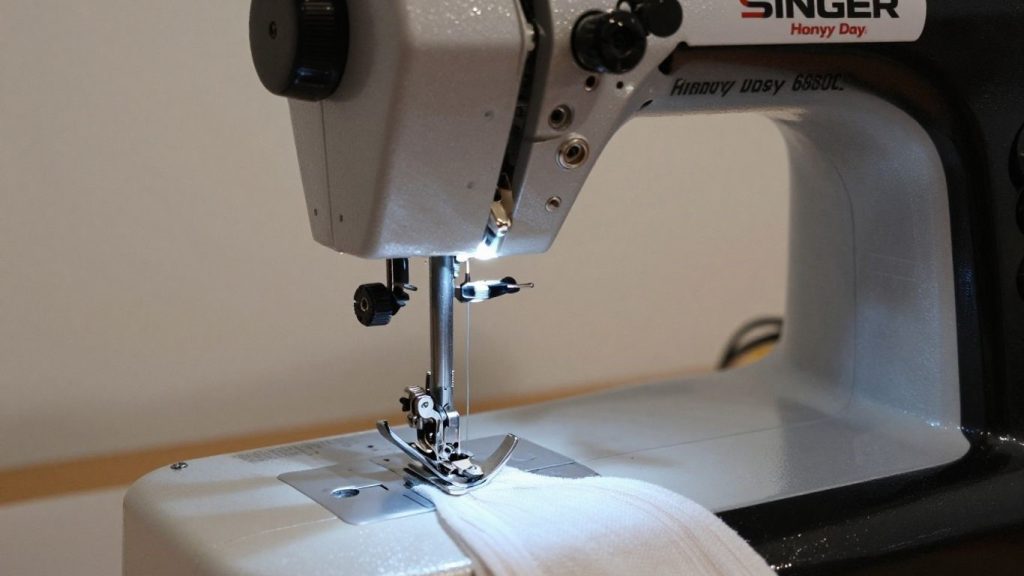
Surprisingly, it was straightforward to do so, although I am the sort who glitches on the most basic of tasks. The setup experience is also quite intuitive. One of the best features for me is the integrated needle threader. I mean, really, threading a needle had always been a nightmare with my eyesight.
This single feature ensures that it is hands-down one of the easiest computerized sewing machines for beginners I have come across. The top drop-in bobbin is another plus; you can see when the thread’s running low so much more easily, and popping it out and in without fuss. No more scratching around underneath the machine!
If you’re just starting out, having the right tools also helps a lot. Beginners should consider starting with sewing kits designed for beginners.
Navigating the Controls
This machine has a ton of features, but I found the controls intuitive to learn. The LCD panel is so clear that you have everything displayed on only one screen; there is no guessing on stitch selection. It gives you access to the dozens of built-in stitches and an easy-to-use, one-step buttonhole function that’s perfect for making sure your buttonholes look less like gaping wounds with every use.
For when I need extra control, like sewing a tricky corner or working with delicate fabric, the speed control slider is a godsend. It allows me to slow things down to a crawl, which is great for working with precision. Plus, the start/stop button means I can sew without using my foot on the pedal at all, which is nice for longer projects or when my foot gets tired.
It does feel like a terrific workhorse of a sewing machine for quilters and crafters who want something that can do a lot without requiring such an extensive learning curve. We will feel it is a tough choice for a heavy-duty home sewing machine, and we also feel yes, definitely in the review of advanced home sewing machines that are searching for more power and options.
Compared to more entry-level models like the SINGER HD4411 Prisma, the 6800C offers significantly more customization and advanced features.
Pros and Cons of the SINGER 6800C
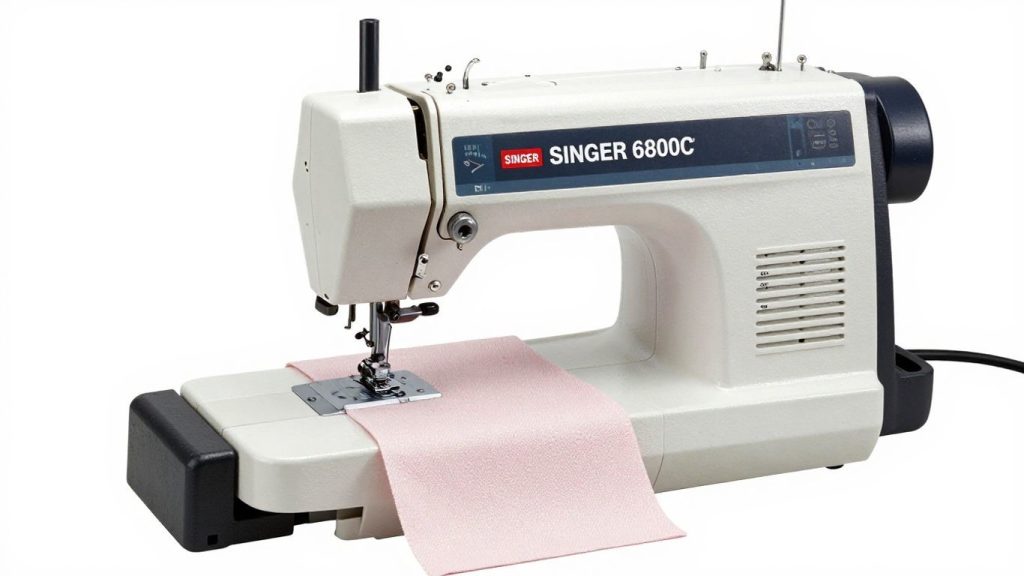
After spending some time with the SINGER Heavy Duty 6800C, I’ve got a pretty good handle on what makes it tick and where it might fall a little short for some folks. It’s definitely a machine with a lot going for it, but like anything, it’s not perfect.
Pros of the SINGER 6800C
- Sturdy Build: This machine is built like a tank, and that’s a compliment. The sturdy metal frame is just as stable, even when I’m pushing it with faster speeds or thicker fabrics. There’s just this stable feeling to it, which is a huge positive for me.
- Plenty Of Stitches: With over 300 anonymous stitches and 568 anonymous stitch applications, I feel like I have a whole toolbox of options. Whether I’m doing simple mending, a bit of decorative work, or even testing out some lettering fonts, there is usually a stitch that works. It’s nice not to be limited.
- Does Tough Fabrics: I’ve run some heavier materials through it, like denim and canvas, and it just plows ahead. The beefy motor makes a big difference here, and I don’t feel like I’m wrestling with the machine to pass through higher layers. It’s a real workhorse for that kind of project.
- Simple Sail: Yes, there are computers involved (it is computerized after all), but not overly so. The speed control is a real blessing, and the clear display makes choosing stitches so easy. For someone who wants more than just an entry-level machine but isn’t yet ready for rigorous pro complexity, this hits a sweet spot.
Cons of the SINGER 6800C
- Noise Level: This is not the quietest machine I’ve used. It can be a little loud when sewing at higher speeds (which some might consider if you have thin walls or share your sewing space)
- Auto-Threader Quirks: I like the automatic needle threader concept, although in practice it can be a bit hit-or-miss. Sometimes it works like a dream, sometimes I find myself having to thread it all by hand anyway. It’s not a deal-breaker, but it is often not the time-saver I’d hoped for.
- Screen Readability: There is no backlight on the LCD screen. That isn’t an issue in a simply lit room; however, if I’m sewing in lower, gentler situations, then it may be somewhat more difficult to learn the sewing choices or settings.
All in all, I feel like you get a ton of machine for the price with the SINGER 6800C. It’s sturdy, has a nice selection of stitches, and handles all kinds of fabric with ease. The few downsides are minor annoyances more than deal breakers, and at the price point, it’s a machine I’d recommend to many home sewists looking to upgrade. For more information on its capabilities, visit Singer’s website.
Who’s the SINGER 6800C Suitable for?
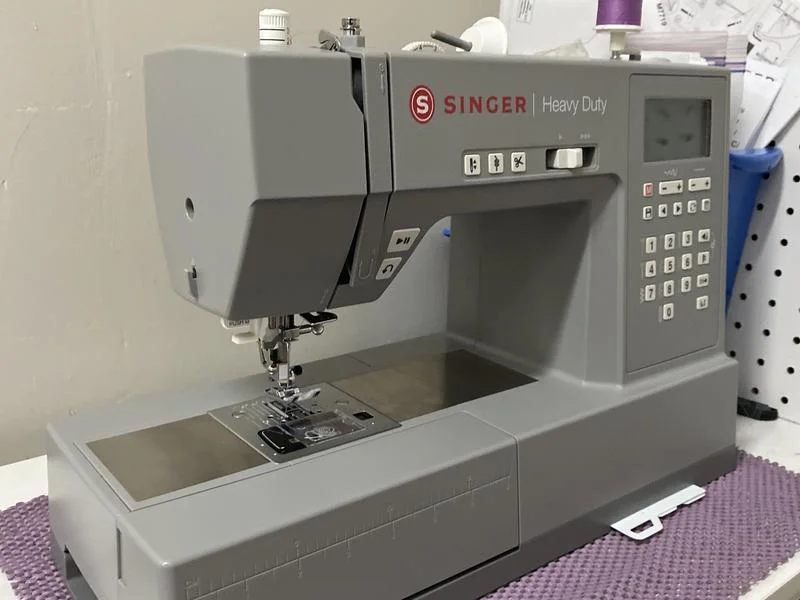
So, who is this SINGER Heavy Duty 6800C machine made for? Having fiddled with it for a bit, I have some idea. This isn’t an absolute beginner machine, that’s for sure — but it ain’t just a pro bike either. I think it hits a sweet spot for home sewists who have outgrown the most basic model and want something a little more robust and up to the task.
If you take on projects that have quite a bit of work ahead, such as sewing through multiple layers of denim when making jeans, working with upholstery fabric for cushions, or taking on some lighter leather jobs, this machine is definitely one thing to note. There’s a reason that “Heavy Duty” is a much-maligned body, and boy does it come into play as you push this thing a bit.
For people exploring embroidery or more advanced machines, you might also compare it with models like Brother SE2000 or Janome MC6650.
Here’s a quick breakdown of who I think would get the most out of it:
- Home Decor Aficionados: If you like to sew your own curtains or create throw pillows, or even do some reupholstering on smaller furniture pieces, the 6800C’s power and stitch diversity will meet your needs.
- Garment Sewists: If you sew clothes (especially out of heavier fabrics, such as canvas or twill), this machine won’t hold you back. It just powers through.
- Quilters: It’s not a true long-arm quilting machine, but its ease of use and decent amount of throat space make it suitable for smaller quilting projects – or larger ones if you enjoy a challenge.
- Anyone Seeking a Workhorse: If your current machine can handle nothing but medium-weight cotton, here the phrase “Heavy Duty” is no hyperbole. It’s designed for longevity and for handling tougher jobs.
This machine seems to be a solid investment for someone who wants a reliable workhorse that can grow with their skills. It strikes a good balance among power, features, and ease of use, so it’s a versatile addition to a home sewing studio. It’s an upgrade from basic models without being overly complicated, making it a good fit for many home sewists seeking that next level of performance. If you are interested in an upgrade, comparing with the SINGER C7290Q might also be a good idea to see how it would differ out there.
Comparing the SINGER 6800C with Other Machines
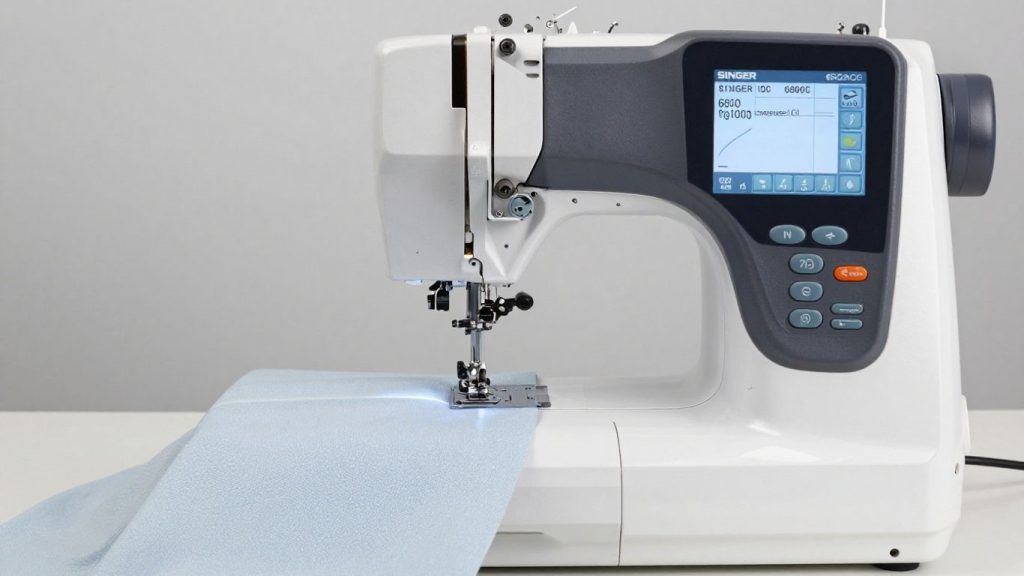
So how does the SINGER Heavy Duty 6800C compare to some of its competition? That’s a question that I get asked a lot, and it’s to be perfectly frank, that is a legitimate question. With so many machines available, choosing the best sewing machine for you can be puzzling. Before we get into specifics, let’s compare the 6800C with some other popular models.
SINGER 6800C vs Janome HD3000
When I see the Janome HD3000, I’m seeing a tank of a machine. It’s a workhorse that’s mechanical, which translates to simplicity and reliability for basic sewing. It has a robust metal chassis, which is nice for durability, but only provides about 18 stitches. If you’re not interested in way too many fancy stitch options and just want to get the job done, this is a good option.
The SINGER 6800C, in contrast, is computerized and has a staggering amount of stitches, over 500! If decorative stitching is your jam or your application has specific stitch needs due to fabric variety, you can hardly be anything but a winner with the 6800C here. The Janome is also a bit slower, maxing out at about 860 stitches per minute versus the 6800C’s 1,100 SPM.
SINGER 6800C vs Brother CS7000X
The Brother CS7000X is also a computerized machine and one that we see come up in conversation frequently. It’s also known as being user-friendly, which is a huge bonus for many home sewists. It has 70 built-in stitches and a decent speed. Yet the SINGER 6800C surpasses the other options in stitch count, giving you way more possibilities for creative projects.
Considering the rugged build, the 6800C does feel a bit more sturdy than the solid CS7000X. If I’m sewing thicker materials or multiple layers, I typically gravitate towards something with the 6800C’s build quality. Something to note is that user reviews of Singer sewing machines tend to discuss durability, and this particular one fits the bill.
The Brother CS7000X is another popular computerized sewing machine known for being beginner-friendly.
You can read a full breakdown in this Brother CS7000X review.
SINGER 6800C vs SINGER Heavy Duty 4452
This is an interesting comparison, as both are from the SINGER Heavy Duty range, but they do target slightly different requirements. Ideal for those who work with strong fabrics or heavy materials, the 4452 is a mechanical machine that’s fast and powerful. It’s simpler and has fewer stitches than the 6800C, but it is a workhorse for built-in heavy-duty tasks. Being computerized, the 6800C has hundreds of stitches and features you wouldn’t find on your average sewing machine, like automatic thread cutting and a digital display.
The 6800C is basically a souped-up version of the 4452 with a much more advanced technology pack and a greater selection of stitches. If you’ll be doing a fair amount of basic sewing on thick materials, the 4452 could suffice. But if you want even more creative freedom and modern conveniences, the 6800C is the way to go. Singer 6800c problems can generally be diagnosed and fixed without too many hassles because this model is electronic in nature, meaning that you would just need to check your settings or which way the thread has been threaded up compared to what you had expected, unlike with a fully mechanical machine, where things are more complex.
If you prefer a mechanical machine, the SINGER 4452 Heavy Duty review explains why that model is still one of the most popular workhorses for heavy fabrics.
Here’s a quick look at some specs:
| Feature | SINGER 6800C | SINGER Heavy Duty 4452 |
|---|---|---|
| Type | Computerized | Mechanical |
| Built-in Stitches | 586 | 32 |
| Sewing Speed (SPM) | 1,100 stitches per minute | 1,100 stitches per minute |
| Buttonholes | 9 (1-step) | 6 (1-step) |
| Automatic Thread Cutter | Yes | No |
When choosing between these machines, I always think about the types of projects I do most often. Do I need a lot of decorative stitches, or am I mostly doing straight seams on denim? The answer to that question really guides my decision.
So, What’s the Verdict?
After spending some quality time with the SINGER Heavy Duty 6800C, I can definitely say it’s just a solid machine. It’s a solid feeling, and has more than enough available stitches for everyday tasks and a few creative projects. It handles thicker fabrics better than I expected it to.
It may take a little practice to be fully comfortable with all of its features, particularly if you’re used to working on something simpler at home, but I think it’s definitely worth the investment for many sewists. It felt like a dependable workhorse that would be there for years to come, so it’s a decent pick if you want an upgrade or just want something more heavy-duty than your average sewing machine.
Frequently Asked Questions
What makes the SINGER Heavy Duty 6800C ‘heavy duty’?
What I learned is that the ‘heavy-duty’ name comes from its robust construction. It has a solid metal frame and a feel to it. That means it doesn’t shift around on my table even when I’m sewing fast, and it also can handle thicker materials, like denim or canvas, without skipping stitches.
Is this machine good for beginners?
I think experienced sewers will love it, but beginners might find their eyes glazing over just a little at the beginning. It has a billion stitches and features! It’s totally achievable, but I’d recommend it for someone who has sewn a little already and wants to step up their game.
How many stitches does the SINGER 6800C have?
The number of stitches blew my mind! It has more than 300 built-in stitches, totaling 568 stitch applications. This ranges from basic and stretchy stitches, decorative patterns, and nine different varieties of one-step buttonholes. Plus, it has two lettering fonts for personalising.
Can this machine handle thick materials like leather?
Yes, the manufacturer claims it can sew through thicker fabrics, like leather and denim. I’ve used it to stitch through several layers of denim with no problem. It’s certainly more powerful than my old simple machine.
What accessories come with the SINGER 6800C?
When I purchased mine, it came with some solid extras. I discovered A darning plate, various needle sets, twin needle spool holders, a bobbins screwdriver brush, and a seam ripper soft cover. It also comes with 10 different snap-on presser feet for different types of work.
What’s the warranty like on this machine?
Because it is a warranty just for the original buyer, if I bought it used, I would miss out on getting this warranty. That’s a 25-year warranty on the frame and 1 year (for parts and labor) for repairs. I have to ensure I hold my receipt!