SINGER Heavy Duty 4423 Review (2026): Is This High-Speed Sewing Machine Worth It?
I recently got my hands on the SINGER Heavy Duty 4423, and I’ve been putting it through its paces. If you’re wondering if this machine can handle your toughest sewing projects, stick around.
I’m going to share what I’ve learned about its features, how it performs, and whether it’s really worth the investment for your sewing needs.
Key Takeaways
- The SINGER Heavy Duty 4423 is built tough with a metal frame and a powerful motor, making it great for thicker fabrics like denim and canvas.
- It boasts a high sewing speed of 1,100 stitches per minute, which can speed up your projects considerably.
- While it has a good range of stitches (23 built-in), it’s designed for function over a huge variety of decorative options.
- Beginners will appreciate features like the automatic needle threader and top drop-in bobbin, but some find the buttonhole process a bit tricky.
- It’s a solid choice for home sewers needing more power than a standard machine but not quite the industrial level, offering good value for its capabilities.
Introduction: What is the SINGER Heavy Duty 4423?
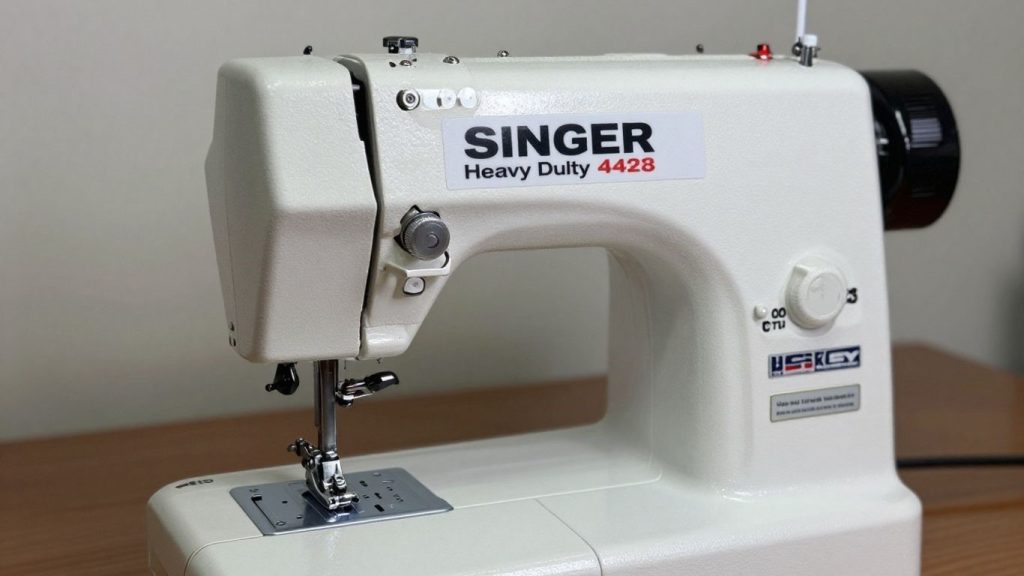
I have been researching sewing machines, and the SINGER Heavy Duty 4423 keeps coming up. It’s touted as a high-speed machine, which I immediately took notice of because let’s get real, who doesn’t want to sew faster? I’ve had a standard machine for quite some time, and while it works okay on lighter projects, I wanted something more for thicker material. This machine appears to check that box. It’s meant to tackle tougher fabrics like denim and canvas — a major draw for me.
At first glance, it felt quite substantial, definitely denser than some of the all-plastic models on the market. That additional weight generally translates to improved stability, particularly when the machine is being put through its paces. It’s not an industrial machine, of course, but at home it seems a nice middle ground. It’s meant to be good for beginners too, which is a bonus, with features like an automatic needle threader. I’m excited to see how it does on other fabrics and if the ‘heavy duty’ name holds up.
The SINGER Heavy Duty 4423 looks to fill the void between basic home machines–what most people will use Stitch Witch for anyway–and industrial beasts. It gives more power to the motor and to the speed, so it can handle a wider range of fabrics and projects that would slow down a less powerful machine. This machine is built to last, and you can tell by its construction that it’s made for the more demanding sewing jobs.
If you’re just starting out, you might also want to check how to learn sewing to understand whether a heavy-duty machine is right for you.
Key Features and Specifications
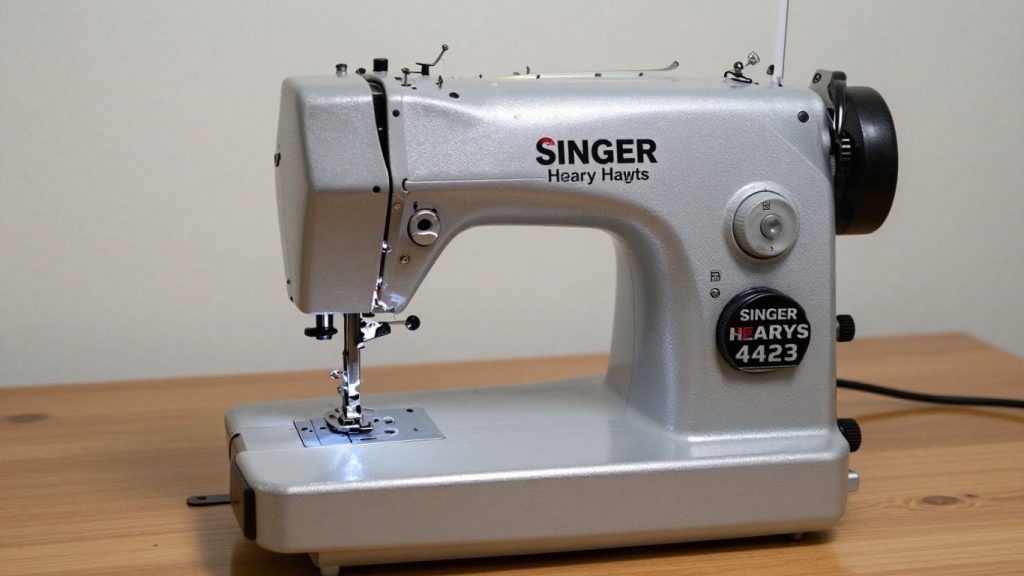
Motor Power and Speed
Right after reviewing SINGER Heavy Duty 4423, I was fascinated by its motor. It promises 50% more power than conventional ones, and frankly, I feel that difference when working with thicker fabrics. This added power means it doesn’t struggle quite as much when I’m sewing through multiple layers of denim or canvas. And the speed!
This thing can really fly, up to 1,100 stitches a minute. It’s a huge leap from what I’m used to, and it absolutely accelerates bigger projects. Of course, you can dial the speed down, but knowing that power is available should you need it is certainly reassuring.
If you’re working on projects like bags, check out how to make a simple tote bag at home to really test this machine’s strength.
Stitch Options and Capabilities
The machine doesn’t stray too far from the basics, offering 23 built-in stitches. I know some machines come with hundreds, but when it comes to my everyday sewing needs, 23 covers pretty much everything I do. There are basic stitches, decorative ones, and even an automatic one-step buttonhole.
I also love that I can quickly change the stitch length and width with dials located on the front of the machine. It also has a top drop-in bobbin, which I find so convenient, as you can see exactly how much thread you’ve got left, plus it’s easy to thread.
- Built-in Stitches: 23 (including utility, decorative, and buttonhole)
- Stitch Adjustment: Length and width control
- Buttonhole: Automatic four-step
- Bobbin System: Top drop-in with clear cover
If you’re curious about how stitches and mechanisms work, read sewing machine parts explained.
Build Quality and Durability
The heavy-duty metal frame is one of my favorite features. It gives the machine a robust, stable feel, which is essential for both speedier sewing and when working with thicker materials. It doesn’t shake or bounce around.
The stainless steel bedplate is a nice touch, too; it allows fabrics to glide easily beneath the needle. Despite being called “Heavy Duty,” it doesn’t weigh a ton, so it shouldn’t be difficult to reposition around the house — but it does feel rugged and built for years of use. So far, I haven’t had issues with it, and it feels like a machine that can live through heavy usage for years.
Combined with a robust internal frame and a flowing metal bedplate, these features greatly enhance the stability of this sewing machine for numerous projects.
For more powerful alternatives, you can also explore Janome MC6650 review for advanced users.
Ease of Use: Setting Up and Operating the 4423
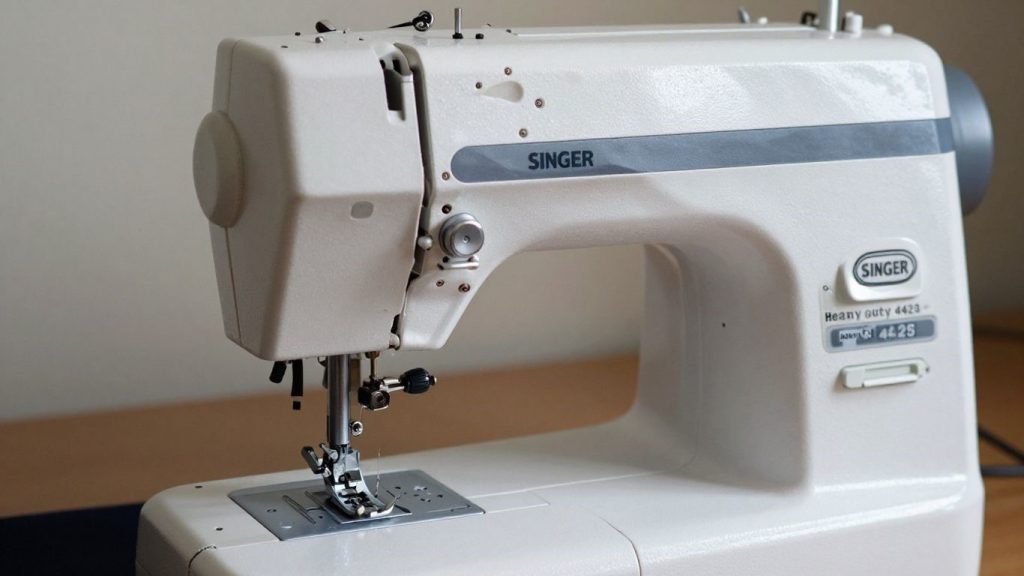
If you’re brand new to sewing, you’ll find it pretty simple to get started with the SINGER Heavy Duty 4423. I found that it was not very time-consuming to set up and get all ready to stitch. It’s almost fully assembled right out of the box, which is a nice change from some machines that need to be assembled.
If you’re brand new, pairing this machine with a good starter kit helps — check sewing kits for beginners you can buy online.
Threading and Bobbin Winding
The automatic needle threader makes it easier to thread the needle on this machine. You just do a few things, and it threads the needle for you.” I have found this to be a great time-saver, though it needs to have the needle set in the right location to work.
The top-load system also makes winding the bobbin a breeze. All you do is put the bobbin on the winder, feed in the thread, and step down on the foot pedal. You can easily tell when the bobbin is getting low, thanks to the clear cover, so you can change it out before you’re halfway through a seam.
Still confused? Follow this step-by-step how to thread a sewing machine guide.
Here’s a quick rundown of the bobbin process:
- Place a new bobbin on the winder spindle.
- Guide the thread through the tension disc and the small hole on the bobbin.
- Hold the thread tail and press the foot pedal to start winding.
- Stop winding when the bobbin is full, or you have enough thread.
Controls and Adjustments
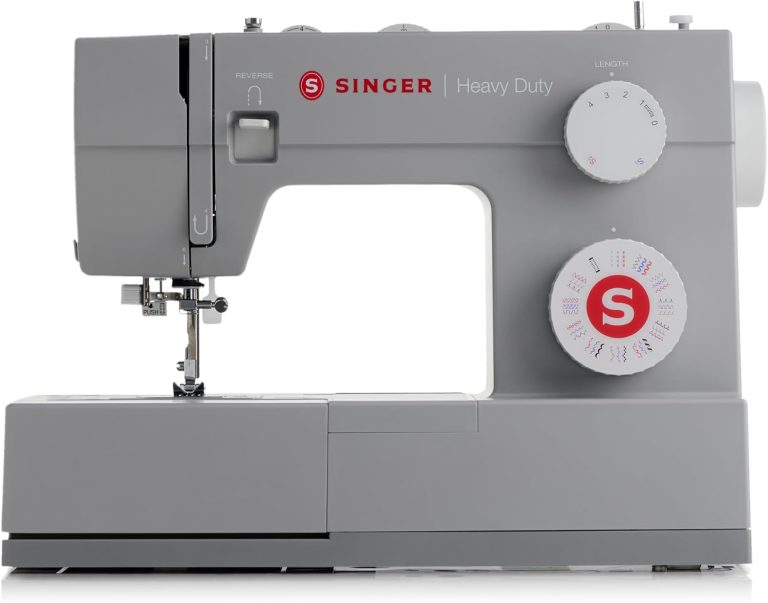
The 4423 is very straightforward in terms of operation. The stitch selector dial has very clear markings, and it is straightforward to choose one of the available stitches. For your stitch length and width, there’s a dial for each to make adjusting them that easy. Unlike some other models, this machine has a reverse stitch lever situated close to the top for immediate access when you need to make the stitches secure.
With buttonholes, it has a one-step buttonhole function that makes producing evenly sized and placed buttonholes super easy. You simply insert your fabric under the presser foot, align the buttonhole lever, and let the machine do its thing.
There’s a stainless steel bedplate, which is a nice touch that helps fabrics glide and slide easily underneath, allowing you to guide your material with ease for even stitches at any one time, from delicate silk to tougher canvas.
If you’re planning simple projects, try how to sew an apron as a practice project.
Performance: How Does the SINGER 4423 Sew?
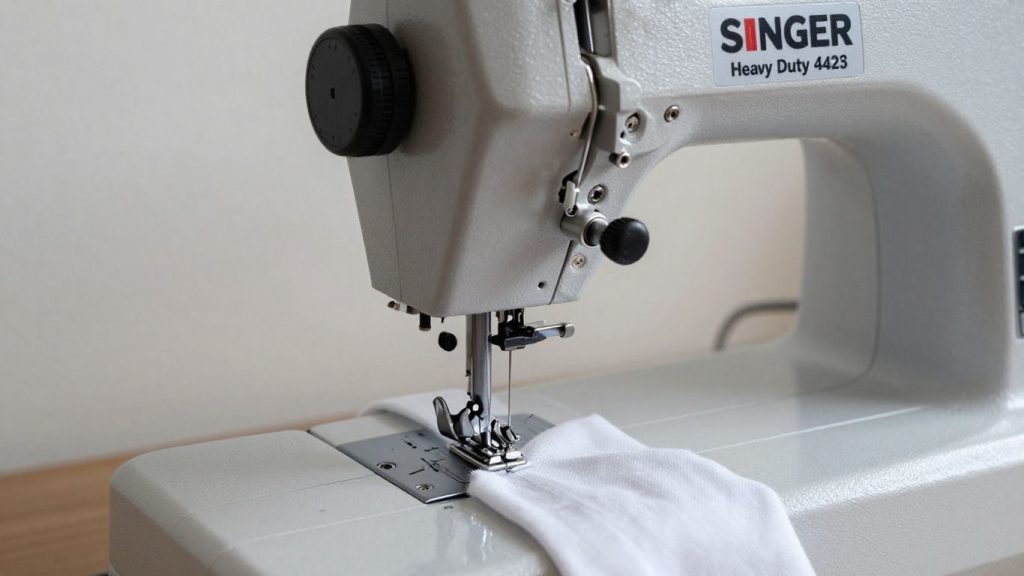
Sewing Different Fabric Types
When I initially unboxed the SINGER 4423, I wanted to see how it would perform on different materials. Having given it a full cardio routine, I can attest that this machine is a workhorse. It handles thicker fabrics like denim and canvas with surprising ease, which is very important to me. I’ve had other machines balk and jam on me, but the 4423 just keeps at it. Of course, the star of the show here is the mighty motor. It’s plenty powerful enough to smash through multiple levels without breaking a sweat.
For lightweight fabrics, such as chiffon or silk, adjustable presser foot pressure is a lifesaver. There is a very small adjustment needed, using a coin to turn one screw, for example, but once you have this set correctly, then it will stop fabric from being pulled & puckered. It’s not a flawless, hand-off process for all the delicate stuff, but it is a marked improvement over machines that don’t have this capability. The stainless steel bedplate also aids fabric gliding, though I didn’t notice it being a drastically different experience than when using other machines. It’s a nice touch, though.
For quilting lovers, you may also want to explore the best quilting sewing machine guide.
Who is the SINGER Heavy Duty 4423 For?
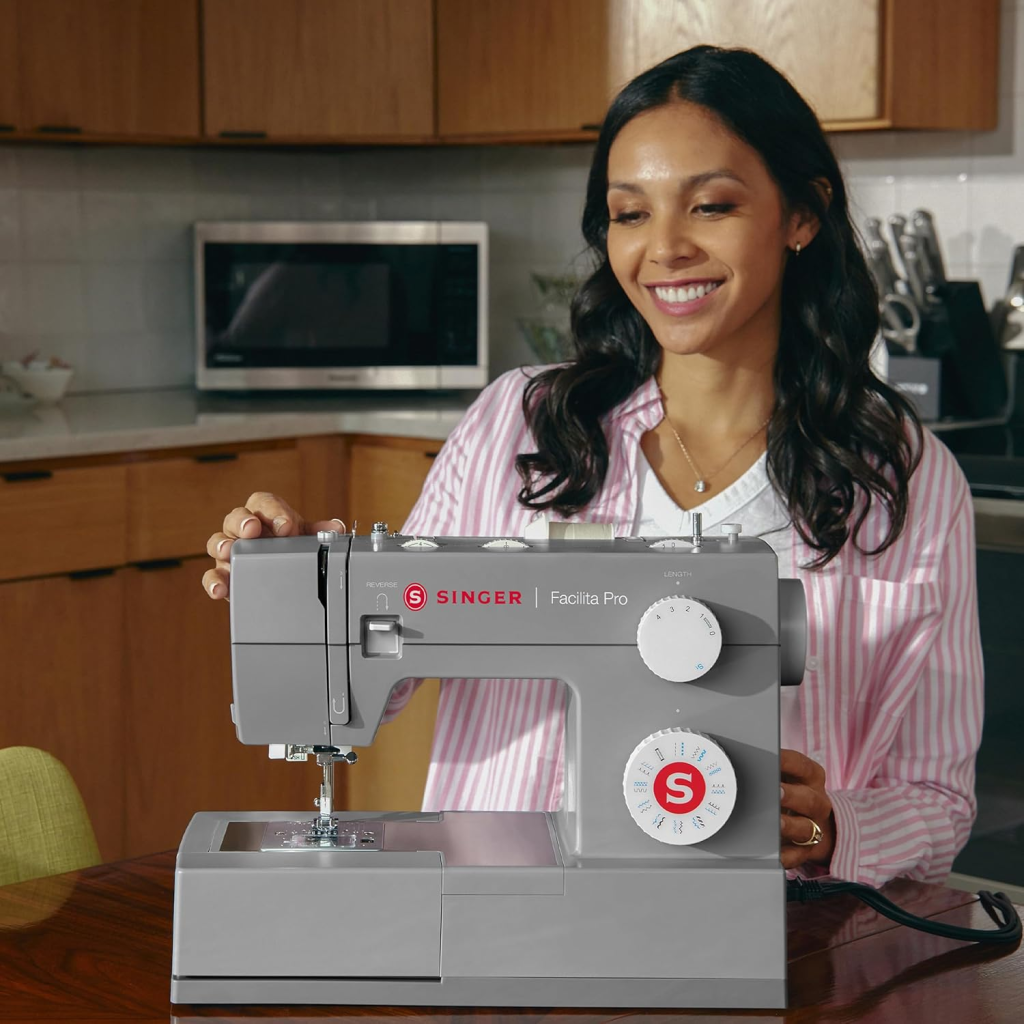
Informed by my SINGER 4423 usage, I believe this machine lands in a sweet spot for several different types of sewers. If you’re hoping for a beginner machine that will give you room to grow into larger projects, this is definitely up there as a good option. The automatic needle threader and top drop-in bobbin can help make the initial setup less daunting. And it can handle heavier materials, so a beginner won’t outgrow its capabilities too soon.
It’s also great for those who work with stiffer fabrics a lot. Think home décor projects, upholstery, or even simply waiting for the hems on thick denim. But if you’re done with your existing machine struggling or shredding needles when it comes to sewing on thicker materials, the 4423 is a worthy step up. It’s not a specialized machine for deep quilting or super fine embroidery, but when it comes to general sewing and heavier loads, it does the job beautifully. If you’re looking for a high-speed sewing machine review that speaks to durability and power, this is also a great option.
See My Full Singer Sewing Machine Comparison Guide
This review covers one Singer model, but our complete guide compares the top Singer sewing machines for beginners, heavy-duty sewing, quilting, and everyday home projects. Read our full roundup of the best Singer sewing machines to compare more options before you buy.
Pros and Cons of the SINGER Heavy Duty 4423
I spent some time with the SINGER 4423. Here are my pros and cons of what I love about it and what I wish were better. It’s a good machine, especially for the price, but like anything, it has its quirks.
I’d have to say that its strength and speed are its biggest selling points, making it a true workhorse for more heavy-duty fabrics.
If you want a slightly upgraded version, see Singer 4452 heavy duty sewing machine review.
Here’s a breakdown of the SINGER 4423 pros and cons:
Pros of the SINGER Heavy Duty 4423
- Heavy Duty Performance: This machine is great at living up to its name. It powers through tough stuff like denim, canvas, and even several layers of fabric without breaking a sweat. This is where it really shines, if you’re upholstering things or working with strong bags.
- Speed Demon: No kidding about the 1100 stitches a minute. It makes my sewing projects go much faster, which is great when I’m trying to knock things out. My older machines feel sluggish by comparison.
- Solid Construction: The metal body makes it feel solid. It does not wobble or shake, even when I’m pushing it hard. It has a build quality that adds to its reliable design.
- Beginner-Friendly Features: It is powerful but not intimidating. The automatic needle threader will save your life, and the top drop-in-bobbin system is not too difficult. I do think a novice could absolutely learn on this machine and upgrade with it.
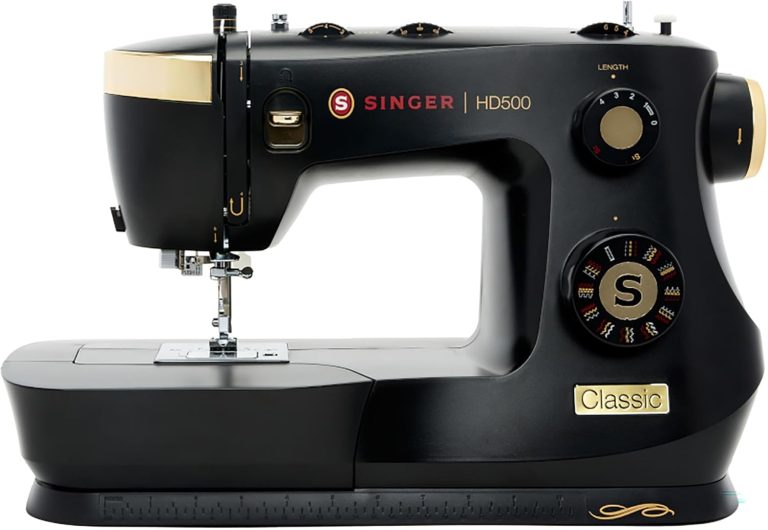
- Good Value: The price point is very reasonable for the capabilities it gives. You get a lot of machine for the price, and especially if you need to do more than just sew light cottons. This machine is perfect if you’re after something with capabilities that won’t leave you in the poor house; think of it as a Singer HD500 for those beginners looking for basic functionality at a good price [01eb].
- Adjustable Features: The adjustable presser foot pressure is great (it also has an extra high lifter available). This allows better control when sewing various fabric thicknesses.
Cons of the SINGER Heavy Duty 4423
- Noise Level: This machine is not known for being low-volume when it gets going. It’s certainly louder than some of the more consumer-oriented machines I’ve used. If you have sound sensitivities, you may opt to bring headphones.
- Smudge Magnet: The stainless steel bedplate is slick for fabric, but for whatever reason absolutely attracts fingerprints and smudges like mad. Even with a quick wipe-down, it still looks messy — this is a little annoying for someone like me who likes things pristine.
- Basic Stitch Selection: It has 23 built-in stitches, which is plenty for most of what you’d do day-to-day with a machine, but it doesn’t have some of the more decorative or specialty ones found on fancier machines. If you are someone who does a lot of complicated embroidery or decorative work, maybe the selection will seem a little insufficient for you.
- Bobbin Problems (Minor and Rare): On the whole, fine, but I’ve had a few thread breaks/miled bobbin problems, particularly when I really hammer it on speed, haven’t worked with very fine threads. It’s not a steady issue, but it’s something to note.
All in all, I believe the SINGER 4423 is an awesome machine for anyone looking for a dependable, powerful, and fast sewing machine to use on daily projects and thicker fabrics. It doesn’t do everything, and the noise and smudge factor are small annoyances, but its performance and value are hard to beat in a heavy-duty category. It’s a device that I’ve realized I find myself turning to more often than I thought.
Comparison of SINGER Heavy Duty 4423 with Other Machines
So, when I am searching for a new sewing machine, I particularly look for a heavy-duty one. I never go without checking reviews of it next to other popular models. It also informs me if I am getting the best value for my investment and if it truly serves my purposes.
The SINGER Heavy Duty 4423 is often recommended as the best heavy-duty sewing machine of 2026, but how does it stack up against a few alternatives?
SINGER Heavy Duty 4423 vs SINGER 4452
These two SINGER builds look quite similar, causing some confusion. The stitch count is the biggest difference I have seen. The 4423 features 23 built-in stitches, while the 4452 boasts 32.
It comes in one more color, the “Meltwater” model. (The stitch difference isn’t huge for most everyday tasks, but if you want a few more decorative options, the 4452 may be marginally more appealing.) Both are great at sewing thick fabrics.
SINGER Heavy Duty 4423 vs Brother ST371HD
I do see this Brother ST371HD pop up often when people are looking for a durable sewing machine to sew thick fabrics. The biggest difference I’ve felt is weight; the SINGER 4423 is definitely heavier, which I tend to associate with a more capable build, even if the Brother is still a solid machine in its own right.
Both models are meant to process heavier-weight fabrics like denim and canvas. The Brother does offer a few more accessories in the box, and while we consider this a bonus, it is not what makes us love the machine.
SINGER Heavy Duty 4423 vs Janome HD3000
The Janome HD3000 is considered a step up in terms of construction and capabilities, and the price generally follows. The Janome HD3000 will almost certainly provide a somewhat smoother sewing experience, and perhaps a little more longevity for very heavy continuous usage, but the SINGER 4423 is such an excellent machine at its price point and with such great performance that we couldn’t help but include it here!
If money isn’t the main concern, then choosing between these two candidates for the best heavy-duty sewing machines of 2026 is quite tough! Among the SINGER Heavy Duty machines’ options, the SINGER 4423 is certainly high up on the value spectrum.
Other Things To Look Out For When Comparing Sewing Machines. Heavy Duty is a very often-used term, and although there are so-called heavy-duty home machines on the market, these need to be looked for compared with industrial ones. Some home models like the SINGER 4423 are designed for heavier workloads than basic machines, but aren’t made for factory-style use, 8 hours a day. They have a good combination of power, versatility, and cost for home sewers sewing thicker materials or multiple layers.
Here’s a quick look at how they generally stack up:
| Feature | SINGER Heavy Duty 4423 | Brother ST371HD | Janome HD3000 | SINGER 4452 |
|---|---|---|---|---|
| Motor Power | Strong | Strong | Strong | Strong |
| Stitch Count | 23 | 23 | 23 | 32 |
| Frame | Heavy Duty Metal | Metal | Metal | Heavy Duty Metal |
| Speed (SPM) | 1100 | 1000 | 860 | 1100 |
| Price Point | Budget-Friendly | Mid-Range | Higher | Budget-Friendly |
| Best For | All-around heavy-duty | Good value | Durability | More stitches |
So, Is the Singer 4423 Worth Your Time?
Having spent some time with the Singer 4423, I can say that it’s a really solid machine, especially if you want to work with thicker fabrics or are simply looking for a no-frills workhorse. It is indeed more powerful than my old machine, and I felt much more secure sewing through denim and canvas. It’s not perfect, at least speaking as a person whose fingerprints take over the operation of the stainless steel plate, but it does good work for the price.
If you’re a beginner who wants to up your sewing game or an experienced sewer looking for a reliable second machine better equipped for tougher jobs, I think it’s worth considering. It’s made my sewing life a little easier, and that’s a victory in my book.
Frequently Asked Questions
Is the Singer 4423 really good for beginners?
Yes, for beginners, I think it’s a good choice. It has features such as an automatic needle threader that simplify things significantly. Plus, it’s a machine you can grow into as your skills increase.
Can this machine sew through thick materials like denim or leather?
Absolutely! That’s what the ‘Heavy Duty’ in its name is for. It has a more powerful motor and is designed to sew through heavier-weight fabrics, so sewing multiple layers of denim or even some leather doesn’t faze me.
How fast does the Singer 4423 actually sew?
For comparison, the fastest sewing machine can sew 1,100 stitches per minute. What this means is that, contrary to using a standard machine, I can get through projects way faster.
What’s the difference between this and an industrial sewing machine?
An industrial machine is meant for factories and non-stop heavy-duty work. That said, this Singer 4423 is really nice for a home sewing machine, but not quite as big or strong and industrial one. But it’s much more practical for home sewers since it’s smaller, cheaper, and easier to use.
Does the Singer 4423 have a one-step buttonhole feature?
Yes, it does! The one-step buttonhole is quite useful in my opinion. You just insert your button into the special, scripted foot, and the machine does the work, making perfect buttonholes each time.
What does the stainless steel bedplate do?
The stainless steel plate beneath the needle allows fabric to glide effortlessly when I sew. In doing this, it ensures that my stitches are evenly spaced when I’m working with delicate silk versus firm canvas.