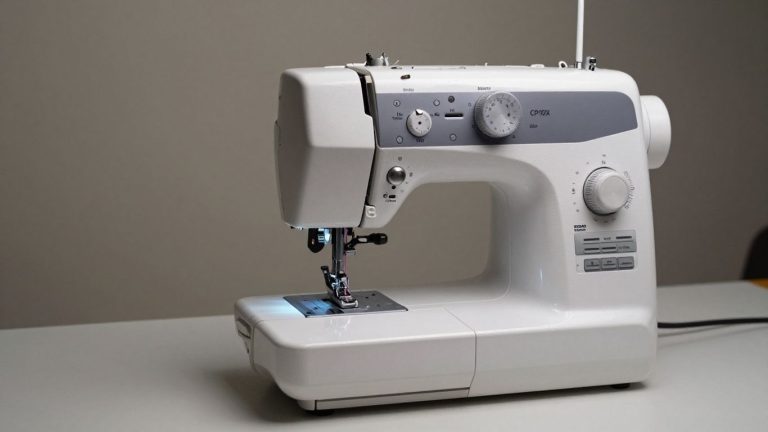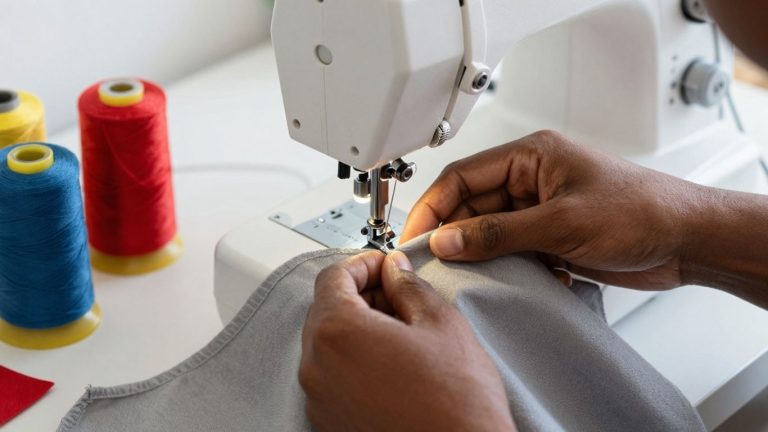
Singer 4452 Heavy Duty Sewing Machine Review My Revew on this Maria Sew ???
Singer 4452 Heavy Duty Sewing Machine Performance I’ve owned my Singer 4452 heavy-duty sewing machine for a bit now, and I have certainly run it through its paces.
On this Singer 4452 review, you’re going to learn about the machine’s features, what it does and its efficiency, if any or whether it lives up to all these hype.
While there’s a lot to like here, particularly when it comes to sewing thicker things, I’ll also tell you where I find this machine lacking for my personal sewing needs.
Singer 4452 Heavy Duty Overview
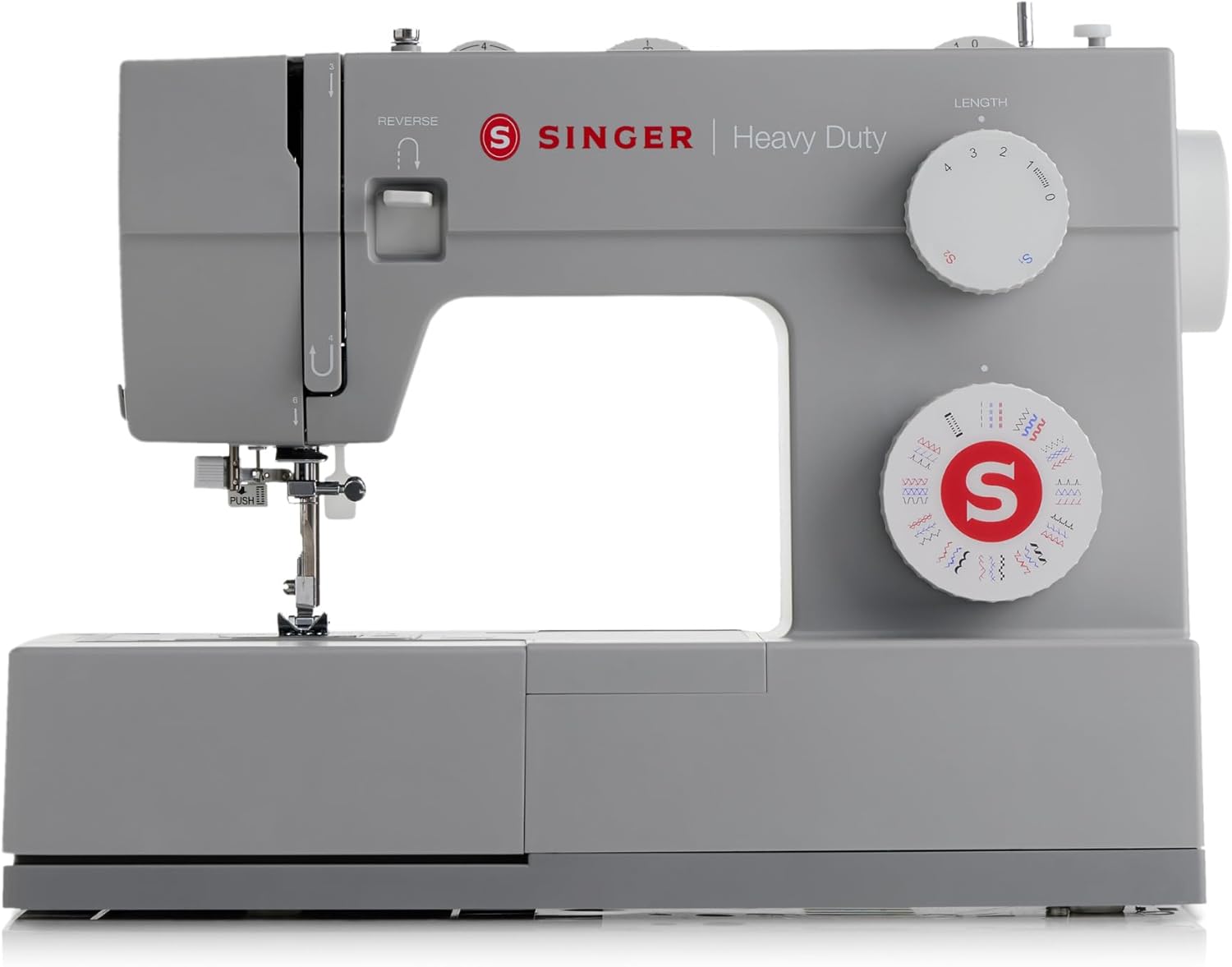
When I began my search for a sewing machine capable of sewing more than just lightweight material, the Singer 4452 Heavy Duty came up over and over again. It’s commonly cited as a good choice, especially if you need a little more oomph than your garden-variety machine.
It is that tough construction that leads to confident mechanical functioning of the machine over its long life. I wanted to know whether it lived up to its name, too I’ve heard a lot of mixed reviews.
This machine does a good job and some okay features, like 32 built-in stitches (which is more than can fit on most everyday projects including the decorative ones). It also has a pretty quick motor, up to 1100 stitches per minute. That’s quite zippy! For those of you who are seeking for a steadfast workhorse, the Singer 4452 sewing machine offerser like these are quite attractive.
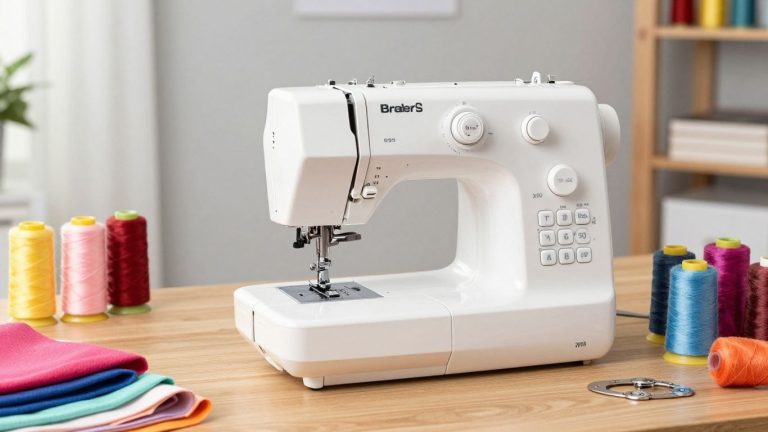
It is often deemed to be one of the best Singer sewing machine for beginners if you are looking forward to working with some thick stuff. It’s almost entirely metal, so it feels solid, and heavy about 14.6 pounds.
This weight helps keep the machine in place as you sew at higher speeds or through heavier material. I was also curious about the included accessories, such as the even feed walking foot, which I’ve found can be a game-changer when sewing multiple layers or slippery fabric. Overall, my first thought is that it seems to be a machine not afraid of hard work and also a little bit speedy, say your all-rounder machine.
Top Features of Singer 4452 Heavy Duty
When I was reviewing the Singer 4452, I needed to dig in and see what this machine is all about. It is branded as “Heavy Duty,” so I was expecting some hard-core power and construction. Here’s what I discovered under the hood.
Motor Power and Stitch Speed
This machine really moves. It has a motor speed of up to 1100 stitches per minute. That is pretty zippy, especially when I am trying to whiz through a long seam or just get done quicker with a project. By comparison, a lot of your average household machines max out at 700-800spm. I certainly notice this extra speed when I’m working on larger projects.
Built-in Stitches and Buttonholes
The 4452 features 32 built-in stitches. That’s a nice number that will include all the basics, like straight stitch and zigzag, as well as some decorative stitches and stretch stitch options. It also includes a one-step buttonhole feature. It is a nice feature, but I find that the buttonhole stitch doesn’t just automatically stop and go forward, so you have to pay attention. Not a dealbreaker, but something to note.
Construction and Durability
There’s a reason Singer calls this machine ‘Heavy Duty. The surface is metal, and it’s bed plate is stainless steel. This makes it feel sturdy, and I haven’t experienced any wiggling even when this thing is really being pushed. It comes in at a hefty 14.6 pounds, heavier than some lighter weight plastic machines, but that extra heft contributes to its stability. It’s also got a presser foot pressure that can be adjusted, which is nice for dealing with fabric of varying weight.
Here’s a quick list of some specs:
| Feature | Specification |
|---|---|
| Motor Speed | Up to 1100 SPM |
| Number of Stitches | 32 |
| Max Stitch Length | 4 mm |
| Max Stitch Width | 6 mm |
| Presser Feet Included | 6 |
| Weight | 14.6 lbs |
| Dimensions | 15.5 x 6.25 x 12 in |
| Usability & UX | Smooth operation, beginner-friendly controls |
Usability and UX
Ease of Use I’m not going to lie, when I received the Singer 4452 Heavy Duty, one of my first thoughts was “How easy is this thing going to be to use?” Now, a lot of the time these machines are very complicated and they’ll look like it. Or at least, that’s what they would have you believe.
Setting Up and Threading
Getting started was pretty straightforward. The manual is easy to understand, and really, threading the machine itself is a no-brainer. The bobbin winding is simple to understand as well. I didn’t struggle to thread it through the guides and, although I find the automatic needle threader slightly fussy at times, it generally does what it should. Just check and make sure the needle’s in the right place and it’s pushed all the way up. It’s not an ideal solution, but it can be a nice bonus if you have good service.
Controls and Adjustments
The appearance never hurts any machine, but I also like that there are the dials for choosing stitches and changing length and width right there on the front/top. They are very obviously labeled, and I appreciate that. The length and width of the stitches can be adjusted with you able to choose any size between 0-4mm for a stitch length, while the maximum width is up to 6mm. The presser foot pressure can also be adjusted according to the type of fabric.
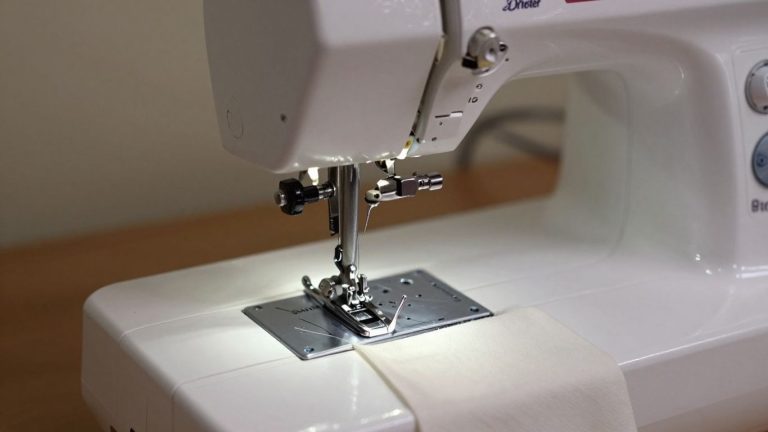
This is useful to assure you get a good stitch on anything from thin cottons to thicker denims. The machine also features a lever to raise the presser foot further, which is a life-saver when working with bulky seams. The LED light that’s over the sewing area is also SUPER bright, way better than on other machines I’ve worked with. It makes it easier to see what I’m doing, particularly in rooms with bad lighting.
I learned that all you do to change the tension is turn a dial which sounded pretty easy. If you’re new to sewing, you might want to keep a running tab of your favorite setting sets (a straight stitch for seams, say) so that there’s not much guesswork.
The stainless steel bedplate is likewise a lovely feature; it’s silky under the fingers and helps fabrics move smoothly, without catching. I don’t see a huge difference to smooth plates, but it’s something rather nice for quilting.
Performance: What Material Can the Singer 4452 Sew?
Sewing Different Fabric Types
So the first thing I wanted to see was how it would respond to a variety of fabrics, because when it’s advertised as the perfect heavy-duty machine, one can never be too sure. I mean, it IS called “Heavy Duty,” right? So, I put it to the test. Because for everyday cottons, and the lighter fabrics it did a pretty good job. I whipped up a few shirts and a dress, and the machine barely missed a beat. The stitches were pretty even throughout, but I noticed a bit of bunching in one swatch of cotton, which was strange. In addition to everything else, it handled a soft rayon beautifully, as well; the machine just plowed through without giving me any trouble!
Durability and Heavy-Duty Tasks
This is where the “Heavy Duty” name truly gets tested. I attempted to sew on double layers of denim, and actually, I sort of hated it. The stitches were so tiny—I mean even when I had the machine set to sew on a long stitch length, and at one point, I managed to bend a needle. It hit the presser plate, which really struck me.
With a powerful motor, and capable of penetrating through several layers of utility fabric on a good needle, I wouldn’t call it a powerhouse when working with multiple layers of seriously thick materials.
Denim wasn’t the easiest to work with on my Singer 4452 and it made me wonder about how “heavy-boxy” it actually is while compared to a few other models I’ve gotten the chance to see or hear about.
From my performance test of the Singer 4452, I would say that it is best for medium-duty work rather than consistently handling thick upholstery or several layers of canvas. There also seemed to be some reports in Singer 4452 reviews I read on other sites, claiming that the machine tends to struggle with exotic fabrics as well, so it doesn’t exactly live up to its “heavy-duty” name for extreme purposes either.
Advantages of the Singer 4452 Duty
Initially when I began researching the Singer 4452, it was being marketed as a “heavy-duty” sewing machine. And frankly, some of it is pretty good and helps set the series apart, even if it didn’t totally dazzle me.
One of the things I really like about it is how simple it is to use. It’s easy to thread the machine, and the top-drop bobbin is awesome. You just pop it in, follow the little diagram that appears on the machine and away you go. Plus, the bobbin case is clear which means that I can always see how much thread is left. No more running out mid-seam!
I also thought the control was fairly intuitive. Tension is so easy to adjust, you just turn a dial and the stitch selection is very well marked. And the bright LED light this machine has is another major win because it seriously lights up my work space, which comes in handy since I like to sew on lots of dark fabrics but also just when I need to see.
It also includes a good variety of presser feet, including both a walking foot and nonstick foot, which are incredibly helpful for sewing with different materials. The fact that these are included means I won’t have to purchase separate ones immediately, which is also nice. It’s a good machine for simple jobs, and can work through some lighter upholstery projects if I’m careful or if I use the walking foot sewing machines that you need for leather.
Oh, and did I mention the warranty? Singer provides a 90-day full coverage, followed by 2 years for parts, and 25 years for the machine’s body. It’s not the longest warranty out there, but it’s something, and good to know that one is on the books if you do have a problem early.
DisAdvantages of the Singer 4452 Duty
Although I was anxious to get my hands on the Singer 4452, I must admit that this “heavy-duty” machine did not quite meet my expectations. I thought the price was a little high, for one thing, given its performance. Even on sale I wondered if it was worth the price. And the “heavy-duty” part wasn’t that stout-feeling to begin with.
As actual sewing, though, I felt the performance to be a bit lackluster. It was okay with the straight stitch, although for some strange reason it would catch sometimes and bunch up the fabric. The one that bothered me the most was the zigzag it was uneven, and I’m sure it was my top thread tension swinging from too loose to too tight.
The machine even struggled with stitches like the scallop and blind hem. Sewing through layers and layers of denim was no small feat. The stitches were minuscule even at the longest setting and even caused a needle to bend, then strike the presser plate, one time. This is definitely not the experience I would expect from a machine that has “heavy-duty” in its name.
I also observed that although the machine is well- labeled, it does not tell you which presser foot to use for different stitches. It’s a mechanical machine, so you will need to pay a little more attention when setting things up, including buttonholes.
You have to manually drop a lever, and watch that all the sewing does not look past the end of the buttonhole. It’s not a dealbreaker, but it is something to remember. A few users have mentioned problems such as straight out of the box machine not sewing properly which is not good coming from brand like this [4597].
As a whole, I thought the Singer 4452 is an okay machine, not really “worth it” for me. And also, if I am going to be honest the price seemed to be pretty high for what you are getting. If you’re trying to find something that actually powers through, I think there are better options available. As a basic machine, it’s fine, but for something really heavy duty, I felt it came up wanting.
Singer 4452 Heavy Duty vs Brother ST371HD
As I researched new sewing machines, I ran across the Brother ST371HD numerous times while comparing it to Singer 4452 Heavy Duty. It’s also intriguing to compare them, as both machines are marketed as capable devices.
Anyway, the Singer 4452 is supposed to be sturdy as hell like a workhorse or some shit, but honestly, I have not found it THAT much of a toughy like its name implies. I thought it was a little lackluster with certain stitches (zigzag, in particular). It would occasionally have issues with even tension, but that just meant the fabric began to bunch up a bit. The denim test, in particular, was rough the stitches were small even on the longest length setting and I also bent a needle. That’s not what I want in a “heavy-duty” machine.
On the other hand, the Brother ST371HD is popular among beginners. While it may lack some of the bells and whistles of fancier models, it appears to be a more dependable performer for its price range. Some reviews mention that it sews through diverse types of fabric well, and overall it is reliable for everyday sewing projects.
The Brother HC1850 is an interesting one because it’s recommended for about the same price and also for performance. But if you’re a beginner, then the ST371HD may be a better investment since it can help you wet your feet in sewing without getting frustrated. You can read more about recommended machines like the Brother ST371HD here.
I got to play with several bobbins full of thread from different machines), but all-in-all, the Singer has just a few more built-on stitches (32 vs the ST371HD’s 23) and it does come with a couple more presser feet… most notably a walking foot (ie. even feed attachment) which is nice. That being said, the ST371HD does appear to produce better stitch quality across all conditions, especially straight stitching.
For me, stitch consistency is common than getting more decorative stitches that I won’t end up using. So, even though the Singer 4452 is called “heavy-duty,” I figured that for most users (those not sewing super thick stuff all the time), I thought that perhaps the Brother ST371HD might actually have a smoother experience all around.
Singer 4452 Heavy Duty vs Janome HD-1000
The Janome HD1000 had been popping up on my radar as a heavy duty machine to keep an eye out for, and I wanted to know how it compared to the Singer 4452 that I already use. In all honesty, comparing these two is akin to reviewing how two separate approaches get tough jobs done.
The Janome HD1000 I believe is a cast aluminum body, for what I have read. That sounds pretty sturdy, right? It’s built like a workhorse, and you frequently hear from people who rave about its related reliability in sailing through thicker fabrics (like denim or canvas).
It has a basic number of stitches that cater to the essentials straight stitch, zigzag and a buttonhole stitch. And it lacks a lot of fancy bells and whistles, which is not so bad if you want nothing more than a machine that sews without complications. The Janome doesn’t have automatic needle threading, and its stitch selection is made using dials. It’s a very simple machine, and that’s exactly what a lot of people like about it.
The Singer 4452, however, comes bearing that “Heavy Duty” name, and has one hell of a motor in it compared to any ordinary machine so you can be sure that not only does it take more fabric than normal ones. I did like its stitch selection a little better, with 32 built-in stitches, including some decorative ones. It even has an automatic needle threader, a nice convenience, and the stitch selection is dial-based as well.
That said, while it is capable of plowing through, some of the more complex stitches or even just a plain old zigzag on certain fabric didn’t turn out quite as nice and consistent as I had hoped. Occasionally the tension would get weird, and I’d have to futz with it. The Singer also has a stainless steel bedplate, which allows fabric to glide, and some bonus feet including a walking foot that’s great for quilting or finicky fabrics.
A cursory glance at some of the contrasts I have observed:
| Feature | Singer 4452 Heavy Duty | Janome HD1000 |
|---|---|---|
| Body Construction | Metal Frame | Cast Aluminum |
| Built-in Stitches | 32 | 14 (approx.) |
| Needle Threader | Automatic | Manual |
| Motor Power | Stronger than standard | Stronger than standard |
| Stitch Selection | Dials | Dials |
| Included Feet | Multiple (includes walking foot) | Basic set |
If I had to choose, the Janome HD1000 is your pick if you care about a solid build and pure, raw sewing power for thick material AND if you don’t want too many stitch choices. The Singer 4452 has more options for choosing your stitches and also has a convenient automatic needle threader, but depending on the fabric and stitch type of what you’re working with, its performance can be hit or miss. Ultimately it depends on what you are looking for in a sewing machine.
Singer 4452 vs Singer 4411 Pink sewing machine
So, I’m seeing the Singer 4452 and then there’s the Singer 4411 Pink. This had me thinking about how Singer gives their machines all of those names, which if I’m being real can get a little crazy. The 4452 has been designed to lead their “Heavy Duty” line and it has a lot going for it, including 32 stitches and a pretty decent motor that can do up to 1100 stitches per minute. It also comes with a bunch of extra feet, which is neat.
Then came the pink 4411, which is just that. That’s the first thing you notice, yes? But other than the color, it’s a much simpler machine. It will have far fewer built-in stitches. typically around 11 and it won’t pack that same heavy-duty motor.
The stitch speed is more slow, and it’s generally sold with fewer accessories. I mean, it’s a really basic machine so suitable for very simple projects and possibly someone who is absolutely new at sewing who wants something bright.
When I put them against each other, the 4452 is a workhorse. It’s designed to work with heavier fabrics and tackle more challenging sewing tasks. The 4411 Pink, however, is more what I would call a mate for lighter fabric sewing.
It’s really not built for the same amount of heavy lifting. In that case, if I’m considering longevity and tackling more challenging materials, the 4452 wins hands down. But if I don’t need all the bells and whistles, a simple machine for basic mending or easy crafting, and really love pink, maybe the 4411 would be enough. It boils down to what it is that I think should be sewed.
Who is the Singer 4452 Heavy Duty For?
So, who then is this Singer Heavy Duty 4452 recommended for? I have put some time on this machine, and really believe it boils down to a few sewist types. First, if you are a beginner that wants something that your little machine won’t be able to handle things like knits and lightly weighted cottons this might be a good pick.
It’s not too complicated, meaning you won’t find yourself lost in a sea of buttons and settings. The features of Singer Heavy Duty 4452 are quite simple which is not intimidating for beginners. I thought the set up and threading were pretty easy (which is always a plus when you’re still learning).
And then there are the home sewers who work on a range of projects. You probably aren’t sitting down to sew every day, but when you do, it’s for curtains or simple home decor projects and maybe the occasional denim repair.
The “heavy-duty” name implies that it can work with thicker fabrics; and though my Singer Heavy Duty 4452 review will demonstrate that it does have its limits, it is stronger than many standard machines. It has a nice selection of presser feet, one that I use all the time is an even feed walking foot which works wonders when you need to sew through layers of fabric.
This is one of the primary Singer Heavy Duty 4452 features that models it above more basic machines. If you want to do a little more work without spending too much more, it’s worth considering. You’ll be able to read further regarding the Singer Heavy Duty 4452 features and what we like and don’t like about it in our overview.
If you’re more experienced and used to working with extremely thick materials such as upholstery fabric, multiple layers of leather or sails, then I would say it’s not for you. Even though it’s labelled “heavy-duty,” in my testing, it did have trouble with some of the more demanding duties (such as sewing through multiple layers of denim).
Frequently Asked Questions
What does it mean when the Singer 4452 is ’Heavy Duty’?
I suspect that the name ‘Heavy Duty’ is because of its strong motor and metal frame, which meant that it could sew through thicker fabrics like denim or canvas. It’s designed for heavier lifting that could burden more lightweight machines.
Is the Singer 4452 sewing machine good for beginners?
Yes, I thought it was quite easy to maneuver around on — even for a beginner. The threading is easy and the controls are uncomplicated. It doesn’t have a lot of fancy features to get lost in, so it’s a good first sewing machine.
What type of stitches does the Singer 4452 have?
It has 32 built-in stitches. That includes all of the basics you’ll need to make most projects, along with some decorative and stretch stitches for knit fabrics. It also has a one-step buttonhole feature that makes sewing buttonholes easy.
What accessories does the Singer 4452 have?
It sure does! I appreciated that it has a nice amount of extras. You also receive multiple presser feet — for zippers, buttonholes, a walking foot and a non-stick one. There are needles and bobbins and lots of useful stuff.
Singer 4432 vs Singer 4452 – What is the difference?
As far as I can tell without seeing the two sitting next to each other, they are effectively the same machine. The big difference is that the 4452 typically comes with a few more accessories in the box – like the non-stick foot and walking foot which are sometimes not included with the 4432, or can be bought separately.
Can I sew heavy weight fabrics such as several layers of denim with this machine?
It’s called “Heavy Duty,” and it can accommodate thicker fabrics more easily than many machines (though I still have a bit of trouble sewing through 15 layers of very heavy denim). It could bend the needle or it might fight you, so I’d be cautious and use a correct size of needle for those really tough tasks.