Kitchen Lighting Ideas 10 Stylish & Functional Ways to Brighten Your Space
I’ve been thinking a lot about my kitchen lately. It’s the heart of my home, where I spend so much time, but the lighting just isn’t cutting it. It feels a bit dark and dingy sometimes, especially when I’m trying to cook or entertain.
So, I’ve been doing some digging into Kitchen Lighting Ideas to make it both functional and a place I love to be. It turns out, there’s a whole lot more to it than just a single overhead light!
Key Takeaways
- Layering different types of lighting, ambient, task, and accent, is key to a well-lit and versatile kitchen space.
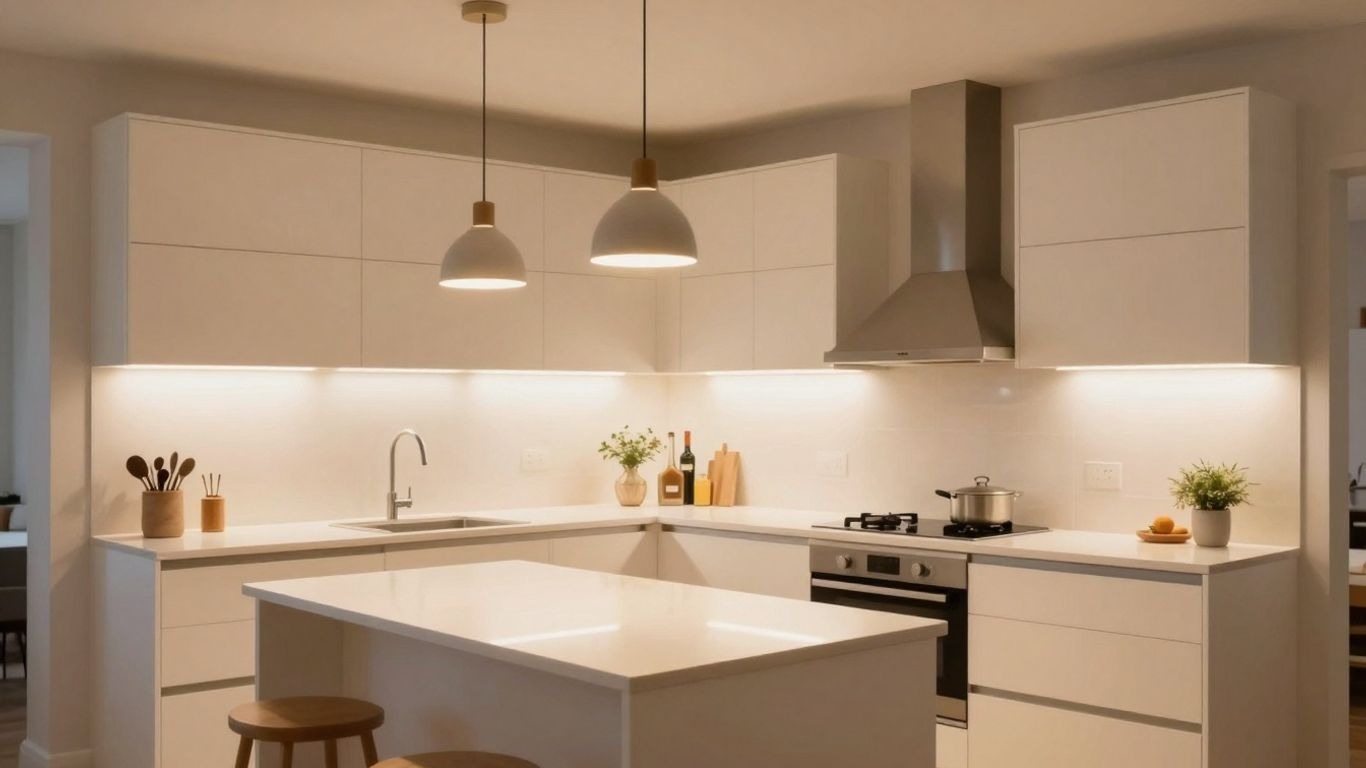
- Under-cabinet LED lighting is a simple yet effective way to brighten countertops and eliminate shadows, making food prep easier.
- Pendant lights over a kitchen island can serve as both a functional light source and a stylish focal point, adding personality to the room.
- Consider dimmer switches for your kitchen lights to easily adjust the mood and brightness for different activities and times of day.
- Don’t underestimate the power of natural light; maximizing it with windows, skylights, or reflective surfaces can make a huge difference.
Why Kitchen Lighting Matters
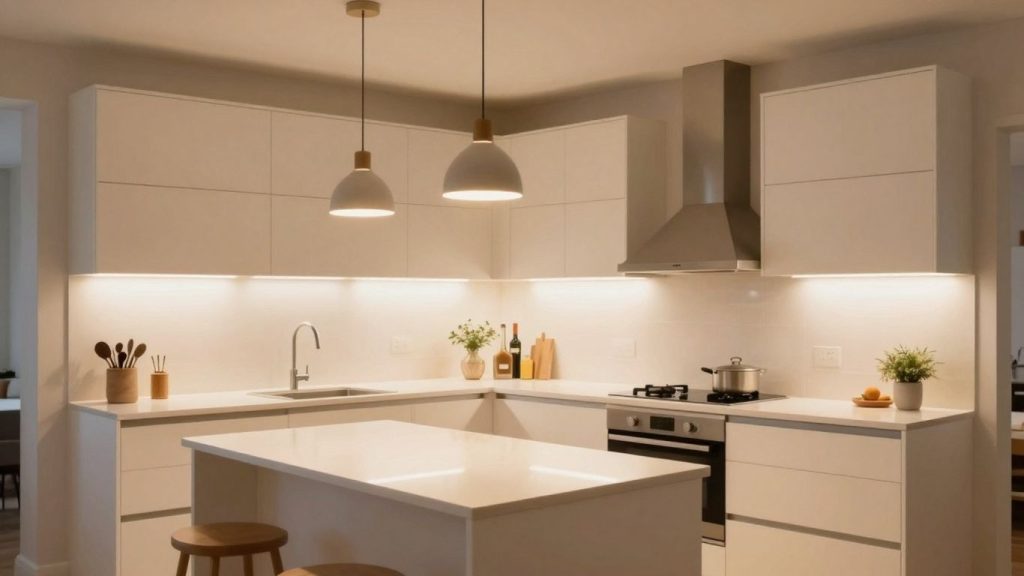
In the beginning, when I began to consider how to light my kitchen, I really didn’t give it any thought. One main overhead light would be sufficient, I reckoned? Turns out, I was way off. Proper kitchen lighting is far more than just the cherry on top of this very practical room; it’s essential for making the whole space not just function better but feel more inviting.
Everything happens in my kitchen, prep work, homework with kids, coffee with friends, the late-night standing-stare-into-the-fridge. Without the proper lighting design for kitchens, it felt dark and cramped, particularly in the corners. It’s incredible what a little illumination will do. Consider modern kitchen lighting not a mere matter of fashion, though, as it happens, contemporary design has certainly played a role. It’s about how the space is employed. You want light to chop and cook by but you also want a soft glow when you’re relaxing.
Getting the layers right, from overall atmospheric light for a kitchen to task lighting for food preparation, makes a difference. It isn’t just about dodging shadows; it’s about making an atmosphere.
So that was an eye-opener for me, in terms of where to put lights within a kitchen and thinking about zones and activities. And, please, don’t even get me started about kitchen accent lighting; you can weigh in with personality and drama. It’s a whole science, but once you figure it out, your kitchen feels complete.
The Three Layers of Kitchen Lighting
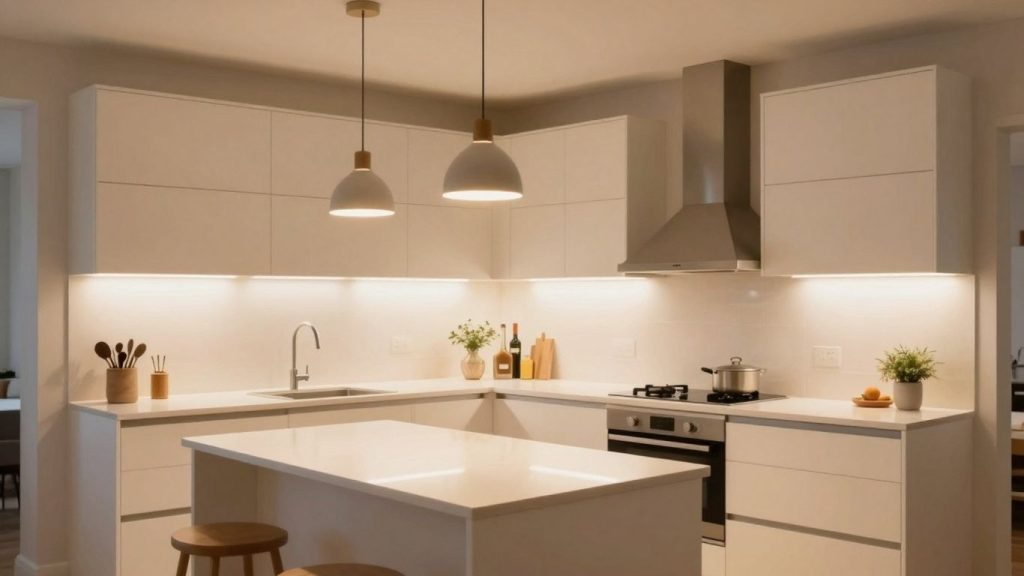
I’ll admit that when I began planning my kitchen lighting, all I could imagine was one overhead light. But then I discovered the three-layered approach to kitchen lighting, and it reoriented everything there.
It’s not simply a matter of having light at all; it’s also about having the right kind, where you need it and when. Think of it like putting together a fabulous outfit, you need a good foundation, then some practical pieces, and finally those accessories that give it that wow factor.
Ambient Lighting: The Foundation
This is your primary, general light. It’s the glow that fills a room, making it safe to walk around and generally see what you’re doing. Your kitchen can still feel dark and a little unfriendly with other lights on, if your ambient light is not good.
It is where everything else begins. For my kitchen, I chose a multitude of recessed lights specifically distributed over the entire ceiling. It’s a nice, even light without being harsh. It is the kind of light you’d want on when you first walk in.
Task Lighting: For Functionality
That’s where the rubber hits the road. Task lighting is concentrated light in places where you will be doing activities such as chopping vegetables, mixing ingredients or reading a recipe. This is likely the most important layer for a functional kitchen.
Think under-cabinet lights that beam down on your countertops, or a pendant light hanging right over the spot where you might chop an onion. I installed some thin LED strips underneath my cabinets, and it was like watching the sun rise in a dark room. All of a sudden, I could see what I was doing without shadows being cast. Cooking is suuuuper easy with it, and safe, too.
Accent Lighting: Adding Drama
Accent lighting is the art of providing interest to a venue by adding some life and emphasizing certain features that are present in your kitchen. This might be a spotlight on an art piece, interior lighting in the glass-front cabinet that showcases your nice dishes, or uplighting to accentuate architectural details. It’s the layer that brings in visual interest and makes your kitchen feel more designed.
I’m considering putting some small lights in my glass cabinets to spotlight my pottery collection. You don’t need it to cook, but it will make the space feel a little more special. It’s the jewelry for your kitchen, that last bit of sparkle. You may want to look at some other kitchen lighting ideas to consider how this layer can change a room.
Layering these varieties of light does more than provide options, though: It means that your kitchen can alter itself to match whatever you are doing. That means you can have bright, focused light for cooking, a softer ambient glow for casual meals, and accent lighting to set the mood or prepare an after-dinner cocktail. It’s all about adaptation and making your kitchen work for you.
10 Stylish & Functional Kitchen Lighting Ideas
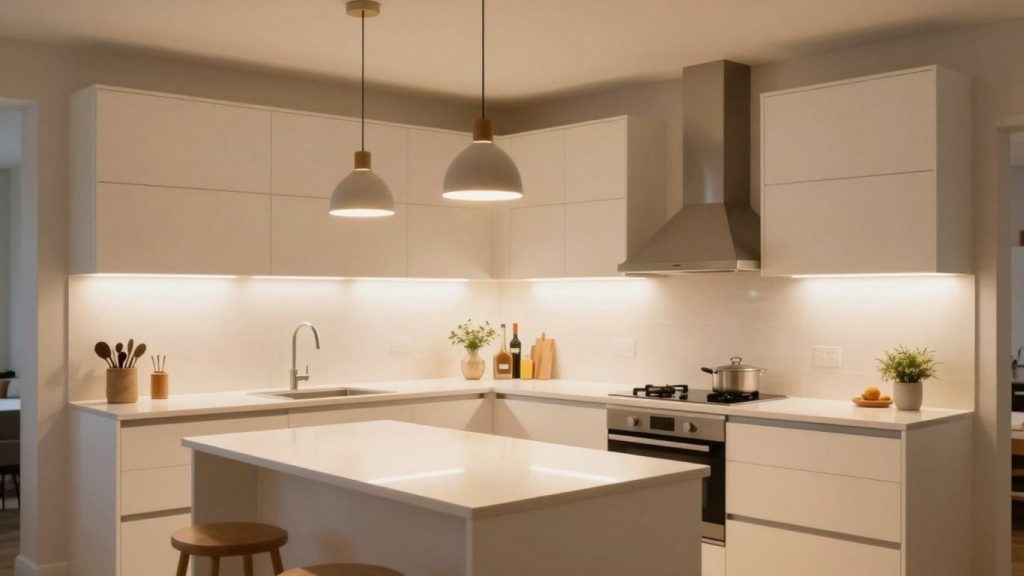
Ok, so shiny kitchen – let’s discuss that! Lighting is more than turning on a switch; it’s creating an environment that you enjoy and works for you. I’ve been researching all the many ways to try and lighten up a kitchen, and you know what there’s some pretty awesome ones out there beyond a simple ceiling light.
1. Under-Cabinet LED Lighting
This, more than anything else, is one of those things that makes a difference. Another fantastic way to banish shadows on your countertops is with under-cabinet LED strips. Seriously, no more squinting at what you’re chopping or cutting!
And they have this lovely, soft glow that just makes the entire kitchen feel more inviting. A lot of these are dimmable now, so you can go from bright and functional when you’re cooking to a warm, cozy vibe for evening chats. It’s an easy upgrade that is well worth it.
2. Pendant Lights Over Kitchen Island
If you have a kitchen island, well, pendant lights are practically a no-brainer. They are a statement piece that gives amazing light to just where you need it. You can choose a pair of them for a diminutive island or three, or more, for a larger one. I’ve seen chunky, industrial-looking pendants and delicate glass ones that add so much personality. One of those classic choices, and for a reason.
3. Recessed Ceiling Lighting
Can lights, Recessed lighting is just super popular for a reason. They allow you to get that clean, smooth appearance since they are flush with the ceiling. They are perfect for adding general ambient light to your kitchen.
You can scatter them around evenly for uniform light, and they don’t occupy any visual space, something that’s handy if you have a smaller kitchen or prefer a more streamlined feel. They’re among the best kitchen light fixtures you can install due to their versatility.
4. Track Lighting for Flexible Focus
The type of track lighting is also a very smart choice for this kind of situation if you want flexibility. You don’t have fixed lights, instead you have a track with adjustable heads. This will allow you to direct the light where you need it — over your prep area, sink, or even a particular cabinet.
It’s a wonderful way to have task lighting in your kitchen without being anchored down by one permanent fixture. If you rearrange the layout of your kitchen, then you can easily move the lights.
5. Toe-Kick Floor Lighting
This one is a little more unconventional, but it looks so freaky. Install lighting strips in the toe-kick (that little recessed space between your cabinets and floor) for a subtle, ambient glow.
It gives the cabinets a floating appearance and a little modern drama. It’s not your main light source, of course, but it is such a great accent and does a lot to make a kitchen feel special, especially in the evening.
6. Statement Chandelier Lighting
Who says chandeliers are only for dining rooms? Hanging a statement chandelier over a kitchen island, or in an eat-in kitchen area, can really make a splash. It’s very classy and stylish yet still looks cute. Depending on your kitchen’s style, you can opt for something modern and sculptural or a more traditional, elaborate piece. It adds some glamour to it, which is great.
7. Task Lighting for Cooking Areas
In addition to under-cabinet lights, consider task lighting for your primary cooking areas. This might mean pendant lights hanging directly over the stove, or range hood lights that actually work. The object here is to have bright, focused light so you can safely and comfortably prepare meals. Effective kitchen task lighting is an essential aspect of a functional kitchen.
8. Glass Cabinet Interior Lighting
If you have cabinets with glass doors that beam out into the Americana vastness of an open-kitchen living area, lighting them up from inside is a game-changer. It transforms your cabinets into places to show off your good dishes or glassware. It gives the kitchen a warm, ambient light and makes your cabinets interesting to look at. Inside the cabinets you can utilize small puck lights or LED strips. I think it’s a nice little touch, and it adds so much visually.
9. Dimmer-Controlled Kitchen Lighting
This is not so much about a particular fixture, but more about an intelligent feature. By installing dimmers on the majority of your kitchen lights (ambient, task, and accent), you have total control over mood and brightness. You can have the bright light for cooking, while it’s quieter for a relaxed dinner, or you’re just hanging out. It’s an easy way to get more out of your lights.
10. Natural Light-Inspired Warm Lighting
But this is not a fixture, it’s about selecting bulbs and fixtures that mimic the warmth of natural light. Opt for bulbs in the lower Kelvin range (somewhere around 2700K-3000K) to create a warm, inviting glow. All of this adds up to the kitchen feeling more homelike rather than institutional. It’s also about setting a welcoming tone, and bulb selection is absolutely a part of the big picture that is your kitchen ceiling light options plan.
In the kitchen, lighting is everything. It can shape a room, focus attention on specific features and, more than anything else, create a pleasant atmosphere for living in the space. Considering how you use your kitchen over the course of the day can help guide your thinking around its lighting mix.
Wrapping Up Your Kitchen Lighting Project
So, there you have it – a bunch of ways to make your kitchen shine. I know I’ve gotten a lot of ideas from putting this together, and I’m already thinking about how I can tweak my own kitchen’s lighting. It’s amazing how much of a difference the right fixtures can make, not just for how the space looks, but for how it feels to actually be in it.
Whether you’re going for a big change or just a small update, remember that lighting is your friend. It’s not just about seeing; it’s about creating a mood and making your kitchen work better for you. Happy lighting!
Frequently Asked Questions
What’s the most important thing to consider when choosing kitchen lights?
I guess to me the important thing is thinking about how I use my kitchen. Do I cook frequently and require strong lights for chopping veggies? Or do I generally use it for socializing with friends and want soft, mood lighting instead? Key is planning for variety in activity.
What are the different types of kitchen lighting I should know about?
I learned that there are three main kinds: ambient, task, and accent lighting. Ambient is the overall light that fills a room, such as ceiling lights. Task lighting is concentrated light for work areas, like under cabinets or above the stove. Accent lighting is for drawing attention to cool features, such as artwork or a fancy backsplash.
Are pendant lights a good idea for my kitchen island?
Definitely! I’m perved out on how pendant lights look over islands in kitchens, I’ve seen plenty good ones. They throw off good light for when I’m prepping food, and they also serve, essentially as a piece of art, which makes the island very much its own focal feature. And you can find them in so many cool styles.
Why is under-cabinet lighting so popular?
I can see why! And it’s super useful because it eliminates shadows on my counters, which helps when I’m chopping or cooking. It also gives the kitchen a really fun, modern glow as well, especially after dark. And some even come with colors or dimmers, which is cool.”
Can I use dimmer switches in my kitchen?
Yes, absolutely! I love the idea of dimmer switches. It means I can have really bright light when I need to cook or clean, but then dim it down for a mellower atmosphere when I’m just hanging out or eating. I get so much control over my mood.
How can I make my kitchen feel brighter without adding more lights?
One trick I’ve heard of is to paint the ceiling glossy. It assists in bouncing the light you’ve already got, including sunlight. And keeping windows clean and employing reflective surfaces, such as shiny cabinets or glossy backsplashes, can reflect the light in.