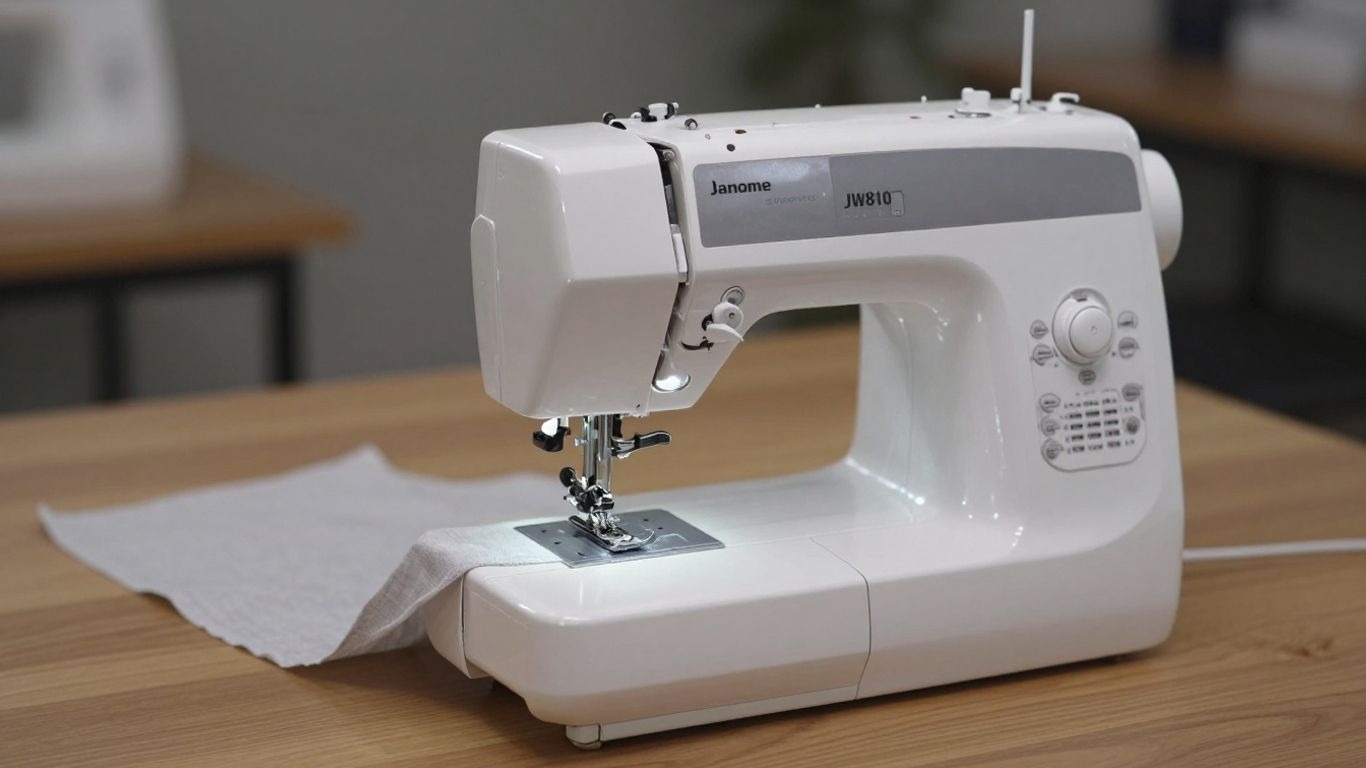
Janome JW8100 Review Specs, Stitch Quality & Real-World Performance
I recently got my hands on the Janome JW8100, and I’ve been putting it through its paces. As a fully computerized sewing machine, it promises a lot, and I was curious to see if it lived up to the hype.
In this Janome JW8100 Review, I’ll break down what this machine is all about, from its features and how easy it is to use, to how well it actually sews. Let’s see if it’s the right fit for your sewing projects.
Key Takeaways
- The Janome JW8100 is a computerized sewing machine with 100 built-in stitches and 7 styles of buttonholes, offering a good variety for different projects.
- It features user-friendly elements like a one-hand needle threader and a drop-in bobbin system, making setup and sewing smoother.
- The machine is relatively lightweight at 12 pounds, which is helpful if you need to move it around often.
- Included accessories like an extension table and a hard cover add value, especially for those working on larger projects or wanting to protect their machine.
- While it offers solid performance for its class, its price point might be a consideration compared to some other options on the market.
Introduction to the Janome JW8100
When I first began researching sewing machines for my home projects, I was overwhelmed by the sheer number of possibilities. I was looking for something that could perform a wide range of tasks without feeling cluttered, and that’s where the Janome JW8100 stepped up to the plate. Which means that this machine boasts a nice blend of features and ease-of-use, which proves attractive to newbies and experienced users looking to upgrade.
I wanted to know if it would deliver on its promises, especially when it comes to those 100 stitches and how easy (or not) it was to sew with the thing. Let’s take a look at what to expect from this model. Reviewing the Janome JW8100 features and benefits seems like a good place to start getting an idea of what we’re dealing with here. I wanted to know what it’s like using the Janome JW8100, with an idea of whether my performance test results for this Janome sewing machine align with reality.
Time and time again, I hear it referred to as a good Janome sewing machine for home use, and in some cases the best sewing machine for beginners, so I was eager to get my hands on one and put it through its paces. In order to achieve that, our review will cover what the JW8100 sewing machine stitches and can do – all based on the actual user experiences of Janome JW8100 owners.
If you’re comparing models, you can also check out the detailed Brother CS7205 Review.
And for another strong Janome option, here’s the full Janome MC6650 Review.
Key Features and Specifications
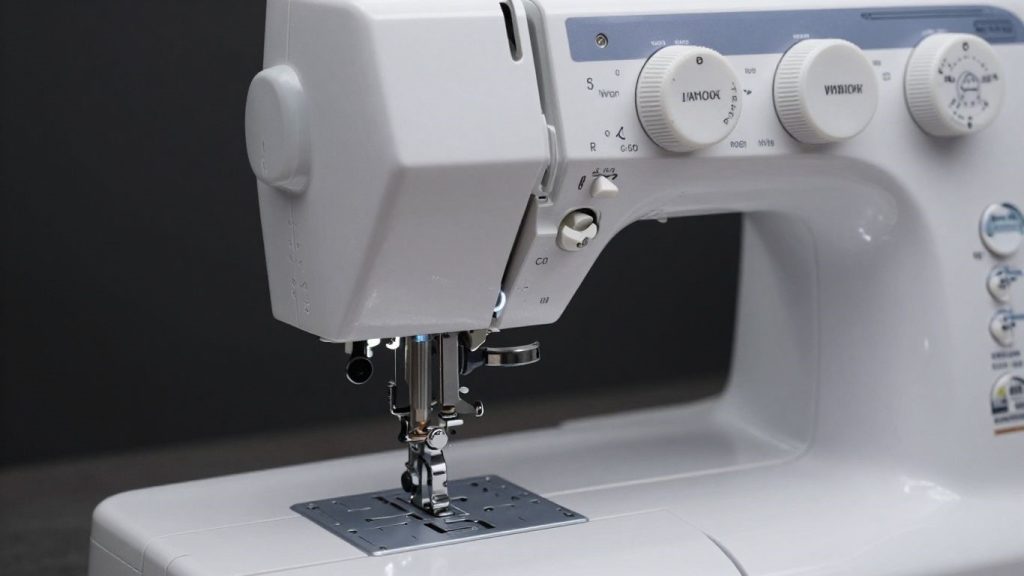
Before diving deep, it helps to understand the basics like essential components and setup. If you’re unsure about machine anatomy, this guide on Sewing Machine Parts is helpful.
Number of Stitches and Stitch Types
The Janome JW8100 includes 100 built-in stitches. It’s a really great number, providing a good range for a variety of sewing jobs, from straightforward seams to more decorative detailing. It also has 7 kinds of one-step auto-size buttonholes, a feature that is super useful when you need to get neat buttonholes easily. The computerization also makes the machine capable of sewing these stitches at the touch of a button.
Automatic Threading and Needle Threader
One of my favorite things about it is the automatic needle threader. It makes the process of getting started so much faster, especially when I’m in a rush. You just do a couple of steps, and the thread is through the needle. It’s a small thing, but it greatly adds to the ease of use.
Adjustable Stitch Length and Width
This machine offers adjustable stitch length and width. You can generally adjust the decorative stitch width to a maximum of 7mm, which is fairly standard for computerized machines and allows you flexibility in creating different fabric types and stitch styles. It comes with 4 interchangeable cylinders in two lengths, so you can customize your stitch length to suit everything from delicate material to heavier weight.
Free Arm Capability
The JW8100 has a free arm, like most sewing machines available today. This is great when sewing smaller, round objects like sleeves, pant legs, or cuffs. You simply take off the accessory storage tray, and your free arm is revealed. It simplifies my job when it comes to those problematic sections.
Included Accessories
Accessories When you receive the Janome JW8100, it includes a good kit of tools to help get you started. The normal feet, such as the all-purpose foot and zip foot, work really well, I thought. It also comes with bobbins, needles, a seam ripper, and a lint brush.
Beyond the basics, some nice bonus items really add to the value:
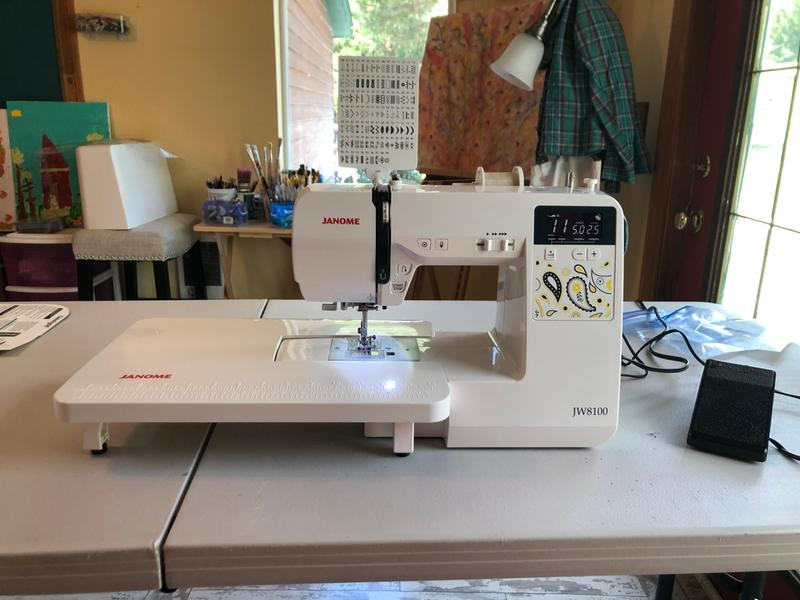
- Extra-Wide Extension Table. This is a great feature for projects such as quilting and sewing big items. It provides you with a huge stable work area.
- Hard Cover: A hard cover is best for protecting the machine from dust when not in use and for carrying.
- Even Feed Foot (Walking Foot): This foot is indispensable for sewing multiple layers of fabric evenly, such as when quilting or sewing slippery fabrics. It really helps prevent shifting.
- Quilting Quarter-Inch Foot: Ideal for the quilter requiring precise 1/4 inch seams for quilting.
The standard and bonus accessories also leave a quite complete feel to the machine, enabling quilters or those working on larger projects to unbox it and go.
Ease of Use and User Experience
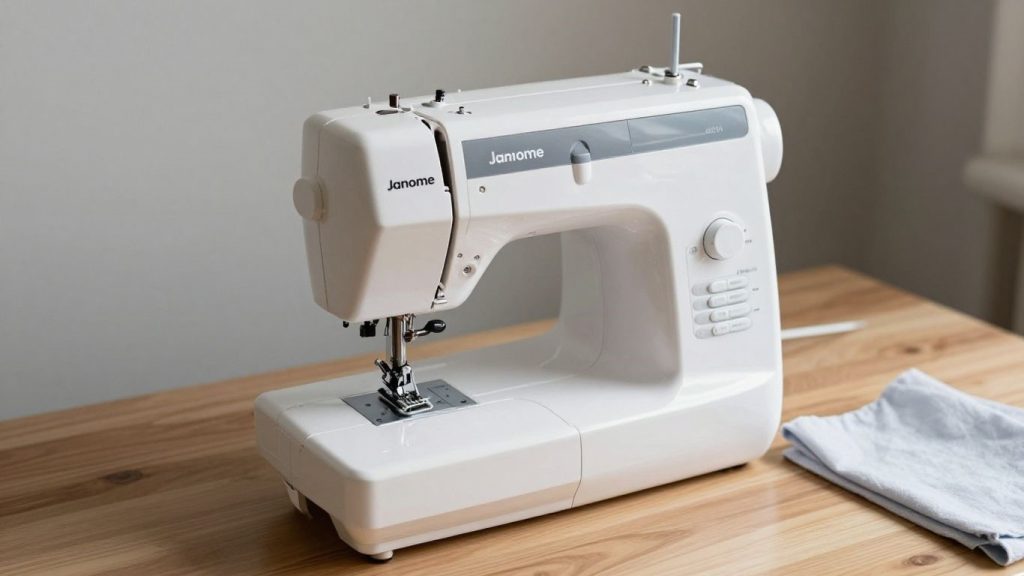
Setup and First Impressions
Setting up the Janome JW8100 was fairly easy. I unboxed it and, truth be told, it felt solid right from the get-go. The manual is fairly helpful, which is rare enough.
It has a nice, clean description of what each component does and how to dive in. I started sewing within 15 minutes of pulling it out of the box. The machine itself has a clean appearance, not decked out with too many flashy buttons or dials that make you feel overwhelmed. It just feels like a sturdy instrument that’s all set to start doing business.
Navigating the Controls
The JW8100 is generally intuitive to use. The stitch selection is through the familiar combination of buttons and a little LCD panel. It’s nowhere near as snazzy-looking as some touchscreens out there, but it does what you need without any fuss.
The screen allows you to see which stitch you are choosing, and even recommends the appropriate presser foot, which is a good feature for beginners. Adjusting stitch length and width is as simple as pressing up and down buttons, which feel snappy. I didn’t experience much trouble adjusting settings; it was mostly ready to go.
Here’s a quick look at how I found the controls:
- Stitch Selection: Made easy by selecting the sticker you want to use, dedicated buttons , and confirming on the LCD.
- Speed Control: With a simple slide, I can make this machine stitch slow or fast! This is perfect for things that need to take it slow!
- Threader: The automatic needle threader is kind of a game-changer and saves my eyes, and probably also my patience.
There are a few thoughtful touches on the machine that really make a significant difference in day-to-day usage. For one, it keeps the needle in a down position when you stop sewing, and being able to pivot around corners without your fabric moving is super useful. It’s those little things that make sewing less of a chore and more of a flow.
Stitch Quality and Performance
When I first began researching the Janome JW8100, I was so intrigued by how good a sewing machine it really is. It’s one thing to be festooned with features; it’s another to see how it does through real, actual fabric without making a mess. So, here are some stitch quality tests with the JW8100 on a couple of different fabrics to know its potential really.
JW8100 Stitch Quality Analysis
I stitched some plain old cotton, a little stretchy jersey, and even some satin to see how it fared with various textures. By and large, the JW8100 did a pretty good job. On cotton, the straight stitches were crisp and even, which is all I could ask for. When I changed over to the jersey knit, it held up pretty well… I did see a minute amount of puckering on some seams.
Knit fabrics can do that – it’s pretty common, so I wasn’t super shocked. The satin was a little trickier because it has a tendency to slide around, but the machine still delivered pretty consistent stitches. The JW8100 total stitch quality rating is a summary of how well the machine performed for regular sewing jobs.
Here’s a quick look at how it handled a basic stitch on different fabrics:
| Fabric Type | Stitch Quality | Notes |
|---|---|---|
| Cotton | Excellent | Clean, even stitches with balanced tension. |
| Jersey Knit | Good | Minor puckering, manageable with slight adjustments. |
| Satin | Fair to Good | Mostly consistent, requires careful fabric handling. |
JW8100 Stitch Quality Assessment
One of the aspects I personally loved was how accessible the stitch settings were. If I heard tension was just a piece of cake. You can’t achieve that level of finickiness when it comes to this stuff without getting professional-looking results.
I also played around with some of the more decorative stitches, and they turned out pretty well – just enough detailing to make my test swatches a touch snazzy. It’s not a sewing machine that was ever going to win design awards for delicate embroidery, but by all accounts, it gets the job done well if you are sticking with basic pieces and looking to add simple embellishments.
I did find that the factory settings gave me a good place to start with all my fabrics. But when it comes to some slinkier materials like the satin or the jersey (even those of a reasonable quality), a touch of adjustment to tension and stitch length seemed to make enough of an impact on how the seam looked in the end.
Pros and Cons of the Janome JW8100
Here are some of the pros and cons of the Janome JW8100 that can help you in deciding whether you should consider it or not.
Pros of the Janome JW8100:
- Consistent straight stitches on most fabrics.
- Easy to adjust tension and stitch length.
- Handles basic decorative stitches well.
- Good for general sewing and mending.
Cons of the Janome JW8100:
- Can show minor puckering on very stretchy fabrics.
- Satin requires careful fabric handling.
- Not designed for heavy-duty materials or complex embroidery.
Who’s the Janome JW8100 Suitable For?
In my opinion, I believe that the Janome JW8100 is an excellent machine for those who are just learning or are intermediate sewers and looking for a machine they can count on for daily projects. If you’re interested in garment-sewing, basic home decor sewing, or if you need a machine for making simple mends and alterations, this should be an adequate choice for you.
It’s a reliable machine and good value if you’re new to sewing but don’t want something cheap that will just keep breaking from the get-go. But, if your projects include thick denim, several layers of upholstery fabric, or intricate quilting, you may want to upgrade to a more heavy-duty model.
If you’re planning beginner-friendly projects, you might enjoy tutorials like How to Sew an Apron.
Comparison with Other Sewing Machines
When I was shopping for a new sewing machine, I did a ton of side-by-side comparisons. It’s a whole lot to sort through, but I wanted to be sure I found something that satisfied my needs.
It’s a pretty good machine, and the Janome JW8100 reviews have all been positive, but does it compare well with some of the more well-known sewing machines out there? I’ve grouped several comparisons to help you find out where it ranks in the market, especially when it comes to purchasing the best sewing machine for home use.
Janome JW8100 vs Brother CS6000i
The Brother CS6000i comes up again and again as one of the best, and it’s not surprising. It features 60 built-in stitches, which is a nice number, and it’s celebrated for being especially user-friendly, good news if you’re a beginner. I appreciated its automated needle threader and adjustable speed control for detail work.
The JW8100 has 100 stitches, which will offer you more variety for creativity. Both machines have a free arm, but the JW8100 just feels like it’s built stronger, which I appreciated when piercing thicker fabrics. CS6000i is also slightly more affordable overall, making it an excellent choice if budget is something you’re really worried about.
Janome JW8100 vs Singer Heavy Duty 4452
It is interesting to compare the two as they address slightly different requirements. The Singer Heavy Duty 4452 is a machine designed to deliver power. It has a metal frame and a powerful motor to sew through heavier materials like denim and canvas. I saw it has a higher stitch per minute count, so that must be faster sewing.
But the JW8100 has far more stitch options (100 versus 32 on the Singer), and it’s a computerized machine, so you have a finer degree of control over how long or wide your stitches are. Though the Singer 4452 is tougher as a workhorse for everyday, sturdier sewing needs, and the JW8100 is more versatile with its decorative stitching. If you are doing a ton of upholstery or thick costume work, the Singer might be your choice. For all-purpose sewing, quilting, and more fancy projects, I’d veer with the JW8100.
Janome JW8100 vs Brother XM2701
Another popular option in the entry-level category is the Brother XM2701. It has 27 stitches, enough for most simple projects, and it is extremely lightweight and compact. I found it really easy to install and use as soon as I got it. With 100 stitches compared to the Brother’s 27, the JW8100 leaves the XM2701 in its dust when it comes to stitch options.
The JW8100 also comes with additional features that are more advanced, for example, a needle up/down button and thread cutter, which I find to be very helpful. The XM2701 is a great option if you’re new to sewing and looking for something easy and inexpensive. But if you plan to expand your sewing skills and like the idea of more stitch options and other features, the JW8100 is a far better value in the long run.
When selecting between those machines, I’ve always tried to think about what sort of projects I will do most with the machine. Any of these could work for everyday mending, basic garments, and occasional decorative touches. But when I feel the urge to challenge myself with more complicated stitches, experiment with different types of fabric, or simply have freedom to be a bit more creative while I sew, machines with many stitches and options like those in the Janome JW8100’s lineup typically win.
So, What’s the Verdict on the Janome JW8100?
Having spent some time with the Janome JW8100, I can confirm that this machine provides a nice foundation for a wide range of home sewists. It has a solid variety of stitches, 100 total, more stitches than I can imagine needing for most things I sew (okay, semi-confession: not that many compared with some other models on the market, but still plenty for everything from basic repairs to sewing clothes). The setup was easy enough for me to follow, and the drop-in bobbin is always a win in my book, no more messing with stuff.
It is also nice and light, so it’s easy to carry around from my workspace to my workspace or even take with me if I go to a sewing class. It seems to be in the same range of quality and style, so while it can’t compare with some fancy bells and whistles of some more expensive models, it keeps the wheels turning. For anyone in search of an affordable, computerized machine that will get the job done with minimum headaches, the JW8100 should be on your short list.
Frequently Asked Questions
What makes the Janome JW8100 a computerized sewing machine?
The Janome JW8100 is a computerized machine because it has a small computer inside that helps control its functions. This means I can easily pick from 100 different stitches and 7 types of buttonholes just by pressing buttons, making my sewing projects much simpler.
Is the Janome JW8100 easy for beginners to use?
Yes, I found the JW8100 to be pretty user-friendly. It has features like an automatic needle threader that helps me get my thread through the needle quickly. Plus, the controls are straightforward, so I didn’t have to spend too much time figuring things out.
What kind of stitches does the Janome JW8100 offer?
I get a total of 100 built-in stitches with this machine. This includes basic stitches for everyday sewing, decorative stitches for adding flair to my projects, and even special stitches for things like quilting. It also comes with 7 different styles of buttonholes, which is quite handy.
How does the Janome JW8100 handle different types of fabric?
From my experience, the JW8100 does a decent job on various fabrics. It comes with an Even Feed Foot and a Quarter-Inch Foot, which are great for sewing tricky materials like multiple layers of denim or for precise quilting. While it’s not specifically designed for super heavy-duty work, it handles common fabrics well.
What accessories come with the Janome JW8100?
I was pleased with the accessories included! It comes with the usual feet, like a general-purpose foot and a zipper foot, plus a special automatic buttonhole foot. It also includes a needle set, bobbins, a lint brush, screwdrivers, and a stitch chart. A big plus for me was the extra-wide extension table and a hard cover to protect the machine.
Is the Janome JW8100 heavy or easy to move around?
One of the things I really like about the JW8100 is that it’s quite lightweight, weighing only about 12 pounds. This makes it super easy for me to move it from my sewing table to a storage spot or even take it to a sewing class if I wanted to.