6 Best Portable Chargers for Travel in 2025 To Buy
I’ve been in a hurry to find an outlet every time I travel, and let me tell you, it’s a pain. For one thing, it’s never fun hunting for a free plug at the airport or a coffee shop. That’s why I began exploring portable chargers and reality, they’ve significantly changed the game for me.
Having that extra bit of juice has saved me countless headaches when it matters most, like while navigating a foreign city or just trying to keep my kids entertained during a cross-country flight. This article is focused just on the best portable chargers for travel, so that staying connected doesn’t have to mean you are stressed about your phone battery.
Key Takeaways
- A portable charger is an essential accessory for travelers that want to avoid the frustration of hunting down outlets (or running out of battery in the middle of a day-long adventure) and keep mobile devices charged on the go.
- When picking out a portable charger, consider things like capacity (mAh), how small and portable it is, its charging speed, the number of ports available and overall durability.
- Various kinds of trips are going to require various chargers; a weekend getaway might only need something small, while an extensive overseas trip may necessitate a higher capacity one.
- Wireless power banks are convenient, but aren’t always the fastest or most efficient way to charge multiple devices at once — especially larger electronics.
- Don’t forget to take the Chargers on board with you, but keep in mind that it is not allowed in checked baggage.
Why You Need a Portable Charger for Your Travels
I didn’t get it, to be honest; I thought portable chargers were a bit of an unnecessary gadget. I mean, my phone battery gets me through the day, doesn’t it? Wrong. Especially when I’m traveling, my phone is my map, my camera, my translator, and how I stay in touch with everyone back home. That’s when I saw just how much I depend on it.
There is nothing like that sinking sensation when you are trying to locate your hotel in a new city, and your phone dies, or when you find yourself at the airport with no free outlet. It’s a real pain.
That’s where these little lifesavers come in. The convenience of not having to search for a wall socket is key; if you have one of those smaller chargers for your phone that you use when traveling, it’s very easy. It grants me freedom to keep my gadgets charged from a long flight to all-day sightseeing. For flights, portable phone chargers are a game-changer for me, so I can be entertained or work without battery anxiety.
For longer trips, or if I’m going to be using my phone heavily for photos and directions, I even think about bringing along a solar phone charger for travel as backup. They’ve since become a few of my favorite must-have travel accessories for charging to ensure that I’m never disconnected and always ready on the go. They really are essential for contemporary travel.
What to Look for When Choosing a Portable Charger
Whenever I need a portable charger, especially for when I’m traveling, I don’t want to just pick one blindly. I look for a few things to ensure it will actually be helpful, and not just another thing to schlep. It’s easy to get overwhelmed by all the choices, so I remind myself of these factors.
Capacity (mAh): How Much Power Do You Need?
This one is arguably the largest. mAh, or milliampere-hour, specifically indicates how much juice the power bank has. Think of it, crudely, as the size of the gas tank. For reference, the average smartphone battery, in my opinion, is 3000-4000 mAh. If I’m sticking to day trips and have access to an outlet here and there, a charger rated for 5,000 or 10,000 mAh is probably enough to give my phone at least two full charges.
But if I’m on an extended trip, perhaps camping or in a place where power is scarce, I’ll seek out a high-capacity portable battery, around 20,000 mAh or more. This gives me plenty of power – enough to charge multiple devices or have several charges over the course of a couple days. Better to have too much power than not enough, when you’re miles from a wall socket.
Portability vs Scale: The Perfect Balance
Here’s where the trouble comes. Or, you desire the portability of a high-capacity portable battery without having to carry a brick in your backpack. I’ve found chargers of about 10,000 mAh often hit a sweet spot — they pack plenty of power without being too cumbersome. Anything larger and it starts to feel heavy in my bag. I want chargers that are thin and light, something I can stick in a jacket pocket or tiny purse. If it’s too large, I’m less inclined to carry it along, which defeats the purpose.
Charging Speed: Quick Charge vs. Standard
I hate waiting for my phone to charge, especially when I’m on the move. I look at the fast charging compatibility of a power bank. Technologies such as Qualcomm Quick Charge or USB Power Delivery (USB-PD) can come in handy.
A fast-charging power bank can refuel my phone more quickly than a typical one. It’s so handy the times when I only have enough time to boost up for a short period of time before leaving. It means I can restore a meaningful chunk of battery life in about 30 minutes.
Number of Ports: Charging Multiple Devices
When I travel, I generally have more than just my phone with me, perhaps a tablet, headphones, or even a friend’s phone in need of a boost. That’s why I shop for chargers with at least two ports. A few of them also include a combination of USB-A and USB-C ports, which is excellent for compatibility. Two is a time-saver: Charging two devices at once saves lots of time and hassle, especially when I’m sharing the charger. Attempts to play nice with each device result in less time twiddling my thumbs while something completes, and I can plug the next thing in.
Durability and Build Quality
When I’m on the road, my gear is thrown around a little. I’ve owned chargers made of thin plastic that cracked into pieces quickly. Now I like chargers with a sturdy construction. A bit of a rubberized or textured finish can sometimes improve grip and help prevent drops. I also look at reviews to see if other customers have had durability issues. A quality-built charger may be a bit more expensive initially, but it will last longer and is the better value in the long run for dependable, long-life portable phone batteries.
Best Portable Chargers for Travel in 2025
The search for the perfect portable charger can often feel like an odyssey, especially when you’re prepping to travel. I’ve experimented with many of them over the years, and man, a dead phone just when you need it? Mind-blowing disappointment. That’s why I bring a trusty portable battery pack with me on all my trips. It has since become one of my favorite travel tech gadgets. Here are some of the best portable phone chargers I’ve found to be worth their price.
Anker 737 Power Bank, 24000mAh 3-Port Laptop Portable Charger
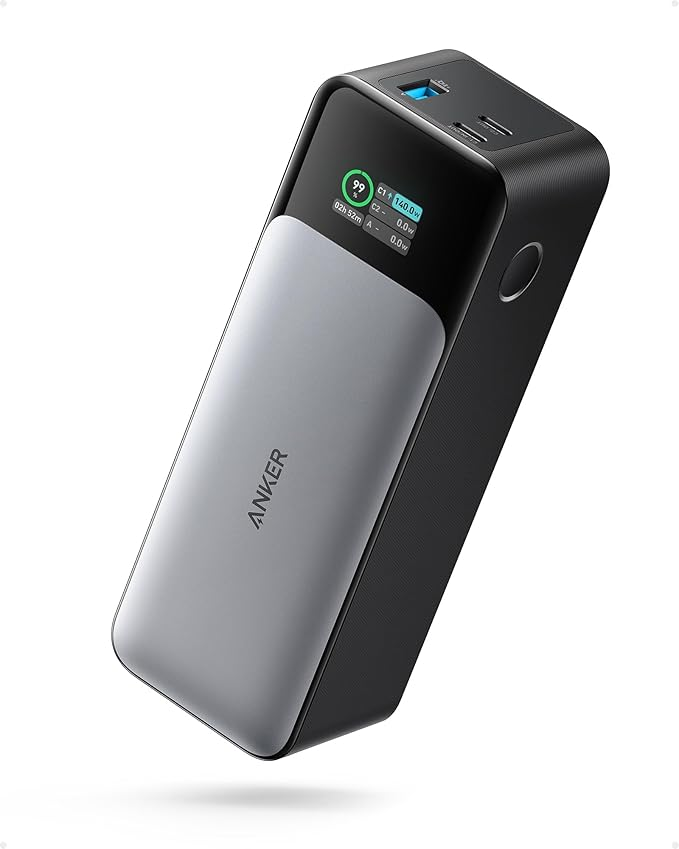
This thing is a beast, and I use that word quite literally. If you’re one of those people rolling around town with a laptop, tablet, and phone, this is your best option. It has a whopping capacity of 24,000mAh, which is enough to recharge my laptop a couple of times or my phone more than I can count.
The three ports are so useful, especially when I’m on the go with my significant other and we both need a juice-up. It’s a tad on the bigger side, so it’s not exactly what you’d call a pocket-sized charger, but for the amount of power that it delivers, I’m willing to give up some space in my bag. It’s certainly one of the best external batteries for on the go if you want some serious power.
Pros:
- Huge 24,000mAh capacity — multiple charges for iPhone, iPad, and even laptops.
- 140W fast charging with PD 3.1, super quick for laptops and phones.
- Smart display shows input/output and estimated recharge time.
- Airplane-safe, compact for its capacity (22 oz, 6.1×2.1×1.9″).
- Includes cable, pouch, 24-month warranty.
Cons:
- Heavier than small portable chargers — less pocket-friendly.
- Pricey due to high capacity and fast-charging features.
- Needs 5A cable + 140W charger to achieve full speed.
Best Budget: INIU Portable Charger, Smallest 22.5W PD3.0 10000mAh Power Bank
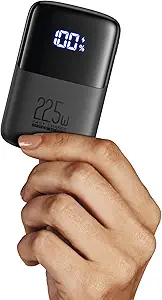
For when all I require is to keep my phone alive and not spend a lot of money, this INIU charger will do the job. It’s impressively tiny and can just slide into a pocket or small purse.
The 10,000mAh capacity should be good for roughly two full charges of a phone, at least — and that’s typically well more than what you’ll need on one day out exploring. It also does fast charging, which is a total lifesaver when I’m running behind. It’s an excellent model for those in the market for a small power bank for backpacking that doesn’t break the bank.
Pros:
- Extremely compact and lightweight — very pocket-friendly.
- Fast charging (PD 3.0 + QC 4+) — iPhone 0-60% in ~30 mins.
- Can charge 3 devices simultaneously.
- Built-in phone holder — convenient for watching videos.
- 3-year warranty — rare in this category.
Cons:
- Smaller capacity (10,000mAh) — not ideal for laptops or extended trips.
- Limited output per port compared to bigger power banks.
Belkin Portable Charger – 15W 3 Port Power Bank Battery Pack with 10000mAh High Speed Battery pack.
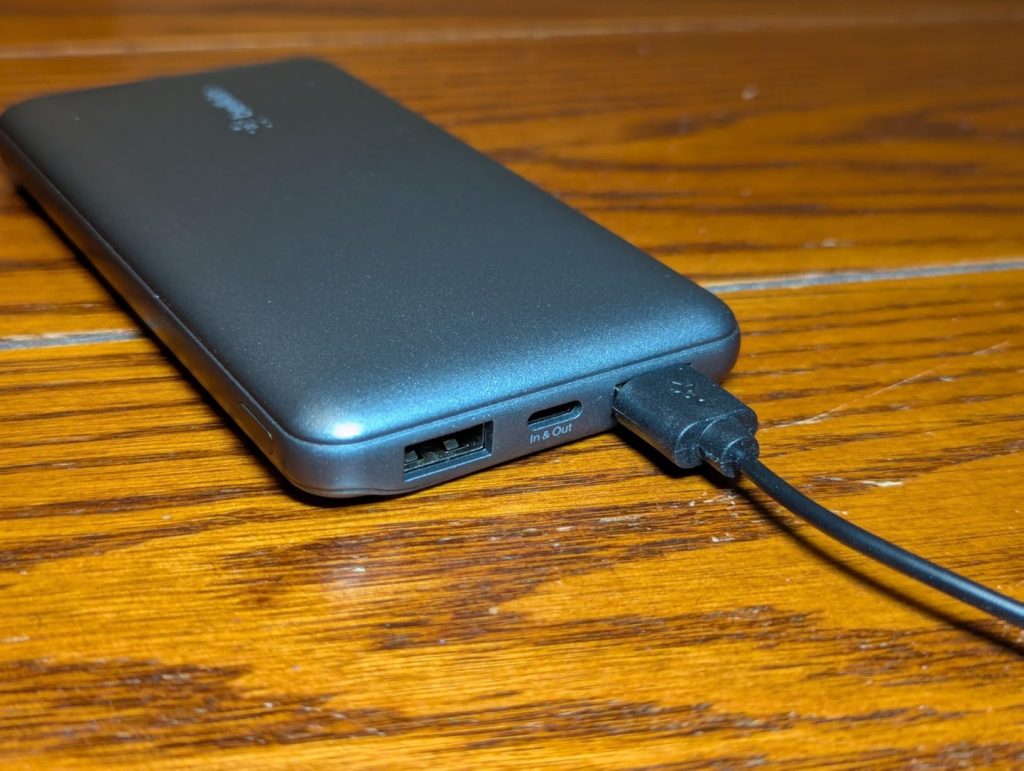
I trust the Belkin brand, and this 10,000mAh power bank is not an exception. It has a clean design and feels durable. I like that it comes with three ports, so I can use it to charge a bunch of gadgets at once. It’s not the quickest charger available, but it’s reliable.
It’s a nice compromise if you want a good amount of capacity and ports, but don’t feel like spending on the super high-end versions. It’s a good travel power bank choice you can trust.
Pros:
- 3 ports (USB-C + 2 USB-A), versatile for multiple devices.
- Compact and lightweight, pre-charged and ready to go.
- LED indicator for battery status.
- Reliable safety-tested design.
Cons:
- 15W max output is slow compared to PD 3.0 fast chargers.
- 10,000mAh capacity won’t cover laptops or heavy usage.
- Less suitable for power-hungry devices.
JUOVI J2621 Power Bank Portable Charger 20000mAh 45W

This JUOVI charger is a bit of a beast. The 20,000mAh capacity has me able to go days without hunting down an outlet, and the 45W output is quick. It’s awesome when I’m on the go to be able to quickly charge my laptop or tablet.
It’s a bit bigger than the smaller 10,000mAh options, but I’ve found the speed and capacity of this model more than worth it in my travels. It’s definitely in the running for best USB-C travel charger.
Pros:
- Large 20,000mAh capacity, charges multiple phones, tablets, laptops.
- 4 ports — 2x PD 45W + 2x USB-A 30W.
- LED digital display — real-time battery info.
- Safe charging protections against overvoltage/overheating.
Cons:
- Slightly bulky, less pocket-friendly.
- 45W fast charge won’t compete with 100+W high-end laptop chargers.
BLAVOR Solar Charger Power Bank 10,000mAh External Backup
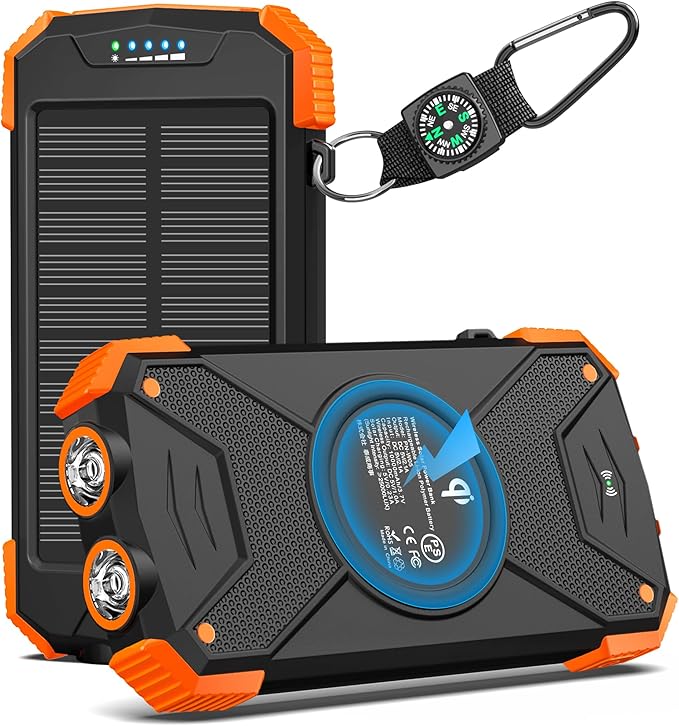
I had been a little skeptical of solar chargers before, but this BLAVOR one has impressed me. The 10,000mAh is par for the course, but I’m not going to turn down additional solar charging capability in case I go camping or am otherwise far away from a power source.
Oh, also: It has a wireless charging pad, which is mega convenient for my phone. Solar charging won’t fully charge it quickly, but it becomes a nice way to trickle and keep its life extended. It’s a cool alternative to all the other travel power bank recommendations.
Pros:
- Solar panel for emergency charging — good for camping/outdoors.
- Wireless charging + USB-C 20W fast charging.
- Durable, waterproof (IPX5), dustproof, shockproof.
- Built-in dual flashlights and compass — excellent outdoor use.
Cons:
- 10,000mAh may not suffice for multiple devices in long trips.
- Solar panel is slow — only for emergency topping off.
- Bulkier due to solar panel and dual flashlights.
VEGER Portable Charger Built-in Cable and AC Plug, 10000mAh
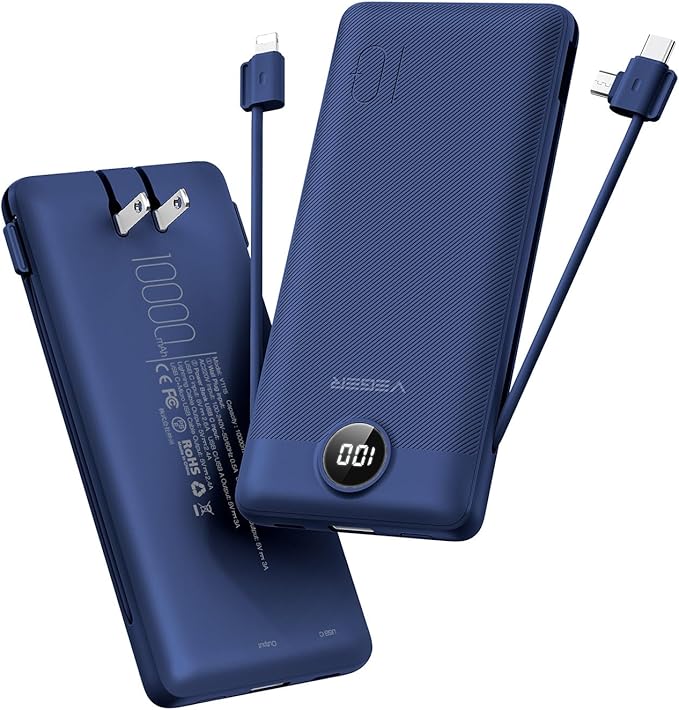
Pretty smart, this VEGER power bank. I can plug the power bank itself directly into a wall outlet for charging using the built-in AC plug, so there’s one fewer cable to carry. It also has USB-C and Lightning built-in cables (one on each side), so I never have to worry about remembering my charging cords.
It is slim and light, which means it can be taken along without issue. Given that it’s an all-in-one design, make no mistake: The BentoStack is a very practical option for helping to streamline my travel tech. It is a very good case of a TSA-approved portable charger that makes your life easier.
Pros:
- Built-in AC plug, no extra cables needed to recharge the power bank.
- Charges up to 4 devices simultaneously.
- Slim and light — 0.72 inches, 8 oz.
- Universal compatibility — iPhone, Samsung, tablets, smartwatches.
- Comes with travel pouch, 12-month warranty.
Cons:
- 10,000mAh capacity is limited, won’t fully charge laptops or multiple high-capacity devices.
- AC plug adds slight bulk compared to standard 10,000mAh banks.
- Max output 15W — slower than PD fast chargers for modern devices.
Wireless Portable Chargers for Travel: Do They Work?
Recently, I’ve been hearing a lot about wireless portable chargers and to be honest, it piqued my curiosity. Pretty handy to think that I could literally just place my phone on top of a power bank and it would charge without any wires, especially when I’m out and about. I’ve sampled a handful, and to be honest, they’re all over the place.
For all their flaws, at least they clear out a lot of cable clutter — and for me, that’s most important when I’m trying to travel light. This is always my quest: to find those light, lightweight battery packs for vacation that don’t make much of a difference in bulk. Wireless chargers can look a little more modern and clean. Although they do seem to be slower than their wired friends. At other times, it’s as though instead of a full and fast charge for the phone, I’m merely topping off my device.
Plus, you’ve got to ensure that the phone is perfectly centered on the pad, which can be a little fiddly if you’re trying to do it in a dark airplane cabin or a crowded train station.
One other thing is that most wireless chargers do require a cable to plug into the wall for their power. So although you might not require a cable for your phone, you still have to bring one for the charger.
For me, the ease is high, but between charging speed and needing to set it down just so I find myself reaching for my trusty wall adapter still quite often, especially when I need a quick bump. They’re cool, but it’s possible they might not fully replace traditional portable chargers just yet (I don’t think so for my travel needs at least).
How to Pick the Best Portable Charger for Travel, Depending on Your Trip
The best portable charger for me really depends on where I’m going and what I’m doing. For a brief weekend trip, during which I’ll mostly be taking photos and looking at maps on my phone, a pair of small power banks for trips added up to around 10,000mAh or so should be enough. I can easily throw it in my pocket or a small bag, and I won’t have to worry about losing juice.
If I’m headed off on a longer expedition, say a week or more, or if I know that my phone or tablet is going to be serving as one of my primary devices for work and entertainment for the duration, then I’ll definitely want something with a higher capacity. Think 20,000mAh or even more.
This allows me to have multiple charges on all my devices and I don’t need to look for a wall outlet. This is especially key when I’m in search of the best power bank for international travel, when a compatible outlet might be tough to find.
Here’s a mad-dog quick ticktock of what I am thinking:
| Trip Type | Recommended Capacity (mAh) | Key Considerations |
|---|---|---|
| Short Weekend Trip | 5,000 – 10,000 | Compact size, lightweight, pocket-friendly |
| Week-long Trip | 10,000 – 20,000 | Charges multiple devices, reliable battery life |
| Extended Travel | 20,000+ | Laptop charging support, fast charging, durable build |
For business trips, when I power my laptop while using the phone, I look for a charger with high wattage output and USB-C Power Delivery.
Yep, it’s a bit of a chunker, but the peace of mind I gain knowing I’ll be able to keep my work devices humming along just fine is worth the extra bulk in my backpack. It’s also nice to have models to search for with built-in cables or AC plugs, so I don’t need more stuff to pack.” It’s just a matter of finding a charger that will offer the best match for my travel needs, so I don’t end up caught with a soggy phone thousands of miles from anywhere.
Best Ways to Utilize Your Portable Charger When You’re on the Go
Any time I’m about to go out on the road, my charger is certainly not something that I leave behind. It’s bailed me out countless times, especially when I’m stranded in an airport with a dying phone. For starters, keep in mind that most airlines have regulations around this sort of thing.
Of course, make sure your portable charger is airplane-safe, and you put it in your carry-on bag, not checked baggage. It’s a small detail, but it’s actually really key for clearing security without any trouble.
Have found that having an adequately charged one and taking it with me before I leave the house is crucial. Worse than having all your socials die on you is finally arriving at the other side, only to discover your power bank is now dead. I tend to top mine off the night before I am flying. Also, consider what you’ll use it for.
If I know there will be a lot of map usage or pictures, then I have my phone charged.) If I’m only using it for sporadic texts, a partial charge should suffice. It’s really a matter of knowing what you need.
And when I’m actually using the charger, I try to charge my gadgets in moments of downtime, like waiting at the gate or during a long train ride. It’s not so much that I need a full charge on demand, but more about keeping things topped up enough that I don’t run out entirely. I also seek to prevent the charger itself from being exposed to the worst that a day can deliver, whether it’s direct sun on a hot day or sub-freezing conditions.
Like your phone, they function best at room temperature. And if you have multiple devices, such as a phone and a tablet, I’ve learned to rank which one needs the juice most. It’s a tough call sometimes, but for the most part, my phone comes first.
Final Thoughts
So, there you have it for finding the right portable charger for your next trip. For me, a portable power supply has been a life changer (hello red Battery indicator!), especially since I’m on the move all day or trying to navigate around travel delays.
It’s a nice little bit of peace of mind that you won’t get stuck with a dead phone. Even if you’re just in need of something super-tiny that will give your phone a quick jolt in an emergency, or something larger to keep all of your gadgets alive, there’s almost certainly something available that fits the bill. Happy travels, and stay charged!
Frequently Asked Questions
Can I take my portable charger on a plane?
Yes, you are allowed to bring portable chargers on planes! Just be sure they go in your carry-on bag, not in your checked luggage. They tend to be small enough to slip into a backpack or purse without much effort.
How much power do I really need?
Consider what you are going to be charging. If it’s just your phone for a day trip, you might get away with one on the small end (say 10,000mAh). But if you have multiple devices or are traveling a longer distance, then obviously you’ll want something with more juice (like 20,000mAh or higher).
What does ‘mAh’ mean?
mAh stands for milliampere-hour. It’s really just a way of calculating how much energy a battery can store. The higher the mAh, the more charges you can get before your portable charger needs to be refilled.
What are the different kinds of portable chargers?
Yep! Some are too small and just give your phone a fast charge. Others are larger and able to power laptops as well as multiple devices at the same time. There are also wireless ones where you just drop your phone on to charge, which is pretty cool.
How can I tell if a portable charger is of good quality?
Try to find a few trying that feel solid and well-made. Anker and Belkin are known for reliable chargers. Reading reviews from other travelers can also offer insight into opportunities that are working well and which remain challenges.
How long does it take to charge the portable charger?
This really varies! Some smaller ones may charge up overnight, while bigger ones will take a few hours to get a full charge. Plan to plug it in at the end of the night before you intend to use it, all day if possible.