SINGER 6620C Review: Price, Features & Should You Buy It?
I recently got my hands on the SINGER 6620C sewing machine, and I’ve been putting it through its paces. If you’re curious about what this machine can do, how it handles different fabrics, and whether it’s worth your hard-earned cash, you’ve come to the right place.
I’ll break down the SINGER 6620C, covering its features, performance, and who I think it’s best suited for. Let’s see if this heavy-duty model lives up to the hype.
Key Takeaways
- The SINGER 6620C is a heavy-duty computerised sewing machine with a strong metal frame and a powerful motor, capable of sewing up to 1100 stitches per minute.
- It offers 215 stitch applications, including utility, decorative, and stretch stitches, making it versatile for various projects from clothing to home decor.
- User-friendly features like an LCD screen, touch-button stitch selection, and an automatic needle threader simplify the sewing process.
- This machine handles thick fabrics like denim and canvas well, thanks to its robust build and adjustable presser foot pressure.
- While it has advanced features, the SINGER 6620C is also accessible for ambitious beginners looking for a durable and capable machine.
Introduction to the SINGER 6620C
Well, I’ve been researching the SINGER 6620C all week, and now I wanted to share what I have discovered. This machine appears aimed at being a good choice for anyone getting serious about their sewing, whether they’ve recently started or have been doing it for some time. It’s an electronic sewing machine guide and then some, really, with so many features packed in.
At first, I saw it and went, “Alright, another sewing machine.” But the more I read, the more I noticed this isn’t just your average model. It’s constructed from a heavy-duty metal frame, which tells me right away that it’s here to stay and support more than just light cotton. And it has a newly revised motor that’s supposed to be 60 per cent stronger than before (and some other models), so it should handle thicker fabrics without breaking a sweat. That’s a major consideration if you’re intending to work with denim, canvas, or even upholstery.
Here’s a quick rundown of what caught my eye:
- 215 options for stitching: That’s a ton of choices, from basic stitches to decorative and lettering.
- Hardened construction: The frame is metal, and the motor sounds strong.
- Easy-to-use features: Though powerful, it has items such as an automatic needle threader and a top drop-in bobbin that make sewing a heck of a lot less hassle.
It’s certainly more than a beginner sewing machine, though I do think an ambitious beginner could definitely succeed with it. It’s as if it’s a machine that can keep up with your skill sets and projects become more complex. I’m a bit curious to see how it would do in actual sewing situations.
If you’re unfamiliar with machine basics, understanding sewing machine parts and how to thread a sewing machine will make using this model much easier.
Key Features of the SINGER 6620C
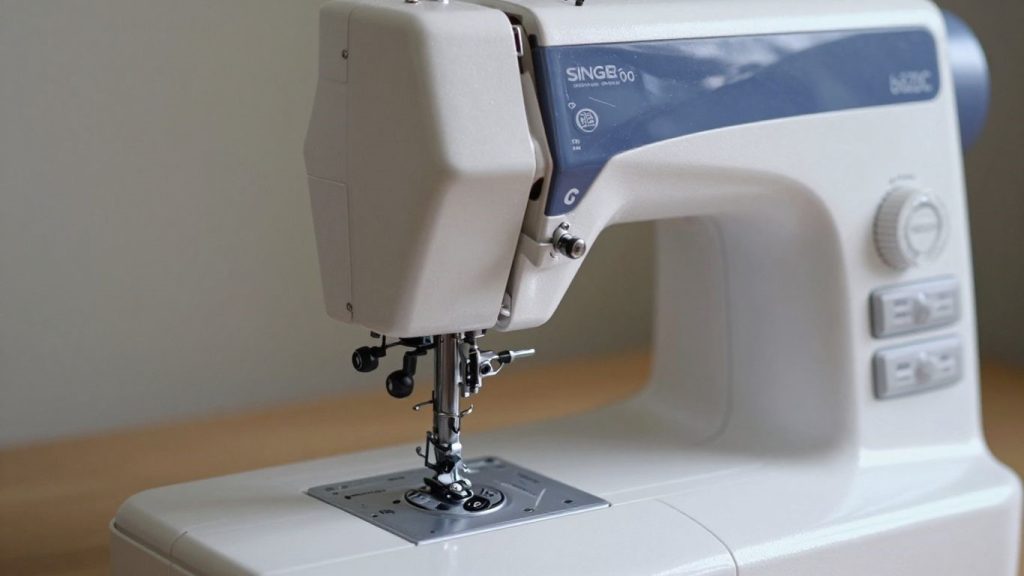
When I first looked at the SINGER 6620C, I was impressed by what it packs into its frame. It’s definitely a machine built for more than just basic mending.
Stitch Options and Capabilities
This machine has a total of 215 stitch applications. That’s a lot of options! As expected, there are the standard utility stitches (though in sufficient quantity to be really useful), but there’s a good range of stretch and decorative stitches too, and even some lettering.
This miner makes it highly convenient for different types of projects, from altering clothing to more imaginative dresses. It has a lot of variegated and specialty stitches, which is definitely a plus for anyone who quilts, and it works with a walking foot, another great help in keeping layers together.
If you’re into quilting or planning creative projects, you might also want to explore the best quilting sewing machine for comparison.
Ease of Use and User Interface
With all that functionality, you might expect the 6620C to be complex and difficult to use. It has a clear LCD screen to show you the selected stitch, its length and width, and it even recommends the right presser foot. I found the settings adjustment to be quite intuitive, done with simple touch buttons.
The automatic needle threader is a lifesaver, and the top drop-in bobbin system makes it easy to see how much thread you have left and to get this vital sewing component threaded in correctly. The truth is that it was such a hassle threading the needle, but this makes it much easier.
For beginners, having a proper sewing kit for beginners can make the entire experience smoother alongside this machine.
Build Quality and Durability
The construction is one of the features that sets the SINGER 6620C apart. It has a heavy-duty metal frame, which makes it feel solid and stable while you’re sewing. This is key, particularly when you’re sewing through heavy fabric.
They describe the motor as stronger than average, giving it extra oomph to power through tough fabrics like denim or canvas. This machine has a solid feel to it, which makes sense if you’re planning on sewing heavily or tackling heavier projects. It’s a bona fide workhorse, meant to tackle some serious sewing.
Its solid metal frame and powerful motor mean this machine will sew through all but the thickest layers beautifully. It’s made for durability and reliable use from project to project.
Here’s a quick look at some of its capabilities:
- 215 Stitch Applications: Covers basic, stretch, decorative, and lettering stitches.
- Heavy-Duty Metal Frame: Provides stability and longevity.
- Automatic Needle Threader: Simplifies the threading process.
- Top Drop-in Bobbin: Easy to monitor and load.
- Drop Feed System: Allows for free-motion sewing and darning.
This machine is a good option if you’re looking for something more substantial than a basic beginner model, especially if you plan on working with tougher fabrics. It offers a lot of functionality without being overly complicated.
If you’re considering other heavy-duty options, you can compare it with models like the SINGER 4452 heavy duty review or the SINGER HD500 review.
Performance: How Does the SINGER 6620C Sew?
I was really excited to see how the SINGER 6620C tackled different types of fabric when I received it. This machine is advertised as a heavy-duty option, and I was intent upon testing that. I intended to find out whether it deserved the hype in my own home sewing machine reviews.
If you’re someone who loves DIY home projects, you can also explore ideas like small apartment sewing-friendly setups to optimize your workspace.
Sewing Different Fabric Types
I began with a bit of plain old cotton, and it sliced through it like butter. Not a skipped stitch in sight, no bunching; just a straight, even line. (Then, I moved to something heavier: Some layers of denim. This is where the machines tend to start struggling, but the 6620C handled itself well.
The strong motor really made a difference here, pushing the needle through without a hitch. I didn’t even have to slow down very much. It felt very sturdy, and that’s a feature I look at when assessing these types of home sewing machine reviews.
Then I turned to a piece of upholstery fabric, thicker and with a little more texture. Again, the machine performed admirably. The stainless-steel bedplate as such does astound, for it is helpful in letting the fabric glide across smoothly, which makes way when guiding the textile accurately. For very thick seams, such as multiple layers of denim under the presser foot, I did find that a slower speed helped me control what was happening, but this machine certainly had the power to get through.
Here’s a quick rundown of how it handled common fabrics:
- Cotton/Quilting Fabrics: Effortless. Smooth and consistent.
- Denim (multiple layers): Handles it well. A bit of a slower pace might be needed for perfect control, but the power is there.
- Upholstery Fabric: Glides nicely. Good piercing power for the thickness.
- Stretchy Knits: With the right stitch (like a zigzag or a stretch stitch), it managed knits without excessive stretching or distortion. The drop feed feature is also helpful here for free-motion sewing.
Specialty Sewing Tasks
Besides straight seams, I was curious how it performed on more specific tasks. Buttonholes were surprisingly easy. The one-step buttonhole function worked like a dream the first time around, resulting in neat, evenly spaced buttonholes on a medium-weight cotton.
I also tested out the drop feed through some free-motion quilting. Certainly, a feature that greatly expands the potential of a quilting and sewing machine. Adjusting the tension just right took me a bit of practice, but when I got there, I was able to move the fabric around easily to create simple designs. OK, not a real electronic long-arm machine, but for basic free-motion on a home machine, it’s quite capable.
This SINGER 6620C is a true workhorse. Having a ton of stitches isn’t the point: It’s about what type of work the machine handles confidently. I was really impressed with how consistent it performed on multiple fabric weights, which is a major concern when I try out any computerised sewing machine.
For creative inspiration, you can even try patterns like macrame wall hanging designs alongside sewing decor items.
Pros and Cons of the SINGER 6620C
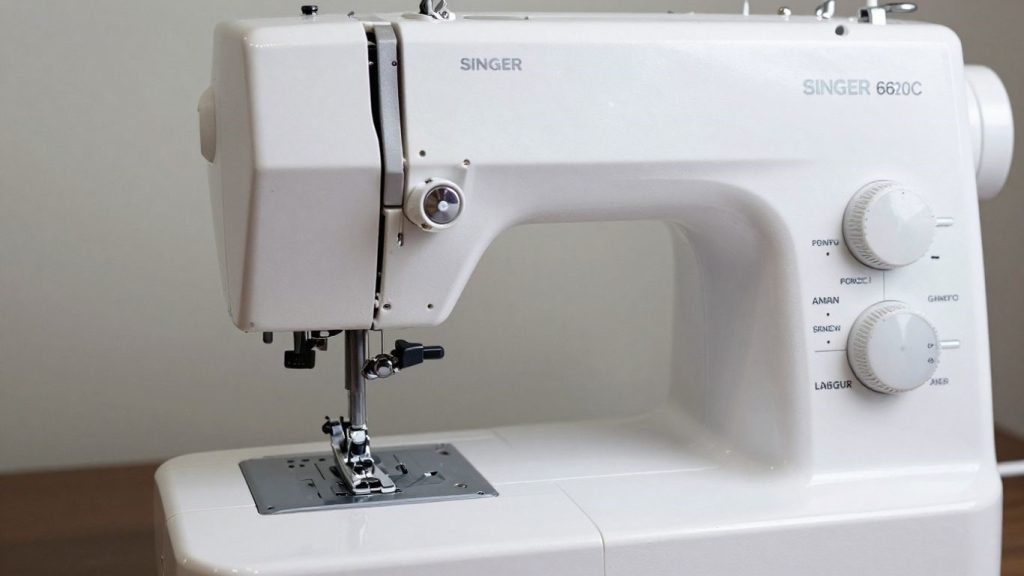
After spending some time with the SINGER 6620C, I’ve put together a list of what I think are its biggest strengths and weaknesses. It’s a pretty solid machine, but like anything, it’s not perfect.
Pros of the SINGER 6620C
- “Powerhouse Performance: This thing definitely lives up to its ‘heavy duty’ title. It handled multiple layers of denim and even some upholstery fabric without trouble. The motor has a nice, strong feel to it and handles thick materials much better than other light-duty machines I’ve used.
- Tons of Stitch Options: You’re not going to run out of ways to get creative anytime soon with 215 stitch applications. There are loads of basic stitches (of course), but also a decent number of decorative ones, stretch stitches for knits, and some lettering functions too.
- Simple To Use Features: The 6620C allows you to have a lot of power in this little machine, but it does need to be simple to use. Your selected stitch and settings are clearly displayed on the LCD screen, and the touch buttons for controlling them are intuitive. I also loved the automatic needle threader; it saves you so much time and makes getting started much easier.
- Durable Construction: This machine feels sturdy thanks to its metal frame. It does not wobble or shake too much, even with me giving it some added pressure. However, the solid construction suggests it’s made to last, which is always a good thing when investing in your sewing needs.
Cons of the SINGER 6620C
- Can Be a Little Intimidating to Absolute Newbies: It has easy-to-use features, but with so many stitches and the fact that this is a “heavy-duty” machine, it may feel a bit intimidating if you’ve never sewn before. But someone in search of their very first, simplest machine may feel it has more than they initially require.
- Noise Level: It can be a little noisy when running at full speed. It’s not intolerable, but it is something to think about if you’re sensitive to noise or have other people in the area trying to focus nearby.
- Accessory Storage: It includes quite a few accessories, but I thought the built-in storage was a little lacking. It’s not a showstopper, but I did need a separate box so that I could keep everything organised.
For the most part, I believe that the SINGER 6620C offers an excellent balance of power, features, and ease of use. It’s a machine that can grow with you, tackling day-to-day tasks and labours of ambition with confidence. It certainly holds its own, with durability and an extensive library of stitches among its highlights.
If you’re comparing beginner-friendly machines, check out the Brother CS7000X review and Brother CS7205 review.
Who Should Buy the SINGER 6620C?
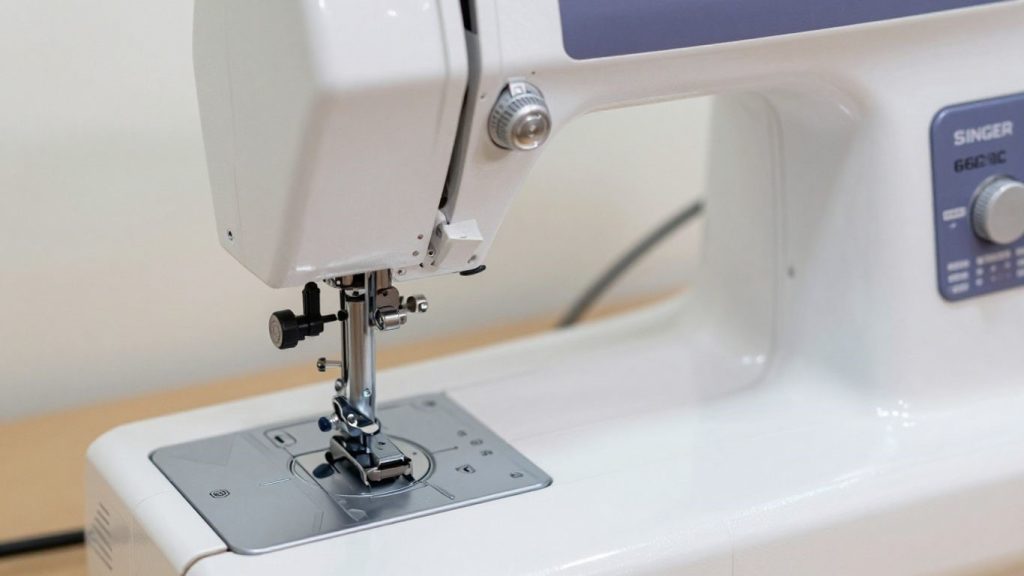
So, who exactly is this SINGER 6620C machine suitable for? I’ve been checking it out, and if I’m being honest, it seems like a great option for a few different types of people.
This machine is also a standout for home sewers who take on an assortment of projects. They are able to penetrate thicker materials, so if you are making home̛décor projects or repairing a durable item such as denim or canvas, this feature is great! And with 215 stitch options, you can get creative when garment making, quilting, and crafting. It doesn’t only sew simple straight stitches, it can do a lot more.
Here’s a quick rundown of who I think would get the most out of it:
- Ambitious Beginners: Those who want a machine with room to grow and learn new skills.
- Home Decorators & DIYers: People who work with various fabrics, including heavier ones.
- Hobby Sewists: Anyone looking for a reliable machine for a wide range of projects, from clothes to crafts.
- Those Seeking Durability: If you want a machine that feels sturdy and built to last, the metal frame is a big plus.
I discovered that thanks to its rugged build and easy-to-use features, it is really a versatile machine. It doesn’t feel flimsy, and the extra power means I don’t have to think twice as much about pushing it too hard with tougher stuff. It’s a prime example of a product that delivers good build quality and great performance for its relatively cheap price tag. For its price, it far surpasses its expectations.
If you’re getting started and only intend to sew really basic seams on lightweight cotton, you may find that it has more features than you need right now. However, if you see yourself tackling bigger projects in the future, or simply want a machine that feels hefty and capable, we’d definitely say the 6620C is worth considering. If you want something with a little more power and versatility right from the start, it’s a strong contender for best sewing machine for beginners.
If you’re upgrading your sewing setup as part of a home improvement plan, you might also enjoy reading about window treatment ideas and reading nook ideas.
Comparing the Singer 6620C with Other Machines
‘When I discover a new sewing machine, I always love to compare it with other famous models. Helps me feel good about what I’m actually paying for, right? Just like with the Singer 6620C (a bit of a unique machine in the Singer lineup nowadays, marketed as a computerised ‘super heavy duty’ offering). This makes it better suited to working with more durable fabrics, and for me, that’s a huge plus.
Here’s a quick look at how it generally compares:
- Durability: Heavy-duty metal frame, very well-known for stability and longevity—this is what the singer 6620C has. Most entry-level machines have plastic frames, making this a big plus.
- Stitch Count: It has quite a lot of stitch applications —215! It is not exactly 215 different decorative stitches, as you may see on a higher-end machine.
- Digital Features: Easy to use with LCD and push-button controls. That is what makes it far superior to older, purely mechanical machines.
- Speed: It has a higher sewing speed (up to 1,000 stitches per minute) than most basic models do, which helps power through projects hızlıca
The Singer 6620C appears to nail the sweet spot for those who require a reliable machine where you can sew more than just light cottons without getting bogged down in unnecessarily complicated features or a sky-high price tag. It’s a workhorse with smarts.
SINGER 6620C vs Brother CS7000X
While both are computerised machines, the SINGER Heavy Duty 6620C and Brother CS7000X target different user needs. The 6620C is all about power and durability, featuring a heavy-duty metal frame and high-speed motor that handles thick fabrics easily, perfect for supplies like denim and canvas. It can do that with 215 stitch applications and high piercing power, just right for users who are working on heavy-duty projects or frequent sewing tasks.
On the other hand, the Brother CS7000X is a more friendly beginner and versatile for lightweight to mid-weight fabrics. It features a large variety of stitches and accessories, so you can use it for quilting, decorative sewing, or just everyday home projects. If you want ease of use and flexibility, choose the Brother, but for power and durability, the clear winner is the 6620C.
For detailed specs and performance, check the full Brother CS7000X review.
SINGER 6620C vs SINGER 4452 Heavy Duty
The main difference as you compare the SINGER 6620C vs SINGER 4452 Heavy Duty, is computer vs mechanical. In contrast, the 6620C is a computerised machine with an LCD screen with auto stitch, so you can choose from hundreds of options, and it works more effectively for precise control. It also provides high-speed stitching and customizable settings for various types of fabric.
On the contrary, the SINGER 4452 is a mechanical, heavy-duty machine built for basics и raw power. It comes with fewer stitch options but is extremely reliable when sewing through thick materials and for simple sewing jobs. Automation and versatility, 6620C Simple, durable, highly capable, minimally-automated heavy machine optimised for the buck; often better to use 4452
The SINGER 4452 heavy duty sewing machine review highlights its mechanical strength, making it a solid alternative.
SINGER 6620C vs Janome HD3000
SINGER 6620C vs Janome HD3000 Analysis: Man vs Machine The 6620C has more advanced features like an LCD, automatic stitch selection, and a plethora of stitch applications to name just a few – so it is ideal for users that need flexibility and convenience in their projects.
In contrast, the Janome HD3000 has seen praise for its build quality and long-term durability. An extreme performance machine with fewer stitches but great contour stitch quality and better consistency over time. Janome is one of the best for many experienced users for its reliability; however, the 6620C is a better deal for anyone who needs modern features and more flexibility in sewing.
See My Full Singer Sewing Machine Comparison Guide
This review covers one Singer model, but our complete guide compares the top Singer sewing machines for beginners, heavy-duty sewing, quilting, and everyday home projects. Read our full roundup of the best Singer sewing machines to compare more options before you buy.
So, Should You Buy the SINGER 6620C?
Having spent a good amount of time with the SINGER 6620C, I can say it’s definitely a pretty solid machine. It feels durable, and I was impressed with how it handled thicker fabrics without too much effort. It also has an automatic threader, which is nice and a lifesaver for my eyes. While it boasts a ton of stitches, which is great for creative projects, I primarily stuck to the basics in most of my work.
For general home use, if you’re not one of those handy DIY-ers for whom subtle extra features matter, but you do need something that’ll work well enough but is also more complicated than it needs to be (it’s a computer programmable in multiple formats, for chris-sake!), the 6620C is a good option. It’s not the cheapest option available, but for the build quality and features on offer, I think it’s a fair price.
Frequently Asked Questions
How many different stitches can I make with the SINGER 6620C?
Turns out this machine has 215 stitch options. Now that’s a huge selection for all kinds of projects, from plain sewing to elaborate decorative stitches.
What makes the SINGER 6620C a ‘heavy-duty’ machine?
The ‘heavy-duty’ part refers to its sturdy steel frame, which makes it extremely stable. It also features a more powerful motor than usual, which allows it to stitch through denser materials with ease. Plus, it can sew pretty fast!
Can I sew tough materials like denim or leather with this machine?
Yes, well, the machine you have is for thicker fabric. The right needle should see it through things like denim, canvas, and even leather just fine.
Is it easy to thread the needle on this sewing machine?
I particularly like the built-in needle threader. It makes getting the needle through easier and faster, which is a great help if I’m in a hurry or using finer threads.
Is the SINGER 6620C a good choice for someone just starting with sewing?
While it’s a capable machine, I would say that it’s still very beginner-friendly. The LCD screen tells you what you need to know, and picking stitches is easy. It’s a great machine for someone looking to grow into it.
What kind of projects is this sewing machine best suited for?
I’ve discovered this machine is excellent for all sorts of projects. Whether I’m making clothes, home decor pieces, quilting, or really even crafting, it’s a strong build, along with the numerous stitches it has, that make this a versatile tool for almost everything I want to create.